Author: Mei Ling Tan

  • ZTE’s CEO Xu Ziyang Awarded at the GSMA’s Asia Mobile Awards

    ZTE’s CEO Xu Ziyang Awarded at the GSMA’s Asia Mobile Awards

    ZTE Corporation, a major international provider of telecommunications, enterprise and consumer technology solutions for the mobile internet, has announced that its CEO Xu Ziyang has been awarded the Outstanding Contribution to the Asia Mobile Industry Award at the GSMA’s Asia Mobile Awards (The AMOs) 2022, held in Hong Kong. The award recognizes Mr. Xu Ziyang’s outstanding leadership in guiding ZTE to continuously promote industrial innovation, increase cross-industry cooperation and boost the development of the global mobile industry.Mobile communication technology has become the key driving force in the booming digital economy for enriching people’s lives, accelerating the digital transformation of industries and promoting economic growth. In order to cope with the challenges brought by the Covid-19 pandemic with innovative ICT technologies as well as facilitate the digitalization and low carbonization of the industry for the healthy development of the economy, ZTE has carried out in-depth cooperation in digital infrastructure construction, digital industry development and more with its global partners. To date, ZTE has entered into cooperation with more than 110 operators worldwide on 5G, while working with over 500 partners to jointly explore more than 100 innovative 5G application scenarios in 15 industries.

    Moving forward, with a focus on the construction of ICT infrastructure, ZTE will keep working with the whole industry to expand the application scenarios of digitalization in order to build a green digital and intelligent world, and contribute to the sustainable development of the global mobile communications industry and society.

    The GSMA’s Asia Mobile Awards are the Asia Region’s leading stage for excellence, innovation, and achievement. As the highest honor in the Asia Mobile Awards, the Outstanding Contribution to the Asia Mobile Industry Award recognizes sustained or extraordinary contributions by individuals, organizations or collaborative achievements that advance the value and benefits of mobile communications for people, businesses and societies in Asia.


  • Rice exports jump 20 pct

    Rice exports jump 20 pct

    Vietnam exported 4.2 million tons of rice in the first seven months, 20 percent up year-on-year, according to the Ministry of Agriculture and Rural Development.

    But earnings were only 9 percent higher at US$2 billion since global rice prices have fallen by over 10 percent to $489 a ton.

    Exports to the U.S. grew fastest at 65.3 percent, followed by the Philippines, Vietnam’s top market, at 48.6 percent.

    Domestic prices also fell as adverse weather affected rice quality and demand was low compared to previous months.

    Exporters have slowed down purchases from farmers and await the peak harvest season.

  • How to Meet Demand in an e-commerce Age with Supply Chain Automation  

    How to Meet Demand in an e-commerce Age with Supply Chain Automation  

    Retailers across the Southeast Asian region are under tremendous supply chain pressure due to increased demand for online orders, hyper-competitive pricing and faster delivery times. For online orders, customers want the cheapest price, shortest delivery time, up-to-date information on stock availability, access to the real-time status of their orders, and seamless return options. On top of all this, businesses continue to contend with increasing labour costs, high staff turnover, increasing costs for building space, pressures from increased regulation and safety requirements, and supply chain disruptions, be they from pandemics, natural disasters and geopolitical tensions.

    All these factors combined have made the task of cost-effective order fulfilment more challenging than ever before. However, there is a way business can tackle these challenges and turn them into an opportunity to improve competitiveness. As this new age of retail and eCommerce coerces supply chains to work faster and harder, automation and technology in Fulfilment Centres are proving to play a critical role in helping businesses streamline their processes towards achieving higher levels of efficiency in their distribution operations.

    So, what can retailers do to meet demand in an e-commerce age when the only constant appears to be disruption?

    Optimised processes make for streamlined operations

    The answer to succeeding in the future involves adopting a strategy to optimise operations around cost-effectively meeting and exceed consumer expectations. Optimisation falls into three broad categories: processes, human efficiency, and inventory management.

    Processes provide the structure for supply chains to function. Automation and technology help optimise processes by removing non-value-adding activities, improving productivity, reducing errors and increasing the speed of the necessary tasks. As an example, the order fulfilment processes can be improved significantly in terms of speed, productivity and accuracy with the implementation of wearable devices to provide real-time instructions and interaction with operators. The process of order tracking is automatically improved with the same software that drives the technology, also providing the capability to track every transaction and movement of inventory through the order fulfilment task.

    Inventory management is key

    Inventory storage has transitioned from being a static requirement to a dynamic one, with many supply chains now able to drive high levels of optimisation across their logistics operations and their retail operations as well.  Automation and technology often play a key role in achieving these high levels of optimisation.

    Manual forklift trucks and Automated Storage Retrieval Systems (AS/RS) are no longer the only material-handling technologies that can be used to store inventory.  Technologies such as Automated Guided Vehicles (AGVs), mobile robotics and shuttle systems can provide much more flexible, scalable and dynamic storage solutions in a wider range of supply chain facilities.

    Make your workers more effective

    In traditional order fulfilment operations, operator travel consumes the largest portion of an operator’s time in fulfilling a customer order. One of the most effective ways to improve the efficiency of operators is to minimise operator travel, or to eliminate it altogether. In terms of automation, Goods-to-Person (GTP) picking solutions can increase operator productivity by over 5 times by eliminating operator travel.  Advances in robotic fulfilment technology have enabled order fulfilment processes to be performed without the involvement of operators at all in some cases.

    Case Study: RedMart’s Advanced Online Grocery Fulfilment with GTP

    To meet surging demand and growth in online orders, RedMart – the online grocery service of e-commerce giant, Lazada – implemented automation at its logistics facility in Singapore, in order to improve productivity, speed, accuracy, and space efficiency.

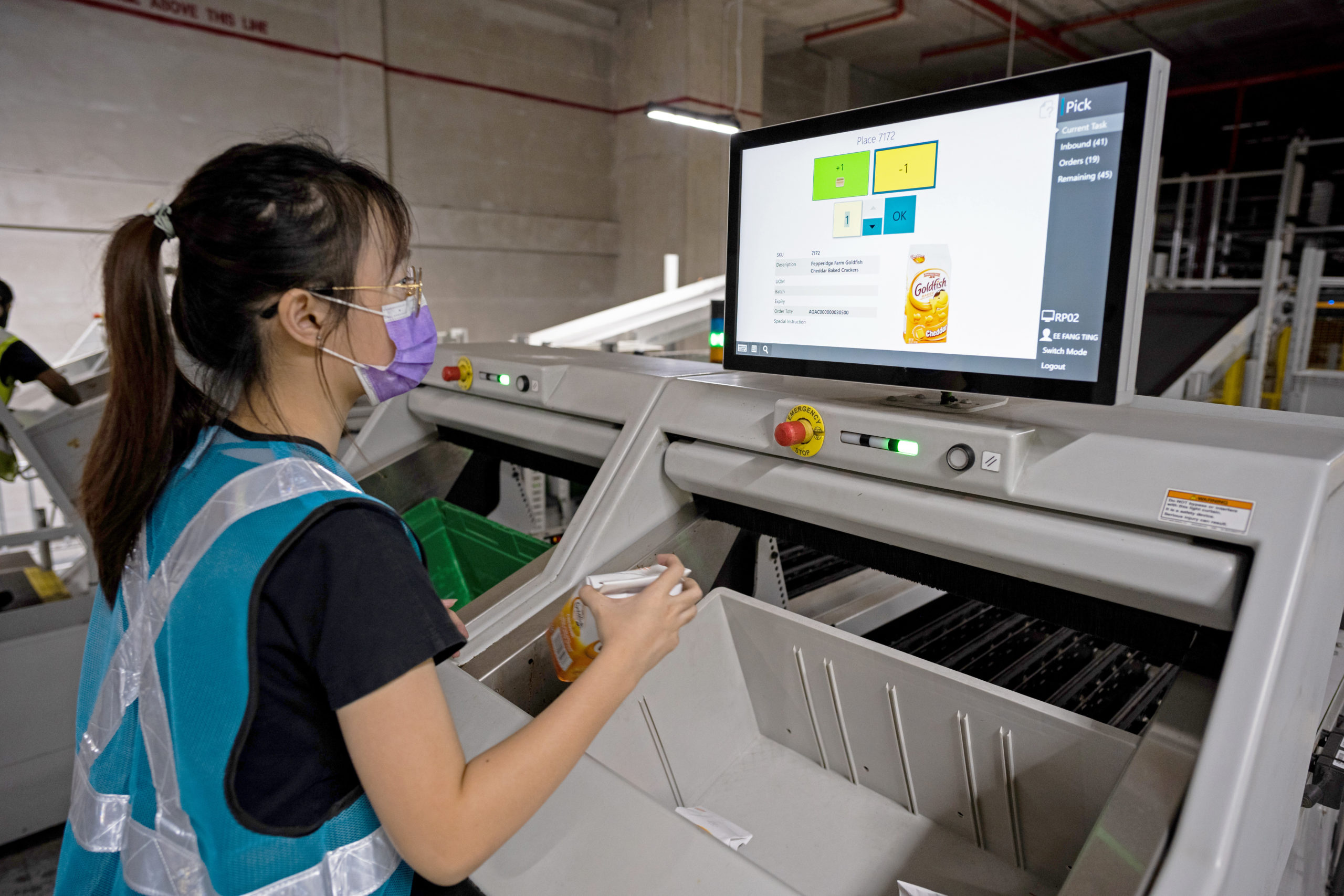
    A key part of the automation solution is the Goods-to-Person (GTP) order fulfilment, powered by a Dematic Multishuttle system. At the ergonomically designed workstations, operators pick orders up to five times faster than they were previously when they would have to manually travel through multiple aisles of shelving to pick the items required for an order.

    The GTP system covers a huge product range in a small footprint, with an extremely effective picking method. Workers stay in one place as items are automatically delivered to their workstation, increasing picking speeds, improving fulfilment accuracy, and advancing operator comfort and safety.

    Optimisation with information

    With the use of new logistics automation and technologies, retailers have a pathway to improve their fulfilment operations, achieving cost-effective and efficient fulfilment processes, higher levels of inventory availability, shorter lead times and improved traceability.  Robust and real-time integration between mechatronics, control systems and software platforms across fulfilment operations and their broader supply chain networks, is a key ingredient to achieving competitiveness and sustainable success in the future landscape of retail.

    For more information on how your business can optimise its supply chain operations and meet market demands, please visit: www.dematic.com/en-au

    Written by: Michael Bradshaw, Senior Regional Director Sales & Solution Development, Dematic Asia



  • Coles taps into carbon-negative beer with Lost Lager

    Coles taps into carbon-negative beer with Lost Lager

    An Australian-made, carbon negative beer made with unsold bread from Coles supermarkets is squaring up to some of the best-known beer brands in the country while tapping into surging customer demand for beverage makers taking tangible action on climate change.

    Lost Lager is a premium brew created in collaboration between Coles Liquor and BrewDog Australia – the Brisbane operation of Scottish carbon negative brewer.

    The packaging for Lost Lager is 99% plastic-free and any emissions BrewDog is unable to avoid through the production process are ‘double offset’ through tree planting schemes around the world.

    Coles’ research shows that one in two customers care deeply about the environment and the majority want to do more, while 50% say they have changed what they buy in response to the packaging of a product.1

    Coles Liquor Acting General Manager Customer, Trade Planning and Insights Mia Lloyd said customers frequently told Team Members in Liquorland and First Choice Liquor Market stores that they wanted to support brands that were taking action on the environment.

    “Lost Lager will be hugely popular with customers given the easy-drinking style of the beer and BrewDog’s commitment to the environment and climate change,” Ms Lloyd said.

    “This is not a fleeting consumer trend, it’s a force that our customers are driving and we can already see support for brands that have moved early to embrace sustainable packaging, waste reduction or renewable power.”

    Additionally, BrewDog invests in a number of significant reforestation projects, including the Yarra Yarra Biodiversity Corridor in Western Australia. This is the only emission reduction project in Australia to be certified under the prestigious Gold Standard accreditation, a globally-recognised best practice benchmark.

    Locally, BrewDog donates the grain used in the brewing process to farmers as an alternative feedstock. Internationally, they are also the proud owner of over 9000 acres of Scottish highlands which will be home to a reforestation and peatland restoration project to sequester carbon.

    The brewer’s Australian CEO Ed Bott said the Lost Lager was a premium lager, similar in style to a German pilsner and created to deliver a craft option for Australian lager lovers.

    “Lager accounts for 90% of beer consumed in Australia, and our Lost Lager connects with the premiumisation of this broad segment of the beer market,” Mr Bott said.

    Lager has been at the forefront of beer sales growth for years. With recent consumer demand shifting towards premium lager, hospitality venues and hotels have seen growing consumption.

    As such, premium lager is one of the fastest-growing product segments in recent years, expanding at a compound annual growth rate of 4.5% from 2019 to 2025.2

    “It’s still in its infancy but lager is the last bastion for craft beer and we’re confident the fresh, uncomplicated style of this beer will prove hugely popular with customers who are seeking something more from their lager,” Mr Bott said.

    “We see how engaged our Australian customers are in relation to issues such as waste and emissions reduction and while we know we can’t save the world on our own, we’re proud that we’re doing our bit here in Australia and around the globe.”

  • Singtel to Invest Additional US$100 million into Innovative Tech

    Singtel to Invest Additional US$100 million into Innovative Tech

    Singtel plans to invest a further $100 million into Singtel Innov8, its corporate venture arm, raising its total capital commitment to $350 million. One of the earliest corporate venture capital firms in Southeast Asia, Innov8 invests in start-ups that align with Singtel Group businesses in the areas of 5G, artificial Intelligence, the digital economy, sustainability, cybersecurity and emerging technologies. It operates on an evergreen fund model, re-investing returns from portfolio exits into new investments. With the capital injection, Innov8 will further expand its portfolio of investments in Southeast Asia, the United States, China, Israel and Australia.

    “This capital infusion is meant for identifying and growing innovative start-ups with new technologies and capabilities that are synergistic and in lockstep with Singtel’s strategic reset to drive greater improvements in our core operations, accelerate our new growth engines, and place us at the forefront of new and fast-evolving areas,” said Yuen Kuan Moon, Group Chief Executive Officer of Singtel and Chairman of Singtel Innov8. “As we sharpen our business focus, we will recycle our assets and capital into selected growth areas, reshaping our portfolio to better serve our stakeholders and build momentum for the longer term.”

    Edgar Hardless, Chief Executive Officer, Singtel Innov8 added, “Singtel Innov8 is empowered to move quickly to capture investment opportunities in the fast-paced venture market. Our mandate is flexible, allowing us to invest in both early and growth stage companies. We believe in backing founders to execute on their vision and support the company’s growth through partnerships with the Singtel Group. Innov8 facilitates access to businesses units across the Group’s footprint, evangelises innovative technologies within the Group, and supports partnerships with the business units. This additional funding and our proven approach will help drive further investment deal flow and greater collaboration with the start-up ecosystem, unlocking more value for both the Group and our portfolio companies.”

  • Vietnam imposes anti dumping duty on Thai-origin sugar

    Vietnam imposes anti dumping duty on Thai-origin sugar

    Vietnam has imposed an anti-dumping and anti-circumvention levy on Thai sugar imported via 5 ASEAN nations.

    The final verdict was made Monday, and the duty of 47.64 percent will become effective between Aug. 9 and June 15, 2026.

    The probe was launched last September after local firms reported sugar products imported from Laos, Cambodia, Indonesia, Malaysia, and Myanmar did not originate in those countries.

    Sugar imports in Vietnam jumped five times year-on-year to 527,200 tons in the period between October 2020 and June 2021, according to the Ministry of Industry and Trade.

    Imports from Thailand, however, slumped 38 percent in the same period.

    This was the period that Vietnam was investigating Thai sugar for dumping and subsidizing.

    “The sugar industry has provided evidence showing signs of Thai sugar’s trade remedies evasion through five countries mentioned above, especially the sudden jump in sugar imports,” the trade ministry said in a statement.

    Last June, Vietnam imposed an anti-dumping levy of 47.64 percent on some sugar products from Thailand for five years.

    Around 3,300 Vietnamese farmers lost their jobs, and 93,225 farming households were affected due to difficulties in the domestic sugar industry, according to the trade ministry.

  • Shipping firms report double-digit growth

    Shipping firms report double-digit growth

    Shipping companies have had one of their best quarters in years with most reporting double-digit growth thanks to high rates.

    Vinalines, the country’s biggest shipper, saw a near doubling of its profits year-on-year to VND1.43 trillion (US$61.19 million) in the second quarter.

    Private player Gemadept reported an 87 percent increase in profits to VND334 billion, the highest since the second quarter of 2018.

    Hai An Transport and Stevedoring made it to the top three after profits rose 3.3 times to VND324 billion.

    It was its most profitable quarter in nearly six years.

    Vietnam Ocean Shipping JSC (Vosco)’s profits were only up 7.5 percent to VND260 billion, but it was its most profitable quarter in 14 years.

    The Petrovietnam Transportation Corp (PVTrans)’s gross profit rose to a 15-year high of VND440 billion, but net profit fell 16 percent to VND265.5 billion as financial income decreased.

    The industry attributed growth to high freight rates, which have quadrupled since 2020 to $8,000 for a 40-feet container, according to data brokerage Bao Viet Securities compiled from Bloomberg.

    But market research firm FiinGroup warned that in the second half of this year the rates would fall and costs, especially of fuel, would rise.

    It also expected China to continue with its zero-Covid strategy, which could drag demand down.

    China accounted for a fourth of global goods throughput last year, according to data from its Ministry of Transport and German data portal Statista.

  • Apple eases mask-wearing policy for corporate employees

    Apple eases mask-wearing policy for corporate employees

    Just when we thought we got rid of the whole COVID-19 craze, things started to get gloomy again. In the US new cases now clock at around 100,000 per day which is very far from ideal but strangely enough, Apple has decided to ease its mask-wearing policies for corporate employees.

    The company’s COVID-19 response team has sent an official email, stating that Apple will no longer require masks at most locations. “We are writing to share an update to our current protocols,” the email reads. “In light of current circumstances, wearing a face mask will no longer be required in most locations.”

    However, even though masks won’t be mandatory, employees will have the opportunity to keep on wearing them if they feel like doing so. “We recognize that everyone’s personal circumstances are different. Don’t hesitate to continue wearing a face mask if you feel more comfortable doing so. Also, please respect every individual’s decision to wear a mask or not,” the email continues.

    The new BA.5 COVID-19 variant is currently raging around the world, and in the US in particular, actually making San Francisco’s BART metro system bring back the mandatory mask regime. This variant is not only highly contagious, but it can evade immunity from vaccination shots and previous COVID infection.

    Apple has been quite polarizing in its COVID policies in the past couple of months, the company even threatened to fire employees if they don’t come back to work in the physical offices, then later softened up the requirement to at least three days per week, just to completely drop it a couple of weeks later.

  • WhatsApp working on a new feature for group admins

    WhatsApp working on a new feature for group admins

    WhatsApp is constantly getting updates and new features, and we usually get a glimpse thanks to our friends at WABetaInfo. The app is working on a new voice note option for status updates, as well as the ability to hide your online status from prying eyes.

    Now there’s another slew of new features being developed mainly to help group administrators do their job more efficiently. The first one is set to allow admins to delete messages in groups for everyone. This was spotted in the WhatsApp beta v2.22.17.12 and according to WABetaInfo will be rolling out to the masses pretty soon.

    When an admin deletes a group message it will disappear for everyone, leaving a notice that it has been deleted by an admin (It says “you deteleted this message as admin” if you’re the one doing it).

    Another cool new feature that’s in the works is a chatbot that will blast users with in-app announcements. These announcements will include notifications about new WhatsApp features, tips and tricks, and possibly messages about paid promotions (hopefully not, but it’d be a missed opportunity).

    Earlier this year, WhatsApp started to test another feature to improve the user experience – the ability to edit your messages.

  • Maxis Records Strong Q2 Performance

    Maxis Records Strong Q2 Performance

    Maxis recorded a strong second quarter performance, delivering solid growth across all segments within its core consumer business as well as good momentum in its enterprise business.

    Service revenue increased to RM2,084 million, up 4.3%. Of which, revenue for the consumer business grew 4.4% to reach RM1,698 million, while the enterprise business yielded RM386 million in revenue, up 4%.

    With more Malaysians increasingly relying on converged connectivity and digital experiences at home, work and on the go, Maxis continues to attract customers with highly relevant solutions to meet their digital lifestyles. This resulted in increased revenue across the company’s mobile and fixed offerings, with market leadership in both postpaid and prepaid mobile.

    Concurrently, Maxis’ enterprise business maintained its growth momentum this year on the back of its core mobile strength. Maxis has been focused on playing a key role in supporting SMEs and enterprises in their digitalization ambitions through holistic converged ICT offerings and strategic collaborations.

    With a strong commitment to supporting the nation’s digital ambitions, Maxis continued to invest in its All-Ways Connected network (Maxis’ Rangkaian Menyeluruh) during the quarter, with a significant portion of these investments going toward fulfilling Jalinan Digital Negara (JENDELA) aspirations, upgrading its core network capacity and providing the best network experience for its customers. This has resulted in higher customer satisfaction levels than the previous quarter, with a touchpoint Net Promoter Score (TP-NPS) of +64 points.

    “Our solid performance across all segments underlines our sharp focus on our strategy and agility, and we are well-positioned for continued growth in a rapidly changing and competitive telco landscape. We are focused on continuously improving our converged network performance and leveraging our strong talent pool in striving to deliver the best innovation and services to our customers,” commented Gökhan Ogut, CEO, Maxis.

  • What Are The Benefits Of Ergonomics In The Workplace?

    What Are The Benefits Of Ergonomics In The Workplace?

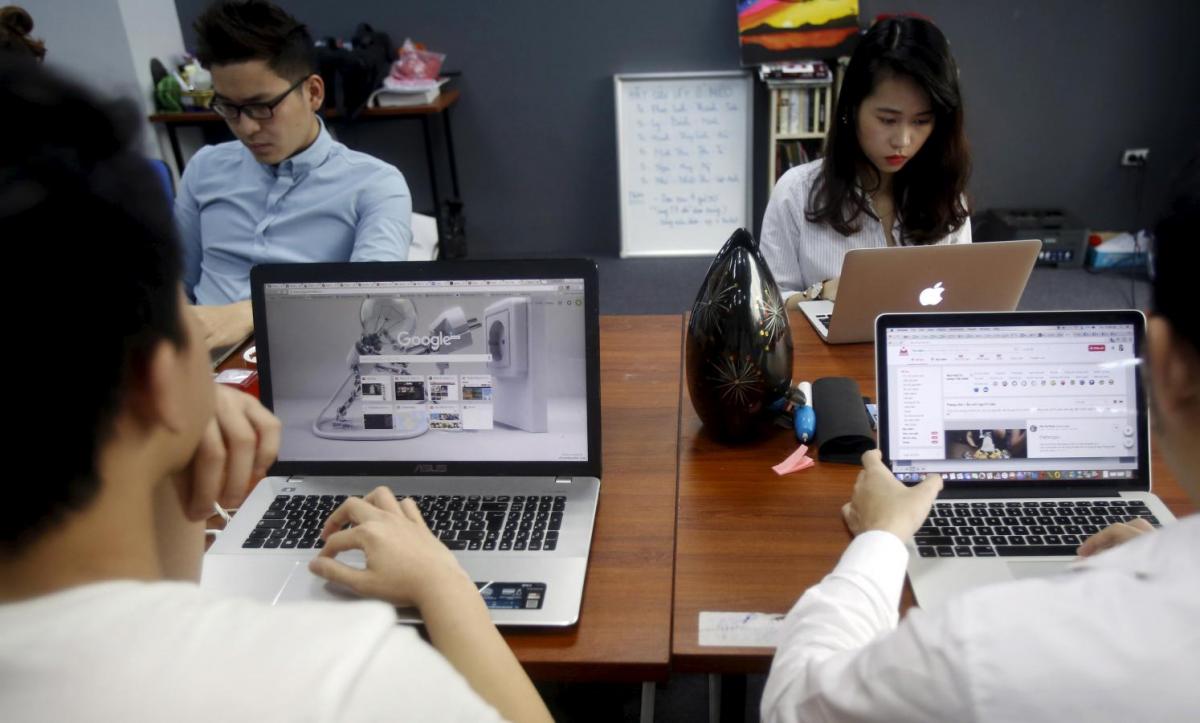
    There is no doubt about it, ergonomics are helping to create a safe and efficient work environment for employees in offices so that they can perform at their highest level without having to worry about any physical injury. The main reason behind the implementation of ergonomics is the basis of creating a safe and efficient work environment where employees feel like going every day. 

    Some people, however, still avoid ergonomics and the implementation of a workplace because they think that it is not worth spending so much to make sure that employees don’t suffer any physical injury. These people are clearly wrong because there is no reason to risk the health of your employees over a little investment. Read on more to find out the importance of ergonomics in the workplace and why ergonomics shouldn’t be ignored:

    Improved Health Of Employees

    The main reason why ergonomic workplaces are designed is to improve the health of workers there. When employees work in a workstation where everything is comforting and beneficial for their health then they suffer fewer injuries. The major problem that people face while working in poor ergonomic workplaces is musculoskeletal disorders. Simply by improving the posture and maintaining the height of the chairs, you can see a 50% decrease in MSK disorders.

    Similarly, ergonomic workstations include adjustable chairs so that you can work at a specific position where you won’t be putting strain and tension on your eyes or neck. It also prevents the development of varicose veins and swelling in the legs because ergonomic workstations are designed in such a way that your blood flow is optimal.

    Higher Productivity Levels

    With an ergonomic workplace, your employees are better focused and they can work at higher productivity levels. By designing a workstation that is adjustable and allows for good posture, less force extortion, better reaches, and fewer motions, the employees are going to love it just as a board game lover loves the Word Unscrambler. An ergonomic workstation allows your employees to focus better which results in them having high levels of productivity.

    For your business to be successful, it needs to have productivity. Just changing the workplace for your employees and making it better for them will make them feel more comfortable, and valued, and they will feel like giving their best, which is obviously in the interest of your business.

    Better Work Quality

    If the place where employees work is not properly built and the workstation has poor ergonomics then it will lead to frustrated and fatigued workers who won’t be able to produce the best quality of work. Just because their workstation isn’t comfortable, the tools that they work with aren’t of high quality, they feel fatigued all the time due to which their work quality is affected.

    Simply by improving the ergonomics of the workstation and providing the highest quality of tools to employees and workers, you can see the best quality of work from them.

    Eliminates Potential Work Hazards

    Just as a person working in a lab wears a white coat, gloves, and safety goggles to protect himself against potential lab hazards, ergonomics in the workplace help to eliminate potential hazards. There are some unsafe distractions and daily hazards that can hurt your employees which can lead to serious consequences later on.

    Simply by applying ergonomics in the workplace, eliminating hazards that you observe yourself, and asking employees about the hazards that they face daily, you will be not only improving their safety but also letting them know that you care about them.

    Increased Employee Engagement

    When employees notice that their employer is making an effort to provide the best conditions possible to work and cares about their health and safety, they will feel like being a part of different business activities. Their interest in business activities will develop just as one’s interest in Scrabble develops after finding out about the Scrabble Word Finder

    You will notice they will be more motivated to work every day and this will help to reduce the turnover rate and increase the loyalty of employees as they would prefer working in a safe and comfortable place.

    Happier Employees

    Along with increased engagement, ergonomics also helps to produce happier employees. It all comes to you that how better are you able to utilize ergonomics in the office. The better you utilize ergonomics, the happier your employees will be. They will love coming to a workplace where they are able to work in a comfortable, distraction-free, and relaxing environment.

    You will notice it yourself when you will see that the mood of every employee is lightened up. When your employees are happy then it means that good days are coming for your company as they will be performing their jobs at the highest levels.


  • 5G Will Be Revolutionizing The Gaming Industry Soon

    5G Will Be Revolutionizing The Gaming Industry Soon

    The online gaming industry has become a booming industry in many countries. Thanks to the advanced and revolutionary technology for the same. Smartphone penetration is increasing across the globe, and further, internet service affordability is increasing too. On top of it, 5G technology has either rolled out or is on the verge of rolling out in many countries. According to many experts, the 5G network will revolutionise the gaming industry in many ways. Here is how 5G will create a revolution in the gaming industry. 

    Cloud Gaming 

    The impact of 5G will be highly prominent in cloud gaming. With the advancement in cloud gaming, gamers can let go of the need to invest in expensive hardware to play their favourite game. With a simple subscription, playing video games on any device, too, will be possible by using additional tools like TapTap. However, a few infrastructural requirements need to be met to bring this advancement. With the mass adoption of 5G, getting the desired result from cloud gaming is possible.

    Also, with cloud gaming, there will not be any need to store any games. This will save plenty of space in the device, and also, it will save plenty of time as the gamer will not have to wait for the games to be downloaded. 

    Complex And Engrossing Story For Video Games 

    5G can bring many high-end AAA games to the mainstream. It can meet the demand for augmented and virtual reality along with support for Auto Clicker and different gaming tools to provide a unique experience to the gamers. The 5G network guarantees a high internet speed and better reliability. 

    With this newfound freedom, the game makers can work on creating bigger games that support engrossing and complex stories. Hence, the gaming quality will improve drastically. 

    Smoother Multiplayer Games 

    In the past few years, multiplayer games had become a huge hit, especially during the lockdown when the people engaged with each other through such games. However, multiplayer games are heavy and require a seamless internet connection. 

    Any lagging issue on the internet can spoil the entire gaming experience of the user. With a 5G connection, the player will not face any lagging issues. Consequently, the multi-gaming experience will become even smoother. 

    Localised Gaming Events 

    Gaming events are a huge hit. Not only do gamers love to participate in such events, but a large section of people love to watch such events. With 5G, there is a huge scope of expansion in such gaming events, especially in terms of localised events. Further, it will generate more participation and will have a greater viewership. Subsequently, sponsorship opportunities will increase, and it is possible to bring such gaming events mainstream. 

    Saves The Mobile Battery 

    Resource-intensive games like Fortnite are known to drain the battery of the smartphone. It is because such games consume a lot of computing power. However, with 5G, such games can be easily available on the cloud with low latency. 

    Also, the game developers can work to eliminate the heavy computation required in creating the games. This will improve the battery life of the smartphone. 

    Growth Of Gaming In Smaller Cities 

    The perfect combination of affordable smartphones and a 5G network can increase the gaming audience by multiple folds. It is already evident from many surveys that the number of gamers is increasing worldwide. However, there is still a large section of the region where the potential for development in gaming is still high. 

    The availability of a 5G network in such a region will allow the users to enjoy graphic-rich games. This, in turn, will increase the popularity of gaming even in underdeveloped regions. 

    The 5G network not only brings with it a faster internet connection but many other experiences for the gamers. However, the faster internet connection has a major role to play. The many benefits of 5G in gaming can fix the lagging issue, cost and other technical hurdles. 

    It will help the gaming industry to grow and allow gamers to enjoy a seamless gaming experience. In short, the 5G is here to revolutionise the gaming industry. The total result will soon be visible in the future when the 5G network becomes the standard network in almost all the regions of the world. 


  • Peroni re-launches its low and no-alcohol brews

    Peroni re-launches its low and no-alcohol brews

    This July, Peroni will relaunch its moderation portfolio of non-alcoholic (0.0%) and mid strength (3.5%) beers in Australia, under the Masterbrand of Peroni Nastro Azzurro, continuing to deliver the same Italian passion and flair to customers.

    Launching in Europe in April this year, Peroni Nastro Azzurro 0.0% and Peroni Mid Strength 3.5% are crafted using the signature Nostrano dell’Isola maize, grown exclusively for Peroni in the north of Italy, creating the same uplifting Italian taste.

    Birra Peroni has implemented technology in its Rome brewery to enable Peroni Nastro Azzurro 0.0% to match the flavour profile of signature beer, Peroni Nastro Azzurro, which has been brewed since 1963. This technology allows the signature base recipe and ingredients of Peroni Nastro Azzurro to be used, and only after the characteristic aroma and taste profile of Peroni Nastro Azzurro is fully developed, is the alcohol  gently removed to deliver the crisp and refreshing Italian taste.

    Australians still love a drink but are consuming beer in an increasingly responsible way, with Australian alcohol consumption at historic lows. These new Peroni beers cater to Australia’s evolving tastes, allowing lovers of premium beer to moderate their alcohol consumption while still enjoying the full and distinctive Peroni flavour.

    Kym Bonollo, Head of International & Craft at Asahi Beverages, says: “Peroni Nastro Azzurro 0.0% and Peroni Mid Strength 3.5% will replace Peroni Leggera and Peroni Libera throughout Australia, giving beer lovers a more authentic Peroni taste.

    “This launch has been a true global partnership between the local Australian team, our global team in London and our home team at Birra Peroni, Italy to develop these incredible and, might I say, refreshing brews. More than ever, we are all moderating our choices, but we shouldn’t have to compromise on taste. The redevelopment of our moderation portfolio to bring the uplifting taste of Peroni Nastro Azzurro to more consumers is a simple but positive one for our future.”

    Peroni Nastro Azzurro 0.0% will also replace Peroni Libera 0.0% in partnering with the Aston Martin Aramco Cognizant Formula One™️ Team and will appear across the car and all team kit, with the all-new 0.0% beer set to be served at prestigious events across the global Formula One™️ calendar.

    The Peroni Nastro Azzurro 0.0% launch in the Australian market will be supported by a campaign above the line across TV, video on demand, out of home, digital and social channels from September 2022. The beer will be available through retail and on premise venues.

    Asahi Beverages is committed to providing more options for beer drinkers to moderate their alcohol consumption. Already, 29% of Asahi Beverages’ beer sales are from no, low, and mid-strength beer.

  • Tourism recovery dogged by lack of staff

    Tourism recovery dogged by lack of staff

    The number of new hospitality businesses is rising, but a shortage of staff and tourists from pre-Covid major markets are hampering the tourism industry’s revival.

    The number of foreign tourists rose 582 percent year-on-year to 602,000, while over 3,000 new accommodation and hospitality businesses were registered, up nearly 28 percent year-on-year, according to the General Statistics Office.

    However, as 60.8 million domestic tourists started to travel after two years of Covid-19 constraints, businesses are struggling to recruit enough staff to cater to the surging demand in many localities.

    “Recruitment is difficult for the whole industry. In our hotel chain, each staff has to undertake several different jobs,” said Vo Thi Thien Huong, director of business and marketing at Fleur De Lys Hospitality hotel chain.

    Jakob Helgen, Marriott International area vice president for Thailand, Vietnam, Cambodia and Myanmar, said many companies are experiencing a labor crisis as employees were forced to quit in droves during the Covid-19 restrictions.

    Other hotels have reported staff shortage in the reception, housekeeping and food and beverage departments.

    The reason for the shortage is erstwhile staff had left for other jobs over the last two years, said Le Thi Ngoc Cuong, director of business and marketing at The Secret Con Dao hotel.

    “Many former tourism staff have found other stable jobs and so it is unlikely that they will return.”

    Phan Trong in Ho Chi Minh City is one of the former tourism staff who is unlikely to return.

    The 33-year-old had worked as a tour guide for five years before leaving for a new job last year, when most tourism activities were shut down.

    He now works as a group leader for a call center with a salary of VND13 million ($556) a month.

    “My salary is the same as before. Even though the new job is a little bit more demanding, I have settled down with it and do not want to go back.”

    Le Nguyen Ngoc Thanh, country director at headhunting platform Adecco Vietnam, said that demand for tourism, hospitality and accommodation staff has increased since the first quarter, but many companies were struggling to fill the empty positions.

    Adding to the shortage is the lack of skill among workers, with many receiving no training or the last two years and fresh graduates having no experience, she added.

    In addition, many workers who left for their hometowns are reluctant to return to major cities because of high living costs and inadequate salary offers, she said.

    Missing tourists

    Another key problem for the industry is the lack of foreign tourists.

    The 602,000 foreign tourist arrivals in the first six months marked a decline of nearly 93 percent over the same period in 2019, when the pandemic had yet to hit the world.

    The four major markets of China, South Korea, Japan and Taiwan together accounted for 66 percent of foreign tourists in the first six months of 2019, but as these countries and territories still maintained quarantine policies for returning tourists, people were not eager to fly.

    The Russia-Ukraine crisis has also blocked Russian tourists, who used to pack Nha Trang and Mui Ne beaches.

    The Russia-Ukraine tension and China’s ‘zero Covid’ policy has had a major impact on Vietnam’s tourism recovery, said HSBC’s country head of markets and securities services Ngo Dang Khoa.

    Inflation and Covid-19 are other factors that keeps tourists from traveling globally, he added.

    One of the solutions the Vietnam National Administration of Tourism has proposed is better utilization of the markets that Vietnam has resumed air travel with, such as South Korea, Japan, Western Europe, Australia and ASEAN.

    New markets that should be focused are India, U.S. and the Middle East, it has said.

    Thanh suggested that tourism companies provide trading for college graduates and employ part-term workers.

    “Businesses should conduct surveys on workers’ expectations in terms of salary and benefits and make necessary changes.”

    Thanh also proposed that companies try to reach out to former employees and convince them to come back.

    Trong said scenario was unlikely, at least for now.

    “There are still so many global issues like geopolitical tensions, diseases and natural disasters. If I go back and the industry freezes again, that would be a tragedy.”

  • Grocery chain Bach Hoa Xanh revenues drop on store closures

    Grocery chain Bach Hoa Xanh revenues drop on store closures

    Grocery chain Bach Hoa Xanh suffered an 8 percent fall in sales year-on-year in the second quarter to VND6.76 trillion (US$289.47 million) following its closure of hundreds of outlets.

    The subsidiary of electronics retailer Mobile World closed 251 unprofitable outlets in May and June as it restructured and also changed the layout of the remaining stores.

    It has so far renovated nearly 1,500 outlets and it plans to close down more this quarter, keeping only 1,700-1,800 stores open.

    Nguyen Duc Tai, its chairman, has said there will be no expansion this year to focus on improving efficiency and customer service.

    The company is preparing for nationwide expansion in 2023 from its current predominant presence in the south.

    Bach Hoa Xanh reported revenues of VND12.8 trillion for the first half, accounting for 18 percent of Mobile World’s revenue.

    Mobile World’s revenues rose 13 percent to VND70.8 trillion, while profits were up 1 percent at VND2.68 trillion.