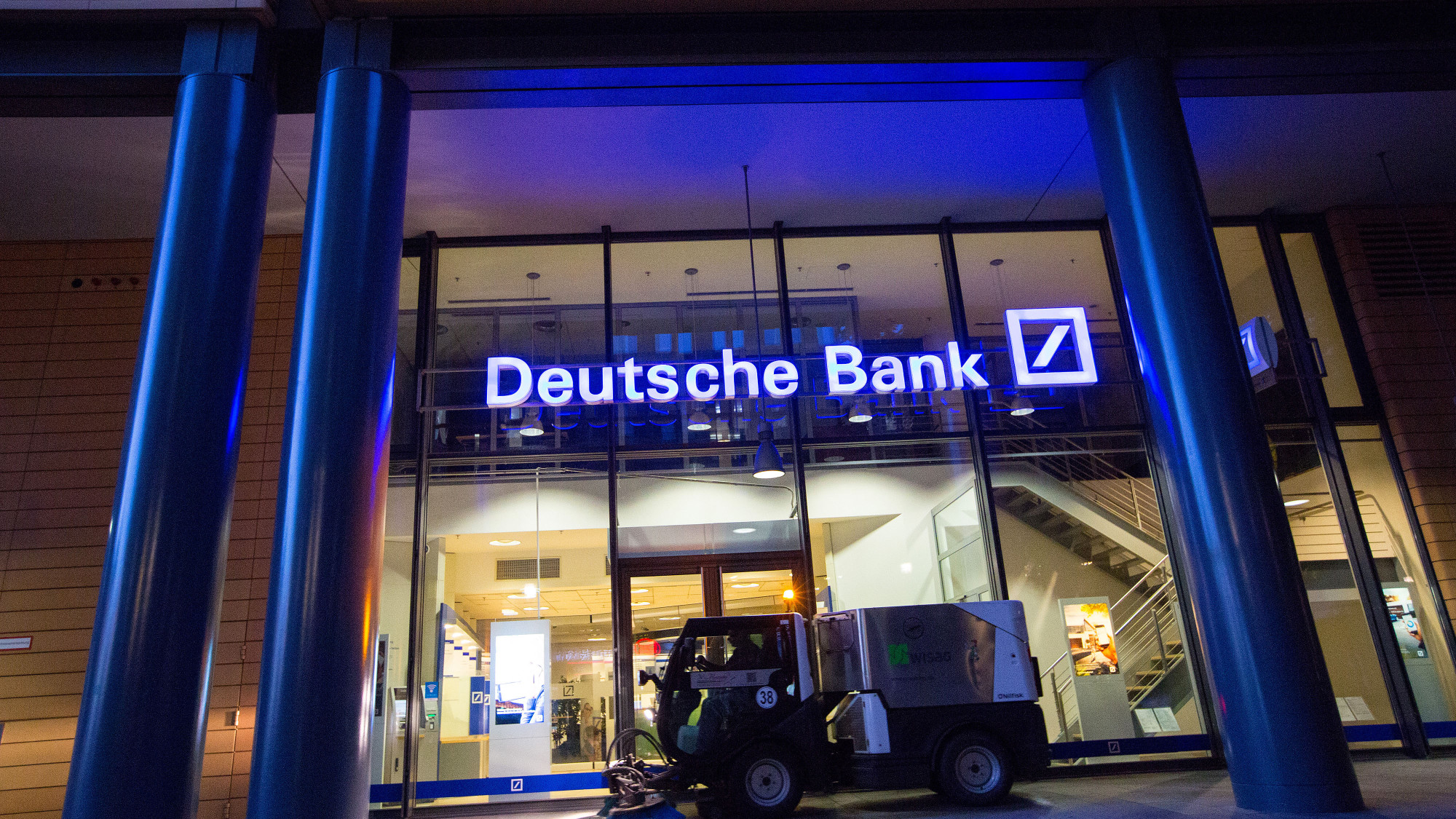
Having a large IT center in St. Petersburg leaves Deutsche Bank highly exposed to Russian sanctions. As a result, it has decided to take a bold action.
Deutsche Bank brought several hundred Russian computer scientists to Berlin, as reported by Germany’s citing anonymous sources.
The bank operated a large technology center in St. Petersburg, Russia, for years. With Russia’s war of aggression against Ukraine and the West’s sanctions, the hub comprising some 1,500 programmers, previously made headlines.
The number of staff there represents about a quarter of investment banking IT specialists.
At the time, the report stated there was no code or data housed in the Russian Technology Center (RTC), and after a three-day stress test last week, Deutsche Bank told regulators there was no immediate systemic risk to its IT infrastructure.
A failure of the center would be a major blow to Deutsche Bank. By moving to Berlin, Deutsche Bank reduces the risk of losing an enormous amount of expertise. In the meantime, the major Swiss banks UBS and Credit Suisse have also moved to withdraw staff from Russia or put them on leave.
Costco plans to open three new stores in Melbourne and Geelong within the next two years, investing up to $150 million.
CEO Patrick Noone told The Australian in an interview that potential sites were identified near Melbourne’s CBD, and at Officer and Geelong. Each store will be allocated $50 million, with the projects now depending on zoning and council approvals.
“We are growing quite nicely, and Melbourne is a big city. For us, business isn’t slowing down in Melbourne,” said Noone.
“Melbourne is a growth area and we’d like build there as soon as we get the approvals.”
During the Covid lockdowns, Costco remained a ‘destination shop’ for Melbournians as members travelled long distances to shop at the store, buying in bulk when regulations allowed.
Costco currently boasts 200,000 members and sells a mix of goods from fresh food, groceries, meat, consumer electronics, clothing, diamonds and even coffins.
According to The Australian, Costco Australia’s sales in the year to August rose from $2.6 billion in 2020 to $2.8 billion last year. Strong online growth helped the company double its profit to $46.39 million.
South Korean chicken chain, Mom’s Touch, is seeking a new owner after voluntarily delisting from the Kosdaq stock market, according to The Korea Herald.
KL & Partners’ investment arm, Korea F&B Holdings, which is the chain’s largest shareholder, proposed to purchase shares for the next six months in order to protect minority investors.
As of the first quarter of this year, Mom’s Touch has 1352 stores across its home country. The company’s value is estimated at about US$804 million – nearly three times the amount Korea F&B Holdings invested to acquire the chain in 2019.
The chain expanded to the US late last year with the ambition to open 100 stores in the country by 2025. On the other hand, Mom’s Touch Singapore, operated by No Signboard Holdings’ wholly-owned subsidiary Hawker QSR, ceased its operations at all outlets last February.
Meanwhile, its rival, Popeyes, is making a return to South Korea through an exclusive master franchise agreement with Silla Group, after exiting the country in 2020. The chain will open its first store by the end of this year.
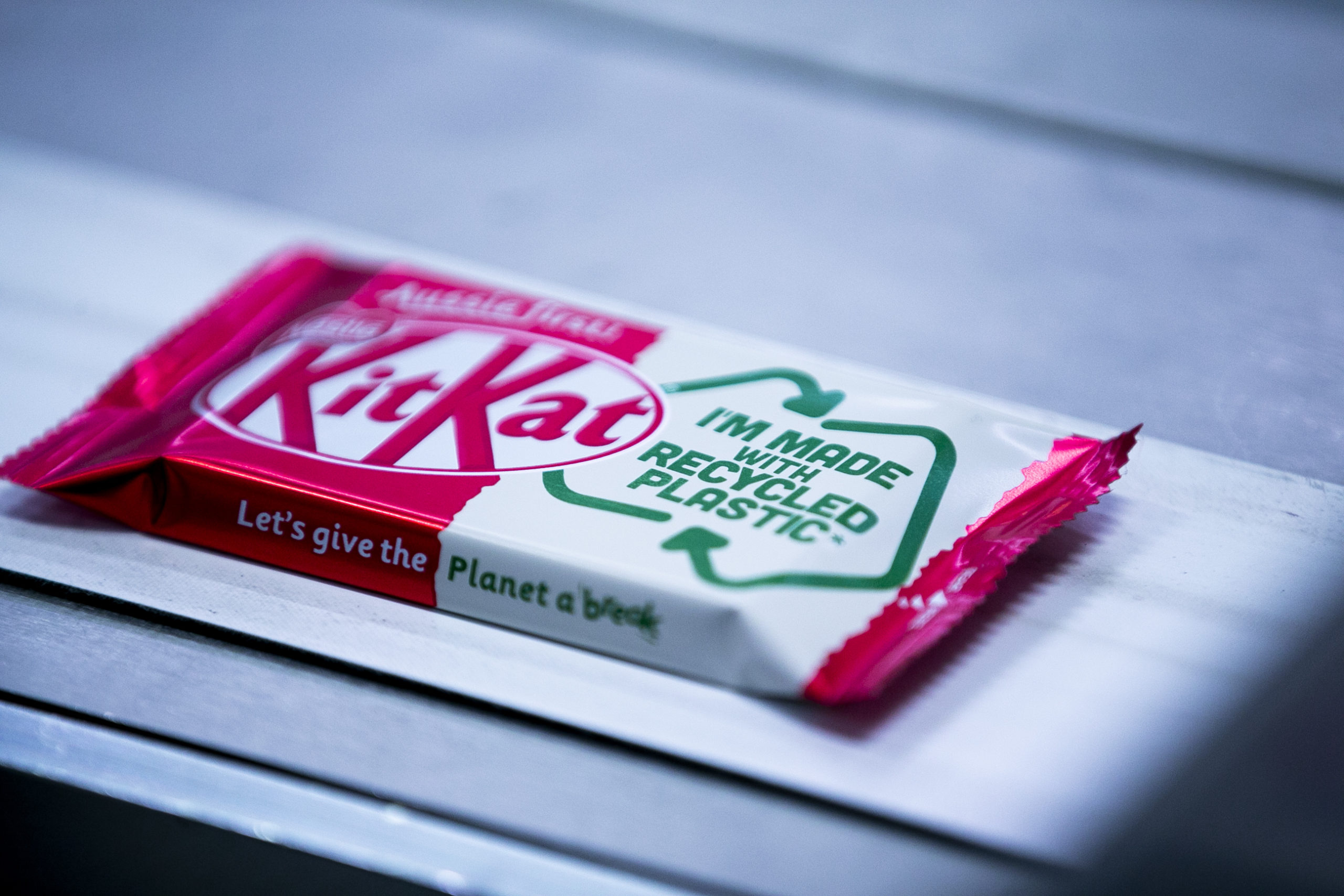
Nestlé Australia has announced that KitKat will be Australia’s “first” chocolate bar with a wrapper using recycled plastic.
More than 40 million 45g KitKat bars will be packed in the 30% recycled content wrapper in the next year, cutting virgin plastic use by around 250,000sqm.
Nestlé Oceania General Manager Chris O’Donnell says the company is on a mission to cut its virgin plastics use by a third by 2025.
“Introducing recycled content in our packaging will make a significant impact against our 2025 ambition. We’ve implemented a number of changes to reduce our use of virgin plastic but this switch, the first of its kind, will be a huge step change.
“We know consumers want our packaging to use more recycled content, so we’re delighted to deliver the KitKat 45g bar as Australia’s first food product to be wrapped in soft plastic made with recycled content.
“For KitKat fans, the news is all good. The 30% recycled plastic wrapper will keep KitKat bars crisp, fresh and delicious, while we focus on giving the planet a break. When they’re finished, they can continue to recycle their wrappers through the REDcycle scheme.”
The wrapper is also Nestlé’s first soft plastic food wrapper globally to use recycled content.
“Soft plastic with recycled content that’s suitable for food packaging isn’t widely available anywhere in the world – we’ve been searching high and low to find as much of this material as we can from our suppliers. As more becomes available we’re hoping to increase the amount we can source for our packaging,” Mr O’Donnell said.
“We’re focussed on less packaging, better packaging and better systems. This is a big step in the right direction but we’re not at our end destination yet. This is a journey of ongoing innovation.
“In the meantime, we’ve committed to invest CHF 2 billion globally to stimulate the market and lead the shift from virgin plastics to food grade recycled plastics.”
The 30% food grade recycled plastic wrapper is supplied by Huhtamaki. The recycled content has been allocated using the mass balance approach and certified by ISCC.
Adidas-owned Reebok has launched a range of adaptive trainers for people with restricted mobility. Called Fit to Fit, the sneakers can be easily put on and removed.
The shoes were created in partnership with Zappos’ adaptive department, the two companies aiming to create shoes that are inclusive in performance and lifestyle. They interviewed people with mobility issues as part of the product development process.
“We created the Reebok Fit to Fit adaptive footwear collection to champion Reebok’s mission of inspiring human movement for all,” Reebok product manager Dan Buonomo said in an interview with Dezeen.
“The collection’s goal is to provide functional products for everyone, while still holding true to Reebok’s iconic design heritage.”
Key to the range is the absence of buttons and buckles which can be a challenge for people with restricted mobility. A zip on the side ensures the shoe fits, but the laces remain so the shoes retain the style and look of those made for typical consumers. Once tied to fit, they don’t need to be retied each wearing.
Removable insoles accommodate prosthetics and a low-cut design aids mobility. A sports shoe based on Reebok’s Nanoflext TR features a pull tab in the heel making it easier for people using wheelchairs to remove the shoes from behind.
Another shoe, the Club MEMT Parafit, based on the tennis shoe of the same name, has a removable insole and comes in wider sizes to accommodate prosthetics.
Initially available in pairs, Reebok and Zappos plan to sell single shoes for people who have only one foot.
Asia/Pacific (excluding Japan) (APEJ) spending on augmented reality (AR) and virtual reality (VR) technologies will grow with a CAGR of 42.4% from 2021 to 26 and reach $16.6 billion by 2026, according to a report by the IDC. The penetration of the wireless-first strategy amongst enterprises, industries, and public sector organizations will drive AR/VR technology investment. However, from a retail consumer perspective, there is a lack of consumer-friendly AR/VR technology, which will change over the next couple of years. Vendors will improve VR goggles and AR for smart glasses and phones, and disrupt augmented audio technology, thereby offering promising growth opportunities to the consumer market.
“The impressive market growth for AR/VR technologies is driven by organizations’ demand for a new immersive experience in the way they do business and interact with clients and employees. But vendors also need to respond to AR/VR consumer applications to not miss out on high growth opportunities in the next few years,” says Dr. Lily Phan, Research Director for Future of Work, IDC Asia/Pacific.
Education, healthcare, discrete manufacturing, process manufacturing, and professional services are the highest spending industries, and will dominate over the forecast period. These five industries registered 65% of 2022 spending for commercial use cases among the 19 industries covered by IDC. Training emerged as one of the top three investment priorities for four out of five industries listed above. Collaboration is gaining incremental impetus, with education, discrete manufacturing, and professional services being the forerunners in adopting AR/VR technologies.
“Customer agility is one of the primary aspects driving investment in AR/VR technology. It helps in improving the customer journey by offering an immersive experience,” says Abhik Sarkar, Market Analyst at IDC Asia/Pacific IT Spending Guides, Customer Insights & Analysis.
The top five use cases captured nearly 60% of the total 2022 investment. Training captured the largest revenue share in 2022 and grew by 44.7% from 2021. With collaboration, it will capture a spending share of 30.1% in 2022. For the enterprise VR users, metaverse will act as a collaborative space for partners, employees, and customers. VR gaming is the most significant contributor to the consumer industry owing to users’ immersive and enhanced gaming experience.
Investments in VR contributed to around 66% of the total market in 2022. It is driven primarily by the growth of consumer market adoption of virtual reality games. Spending on VR training and collaboration will also lead to VR technology investments during the forecast period. As far as AR is concerned, training, retail showcasing, and industrial maintenance will lead to increased investments. In both the reality types, hardware showcases maximum investment in 2022 followed by software, and services. This trend is expected to stay the same over the forecast with hardware growing at a CAGR of 48.1%, software at 47.1%, and services at 20.8%.
Vietnam Helicopter Corporation’s profits rose by 11 percent to VND263 billion (US$11.3 million) last year despite the severe impact Covid-19 had on the aviation industry.
It saw a 6.7 percent drop in revenues to VND2.08 trillion.
The company transports cargo and people, trains pilots, imports aviation devices, and offers firefighting services.
Owned by the Ministry of National Defense, it has seven affiliates and subsidiaries and a charter capital of VND3.98 trillion.
It charges $3,650-7,300 for an hour of chartered flying.
On one hand, the satellite communications industry is pressured to deliver universal connectivity. On the other, the industry has a part to play in mitigating potential damage of uncontrolled growth in space. Telecom Review Asia Pacific interviews Peter Hadinger, Chief Technology Officer, Inmarsat during Asia Tech Singapore 2022 to learn about the pressing need for governance in space, as well as the future outlook of the GEO satellite operator.
Why is it important to ensure sustainability at the forefront of satellite network design and deployment?
When you start off small, you don’t always pay attention to the environment that you’re working in. This has been true for humanity over the millennia, when people didn’t have to worry as long as the environment is big and their impact is small. This leads to the ‘tragedy of the commons’ when everybody assumes that somebody else will take care of the problem.
This is why for a long time, satellites have been a rare thing. You didn’t have many of them and as space is big, there were no problems and not many rules. Similar to when aviation just started, there was no air traffic control. But when air traffic became more congested, mechanisms were needed to ensure that everyone was following the same rules. This is also true for maritime.
However, space has been an open territory without a lot of rules, even though there are bodies like the International Telecommunication Union to coordinate on spectrum. Some large countries—the United States in particular—have had some rules about orbital debris for a number of years. But it’s not about satellites running into each other – it’s more about ensuring that satellites do not leave a lot of debris behind.
But now, in an era of mega-constellations, we feel that it’s incumbent on space operators to do what all other industries have done over time, which is to establish rules to ensure that space is collectively taken care of.
For geostationary satellite operators, this has been going on for a long time. There’s one very narrow space which is the geostationary arc, and in that arc, there are essentially informal rules that govern how operators move around and coordinate positions with one another.
But once you enter the lower orbit, where there are more players and a far greater number of assets that are going every which way. Becoming disconnected from each other, it’s important to ensure that we have rules in place to address conflicts when they occur — when satellites are decommissioned or if we lose control of them, or to ensure that we can avoid one another in space.
Today, we have to launch through the LEO belt to get to GEO. Our early operations of getting into the GEO orbit involve looping, in and out of the LEO space. We, as GEO operators, are very concerned about what happens in LEO because we cannot afford to have an accident that spreads debris, which has occurred in the past.
Can you tell us about Inmarsat’s commitment to ensuring continued growth and innovation in space?
Inmarsat has always been on the leading edge as we are the first to introduce activities in a variety of frequency bands, as well as the first to debut new technologies for combining space-and-ground networks like what we do with the European Aviation Network.
We integrate these capabilities into new, innovative systems. For example, Iris is a system we’re deploying in Europe to support air traffic navigation, with manned and unmanned platforms working side-by-side. The same problem that we’re talking about in space is being addressed in Europe’s aviation environment because they have too many planes and are getting into things like drones which have to operate in that same space.
They need to have a common communications infrastructure to share information on where they are and to reach where they’re going safely.
Moving into an era where we are addressing the hotspots of the world, there’s a combination of both satellite and terrestrial technologies, comprising mixed frequency bands and different kinds of satellites (GEO and LEO). However, end users do not need to understand these complexities – all that matters is that they are connected.
But for us, we must ensure that they receive the best possible service everywhere, independent of all the magic that goes on behind the scenes. This is our motivation for investing hundreds of millions of US dollars a year to stay at the forefront of mobility and safety. Since Inmarsat’s inception, we have been offering transport mechanisms for global safety critical industries, starting from maritime and now aviation. We’re also the largest supplier of communications services to governments worldwide. With more than 40 years of global satellite communications leadership, we recognize the ability to not only facilitate air traffic and maritime navigation, but also space traffic navigation.
Recently, the trials for the terrestrial element of Inmarsat ORCHESTRA have just ended in Singapore. Can you tell us why was Singapore picked as the destination?
There are three reasons why. Firstly, you can’t find a denser maritime environment than in Singapore – undeniably the world’s most dense shipping route and a place that challenges capacity.
Secondly, Singapore has a very challenging radio environment impacted by the weather, where its humid and rainy climate adversely affects radio links. With our proofs-of-concept, we couldn’t find a more challenging venue than Singapore. We knew that if it was going to work in Singapore, it would work anywhere else.
Thirdly, we receive tremendous support in Singapore. As these tests were conducted during the height of the pandemic, it was great that we have a local office in Singapore, with engineers and staff that supported us in placing our equipment in ships to run the trials. We also have had the support of the Maritime Port Authority (MPA) which saw the value in introducing new technologies in this dense environment.
How do the trial results support better connectivity solutions for Inmarsat in the future?
The fundamentals of ORCHESTRA are using different communication mechanisms to support a given user, which in this case is a ship. Because we have so many ships in a dense environment like Singapore, being able to take some of that traffic off from the satellite and connect it directly to shore frees up satellite capacity for other applications.
To deliver a huge amount of capacity domestically, we wanted to test a bunch of technologies to determine how they would work in this challenging environment. We used the results to refine our technical approaches that will then bring the market ultimately to the terrestrial element of ORCHESTRA, not just in Singapore but everywhere else, targeting dense hotspots such as ports, straits, canals, airports, with high traffic.
We’re also looking at future LEO satellites forming small constellations of fewer than 200 satellites to address mobility and sustainability. We’re also investing in LEO satellites as they make financial sense in the long run.
Fortunately, we are not time-pressed to achieve this as we already have the world’s best global network and a roadmap that goes well beyond 2030. In the near future, I foresee LEO playing a significant role. Our upcoming LEO capabilities would build on the foundation we’ve established, which is essentially core to ORCHESTRA to uniquely integrate LEO and terrestrial networks at hotspots to support sustainable satellite communications.
Waze runs all sorts of collaborations to bring its customers different content each month. This time around, the navigation app is bringing Waze users a new celebrity in-car experience that puts famous singers front and center.
This particular collaboration is aimed at Kehlani fans, as the American singer, songwriter and dancer is now bringing their music to Waze users all over the world. The new Kehlani experience includes two Moods that are inspired by the singer’s music and road-trip musts.
The first one is called Flowing Mood and is inspired by Kehlani’s latest album, Blue Water Road, while the second is the Captivating Mood, which is said to represent the camera Kehlani keeps close all the time while on the road.
Additionally, the new in-car experience features Kehlani’s signature vehicle, El Kehmino, which is inspired by their own ’81 El Camino. Finally, Kehlani curated a Spotify playlist that users can stream through the Waze Audio player.
The celebrity in-car experience is now available on Waze for a limited time with voice navigation in English. To install it, tap “My Waze” in your app to find the “Drive with Kehlani” banner.
The Roku Channel is adding new content all the time, which is probably one of the reasons it’s one of the most popular providers of live TV channels. Today, the service announced that no less than 50 Live TV channels will be available for free via The Roku Channel.
The new Live TV channels will be available as part of a new category of entertainment called Espacio Latino, a brand-new Spanish language hub in the United States, which offers thousands of hours of content to Spanish-speaking audiences in one easy location.
Apart from sports, news entertainment, telenovelas, movies, and music, Espacio Latino will also feature thousands of free, original, and exclusive movies and TV shows in Spanish, plus popular English titles dubbed and subtitled.
Out of the 50 Spanish language Live TV channels available through Espacio Latino, over 25 are brand-new to The Roku Channel. Keep in mind that all channels will be accessible via Espacio Latino and The Roku Channel’s Live TV Guide. Also, content from Premium Subscriptions will be available for streamers to enjoy in the category.
According to Roku, some of its original titles will be available on Espacio Latino too, including the recently released title Mamas (narrated in Spanish by Zoe Saldana), as well as Natural Born Narco, which will debut on July 8.
Last but not least, fans of Espacio Latino should expect even more content, as Roku is working with multiple content partners, including NBCUniversal Telemundo, Hemisphere Media Group, Eurochannel, Weather Group, BBC Studios, Lionsgate, Sony Pictures Television, A+E Networks, and more.
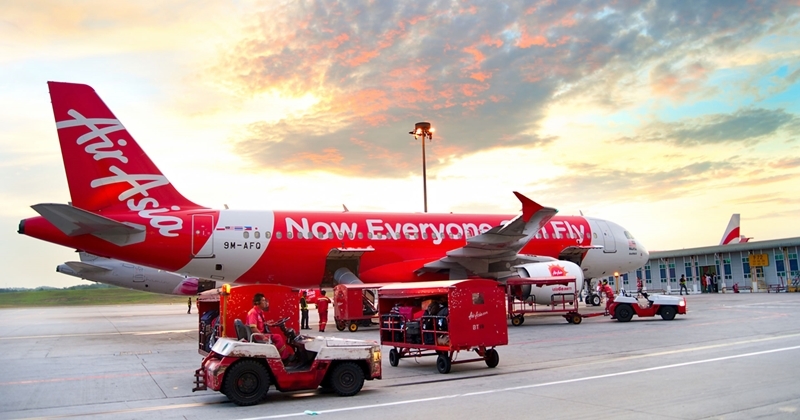
AirAsia announced it will be installing an innovative aircraft software modification known as Descent Profile Optimiser (DPO) on its A320ceo aircraft commencing from June in conjunction with the World Environment Day. This upgrade will help to generate fuel savings and significantly reduce carbon dioxide (CO₂) emissions. The enhancement to the aircraft’s onboard Flight Management System (FMS) performance database allows the aircraft to optimise the descent phase of the flight which subsequently minimises the amount of time spent at an inefficient level off.
The new initiative is set to reduce fuel consumption and improve the fuel efficiency by up to 0.75 percent of fuel burn which is equivalent to saving 101 kgs of CO₂ emissions per flight. This could reduce CO₂ emissions by over 221 tonnes per aircraft per year, representing a considerable contribution to more sustainable Flight Operations. Once installed initially on 17 aircraft, it would save 3,764 tonnes of CO₂ per year or the equivalent of 62,700 urban trees planted based on the US EPA’s Greenhouse Gas Equivalencies Calculator.
Bo Lingam, Group CEO of AirAsia Aviation Group Limited (AAAGL) said: “As the travel industry begins to recover and we expect to get back to pre-pandemic levels by the end of this year, it is important that we review our climate strategy and put in place new mechanisms and processes that will help to minimise the environmental impact of our flight operations. Installing the new flight operations optimisation solution for our current A320ceo aircraft allows us to reduce our carbon footprint for the short and medium-term as we continue to gradually upgrade our fleet to the higher capacity and more fuel-efficient A321neo in the longer term. Given the reality of climate change and the airline industry’s contribution to emissions, reducing our carbon footprint is currently one of our top sustainability priorities and we look forward to further reducing an additional 221 tonnes of CO₂ emissions per aircraft each year with the DPO system we are implementing. We remain committed to ensuring not only that we build a sustainable airline but also align with the aviation industry’s sustainability goal to reach net-zero by 2050.”
Besides the DPO, AirAsia has implemented several other key efficiency initiatives to reduce fuel consumption and carbon emissions such as One Engine Taxi (procedure to operate one engine during the taxi phase of flight instead of both engines), Idle Reverse Landing (a procedure that uses idle engine thrust upon landing instead of powered thrust to reduce noise and fuel burn) and the Required Navigation Performance-Authorisation Required (RNP-AR) approach (a procedure that uses the aircraft’s advanced navigation capabilities instead of conventional ground-based equipment for the shortest landing approach). In 2021, these measures enabled AirAsia to avoid emitting 11,175 tonnes of carbon dioxide, which is equivalent to planting 186,250 urban trees.
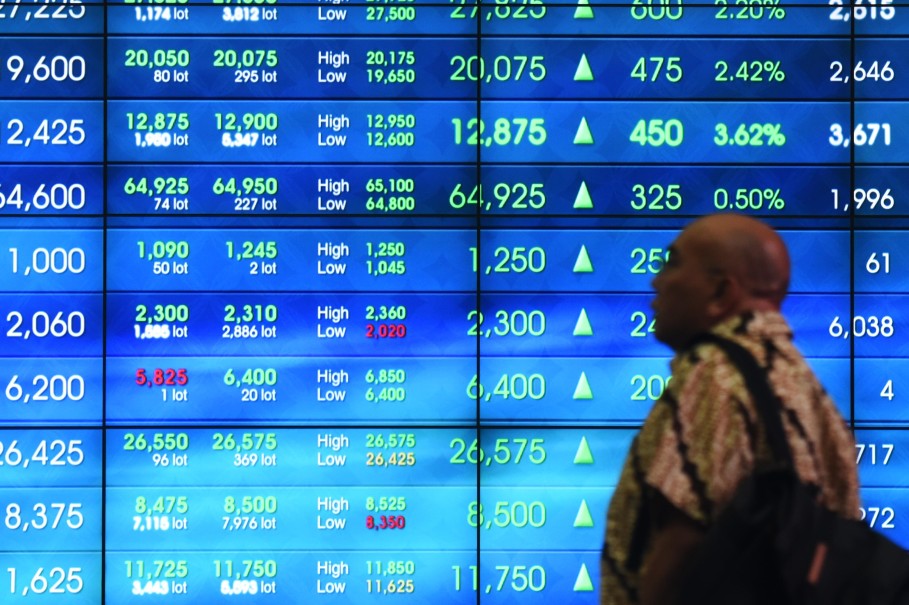
Vietnam’s benchmark VN-Index rose 0.16 percent to 1290.01 points Monday with a double-digit surge in trade as blue chip stocks climbed to the highest in weeks.
The index closed two points higher after losing nearly one point on Friday. Trading on the Ho Chi Minh Stock Exchange (HoSE) increased by 31 percent to VND16.94 trillion ($730.64 million).
The VN-30 basket, comprising the 30 largest capped stocks, saw 11 tickers gained. GAS of state-owned Petrovietnam Gas rose 4.6 percent to a new peak, having increased by 37 percent in the last three weeks. MSN of conglomerate Masan Group went up 3.7 percent to the highest in over a month.
PLX of fuel distributor Petrolimex gained 3.2 percent to the highest in over a month. Sixteen blue chip stocks fell, with TPB of private TPBank losing 3.6 percent. STB of Ho Chi Minh City-based lender Sacombank dropped 3.1 percent, while NVL of real estate developer Novaland Group lost 1.5 percent.
Foreign investors were net buyers to the tune of VND44 billion, mainly buying DPM of Petrovietnam Fertilizer & Chemicals Corporation and Binh Son Refining and Petrochemical Jsc (BSR).
The HNX-Index at the Hanoi Stock Exchange, where mid and small caps list, was down 1.18 percent while the UPCoM-Index at the Unlisted Public Companies Market fell 0.29 percent.
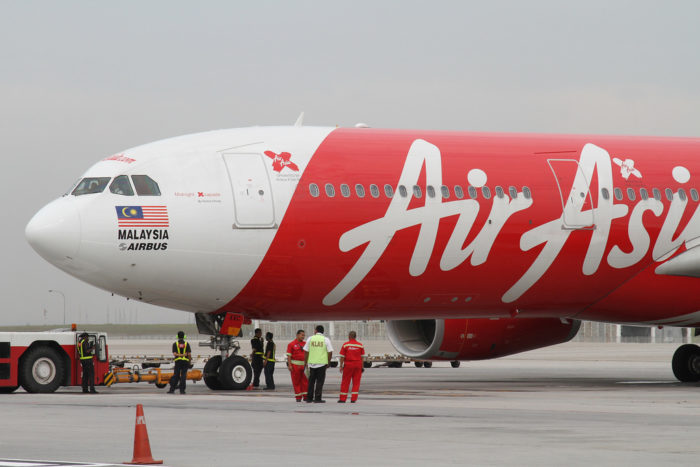
Malaysia’s AirAsia is facing a wave of complaints from customers who say they have still not been refunded for flights that were cancelled or rescheduled during the pandemic.
AirAsia and its subsidiary AirAsia X (AAX), both owned by Capital A Berhad, grounded thousands of flights in 2020 and 2021 after the Malaysian government shut state and international borders to curb the spread of COVID-19.
But months after the low-cost carrier resumed flights following the lifting of interstate and international border restrictions for Malaysians in October, hundreds of customers have taken to social media to complain of poor customer service and long waits for refunds.
Rohana Betak, 60, said she requested a refund of 4,000 Malaysian ringgit ($911) after the airline cancelled her flights between Senai and Kota Kinabalu, the capital of Sabah state, following the introduction of a nationwide lockdown in March 2020.
Betak, who planned to visit the area around Mount Kinabalu, Southeast Asia’s highest peak, with her family in October 2021, said the airline’s automated online customer service only offered her the option of travelling on different dates. Betak decided against accepting the offer due to uncertainty over when restrictions would be lifted and concerns about catching COVID-19. Two years later, she says she is still waiting for her money back.
“In my request, I said it was fine to refund me credits for the booking but instead I was reminded in June 2020 that I must board the flight to Sabah on a different date and there would be no refunds,” Betak told Al Jazeera.
“It was not helpful because instead of offering me at least credit in refunds, it told me I had no other choice but to travel on different dates.”
Rohana Betak, pictured in a pink hat in the back row, says she has been waiting two years for a refund from AirAsia [Courtesy of Rohana Betak]
Travel to Sabah before October 2021 was strictly limited to certain categories of travellers, including those travelling for work and those born in the state. Rohana and her family did not fall under any exempted category.
“When it demanded I get on another flight, I asked if they wanted to send me and my family to our deaths?” Betak said. “It’s so frustrating and I am so tired of trying to get my money back so I’ve accepted that I might not get my money back at all.”
Many of the complaints have been directed towards AVA, AirAsia’s online chatbot, which is the only line of communication between customers and the airline for issues involving bookings or flights.
In particular, some have questioned why it is so difficult to reach customer service to request a refund, even for flights booked since the lifting of pandemic restrictions.
Customer Aulia Chaerisa Salleh said she is waiting for a refund for a flight between Batam and Jakarta that was booked earlier this month after she was informed no seat was available.
“I paid for my ticket and it did not register in the system so I tried to get my refund for my tickets. I tried the AVA live chat but it is not helpful at all. It has been days, I haven’t heard from them,” she said.
Under AirAsia’s current refund policy, the airline offers customers a refund, credit or a new travel date whenever a flight is cancelled or postponed.
AirAsia told Al Jazeera the airline is engaged in ongoing dialogue with consumer regulators across the region to ensure compliance with all local regulations.
“AirAsia Group’s policies are in line with many low-cost operators in the travel industry worldwide and are fully compliant with all regulatory requirements and as a customer-centric airline, we have focused on resolving all customer queries during the pandemic as soon as possible,” a spokesperson said.
The airline group said it has resolved more than 90 percent of refund requests and is committed to resolving a small number of outstanding claims as soon as possible.
“In Malaysia for example, our current refund progress is only left with 0.03 percent of the refund requests we received and we are looking forward to completing the refunds exercise for all outstanding queries within the next few months,” the spokesperson said, adding that the past two years had been the most challenging in the history of commercial aviation.
The spokesperson added that “our passengers remain our number one priority” and the airline will “continue to enhance our services to deliver the very best in terms of safe, affordable and reliable air travel”.
Tan Kok Liang, president of the Malaysian Association of Tour and Travel Agents (MATTA), said the refunds backlog is a short-term issue and its 3,100 members will continue to book with AirAsia as long as requested by customers.
“The problem child is AAX and while air connectivity is crucial for tourism recovery, based on media reports, AirAsia should be held more accountable to all stakeholders,” Tan told Al Jazeera.
The hefty compensation paid out to airline co-founders Tony Fernandez and Kamarudin Maranun, who took home close to 30 million ringgit ($6.8m) combined last year, has also raised eyebrows.
Following the release of Capital A’s Annual Report 2021 last month, some social media users vented their frustrations on Fernandez’s personal Instagram accounts, with one comment slamming AirAsia as “the one and only airline that does not have a customer service phone number.”
Despite the generous executive compensation, AAX, the group’s long-haul carrier, was last year forced to undergo debt restructuring to save itself from liquidation after racking up huge debts during the pandemic.
In March, AAX announced it had completed its debt restructuring after creditors earlier agreed to a deal under which the airline would pay just 0.5 percent of outstanding debt and terminate existing contracts to restructureRM33.65 billion(US$8.1 billion) of liabilities.
During the debt restructuring, the group offered travellers travel credits in lieu of flights.
The Malaysian Aviation Commission (MAVCOM), however, urged the airline to reimburse customers for tickets purchased while threatening to exercise its powers under the Malaysian Aviation Commission Act 2015.
Capital A posted revenue of 1.7 billion ringgit ($387m) in the 2021 financial year, down 47 percent from the previous year, as capacity sank to just 36 percent of 2020 levels.
Cross-borders platforms like Facebook and Google have paid VND5.1 trillion ($220 million) in taxes for the period between 2018 and 2021, says Finance Minister Ho Duc Phoc.
He informed lawmakers in a report that by April 2021, Facebook had been taxed VND1.97 trillion; Google, VND1.9 trillion; and Microsoft, VND651 billion.
The figures were 15 percent higher than Phoc’s report in March.
Vietnamese authorities also collected VND735 billion from handling violations and tax avoidance by individuals and organizations providing cross-border digital and e-commerce services, the report said.
Last year, Vietnam earned VND1.32 trillion from taxing cross-border platforms, up 15 percent from 2020.
The General Department of Taxation said last year that Facebook, Google, Netflix, YouTube and other cross-border platforms were not fulfilling their tax obligations in Vietnam.
Vietnam is also looking to tax online sellers, both on e-commerce platforms and social media, as e-commerce sales have been surging by double-digits in recent years.
Phoc called for tightening regulations and upgrading the capacity of collectors in order to tackle tax evasion more effectively.
Discover the current and upcoming shopping behaviours that will shape the future of cross-border commerce, and emerging trends that will help integrate and bring seamless shopping experiences to your customers.
During the pandemic, 10 years of forecasted growth happened in the span of 90 days. This year, the global e-commerce market is expected to be valued at US$5.55 trillion and will reach $6.17 trillion by 2023, making up nearly a quarter of total retail sales. Though retailers have often shied away from expanding into new markets due to their complexity, closed borders pushed businesses to venture beyond their native markets, supported by the advancement of merchant tools. In a recent webinar hosted by Inside Retail Asia, luxury flash sale showroom OnTheList shares its international expansion journey amidst the pandemic, with global payments provider PayPal advising strategic tips for merchants looking to enter foreign markets.
The pandemic impact
The fight for survival spurred by product shortages and in-person shopping safety accelerated consumers’ digital adoption, as countries with the lowest e-commerce penetration saw the largest migration to online shopping with Southeast Asia welcoming 70 million new shoppers since the beginning of the pandemic with no signs of slowing down. As shoppers become more comfortable with the online environment and shopping globally, consumers’ expectations have increased, urging retailers to keep up and meet their demands in competing with new entrants. Having the wealth of product options suddenly available (albeit faced with shipping challenges) has lured shoppers away from brick-and-mortar to the world wide web.
Despite national campaigns and broad sentiment to support local retailers, consumers are choosing to shop outside of their home countries for numerous reasons. A study by PayPal revealed that Japanese consumers favour shopping abroad due to price sensitivity and unique products available. Equally, businesses have been casting their net beyond their home markets in hopes of recapturing lost businesses overseas. Cross-border merchants have found new revenue opportunities abroad and larger audience reach, all the while competing with local sellers. One in two surveyed e-commerce merchants in Hong Kong had been actively looking to reach new customers in other markets as part of their efforts to recapture lost businesses.
Originally starting with a 7000sqft physical showroom in Central, Hong Kong, the space had been temporarily shut during lockdowns. Shifting from a 90 per cent offline presence to online, members were pushed to snatch Jimmy Choo flash sales online, all the while inventory build-up became a problem for luxury retailers.
“Many of them (brand partners) were impacted at different stages with regards to traffic in their stores or even stores being closed, so this posed an opportunity for OnTheList to step in and partner with them to find solutions for their inventory”, shared Adele Leong, SEA MD at OnTheList. The organic transition to online catapulted OnTheList’s digital transformation to scale and expand to Australia, Malaysia and South Korea all within a short period.
What normally was recognised as slow sales seasons in the months of March and April, PayPal equally witnessed a volume uptake in transactions and merchant sign-ups as more consumers turned online for products and services overseas that were not available locally due to supply shortages.
“A lot of businesses had to look for new ways of survival; they have to think about being agile and responding to new ways of catering to consumer demands” explained Syd Wong, head of enterprise sales at PayPal (Hong Kong, Taiwan, Korea). As new consumers migrated from traditional in-store experiences to online, more than 67 per cent of transactions were also taken on mobile rather than desktop, prompted by the government’s push to use digital payments and wallets during subsidy payouts in an attempt to reignite the retail economy.
Entering new markets
The challenges of global expansion and localisation cannot be tackled with just one global site and a currency converter widget. Truly understanding customers abroad is the key to every successful market entry, where localisation plays a huge part in connecting and retaining local consumers through understanding cultural nuances and adapting content appropriately. E-commerce marketplace Techsembly identified localisation can increase a site’s conversion rate by up to 70 per cent, where consumers are more likely to purchase if the retailer’s website is displayed in their native language with their preferred local payment options available.
“We just couldn’t make that trip to each market to see what has happened to find opportunities, particularly for offline. We had to really depend on the local teams to maximise our operational expertise,” said Leong.
From an organic China expansion to cross-border scaling, OnTheList is a successful case study of a retailer’s international growth during the pandemic, all the while remote. The brand relied on brand partners and members as the main basis to explore new market openings.
“There’s really no big secret. We took the time to understand all the localisation factors that were important for us to be successful. For example, the type of brands that we worked with, the way we communicated with our members and understanding the types of shopping habits, cultures and payment methods” revealed Leong. OnTheList expanded into new markets as pure online retailers, all the while dabbling with physical pop-ups to test market potential to expedite expansion.
The long-standing debate between outsourcing to service providers or building in-house for cross-border retail and payments stands to benefit retailers without remote resources abroad.
“One of the barriers to think about is the sensitivity to some of the local country’s consumer behaviours and their types of payment preferences,” commented Wong, noting specific local payment behaviours vary from Octopus-loving Hong Kongers as opposed to consumers in Europe in comparison.
PayPal prides itself on its flexibility, being able to work with local partners and shopping cart solutions to integrate payment options for a seamless checkout experience, with language and customer support provided.
“Work with a global partner with experience and feet on the street of each market that you’re actually expanding into so you can actually leverage some of the expertise and experience in the local markets” suggested Wong. “We have actually started to work with local partners to accept local payment types to cater towards local consumer preferences to help merchants go into new markets easier” he adds.
With over 180 fiat currencies available, it is suggested at least 30 to 40 currencies need to be available in order to be recognised and supported in order to gain substantial sales benefits. Offering multiple payment options may be complex, but payment technology providers such as PayPal have simplified cross-border payments, allowing merchants to scale into new markets with ease.
Future payment trends
With the rise of social commerce, consumers have higher expectations for convenience and seamless checkout experiences. Retailers like OnTheList are pressured to invest in improving their e-commerce platform and apps to cater to the demand and new expectations. Mobile payments are deemed a must-have as 99 per cent of Gen Z have the highest smartphone usage compared to all generations.
“You need to present a smooth user interface across all devices for consumers, especially the ability to checkout and pay, regardless of what devices you’re actually on,” emphasised Wong.
As Gen Z and Gen Alpha enter the workforce with new spending power, young and aspiring professionals wanting to spend more at certain times have prompted the uptick of ‘Buy Now Pay Later’ schemes. Though more prominent in Western countries such as the US, UK and Europe, the trend is also seen catching up in Asia.
Leong reports: “This for us has been particularly interesting because it brings us a very new and interesting pool of aspiring customers, people that are in the earlier stages of their career who may not be able to afford full-price luxury. But by having Buy Now Pay Later, they can experience luxury brand products before becoming a full-price customer eventually.”
As Asia adapts to the new normal, so are solutions and services that have been evolving ever since to better serve the various different markets and changing consumer behaviours. Brands are to face the latest demands with agility to cater for the future generation of consumers under new opportunities, across the borders.