Author: Mei Ling Tan

  • Creators will be able to sell virtual items in Meta’s Horizon Worlds

    Creators will be able to sell virtual items in Meta’s Horizon Worlds

    Well, well, as you know Facebook rebranded to Meta in order to focus more on the metaverse, a virtual reality world. But of course, the company cannot give up on social media, or at least, a form of social media dubbed Horizon Worlds, which is a virtual world you can hang out with using avatars in the metaverse. Meta has found a way to monetize in the metaverse: with creators selling virtual items on there.

    Pretty much, Meta is looking into ways to let creators make money within Horizon Worlds. Horizon Worlds is a social metaverse platform for Quest VR, and it should be coming soon to mobile phones and possibly game consoles. Now, a handful of Horizon creators will get the possibility to sell virtual items and effects in the worlds they have created.

    Basically, creators will be able to sell anything, whether we are talking about a VIP section in their virtual worlds or just virtual items such as jewelry, or a special basketball, stated Meaghan Fitzgerald, who is the product marketing director for Horizon.

    In the US, participants will be able to earn money from a $10 million creator fund that Meta has recently set up in order to reward creators who have the most engaging worlds. And now, to further incentivize creators to use Horizon Worlds, Meta will be offering an “in-world purchases” system so creators can make money.

    But of course, Meta will be indeed taking a cut of the money that creators earn by selling virtual stuff in the metaverse. You may be wondering what exactly is that cut? Well, for Horizon purchases, Meta is taking a 25 percent cut of the percentage that’s left after a platform fee was applied.

    And that platform fee depends on the platform. For example, there are platform fees with a 30 percent cut, like Meta’s own Quest Store, and the creator will then be left with a little over half of the sale price. Put in simple terms, Meta will get 25% of the 70% left after the platform fee was applied.

    Vivek Sharma, Meta’s VP of Horizon, stated that the company thinks this is a pretty competitive rate in the market, and that other platforms should also be able to have their share. However, as The Verge rightfully reminds us, Meta was calling Apple’s 30% commission for App Store purchases too aggressive, but hey…

    So far, Horizon doesn’t have advertising, except for a recent Wendy’s theme world that was called… wait for it… “Wendyverse”. Apart from that, though, the focus is on monetization for creators, and not on ads right now. Fitzgerald does mention that ads would be an area they want to explore in the future, but as you can imagine, it’s better first to have people in the metaverse. And the best way to get users on there – is to have creators on there.

    Additionally, Meta is rolling out a bonus program to encourage creators to build out their world. It is a “goal-oriented bonus program”, and the bonuses will not be subject to any fees. The bonuses will be calculated based on the engagement of the creator’s world.

    Of course, not everything is allowed in there. Creators will need to follow the company’s VR conduct policy and not publish any content that’s prohibited in Horizon Worlds. If creators fail to follow the rules, they would be removed from the program.

    Horizon Worlds has so far hit 300,000 monthly users just for its few months of existence. So far, the company stated that 10,000 worlds have been created in the metaverse. And Meta plans to expand further, planning to bring Horizon Worlds to mobile phones later this year, and probably to game consoles too (but there, it is still in “early discussions”).

  • AirAsia powers Super App with Google Cloud

    AirAsia powers Super App with Google Cloud

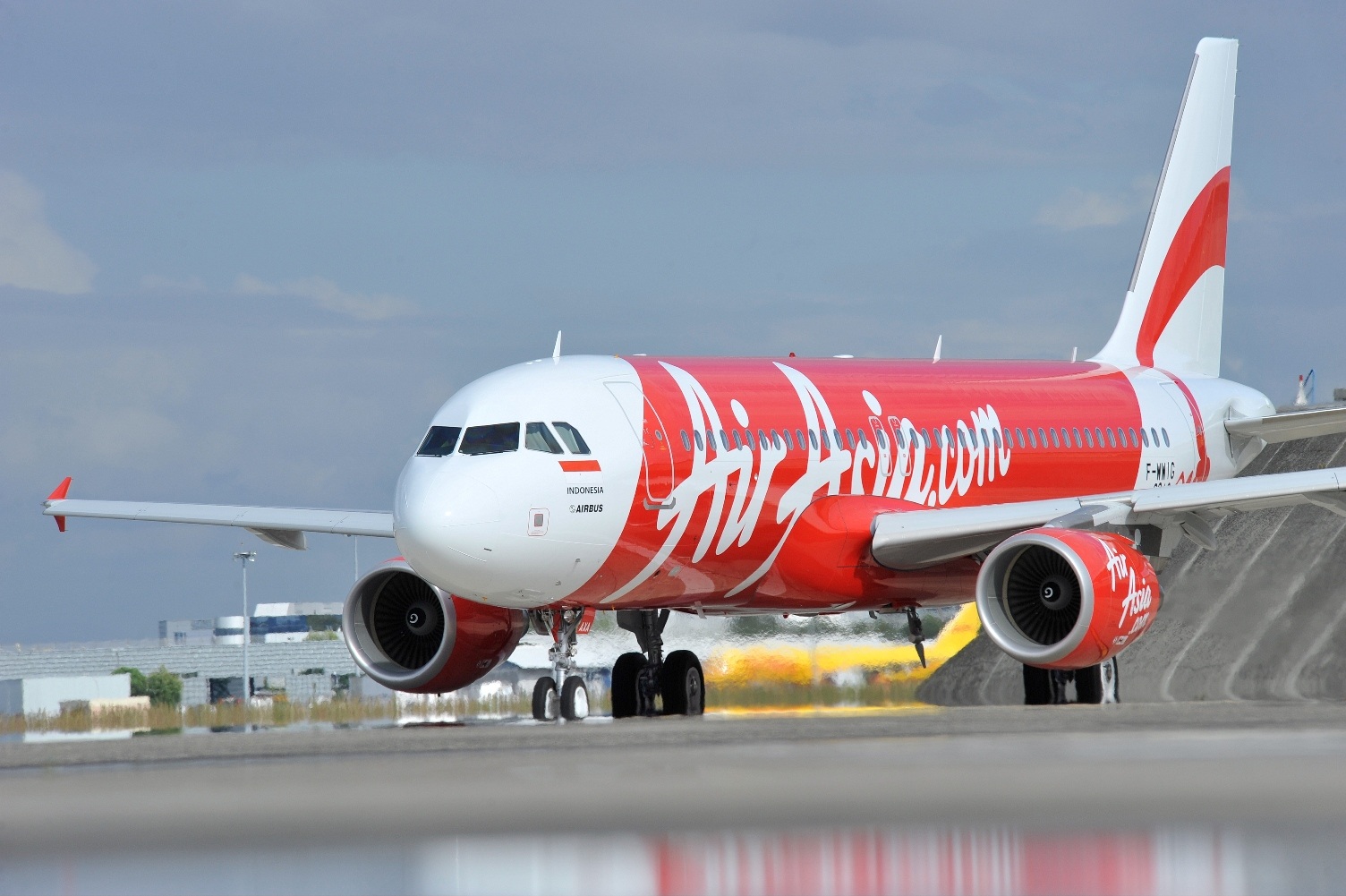
    AirAsia has unveiled a five-year strategic collaboration with Google Cloud to advance Super App capabilities through cloud-based co-innovation across Southeast Asia.

    Central to such efforts will be the combination of core competencies to nurture technology talent, the co-creation of software tools for “open innovation” and the delivery of data-driven intelligence targeting micro-, small- and medium-sized enterprises (MSMEs) on the platform. This is in addition to improved accessibility for diverse users in cities and rural areas.

    Operating as a, forming part of Capital A’s digital pillar alongside AirAsia as a multinational airline.

    The platform offers flight and hotel bookings, e-commerce, food and parcel delivery, ride-hailing, financial and health services and on-demand education among others, supported by an integrated rewards program and mobile wallet.

    Since launching in 2020, Super App has become one of three unicorns headquartered in Malaysia, according to Credit Suisse, and currently houses 51 million users across ASEAN.

    “Five years ago, when I decided to move our digital journey to its next stage, I was looking for a partner to help us reach that nirvana, much like how Airbus and General Electric helped us grow from a little two-plane operation to become the fourth-largest airline in Asia,” said Tony Fernandes, CEO of Capital A.

    “I went around the US looking for that partner, met Diane Greene from Google Cloud, and the journey started. With Thomas and his team, we are now on the road to disrupting the digital platform arena in the same vein as we did airlines.”

    Despite acknowledging that Capital A is “late in the game” from a digital perspective, Fernandes said Super App now operates at the “centre of our ecosystem” of e-commerce, logistics and fintech.

    “We are determined to give all 700 million people in ASEAN inclusivity, accessibility and value,” he added. “With Google’s help, our ecosystem will not only be transactional, but be about building community, and enriching that community – not just the customers but partners like restaurants, airlines, hotels, and drivers. What we are doing is not evolutionary, but revolutionary. I’m going to enjoy the ride with Google.”

    To help create an “agile culture and co-innovation talent engine”, Super App and Google Cloud will establish a Cloud Centre of Excellence (CCoE) consisting of AirAsia Allstars and Google Cloud technologists.

    The move is designed to “embed an agile culture” across all Super App business units to “accelerate product development velocity” and up-skill talent, supported by access to Google Cloud’s Site Reliability Engineering (SRE) and MLOps best practices.

    “To benefit everyone across Southeast Asia’s heterogeneous communities, the Super App must be simple and easy-to-use while underpinned by inclusive design, interoperability and personalisation,” outlined Amanda Woo, CEO, Super App.

    “It’s therefore crucial that we leverage Google’s rich experience in building global platforms and ecosystems to equip and engage more talent, entrepreneurs a

  • Pizza 4Ps loss doubles to $1.66 million

    Pizza 4Ps loss doubles to $1.66 million

    Pizza 4Ps racked up a net loss of VND38 billion ($1.66 million) last year, as it struggled to recover from Covid-19 hits.

    The chain, produces pizzas, cheese and other dairy products, had posted its first ever loss of VND20.8 billion in 2020.

    Before the pandemic hit, the chain earned profits of over VND50 billion in 2018 and 2019.

    Pizza 4Ps charter capital has also fallen to 28 percent to VND98 billion, driving its debt-to-capital ratio up from 0.66 to 1.99.

    It issued bonds worth VND21 billion last year to build new outlets and a cheese factory.

    Founded in 2011 by a Japanese couple, Pizza 4Ps has 25 outlets in HCMC, Hanoi, Da Nang, Hai Phong and Nha Trang.

  • Vietnam’s VinFast seeks US government loans for expansion

    Vietnam’s VinFast seeks US government loans for expansion

    The chairman of Vietnam’s Vingroup conglomerate said on Saturday that the company’s auto unit, VinFast, would seek financing from the U.S. government to support its expansion with a planned plant in North Carolina.

    “It is also one of our financing options, but we need to prove to them that we are qualified,” Vingroup Chairman Pham Nhat Vuong told a group including reporters.

    VinFast said this week that its Singapore-based holding company had filed for an initial public offering (IPO) with U.S. securities regulators, as the company readies a $4-billion investment to build a factory in the United States.

    VinFast, which began operations in 2019, is betting big on the U.S. market, where it hopes to compete with legacy automakers and startups with two all-electric SUVs and a battery leasing model that will reduce the purchase price.

    Vuong said VinFast was committed to an IPO that would help establish the electric vehicle maker as a global brand, but added: “if the conditions are not right we can wait.”

    “We ourselves are determined to push and committed to this IPO, but the highest target for the IPO is not financing but to set up VinFast in the global market,” he told the group.

    Lending from the U.S. government’s Advanced Technology Vehicles Manufacturing (AVTM) loan program was another option VinFast was exploring, Vuong said, in response to a question.

    The $25-billion fund was established by Congress in 2007 when Detroit-based automakers were tipping into crisis. It is administered by the Department of Energy still has a lending capacity of almost $18 billion, according to its website.

    VinFast has promised to create 7,500 jobs at its planned plant in North Carolina, where it will build the battery-powered VF8 and VF9 SUVs. The company has said it plans to begin construction of the plant as soon as permits are granted with a goal of starting production by 2024.

    It plans to begin exporting the two electric vehicles to the United States later this year from its existing plant in Vietnam.

  • Hanoi housing prices keep rising on low supply

    Hanoi housing prices keep rising on low supply

    Housing prices in Hanoi rose the most in five years, driven up by limited supply and the specter of inflation. According to leading properconsultancy CBRE, the average price of a new apartment increased by 13 percent to US$1,655 per square meter. In the secondary market, it was up 9 percent at $1,278.

    In Vietnam, housing has historically been a safe haven investment during times of high inflation.

    In the quarter ending in March, the new housing supply was 3,500 units, down 39 percent quarter-on-quarter and 20 percent from the same period last year.<

    The decline was caused by a new wave of Covid-19.

    Most of the new supply came from ongoing phases at six projects. Only two came into the market for the first time.

    Mid-priced apartments accounted for 66 percent of the new supply. Demand was higher than new supply, with 4,200 units being sold during the quarter.

    CBRE forecast a supply of 26,000-28,000 units this year, but said the affordable segment would continue to face a scarcity.

    While over 90 percent of the new supply would be sold thanks to the bullish market sentiments, the trajectory could change at the end of this year, depending on the economic situation.

    Prices are expected to keep rising in the first half of 2022 but speculative trading would come down due to a crackdown by authorities, it added.

  • Rice export prices rise to 3.5-month high

    Rice export prices rise to 3.5-month high

    The prices for Vietnamese 5 percent broken rice rose to $420 per ton late March, the highest in the past 3.5 months.

    Vietnam exported 1.48 million tons of rice worth $715 million in the first three months this year, up 24 percent in volume and 10.5 percent in value against the same period last year, according to the Ministry of Agriculture and Rural Development.

    The ministry said stable global demand and high transportation costs resulted in March’s price hike.

    Vietnam’s 5 percent broken rice was sold at $415-420 per ton in late March, up $20 per ton from the beginning of the month. On average, the rice has cost $414 per ton in the world market in March, up $16 per ton against February.

    Meanwhile, Thailand’s 5 percent broken standard rice was sold at $408-412 a ton, down $16 from the beginning of the month as the baht continued to drop against the dollar.

    Vietnam exported over 6.2 million tons of rice for nearly $3.3 billion last year, according to the General Department of Vietnam Customs.

    The average export price of Vietnamese rice rose 5.5 percent in 2020 to $526.8 per ton in 2021, according to the agriculture ministry.

  • Musk Promises ‘Dedicated Robotaxi’ With Futuristic Look From Tesla

    Musk Promises ‘Dedicated Robotaxi’ With Futuristic Look From Tesla

    Electric carmaker Tesla will make a “dedicated” self-driving taxi that will “look futuristic,” Chief Executive Elon Musk said on Thursday, without giving a timeframe.

    The 50-year-old billionaire, wearing a black cowboy hat and sunglasses, made the comments at the opening of Tesla’s $1.1 billion factory in Texas, which is home to its new headquarters.

    “Massive scale. Full self-driving. There’s going to be a dedicated robotaxi,” Musk told a large crowd at the factory.

    Musk has several times missed his targets of full autonomy. In 2019, he said robotaxis with no human drivers would be available in some U.S. markets in 2020.

    In January he said he would be “shocked” if Tesla did not achieve full self-driving that is safer than that of humans this year.

    Tesla will expand its “Full Self-Driving” beta software to all North American FSD subscribers this year, he said on Thursday.

    Tesla now sells the advanced driver assistance systems for $12,000, with a promise of more features. It says the software does not make its vehicles autonomous, and requires driver supervision.

    The beta version, launched in late 2020, aims to enable cars to navigate city streets better. By January, it had been installed in nearly 60,000 vehicles in the United States.

    Musk said Tesla had started deliveries of Texas-made Model Y electric sport utility vehicles, with a goal of producing half a million a year at the Texas factory, which he said would be the biggest car factory in the United States.

    He gave no details of such Model Ys, but they are likely to be lower-priced versions to better take on cheaper competitors.

    Tesla will start production next year of its Cybertruck as well as a humanoid robot, Optimus, Musk said.

    The firm’s new giga factories in Texas and Berlin, which will make vehicles and its own battery cells, face challenges of ramping up production with new processes

    Musk said Tesla was simplifying car making by making a car using three major parts.

    Despite record deliveries in the first quarter, a recent COVID-19 spike in China has forced Tesla to suspend production at its Shanghai factory for several days.

    Thursday’s event comes after Musk surprised the market this week by revealing he had bought a stake of 9% in Twitter and will join the board of the social media network.

  • Mercedes-Benz Accelerates In-House Software Push With New Tech Centre

    Mercedes-Benz Accelerates In-House Software Push With New Tech Centre

    Mercedes-Benz opened a new 200 million euro ($217 million) software center in Sindelfingen on Friday, its latest investment in boosting in-house software capabilities as it works to bring its own MB.OS operating system onto the market by 2024.

    Around 750 of the 3,000 new hires, the luxury carmaker plans to bring in globally to develop the operating system were hired in Sindelfingen, working on features from in-vehicle entertainment to autonomous driving.

    The center is part of a wider effort by Mercedes-Benz to streamline its software strategy from a patchwork approach bringing in technology from a wide range of suppliers to controlling the core of its software offering itself.

    “We take responsibility for software architecture and integration – that is our main goal,” Chief Software Officer Magnus Oestberg said in a roundtable.

    “We don’t do everything ourselves – we place value on partnerships, but of course the parts that are most important for us, we do in-house.”

    One such partnership is with U.S. computer graphics specialist Nvidia, with whom Mercedes-Benz struck a deal in 2020 to develop assisted and self-driving functions that will form part of the MB.OS system launching in two years time.

    The carmaker is 600 unfilled vacancies away from achieving its goal of a global team of 10,000 software engineers in Berlin, China, India, Israel, Japan, and the United States.

    “The profile of a software engineer is highly sought-after – demand is considerably higher than supply,” Chief Technology Officer Markus Schaefer said.

    In a survey of 572 auto executives by research institute Capgemini, 97% said that four out of 10 in-house workers will need to have software skills within five years, from IT architects to cloud management professionals to cybersecurity experts.

  • GM and Honda To Produce ‘Attainable EVs’ In Bid To Surpass Tesla Sales

    GM and Honda To Produce ‘Attainable EVs’ In Bid To Surpass Tesla Sales

    General Motors and Honda Motor Co said on Tuesday they will develop a series of lower-priced electric vehicles based on a new joint platform, producing potentially millions of cars from 2027 in a bid to beat Tesla in sales.

    The announcement expands on plans for GM to begin building two electric SUVs for Honda starting in 2024 – the Honda Prologue and an Acura model.

    The automakers said the new deal is for “affordable” EVs, including compact crossover vehicles, built using GM’s Ultium battery technology. The compact crossover is the biggest selling auto sector in the world with annual volumes of more than 13 million vehicles, the companies said.

    The companies declined to say how much they are investing as part of the new collaboration.

    GM Chief Executive Mary Barra said Tuesday at an Axios event the pricing will come in below the $30,000 price tag planned for the electric Chevrolet Equinox SUV. She said the new lower-priced vehicles would be “attainable EVs.”

    She said the new vehicle is part of GM’s plan to surpass Tesla in EV sales.

    “We have a very important goal… that by mid-decade, by 2025, we’ll sell more EVs in the U.S. than anyone else and to do that, you need to have a portfolio of vehicles,” Barra said, noting GM plans a wide range of small to large EVs. “We definitely can scale and can do it quickly.”

    The companies said they will also discuss future battery technology collaboration for electric vehicles in a push to drive down costs.

    The deal is part of GM’s push to achieve carbon neutrality in its global products and operations by 2040 and eliminate tailpipe emissions from light-duty vehicles in the United States by 2035.

    Honda has said it aims to reach carbon neutrality on a global basis by 2050.

    The Japanese carmaker owns a stake in GM’s Cruise self-driving car subsidiary and the carmakers are co-developing the Cruise Origin autonomous EV. The companies also have a joint venture to develop and produce hydrogen fuel-cell systems at a plant in Brownstown, Michigan.

    “Honda and GM will build on our successful technology collaboration to help achieve a dramatic expansion in the sales of electric vehicles,” Honda CEO Toshihiro Mibe said.

  • MVNO Google Fi cuts its pricing for unlimited data

    MVNO Google Fi cuts its pricing for unlimited data

    Originally known as Project Fi, Google Fi debuted in April 2015 and was offered by invitation to owners of the Nexus 6. A year later, the Pixel and Pixel XL were added and in February 2018, the service was rebranded as Google Fi.
    Google Fi is an MVNO (mobile virtual network operator) which means that while it does offer you wireless service, Google Fi itself does not own any cell towers and pays for the right to use network capacity from T-Mobile and U.S. Cellular. The carrier you will be using on Google Fi at any given time is the one offering a stronger signal at your current location.
    Pricing changes are being made to Fi’s service tiers except for the Flexible plan. With that plan, you pay $10 for each GB of data used and $16-$20 for unlimited calls/text (depending on the number of people on the plan).
    While pricing hasn’t changed for this plan, you can now get “unlimited calling within Canada and Mexico at no extra cost.” Previously, calls from the U.S. to Mexico and Canada were free but by replacing the word “from” to “within,” Google has expanded coverage for Fi users. Allowing subscribers to make unlimited calls within Canada and Mexico is now offered on all three plans (Flexible, Simply Unlimited, and Unlimited Plus) although you’ll pay $10 for each GB of data used on the Flexible plan.
    The Simply Unlimited plan (which is such a Googley name for this tier of service) is celebrating its first birthday with a nice price cut. It is designed to be an affordable unlimited plan for those who like to use plenty of data but don’t like the idea of paying for it. It also doesn’t include a lot of the extras that Google Fi offers to entice you to join its premium service.
    For four or more lines of Simply Unlimited, you now will pay $20 per subscriber each month, down from $30. For three lines, you’ll now pay $25 per subscriber each month, also down from $30. Two lines are now $40 per subscriber each month (down from $45) and the monthly price for a single line has been sliced to $50 from $60.
    Simply Unlimited includes unlimited data in the U.S., Canada, and Mexico with data speeds throttled to 2G (256 kbps) after consumption of 35GB of data, up from 22GB. The plan includes 5GB a month of hotspot tethering.
    Google Fi has also lowered the pricing on its most premium plan which it calls Unlimited Plus. For four or more lines, the price of this plan has been reduced to $40 per subscriber each month from $45. Three lines are now priced at $45 per subscriber per month, down from $50. Two lines are priced at $55 per month for each subscriber (down from $60), and a single line will cost $65 monthly, down from $70.
    With the Unlimited Plus plan, subscribers now receive 50GB of high-speed data which can be employed for hotspot tethering and used internationally. Data can be used on tablets and other devices besides a phone, and there is 100GB of Cloud Storage using Google One. Calls from the U.S. are free to over 50 destinations, and data while traveling outside of the U.S., Canada, and Mexico is free in over 200 destinations.
    Regardless of which plan you choose, Google Fi delivers:
    • Unlimited calls & texts.
    • No contracts or activation fees.
    • Built-in VPN and spam blocking.
    • Contact controls & data budgets.
    • 24/7 customer support.
    And to celebrate the updated pricing, you can save up to $500 on the purchase of certain handsets. If you bring your own phone, you will get a Fi bill credit of $100 if you subscribe or add a line.
    While Google Fi does support the majority of Android handsets, iPhone users will only see 4G data speeds if they subscribe to the MVNO.


  • Chip Undersupply To Last Until 2024, Says Volkswagen CFO Boersen-Zeitung

    Chip Undersupply To Last Until 2024, Says Volkswagen CFO Boersen-Zeitung

    Semiconductor chip supply is unlikely to be enough to completely satisfy demand again until 2024, Volkswagen Chief Financial Officer (CFO) Arno Antlitz said in an interview with German daily Boersen-Zeitung on Saturday.

    He said that although bottlenecks would likely begin to ease towards the end of this year, with production returning to 2019 levels next year, this would not be enough to meet heightened demand for the chips.

    “The structural undersupply will likely only resolve itself in 2024,” Antlitz said.

    A lack of wire harnesses from Ukraine was also still causing some shifts to be canceled, Antlitz said, even as the company was establishing new supplier relationships to source the component from other countries.

    Asked about how funds from a possible IPO of Porsche AG, planned for the end of the year, could be used to bolster Volkswagen’s finances, Antlitz said the money could help fund the carmaker’s software unit and its battery production plans.

    “Only those who can map out their battery supply chain have the advantage at scaling in electromobility. Securing the supply chain comes with that. A Porsche IPO could give us a lot more flexibility in financing this,” Antlitz said.

  • Cebu Pacific, STB renew partnership

    Cebu Pacific, STB renew partnership

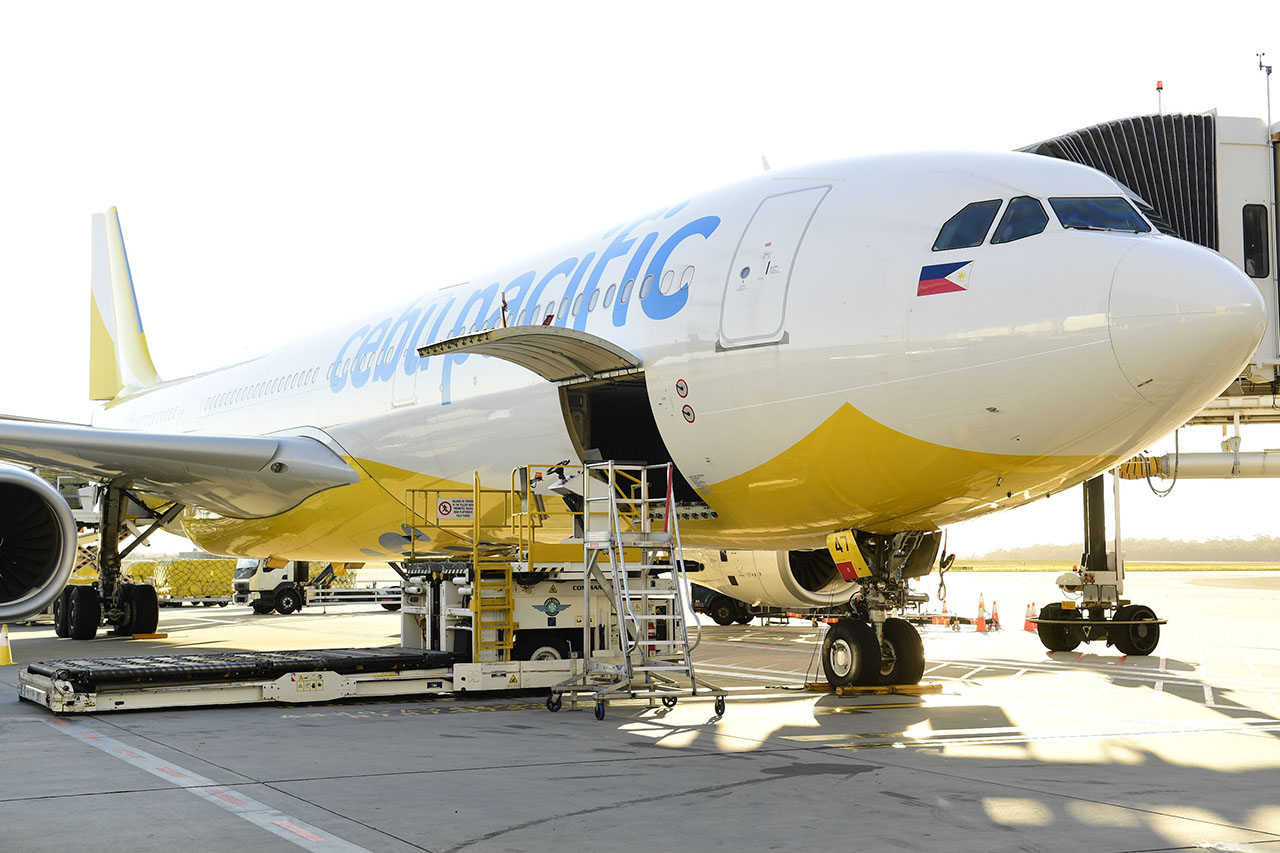
    Cebu Pacific (CEB) has renewed its partnership with the Singapore Tourism Board (STB), which will facilitate the travel of Filipinos to the Lion City.

    Singapore recently reopened its borders for all fully vaccinated Filipinos, making it easier for tourists to enjoy a convenient, quarantine-free vacation. Since April 1, 2022, vaccinated travelers to Singapore enjoy a simplified travel process, requiring only proof of vaccination, a pre-departure Covid-19 test, and an online Singapore Arrival Card.

    “STB is excited to collaborate with CEB and would like to thank them for this opportunity to bring more visitors from the Philippines to Singapore. Through this partnership, Filipino travelers can look forward to attractive promotions and campaigns to warmly welcome them back to Singapore,” said Juliana Kua, Assistant Chief Executive for International Group, Singapore Tourism Board.

    “We are very happy to firm up our collaboration with the Singapore Tourism Board following the easing of travel restrictions in and out the Philippines. We believe this partnership is very timely as it’ll surely contribute to the recovery of both the industry, as well as our respective countries,” said Candice Iyog, Vice President for Marketing and Customer Experience at Cebu Pacific.

    Meanwhile, CEB has achieved a 7-star safety rating from airlineratings.com for its Covid-19 compliance. It continues to implement a multi-layered approach to safety as it endeavors to restore the public’s trust and confidence in air travel.

  • UBS Sets Up Diversity Focused Investment Team

    UBS Sets Up Diversity Focused Investment Team

    UBS has created a new unit dedicated to diversity and inclusion. Switzerland’s largest bank has created a new wealth management unit aimed at mobilizing client funds to offer investments that promote equality and expand outcomes for underrepresented or marginalized groups, according to a report.

    Karen Sunderam will lead the group from New York. According to her LinkedIn profile, she has been with UBS for nearly five years and has been the head of inclusive investing solutions since May last year.

    By responding to client requests for investment options that reflect personal values and are aimed at social good, UBS will offer clients opportunities to channel their money to firms at least partly owned by minorities. This also includes products led by portfolio managers who self-identify as racial or ethnic minorities, women, veterans, disabled and LGBTQ, «Bloomberg» reported.

    Under CEO Ralph Hamers, UBS has dedicated itself to the «purpose» of reinventing investing and connecting people for a better world. Head of sustainability Michael Baldinger was tasked in May 2021 with weaving these threads across the group and advancing diversity.

  • What Type of Gambling Is Most Popular in Asia?

    What Type of Gambling Is Most Popular in Asia?

    Gambling is illegal in many places around the globe. In certain jurisdictions, casinos are the only sites where gambling is permitted. With online  apps, you can play your favourite casino games from the comfort of your own home and win real money. While online betting is available to anybody, it can only be done in nations that allow it.

    One of the world’s most important gambling marketplaces is in Asia, which is one of the continents with the greatest populations. In addition to being the world’s biggest and most diversified continent, Asians are known to enjoy a wide range of gambling activities.

    Poker, blackjack, and roulette are all prominent forms of gambling in nations like the United States and online casinos. Nevertheless, what do you believe the most popular forms of gambling are in Asian countries? You’ve come to the perfect place if you’re wondering. We’re going to show you some of the most well-liked Asian gambling games right now.

    Mahjong

    Whenever the subject of gambling in Asia is mentioned, you may think of those Hollywood movies depicting people playing Mahjong in a packed casino. This isn’t entirely incorrect, since Mahjong is a very popular game in Asia. The origins of this game may be traced back to China. Even though most kinds of gambling are illegal in that nation, playing Mahjong in legal facilities or licensed clubs is permitted.

    As soon as the Qing dynasty invented the game of Mahjong, it became an instant hit with gamblers all over the globe. There are 144 tiles in all, and each one has a distinct Chinese sign or character on it. Bets are put first before the game starts, and it is often played by four people at a table. To find out who the dealer is, dice will be thrown. Afterward, each participant will get 13 shuffled tiles. To have a chance of winning, each player must draw and discard a tile in each round. A winning ticket of 14 tiles requires the first player to call out “Mahjong.”

    Keno

    Keno is said to be the world’s oldest lottery game. Since its inception during the Han Dynasty in 206 BC until 220 AD, it has been widely accepted as the source of this practice.

    When you sit down to play Keno, you’ll be handed an 80-number card. A particular number of numbers must be selected and gambled on. Twenty numbers will be picked, and the rewards you may win are based on how many of your numbers match those drawn at random.

    Tax money collected from gamers during warfare was used to fund the construction of the Great Wall of China and other military expenditures. When Chinese immigrants came to the United States and desired to gamble outside of China, Keno was introduced to them. So much so that Las Vegas is now known as the US Keno Capital.

    Pachinko

    Playing Pachinko is a popular pastime in Japan. The game’s name derives from the amusing sound it makes while being played. Contemporary Japanese culture is seen in the flashy lights and loud noises of pachinko machines.

    To win the jackpot in Pachinko, players must match three numbers in a row. You’ll have a better chance of winning if you can fit the small steel ball bearings into the centre scoring pocket at the bottom of the screen.

    It is unlawful to gamble with money in Japan. As a workaround, Pachinko parlours gave out tokens that could be exchanged for cash later.

    Pai Gow

    Pai Gow is another popular casino game in Asia. Between 960 CE and 1279 CE, the Song Dynasty was the source of its origins. “Make nine” is the highest possible score for a hand while playing this game.

    You’ll need 32 Chinese dominoes put face down on the table and shuffled to form eight stacks of four dominoes each. This is how you begin playing Pai Gow. Betting will begin after that. Next, each player will get a stack of four tiles, which they will divide into two hands, each holding two tiles. In order to win, the player’s hands must both rank higher than the dealer’s.

    Pai Gow Poker, a westernised form of Pai Gow, is now available online as well.

    Cockfighting

    For thousands of years, people have discovered a method to wager on anything that provides them a chance to win or lose. And they do this even if it means that two animals are going to fight each other. Cockfighting, for example, is a popular pastime in Southeast Asia, particularly in Thailand, the Philippines, India, and Indonesia, where it has become an integral part of the culture and history.

    Ferdinand Magellan brought cockfighting to the Philippines in 1521 during his trip. Cockfighting is now permitted in just a few nations throughout the globe. However, the fighting culture varies from nation to country. To provide two examples, birds in India battle with bare heels, whereas, in the Philippines, they fight with metal blades strapped to their legs. Only roosters are permitted to be used in fights due to their higher level of aggression than males.

    The Bottom Line

    These are some of Asia’s most prevalent forms of gaming. As a result of these games, a broader cross-cultural understanding is fostered.

  • Nestle opens $90 million pet food plant expansion at Blayney

    Nestle opens $90 million pet food plant expansion at Blayney

    With the last two years seeing more people adopting pets, the Purina factory is now set to meet the growing demand for wet cat food in Australia and beyond thanks to the newly installed state-of-the-art high-speed manufacturing technology.

    As well, the Purina team has expanded to meet the increased demand, with 20 new jobs now created on site, creating cat favorites such as Felix, Fancy Feast, Pro Plan and Purina One.

    Nestlé Blayney Factory Manager Charlene De Wit said the new facility is a testament to Nestlé’s commitment to local manufacturing and support for the Central West community.

    “We are proud to produce quality Purina pet food for our much-loved furry friends across Australia and around the region, right here in Blayney.

    “Our expanded facilities will allow us to scale up production of single-serve wet cat food by over 120% – as well as the dry cat and dog food we already produce,” Ms De Wit said.

    The opening brings Nestlé’s total investment in the factory to more than $200 million over the past 10 years, as the business has increased production and developed new capabilities. The wet cat food facility, opened in late 2014, was developed to create premium products with the taste profile cats prefer, and the simplicity their owners prefer.

    The expansion will position Nestlé Purina as a key regional supplier, with both wet and dry pet food exported from Blayney to New Zealand, Thailand and Japan.

    The new facilities will also see a significant quantity of local ingredients used in production. More than 85% of raw materials used at the Nestlé Blayney factory will be sourced locally, including meats and grains.

    Ms De Wit continued, “We have an incredibly dedicated and highly skilled team here at Blayney. By bringing leading technology to our factory and continuing to use high quality ingredients in our product, we are even more confident that we will continue to enrich the lives of pets and the people who love them for years to come.”

    The Nestlé factory in Blayney began operations in 1989, and now features world-class facilities to manufacture brands such as Felix, Fancy Feast, Pro Plan, Supercoat and Purina One.