Author: Mei Ling Tan

  • Priceline Pharmacy launches health insurance

    Priceline Pharmacy launches health insurance

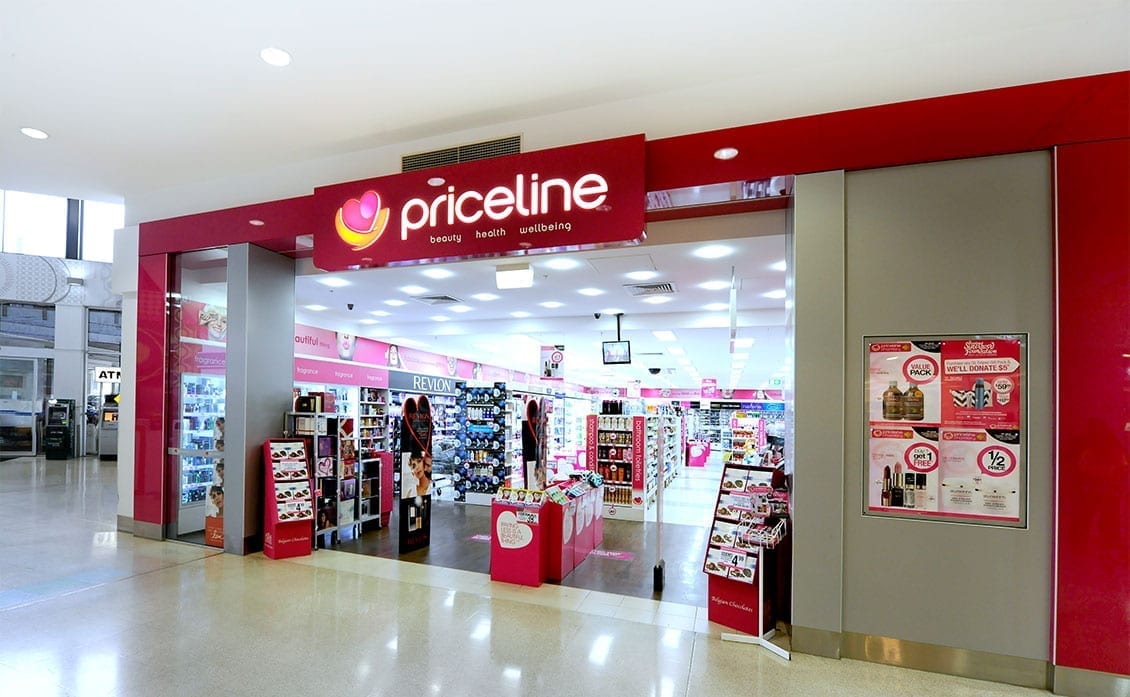
    Priceline Pharmacy has launched a unique health insurance brand and products in partnership with health fund nib.

    The launch of the health insurance products sees Priceline Pharmacy become the first pharmacy retailer to offer this to its customers.

    The cover includes all the stuff people would typically expect with private health insurance but the real benefits are the Priceline perks thrown in for good measure.

    “Priceline has operated as a health and beauty destination for over 40 years. We are constantly looking to provide products and services that our customers want and Priceline Health Insurance now provides an extension of our brand’s trusted pharmacy offer,” General Manager, Priceline Pharmacy, Andrew Vidler said.

    There is no other health insurance product like this: from $5 vouchers, which accrue with every $50 purchase (and I can tell you they add up quickly!) to offering annual flu vaccinations through more than 370 Priceline Pharmacies around Australia.

    “It’s important to us that our Franchisees who operate these local pharmacies in their communities will also see these new health insurance customers in their stores and create even more loyal Sister Club members for our brand,” he said. 

    Priceline says the pharmacy brand is leveraging the power of its Sister Club program. Specifically, Priceline health insurance members will receive Sister Club bonus points for every $1 spent on the premium and a $5 voucher for every $50 spent in Priceline and Priceline Pharmacy stores.

    Additionally, Priceline says that health insurance members will also be bumped up to automatic ‘Pink Diamond’ status, which is the highest status a Sister Club member can attain. This comes with numerous benefits including more $5 vouchers and gifts for birthdays and Christmas.

    Additionally, every health insurance customer will reportedly receive an annual flu vaccine at Priceline Pharmacy.

    nib’s Chief Executive Australian residents’ health insurance, Ed Close said the launch of Priceline health insurance presented a unique and exciting opportunity, particularly for the more than seven million Sister Club members.

    “As one of Australia’s largest loyalty programs, Sister Club members will benefit from a bespoke range of best-in-class health insurance products, but with the bonus of Sister Club points on joining and when they pay their premium, making sure they get ongoing value from simply being a Priceline health member,” Mr Close said.

    “In addition, we will be able to use Priceline’s national pharmacy network and digital assets to provide an enhanced service offering as well as ongoing customer benefits.”


  • Aussie beverage company Made removes natural sugars from milk

    Aussie beverage company Made removes natural sugars from milk

    The TPG-backed Made Group is tapping into the growing health trend of low sugar drinks and increasing its focus on sustainability by using innovative technology to create a milk product, ReMilk.

    Made Group was the first Australian company to launch vitamin-infused bottled water (NutrientWater), coconut water, high-protein breakfast drinks, and cold-pressed juices with an extended shelf life – beating giants such as Coca-Cola Amatil and Asahi’s Schweppes to the market by several years.

    Now, co-founders Luke Marget and Matt Dennis are expanding the business after signing a deal last year with TPG Capital, which has a 60 percent stake. Following the equity injection, Made’s enterprise value is between $300 million and $350 million.

    They are not only widening their portfolio of non-dairy products such as Loco, a plant-based cream alternative, and Cocobella coconut yoghurt, but also turning to specialty fresh dairy using cow’s milk from Victoria’s Gippsland region.

    Mr Marget said more “flexitarians” were emerging – those who were semi-vegetarian and ate mostly plant foods with the occasional inclusion of meat.

    “We recognize that there are vegan consumers who are dedicated to a full plant-based diet, but the percentage of those globally is pretty small,” he said.

    “But what we’re seeing is a trend towards an increasing number of flexitarian consumers that are still interested in products like dairy that had a nutritional powerhouse, but also looking at complementing their diet with plant-based products from time to time, so that’s why we can offer consumers different choices.”

    Cow’s milk is mostly made up of water; the other components are fat, lactose and minerals such as calcium. Plant-based milk is low in protein and can also have less calcium, which is needed for strong bones.

    Mr Dennis said innovation had been lacking in recent years in the milk category. Through a cold filtration technology process, half the natural sugar of ReMilk was removed, he said, but it had more proteins than regular milk.

    After the cold filtration process, ReMilk also becomes lactose-free as any remaining lactose is converted into other sugars such as glucose and galactose by using natural lactase enzymes that are added to the milk.

    “The thing that struck me about the ReMilk proposition is it’s obviously addressing some of those sort of nutritional requirements that many consumers are seeking, but also addresses a more sustainable solution,” Mr Dennis said.

    “This is a product which appeals to a broad audience.”

    More than 50 per cent of Australians are estimated to have some form of lactose intolerance, a figure that rises to 70 per cent in Asian countries.

    Mr Marget said the removed lactose offshoot could be used in other products such as baby formula, and this would help reduce the group’s carbon footprint and cut wastage.

    Consumers are becoming increasingly conscious of their purchasing patterns and seeking out more sustainable solutions.

    A recent LEK Consulting sustainability survey across the UK, the US and Australia showed that more than half the 2700-odd people surveyed were turning their backs on unsustainable choices and willing to pay a premium for sustainable brands, especially for products in pet care, beauty and household basics.

    ReMilk has invested in a renewable packaging format called Tetra Rex by Tetra Pak, made from a combination of plastics derived from sugar cane and paperboard.

    The pair say that by swapping regular milk with ReMilk, consumers would remove 1.7 kilograms of sugar from their diet every year.

    They say their ReMilk product, made under the Rokeby Farms label, is not to be confused with an Israel-based start-up dubbed Remilk, which makes dairy-like products but not with cow’s milk.

    “This is our brand that we created using our innovation,” Mr Marget said.

    He said there had been a focus on accelerating sales into Asia for the larger Made Group suite of productions, but ReMilk was focused on winning a share in Australia’s $3.2 billion milk category.

  • Ferrari 296 Convertible To Debut On April 19

    Ferrari 296 Convertible To Debut On April 19

    Ferrari has teased the debut of the 296 convertible on its social media channels for April 19. The teaser image reveals little about the new convertible aside from previewing part of the rear profile of the upcoming model along with the lines on the rear fender. A closer look reveals the silhouette to be of the rear buttress of the upcoming Ferrari which shares similarities with the 296 GTB coupe.

    As per reports, the new 296 convertibles will feature a folding hard-top roof. Compared to the coupe expect the rear decklid to be revised to accommodate the remainder of the cosmetics likely to remain unchanged over the 296 GTB coupe. The interior too is expected to remain identical to the Coupe’s as seen on other Ferraris. The carmaker is also yet to confirm the name for the 296 convertible with the carmaker having used the Spider, GTS, and Aperta suffixes to describe its current and past range of convertibles.

    The convertible is expected to share most of its styling with the 296 GTB Coupe (pictured) with changes expected to be focused on the rear deck.

    With the lack of a fixed roof, expect Ferrari to make tweaks to the chassis of the 296 convertible to improve body rigidity with the 3.0-litre twin-turbo V6 also likely to get a revised tune to account for the additional weight of the folding roof and any structural strengthening measures. Like the GTB, the drop-top 296 will remain a hybrid with an electric motor paired with the petrol engine developing a combined 818 bhp and 740 Nm.

    Ferrari is also readying its new generation GT3 race car based on the 296 though this model is only set to debut next year.

  • Samsung adds new models to its Digital Car Key support list, but not all work with UWB

    Samsung adds new models to its Digital Car Key support list, but not all work with UWB

    A few weeks after Apple, the Samsung Digital Car Key initiative announced support for a number of new BMW, Kia, and Genesis models, reports TizenHelp. These include the Genesis GV60, Genesis G90, BMW 1-8 Series, BMW Z4, BMW X5-X7, BMW iX3, BMW iX, BMW i4, and the Kia Niro.

    While the luxury Genesis models will support both NFC and UWB connectivity, the rest only offer NFC support meaning that you will have to hold your Galaxy closer to the car in order to unlock it.
    The feature is available on its home turf for now, but hopefully, Samsung will roll it out for the new car models globally soon, or you can use the digital car key support built into Android 12.
    For now, Samsung’s Digital Car Key option is available only on the Galaxy S22 and S21 series, the oldie Note 20 Ultra, and on Samsung’s foldable phones like the Z Fold 3 and the Z Flip 3. Besides Samsung, Google’s Pixel 6 series are also supporting digital car keys and Google even baked BMW support in Android 12 on a system level.
  • Spotify’s standalone Greenroom app gets a new home and a new name

    Spotify’s standalone Greenroom app gets a new home and a new name

    Spotify is constantly changing its app to provide users with a wide range of features. Last year, Spotify bought a company called Betty Labs, the creators of Locker Room, a live audio app where fans and insiders can take part in conversations focusing on various topics.

    A few months later, the Locker Room app has been renamed to Greenroom and offered separately as part of the Spotify ecosystem. Starting this week, Greenroom will be available from the Spotify main app to make it easier for everyone to enjoy its features.

    Additionally, Spotify announced that it decided to change Greenroom’s name to Spotify Live. It’s important to mention that Spotify Live is now available both as a standalone app and as a livestream function in the Spotify app.

    Spotify users can now tune in to live programming on the service via the creator’s podcast or artist page, and if whey wish be part of the conversation or join the host onstage, they can head to the Spotify Live app to make it happen.

  • Not being able to track you on iPhone could cost Facebook $12.8 billion in 2022

    Not being able to track you on iPhone could cost Facebook $12.8 billion in 2022

    As many of you probably know, Facebook was a loud critic of Apple’s App Tracking Transparency feature upon its announcement and release, and that has, surprise, surprise, a reason. In 2021, Facebook lost some money due to those privacy features, and the social media giant might lose an estimated $12.8 billion just because of ATT.

    App Tracking Transparency was launched back with iOS 14 in April of 2021, and it is a very useful privacy-related feature for iPhones. What it does is prevent third-party tracking to occur (of course, if you choose not to be tracked, which is what the majority of iPhone users chose anyway). This way, an app such as Facebook cannot track your activity online so that it can serve you with relevant ads.

    And Facebook has seen the impact of this. Almost 12 months after Apple’s launch of ATT, a new analyst now predicts the second year will cause major disruption to advertisers. Companies that rely on advertising, including Facebook, YouTube, and others, are estimated to collectively lose around $16 billion because of the feature.

    Towards the end of last year, Facebook’s Mark Zuckerberg reported the company would potentially see a $10 billion revenue hit for 2022. Well, it seems this number may be a bit higher, at least according to an analysis by research firm Lotame.

    According to the research, Apple’s App Tracking Transparency will continue to have an impact this year, but it should be lessening. Alongside the introduction of ATT, Apple also deprecated its old technology called IDFA (Identifier for Advertisers), which made it possible for third-party apps to track you across websites using an identifier and then serve you ads that you are more likely to buy something from.

    Despite that, Apple doesn’t wish death upon all advertisers, so the company introduced new frameworks to help advertisers, but this time, no personal tracking is used and the data is aggregated. This way, less relevant ads could be served to users.

    The report continues on to say that the collective impact for companies would be nearly $16 billion, and the company that’s going to lose the most is Facebook with an around 81% share of those $16 billion. Other companies expected to lose revenue are Snap, which could lose around $545 million, then Twitter with around $323 million. YouTube is also on the list of impacted companies, and there, the estimated revenue loss is around $2.2 billion.

    Pretty large sums, we might add. Interestingly enough, these sums represent in fact how much those companies and apps were actually relying on tracking you on the internet…

    The report also indicates that both Snap and Twitter have been quickly adapting to the situation, including using the new measurement systems provided by Apple, and these two companies don’t seem too troubled with it.

    Facebook has also stated that it will work to decrease its reliance on Apple. Earlier, the social media giant stated that it will look into other ways that advertisers can profit.

    But Apple’s App Tracking Transparency impact, at least according to the analysts, is going to decrease by the second half of 2022, and “other shocks” are expected to affect the advertising industry, but the report doesn’t delve into details on that.

    Facebook seems to have suffered the most from Apple’s ATT. You may remember earlier when Meta’s stock price drastically fell after Zuckerberg’s report on the revenue of the company and ATT. For those of you who are curious, currently, Meta’s share price sits at $214.99 (at the time of writing), dropping down from around $323 in February 2022 (before the report came out).

  • Standard Chartered sees Vietnam inflation higher than central bank forecast

    Standard Chartered sees Vietnam inflation higher than central bank forecast

    Standard Chartered Bank expects inflation of 4.2 percent this year, slightly higher than the central bank forecast, driven by the geopolitical situation and higher commodity prices.

    “Over the medium term, demand-push inflationary factors are likely to kick in as the economy recovers,” the lender said in a note, adding that supply-side factors pose upside risks to inflation, particularly given the ongoing geopolitical situation.

    It forecasts a further increase in the rate next year to 5.5 percent.

    The State Bank of Vietnam targets inflation of not more than 4 percent this year.

    Prices rose by 1.8 percent last year, the lowest rate in six years.

    The Asian Development Bank this month forecast Vietnam’s inflation to hit 3.8 percent this year and 4 percent next year, pointing to the instability in global oil prices.

    Standard Chartered was confident about Vietnam’s growth potential, forecasting GDP growth of 6.7 percent this year (2.6 percent last year), saying the recent bounce in economic indicators have become more broad-based.

    Tim Leelahaphan, the bank’s economist for Thailand and Vietnam, said: “The government lifted its quarantine requirement for international arrivals in mid-March. We think the reopening of tourism, which accounts for close to 10 percent of GDP, is the key development to watch in the second quarter after a two-year closure.”

    Vietnam remains a manufacturing hub and a key link in the global supply chain despite geopolitical and pandemic-related challenges, the bank said.

    FDI started recovering this year after contracting last year, and the bank expects this to continue, particularly in sectors such as manufacturing, electricity and gas,.

    Several major global tech companies have shifted (or plan to shift) production to Vietnam from China in recent years to diversify their supply chains, Leelahaphan added.

  • Auto sales recommence growth

    Auto sales recommence growth

    Vietnam’s auto sales in March returned to growth with a 17 percent increase year-on-year to 36,962 units after two consecutive months of decline, according to Vietnam Automobile Manufacturers Association (VAMA).

    The figure was highest this year and brought sales in the first quarter to 90,506 units, up 27 percent year-on-year, said VAMA, which does not incorporate data of VinFast and TC Motor (assembler of Hyundai cars).

    Most top-selling brands posted a double-digit increase in sales compared to March last year.

    Truong Hai Auto Corporation (Thaco) led with 13,295 units sold, up nearly 33 percent year-on-year.

    Toyota sold 7,977 units, up 22 percent.

    Mitsubishi and Honda followed with 3,675 units and 3,604 units respectively.

    Visuco (Suzuki) saw sales declining by 0.8 percent, while Ford’s sales plunged 45 percent.

    With data from all brands included, the hatchback VinFast Fadil was the top-selling model in Vietnam last month at 2,567 units. It was followed by the SUV Toyota Corolla Cross and the sedan Toyota Vios.


  • Market Optimism Driven Stock Prices to Recovery

    Market Optimism Driven Stock Prices to Recovery

    Forex trading plays a vital role in international trade and business as products and services purchased in diverse countries must be paid for in the same currency. The rate at which you exchange one currency for another is available in the foreign exchange rates between different currency pairs. As a result, the foreign currency market is one of the most heavily traded globally, with a daily average turnover of more than $5 trillion.

    Also, the FX market operates on a 24 hours schedule, from Sunday to Friday night, and can be influenced by the buy stop vs buy limit metrics. Individuals, firms, and organizations also regularly exchange a wide range of currencies to benefit from the rate swings and conduct international business.

    News retail highlights market optimism as another key stock driver and one largely leveraged by traders in analyzing and projecting possible market trends. Global financial markets are rising to new highs amid increasing optimism that Covid-19 vaccinations and stimulus measures will help the economy recover quickly from the pandemic’s second wave. The MSCI World Index, which tracks companies throughout the developed world, hit a new high of 639.33. This has been the case since the beginning of November, when various vaccination discoveries were first disclosed; the index has risen 16 percent, giving traders more hope for stabilized markets.

    Stocks in the Oil Industry are Falling, While Those in the Technology Industry are Rising.

    Investors have been keenly watching the geopolitical tension between Russia and Ukraine with bated breath. This is because stocks in the oil industry are falling while those in the technology industry are rising. Crude oil prices plummeted roughly 27% in a week after reaching 14-year highs boosted by the Russia-Ukraine conflict.

    The U.S. benchmark, West Texas Intermediate crude, concluded the day with a $96.44 per barrel on March 15, down 6.4 percent from the day before. Brent crude, the worldwide benchmark, finished the day at $99.91 a barrel, down 6.5 percent from the previous day. As a result, oil giants like Chevron Corp. CVX and Exxon Mobil Corp. XOM saw their stock prices plummet by 5.1 percent and 5.7 percent, respectively.

    As a result, technology stocks have recovered thanks to chipmakers’ assistance. The benchmark 10-year U.S. Treasury Note rate jumped 2.1 basis points to 2.16 percent, a 52-week high. Higher risk-free market interest rates are often harmful to growth stocks such as technology. Despite this, NVIDIA Corp. (NVDA) and Advanced Micro Devices Inc. (AMD) saw their stock prices rise by 7.7% and 6.9%, respectively.

    Importance of Technical Tools in Trade

    Traders need to understand technology tools that they can leverage for success leading to the obvious questions; what are the technical tools for traders’ success? What should it be? In addition to the technical tools, traders need to examine the positive relations between investor sentiment and stock market performance. For instance, investors analyzed the Federal Reserve’s latest monetary policy decision, which signaled the start of a series of interest rate hikes this year. In line with their projections, the central bank increased rates by 25 basis points, validating the positive relationship between traders’ optimism and the market rates.

    Take Profit and Stop Loss turns out to be one of the very important tools for traders who need to trade while focusing on other areas. It’s an optimal tool where you do not have the possibility of staying glued to their screens to appreciate the variations of the market. Trade Profit and Stop Loss have proved to be the tool for everyone, including newbies in the industry. This includes the new traders who don’t have the time to learn the forex nitty-gritty. The tool is also helping traders execute market orders with the best available market pricing. There are two common trips of orders that you at least need to understand as listed below:

    Market Order- Refers to the order by a trader to purchase or sell security instantly. The basis of a market order is to ensure that the order is executed but doesn’t cover the precise execution price. Its execution is close to the current bid, which can also be informed by the buyer’s offer price for a sell order and buy orders, respectively.

    Limit Order- Refers to a purchase or sale order for a specific price or better on security. A buying limit order is only filled if the price is below the limit, and a sell limit order is only filled if the price is above the limit. For instance, if an investor intends to buy shares of XYZ stock for no more than $20, then this amount could be specified in a limit order, which will only be executed if XYZ stock price is $20 or less.

    In the highly polarized international markets, it can be extremely risky for any trader to ignore the power of optimism. You, therefore, need to carefully study the markets leveraging the available technical tools while also observing what’s happening on the international front.


  • Campbell’s launches wellness soups

    Campbell’s launches wellness soups

    Campbell Soup Co. has updated its nutrition metrics to set higher health and wellness standards for new and existing products, according to the company’s 2022 Corporate Responsibility Report. These new metrics are built upon three main tenets: focusing on nutritious foods, reducing negative nutrients and quantifying product affordability and accessibility. This system represents an effort by Campbell Soup to concretely track health and wellness progress to share with stakeholders, according to the company.

    The updated reporting system, which sets standards for nutrition-focused foods, logs nutritional content based on the categories “Cannot Exceed” as well as “AND Must Meet at Least 1,” both according to product serving size. The “Cannot Exceed” category sets limits for “negative nutrients,” such as calories, saturated fat, trans fat, sodium, and added sugar. The “AND Must Meet at Least 1” category lists “positive nutrients,” including protein, fiber, vitamins A, C and D, potassium, calcium, iron, vegetables, fruit, and whole grains. Similar to the negative nutrient list, Campbell Soup provides daily value serving suggestions for each positive nutrient. In Campbell Soup’s current portfolio, 56% of products meet the criteria for nutrition-focused foods, according to the company.

    Through product innovation and renovation, Campbell Soup hopes to implement nutrition guidelines across the company’s entire portfolio to reduce the presence of negative nutrients. The guidelines include category-specific limits for the previously listed negative nutrients but are less stringent than the corporate reporting nutrition metrics, according to the company. Categories for negative nutrient measurement include beverage, soup/stock/broth, simple meals, salsa and dips, sauce, bread and rolls, sweet snacks and savory snacks. With the guidelines, Campbell Soup is implementing nutrition expectations across the company’s culinary and nutrition teams, to re-establish product development standards. Currently, 69% of Campbell Soup’s current portfolio meets the updated product development guidelines, according to the company.

    The final mission of the company’s updated nutritional standards is to track accessibility and affordability. Doing so, Campbell Soup hopes to home in on the needs of economically insecure consumers and expand access to high nutrition/low cost meal options. One area this can already be seen is in the nutrition-focused food category, which averages just 62¢ per serving while the company’s entire portfolio averages 65¢ per serving. Additionally, 71% of Campbell Soup’s meals and beverages meet the requirements for at least one federal nutrition program, including WIC Eligible Foods, SNAP Staple Foods for Retailer Eligibility, and USDA Smart Snacks, and about 53% of the company’s family meal recipes cost less than $3 per serving. To expand access to meal planning, which may lead to less food waste and easier budgeting, the company created an online three-day meal planning resource, which may be found here. Highlights of the meal plan include incorporating meatless and plant-based dishes into the cooking rotation and eating fresh fruits and vegetables.

    Campbell Soup already has begun implementing these health and wellness metrics with some of its newer brands, including Well Yes! soups. Well Yes! soups debuted five years ago as a better-for-you option and continue to expand according to consumer needs. In 2021 new varieties were released that included trending ingredients such as cauliflower, bone broth and chickpeas. Similarly, the Campbell V8 brand launched two new on-trend vegetable juice flavors last year — carrot ginger and beet ginger. Other health initiatives have been undertaken across Campbell Soup brands, including Prego and Pacific Foods, which have launched their own plant-based and alternative dairy products in the past year.

  • Zilingo CEO suspended amid financial probe

    Zilingo CEO suspended amid financial probe

    Zilingo Pte, one of Singapore’s highest-profile startups, has suspended Chief Executive Officer Ankiti Bose after an effort to raise new funding led to questions about the company’s accounting, according to people familiar with the matter.

    The company, which supplies technology to apparel merchants and factories, had been trying to raise $150 million to $200 million with help from Goldman Sachs Group Inc. when investors began to question its finances as part of the due diligence process, said the people, asking not to be identified because the information is confidential.

    The company began by working with small merchants that sell to consumers and then expanded into adjacent areas. As the founders started talking with small sellers, they realized many lacked access to robust technology and essential capital.

    That led them to develop software and other tools that would allow merchants to access factories in places like Vietnam or Bangalore, and would smooth the complicated process of shipping across borders. In 2018, Zilingo began to team up with financial technology firms to provide working capital to small sellers so they can buy raw materials to produce goods.

    In early 2019, Zilingo raised $226 million from investors including Sequoia and Temasek, and pushed its valuation to $970 million, almost the $1 billion mark that earns startups designation as a unicorn. Bose, then 27, was celebrated as a visionary and a sign of the entrepreneurial potential for Southeast Asia.

    “We were a bunch of twenty-somethings with nothing except this dream and we decided to chase it,” she said at the time. Bose had worked at Sequoia earlier and had said the experience helped her build the startup.

    Zilingo, which had grown into a full-blown marketplace for wholesale buyers and sellers in the fashion industry, faced growth troubles after pandemic-fueled restrictions forced many small businesses to shut their doors. To rein in its own costs, Zilingo said it cut a number of jobs in 2020 and downsized marketing, sourcing and support teams in the U.S., Australia, Singapore and Indonesia.

    The company made an aggressive pitch in its latest effort to raise fresh capital. Late last year, it forecast that core net revenue would rise from about $40 million in fiscal 2021 to roughly $60 million in fiscal 2022 and $100 million the year after, according to presentation documents reviewed by Bloomberg News. Zilingo said it anticipated breaking even on core Ebitda — or earnings before interest, taxes, depreciation and amortization — in fiscal 2023 and then reach almost $200 million in fiscal 2026.

    On March 31, Bose was called to a meeting with three board members and told about “serious” complaints about discrepancies in accounts and mismanagement, according to the correspondence reviewed by Bloomberg. She was later questioned by two people from Kroll, the investigations firm. Her suspension is scheduled to run until May 5.

    Bose, through her lawyer, has argued that the directors did not follow proper procedures during the process and questioned their right to suspend her, according to the correspondence from her attorney to Zilingo.

    “We are of the view that our client’s suspension has been procured by invalid and defective means; that the investigation commenced into her is unfair and lacking in due process, and that she has been suspended without proper and reasonable cause,” her attorney wrote.

  • Roku adds important new streaming service, but you’ll have to pay for it

    Roku adds important new streaming service, but you’ll have to pay for it

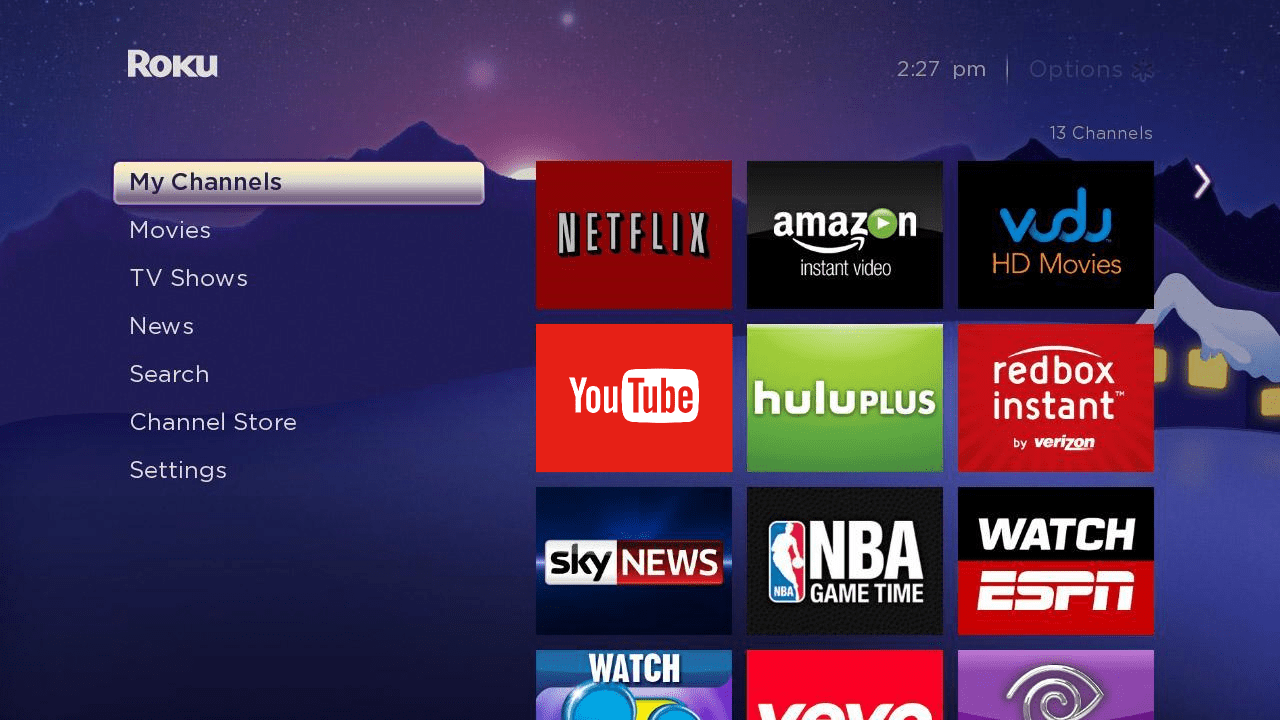
    Roku has been adding a bucketload of new channels since the beginning of the year, so it’s probably “unusual” to report about a single service being added to the streaming platform. Still, this is quite an important streaming service for those who want to stay in the loop with the latest news.

    Starting this week, Roku users can access content offered through CNN+, the subscription streaming from CNN. Although the new service doesn’t come for free, the fact that the option is there should be good enough.

    In case you didn’t know CNN+ offers about 8-12 live daily shows, new CNN+ Original Series and a library of more than 1,000 hours of programming from the CNN Original Series and CNN Films teams. Subscribers also get access to the streamer’s Interview Club feature on desktop, mobile and tablets, which houses a passionate community.

    • 7:00 AM ET: 5 Things with Kate Bolduan
    • 8:00 AM ET: Go There
    • 9:00 AM ET: Big Picture with Sara Sidner
    • 11:00 AM ET: Reliable Sources Daily
    • 4:00 PM ET: The Source with Kasie Hunt
    • 5:00 PM ET: The Global Brief with Bianca Nobilo
    • 6:00 PM ET: Who’s Talking to Chris Wallace?
    • 7:30 PM ET: The Newscast with Wolf Blitzer
    Of course, to get access to the robust content offering available on CNN+, you have to pay either $5.99 per month or $59.99 per year. The good news is a 7-day free trial is available via the Roku channel store for those who want to try it before becoming subscribers.
  • Insurer Baloise Targeted in Cyber Attack

    Insurer Baloise Targeted in Cyber Attack

    The Basel-based insurer suffered a cyber attack early this week.

    Baloise detected an attack on parts of its IT infrastructure on Monday, it said in an statement Tuesday.

    According to current reports, no company or customer data was stolen in the attack. Baloise took countermeasures within a short time to fend off the attack and identified that its German subsidiary Basler Deutschland, was targeted, the statement said.

    Baloise’s service traffic could suffer further restrictions, it said.

    We will continue to do everything we can to protect Baloise and data of its customers and partners from such attacks, the statement said.

  • Samsung to introduce recycled parts for smartphone repairs

    Samsung to introduce recycled parts for smartphone repairs

    Samsung is reportedly planning to start a new program that could significantly reduce repair costs for your Galaxy phones.

    Samsung is considering introducing certified recycled parts for mobile repairs. These are parts made of recycled materials such as discarded plastics, metals, and more. The initiative could launch in the next few months, specifically by the first half of this year.

    The report suggests that by using recycled spare parts, Samsung could pass on a smaller repair bill to users. The publication notes that things like display replacement could cost half of what it does today.

    As far as the quality of the recycled repair parts is concerned, Samsung is aiming for a level that can match that of new products. There’s no word on which smartphone parts will be available under the program and how much they would cost exactly.

    Samsung has been promoting sustainable manufacturing for a while now. The Galaxy S22 series is one of the latest examples of its efforts. The phones use a new material made up of discarded fishing nets.

    Over the years, Samsung has also significantly reduced the amount of plastic and paper in its packaging. Recycled repair parts seem to be a logical extension of Samsung’s sustainability efforts.

  • Netflix adds a ‘Double Thumbs Up’ button to further improve its recommendations

    Netflix adds a ‘Double Thumbs Up’ button to further improve its recommendations

    In an attempt to better attune its recommendations to its users, Netflix introduced a third button to its rating system. Yes, from now on, Netflix will have not two, but three reaction buttons: a thumbs up, a thumbs down, and a double thumbs up button.

    According to Netflix, the thumbs-up button shows Netflix’s algorithms what movies and TV shows you like, but the double thumbs-up button shows which movies and TV shows you love. Based on which movies and shows received your double thumbs-up reaction, Netflix’s algorithms will better recommend similar movies and shows that “what you enjoy.”

    As Netflix explained, if you reacted with a double thumbs up to the TV show Bridgerton, the platform may even recommend you more movies or series starring some of the show’s cast or other movies and shows from the same production company, which in this case is Shondaland.

    Netflix’s double thumbs-up button is located next to the thumbs-up and thumbs-down buttons. You can see and use it now on the TV, web, and mobile versions of the service. And as Netflix said, “Don’t be shy. Express yourself and tell us what you’re loving on Netflix. You know you want to.”