Author: Mei Ling Tan

  • Tesla, VW, SAIC Look To Recommence Shanghai Operations

    Tesla, VW, SAIC Look To Recommence Shanghai Operations

    Tesla VW and SAIC are among several companies that are looking to get production back up and running at their Shanghai facilities after almost three weeks of COVID-19 related shutdowns. The news comes following Beijing having drawn up a “whitelist” of companies prioritised to re-open or keep operations going in Shanghai. The list included a number of companies ranging from carmakers to semiconductor manufacturers and medical firms.

    As per Reuters, Tesla had already recalled workers to its Shanghai factory where they would be required to live on-site. The company had planned to commence production today though it has now been deferred to tomorrow citing logistical issues from a supplier. SAIC Motor meanwhile reported that it was commencing stress testing from Monday with an eye on recommencing production while VW said it was evaluating the feasibility of resuming production at its SAIC joint venture.

    However, with COVID-related closures in other cities in the country, it remains to be seen how manufacturers work around supply chain disruptions.

    Shanghai meanwhile aims to stop the spread of COVID-19 outside of quarantined areas by Wednesday with reports saying that the city had stepped up testing measures and transfer positive cases and their close contacts to isolation.

    Companies are being required to ensure ‘closed loops’ for workers being called into work while also maintaining medical supplies. Under ‘closed loops’ employers have been asked to minimise employee exposure to others while transiting to work or arranging for employees to live on their factory premises.

  • YouTube Shorts are finally coming to iPads and Android tablets

    YouTube Shorts are finally coming to iPads and Android tablets

    Social media apps borrow features from each other all the time to keep up with the trends. Snapchat, Instagram, TikTok and YouTube have been adding new features that have similar functionalities for a long time, something that has become very common in the last couple of years for many other industries.

    Introduced back in 2020, Shorts, YouTube’s take on TikTok’s short-form videos, have amassed five trillion total views as of January 2022. The number includes all platforms where YouTube Shorts are available such as Android phones and laptops but does not include tablets, which don’t support the feature.

    However, YouTube fans will be happy to know that Shorts will soon be coming to Android and iOS tablets. Although they won’t be available on both platforms at the same time, at least we know YouTube plans to make them available on tablets too sooner rather than later.

    According to YouTube, the Shorts option should be rolled out on YouTube’s apps for Android and iOS tablets “in the coming weeks.” Once the new feature will go live, tablet users should see a Shorts tab within the YouTube app. More details about how to create a Short using a song from YouTube’s library are available on the support page.

  • Stocks plunge to 11-week low

    Stocks plunge to 11-week low

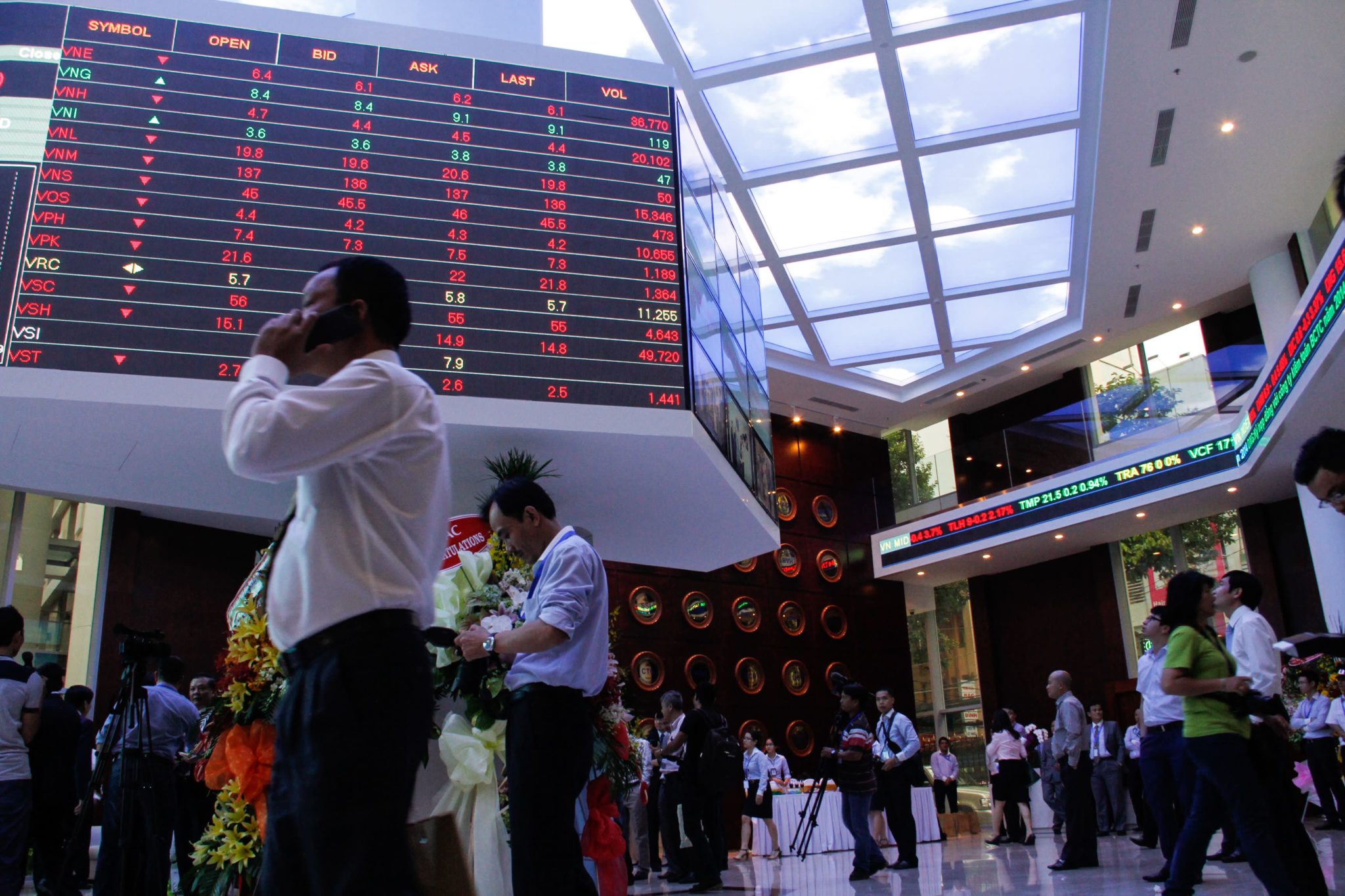
    Vietnam’s benchmark VN-Index started off the week in the red with a 1.25 percent drop to 1,440.23 points Monday morning, the lowest in 11 weeks.

    The index fell by 17 points as of 11:06 a.m. after ending in the red in four out of the last six sessions.

    The main bourse Ho Chi Minh Stock Exchange (HoSE) saw 361 tickers in the red and 107 in the green.

    Brokerages have forecast earlier that the market would drop in the short term.

    The VN30 basket, comprising the 30 largest capped stocks, saw 15 tickers in the red, with SSI of leading brokerage SSI Securities Corporation falling 4.5 percent to the lowest since August last year.

    VHM of real estate giant Vinhomes dropped 3.4 percent, the lowest in over a year.

    Other losers included CTG of state-owned lender VietinBank, down 3.5 percent, MBB of lender MB, down 2.7 percent, and VIC of biggest private conglomerate Vingroup, down 2.9 percent. Fourteen blue chips bucked the trend, with PNJ of Phu Nhuan Jewelry rising 3.2 percent and FPT of IT giant FPT Corporation gaining 2.2 percent. Both were at new peaks.

    They were followed by SAB of brewer Sabeco, up 2 percent, and TPB of private TPBank, up 1.6 percent.

    Foreign investors are buying the dips with a VND88 billion net purchase, focusing on DPM of Petrovietnam Fertilizer & Chemicals Corporation and NLG of real estate developer Nam Long Investment Corp.

    The HNX-Index for stocks on the Hanoi Stock Exchange, home to mid and small caps, was losing 2.51 percent, while the UPCoM-Index for the Unlisted Public Companies Market was losing 1.5 percent.

  • Singtel and Telkom forge deeper ties in regional data centres and fixed broadband

    Singtel and Telkom forge deeper ties in regional data centres and fixed broadband

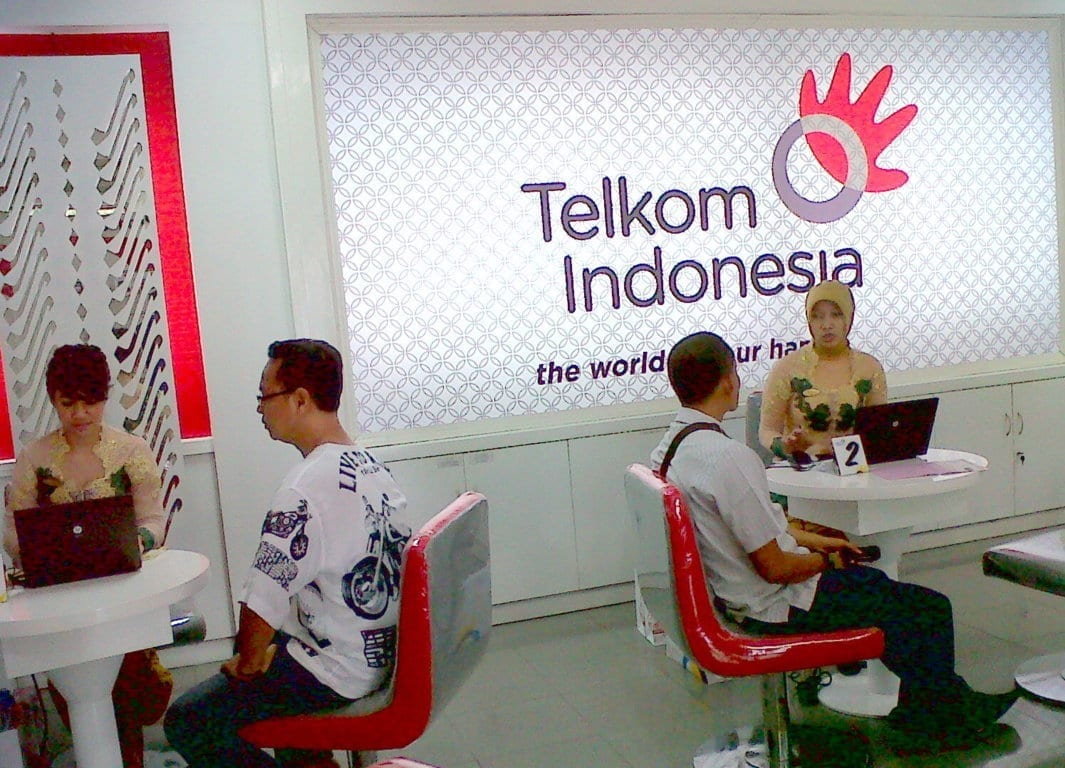
    Singtel and its Indonesian partner Telkom, the parent company of Singtel’s regional associate Telkomsel, have signed two memoranda of understanding (MOU) which was witnessed by Indonesia’s minister of state-owned enterprises Erick Thohir and vice minister of state-owned enterprises Kartika Wirjoatmodjo. The first of the two MOUs covers collaboration in the area of data centres, which marks a significant step in advancing Singtel’s regional data centre strategy. The second MOU involves a collaboration to support Telkomsel’s transformation into Indonesia’s leading consumer fixed broadband and mobile operator through a fixed mobile convergence strategy with Telkom.

    Expansion of regional data centre footprint to Indonesia

    To capture growth opportunities arising from the unprecedented digitalisation and cloud adoption in ASEAN, Singtel has focused on establishing a data centre platform that will work with partners to build and acquire data centres in the region. ASEAN has been experiencing robust data centre growth and the Singapore and Indonesia markets are projected to more than double in size, accounting for over 60% of regional growth by 2025.

    As strategic partners for over two decades, this move into data centres expands on the close collaboration between Singtel and Telkom to build out Indonesia’s mobile communications and digital infrastructure.

    Singtel Group CEO Yuen Kuan Moon said, “As businesses rapidly digitalise, and with the growing adoption of IoT, artificial intelligence and 5G across the region, demand for high-quality data centres is on the rise. This partnership with Telkom is an important step for our data centre strategy, bringing together the prime assets, expertise and networks of two market leaders in data centre operations in Indonesia and Singapore. As the largest digital economy in ASEAN, Indonesia is a strategic data centre market which expands our platform’s footprint to cover the three fastest-growing locations in the region – Indonesia, Singapore and Thailand. The platform will support the digital transformation needs of customers wanting to deploy into Indonesia, and Indonesian businesses looking to grow beyond the country. We look forward to deepening our longstanding collaboration with Telkom to capitalise on the favourable trends and tremendous market opportunity.”

    Telkom CEO Ririek Adriansyah said, “Telkom Group is currently consolidating our data centre business to answer the challenges of digital transformation. The regional data centre platform is a continuation of this data centre consolidation strategy and demonstrates our commitment to respond to customer needs and capture opportunities that will pave the way for our company to become a data centre player on a global level. These efforts require strategic partnerships with operators who have proven capabilities and track records. With its strengths and experience, Singtel is one of the strategic partners for Telkom in developing this regional data centre business.”

    Singtel is a leading operator of data centres in Singapore and has carved out its top-tier data centres, DC West and Kim Chuan 2, into a separate Singtel-owned entity with approximately 60 MW of capacity. In addition to securing a site in Tuas for a new integrated cable landing and data centre facility which will be ready in three to four years and add 30-40 MW in capacity, Singtel will continue to explore adding further capacity.

    An experienced data centre operator, Telkom has an existing data centre portfolio of 27 data centres in Indonesia and the region. It is also building a hyperscale data centre with 75 MW capacity to serve local and foreign companies and hyperscalers. Selected data centre assets from Telkom will be placed in the data centre platform. The companies will also collaborate on development opportunities and explore bringing third-party investors or partners into the platform.

    Besides Indonesia, Singtel has set its sights on the Thai data centre market. In February, Singtel signed a joint development agreement with Gulf Energy and Singtel’s regional associate AIS to start developing data centres in Thailand, and the new joint venture will be launched soon.

    Fixed mobile convergence strategy

    Singtel and Telkom will also jointly explore a fixed mobile convergence strategy for Telkomsel which will see an integration of its mobile business with Telkom’s consumer fixed broadband business. By combining the strengths of the two companies, Telkomsel will be able to enjoy significant synergies and enhance its leading position in the market with converged solutions that will give customers the best digital experience. This strategy will strengthen customer value proposition, in turn increasing customer lifetime value and household penetration.

  • These are the Top Countries in Asia for Passionate Gamblers

    These are the Top Countries in Asia for Passionate Gamblers

    Gambling is a very popular pastime in the modern world. There are many reasons for this. Entertainment is the main reason, however. Different cultures, traditions, and lifestyles exist around the globe. Most people admit to enjoying gambling games such as poker, slots, and roulette.

    People also enjoy traveling. All of us have the desire to travel the world and see many places. We are often limited by time and circumstances that make it impossible to travel as much as our hearts desire. Every trip you plan must be flawless. If you love gambling, Asia is the place for you.

    All across Asia, gambling is growing in popularity. When it comes time spent. However, the industry of gambling is still developing. Online casinos such as Fun88 Thailand allow people to gamble from their home. The trend will likely continue for the next few years.

    It is not our intention to suggest that the countries on this list can only provide entertainment. These countries also have rich traditions and histories, many monuments to see, beautiful views, and so on. These places are worth visiting, even if the day is over. We have highlighted five Asian casino destinations that are worth your attention. Each will provide you with a memorable and enjoyable gambling experience.

    Macau

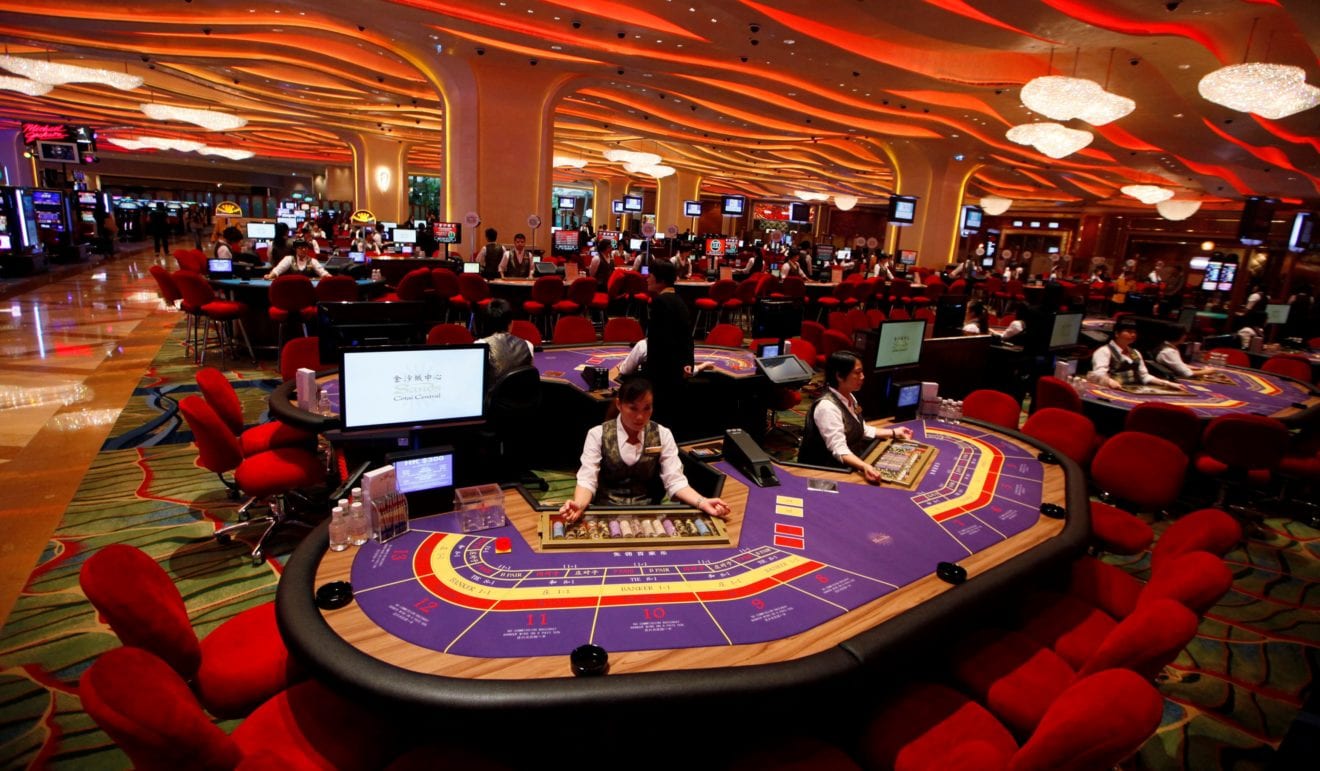
    Many will agree that Macau is Asia’s gambling capital. One thing is certain. You’ve probably fantasized about visiting Las Vegas, one of the most famous casinos in the world. Macau is Asia’s Las Vegas, or at least that’s what many people believe.

    Another reason you will be surprised is the wide variety of choices. You can play different games at casinos such as MGM, Grand Lisboa and The Venetian. There are smaller casinos that offer the same entertainment but fewer games. These can be great for players who prefer to play in peace and quiet. However, we cannot guarantee that you will find the same in larger ones.

    Thailand

    Most people who have been to Thailand would be surprised that this country is included on this list.Thailand’s gambling laws are quite specific. Due to government laws. The casino relies heavily on tourists. But that doesn’t mean gambling has become a non-popular pastime. Online casinos at 88thaicasino.com will be more popular with all citizens of the state. There are many options for them when it comes to casino sites. Online casinos offer a variety of games, decent bonuses and attractive designs.

    Philippines

    Remember the Macau comment? We can now say that the Philippines is gradually becoming the largest competitor. The Resorts World Manila is a good example. It is the most visited casino resort, welcoming thousands of players every day. It is also the first to open in this country. There are nearly 300 live gaming tables and more than 1500 machines.

    You can still visit other resorts with the same quality. Resorts World Bayshore and City of Dreams are just a few of the places worth your attention.

    Singapore

    Although we don’t want to deny that there are many casinos, it is not true. We believe that everyone will agree on the importance of quality over quantity. We will still need to emphasize this point.

    We recommend that you investigate the Singapore gambling laws. You won’t be able to travel to certain places if you don’t have the necessary documents to prove your identity. You will need to pay a fee for most casinos. The fee may not exceed $150 per day in some cases. You can pay a yearly fee, which is usually around $3000.

    South Korea

    Gambling is prohibited, it’s true. This rule applies only to local players. You have the right to visit the most prestigious casinos in the world if you are visiting the country as a tourist.

    Paradise Walker Hill Casino is a popular casino in Seoul. Although the casino isn’t huge, you can enjoy different games such as Blackjack, Roullete and Tai-Sai.

    Conclusion

    Las Vegas is a great place to visit, but it’s not the only one. You will find that there are many countries in Asia that can provide you with great gambling experiences. The future of Asian gambling is in countries like Macau, Malaysia, and the Philippines. What do you think? Which one seems the most appealing?


  • How Retail Businesses Can Benefit From Machine Learning Systems

    How Retail Businesses Can Benefit From Machine Learning Systems

    Machine learning systems are a branch of artificial intelligence that enables software applications to analyze and learn from data and experience to make accurate predictions and decisions with minimal involvement by a person. When it comes to retail business operation, business leaders initially used machine learning to automate day-to-day processes like in-store robots guiding customers to the product locations and restocking empty shelves. They also used chatbots to answer basic questions and make product suggestions.

    But due to technological advances, machine learning systems are no longer limited to physical automation. Today, retail businesses leverage it to streamline their daily operations. Especially when it comes to automated data analysis, data-driven decision-making, and smooth payment processing. If you want to learn more about machine learning, cnvrg published an article on this topic and provided information about decision trees and how to build one.

    Furthermore, you may proceed to read the critical points given below if you want to know how retail businesses can take advantage of machine learning systems.

    Efficient Customer Experience

    Machine learning systems in the data-driven retail industry provide a higher level of data processing, leading to more profound business insights. It enhances the retail business processes and provides an efficient retail shopping experience. Notably, machine learning systems incorporated with chatbots can send information about new product collections, suggest similar products that retail customers might want to buy, and respond quickly to commonly asked questions.

    Also, they help customers cut down their shopping time, make the sales team focus on other valuable tasks, and improve customer experience consistently. And the good thing is that these chatbots work in the retail business without human supervision.

    With that in mind, whether a brick-and-mortar or online retail business, machine learning systems allow business owners to market their products and services more efficiently by improving the customer experience. It has become an integral tool that retail companies can employ today to deliver highly personalized customer service.

    Predicting Customer Behavior

    Understanding customer behavior is crucial for retail businesses to succeed with their new products. Each customer has a distinct thinking process and attitude towards making a purchase. If a retail business fails to understand a customer’s reaction toward a particular product, it increases the likelihood of product failure.

    But the good news is that the retail industry nowadays can incorporate machine learning systems into their day-to-day operations to make critical predictions and improve their business plan. Notably, machine learning-powered predictive analytics can help retail businesses operate with lesser costly mistakes, get insights into the best practices to approach retail customers, and predict their behavior over a long-term period.

    Furthermore, retail businesses can also utilize machine learning-powered predictive analytics to identify the signs of dissatisfaction among current customers in their database. Consequently, it helps them retain those customers and determine the customer segments likely to go to another retail company.

    Better Price Optimization

    Optimizing retail prices to increase profits and avoid customer dissatisfaction has always been challenging for retail businesses. Before artificial intelligence and machine learning systems were born, retail companies only used traditional price optimization methods like manual market and customer data analysis. Pricing managers used mathematical models to calculate how price changes affect profitability rates and customer willingness to pay.

    However, due to the increasingly complex market conditions wherein retail companies are competing, traditional retail price optimization approaches can no longer adequately help retail businesses set prices for maximum profitability. Fortunately, there are technological developments in price optimization technology that allows retail companies to utilize the full potential of their business data and effectively set prices that increase their profits.

    Accordingly, with the help of machine learning systems integrated into price optimization technology, retailer businesses can now address most of the challenges they face in price optimization. In particular, machine learning-based pricing technology can analyze significantly extensive data sets and study more variables. Also, since machine learning learns on its own and constantly gets better over time, these advanced pricing tools can determine the optimal price points for retail businesses.

    Improved Inventory Management

    Retail supply chain processes are full of risks that can lead retail businesses to severe delays and deficiencies if they are not vigilant enough. Notably, they need to track their previous sales figures, historical trends, customer preferences, and even the opinions or reviews of shoppers online.

    On top of these tasks, they need to order products earlier than expected to ensure they are making the right call. However, if they become negligent or make mistakes, they risk being stuck with nonmoving or obsolete inventory, wasting money on products, parts, transport, and warehousing.

    But the good news is that, by incorporating machine learning systems into their forecasting, retail businesses can keep their supply chain flexible and agile. Machine learning systems allow supply planners to perform what-if analysis to help them get a clear picture of the cost and service alternatives that set the proper stock levels in place. As a result, retail businesses can avoid over-stocking products and increase customer satisfaction by meeting their demands and providing seamless experiences.

    Conclusion

    Overall, as competition in the retail industry becomes fiercer, machine learning systems play a significant role in getting and keeping a competitive edge. Therefore, retail business leaders should incorporate these game-changer technologies into their operations if they want to stand out from the competition.


  • Swensen’s Thailand opens next-gen regional flagship

    Swensen’s Thailand opens next-gen regional flagship

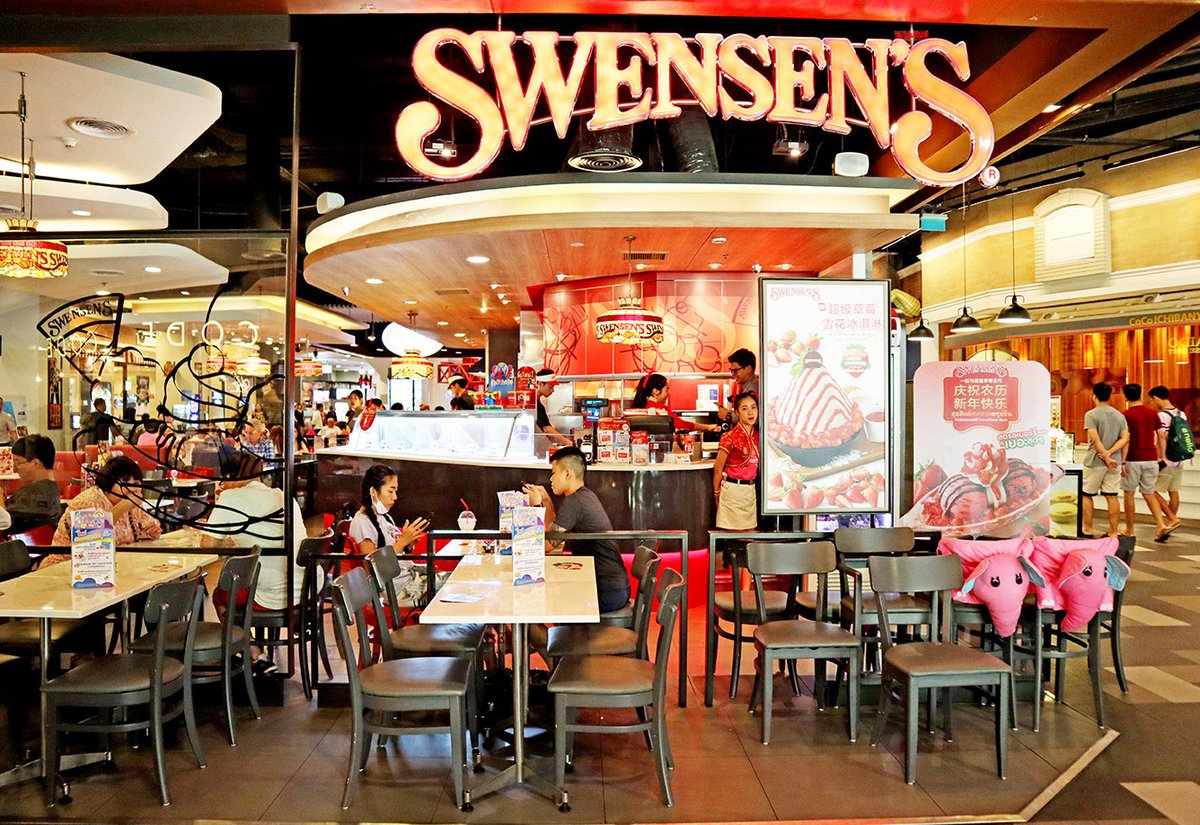
    Once again, Swensen’s reinforces to be the leading ice-cream brand that delivers a unique customer experience with the opening of Swensen’s Nan Regional Flagship Store. This store is the second store in Thailand after Phuket Town that is designed in accordance to the Regional Flagship Store concept. This concept is not just about expanding stores, but also to select a province with a character and local people including a distinctive local culture.

    Like Nan province, there is a strong community. So Swensen’s joins with local franchisee who truly understands  the Nan culture, to develop the area to become a new tourist attraction of Nan province.

    About store design, we bring the wisdom of Nan culture to create economic innovation through the store design. Customers can enjoy delicious ice-cream with a special ambience. We consulted with Nan historians, cultural experts and local designers  for store design,  to ensure that store ambience truly resonates with the local culture.

    Additionally, Swensen’s also adds a special menu ‘Bualoy Coconut Ice-cream’, which is available only in this store. If you travel to Nan, then do not forget to visit Swensen’s – Nan Regional Flagship Store and you will be truly impressed.

  • Uniqlo owner sees big profit drop in China due to Covid restrictions

    Uniqlo owner sees big profit drop in China due to Covid restrictions

    The owner of Japanese clothing brand Uniqlo on Thursday flagged a big profit drop in China due to COVID-19 restrictions, while its chief executive sounded alarm about the weakening yen’s potential to drive up costs.

    Fast Retailing is a rare bellwether for both global retailers in China, its biggest foreign market, and consumer demand in Japan, where it has carved out a dominant position by offering casual clothing to famously price-conscious shoppers.

    It and other multi-national retailers are now being forced to deal with lockdown measures in China. Fast Retailing has 863 stores on the mainland and almost 90 outlets in Shanghai, where strict measures, introduced in late March, remain in place to contain the country’s worst outbreak of the pandemic.

    McDonald’s and Starbucks, which each have dozens of outlets in Shanghai, have also been impacted as has production for retailers such as H&M, and Nike.

    Fast Retailing said it expects revenue declines and a large drop in profit in its Greater China segment in the second half and for the whole of fiscal 2022 due to COVID restrictions.

    Sales in the Greater China region, which includes Hong Kong and Taiwan, were hit in March, as up to 133 stores were temporarily shut.

    It has more Uniqlo stores in China than in Japan. It opened a flagship store in Beijing in November, and plans to open in 100 locations in the country each year.

    Separately, luxury brand Hermes said it had a strong start of the year in China until the beginning of March and is confident stores closed in Shanghai will reopen quickly.

    But the weakening yen and higher costs have forced Fast Retailing to consider price rises, a major shift for a company that has long competed on price.

    “There’s absolutely no merit to a weak yen,” Chief Executive Tadashi Yanai told reporters.

    “Japan is engaged in the business of importing raw materials from all over the world, processing them, adding value to them, and selling them. In this context, there is no advantage if the value of a country’s currency weakens.”

    The yen has been hammered this year, falling to the weakest level in almost 20 years against the dollar. For many Japanese companies that manufacture offshore – like Fast Retailing – the weak yen is less of a benefit than for traditional exporters.

    The company reported a record half-year profit on Thursday, buoyed by sales growth in North America, Europe, and other parts of Asia, while revenue and profit declined in Japan and China.

    Operating profit climbed 18% to 189 billion yen ($1.51 billion) in the six months through February from a year earlier.

    The company maintained its full-year profit forecast at 270 billion yen. That compares with a consensus forecast for annual profit to total 278 billion yen, according to a Refinitiv poll of 11 analysts.

    The Ukraine crisis has created another headwind, leading the company to close its 50 stores in Russia, after it initially resisted calls to exit the market along with other major brands.

    Prior to the earnings release, shares in Fast Retailing closed up 2.1%, versus a 1.2% gain in the broader market.

  • Shinsegae and Lotte to compete in wine and whisky market

    Shinsegae and Lotte to compete in wine and whisky market

    South Korea’s top two retailers — Shinsegae Group and Lotte Group — are going beyond retail to jump into the whisky and wine markets, which have been seeing rapid growth since the onset of the COVID-19 pandemic.

    Lotte Chilsung Beverage Co. announced in a report released early this year that it will expand its production of whisky, recruiting employees and signing contracts with whisky experts from Scotland to set up a whisky brewery.

    The company reportedly plans to build a brewery on one of the parcels of land that it currently owns. Construction is expected to begin next year at the earliest.

    Shinsegae L&B Ltd. also plans to put a start to the whisky business as it is now recruiting experienced employees, with a goal of setting up breweries of its own.

    Both companies are expected to compete in the wine market as well. Shinsegae Group purchased 299.6 billion won (US$243 million) of real estate in relation to the Shafer Vineyard in the U.S. last February.

    Its subsidiary, Shinsegae L&B, plans to take the offensive by expanding the number of its Wine and More stores and introducing new series of wines including those from the Shafer Vineyard.

    Lotte Chilsung Beverage continues to broaden its presence in the wine market by importing and selling a wider variety of wines, generating 83.2 billion won in wine sales last year, up by 34.4 percent from the previous year.

    The company reportedly received acquisition proposals from a number of winery companies interested in selling their products.

  • Singtel-owned ATN and AustralianSuper acquire Axicom

    Singtel-owned ATN and AustralianSuper acquire Axicom

    Singtel-owned Australia Tower Network (ATN) and AustralianSuper have announced the acquisition of Axicom, one of Australia’s leading providers of telecommunications tower infrastructure, for A$3.58 billion.

    Axicom owns and operates approximately 2,000 telecommunication sites located in metro and outer-metro locations across all eight states and territories and major cities in Australia.As ATN’s shareholders, AustralianSuper and Singtel said the strong synergies between Axicom and ATN would provide exceptional growth opportunities which will benefit customers, employees, and the community in the long term.

    AustralianSuper head of infrastructure, Nik Kemp, said Axicom is a high-quality asset that will deliver long-term value to AustralianSuper members.

    “Axicom is complementary to our existing digital infrastructure portfolio and this acquisition will result in the creation of a provider with a truly national footprint that will connect the vast majority of Australian families and businesses,” Kemp said.

    “Axicom has all of the characteristics we are looking for in an infrastructure asset and there are strong synergies between the two organisations. We look forward to working with the great teams of both ATN and Axicom to bring these two strong businesses together and leverage the great opportunity we have to continue to deliver for customers and AustralianSuper members.”

    Singtel Group chief corporate officer, Lim Cheng Cheng said, “This acquisition is a unique opportunity to scale up ATN’s operations and expand its customer base. It also reinforces Singtel’s commitment as a long-term investor in the Australian telecoms space where our goal has always been to provide more options and build better communications for Australian consumers and businesses. In combining ATN and Axicom, AustralianSuper and Singtel will be working closely to realise the significant operational synergies created.”

    AustralianSuper acquired a 70% stake in ATN from Singtel in November last year. Following the Axicom acquisition, Singtel’s shareholding in the combined ATN/Axicom business will be 18%, with AustralianSuper at 82%.

    Kemp said AustralianSuper will continue to seek further opportunities in this sector both domestically and globally.

    “AustralianSuper is looking to double its infrastructure portfolio over the next five years from its current A$31 billion. We believe that there will be significant growth in demand for digital infrastructure and will actively consider future opportunities in this space.”

    ATN chief executive officer, Cameron Evans, said ATN was looking forward to broadening the relationship with Axicom’s customers and providing them with access to the over 2000 current ATN sites and more than 565 new sites under construction.

    “Bringing together Australia’s two largest independent wireless telecommunications infrastructure operators provides real strategic advantages and strong value creation opportunities. It will also provide greater support for our customers as they continue to deliver essential services to the community such as mobile coverage, internet services, broadcast and emergency services,” Evans said.

    “We look forward to working with the team at Axicom to bring our two businesses together and leverage the opportunities we have with our top-quality digital infrastructure to connect Australians for generations to come.”

  • TikTok may soon let you dislike comments

    TikTok may soon let you dislike comments

    Today, almost everyone is on TikTok, and — although the short-video platform is extremely addictive and entertaining — as with any social platform, there’s the potential for inappropriate or harmful content as well as comments. To help its users “feel more in control over their interactions”, TikTok is testing a new dislike button for its comment section.

    In a blog post, TikTok said that the new button will allow users to flag comments that they find irrelevant or inappropriate. The dislike reaction will be private, only visible to the person who pressed it. The social platform stated, “This community feedback will add to the range of factors we already use to help keep the comment section consistently relevant and a place for genuine engagement.”

    The dislike reaction to a comment will signal the platform’s algorithms that there may be something wrong or simply irrelevant in said comment. We assume that a certain amount of dislikes would cause a comment to sink further down the list, or flag it for review.

    If you wish to straight-up report a disruptive, spammy, or plain inappropriate comment — you can do so currently by tapping and holding on to the comment and then choosing the “report” option.

    Another feature that TikTok said is in its testing phase is reminders that the social platform sends to creators who receive a “high proportion of negative comments.” The reminders will tell creators about features such as comment filtering, bulk block, and bulk delete, which can be used to battle harmful comments. The social platform also noted that it would decide whether to roll the feature out or not in the coming weeks.

  • Musk bids $41 billion in cash to buy 100% of Twitter

    Musk bids $41 billion in cash to buy 100% of Twitter

    Just three days ago, when Elon Musk ended up not joining Twitter’s board even with the 9.1% stake in the company that he amassed, one analyst suggested that this was a tactical move on Musk’s part. As a board member, he would have been forced to keep his stake capped at no higher than 14.9% of the social media outfit but if he was not on the board, Musk was free to buy all of Twitter.
    As the richest man in the world with a net worth said to be as high as $273 billion, Musk could buy Twitter without having to finance the transaction via a loan. And sure enough, this morning the Tesla CEO announced that he is offering to buy the company for $41 billion or $54.20 a share (that price includes a ‘420’ reference to marijuana). That is a 38% premium over Twitter’s closing stock price the day before his stake in the company was revealed.
    Musk famously smoked pot while appearing on a Joe Rogan podcast. He is also known for making jokes about cannabis during business discussions, so it is not surprising that he would include a reference to weed in his bid for Twitter.
    “Twitter has extraordinary potential. I will unlock it,” the multi-billionaire said. Musk told the Twitter board that this is his last and final offer and that if it is rejected, he would reconsider his investment in the company.
    In a letter to Twitter Chairman Bret Taylor, Musk wrote, “Since making my investment I now realize the company will neither thrive nor serve this societal imperative in its current form. Twitter needs to be transformed as a private company.”
    Twitter has some options. It could try to fend off Musk by putting itself up for sale and try to find a higher bidder. It could reject Musk’s offer which would probably lead to a proxy fight in which shareholders get to vote on the deal. Twitter could also use what is known as a ‘scorched earth’ defense and take action to make the company a less attractive investment for Musk once he buys enough shares to put him over a certain threshold of ownership.
    Reuters says that Wall Street’s lackluster reaction to the offer implies that Musk has a 29% chance to close on the transaction. Tesla shares were also impacted today dropping 2% on the theory that Musk will have to sell some of his holdings in the company in order to pay for the Twitter bid.
    The Tesla CEO considers himself to be a free-speech absolutist and has often criticized Twitter for its policies. He has over 81 million followers which ranks him as one of the most popular figures on the platform.
    This morning, former President Donald Trump, who was banned from Twitter, Instagram, and Facebook following the January 6th, 2021 insurrection at the U.S. Capitol, said that he will not return to Twitter if the latter is purchased by Musk. During his four years in the White House, Trump used Twitter to make policy announcements.
    The New York Post quotes Trump as saying, “Twitter’s become very boring. They’ve gotten rid of a lot of good voices on Twitter, a lot of their conservative voices. It used to be a war on Twitter, but it was a very interesting war…Mentally, we had some pretty good fights. We would go after the progressives, who I call the un-progressives. We’d be fighting back and forth and it was great stuff.
    Trump added that “friends of mine” have complained that it’s (Twitter) not the same.”
    As of the start of this year, 76.9 million people use Twitter in the United States while nearly 59 million in Japan use the platform.
  • New report says increasing number of iOS users seeing the value in being tracked

    New report says increasing number of iOS users seeing the value in being tracked

    With last year’s iOS 14.5 came Apple’s App Tracking Transparency feature that asks people whether they would like to be tracked by apps. Companies like Facebook which rely on this sort of tracking to serve personalized ads vehemently criticized the Cupertino giant for introducing this feature, but it’s not all doom and gloom, suggests a new report.
    Apple assigns a random device identifier called Identifier for Advertisers (IDFA) to devices like iPhones and iPads that let app makers track user activity across apps for targeted advertising. IDFA has now been made an opt-in feature, meaning users will have to consent to being tracked.
    Facebook has been a vocal critic of the feature and a recent report estimates that the company could lose $12.8 billion in revenue this year because of ATT. Snapchat, Twitter, and YouTube are also expected to be impacted, though they are projected to take smaller hits.
    The situation looks to be improving, per analytics platform Adjust. In May 2021, 16 percent of the users had opted-in to being tracked, and the number has now grown to 25 percent. The study is based on the 2,000 most popular apps in the firm’s database.
    The stats are even more promising for gaming apps, with an estimated 30 percent of users allowing businesses to track their activities for personalized ads. For some popular games, opt-in rates were as high as 75 percent.
    The outlet notes that a month after the launch of the ATT feature, only 4 percent of the users in the US had opted-in to it, so the latest report could be a beacon of hope for the likes of Facebook.
    Apple allows app developers to explain why users should allow tracking and it looks like many businesses have found ways to convince users to opt in to tracking. For instance, an app may say that personalized ads help the developer keep the app free or that it can help users save money.
    Adjust thinks that more users now “understand the value of opting in and receiving personalized advertisements” and expects the upward trend in consent rates to continue.
    Apple meanwhile continues to advocate for stronger privacy protections and is fighting hard to prevent legislation that would let users download third-party apps outside of the App Store.
  • WhatsApp announces important changes for groups: Reactions, File Sharing, more

    WhatsApp announces important changes for groups: Reactions, File Sharing, more

    WhatsApp announced important new features coming to its apps in the coming weeks, all part of a new hub called Communities that will eventually be added to the service. Given lots of feedback it received over the years, WhatsApp has decided to make communication for organizations like schools, local clubs, and non-profit organizations easier.

    Communities will allow WhatsApp users to bring together separate groups in a single place. As a result, users will be able to receive updates sent to the entire Community and organize smaller discussion groups on important topics. Of course, Communities will have all the required tools for admins, including announcement messages and control over groups.

    In addition to bringing Communities to WhatsApp, the company also announced it will roll out improvements to how groups work on the app, regardless of whether or not they are part of a Community hub. Here are the features that will be released in the coming weeks to all WhatsApp users:

    • Reactions – Emoji reactions are coming to WhatsApp so people can quickly share their opinion without flooding chats with new messages.
    • Admin Delete – Group admins will be able to remove errant or problematic messages from everyone’s chats.
    • File Sharing – We’re increasing file sharing to support files up to 2 gigabytes so people can easily collaborate on projects.
    • Larger Voice Calls – We’ll introduce one-tap voice calling for up to 32 people with an new design for those times when talking live is better than chatting.

    Another important aspect worth mentioning is that since all Community hubs will be private, messages will be protected with end-to-end encryption. According to WhatsApp, Communities will be the company’s main focus for the year to come, so expect more announcements in that regard.

  • Asian Consumers Suffer From Record High Gas Prices In Domestic And Global Markets

    Asian Consumers Suffer From Record High Gas Prices In Domestic And Global Markets

    Asian gas consumers are facing hard times as they are forced to import spot LNG at record high prices. Experts believe this is likely to kill any demand for gas within the region and accelerate demand destruction for natural gas while also amplifying concerns about costlier goods and services. Emerging markets are the most hit as they are grappling with high spot LNG prices and oil prices staying above $100 per barrel, which makes LNG imports the most expensive they have been in years. ICE May Brent futures were trading above $121 per barrel in Asian hours yesterday, which means oil-linked LNG prices could be around $18/MMBtu. According to S&P Global commodity Insights, the plats JKM for May delivery was assessed at $33.841/MMBtu on Wednesday.

    A recent report indicates that LNG prices have halted spot trade for these commodities. However to trade derivative products attached to the assets on top of forex you can click here. One European utility claims that market players have been discussing possible transactions and trying to arrange swaps. Still, due to price volatility, nothing is being finalized, while Japanese and Korean utilities are less willing to procure more cargo because of high prices.

    One South Korean importer claims that they don’t want to buy any cargo even though the company’s inventories are not sufficient. The plan is to roll the requirements till later in June or July.

    Over this month, price-sensitive LNG importers such as Pakistan, India, and Thailand have had to pay around $33/MMBtu – $36/MMBtu for spot LNG cargoes which represent some of the highest LNG prices these countries have had to bear. According to S&P Global data, state-run Indian Oil Corp. bought two spot LNG cargoes from a trading house on March 21 for $33.7-$33.8/MMBtu and $33.3-$33.4/MMBtu, to be delivered on May 7 and June 4, respectively.

    PTT of Thailand bought three spot LNG cargoes for $35-$36/MMBtu for delivery in the second half of April. Also, on March 16, India’s Gujarat State Petroleum Corp bought a spot cargo for $35.2-$35.3/MMBtu from a trading house for delivery on March 28-April 15. And Pakistan bought a cargo for March delivery ranging in the mid-$20/MMBtu.

    Record High Global Gas Prices

    Most nations are witnessing record-high global gas prices as they slowly filter into the domestic markets. According to company officials, Reliance Industries Ltd., a diversified conglomerate based in India, sold natural gas from a coal-bed methane block in the central state of Madhya Pradesh for around $23.5/MMBtu. The price reflects a hefty premium over the base price of 14% Dated Brent as stated in the tender for a one-year supply of 0.65 million cubic meters of gas per day. The tender was awarded to gas companies, including state-run GAIL ltd., Gujarat State Petroleum Corp, and Shell.

    The quote received by Reliance for CBM gas is higher than the price state explorers such as ONGC and Oil India Ltd receive for gas nominated from their upstream fields, which is capped at $6.13/MMBtu. Even Reliance’s natural gas from its KG basin fields is sold at similar levels. According to one trader, a domestic gas tender priced in the low-to-mid $20s/MMBtu is still at a better price than spot LNG. The trader adds that it is still cheaper compared to spot LNG even though it’s costly, which explains why such a price was agreed considering the current high Brent crude and spot LNG prices.

    Another trader adds that high prices are determined by supply and demand. Also, the limited quantity offered through the domestic tender might be another factor. The trader adds that with an inadequate gas supply, if one can get gas in India domestically at lower prices than imported LNG, then why not take advantage of the situation.

    A third trader noted that India’s gas demand was hanging in the balance unless prices dropped and based on the forward curve. December 2022 JKM prices are still not affordable for India’s industrial sector compared to liquids like LPG. India is working to align natural gas prices with global markets. A government panel has submitted a price reform proposal for locally produced natural gas where the entire output can be sold on the domestic gas exchange platform for price discovery.