Author: Mei Ling Tan

  • AirAsia resumes routes from India to Malaysia, Thailand; AirAsia X starts ops to Korea and India

    AirAsia resumes routes from India to Malaysia, Thailand; AirAsia X starts ops to Korea and India

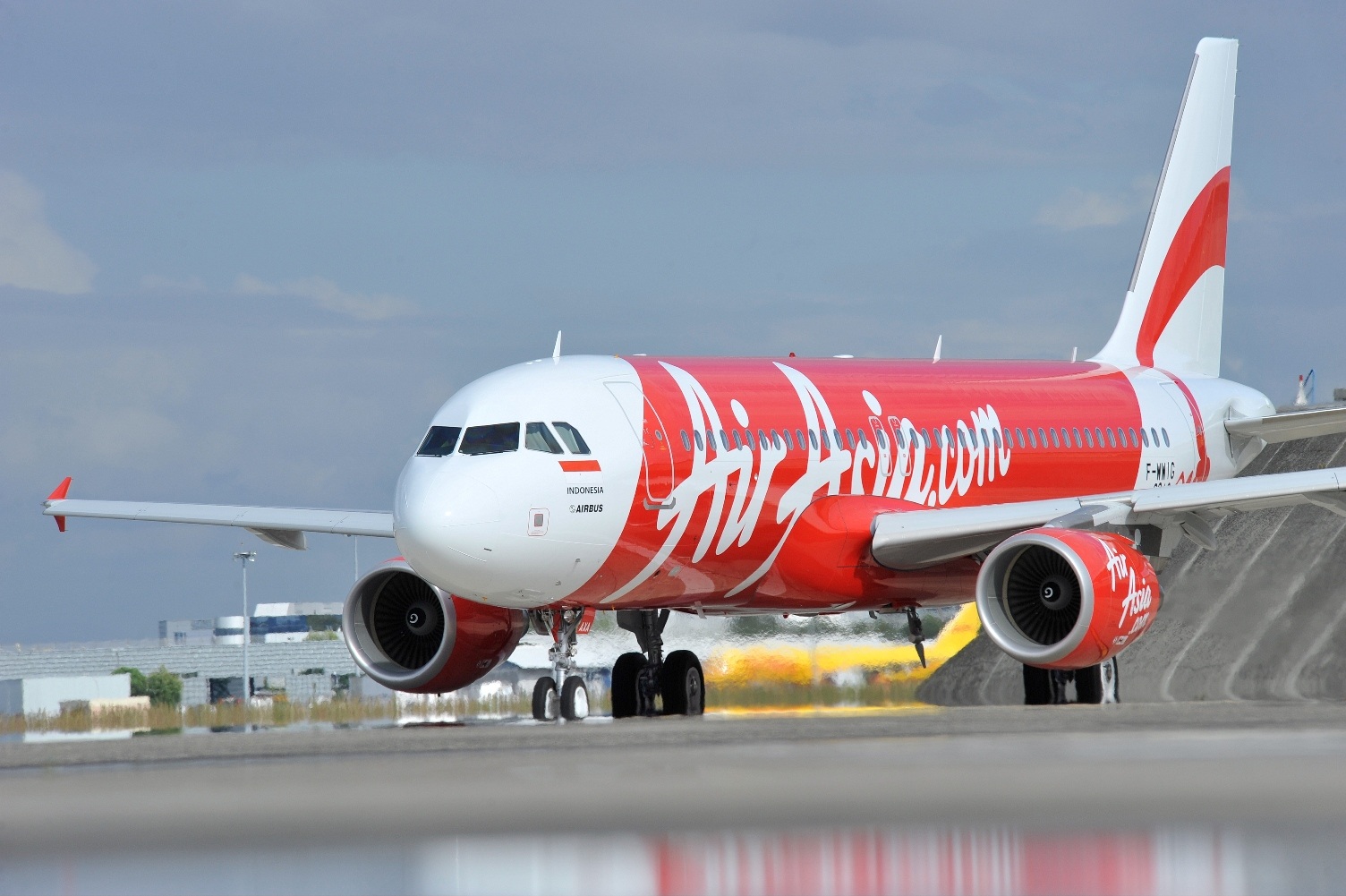
    AirAsia announced that it is resuming flights from India to Malaysia and Thailand with flights now available from April and May 2022 onward. Six new routes from India to Malaysia include Bengaluru to Kuala Lumpur (KL) and Chennai to Kuala Lumpur,  Tiruchirappalli to KL from 5 April, Kochi – KL commencing 18 April, Kolkata – KL commencing 23 April and Hyderabad – KL commencing from 1 May, 2022.

    Five new routes launching India to Thailand will include Bengaluru-Bangkok (Don Mueang) commencing on 4 May, Chennai-Bangkok (Don Mueang) on 4 May, Kolkata-Bangkok (Don Mueang) commencing on 2 May , Kochi-Bangkok (Don Mueang) commencing on 1 May , and Jaipur-Bangkok (Don Mueang) on 1 May.

    Manoj Dharmani, AirAsia’s Regional Commercial Head for India, Sri Lanka & Bangladesh, acknowledged that “AirAsia’s resumption of international flights has been highly anticipated by both the airline and its guests. With Malaysia and Thailand reopening and travel restrictions being lifted, AirAsia will be continually re-introducing international services, starting from April 2022. In this regard, India, Malaysia, and Thailand are countries with significant potential in terms of stimulating tourism and reigniting the economy. We believe that our flight resumption will bring great opportunity and support to the countries’ economic recovery.”

    AirAsia X launching new services to South Korea and India

    Following the  resumption of passenger  services to Sydney, Australia in February, AirAsia X (AAX) is expanding its flight  network from Kuala Lumpur with new services to Incheon (Seoul), South Korea and New Delhi, India commencing from 20 April 2022. Flights to Incheon (Seoul) will initially be operated weekly on Wednesdays and returning on Thursdays. Flights to New Delhi will resume twice weekly on Wednesdays and Sundays returning on the same days. Both services are on sale now for travel between 20 April 2022 to 30 June 2022, with additional services to be added in the near future. Guests with outstanding bookings or unused credit during the pandemic, will be able to use these for future bookings, by updating their original flight booking for future travel or by utilising their credit account to book the flights.

    CEO of AirAsia X Benyamin Ismail said: “After two long years, we are thrilled to return to the skies once again with the best value airfares for medium haul travel. Now that the world is finally opening up, we are gradually resuming flights to our key markets, starting with Sydney recently and now also to South Korea and India, with more popular destinations to be announced soon. We are confident our return to these markets will be well received, particularly for those longing to visit friends and family again or for much anticipated leisure travel. With Malaysia’s international border reopening last week on 1 April, and quarantine free travel both ways on our new services, it is also the perfect time to welcome back international tourists, providing a significant boost to the nation’s tourism sector and the economy, as we did pre-pandemic.”

  • Netflix loses a quarter of its value after reporting a shocking figure for the first quarter

    Netflix loses a quarter of its value after reporting a shocking figure for the first quarter

    Netflix shares lost more than a quarter of their value this evening after the company released shocking news about the video streamer’s first-quarter earnings. For the first time in over a decade, the company reported a quarterly loss in the number of subscribers which totaled about 200,000 users. Netflix blamed the drop on password sharing, increased competition, inflation, and the Russian invasion of Ukraine.
    The last time Netflix reported a decline in subscribers was in October 2011. And the bleeding is going to continue with the company forecasting a further decline of two million subscribers for the current quarter that wraps up at the end of June.
    The report was released after regular trading hours on NASDAQ where Netflix shares had risen by $10.75 or 3.18% to close at $348.61 per share. But once investors saw the first quarter results and the forecast for the current quarter, they dumped the stock taking it down to $259 for a loss of $89.61 or 25.70% in after-hours trading. Netflix also took down the shares of fellow streamers like Roku, Disney, and Spotify, all of which declined thanks to Netflix. For example, Disney stock, which rose $4.40 during regular trading hours, gave it back and more when the report was released.
    In a letter to shareholders, Netflix wrote, “Our revenue growth has slowed considerably. Streaming is winning over linear, as we predicted, and Netflix titles are very popular globally. However, our relatively high household penetration — when including the large number of households sharing accounts — combined with competition, is creating revenue growth headwinds.”
    Netflix pointed out that there is plenty of growth potential ahead as half of the world’s broadband users still do not have a Netflix account. As the company stated, “while hundreds of millions of homes pay for Netflix, well over half of the world’s broadband homes don’t yet, representing huge future growth potential.”
    Looking to reduce the practice of password sharing which is eating into Netflix’s results, the streamer is looking to hike the subscription rate for plans that are shared between households. This could result in subscribers paying an extra $2.99 monthly to allow a family member who doesn’t live at the same address to share the account. Netflix Co-CEO Reed Hastings said that the company is considering offering lower-priced ad-supported tiers of service (similar to NBCUniversal’s Peacock).
    During the first quarter of 2022, Netflix took in $7.87 billion, up 9.8% on an annual basis. Net income declined 5.9% from $1.7 billion to 1.6 billion during the first quarter. Diluted earnings per share slipped 5.8% to $3.53. For this quarter, Netflix sees earnings per share of $3.00.
    The number of global streaming paid memberships declined from 221,840,000 to 221,640,000 from the 4th quarter of 2021 to the first quarter of 2022. Wall Street was expecting a 2.7 million increase in subscribers. The suspension of Netflix’s streaming service in Russia cost Netflix 700,000 subscribers. If not for that activity, Netflix would have reported an increase of 500,000 subscribers during the quarter.
    Netflix announced today that over 100 million global households use a shared password and that a global crackdown on this practice is coming. 30 million Netflix users in the U.S. and Canada are believed to be sharing Netflix passwords while over 100 million additional households worldwide are sharing the same passwords. Netflix told shareholders on Tuesday that, “Account sharing as a percentage of our paying membership hasn’t changed much over the years, but…it’s harder to grow membership in many markets — an issue that was obscured by our COVID growth.”
    Netflix said that originally it generously allowed users ti share passwords to help users get “hooked” to the service. But now, with the heavy competition that it faces from Disney+, Peacock, AppleTV+ and others, Netflix says that it is time for those getting the service for free to start paying for it.
  • Unilever’s new New Zealand chief finally takes his office

    Unilever’s new New Zealand chief finally takes his office

    Unilever New Zealand MD Cameron Heath will relocate to take up the new role with his team this month after nearly six months of managing the role remotely.

    His predecessor, Nick Bangs, will move to Sydney to take on the role of GM, home, beauty and personal care for Unilever Australia and New Zealand.

    Heath spent seven years working as GM Baltics with Unilever in Latvia and four years as marketing director food & beverages in Prague. Prior to that, he worked at Procter & Gamble for seven years, taking responsibility for customer development and category strategy roles, including time working in the New Zealand market.

    Heath said Unilever’s commitment aligns with his personal goal to care of the health of the planet and create a fairer, more diverse, and equitable world.

    “As one of the world’s largest producers of consumer goods, we have both a responsibility and an opportunity to do more good for our planet, not just less harm,” said Heath.

    With 15 years in the FMCG industry, Heath has experience in marketing and category management, so he understands and has awareness of the challenges that lie ahead for the consumer goods sector.

    “I understand first-hand the pressure retailers and consumers are facing as we deal with supply-chain disruption and increased cost of production across the board,” he added.

    Cameron Heath started his role remotely last November and will join his team in New Zealand this month.

  • Yum China names new executives

    Yum China names new executives

    Yum China has appointed Johnson Huang as its first chief customer officer and Warton Wang, who is currently the chief development officer, as GM of KFC. Both roles are effective on May 1.

    Yum China says creating the chief customer officer position is one of the company’s strategies to “integrate customer-centricity into its brand-driven culture”.

    Johnson Huang has served as GM of KFC and joined the company in 2006. Prior to that, he was the company’s chief information and marketing support officer and helped build IT functions and digital infrastructure.

    In his new role, Huang will focus on enhancing customer experiences as well as understanding the market demand and creating cross-functional initiatives. He will also supervise some brands like Lavazza, Coffii & Joy and Taco Bell, and continue to report to Joey Wat, the company’s CEO.

    Meanwhile, Warton Wang will succeed Huang as the GM of KFC. Wang joined the brand in 1998 as an operations management trainee and has held various operations roles within KFC, including as market manager of Hangzhou KFC.

    Wang became the regional VP of KFC Field Operations in 2015 and the company’s chief development officer in 2020.

    “Digital is a core growth enabler of Yum China to unlock tremendous opportunities. Johnson’s new leadership role will enable us to continuously strengthen our digital capabilities and elevate the customer experience,” Joey Wat.

    “With his strong technology background and deep understanding of the organisation, Johnson is most suited for this new role. [His] proven track record of leading KFC in the past five years gives us confidence that he can transform our emerging brands into future growth engines for Yum China.”

  • Central Retail invests US$3 million for Tops Market’s new model

    Central Retail invests US$3 million for Tops Market’s new model

    Central Retail has invested US$3 million to build Tops Market’s first standalone supermarket, on Bangkok’s Pattanakarn 30.

    Catering to the residential areas in Eastern Bangkok, the new standalone supermarket spans 3400sqm, housing more than 17,000 items across seven zones, including Healthiful, Snacker, Asian Flavours and Petster. Tops Market Pattanakarn 30 offers omnichannel with personal shopper service and quick commerce service through Line.

    “The new store will cater to modern consumers who prefer shopping near their home so that they do not have to worry about commuting,” said Stephane Coum, CEO of Central Food Retail. “We recognise the spending potential of the consumers in this area, as it is an upscale residential area in Eastern Bangkok, with many large-scale real estate projects.”

    Sustainability innovations and technology are implemented at the store in line with the Central Retail Retailligence strategy. Two EV charging stations are installed to support clean energy, while energy-saving refrigerators are used to reduce the use of electricity and carbon footprints.

    Customers can also collect trash and household waste to receive points on recycling days. Each point is equal to one baht, and Tops Market adds another baht to be donated to Empty Bottles, Full Value project by Wat Chak Daeng in Samut Prakan province, to make PPE uniforms for the temple and garbage collectors.

  • Vietnam plans two-thirds cut in thermal power

    Vietnam plans two-thirds cut in thermal power

    Vietnam will reduce coal-fired power supply by two-thirds between 2025 and 2045 and increase renewable power supply to account for more than half of the total.

    All localities have expressed agreement with the Ministry of Industry and Trade’s latest version – Power Power Development Plan 8 – which was announced earlier this month. The ministry is required to complete its final draft of the plan and submit it to the government by the end of this month, Deputy Prime Minister Le Van Thanh has said.

    The plan includes targets to bring down the ratio of coal-fired power supply from 29.3 percent in 2025 to 9.6 percent in 2045, when the country is set to have a total supply of 401,556 megawatts from all sources.

    This means coal-fired projects under construction will still be completed, but no new plant will be approved. Hydropower will also see its ratio reduced from 27.2 percent in 2025 to 9 percent in 2045. Renewable energy, comprising mostly of wind and solar power, will see its ratio increase from 23.7 percent in 2025 to 59.5 percent by 2045.

    Offshore projects are set to account for zero percent of supply by 2025 but will rise to 17 percent by 2045.

    Solar power farms will see its ratio more than double from 8.9 percent to 19.4 percent.

    The industry ministry also eyes a gradual transition from liquefied natural gas (LNG) projects to hydrogen power over 20 years. By the 10th year of their operation, the government wants LNG plants to have 20 percent of their capacity coming from hydrogen power.

    The latest development plan aims to maximize the reduction of coal-fired power sources in order to meet the country’s commitment to achieve carbon neutrality by 2050, the industry ministry told the government in its report.

    Carbon emissions are set to hit 175 million tonnes by 2045 and fall to 42 million tonnes by 2050.

    The plan will also increase power independence and reduce the need for energy imports, the ministry said.

    Power imports are set to see their ratio decrease from 4.5 percent of total supply in 2025 to 2.8 percent in 2045.

    The industry ministry estimates an investment of $141.6 billion to implement this plant, with transmission accounting for nearly 10 percent.

    It wants to increase power transmission from the central and southern regions to the northern region starting 2030.

  • ZTE COO Xie Junshi: Digitalization is the key to greater societal resilience

    ZTE COO Xie Junshi: Digitalization is the key to greater societal resilience

    At the post MWC22 sharing session recently organized by the GSMA, Xie Junshi, EVP and COO of ZTE, explored several exciting new trends in scenario-based 5G applications, mobile technologies, and industry development in an increasingly digitalized world.

    Xie noted that digitalization in the volatile, uncertain, complex and ambiguous (VUCA) era is continuously strengthening the “immune system” of our society, playing an irreplaceable role in tackling not only the current pandemic but also long-term public health issues such as ageing populations while promoting sustainable development. With digitalizationaccelerating around the world, both the technology and market are changing disruptively, creating more innovations and greater potential. To maintain a competitive edge, CSPs are pursuing the transformation to DSPs. Focusing on scenarios and value creation, ZTE aims to work jointly with all partners to build a digital and intelligent ecosystem.

    Below are the highlights of Xie’s sharing:

    Accelerating global digitalization is boosting the society’s immune system

    Digitalization is the key to greater societal resilience in the post-pandemic era. Whether in telecommuting, online collaboration, or digital factories, digitalization provides support for our lives and helps guarantee the health of the entire economy. Digitalization is also playing a pivotal role in tackling VUCA and population aging while promoting green, low-carbon, and sustainable development.

    Driven by scenario and value, both the market and technology are changing disruptively. The diverse range of exhibitors and fascinating content at MWC 2022 highlight the evolution from mobile Internet to IoE and AIoE, marked by ubiquitous 5G connectivity, AI advancement, cloud-network convergence, and new technologies. Today, without a doubt, global digitalization is accelerating, creating more technological innovations and greater market potential. To maintain a competitive edge, CSPs are pursuing the transformation to DSPs.

    In every industrial revolution, higher efficiency has always been the most critical factor. This current revolution of digitalization is no exception. At MWC 2022, most of the digital innovations presented by exhibitors, including ZTE, focus on higher efficiency. For instance, ZTE shared innovations for simplified infrastructure, efficient and intelligent operations, as well as agile innovations for achieving growth in the second curve of digital services. ZTE has also adopted scenario-based approaches to realize the ultimate experience and efficiency, promoting sustainable development and future technological advancements.

    Sustainable development is the key goal of enterprises, while the key to promoting 5G application in the to-B field lies in three aspects

    For 5G networks, consumers look forward to a better experience, while enterprises look for lower costs, higher efficiency, and business growth. So far, in the to-B field, 5G technology has been widely applied to verticals. For example, to assist or replace manpower, 5G-powered automated guided vehicles (AGVs) are used in flexible production lines, 8K machine vision for more efficient quality inspection, and unmanned or remotely controlled machines to assist in operations.

    To facilitate greater breakthroughs in the to-B field, however, it is important to achieve collaboration with operators and enterprises where every party stands to benefit. Together, there are three aspects to work on: creating and sustaining competitive differentiation, developing effective business models to speed up value creation, and exploring the path to mass customization.

    Competitive differentiation means that ZTE can provide unique and optimal solutions, and hence stand out from the competition. When delivering 5G solutions for verticals, it is important to determine whether 5G technology is indispensable, or whether the 5G-powered solutions have unparalleled advantages over others. This is how competitive differentiation can be sustained.

    As for speeding up value creation in the early stage of 5G application, it is important to focus on customers’ pain points and distinctive needs in fragmented scenarios. On this basis, ZTE can explore more scenarios in different fields, so as to accelerate the development of 5G application in the to-B field.

    To achieve higher profitability, mass customization is the optimal choice. This is why ZTE aims to build underlying capabilities of digital infrastructure and component-based cloud capabilities. Through flexible orchestration of such capabilities, agile innovation can be implemented, meeting the requirements of different applications in various scenarios. In addition, this allows ZTE to continue to build successful experience across different scenarios and consolidate a strong digital foundation, to enable rapid iteration and continuous evolution.

    Evolving consumer expectations drive 5G application in the to-C field, and joint efforts are required for building the infrastructure and ecosystem

    The rapid development of the mobile Internet is driven by evolving consumer expectations and improving human capabilities. The same will be true for the application of 5G in the to-C field. For example, consumer demands boost the development of applications that can provide real-time, immersive, and interactive audio-visual experience, such as UHD videos, AR and VR applications, and cloud gaming. This has been a trend in countries with wide 5G network coverage, including China and South Korea. With 5G technology, we can now watch live sport events with a panoramic view, freely zoom in or out, and switch between different camera positions. In this way, consumers can stay at home and enjoy personalized and immersive experiences in real time. In order to make the much talked-about metaverse a reality, we need to enhance network capabilities, computing power, and storage capabilities, for which 5G technology plays a vital role.

    To promote 5G applications in the to-C field, wide and deep network coverage is of great importance. More specifically, we need optimal, cost-effective 5G solutions that can guarantee continuous and intensive network coverage both outdoors and indoors, even on high-speed trains, airplanes, and ships. ZTE has already made many innovations in the to-C fields. In addition, easy-to-use and cost-effective terminals, together with different kinds of content services, will help give rise to improved applications in a stronger and healthier ecosystem.

    ZTE is committed to building a “1+2+3” digital ecosystem.

    The next major chapter of 5G development will start with the arrival of 5G-Advanced. While 3GPP Releases 15, 16, and 17 represent the first phase of 5G standards, 5G-Advanced marks the start of the second. Following up on 5G commercial deployment and empowerment of verticals worldwide, 5G-Advanced focuses on better user experience and more industry applications.

    In December 2021, together with its industry partners, 3GPP approved a work package for its Release 18, marking the start of 5G-Advanced evolution. The work package includes 28 study or work items in a variety of scenarios, including eMBB, real-time interactive new media, network intelligence, IoT featuring high-precision positioning and low power consumption, IIoT, integrated sensing and communication (ISAC), fused location, and satellite-cellular network integration. These efforts will bring us brand new capabilities, applications, and experiences. Toward 5G-Advanced, ZTE will continuously work with industry partners to promote technological innovation and industrial transformation.

    To gain a firm foothold in this process of network evolution, ZTE is always committed to building a “1+2+3″ digital ecosystem, looking to address key pain points and create greater value for customers.

    So what exactly is ”1+2+3”?

    “1” refers to a solid foundation consisting of chipsets, algorithms, and architectures. ZTE continuously strengthens its foundation to gain momentum for growth.

    “2” refers to intelligence and security, which are crucial to 5G networks and business.

    “3” refers to capability, performance, and efficiency, which should be continuously improved through innovations and are key to the prosperity of 5G.

    With the evolution to 5G-Advanced, ZTE will work with industry partners and advance technological innovations to reinvent a digital world.

    China’s 5G development will make greater contributions to global industries and markets.

    As of January 2022, a total of 1.425 million 5G base stations have been built in China, making 5G networks available in over 98% of counties and 80% of towns. Mobile 5G connections now exceed 518 million. More crucially, over 10,000 innovative 5G use cases have been created, which span the fields of manufacturing, health care, education and transportation.

    In the 5G era, China has been an active contributor in many aspects:

    • The moderately advanced pace of network construction in China has boosted the growth of the 5G industry.
    • China has continued exploring and promoting large-scale 5G application, consolidating the foundation of the entire industry.
    • China actively pushes forward the co-building and sharing of networks for higher resource efficiency.

    China has a wide range of wireless scenarios and a sound foundation provided by its digital economy, and is witnessing the growth of huge potential in consumer markets and various industries. With the moderately advanced pace of 5G network construction, excellent network coverage and guaranteed performance, China’s unique environment is set to produce a range of more applications and continuous innovation, and contribute to global industries and markets.

    Video link to Xie’s sharing at MWC22 :

    https://res-www.zte.com.cn/MediaFiles/4/F/4/%7B4F48E19C-7979-4844-861C-99C0759DA7F4%7D202204151635.mp4

     

  • Coles’ supersized range targets Costco shoppers

    Coles’ supersized range targets Costco shoppers

    Coles is taking a shot across the bows of warehouse retailer Costco with the launch of a range of household grocery products in supersized volumes.

    While Coles has launched the Big Pack Value range as a means of helping families reduce their grocery bills by buying in bulk, the nuanced comparison with Costco is clear in an email circulated among media announcing the new house brand.

    “Making bulk buying easy, with no memberships and no need for a destination shop, Coles’ Big Pack Value range has plenty of choice,” the cover letter said. Consumers shopping at Costco can buy bulk packs but must pay a nominal annual membership for the right to shop there and there are a limited number of Costco stores in Australia, only in major metropolitan cities.

    However, it may be just a trial by Coles, with the 44 products released under the label on sale for an unspecified “limited time”.

    Coles says the bulk deals save up to 60 percent when compared to the price of regular-size packs. Examples include a 2kg tub of Bega Peanut Butter for $16.50 which is 48 percent cheaper than 10 x 200gm jars at $3.20 each, and Obento Panko Breadcrumbs in a 1kg pack for $5 compared with $2.30 for a 200gm packet.

    Coles GM for grocery, Leanne White, said the supermarket company believes offering some of its popular products in bulk is a way to help customers save time and money on their weekly grocery shop.

    “Our Big Pack Value range is helping feed even the largest of families on a budget with significant savings on 44 family favorites in bulk sizes – everything from snacks to sauces, coffee, and dinner staples like a giant 1.32 kilo tin of Milo, a massive 2 kilo tub of peanut butter, and 18 pack of Maggi 2 Minute Noodles.”

    “Buying in bulk works really well for families who are buying the same products regularly so can stock up on their favorites at a cheaper cost overall. Some of the products can last an average family a couple of months, which means customers save time shopping in-store, while managing the family budget,” she said.

    Participating brands include Darrell Lea, Starbucks (Nestle), Smith’s, Pascall and The Natural Confectionery Co (Cadbury), Kewpie and Bega.

    The savings are calculated on the basis of comparable unit pricing.

  • M&Ms steps out with Adidas

    M&Ms steps out with Adidas

    Sportswear label Adidas has collaborated with confectionery brand M&M’s to launch a limited-edition sneaker called Originals Forum Lo 84, inspired by the chocolate brand’s distinctive packaging.

    The sneakers feature a yellow rubberized leather complemented by bounded TPU 3-Stripes branding and a high heel. Both are drawn on M&M’s Peanut variant packaging. The “M” letter is perforated on both toe boxes and a removable M&M’s brand flag is attached to the lacing.

    In addition, each pair of sneakers comes with a set of accessories: six pairs of laces, 19-lace jewels, three pairs of alternative straps and seven different Velcro chocolate candy lentils.

    According to Adidas, the sneakers are also packaged in a bright yellow co-branded box inspired by the famous M&M’s Peanut variant packaging to fit the playful look.

    “The M&M’s brand has long been committed to bringing people together by creating colorful fun for all, as part of our mission to create a word where everyone feels they belong,” said Jane Hwang, global marketing VP at Mars Wrigley.

    “Mars is proud to celebrate fans from all communities through this collaboration, which is also customizable, allowing sneaker and candy fans … personal expression.”

    The new Adidas sneakers Originals Forum Lo 84 M&M’s are available to purchase globally through the Adidas website and from selected retailers.

  • Google is allegedly resurrecting Google Wallet, but not the way we think

    Google is allegedly resurrecting Google Wallet, but not the way we think

    Google Wallet could be making a comeback, but it won’t be the way we think On Twitter, Esper’s Senior Technical Editor, Mishaal Rahman, posted that Google Wallet is coming back from the dead, not as a standalone app, but as a “Wallet” interface within Google Play Services. The goal of the change is to provide a way to access and manage your payment, transit, and other cards that are part of your digital wallet.

    But wait, isn’t Google Pay already doing that? Yeah, it does. According to Rahman, you will continue to use Google Pay to make payments, and Wallet will be where you will keep your cards.

    But how will you access this Wallet interface? From Rahman’s screenshots, we assume that the new UI will be accessible directly from the Google Pay app. Also, one of the screenshots says, “learn how passes in your Wallet will appear across Google.” This may mean that the cards stored in Wallet could be accessible on other Google services as well.

    In 2011, Google created Google Wallet to function as an NFC payment app and as a place to store your digital cards. But in 2018, it combined Google Wallet and Android Pay and created Google Pay. From there on, Google Pay became the app for making NFC payments and the place from which you can manage your digital wallet.

    So, if Google Pay already does this, then why bring Wallet back? It seems like a branding choice to make it more obvious which UI does what. Google Pay would be strictly the service we use for payments. And there will be the Google Wallet, where we can manage payment cards, loyalty cards, vouchers, and tickets.

    This push to bring back the Wallet branding may also indicate that Google is planning to enhance its functionality — who knows, maybe support for driver’s licenses a-la Apple Wallet?

  • Lazada to highlight 5000 eco-friendly products in LazEarth campaign

    Lazada to highlight 5000 eco-friendly products in LazEarth campaign

    E-commerce platform Lazada has grouped 5000 products with sustainability credentials in a new section of its LazMall to encourage shoppers to buy items that are friendly to the planet.

    The goods, from some 70 brands, mainly span the fashion and FMCG categories and are made, packed, or shipped with reduced plastics, or materials better for Earth.

    Unveiling its LazEarth campaign, Lazada says it wants to encourage a reduction in plastic waste in both products and packaging, given Southeast Asia consumes an estimated 31 million tonnes or more of plastic waste each year. Recognising that consumers in the region are becoming concerned about plastic waste, Lazada believes the campaign will make it easier for people to identify and source environmentally friendly products.

    Lazada will also work with LazMall brands and partners to expand their offer of eco-friendly products.

    “As digital commerce continues to be one of the key growth drivers in Southeast Asia, it is crucial for companies to place sustainability at the core of their strategies to build stronger and greener economies,” said Magnus Ekbom, chief strategy officer at Lazada Group.

    “The LazEarth campaign is part of Lazada’s ongoing efforts to address plastic waste and help our buyers make informed decisions about sustainable products.”

    Lazada has offered greener packaging through its Fulfilment by Lazada (FBL) service for the partnering brands since 2011. The brand also partners and makes social initiatives to build a sustainable digital commerce ecosystem in Southeast Asia.

    “As part of our commitment to build a lasting digital commerce business in Southeast Asia, we recognise that sustainability and value creation will become increasingly important to our long-term success,” said James Chang, chief business officer of Lazada Group

    “With the launch of LazEarth, we look forward to forging more collaborative partnerships and green initiatives that will empower our brands, partners and consumers to collectively create responsible and sustainable shopping and consumption habits.”

  • TPBank eyes 36-percent hike in profits

    TPBank eyes 36-percent hike in profits

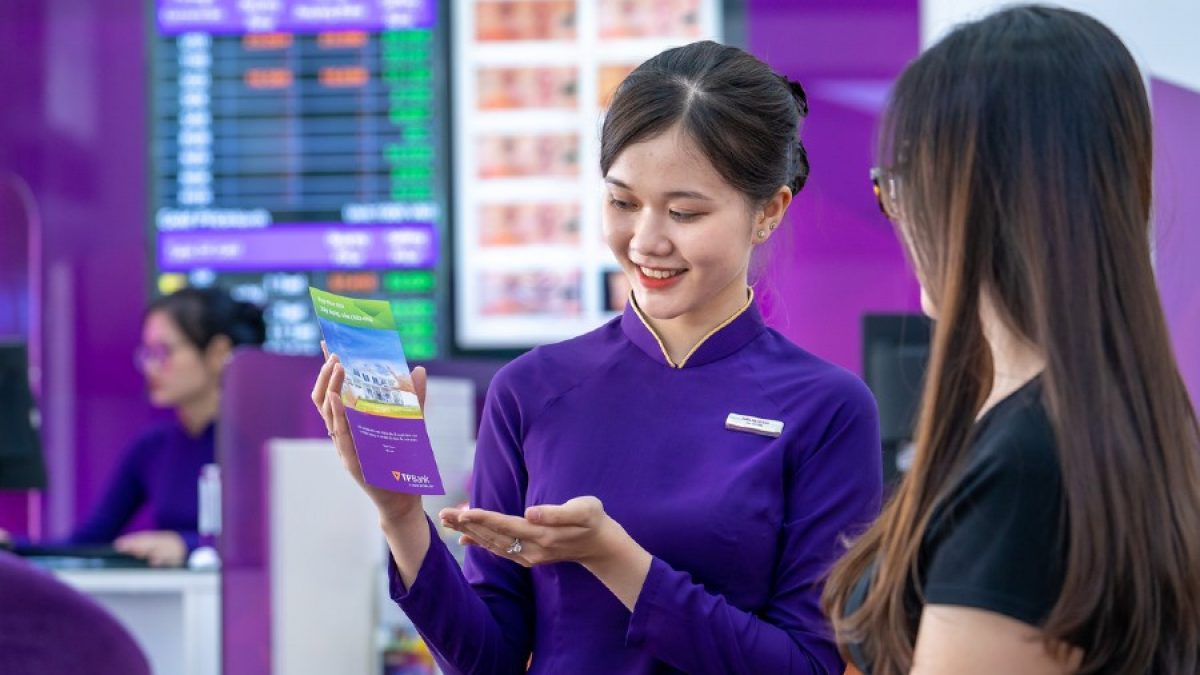
    Private lender TPBank expects its pre-tax profits to top VND8.2 trillion ($358 million) this year, up 36 percent from 2021.

    It also targets a 20 percent increase in assets to VND350 trillion.

    The bank plans a rights issue of 527 million shares this year to raise VND5.3 trillion and increase its charter capital to VND21 trillion.

    VnDirect Securities has forecast 25 percent growth for TPBank this year, higher than the 20 percent expected for the sector.

    BaoViet Securities has forecast its compounded annual growth rate to top 31.4 percent in 2020-22 and return on average equity (ROAE) in the period of 24.8 percent.

  • Singapore sneaker reseller Ox Street to launch in Australia, NZ

    Singapore sneaker reseller Ox Street to launch in Australia, NZ

    Singapore-based online sneaker resale marketplace Ox Street is launching a trans-Tasman expansion, opening an e-commerce store in Australia.

    “Australia is a perfect fit for the community we want to build in the long-term,” said Gijs Verheijke, founder and CEO at Ox Street. “We see a big supply gap when it comes to Australian buyers having access to the most coveted sneakers, whether they’re hot new drops or all-time classics.”

    Verheijke said the company, which was acquired by Carousell last October, has already built a large network of resellers across Australia and New Zealand during the past few years. Ox Street said the emphasis is on enabling faster delivery times and greater access to supply in an industry dominated by US and European megabrands.

    The Australasian launch is part of Ox Street’s ambition to build a “global hub for sneakerheads,” Verheijke said. The company’s short term plan is to build brand equity and a large part of that is being trusted to robustly authenticate the products before they reach buyers.

    Founded in 2019, Ox Street operates across eight Southeast Asian countries, targeting Gen Y and Z investors, collectors and fashion-conscious consumers. The brand reported sales growth surging more than four-fold during the past year.

    As part of the Australia launch, Ox Street has partnered with Sneaker Freaker in an Instagram-based sneaker giveaway worth more than $2000.

  • Uniqlo owner sees big profit drop in China due to Covid restrictions

    Uniqlo owner sees big profit drop in China due to Covid restrictions

    Clothing brand Uniqlo’s Japanese owner said on Thursday its China operation would report a large profit decline in the current fiscal year owing to the country’s Covid-19 restrictions.

    Fast Retailing < is a bellwether for how major global retailers are being impacted by Covid-related shutdowns in China, one of the biggest growth markets for many Western brands.

    China is Fast Retailing’s biggest foreign market, with 863 stores on the mainland and almost 90 outlets in Shanghai, where stringent lockdown measures, introduced in late March, remain in place to contain the country’s worst outbreak of the pandemic.

    The fast fashion retailer said it expects revenue declines and a large drop in profit in its Greater China segment in the second half and for the whole of fiscal 2022 due to Covid restrictions.

    Sales in Greater China region which includes Hong Kong and Taiwan struggled in March, as up to 133 stores were temporarily shut down.

    Fast Retailing has more Uniqlo stores in China than in its home market of Japan. It opened a flagship store in Beijing in November, its third megastore in mainland China, and plans to open 100 locations in the country each year going forward.

    The weakening yen and higher costs for raw materials and shipping have forced Fast Retailing to consider price hikes, a major shift for a company that has long competed on the inexpensiveness of basic items like socks and underwear.

    The company reported a record half-year profit on Thursday, buoyed by sales growth in North America, Europe, and other parts of Asia, while revenue and profit declined in China.

    Operating profit climbed 18 per cent to 189 billion yen ($1.51 billion) in the six months through February from a year earlier.

    The company maintained its full-year profit forecast at 270 billion yen. That compares with a consensus forecast for a

  • Android TV 13 might reduce power consumption for smart TVs

    Android TV 13 might reduce power consumption for smart TVs

    With Android 13 on the way, we’re expecting many important new features to arrive on all devices that are part of the ecosystem, not just smartphones and tablets. Cars and TVs that use Google’s OS are likely to receive their fair share of improvements too, including some that might reduce consumption.

    Obviously, your car won’t consume less fuel or electricity for using Android Auto, but your smart TV might, at least according to a new report by Esper’s Mishaal Rahman. Apparently, Android TV 13 will include a new “low power standby” mode that will prevent some functions to keep running in the background when your smart TV is in standby mode.

    While the low power standby mode is enabled, wakelocks are disabled and network access is blocked. The feature will be disabled by default just in case you want to continue to receive notifications while your smart TV is in standby mode.

    In the same piece of news, the cited report highlights another interesting improvement that Android TV 13 is expected to bring to smart TVs: expanded Picture-in-Picture (PiP) mode. With Android 13 TV, PiP windows can be set to less than 1:2.39 or bigger than 2.39:1. Also, despite the fact that Android TV does not support multi-window features except from PiP, Android TV 13 might actually add a “pseudo-split-screen” mode with docked, expanded PiP windows.