Author: Mei Ling Tan

  • ZTE and China Mobile launch SPN intelligent fault diagnosis system

    ZTE and China Mobile launch SPN intelligent fault diagnosis system

    ZTE Corporation and the Liaoning branch of China Mobile have verified the rule/policy-based SPN intelligent fault diagnosis system on the intelligent management, control and analysis platform ZENIC ONE (UME) and deployed it across Liaoning province in China.

    4GThe system, jointly developed by ZTE and China Mobile, orchestrates the policies for the diagnosis flow through innovative flexible programming of fault diagnosis rules. Thereby, the intelligent management and control system can quickly respond to and meet the requirements of O&M staff to implement minute-level fault location.

    In traditional PTN/SPN network operation, it is difficult to develop alarm-relativeness rules, so the location of substantial faults depends on the experience of senior O&M engineers. The diagnosis usually takes several hours with low efficiency. ZTE has found a new way of fault diagnosis to flexibly orchestrate diagnosis rules and policies in accordance with service scenarios to improve the efficiency of fault diagnosis and location.

    Based on the cloud native and microservice architecture of the ZENIC ONE (UME), ZTE integrates the SPN intelligent fault diagnosis system onto the ZENIC ONE (UME) as an independent tool. This system uses the knowledge graph to build the diagnosis rules and develop the diagnosis process through a series of atomized diagnosis rules, which can be independently programmed by Drools. At the same time, the system adopts the jBPM workflow graphs and flexibly orchestrate rules and policies for different service scenarios, thereby enabling one-touch fast fault diagnosis and location of 4G and 5G base stations backhaul services.

    ZTE and China Mobile have verified the fault diagnosis function of the system in 4G and 5G base station backhaul service interruption and packet loss scenarios on the existing network in Liaoning province. The faults are successfully located through backtracking and review of faults history. The fault location time is shortened from hours to minutes, and the graphical diagnosis policies and flows are completed by one touch. The system significantly reduces the O&M difficulty in existing network and highly improves the O&M efficiency.

    Moving forward, ZTE and China Mobile will continue using AI technologies to promote system self-learning and enrich application scenarios such as mobile apps. On this basis, both parties will further implement closed-loop management from fault diagnosis to automatic service recovery, and push autonomous networks to evolve its service guarantee capability from L2 to L3.

  • An AirAsia flight was diverted after passengers spotted a snake on their plane

    An AirAsia flight was diverted after passengers spotted a snake on their plane

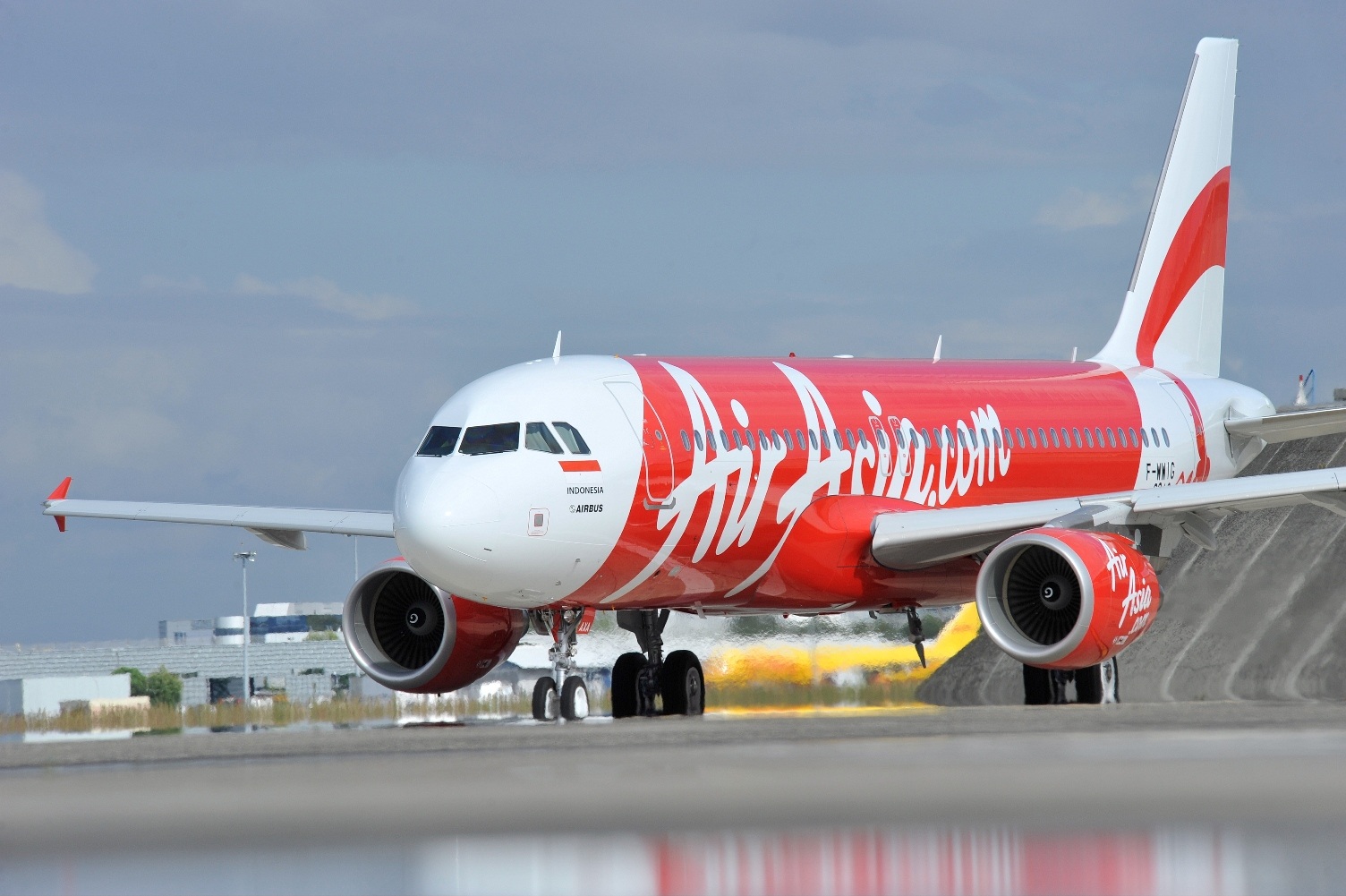
    Passengers on an AirAsia flight had their trip rerouted after spotting an uninvited passenger on the plane.

    In a video shared on TikTok by user @edal8808, what appears to be a long snake can be seen slithering through an overhead light fixture. In the caption, the user wrote that the flight, which was headed from the Malaysian capital city of Kuala Lumpur to Tawau, had to instead make an emergency landing in Kuching, according to a translation of the text.

    AirAsia did not immediately respond to a request for comment from NPR. However, the airline’s chief security officer Liong Tien Ling confirmed the incident in a statement to CNN.

    “AirAsia is aware of the incident that occurred on the flight from Kuala Lumpur to Tawau on Thursday. As soon as the captain was notified, the plane was diverted to Kuching to be disinfected,” he said.

    He went on to state that neither passengers nor guests were in danger, according to the outlet.

    Passengers were able to continue their journey to Tawau that same day, multinational news network CNA reports.

    Still, travelers with upcoming flights have no need to worry that their vacations may turn into a real-life version of Snakes on a Plane. In a statement obtained by CNA, Ling noted that what happened on Thursday’s place is not a common occurrence.

    “This is a very rare incident which can occur on any aircraft from time to time,” he explained.

    The video has been viewed more than 2 million times since being posted on Thursday, and footage of the unexpected discovery has since spread to other social media platforms like Twitter. However, it is unclear if the TikTok user who initially shared the video was the one to record it and they did not respond to a request for comment from NPR.

    It’s not the first time snakes have found their way onto passenger flights. In 2019, a woman traveling home to Scotland from Australia encountered a nasty surprise when she went to unpack and found a snake curled up in her luggage. There was even an occasion where a pilot had to conduct an emergency landing after finding a snake in the cockpit.

  • Two new solar power plants built in southern province

    Two new solar power plants built in southern province

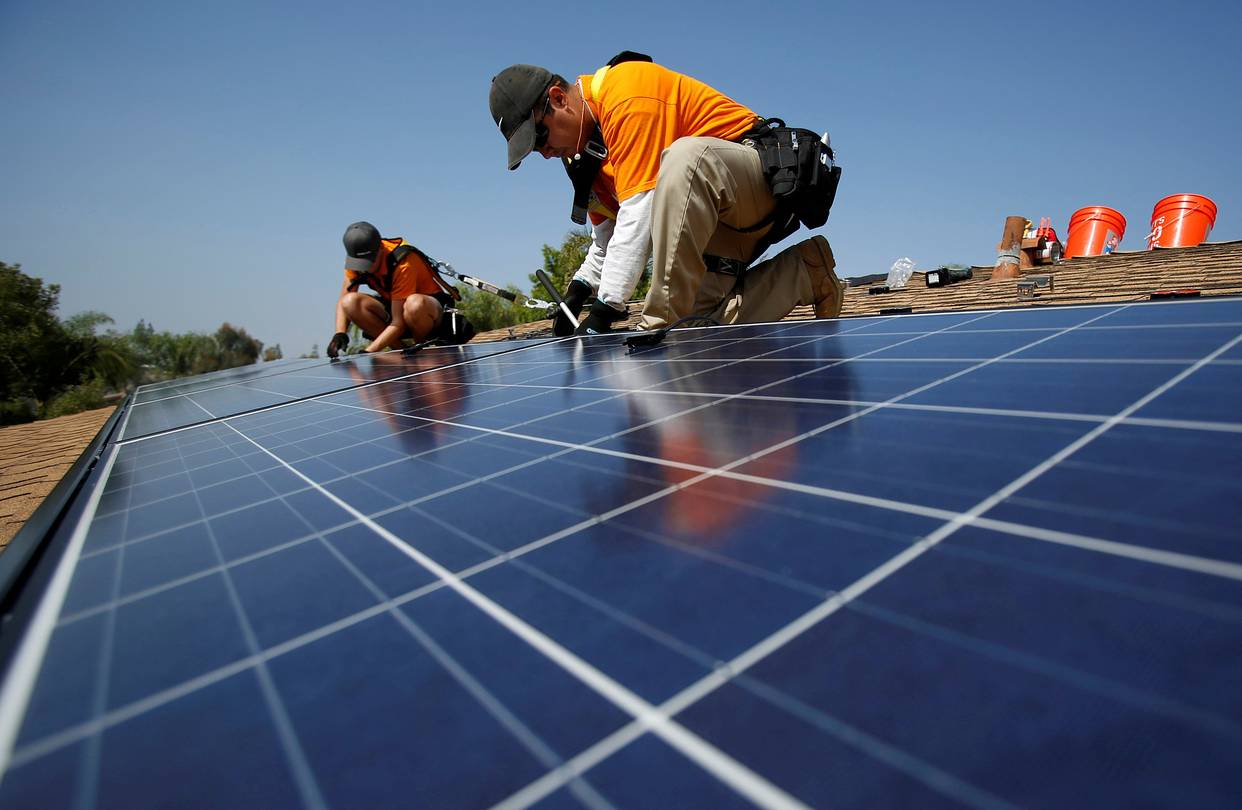
    Dau Tieng 5.1 and Dau Tieng 5.2 solar power plants are expected to start construction in Q2, with an investment of VND3.56 trillion ($157 million).

    With a capacity of 225 MW each, the two power plants will cover 332.5 hectares at Dau Tieng Lake in the southern province of Tay Ninh. Construction is expected to complete in April, 2023.

    The operational time of both projects is 50 years.

    Their investor, Xuan Cau Holdings, had constructed three other solar power plants around Dau Tieng Lake with a total operating capacity of 500 MW.

    Tay Ninh now has about 10 operational solar power projects with a total design capacity of 808 MW.

    According to state-owned Vietnam Electricity (EVN), as of 2021, Vietnam was among the top 10 countries with the highest solar power capacity at 16,504 MW, accounting for 2.3 percent worldwide.

  • iPhone doubles Vietnam market share

    iPhone doubles Vietnam market share

    iPhone’s market share in Vietnam increased from 4 percent in 2020 to 9 percent last year, making it the fifth-largest smartphone seller.

    The growth of 119 percent was the highest for any brand, Counterpoint Research said in a report.

    Apple was behind Samsung (34 percent), OPPO (19 percent), Xiaomi (13 percent), and vivo (11 percent).

    Strong growth in Apple products was seen in the last quarter of the year, with sales doubling year on year, the report said.

    This was when the company launched iPhone 13.

    Last year, taking advantage of the rising demand, several stores were set up to exclusively sell Apple products like FPT’s F.Studio, TopZone, and Lazada Apple Flagship Stores.

    Counterpoint analyst Ivan Lam said: “Apple has always had a place in Vietnamese consumers’ hearts. Last year it expanded its distribution campaign in Vietnam.”

    The overall smartphone market grew by 7 percent last year, the report said.

  • Uber Forecasts Adjusted Earnings Of $5 Billion By Fiscal 2024

    Uber Forecasts Adjusted Earnings Of $5 Billion By Fiscal 2024

    Uber Inc’s Chief Financial Officer Nelson Chai on Thursday forecast $5 billion in a measure of adjusted earnings by fiscal 2024, with gross bookings expected to be between $165 billion and $175 billion.

    He was speaking at the company’s first investor day after it went public.

  • Slyp raises $25 million in Series A fundraising

    Slyp raises $25 million in Series A fundraising

    Digital receipts fintech Slyp has closed a $25 million Series A with the backing of Australia’s big four banks, and plans to use the fresh cash to launch new products and features on its platform.

    The oversubscribed funding round was supported by new investors such as advisory and investments firm Sayers Group, alongside additional investment from the nation’s largest banks.

    While NAB was the first bank to integrate the fintech’s software, Slyp is now working with other financial institutions, as well as buy-now-pay-later providers to get its tech in the hands of millions more Australians.

    “We’re delighted to officially announce our Series A. Thanks to the growing and unwavering support of our investors and partners, Slyp is on track to make Smart Receipts available to half of all Australians by the end of this year,” co-founder Paul Weingarth said.

    “The funds raised will be invested directly into our unique technology that enables Slyp to deliver the most seamless, intuitive, and sustainable proof of purchase in the world, while building new products to improve the entire purchase experience.

    “This year, we will be laser-focused on expanding our presence within the in-store retail and hospitality ecosystem, working closely with Australia’s retail network and leading banks to switch off the paper receipt and transform the customer checkout experience, for good.”

    Founded in 2017 by former PayPal executives Paul Weingarth and Spiro Rokos, alongside former ANZ group data officer Mike Boyd, the fintech delivers ‘smart receipts’ inside of banking apps, cutting out the need for paper in a transaction altogether.

    More than 880 stores and venues are now using the platform, including Chemist Warehouse, Mitre 10, JD Sports, Harris Farm and Hunter St Hospitality and Pacific Concepts.

    Slyp is also looking to expand beyond smart receipts by introducing a product that will allow customers to link their loyalty cards to their payment cards, which will be released later this year.

    Since launching smart receipts in late-2020, 1.2 million have been sent to a customer’s NAB app or via SMS in the last 12 months.

    “Creating seamless digital experiences for our customers is a key investment focus for NAB Ventures and Slyp Smart Receipts has been a perfect fit. The economy is becoming increasingly digitised and Slyp’s technology is creating a more convenient and sustainable experience for our customers,” NAB Ventures managing director Todd Forest said.

    “We’re proud to be an inaugural investor since 2018 and it’s been great to watch the company grow.

    “Since becoming the first major bank to integrate the Slyp solution into our mobile banking just over a year ago, the feedback from NAB customers has been overwhelmingly positive. It’s been really pleasing to see more and more partners sign-up to Slyp and it made the decision to reinvest our next natural move.”

  • 5 Best Gambling Destinations in Asia

    5 Best Gambling Destinations in Asia

    Planning a trip to Asia? You’re in luck! It just so happens that the region is home to the world’s top gambling destinations that easily rival the atmosphere of Las Vegas. From towering skyscrapers and all the way to luxury resorts, Asia is the place to be if you consider yourself a gambler.

    The following Asian countries all deserve a place on your travel bucket list:

    1. Singapore

    If you’ve got the budget, Singapore can be a breathtaking sight. Although it only has 2 casinos in total (keep in mind this is a relatively small country), they easily make up for in quality what they may be lacking in quantity. As anyone who has ever visited Resorts World Sentosa and Marina Bay Sands can tell you, these are some of the finest gambling establishments out there and they will keep you busy for hours on end.

    Don’t forget you can always play online if you’re carrying a computer or a smart device with you. Playing online is a practical solution that keeps you in the game no matter where you are at the moment. Basketballinsiders guide on how to play from Singapore is a great reliable source of information, covering the best offshore casinos that accept players from Singapore. But if you don’t mind the traffic, it pays off to see the Marina Bay Sands infinity pool from up close. The slots connoisseurs among you will be glad to know that the Resorts World Sentosa Casino will spoil you with its vast selection of games.

    2. Macau

    Without a shred of doubt, Macau is a gambler’s paradise. Commonly referred to as the Monte Carlo of the East, numerous travelers visit the country to take in its breathtaking sights while placing a bet or two in one of its numerous casinos. Here, you will find several gambling establishments; combined, they are said to bring in more revenue than Las Vegas.

    The Venetian is one such example and a very popular gambling destination. The glorious 39-story building houses the typical casino gaming repertoire in addition to unique niche casino games that can only be found in Macau. Then, there is the magical City of Dreams that looks like a shopping mall, but comes with a twist – inside, you will find a theater, an aquarium, and, of course, the casino section. While you’re there, don’t miss out on what the Grand Lisboa hotel and casino has to offer.

    Macau is an Asian gambling giant.

    3. The Philippines

    The Philippines is an affordable place to stay, but don’t let its looks deceive you. In reality, it’s a popular gambling retreat, and its pro-gambling climate has allowed 65 casino resorts to gain a foothold in 32 cities combined. Since the country is situated in close proximity to China, flocks of Chinese tourists gather there to visit the local casinos – the one thing they can’t do at home since China decided to ban it.

    It’s impossible to run out of options while you’re in the Philippines, and your selection of casinos to visit will likely depend on where you’re going to be staying. If you’ll be stopping in Manila, our recommendation is to try some of the people’s favorites, and the list includes Manila Bay Resorts, Solaire Manila, and Resorts World Manila. The latter is particularly interesting due to its social venues, cinemas, shopping malls, restaurants, and hotels, all allowing you to treat yourself to something nice if the night goes your way.

    4. Cambodia

    Ever since 1999, the number of tourists who visit Cambodia for gambling purposes has been on a steady increase. In fact, industry experts are speculating that Cambodia may very well become one of the countries to revolutionize land-based gaming or perhaps even the leading country in the entire Asia Pacific region.

    The opening of the Golden Crown in 1999 was the one event to set the precedent. At the time, Poipet was the go-to city for gambling, but nowadays, you’ll see a plethora of casinos along the Vietnam border, all competing against each other to draw in as much visitors as possible. Do not be mistaken – some of these establishments rival the size of Macau or perhaps even Las Vegas.

    5. Malaysia

    Despite the country hosting only one casino – namely, the Resorts World Genting – it still deserves a place on our list. The reason being is that Malaysia is a melting pot of cultures, as evident from its diverse cuisine and architecture. This, and many other things attract a myriad of travelers to stop in one of its entertainment venues and have an amazing time.

    Those who have visited the Resorts World Genting can all attest to its amazing views and a broad selection of games from every genre. The grand total comes down to over 400 table games and 3000+ slots, and counting! Whenever you get tired from all the action, you won’t even have to leave the building to get some rest, as the establishment also happens to be one of the world’s largest hotel complexes.

    Conclusion

    With its numerous gambling establishments and mouth-watering cuisine, Asia is unlikely to disappoint. Once the borders reopen, you’d be doing yourself a disservice not to visit.


  • Coca-Cola, the world’s worst plastic polluter, makes reusable pledge

    Coca-Cola, the world’s worst plastic polluter, makes reusable pledge

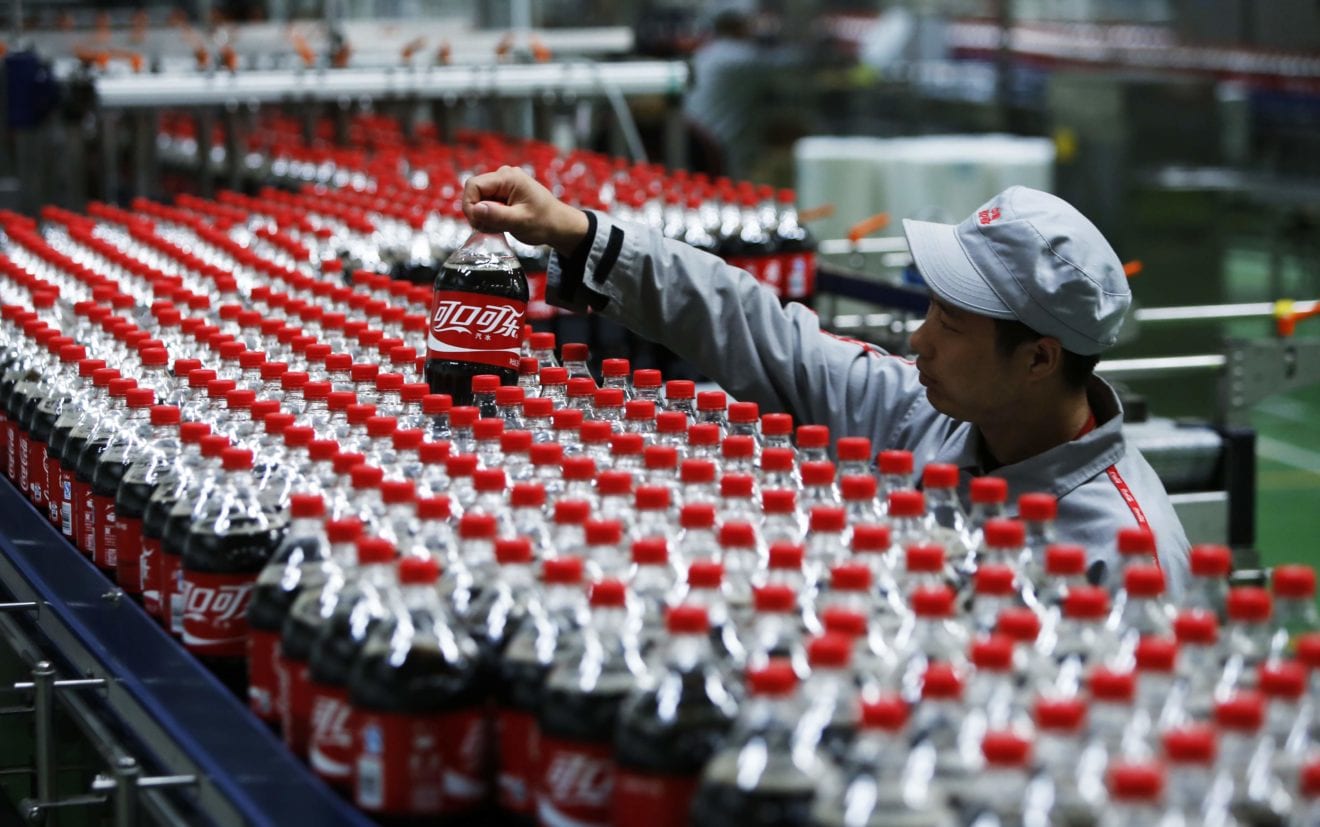
    The Coca-Cola Company on Thursday said it will aim for 25% of its packaging globally to be reusable by 2030, a move hailed by environmental groups who have called out the soft-drink maker for worldwide plastic pollution.

    Coca-Cola is a top target for consumer, investor, and environmental groups concerned about petroleum-based plastic single-use bottles clogging oceans, among other problems.

    The company was the world’s worst plastic polluter for the fourth year in a row in 2021, according to the global coalition Break Free From Plastic’s annual report released in October.

    “We hope that other companies will follow Coke’s leadership and set reusable packaging targets,” said the group’s global corporate campaign coordinator Emma Priestland.

    Reusable packaging includes containers that can be refilled with original products by companies or consumers, such as refillable fountain drink containers and glass and plastic bottles that are refillable or returnable, the cola maker said, referring to reuse guidelines by nonprofit Ellen MacArthur Foundation.

    In 2020, 16% of the company’s packaging was reusable. That year, 90% of its refillable glass and plastic containers were collected, it said.

    Coca-Cola’s announcement on Thursday is “the first known goal of its kind” and “a welcome change in strategy,” fund manager Green Century Capital Management said in a statement.

    Green Century and activist investor As You Sow filed a shareholder proposal urging Coca-Cola to reduce single-use plastic. They are now considering whether to withdraw their proposal.

    If Coca-Cola hits its new goal, it will be “easier to achieve our objectives of a World Without Waste, where we intend to collect back a bottle or can for every one we sell by 2030,” Chief Executive Officer James Quincey said during the company’s fourth-quarter earnings call Thursday.

    Eight in 10 American adults support government policies to reduce single-use plastic, according to a poll released on Wednesday by advocacy group Oceana.

    Coca-Cola, PepsiCo and other international brands in January called for a global pact that included calls to cut plastic production, a key growth area for the oil industry.

    Break Free From Plastic cleaned beaches in 45 countries and found nearly 20,000 Coca-Cola branded products, more than the next two largest plastic polluters – PepsiCo Inc and Unilever PLC – combined.

  • Gasoline shortages continue in the south

    Gasoline shortages continue in the south

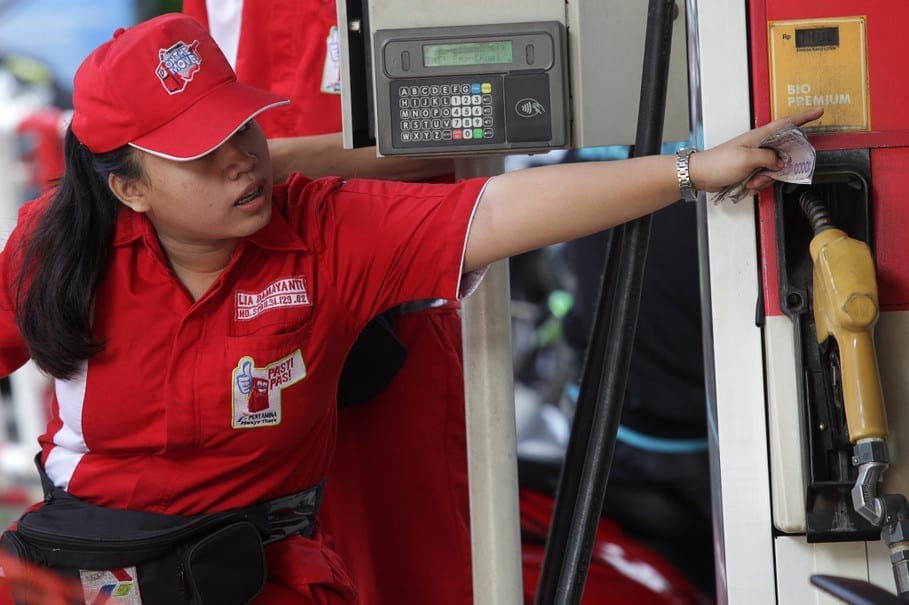
    Gasoline stations remain shut in southern localities, including HCMC, due to a short supply despite authorities’ assurances to the contrary.

    As of Thursday afternoon, seven out of HCMC’s 548 gas stations did not have stocks of the popular RON 95 gasoline to sell, according to the city Department of Industry and Trade.

    In Long An Province, several remained closed, while others limit sales, selling to customers only half of what they order.

    In Vinh Long Province, authorities have found some gas stations with empty tanks and waiting for delivery from suppliers.

    One outlet in Soc Trang Province’s An Lac Tay Commune was found not selling despite having 7,000 liters of the E5 RON 92 biofuel.

    Its manager claimed he was not selling yet because the stock had just arrived.

    Le Viet Long, a deputy inspector at the Ministry of Industry and Trade, said the reason was dubious and authorities are investigating further to slap possible penalties.

    A gas shortage has been reported in the south due to the reduced capacity of Vietnam’s biggest refinery, Nghi Son, though officials have said there is enough to fully meet demand in February.

    Trade minister Nguyen Hong Dien said Wednesday gas stations found not selling despite having stocks would have their license revoked.

    The retail price of RON 95 has increased by nearly 4.6 percent to VND24,360 ($1.07) per liter this year.

    On Friday that could increase to 8.9 percent.

    The prices in Vietnam are determined by the government on the 1st, 11th and 21st day of each month.

  • Waze launches Cupid-themed driving experience just in time for Valentine’s Day

    Waze launches Cupid-themed driving experience just in time for Valentine’s Day

    Waze is not missing any chance of bringing new driving experiences to its users, so it’s no wonder that this time of the year we’re getting a Valentine’s Day-themed voice pack to guide us in our travels. Earlier today, Waze revealed that a new Cupid driving experience will be available everywhere in the world.

    We’re not sure who’s supposed to impersonate Cupid but installing the new driving experience implies that you’ll be hearing his words of wisdom. Waze is also “warning” users that Cupid might have some hot takes “on the state of dating and love in 2022,” so if you’re not ready for some dad jokes, you better skip this one (unless Waze has something else in mind).

    Just so you know, the pack will include Cupid’s voice, which can be paired with the limited edition Lovewagon and a Cupid Mood, if you really want to get into the Valentine’s Day mood.

    Of course, the Cupid driving experience will only be available to download for a limited time, but once installed, it’s yours to keep forever. It’s only available in English, but even if you don’t understand the language, I see no reason not to go full Valentine’s Day mode if you love the celebration of romance and love.

  • Asia Pacific outlook: Surge in data centers

    Asia Pacific outlook: Surge in data centers

    According to Cushman & Wakefield, the Asia Pacific data center market is poised to become the world’s largest data center region over the next decade. In a 2022 report, Singapore takes the top data center spot in the Asia Pacific, and the second place globally – tying with Silicon Valley after Virginia. In the region, Hong Kong claims the second spot, Sydney comes in third place, while Shanghai maintains the fourth place.

    The surge in data center activities is led by colocation providers including AWS, Microsoft, Tencent, and Alibaba. Research firm Report Linker revealed that investments into the region’s data center market amounted to US$63.15 billion last year, with investments predicted to reach US$94 billion by 2027.

    The largest data center market in the region, Singapore lifted a moratorium on new data center construction in January 2022. The moratorium was first implemented in 2019 to allow new server facilities that meet energy efficiency criteria to be constructed. As of last year, Singapore had more than 70 data centers operating with a total power capacity of 1,000 megawatts.

    For telecom operators, where data centers are becoming a strategic asset, many are deliberating data center partnerships or sell-offs to cash in. Last November, Globe Telecom was in advanced talks with ST Telemedia Global Data Centres (STT GDC) to establish a data center business in the Philippines.

    To optimize and grow the value of its large and unique portfolio of quality infrastructure assets, Singtel outlined plans to create a regional data center business last year. Through a partnership with Thailand’s Gulf Energy and AIS, Singtel’s regional data center strategy aims to offer customers a differentiated value proposition.

    The global pandemic sparked work-from-home arrangements and a spike in digital infrastructure and cloud demand. Hyperscalers are amongst those pressured to increase data centers. Compounded by the acceleration of 5G deployments and resulting technologies, strategic investments into data centers have been on the rise. New sources of funding from private equity funds also contribute to the growing data center market to capitalize on future growth opportunities.

    Datacenterpricing, a data centre research specialist, estimated over 1.5 million square meters of space under development for data centers in the Asia Pacific.

    A recent high-profile investment is the Asian Infrastructure Investment Bank (AIIB)’s US$150 million into data centers serving emerging countries in the Asia Pacific. Of which US$100 million would be channeled through Keppel’s Keppel Data Centre Fund II (KDC Fund II), which closed with US$1.1 billion in funding commitments.

    After the US, China has the second-largest hyperscaler data center capacity, accounting for 15% of the world’s total. According to Datacenterpricing, China will expand its data center market by 239,000 square meters to represent a 14% growth. Without overloading its power grids, China’s National Development and Reform Commission (NDRC) announced the set-up of four mega data center clusters outside the main population epicenters.

    South Korea is also a hotspot for data centers. In January, Equinix and Singapore’s sovereign wealth fund, GIC will jointly develop and operate two xScale data centers in Seoul, South Korea. Digital Realty will also be launching its first carrier-neutral data center in the capital to scale large enterprise applications.

    With many countries in the region still underserved, Asia Pacific will continue to witness unprecedented growth in the data centers, fuelled by increased digitalization and e-commerce.

    Indonesia, for instance, offers immense opportunities with a digital economy projected to be worth US$124 billion by 2025. The country houses more than 200 million internet users and an e-commerce market expected to reach US$100 billion by 2025. Last May, Singapore-headquartered STT GDC entered into a partnership with Indonesian Triputra Group to develop a new data center operating platform in Jakarta. Tencent Cloud built two data center facilities in the country.

    Alibaba Cloud also built its third data center in Indonesia last year. In the Philippines, Alibaba Cloud built its first data center last year to support businesses’ digitalization. This year, Alibaba has plans to debut centers in Thailand to expand its foothold in the region – a key profit driver which accounts for about 8% of the company’s total revenue, and amid greater competition by Tencent in China.

    In one of the latest, SpaceDC partners with JLL to build the largest data center in the Philippines. India, being the second most populous country in the world, is another country with very high population, but with a very low data center capacity. The current data traffic boom in India makes it another high-growth market for data centers. According to reports, Bharti Airtel plans to triple its data center capacity to 400 megawatt by 2025.

    Data centers demand is here to stay. As some telecom operators rethink their strategy for non-core operations, others view the data center business as a worthwhile investment. With the emergence of 5G and accompanying technology, telecom operators are well-positioned to seize opportunities working with, rather than against hyperscale providers to extend their capabilities to the network edge
  • Telenor sale could endanger Myanmar activists

    Telenor sale could endanger Myanmar activists

    The sale of Telenor’s Myanmar subsidiary could place the personal data of its 18 million customers in the junta’s hands. As Telenor finalizes the sale of its Myanmar business to a military-linked group, concerns have been raised that sensitive data will be infringed and that families of activists in hiding will be put in harm’s way.

    According to sources, the sale will be completed by 15 February. Last July, Telenor announced that its Myanmar subsidiary would be sold to Lebanon’s financial firm, M1 Group. Military-linked Shwe Byain Phyu was later known to be a co-investor in the sale approved by the junta.

    Justice for Myanmar has since urged the Norwegian government to intervene in the sale. There had been reports that the Ministry of Transport and Communications (MOTC), ruled by the junta, had made more than 200 requests to Telenor for information including records of calls, over the past year.

    Telenor has since said that customers in Myanmar are handled by Telenor Myanmar and that Norwegian or EU data protection regulations do not apply to its subsidiary.

  • Masan acquires majority stake in Phuc Long tea chain

    Masan acquires majority stake in Phuc Long tea chain

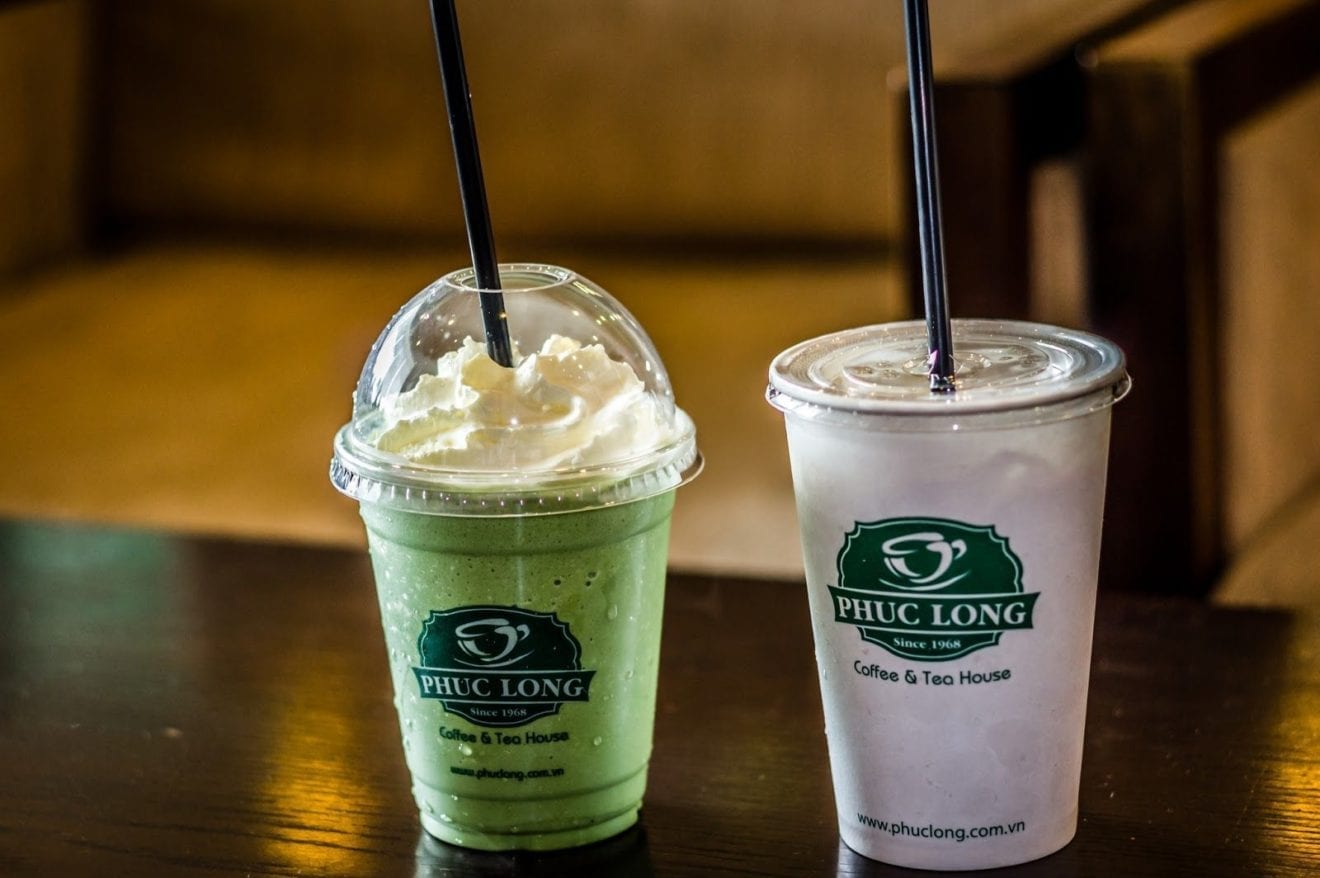
    Conglomerate Masan announced Wednesday that it has spent an additional $110 million to increase its ownership in the Phuc Long beverage chain from 20 percent to 51 percent.

    “Since Masan’s initial investment, Phuc Long has demonstrated strong synergies with MSN’s Point-of-Life strategy, which can now be accelerated with Phuc Long as a consolidated subsidiary of Masan,” it said in a press release.

    Masan first bought a 20 percent stake in Phuc Long in May last year for $15 million. The latest purchase puts the valuation of the tea and coffee chain at $355 million.

    Incorporating Phuc Long’s tea kiosks into Masan’s WinMart+ stores nationwide has been part of the conglomerate’s plan since last year as it sought to advance its “point of life” strategy by developing a mini-mall concept that serves a wide array of essential products and services such as groceries, beverage, pharmaceuticals and financial products.

    Masan plans to launch 2,000 such mini-malls this year, and Phuc Long is set to contribute up to VND3 trillion ($132 million) to the conglomerate revenues, which hit VND88.6 trillion last year.

    Phuc Long was established in 1968 in the Central Highlands province of Lam Dong. The company launched its tea and coffee chain in 2012 with is first store in HCMC.

  • Are Bankers Ready To Become Gamers

    Are Bankers Ready To Become Gamers

    Play-to-Earn games where participants convert digital credits into real-world money are gaining in popularity and are the gaming industry’s next big thing. Blockchain-based technology is upending the gaming industry. Until recently, regular games didn’t offer monetary compensation to gamers. Instead, proceeds flowed to game platforms.

    These new types of play-to-earn games are an early iteration of what many see as the promise of Web3,» Alexander Braun, an executive director at Capco responsible for digital strategy and innovation.

    In the early web, referred to as web1, users consumed content in a way best described as read-only.

    Technological advances gave way to Web2, giving users read-write access, and enabling them to load content onto platforms such as YouTube and Facebook.  These platforms went on to monetize the shared content.

    Introducing non-fungible tokens (NFTs) allows players to earn and own digital assets, which they can convert into money and use outside the game. This decentralization of economic ownership is a key component of Web3.

    In this sense, these games have become virtual economies. The hype around NFTs and the metaverse are closely connected to this development, Braun says.

    The global video gaming market is estimated to reach $268 billion by 2025. This sum should be setting off alarm bells at banks.

    The NFTs earned in such games are manifold and include virtual characters, decorative items, and pieces of land, which players can earn and transfer into real-world money.

    Microsoft’s $70 billion planned acquisition of game developer Activision Blizzard last month, and Walmart’s filing of patents last year related to creating and selling virtual goods show the importance businesses are assigning to games and the metaverse.

    Some go as far as to say the paradigm shift in gaming could serve as a blueprint for the start of a new economy, based on a self-governing financial system. One in which the way people interact with traditional financial institutions and with governments will fundamentally change.

    This expectation is certainly the driving force behind the billions of dollars invested in blockchain-related projects, Braun says.

    Banks can enter the trend in different ways beyond the short-term gain of improving efficiencies and streamlining outdated processes. It is also a massive opportunity for them to generate new business, Braun says.

    Yet the discussion is currently dominated by the banks’ fear their role as an intermediary will be made redundant by blockchain technology, he adds.

    However, if banks learn the costly lessons from the software industry, which was afraid of being disintermediated by open-source-software in the late 1990’s, initially fighting it and almost going extinct in the process, only to later embrace it becoming all the more profitable as a result, they will have an important and very prosperous role to play in the future, Braun says.

    Or is the real question: will gamers become bankers before bankers become gamers?

  • Twitter is cutting ties with its two-factor authentication message provider

    Twitter is cutting ties with its two-factor authentication message provider

    Twitter is ending its business relationship with the company that sends its two-factor authentication messages to its users. In a disclosure to U.S. Senator Ron Wyden, Twitter wrote that it is ‘transitioning’ from working with Mitto AG, a tech company based in Zug, Switzerland, and backed up its decision with some reports from the media.

    But why Twitter decided to stop working with Mitto AG? Well, according to some media reports, the reason is that a co-founder of the Swiss firm has been assisting governments in discreetly tracking and monitoring the phones of people to whom the company sends text messages. There were even cases when he obtained the call logs of some individuals.

    A spokesperson for Mitto said in a statement that Mitto AG “does not disclose information about its business partners, through any channel – official or unofficial – full stop. Generally, such agreements are mutual in nature, with both parties agreeing to protect the privacy and integrity of the other.”

    Mitto AG works with telecommunication and software companies to send text messages like sales promotions, appointment reminders, and two-factor authentication codes to people from all over the world. Mitto AG works with companies such as Google, WhatsApp, Telegram, TikTok, and Alibaba. There is yet no word from these firms on whether they will also follow Twitter in terminating their business relationships with Mitto AG.