Author: Mei Ling Tan

  • Market Is Down: Riding Out Stock Market Volatility

    Market Is Down: Riding Out Stock Market Volatility

    Investors should buy low and sell high in an ideal world. But instead, investors frequently do the opposite—they purchase high and sell low. While volatility can be unpleasant, it is an inherent element of the investment process.

    Many investors become concerned during turbulent periods and reconsider their long-term investing ideas. Of course, nobody wants to see their account worth fall, but you can ride it out if you have a long-term plan to stay invested.

    Uncertainty is encoded in the human brain. While this may have been useful in the past, it is now a dangerous inclination. Read below to learn how to ride out the uncertain and volatile stock market with your ongoing and future investment plans.

    What Does A Volatile Market Look Like?

    The degree to which the stock market’s value goes up and down is measured by its volatility. Individual stocks can become more erratic around important events like earnings reporting.

    Some equities are more erratic than others. Dread is frequently linked to volatility, and fear increases during weak markets and collapses.

    Volatility, on the other hand, does not measure direction; it merely measures the magnitude of price changes. The CBOE Volatility Index forecasts stock market volatility over the following 30 days.

    The VIX is often regarded as the market’s “fear indicator.” This is because volatility and risk are inextricably linked for traders who want to buy cheap and sell high every trading day. However, long-term investors’ daily in individual equities is insignificant.

    Riding Out The Volatile Phase

    Portfolio diversification and downside protection techniques will assist you in meeting your long-term objectives while remaining unaffected by short-term market changes.

    Here we have discussed these techniques for maintaining your financial stability in an unstable stock market in further detail—

    Diversify

    The idea behind diversification is that diverse asset classes or types of investments will respond to market events differently. However, diversifying your portfolio does not promise profitable future outcomes or provide loss protection.

    However, diversity might make the process of achieving long-term market growth potential more comfortable. Therefore, a significant step in achieving your financial objectives is diversification.

    Each sort of investment bank is impacted by market fluctuations differently. Investing a tiny portion of your bond portfolio may be beneficial, even if you are saving for a goal that will take several decades to reach. For an illustration of how an investor with 25 years before retirement may divide up assets, see “Spread Your Assets” below.

    Fight Your Obsessive Nature

    Staying the course has yielded greater returns than exiting the market entirely. However, if you are still concerned about a market slump, adopt a more cautious investment approach.

    Bonds and mutual funds are less volatile than stocks, so speak with your financial advisor about investing in these asset types. However, your investments may still provide a good return in the long term.

    Before making a choice, several financial experts recommend checking with a financial counselor. Also, consider investing in assets that are more likely to keep their value in the short term if you are nearing retirement age.

    Plan Your Investments For Long Term

    If you are an individual investor, you should have sufficient safety reserves to cover unforeseen short-term expenses and only make long-term investments with money you won’t need for at least three years.

    The number of an institution’s assets that it intends to spend annually must be planned for, and the portfolio must be structured to include shorter-term assets like cash or bonds to cover those yearly demands.

    Make sure that your investing strategy includes frequent protection against behavioral biases. An investing process is a set of internal procedures that you will use to put your investment philosophy into action.

    You should be aware that there isn’t a procedure that works for everyone and that you shouldn’t try to copy it. Instead, you should consider your skills and shortcomings and develop an investing strategy designed to emphasize your strong points and minimize your deficiencies.

    Reevaluate Your Risk Tolerance Before New Investments

    Risk capacity is your financial ability to accept a loss, whereas risk tolerance is your capacity to tolerate significant price changes emotionally.

    Market declines may remind you to reevaluate your risk tolerance, but we advise delaying until you are calm. However, risk tolerance can—and ought to—be considered at any moment.

    Do you have enough money to accomplish short-term objectives? The ideal place to put money that you’ll need soon or that you can’t afford to lose in reasonably stable assets like money market funds, certificates of deposit (CDs), or Treasury bills.

    When the stock markets are volatile, having your next year’s worth of living costs in a bank account or money market fund, together with a few more years worth of bonds that mature when you need the money, can help retirees maintain their composure.

    Include Defensive Assets In Your Strategy

    Defensive investing techniques are intended to provide first, followed by moderate growth. These tactics are designed to shield investors from big losses brought on by significant market declines.

    In contrast, an offensive or aggressive investing strategy looks to profit from an upturn by buying assets that outperform for a specific degree of risk and volatility. Both offensive and defensive investment methods need active management, which might result in greater investment costs and tax obligations.

    Additionally, a defensive portfolio manager can keep a moat of cash and cash equivalents like Treasury bills and commercial paper.

    The goals in both situations are to safeguard current assets and maintain inflation-beating growth. Therefore, a defensive portfolio manager will only choose equities from well-established, well-known companies.

    Be Steady And Wait It Out!

    Your financial objectives, time horizon, and risk tolerance should be all factor into how much risk you are willing to face. Your adviser should assist you in filling up an investor profile with many hypothetical questions.

    Keep your attention on your long-term financial security strategy while keeping an eye on the larger picture (what is happening in the market).

    With a strong plan that covers your future rather than the present and the presence of mind, you can easily maintain financial stability in any volatile market situation. All you need to be is a little more patient and optimistic in such cases.


  • Zuckerberg announces $1,500 Meta Quest Pro and takes a shot at Apple

    Zuckerberg announces $1,500 Meta Quest Pro and takes a shot at Apple

    On Tuesday, Mark Zuckerberg unveiled Meta’s new $1,499 Quest Pro Virtual Reality (VR) headset. VR gives the user the immersive experience of being in a fabricated environment that is not real, no matter how realistic it looks. Meta’s CEO and co-founder took a shot at Apple which is supposed to unveil its own pricey mixed-reality headset early next year.”
    While not exactly mentioning Apple by name, the executive did make some comments referencing Apple’s so-called “Walled Garden.” Mark said, “In every generation of computing, there’s been an open ecosystem and a closed ecosystem, there was Windows and Mac, then Android and iOS. Closed ecosystems focus on tight control and integration to create unique experiences and lock in. Although most of that value ends up flowing to the platform over time.”
    The executive goes on to say, “I see our role is not just helping to build this open ecosystem, but making sure that the open ecosystem wins out in this next generation of the internet.”
    Zuckerberg has been angry at Apple ever since last year when the company gave iPhone users the opportunity to opt out of being tracked by apps and websites for the purpose of receiving customized ads. And that hit Meta hard as the App Tracking Transparency (ATT) feature cost the company more than $10 billion in revenue. And while that wasn’t the only factor involved, for the year to date Meta’s shares are down $210 or a whopping 62%.
    Last month, CBS News calculated that Zuckerberg’s net worth had declined by $71 billion because of the stock decline. Ouch! That has got to hurt. And we get the feeling that Mark blames Apple for much of the hit he has taken personally.
    Zuckerberg sees VR and Augmented Reality (AR) as the building blocks of a new platform that could be found on a new device that could become more popular than the smartphone. First, let’s tell you that AR allows users to see computer-generated data superimposed on top of a live video feed. A good example of this is Google Maps’ “Live View” which can be activated while walking.
    Users see the view in front of them thanks to a rear camera. On top of that image are arrows that give the user navigation directions while other computer-generated icons point out landmarks and notable locations.
    Apple’s upcoming headset, nothing more than a rumor at this point, will reportedly be powered by an Apple M2 chip and could feature 16GB of memory. Rumored pricing has Apple’s headset costing over $2,000 and perhaps reaching $3,000.
    After these headsets are released, it appears that the next item on the agenda is AR glasses similar to Google Glass. Many see AR glasses eventually replacing the smartphone as the glasses can project data into your eyes while doing everything that a smartphone can do. Apple is supposedly working on AR glasses although they are believed to be a few years away.
    Zuckerberg made it sound as though Meta is also working on a similar product. “The fundamental technologies across the stack to build augmented reality glasses are coming together. We’ve got displays, sensors, silicon, AI, and more,” the CEO said.
    In early April of 2012, Google unveiled “Project Glass” to the world releasing “a day in the life of” video that showed how the specs could handle the things that a smartphone could do. But the pricey glasses led many bystanders to wonder if they were being photographed or recorded without permission. Some movie theaters banned Google Glass as they worried that the user could be recording a bootleg video that would be sold illegally.
    Eventually, users became known as “Glassholes” and Google stopped selling the device to consumers. Google is reportedly taking another shot at this device and is said to be working on its own AR specs for the public that will look different than Google Glass and more like regular eyeglasses.
  • Heinz launches Black Garlic Mayo version for Halloween

    Heinz launches Black Garlic Mayo version for Halloween

    It’s well and truly the scary season, and Heinz’s newest sauce is set to get you in the Halloween mood, one dip at a time. Launching the [Scarily] Good Black Garlic Mayo, Heinz have found a way for you to incorporate all things spooky into all your meals throughout October and maybe even into November, because it’s that good.

    Arriving in three limited-edition collectible designs, the Black Garlic Mayo is rich, tangy and slightly sweet and umami-packed, making it a fang-tastic accompaniment to your dinners. The best part about this jet-black condiment though, is that it’s vegan! It’s safe to say that it’s definitely a treat.

    A Kraft spokesperson said: “We are un-boo-lievably excited for Heinz fans to get their hands on our newest, fang-tastic [Scarily] Good Black Garlic Mayo. This new product is the perfect way to embrace the spooky season, suitable for all audiences, even vampires! Don’t miss out on this limited batch.”

  • Nissan Exits Russian Market

    Nissan Exits Russian Market

    Japanese auto giant Nissan has announced its exit from the Russian market. The automaker’s Executive Committee approved the sale of its Russian operations to the state-owned NAMI, the Central Research and Development Automobile and Engine Institute. Nissan had stopped operations in Russia in March this year, following the invasion of Ukraine. It then ceased operations at the company’s St. Petersburg plan later the same month citing parts shortages. Nissan said it will book a loss of 100 billion Yen (around $686.2 million) with the sale of its local unit in Russia. The sale will be formalised in a couple of weeks following approvals from local authorities.

    The sale transfer will include all of Nissan’s Russian operations under the Nissan Manufacturing Russia LLC (NMGR) legal entity to NAMI for future passenger vehicle projects. This includes the manufacturing and R&D facilities in St. Petersburg, and Sales & Marketing centre in Moscow, which will operate under a new name. The company further said that all of Nissan employees will receive employment protection of 12 months. The terms of sale allow Nissan with the option to buy back the entity and operations within the next six years.

    Speaking about the exit from Russia, Makoto Uchida, President and CEO – Nissan, said, “On behalf of Nissan, I thank our Russian colleagues for their contribution to the business over many years. While we cannot continue operating in the market, we have found the best possible solution to support our people.”

    The automaker said it will maintain its full-year guidance. More details on the exit will be reported after further assessment during the second quarter results in November 2022.

  • Switzerland’s First Private Digital Bank is Open for Business

    Switzerland’s First Private Digital Bank is Open for Business

    Swiss digital bank Alpian received its banking license from Finma in April. The launch of its private banking app marks the start of business operations.

    Alpian bills itself as the first Finma-licensed digital private bank in Switzerland. The app, through which the bank exclusively offers its services, is now available for download in the Apple and Google Play Stores, according to a statement on Tuesday.

    The bank’s digital service geared toward mobile devices, combines everyday services and private banking, bringing a new combination of banking and investment services to the market. The hybrid concept combines a secure, state-of-the-art banking platform with the support and advice of experienced wealth advisors, it said.

    The offering is designed to give affluent clients access to services otherwise reserved for the clientele of traditional private banks. It offers professional and highly personalized services at a management fee of 0.75 percent which Alpian calls «competitive».

    A unique selling point compared to other neo-banks is a video call function that can be used to contact advisors from within the app. Personal contact with advisors is an indispensable part of the offering, according to Alpian.

    The digital bank, originally launched by the Geneva-based Reyl Group, received its banking license from Finma in the spring after a two-year lead time. According to the information previously provided, it intends to offer its services exclusively to Swiss customers. The target group is between 100,000 and one million Swiss francs of assets.

  • Revolut is Nipping at the Heels of Traditional Swiss Banks

    Revolut is Nipping at the Heels of Traditional Swiss Banks

    The Swiss retail banking business is becoming increasingly digitalized. A study sheds light on the newcomers challenging established players.

    Efforts to digitize banking services continue to grow in Switzerland, with the gap between retail banks and digital banks narrowing. The biggest differences remain in the functions offered and the customer experience, where neobanks stand out through innovation and their primarily digital customer relationships, according to a digitalization study by Swiss consultancy Colombus Consulting.

    The Swiss digitization rankings continue to be led by UBS, Postfinance, Raiffeisen, and Credit Suisse. In eighth place comes Yuh, the first newcomer. The neo-bank emerged from a partnership between Postfinance and Swissquote, overtaking the latter after just 18 months.

    Moreover, retail banks are catching up with digital banks and their hybrid services, the report adds. The digital reach of Swiss retail banks increased by 12 percent to 26 million monthly visits, while social media reach increased by 7 percent to 2.3 million subscribers.

    According to Jean Meneveau, director of Colombus Consulting Switzerland, traditional retail banks need to score points in the highly competitive market, especially with innovations. Credit Suisse, for example, offeres more digital services with its CSX brand, while CIC was the last bank to enter this niche, launching CIC ON, offering a whole range of digital and personal finance solutions.

    In just a few years, mobile apps have evolved from a simple showcase for customer services around e-banking to an offering where banks are concentrating all of their innovation efforts.

    In this area, Revolut remains unbeatable, according to the study authors with special functions such as time-limited bank cards and instant payments competing directly with Twint. Nevertheless, large banks in particular continue to prefer this payment solution, but 80 percent of all respondents now use it.

    When it comes to social networks, 58 percent of the banks surveyed use Linkedin, while only 20 percent have an active Tik Tok account. Apparently, the aim is to appeal to professionals in a serious setting rather than to younger people in an unconventional setting, the report says.

    Another difference is in the content disseminated. Where traditional banks emphasize their ESG products and CSR commitment, neo-banks are more likely to talk about new technologies and cryptocurrencies.

    Opening an account is becoming increasingly digitized, with two-thirds of participants offering such services. However, the more conservative institutions in particular, are focusing on a hybrid customer relationship, using both digital channels for simple tasks and personal consultations for more complex customer needs.

    Overall, customers are not at the point yet where they want to use digital channels for transactions to do with buying real estate or retirement planning.

  • Vietnam economy seen growing 8% in 2022, beating official target

    Vietnam economy seen growing 8% in 2022, beating official target

    Vietnam’s economy is expected to grow 8% this year, beating an official target for an expansion of 6.0%-6.5%, the government said on Tuesday.

    The country’s exports are forecast to rise 9.5% to $368 billion in the year, the government said in a statement, adding that its foreign direct investment inflows are seen rising 6.4%-11.5% to $21 billion-$22 billion.

    Vietnam, a regional manufacturing hub, has seen its economy rebounding from the pandemic, with gross domestic product in the third quarter growing 13.67% from a year earlier.

    The government said it will pursue “a flexible and prudent” monetary policy during the rest of the year to ensure macroeconomic stability.

    Vietnam will aim for a growth of 6.5% and will consider an inflation target of 4.5% next year, the government said.

  • Thai beauty e-commerce platform Konvy bags $10 million in series A

    Thai beauty e-commerce platform Konvy bags $10 million in series A

    Founded 10 years ago, Konvy is now Thailand’s top beauty e-commerce platform. It plans to accelerate its omnichannel and international distribution with a new Series A of $10 million from Insignia Ventures Partners.

    Konvy was launched in 2012 by Chinese entrepreneur QingGui Huang, who previously managed fashion e-commerce platforms in China. It now works with more than 1,000 brands, representing SKUs of more than 20,000. Its brand portfolio includes L’Oréal, Shiseido, Sulwhasoo, Eucerin and La Roche-Posay.

    “Konvy had the advantage of starting in Thailand when there were no really significant e-commerce players there at the time,” Huang told TechCrunch. “We’ve since leveraged our first mover advantage in Thailand to become a leading e-commerce player in the market.”

    Konvy founders Leon Huang, Pornsuda Vangvidhayakul and QingHui Huang

    Konvy’s goal is to help local and international beauty brands take advantage of two major trends. The first is that health and beauty purchases are a priority spending category for Thai consumers and the second is that Thailand sees high rates of e-commerce purchases and social media usage, meaning that young people in Thailand spend an average of about two hours and 55 minutes on social media each day.

    Huang said he confirmed his assumptions about Thai spending on beauty products through conversations with brands, which drove his desire to start Konvy.

    “This opportunity of health and beauty being a priority spending category for Thai consumers is a function of both demand and supply circumstances favoring this consumer behavior over the past decades,” he said. “On the supply side, Thailand has been a manufacturing hub for a lot of international brands for more than 40 years. This has spawned as well a thriving local industry. On the demand side, we see that Thai consumers are plugged into this mindset of ‘upgrades’ when it comes to health and beauty, that is to say, it’s not just about accessing such products but actually looking for the best products and high willingness to spend on the latest trends.”

    Konvy taps into the high rate of social media usage by developing a feedback loop, where engagements on its partner brands’ not only helps Konvy’s existing portfolio, but also helps more brands in the future. For example, as more Gen Z consumers bought products they saw on TikTok during the pandemic, Konvy made itself more present on that channel.

    In a statement, Insignia Ventures Partners founding managing partner Yinglan Tan said, “While there may be stronger competitors from horizontal marketplaces in the future, we believe Konvy is best positioned to be the market leader in the online beauty segment given its long-standing brand equity, brand-centric and community-led approach.”

  • Johnnie Walker launches new Ghost and Rare in Hong Kong

    Johnnie Walker launches new Ghost and Rare in Hong Kong

    Christmas is just around the corner. Get ahead on your shopping for all the nice people who have been good to you this year. If you’re looking for something classy, boozy, and rare, to give to a special someone, a quality bottle of liquid gold is always a good choice. And the good news is, starting today, you’ll be able to purchase the fifth edition of Johnnie Walker Blue Label Ghost and Rare in Hong Kong. Give the gift of rare whiskies from one of the world’s most famous grain whisky distilleries with more than 100 years of distilling history.

    This new release marks the first Ghost and Rare expression from Johnnie Walker master blender Emma Walker following the releases of Johnnie Walker Blue Label Ghost and Rare Pittyvaich in 2021, Johnnie Walker Blue Label Ghost and Rare Glenury Royal in 2019, Johnnie Walker Blue Label Ghost and Rare Port Ellen 2018, and Johnnie Walker Blue Label Ghost and Rare Brora 2017.

    Port Dundas closed its doors in 2010 and its precious and dwindling stocks of whisky can only be found in special bottlings like this latest release from Johnnie Walker. This new bottling explores the creamy, wood notes of Port Dundas blended with the vanilla and soft smoke from other ‘ghost’ whiskies of Cambus and original stocks of Brora.

    Johnnie Walker Blue Label Ghost and Rare Port Dundas (43.8% abv, 750ml) is available for $2,860,

  • Singapore’s mega indoor playground Kiztopia opens in Hong Kong

    Singapore’s mega indoor playground Kiztopia opens in Hong Kong

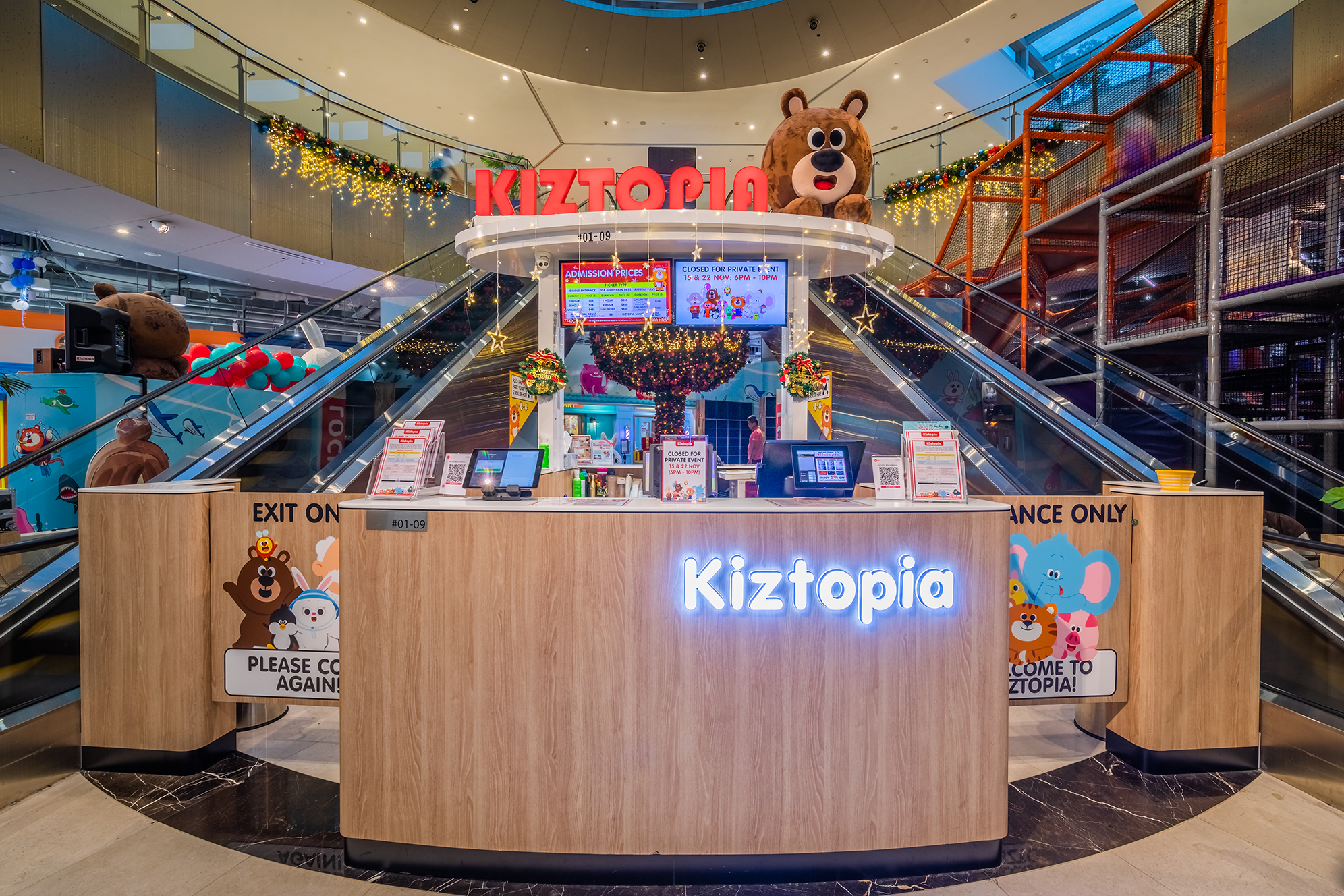
    First opened in 2019 at Marina Square, Singapore, Kiztopia is a massive indoor playground that’s designed for the little ones to both play and learn at the same time. Now opening its first ever overseas flagship outlet at New Town Plaza’s new Play Park, the playground occupies a 12,000sq ft space with 15 themed play areas featuring slides, trampolines, a climbing wall, bouncy castle, swings – the whole shebang.

    There are three major play zones at the playground recommended for kids aged four to 12. These include the Mojo Zone, which features eight exhilarating slides (the highest one of four metres tall!), the Ninja Warrior Zone for the kids to unleash their inner ninja and take on challenging obstacles, and a trampoline zones for children to put their agility and sense of space to the test.

    There will also be various Occupational Experience Zones where Kiztopia’s very own original cartoon characters will be there to inspire the little ones with learn-through-play experiences. Each play zone is designed to help stimulate and develop important assets such as social and communication skills, as well as their body coordination, creativity, and more.

    Other areas at Kiztopia include Raby’s Corner, a fun and safe play area specially designed for toddlers, the Hero Square, where kids can catch different shows or participate in educational activities, Bell’s Cafe, for families to rest their feet and recharge with drinks and snacks, and the Star Lite room available for private parties. Before you leave, check out the gift shop offering everything from toys and accessories to learning equipment and gift combos.

    Tickets are now available on both Kiztopia’s Hong Kong website and Klook. Prices range from $108 to $228 on Mondays to Thursdays, and $148 to $298 on Fridays to Sundays and on public holidays. Ticket packages and annual passes are also available.

  • Changi Airport implements higher airport fees on travellers starting Nov 1

    Changi Airport implements higher airport fees on travellers starting Nov 1

    While international travel has officially picked up this year, it’s important to note that passengers departing from Singapore’s Changi Airport will now have to pay extra airport fees and levies starting November 1, 2022 to Mar 31, 2023.

    Changi Airport departure fees will be increased from $52.30 to $59.20 to make way for the aviation industry’s recovery phase. This comprises $40.40 passenger service and security fee, an $8 aviation levy and a $10.80 airport development levy. The passenger service and security fee will subsequently go up again in phases, to $43.40 on Apr 1, 2023 and $43.40 on Apr 1, 2024.

    The announcement was made on September 15 by the Civil Aviation Authority of Singapore (CAAS) and Changi Airport Group (CAG), who informed that the increase in fees was announced in 2018, but suspended due to the pandemic. The aviation levy amounts will be utilised for maintenance of the airport and making Singapore the prime hub of international aviation in the post-pandemic era, per CAAS.

    Those who have booked tickets from Singapore before November 1 are not required to pay the additional charges. There will also be no change to the departure fee for in-transit passengers. They will continue to pay $9 in airport charges.

  • Hong Kong will be ending hotel quarantine on Sep 26

    Hong Kong will be ending hotel quarantine on Sep 26

    It’s a breath of fresh air – almost literally, just in time for our end-of-year travels. While Japan has just announced that visa-free entry will soon open for individual travellers, Hong Kong will end its once-mandatory hotel quarantine from September 26 (next Monday) onwards.

    Now, instead of having to spend three days in a self-paid hotel, you will need to go through a polymerase chain reaction (PCR) test upon arrival. You can then happily head off home or go to a hotel of your choice, but just remember to self-monitor for three days after. This also means that you won’t be able to pop by your local bar or favourite restaurants for the same time period. Hong Kong terms this as the “0+3” scheme.

    There’s now also no longer a need to show proof for a pre-flight PCR test before flying to Hong Kong – instead, it’s been replaced with the more affordable Antigen Rapid Test (ART).

  • Ororo commences operation of $25m glass recycling plant in SA

    Ororo commences operation of $25m glass recycling plant in SA

    The new Orora glass beneficiation plant in South Australia has begun operations, with the $25m facility set to recycle 150,000 tonnes of post-consumer glass each year, which will go into the company’s glass manufacturing plant next door.

    Orora CEO Brian Lowe and South Australia Deputy Premier Susan Close officially opened the highly automated plant this morning. The SA and Commonwealth governments provided some $8m of the funding for the new plant.

    With just 12 staff and the latest optical technology, the highly automated plant will remove impurities from used broken glass through crushing, cleaning and sorting, to deliver crushed contaminant-free glass, ready for manufacture into new products.

    The company says the new plant will enable the 900 million glass bottles manufactured at the company’s Gawler plant to have an average of 60 per cent recycled content by 2025. All the recycled glass will be used by Orora for its beverage products, which includes bottles for wine, beer, carbonated soft drinks, kombucha, water and olive oil.

    The new plant took just a year to build, overcoming supply chain issues, and bringing in the latest European technology for its automated sorting process.

    Orora CEO Brian Lowe described the beneficiation plant as a major milestone in the company’s sustainability journey. “Our new world-class beneficiation plant is a significant achievement as it will increase the amount of recycled glass used in our manufactured products, allowing us to process up to 150,000 tonnes each year – that’s equivalent to approximately 330 million wine bottles or 750 million beer bottles. Not only does this progress Orora’s sustainability agenda, it enhances our ability to support our customers’ sustainability goals, in turn contributing to the circular economy and the sustainability of the Australian glass industry.”

    Lowe said, “Together with our new oxygen fuelled furnace at Gawler, we are offering our customers a low emission, highly recycled product.”

    Close said, “Consumers are increasingly demanding recycled packaging, and this project makes a significant contribution to the circular economy and the sustainability of the glass industry in this state.

    “We value the investment of the Commonwealth and SA government – it aligns to the government’s focus on increasing Australia’s capacity to generate high value recycled commodities, investing in recycling and waste infrastructure, as well as creating new opportunities to recover and reuse resources.”

    Lowe said that the company saw plenty of opportunity for growth in the domestic glass business, saying, “Australia is still a net importer of glass bottles, which could be manufactured here, and would save on emissions in transport.”

    Lowe also said the beginnings of rapprochement in Australia’s trading relationship with China was good to see, but said Orora was not counting on a resumption of the wine trade, for which the company was a major glass bottle supplier. Since the wine tariffs came into play, which ended most of Australia’s wine exports to China, Orora has pivoted into new business areas, and has replaced all the lost business. Lowe said, “Any easing of restrictions would be good news, and we would be ready to supply winemakers, but we will have to wait and see.”

    A transition away from plastic bottles has not yet begun, with Lowe saying if it does happen it will more likely be to aluminium cans rather than glass bottles. The company is investing some $200m in can production over the next three to four years.

  • WhatsApp might soon increase the group chat cap to 1024 people

    WhatsApp might soon increase the group chat cap to 1024 people

    If you are a WhatsApp user with many friends, and we mean a lot, lot — 1000+ — you will be happy to learn that, soon, you will probably be able to add up to 1024 of your friends in one group chat.

    As WABetaInfo first reported, WhatsApp is rolling out a new feature to select WhatsApp beta testers that increase the current 512-person group chat cap to 1024.
    Previously, you could only add up to 256 people in one group chat, but WhatsApp saw that wasn’t enough anymore, and in June 2022, it increased the limit to 512 people. After all, if you are a big business with many employees that use WhatsApp as its main communication app, a 256-person cap is just not enough.

    Before the limit increase, many large companies that use WhatsApp had to make and manage multiple group chats because they couldn’t add all of their employees to one single conversation. And now, just a few months after the raise, WhatsApp wants to double the limit again, enabling even bigger companies to use the app as their main communication method.

    Furthermore, to give admins better control over these large groups, WhatsApp is also working on a new set of tools. For example, it wants to introduce a list of pending participants — which is a section that lists all the people wanting to join a group and lets admins approve them at any time — and an approval system that enables admins to choose who can add new participants to the group.Sadly, there is no information on when WhatsApp will release these features to regular users. If you want to have a group chat with 1000+ people right now, you could create a group in Telegram. The cap there is 200,000 people, which should be plenty enough.

  • Apple has started preparing a UK store for the iPhone 15 launch

    Apple has started preparing a UK store for the iPhone 15 launch

    The iPhone 14 lineup is finally here, but, unfortunately, this year’s iPhones are just a slight upgrade from the previous generation — especially the regular iPhone 14 and the iPhone 14 Plus. So, if you have decided to skip this one and wait for the iPhone 15 to come out, you might want to know when you could expect Apple to release the next iPhones.

    Sadly, we can’t tell you an exact date, but a new report suggests that the release date of the new iPhones might be sometime between September 15th, 2023, and October 7th, 2023.

    Employees from the UK Apple store in Milton Keynes have received a memo coming from “above the store” telling them that they won’t be able to take a leave between September 15th, 2023, and October 7th, 2023, and December 2nd, 2023, and the start of January 2024. The reason is that Apple wants to be better prepared for next year’s “high velocity moments.”

    In most cases, Apple forbids taking time off before the launch of new devices as well as during the holiday season, and it usually tells its employees about its decision via an internal communication app shortly before it goes into effect.

    Although we can’t confirm how widespread Apple’s new instruction is, the fact that it comes from above the store suggests it might affect other Apple shops as well. Also, it doesn’t look like Apple has chosen these dates randomly. Most likely, the tech giant is preparing early for its next iPhone launch event. Furthermore, iPhones traditionally release in September, so it’s very probably Apple might also launch its next iPhone in this period as well.

    Of course, we can only speculate at this point. The iPhone 15 is still a whole year away, and a lot can change in a year.