Author: Mei Ling Tan

  • UBS Asset Management Names Sustainability Head

    UBS Asset Management Names Sustainability Head

    Swiss bank UBS is hiring a sustainable expert for its asset management arm. The experienced banker used to manage the investments of an Australian state.

    UBS asset management is appointing Lucy Thomas as head of sustainable investing, the bank said in an emailed statement.

    Thomas will lead sustainability and impact strategy and report to Barry Gill, head of investments for UBS asset management.

    In her previous role, Thomas was head of investment stewardship at TCorp, the financial markets’ partner of the New South Wales government in Australia. Thomas will move from Sydney to Zurich for the position.

    Thomas brings extensive experience working with clients and leading the integration of sustainability factors into the investment process globally, Gill said in the statement.

  • Pandora has no plans to join platforms like Amazon or Farfetch

    Pandora has no plans to join platforms like Amazon or Farfetch

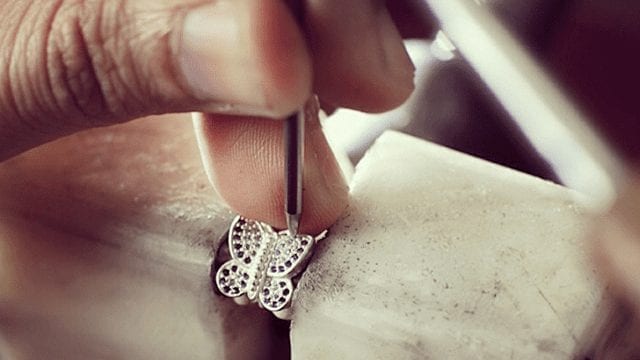
    Jewelry maker Pandora would prefer to invest in physical stores or its own online sales platform rather than join large e-commerce marketplaces like Amazon or Farfetch, its chief executive said on Wednesday.

    “If you’re a small and unknown brand, marketplaces offer a great opportunity, because they provide you with an audience. I already have an audience,” CEO Alexander Lacik said during an interview.

    Pandora, the world’s largest jewelry maker by production capacity, has found a niche between cheaper accessories sold by the likes of H&M and more expensive jewelry like that of Tiffany & Co .

    “Eight out of ten women globally are aware of our brand, so I don’t need to make you aware of me. What I need to do is to show you what I’ve got, and I can to this much better if I have a direct relationship with my customer,” he said.

    The $12.3 billion company, headquartered in Copenhagen, has increased investment in e-commerce during the pandemic. It is present on China’s T-mall platform but not on large global platforms like Amazon or Farfetch.

    “Marketplaces always have to make a compromise for all the clients they are serving. I don’t have to compromise,” he said.

    Pandora’s more than 2,600 physical stores remain the core of its business and accounted for 62% of global sales between July and September.

    “Nearly two-thirds of my customers are men buying jewelry for their girlfriends, wives, grandmothers, or children. And we know that men buying jewelry need help,” he said.

  • Vivaldi is world’s first mobile browser to introduce two rows of tabs

    Vivaldi is world’s first mobile browser to introduce two rows of tabs

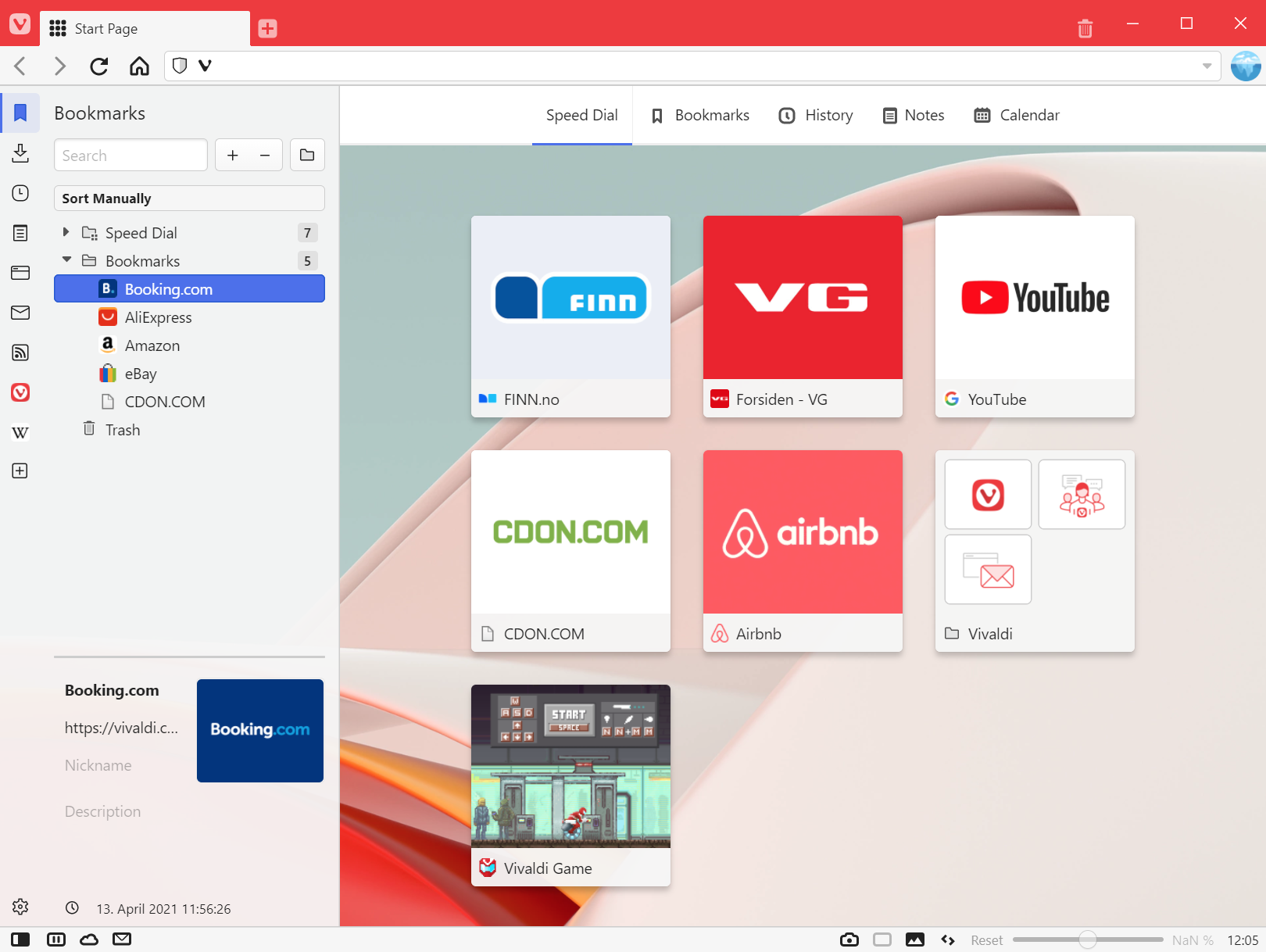
    Vivaldi is trying to appease as many Android users as possible, so the most recent update for the mobile browser brings a world premiere. Vivaldi 5.0 is the world’s first mobile browser to offer a “two-level tab stacks” solution. Additionally, Vivaldi’s Android browser brings built-in Panels on tablets and Chromebooks, another first.

    Back to the “two-level tabs stacks” solution, this has been launched on Vivaldi’s desktop browser earlier this year and allows users to manage multiple web pages smoothly and easily. Starting today, the same feature but designed for mobile devices, is available for Android users.

    To enable the new feature, simply long-press the New Tab button and select “New Tab Stack.” That should allow you to start using the new stack/group created, with the current tab and one new additional tab. There’s another way to make a group of tabs from the Tab Switcher: drag one tab on top of another to create a new stack.

    But this isn’t the only new feature included in the latest Vivaldi update. An improved tab interface and new ways to tweak the Tab Bar have been added too. The built-in Notes tool has been enhanced too so that Android users can quickly handle big chunks of text from a webpage to an existing note with an “Append to Note” option when highlighting text.

    Vivaldi 5.0 is also a big step up for tablet users, as developers have been working to optimize the browser for bigger screens. Apart from a new design, the new version of Vivaldi features a side Panel to make it easier for users to optimize their screen space better on tablets.

  • Singapore’s Sustenance meal-replacement shakes entering Australia

    Singapore’s Sustenance meal-replacement shakes entering Australia

    Gautam Param and Leon Chen started meal replacement company Sustenance to solve this key issue that most of us are facing – “I wanted a simple way to eat healthy without putting my diet at the center of my life. I didn’t like other options in the market, they had lots of artificial junk and were too far away from nature to be considered an actual meal.”

    Noting this gap in the market, the duo wanted to offer people minimally processed products that use real food ingredients from premium suppliers. Their products contain plenty of protein and fiber and minimal bad stuff like saturated fat and artificial junk.

    “The idea behind Sustenance is simple — we want to make it simple and painless for people to eat healthily. We want to empower people to lead healthy, disease-free lives without having to put diets at the center of their lives,” said Gautam.

    Gautam added that Sustenance is suitable for time-starved people like busy workers who prefer quick, yet healthy meals. There are also some who turn to Sustenance to incorporate it as part of their diet to lose weight.

    The winning factor of Sustenance over a conventional meal is its convenience. If you are short on time, can’t find affordable options or healthy food around you, then Sustenance’s meal shakes make a good alternative to unhealthy food.

    “Science has established that consistently eating healthy is a behavioral problem, not a knowledge problem. People know what eating healthy means, but they struggle with doing it consistently in the long run because of the hassle.”

    “Nobody wants to spend their lunch break queuing (up for food), spend a bomb eating grain bowls every day, or spend an hour cooking and cleaning up during weekdays. If we can reduce the friction to eating healthier, many people would eat healthier more consistently.”

    This is the unique proposition of meal replacements – they serve as a “backup option” that is readily available anytime, anywhere.

    Most of their customers started out as non-believers who never tried any meal replacements before. However, after buying and trying their products, they instantly became converts.

    “These people who were initially on the fence end up being regular customers and making many repeat purchases. They would then recommend it to their family and friends — this is our main source of growth.”

    Its pool of customers has grown to several thousand over the past 12 months, and its products are rated 4.9 out of 5.0 stars across hundreds of reviews on Google and Facebook. Many of these reviews talk about the unexpected deliciousness of the shakes despite their green appearance, and how filling they are.

    The company has grown by more than six times in 2020 and started selling in Hong Kong and Australia in March 2021. They plan on entering two more markets by the end of 2021.

  • Bimba Y Lola opening in China

    Bimba Y Lola opening in China

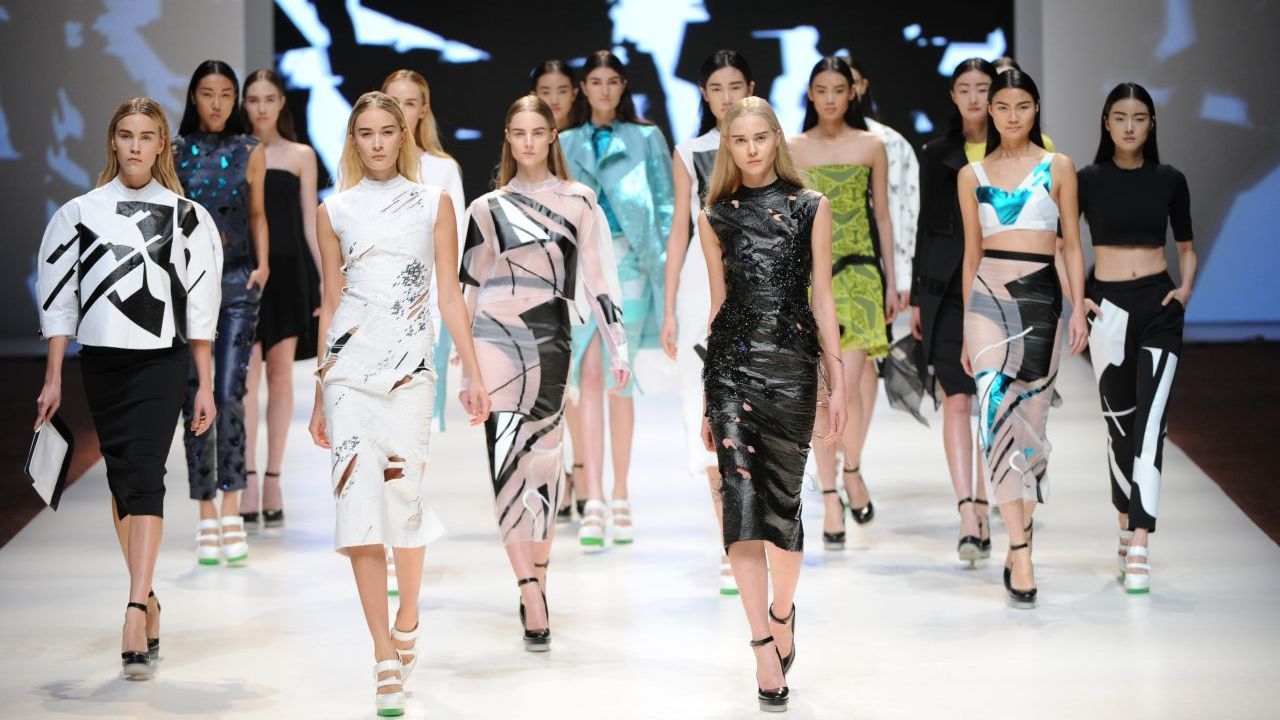
    Spanish contemporary fashion label Bimba Y Lola is launching in China with a joint venture with ImagineX, Lane Crawford Joyce Group’s distribution and brand management arm.

    With a corporate office to be set up in Shanghai, the brand aims to establish a retail presence on Alibaba’s Tmall and Tencent’s WeChat, and physical pop-ups by 2022, to ramp up brand awareness and customer following.

    It will be followed by store rollouts, with plans to open 30 points of sale across 15 major cities in China, including Shanghai, Beijing, Shenzhen, Chengdu, and Chongqing in the next five years.

    Founded in 2005, Bimba Y Lola targets fashion-forward Millennials and Generation Z with ready-to-wear, jewelry, and accessories. It operates more than 290 stores across 20 countries, including the U.K., France, Singapore, and South Korea.

    According to researchers at SEMrush, Bimba Y Lola’s website traffic saw some of the biggest surge pre-pandemic, outperforming traditional retail fashion leaders such as macys.com and online giant Amazon.

    Last month, Madonna’s daughter Lourdes Leon made her fashion campaign debut with the brand’s fall 2021 campaign, a jaunt through a digital landscape.

    Uxia Dominguez, founder and president of Bimba Y Lola, believes that in China, a market of strategic importance yet one that is unique and complex to navigate, ImagineX has the right channels to unlock the potential of the brand.

    Alice Wong, president of ImagineX, thinks that the brand will resonate well with “Chinese consumers, especially the Gen Zs and Millennials.”

    “They have an increasing appetite for international accessible-luxury and affordable brands with cutting edge design, which truly stands out from the crowd,” she added.

    ImagineX manages 25 brands, including Salvatore Ferragamo, Canada Goose, Ba&sh and Club Monaco, with 448 points of sale across 48 cities in the Greater China region.

  • Nissan Unveils Lunar Rover Prototype

    Nissan Unveils Lunar Rover Prototype

    Nissan unveiled a lunar rover prototype jointly developed with the Japan Aerospace Exploration Agency (JAXA). The JAXA Space Exploration Innovation Hub Center is conducting research on lunar rovers for space exploration. Nissan has been working with JAXA on driving the controllability of the rovers since January 2020.

    A lunar rover must be able to traverse the Moon’s powdery, rocky and undulating terrain and be energy efficient. Furthermore, energy sources for operating vehicles in space are limited. Nissan’s research applies the motor control technology it has developed through its production of mass-market electric vehicles such as the LEAF as well as the e-4ORCE all-wheel control technology featured on the all-new Ariya electric crossover. In particular, it is e-4ORCE that is boosting the lunar rover’s performance over tricky terrain.

    Nissan has focused on the development of stable driving performance that enables customers to drive their cars with greater confidence. Nissan’s e-4ORCE technology precisely controls all four wheels independently, providing the driver with confidence in various conditions.

    In its joint research with JAXA, Nissan is evolving e-4ORCE technology to improve its performance in sandy terrain and other harsh conditions. When cars are driven in sand their wheels frequently spin and dig in, impeding progress. A high level of driving skill is required to avoid getting stuck. To meet this need, Nissan has developed driving-force controls that minimize the amount of wheel spin in accordance with surface conditions.

    Through the joint research, Nissan aims to contribute to the technological evolution of automotive technology and space exploration technology by sharing know-how gained from test-vehicle development and combining it with JAXA’s knowledge of rover research

  • Apple releases iOS 15.2 beta 4 for developers and the public

    Apple releases iOS 15.2 beta 4 for developers and the public

    Apple has started sending out iOS 15.2 beta 4 (build: 19C5050b) to both developers and public beta testers who are subscribed to Apple’s beta program. Also dropping today for developers and public beta testers are iPadOS 15.2 beta 4 (build: 19C5050b), watchOS 8.3 beta (build: 19S5050c) and tvOS 15.2 beta.

    As we get closer to the final build of iOS 15.2, you might recall that it refreshes the Notification Summary feature, which allows you to avoid being interrupted by notifications from your apps filling up your display. Instead, all of your non-urgent notifications are bundled together in a summary that is sent to you at a scheduled time. Direct Messages (DMs) and Time Sensitive messages are always sent immediately, so keep that in mind.

    With iOS 15.2 installed, the Notifications Summary no longer appears as a list, but is seen as separate blocks on your Lock Screen.

    The latest iOS and iPadOS builds will introduce the App Privacy Report which will show users which data is being accessed by Apple and third-party apps via privacy permissions granted by them. These permissions may allow apps to access their iPhone’s location, camera, contacts, camera, microphone, and photos.

    The iPhone 13 Pro models have a feature called Macro Mode which automatically turns the ultra-wide camera into a Macro camera for taking extreme close-ups whenever the device is placed within 10 cm (3.94 inches) of an object. Macro photography will help you shoot photos of insects, flowers, and other subjects that are no closer than 2 cm (.79 inches) away. Apple is adding a toggle in iOS 15.2 that will allow users to disable Macro Mode.

    And iOS 15.2 will also make iPhone users feel safer by allowing users to scan their surroundings for AirTags and other devices used with the Find My app that can track them without their knowledge. The feature is found in a new section of the Find My app that will appear when iOS 15.2 is installed on an iPhone and is called “Items That Can Track me.” Any nearby items that do not belong to you but do contain Apple’s tracking technology will surface under this section.

    Additionally, any AirTags that are away from its owner for 24 hours and longer will make a warning sound. This helps alert iPhone users that they are potentially being tracked by an AirTag that doesn’t belong to them.

    And if you come across an AirTag tracked item that does not belong to you, the renamed “Help Return Lost Items” will give you information about how to contact the owner of the item so that it can be returned. The previous name of the feature was “Identify Found Item.” This is perfect for all of you good samaritans who don’t feel that the universe is okay unless every misplaced item has been returned to its rightful owner.

    If you want to get in early on iOS updates, you can join the iOS Beta Software Program by tapping on this link. Keep in mind that Beta versions of iOS are unstable (like that little old lady with the 55 cats that lives next door) and certain features and apps might not work when you have a Beta build installed. Additionally, battery life could be diminished until the final version of the build is released.

    These things might not bother you, but it is something you need to concern yourself with if you plan on joining the iOS Beta Software Program. Once you install a beta version of iOS on your iPhone, you can leave easily if the phone is running an official version of the software. To do that, go to Settings > General > Profile & Device Management. Select the iOS Beta Software Profile, then tap on Delete. Confirm your decision and that is it.

    Now it is a little tougher to leave if your phone is currently running a beta version of iOS. If that is the case, we recommend waiting for the next official version of iOS to arrive, and then you should follow the directions above. Otherwise, you will have to restore to an older backup version of the operating system using your PC or Mac. And that means losing all the data added since your last backup.

    By the way, if you already are a member of the iOS Beta Software Program, you can install iOS 15.2 beta 4 by going to Settings > General > Software Update.

  • AuMake and Miniso to launch dual-branded stores in Sydney

    AuMake and Miniso to launch dual-branded stores in Sydney

    The specialist retailer in Australia and New Zealand, Aumake Limited shared on Thursday that it has entered into a distribution agreement with a Japanese-inspired lifestyle product retailer MINISO Master Franchisee Pty Ltd (MINIS0).

    As per the agreement, MINISO will provide operational support and products to three of Aumake’s physical stores initially, strategically picked for their high foot traffic locations and traction with Asian customers.

    The key terms of the distribution agreement include:

    • Initial physical stores are located in Chinatown, World Square CBD and Burwood in Sydney, NSW.
    • Physical stores to be dual-branded as Aumake and MINISO.
    • MINISO will pay Aumake a percentage of sales (GST incl.) in exchange for using Aumake’s premises to sell the products.

    Aumake’s deal with MINISO creates a significant revenue opportunity and subsequent reduction in overhead costs due to increased physical foot traffic, especially when the restrictions on international borders are likely to be eased for Asian tourists and international students in the coming weeks.

    In addition, the cooperation between the two companies will also provide Aumake with an opportunity to introduce and expand new skincare and cosmetic brands.

    Meanwhile, the stock AUK was spotted trading 10% higher at AU$0.016 per share at 2:00 PM AEDT.

  • Indian car rental company zooms into Vietnam

    Indian car rental company zooms into Vietnam

    Leading Indian car rental platform will begin operations in Vietnam next week.

    Users can start booking cars, including SUVs and hatchbacks, on its website and smartphone app starting Monday, a media representative said.

    “We hope to reach 2,000 vehicles on the platform by March next year.”

    The company has appointed Kiet Pham as its vice president and country director.

    Kiet used to hold senior management positions at Indonesian ride-hailing platform Gojek and Indian hotel booking company OyO.

    The rollout is part of Zoomcar’s plan to enter the Southeast Asian market, where it plans to invest more than $100 million in the next two to three years.

    Zoomcar launched its car rental service in India in 2013 and has become a leading company there in the industry.

    It has 10,000 cars for rent in Asia, the Middle East and North Africa. Its headquarters in India has 300 employees.

    The company recently raised US$92 million from several investors led by U.S.-based SternAegis Ventures.

  • Japan eases blanket ban on new incoming flights

    Japan eases blanket ban on new incoming flights

    Japan has softened its suspension of all new incoming flight bookings to make it easier for citizens to return, the government said Thursday, a day after it announced the move prompted by worries about the Omicron coronavirus variant.

    The transport ministry abruptly said Wednesday it was asking airlines to stop taking all new incoming flight reservations for a month, in a surprise move affecting citizens and foreign residents.

    But on Thursday, government spokesman Hirokazu Matsuno said it would be amended.

    “This request caused confusion among those affected and so the prime minister instructed the transport ministry to examine the issue and consider the needs of Japanese citizens hoping to return home,” he told reporters.

    As a result, the ministry “asked airlines to cancel the blanket suspension of new reservations for international flights to accommodate Japanese hoping to return home”, he added.

    Japan has had tight border restrictions throughout the Covid-19 pandemic, barring almost all foreign arrivals.

    It had begun to ease those rules slightly last month to allow some students and business travelers entry, but reversed that decision after the emergence of the Omicron variant.

    It has also barred all non-citizens from entering the country if they are coming from 10 southern African countries.

    All arrivals in Japan must quarantine for 14 days at home, with people coming from dozens of locations required to spend between three and 10 days of that two-week period in designated facilities.

  • MB selects strategic partner for commercial joint venture bank in Cambodia

    MB selects strategic partner for commercial joint venture bank in Cambodia

    MB and Shinsei Bank signed a master agreement on the establishment of a commercial joint venture bank in Cambodia on Dec. 2.

    Both parties agreed that after obtaining the approval of the state agency on the establishment of a commercial bank in Cambodia with a minimum charter capital of $75 million, MB would transfer up to 49 percent of shares to a strategic partner and launch Vietnam’s first joint venture bank abroad.

    Military Commercial Joint Stock Bank (MB) is known for its rich experience in developing digital banking in Vietnam, along with its solid business foundation and market understanding during 10 years of operating in Cambodia as a branch.

    Shinsei Bank, Ltd. (Shinsei Bank) has more than 50 years of banking experience in Japan with outstanding achievements in retail banking and consumer finance.

    The joint venture bank built on the collaboration of these two financial groups is expected to become a leading digital – retail bank in Cambodia.

    Both parties agreed to invest substantially and systematically in resources and nominate high-quality personnel to build outstanding business strategies, models and solutions to enter the dynamic financial and banking market in Cambodia.

    MB and Shinsei Bank have gained experience in implementing a joint venture at MB Shinsei Finance Limited Liability Company (Mcredit). After five years of cooperation, Mcredit is currently a consumer finance company with the top 4 best outstanding loans in Vietnam, with ROE performance of up to about 30 percent.

    The joint venture between MB and Shinsei Bank in Cambodia marks a milestone in the cooperative relationship between the two financial groups of Vietnam and Japan. The joint venture in a third country – Cambodia – also demonstrates the two groups’ willingness for long-term cooperation.

    “This also indicates MB’s strategic vision and great expectations to gradually improve its position and foster business development

  • Netflix brings three new mobile games to its subscribers

    Netflix brings three new mobile games to its subscribers

    Netflix’s games program doesn’t work like traditional games services since it doesn’t require users to pay a monthly subscription. However, you do have to be a Netflix subscriber to have access to several mobile games in its library.

    When it launched early last month, the program offered to Netflix subscribers a pretty short list of mobile games they could play for free: Stranger Things: 1984, Stranger Things 3: The Game, Shooting Hoops, Card Blast, and Teeter Up.

    Less than two weeks ago, Netflix added two new games to the lineup: Gameloft’s Asphalt Xtreme and Bowling Ballers. Today, three new games are added to the roster: Dominoes Café, Knittens, and Wonderputt Forever.

    Although these might not be as appealing as the previous titles, they’re free to play and don’t include ads, additional fees or in-app purchases. If you want to play any of the games offered by Netflix and you’re using an Android device, you can do so via the dedicated games row and games tab.

    On the other hand, members on an iOS device will see a dedicated games row where they can select any game to download.

  • Uniqlo clothes plans to produce from recycled materials by 2030

    Uniqlo clothes plans to produce from recycled materials by 2030

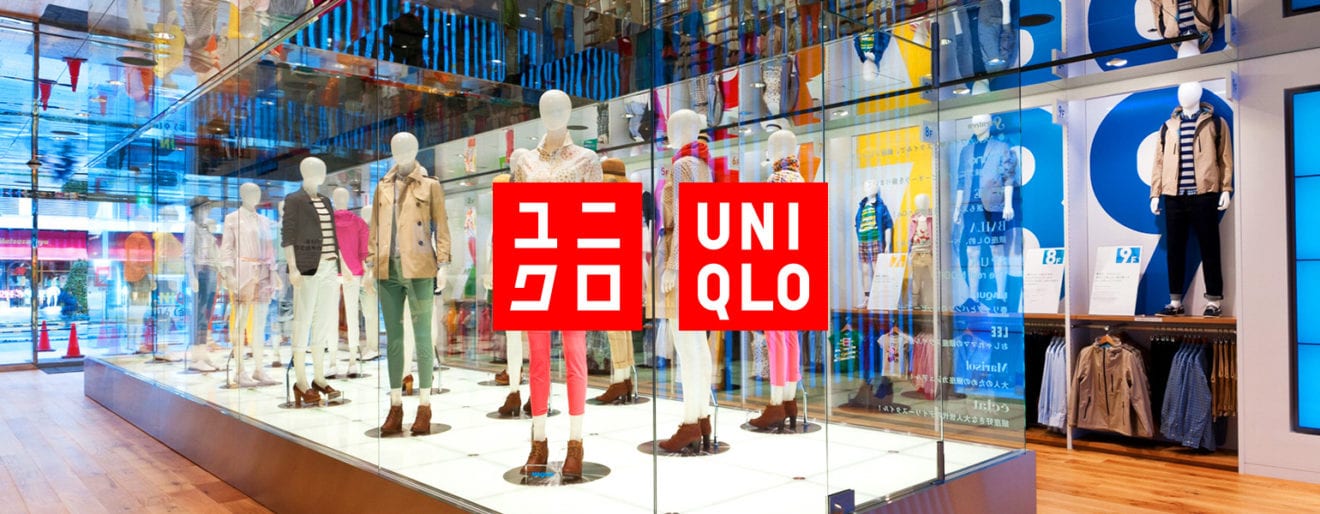
    Uniqlo owner Fast Retailing says its clothes will be made of 50% recycled materials by 2030 as it works toward its goal of carbon neutrality by 2050.

    The goal was announced on Thursday along with other sustainability targets and follows an announcement in February that Fast Retailing is shooting for carbon neutrality by 2050.

    Currently, about 15% of the polyester the apparel maker uses comes from recycled PET bottles. The company says it will start with synthetic fibers such as rayon and nylon as it begins to raise its garments’ recycled materials ratio.

    Fast also articulated its carbon emissions reduction plan toward 2030. In its own operations, the company intends to reduce these emissions by 90% from 2019 levels.

    Improving energy efficiency at its stores will be key as the stores account for the majority of the company’s total emissions. Fast aims to emit 40% less from its roadside stores and 20% less from its stores inside malls.

    It will accelerate its stores’ switch from electricity to renewable energy sources. Currently, 64 Uniqlo stores in nine European countries run on renewable energy. All stores in North America and some in Southeast Asia will follow suit and complete the switch by the end of this fiscal year ending next August, the company said.

    Fast also aims to encourage companies along its supply chain to reduce their emissions. Among its raw material providers and sewing factories, it is shooting for a 20% cut in emissions by 2030, based on 2019 levels.

    It will consider granting financial support to help factories invest in facilities.

    The fashion industry is widely considered the world’s second most polluting industry.

    Fast Retailing Director Koji Yanai told reporters that the company will reduce waste by improving the accuracy of its production volume forecasts and by reforming its logistics operations. It expects these steps to help it sell out of what it makes.

    The casual apparel maker will also collect more used clothes. Yanai said the company hopes to launch a collection service that utilizes the delivery personnel involved in bringing orders to customers’ doors. In Yanai’s vision, when a new jacket is delivered, the customer will be able to hand the driver an old jacket.

    Fast also plans to collaborate more with manufacturers in other industries, including carmakers and building material producers. It and material maker Toray will set up a research facility in 2022 that will specialize in the circulation of apparel and new material development.

    Other apparel brands are moving in the same direction. Patagonia, a U.S.-based maker of outdoor clothing, intends to make its garments with all recycled materials by 2025. Swedish fast-fashion giant Hennes & Mauritz has a 2030 goal for all of its clothing to be made of either recycled or sustainably sourced materials.

    Compared with other brands, Fast’s target is relatively lackluster. “We’re putting our customers first and presenting this as the maximum number our brand can commit to,” Yanai said. “We do not consider our target low.

    “From now on, people will evaluate what kind of responsibility each brand is trying to fulfill after selling clothes.”

  • Nokia to power KDDI’s 5G networks with standalone core and monetization solutions

    Nokia to power KDDI’s 5G networks with standalone core and monetization solutions

    Nokia has announced that Japanese operator KDDI has selected Nokia’s 5G Core and Converged Charging software to support its transition to a fully automated, cloud-native 5G Core architecture.

    Nokia’s cloud-native 5G Core’s near zero-touch automation capabilities help operators drive greater scale and reliability. Following the evolution of KDDI’s networks to 5G standalone core, subscribers will experience lower latency, increased bandwidth and higher capacity.

    Nokia’s open 5G Core architecture gives KDDI the flexibility to be responsive to market demands while controlling costs by streamlining operations and unlocking crucial capabilities, such as network slicing. Developed around DevOps principles, Nokia’s 5G Core will automate the lifecycle management of KDDI’s networks, as well as enable continuous software delivery and integration.

    Nokia will also deploy 5G monetization and data management software solutions including cloud-native Converged Charging, Signaling, Policy Controller, Mediation and Registers to capture new 5G revenue opportunities, enhance business velocity and agility, and streamline the operator’s network operations.

    With Nokia’s monetization solutions, KDDI will be able to monetize new opportunities within the 5G economy. This includes 5G network slicing and network as a service offering, IoT and new business models for B2B2X services through a containerized, microservices-based solution that enables services-based integrations with new 5G network functions meeting standards requirements for 5G convergent charging systems.

    Other products in the deal include Nokia’s Digital Operations software, Cloud Operations Manager, NetAct network management system and Archive Cloud to automate the backup and storage of network data. Solutions will be deployed across Nokia cloud infrastructure, a cloud-native solution that integrates multi-vendor and multi-technology environments.

    Tatsuo Sato, Vice President and Managing Officer, Technology Planning, KDDI, said: “The deployment of Nokia’s solutions marks a key milestone in the evolution of our 5G architecture. The evolution of our 5G architecture will enable us to fully automate and provide better services to our customers. We are pleased to be continuing our strong relationship with Nokia.”

    John Lancaster-Lennox, Head of Market Unit Japan at Nokia, said: “We look forward to expanding our 25-year relationship with KDDI with the deployment of our standalone 5G Core solutions. With crucial monetization and operations functions, such as network slicing, KDDI will unlock key revenue opportunities and benefit from increased operational efficiencies as well.”

  • Germany’s DB Schenker To Order 1,500 Electric Trucks From Sweden’s Volta

    Germany’s DB Schenker To Order 1,500 Electric Trucks From Sweden’s Volta

    Deutsche Bahn’s logistics unit Schenker will order almost 1,500 electric trucks from startup Volta Trucks to transport goods from European terminals into city centres and urban areas, the companies said on Tuesday. DB Schenker will use prototype electric trucks in the spring and summer of 2022 in distribution operations, findings from which will be used in the production of 1,470 electric trucks. Those trucks will be made at a former MAN truck plant in Austria that was taken over by Steyr Automotive. The electric trucks will operate at 10 DB Schenker locations in five countries.

    The companies didn’t immediately provide details on the transaction’s value.

    Stockholm-based Volta Trucks, which also operates in the UK, plans to start production of the Volta Zero, a 16-tonne electric truck, in 2022. Bans on fossil-fuel commercial vehicles will take effect in some European cities over the next few years, putting pressure on logistics providers to find zero-emission alternatives.

    “The large-scale partnership with Volta Trucks allows us to significantly increase the pace of electrification of our fleet and invest in greener transport solutions,” Cyrille Bonjean, DB Schenker’s executive vice president for land transport in Europe, said in a statement. DB Schenker has around 74,200 employees in over 130 countries. The latest order brings Volta Trucks’ order book to around 4,500 electric trucks. It previous biggest public order was for 1,000 trucks, from French refrigerated truck firm Petit Forestier.