Author: Mei Ling Tan

  • HSBC Reshuffles Commercial Bank

    HSBC Reshuffles Commercial Bank

    HSBC has reshuffled senior management at its commercial banking arm in Asia and the U.K. Amanda Murphy and Frank Fang have been named co-heads of the APAC commercial banking business, according to a statement, reporting to global commercial banking chief executive Barry O’Byrne.

    The current head of commercial banking for HSBC U.K., Murphy will relocate to Singapore to become head of commercial banking, South and Southeast Asia to oversee the local commercial banking franchises in India, Southeast Asia, Australia, and international markets.

    Frank Fang will maintain his role as head of commercial banking, Hong Kong and Macau.

    Murphy and Fang will also serve on the global and APAC commercial banking executive committees.

    Succeeding Murphy’s role as head of commercial banking for HSBC U.K. is Stuart Tait, subject to regulatory approval, who led the APAC commercial banking franchise since 2016.

    I would like to thank Tait for growing our business in Asia Pacific over the last five years – his customer-centricity will be equally instrumental in his new role, O’Byrne said.

    Focusing on Asia for growth, investment and capital deployment is a strategic priority for our global business. We aim to grow our market share in the Greater Bay Area, India and Southeast Asia, expanding our customer base and digitizing at scale to help our clients and business to capture global opportunities.

  • DBS Exec to Lead Carbon Credits Exchange

    DBS Exec to Lead Carbon Credits Exchange

    He was most recently DBS’ group chief sustainability officer, responsible for developing the bank’s sustainability framework and driving sustainability initiatives.

    Climate Impact X (CIX) has announced the appointment of Mikkel Larsen as chief executive officer, effective immediately, according to an announcement on Wednesday.

    Larsen has been interim CEO of the platform, a joint venture between DBS Bank, Singapore Exchange (SGX), Standard Chartered, and Temasek, since May 2021.

    Before his nine years at DBS, Larsen spent over seven years at UBS, leaving as CFO of Asia-Pacific, and previously held roles at Citibank in London, and KPMG.

    In his new role, Larsen will oversee all day-to-day operations for CIX, including collaborating with its ecosystem of technology partners to build up its Project Marketplace and Exchange platforms as well as curating a pipeline of high-quality carbon credit projects to feature on its platforms. He will also drive the company’s culture, values, and behavior while building up a high-performing team passionate about catalyzing scalable sustainable solutions.

    The carbon market is going through a transition. We have a unique opportunity to establish a trusted market that can both help preserve the crucially important existing carbon sinks whilst developing new ones, Larsen said in the announcement.

    CIX said it completed a pilot auction in October of a curated portfolio of high-quality carbon credits, where it successfully cleared 170,000 tonnes of carbon credits from eight recognized NCS projects spanning across Africa, Asia, and Latin America.

  • China and South Korea boost Burberry sales

    China and South Korea boost Burberry sales

    Double-digit sales growth in China, South Korea, and the Americas underpinned a 37-per-cent lift in first-half sales for luxury fashion group Burberry to US$1.63 billion.

    The lift reflected a recovery in-store sales as Covid-related lockdowns and trading restrictions eased in the six months to September 25, compared with the same period a year earlier when a swathe of stores was closed across key markets.

    “We have made strong progress in the half,” said Burberry chair Gerry Murphy in a statement.

    “Full-price sales are growing at a double-digit percentage, driving margin expansion and strong free cash generation. We are seeing an acceleration in performance in countries less impacted by travel restrictions and we remain confident of achieving our medium-term goals.”

    The company reported an adjusted operating profit of $263 million, up 16.2 percent year on year.

    While the Americas, Korea, and China buoyed sales, the company said other regions continued to be impacted by reduced tourist levels.

    The company said its new store format – of which 15 are now complete with a target of 50 by the end of next March – was drawing higher-spending customers through the doors. Online sales were performing well with sales of goods at a full price almost doubling year on year.

    During the six months, Burberry announced its CEO Marco Gobbetti was to stand down early next year, to be replaced by Jonathan Akeroyd in April.

    Murphy paid tribute to Gobbetti’s “vision and leadership” during Burberry’s transformation and said the board expects Akeroyd will build on the strong foundations to accelerate growth and deliver further value for shareholders.

  • Major garment producer says did not lose Nike orders due to Covid restrictions

    Major garment producer says did not lose Nike orders due to Covid restrictions

    Viettien Garment Corporation has not lost any of its Nike orders to other countries since the American company could not find suitable alternatives, its chairman said.

    “Until October, when we reopened, Nike has not moved any of its orders from Viettien to another country because it could not find an appropriate manufacturer in terms of delivery time and quality.”

    Giang, also chairman of the Vietnam Textile & Apparel Association, said during the restrictions in the third quarter, 13-14 percent of garment orders were moved from Vietnam to other countries.

    But there are signs that orders are coming back for next year, he said.

    “This is why we have set an export target of $43.5 billion.”

    Last year, exports had fallen by 9 percent to $35 billion.

    Giang said that foreign companies only move orders to other countries when the deadline is too close, and they continue to have confidence in Vietnam.

    Vietnam’s garment exports in the first 10 months of this year fell by 5 percent year-on-year to $24.74 billion.

  • Opening date released for the world’s largest Ikea in Manila

    Opening date released for the world’s largest Ikea in Manila

    The world’s largest Ikea store, Ikea Pasay City in Manila, is set to open its doors to the public this month after being delayed due to the Covid-19 pandemic.

    Ikea Pasay City also marks the chain’s first location in the Philippines. The 67,760sqm store, scheduled to open on November 25, is located next to the Mall of Asia and spans five stories.

    While two floors are dedicated to retail activities, the remaining floors are for stocks and e-commerce operations.

    The new Ikea store will house more than 8,000 home furnishing and appliance products, together with a restaurant, where customers can find the brand’s famous Swedish meatballs. Ikea Philippines’ online store launched earlier this month for delivery orders after a soft launch in September.

    The launch of Ikea Pasay City was announced in 2018 and due to open last year. However, the construction of the store was interrupted last year due to the Covid-19 pandemic.

  • Holiday train tickets in low demand

    Holiday train tickets in low demand

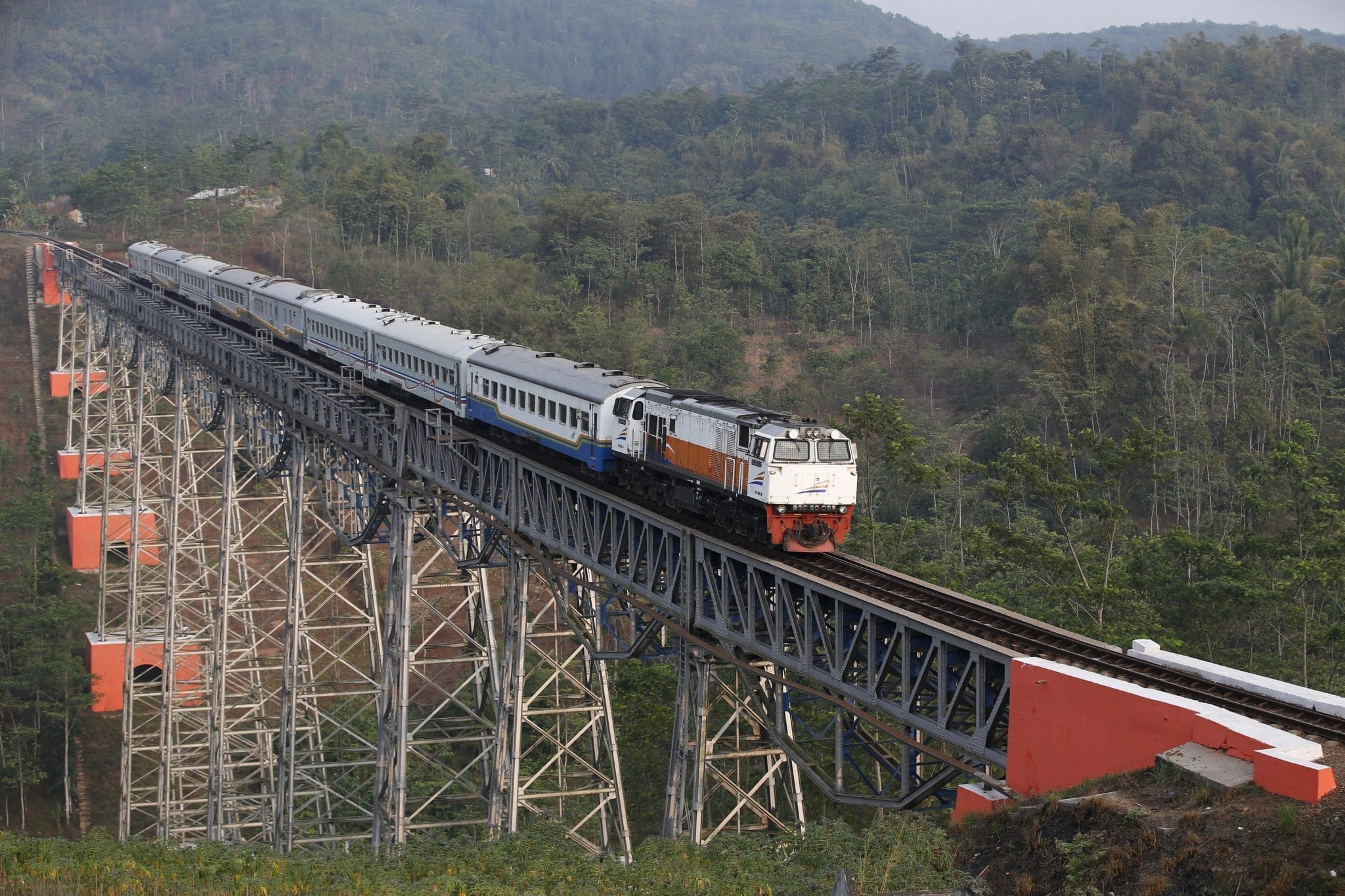
    Train ticket demand for the upcoming Lunar New Year Holiday is plunging due to fear of Covid-19 contagion as thousands of new cases nationwide are confirmed each day.

    Saigon Railway Station in HCMC opened its ticket sales for Tet 2022, the biggest annual holiday which falls in early February, but its nine counters were seen with few inquirers.

    Viet Truong, 37, showed up at 7 a.m., anticipating a large number of customers as what happened in previous years.

    “I got the tickets in only 20 minutes, while in previous years I had to wait the whole morning.”

    Tet tickets are being sold for five routes: four North-South routes and one HCMC-Da Nang route, while in previous years there were 20 routes.

    After two hours of opening sales, over 1,500 tickets were sold, which is the lowest in recent years.

    Hundreds of seats were still available as of lunchtime, even though tickets are being sold at a 10-15 percent discount in the first 10 days.

    Vietnam recorded over 8,200 new Covid-19 cases on average in each of the last seven days, with over 1,200 in HCMC alone.

  • Apple quietly buys ads for subscription apps as it profits from an arbitrage play

    Apple quietly buys ads for subscription apps as it profits from an arbitrage play

    Several app developers say that Apple is secretly purchasing Google ads for iOS subscription apps found in the App Store without approval from the apps’ developers. The report claims that Apple is doing this to help it collect millions of dollars in subscription revenue and calls it “ad arbitrage.” Arbitrage is the practice of making a hedged bet on Wall Street by buying and selling the same shares in different markets to profit from a small difference in price.

    What Apple is doing, according to Forbes, is paying its own money to advertise an app. Let’s say for example that Apple is paying to advertise HBO Max on Google, spending its own money. Now you might think that having Apple advertise your business would be great, but there is a catch. If the app in question allows subscribers to make their payments through Apple’s in-app payment process, the tech giant gets 30% of the subscription cost for the first year, and 15% for each subsequent year that the subscription runs for.

    Some subscriptions can cost users hundreds of dollars a year. Apple could be paying $5 to $10 for each ad that leads to a new subscription and the revenue could be $50 or more. One source said, “The customer doesn’t know, the user doesn’t know that $54 is going to Apple, not the developer.” And there is more. When a subscriber pays for a subscription through Apple’s in-app payment platform, they are considered Apple’s customers and Apple doesn’t reveal information about them making it hard for the developers to handle customer service.

    A marketing executive from one app developer pointed out the difference between dealing with a customer signed up through Apple and a customer whose subscription was processed by the developer. “The user experience is much worse. When you buy with the developer, they have a relationship with you … when you buy from Apple: sorry, you’re Apple’s customer, not ours, and if you have a problem with a subscription … we can’t really help them.”

    And this doesn’t take into account the hike in ad prices that Apple is causing when it bids for the same slots. While Apple is spending money on advertising HBO Max in order to get that percentage of subscription fees that run through its platform. This forces HBO to spend more than Apple to get the top ad slot so it can be noticed by consumers.

    Another source explains how Apple’s little arbitrage game is negatively affecting developers. “It hurts the advertiser LTVs (life-time value of a customer) are lower, so it doesn’t just cost more to advertise, but you can’t spend as much. Apple is not just making more money off developers, it’s hurting their business.”

    Some analysts have told clients that Apple’s App Tracking Transparency feature is a smokescreen to cover up Apple’s own advertising ambitions. As one source says, “Anyone that understands the basics of arbitrage could invent this. We all know what Apple’s doing for its privacy stuff is for its own pockets. It didn’t sit right that in the background they’ve been doing this to developers, it’s not ethical.”

    You can tell whether an ad for a subscription service was placed by Apple or the app developer by clicking the link. If it takes you to the App Store, the ad came from Apple. If the link takes you to the developer’s website, the ad came from the app’s developer.

  • McLaren Denies Being Acquired By Audi

    McLaren Denies Being Acquired By Audi

    Earlier in the day, reports had emerged that Audi had closed a deal to acquire the entire McLaren group. Audi had been exploring an acquisition of the McLaren Formula 1 team to facilitate its entry into the pinnacle of motorsport in 2026 when the new engine formula come into the sport. It had been open to the full acquisition of the entire McLaren Group that gives it access to the McLaren supercar brand. Audi, of course, already has a controlling stake in Lamborghini and the Volkswagen Group has been looking to enter the world of Formula 1 with its Audi and Porsche brands. Due to the pandemic, McLaren had faced many losses and was forced to lay off 1,200 workers.

    Even though its F1 team has been on a revival and its financials have improved with external funding, last month the supercar maker also lost its longtime CEO Mike Flewitt who ran the main motorcar brand while its Applied sciences division was already sold.

    Volkswagen Group has been looking to enter the world of Formula 1 with its Audi and Porsche brands

    While Audi seems keen, McLaren has come out and rubbished all these claims. “McLaren Group is aware of a news media report stating it has been sold to Audi. This is wholly inaccurate and McLaren is seeking to have the story removed. McLaren’s technology strategy has always involved ongoing discussions and collaboration with relevant partners and suppliers, including other carmakers, however, there has been no change in the ownership structure of the McLaren Group,” the company said in an official statement.

    ly denied the report which originated from Autocar. “As part of our strategic considerations, we are constantly looking at various cooperation ideas,” said an Audi spokesperson in response to the Autocar report. Porsche is looking at a partnership with Red Bull for its powertrains division while Audi had been planning to acquire a team and McLaren was the one on top of its list. If it can’t get McLaren, it will be looking at either Sauber or Williams which are now the last of the three independent teams left in the sport.

    For Audi, McLaren is very attractive. Apart from being the third most successful F1 team in history, it is a storied supercar brand. Its team is also now back on the upswing with a great set of drivers in Lando Norris and Daniel Ricciardo. What’s interesting is if an acquisition were to happen what will happen to the McLaren brand which counts F1 core to its identity?

  • Muji launches fresh food concept store with JD

    Muji launches fresh food concept store with JD

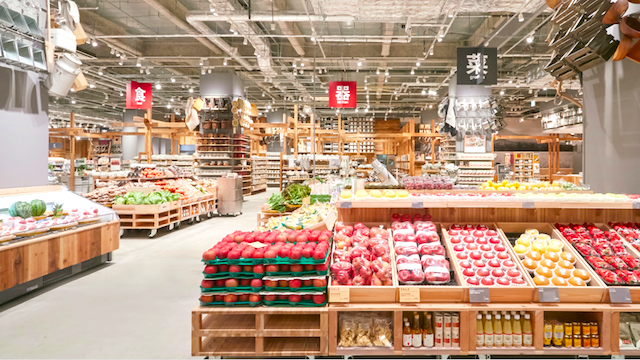
    Japanese retail giant, Muji, has forayed into the fresh food industry with the launch of a food complex in collaboration with JD’s Seven Fresh in Shanghai.

    Operated by both companies, the complex is located inside Ruihongtiandi shopping mall and spans 400sqm, housing a Muji store and fresh food supermarket, Seven Fresh, which is also the chain’s first presence in the city.

    Unlike Muji’s usual stores, the 1208sqm Muji store in the complex offers an expanded selection of food products, including ramen, oatmeal, frozen food, ice cream and pizza. Its fashion brands, Muji Labo and Muji Walker, are also available in the store.

    The Seven Fresh store features an omnichannel concept with both online and offline services, and customers can have their online orders delivered in as soon as 30 minutes.

    The store-in-store concept is not the first collaboration of the two companies: last year, Muji launched a new format MUJIcom, at JD headquarters in Beijing, providing employees selected products such as daily necessities and food, including lunch boxes featuring simple meals.

  • Grab’s Ride-Hailing Services Disrupted In Southeast Asian Countries

    Grab’s Ride-Hailing Services Disrupted In Southeast Asian Countries

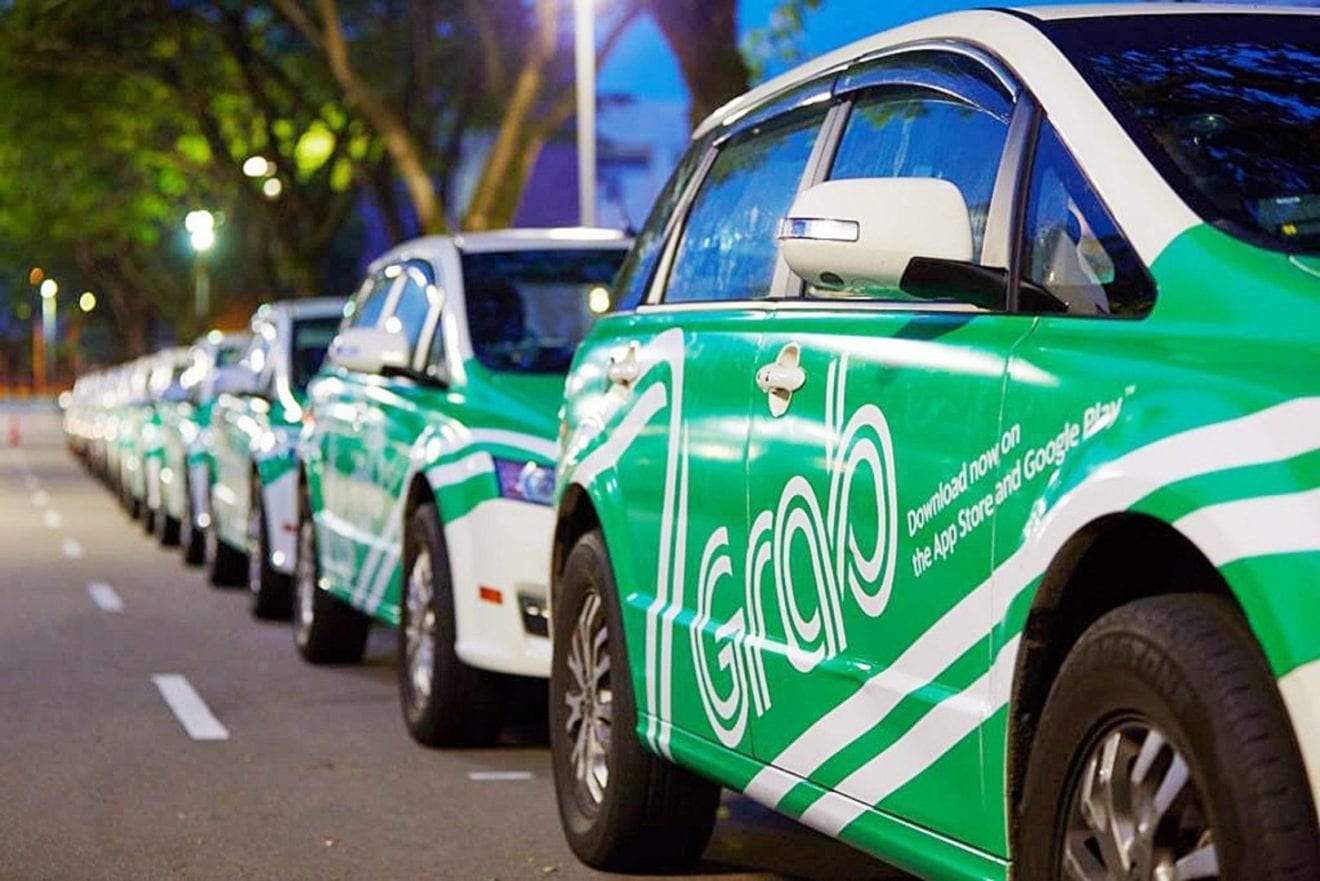
    Southeast Asia’s Grab on Tuesday said it was experiencing disruption to its services, with customers and drivers in Singapore, Indonesia, and Malaysia complaining that they were having trouble using the app’s ride-hailing functions.

    “Some of our services are not accessible at the moment,” Grab posted on its Facebook page.

    “We are looking into this and we will update when the app is back up and running.”

    Grab operates Southeast Asia’s most popular “super app”, which provides ride-hailing, food, and grocery delivery, and payments in over 400 locations in eight countries.

    “We are experiencing some technical difficulties with the app and our engineers are working to recover the issue,” Grab said.

  • Viasat buys Inmarsat for $7.3 million to create a global communications innovator

    Viasat buys Inmarsat for $7.3 million to create a global communications innovator

    Viasat has entered into a definitive agreement under which Viasat will acquire Inmarsat in a transaction valued at $7.3 billion, comprised of $850.0 million in cash, approximately 46.36 million shares of Viasat common stock valued at $3.1 billion based on the closing price on Friday November 5, 2021, and the assumption of $3.4 billion of net debt.

    The combination will create a leading global communications innovator with enhanced scale and scope to affordably, securely and reliably connect the world. The complementary assets and resources of the new organization will enable the availability of advanced new services in mobile and fixed segments, driving greater customer choice in broadband communications and narrowband services, including IoT.

    The combined company intends to integrate the spectrum, satellite and terrestrial assets of both companies into a global high-capacity hybrid space and terrestrial network, capable of delivering superior services in fast-growing commercial and government sectors. This advanced architecture will create a framework incorporating the most favorable characteristics of multi-band, multi-orbit satellites and terrestrial air-to-ground systems that can deliver higher speeds, more bandwidth, greater density of bandwidth at high demand locations like airport and shipping hubs and lower latency at lower cost than either company could provide alone.

    Both companies have proven track records of product and service innovation. Viasat has advanced North American residential and aviation connectivity and defense communications with technology and business models embraced by customers. Viasat is also recognized for driving change through its pioneering ultra-high-capacity satellite technology, which has delivered superior value at attractive, affordable economics.

    Inmarsat has an exceptional presence in the growing global mobility segment and is at the forefront of network design with its recently announced multi-dimensional mesh network. It is preparing to expand its global network later this year with its most powerful and advanced software-defined commercial communications satellites ever, offering both Ka- and L-band capabilities. Inmarsat has a global presence, a robust distribution channel spanning the rapidly growing mobility, government, IoT and enterprise sectors and currently provides safety and connectivity services to more than one million mobility and defense platforms.

    “This is a transformative combination that advances our common ambitions to connect the world. The unique fusion of teams, technologies and resources provides the ingredients and scale needed for profitable growth through the creation and delivery of innovative broadband and IoT services in new and existing fast-growing segments and geographies,” said Viasat’s Executive Chairman Mark Dankberg. “Inmarsat’s dual-band global mobile network, unique L-band resources, skills and capabilities in the U.K. and excellent technical and operational talent worldwide, are powerful complements to Viasat’s business. Together, we can advance broadband communications and create new hybrid space and terrestrial networks that drive greater performance, coverage, speed, reliability and value for customers. We look forward to welcoming the Inmarsat team into the Viasat family.”

    “Joining with Viasat is the right combination for Inmarsat at the right time,” said Rajeev Suri, CEO of Inmarsat. “Viasat is a terrific innovator and Inmarsat brings some powerful additions: global reach, a broad distribution channel, robust business momentum and a presence in highly attractive global mobility segments. Together, the two companies will create a new global player with the scale and scope to help shape the future of a dynamic and growing industry. The combination will create a strong future for Inmarsat and be well-positioned to offer greater choice for customers around the world, enhanced scope for partners and new opportunities for employees. The industrial logic is compelling and ensures that the U.K. has a strong and sustainable presence in the critical space sector for the long term.”

    Viasat plans to build on Inmarsat’s presence in the U.K. and is committed to preserving and growing the investment of the combined company in U.K. space communications, as well as supporting the recently published National Space Strategy. The combined company will cooperatively engage with the U.K. government with a view to operating in the U.K. consistent with the commitments previously made by Inmarsat/Connect BidCo, and expects continued constructive engagement across the U.K.’s thriving innovation ecosystem. It further intends to work closely with the U.K. government to bring additional space capabilities and other advanced technologies to the country as well as long-term, highly skilled engineering and related jobs for U.K.-based employees. Viasat plans to preserve and grow Inmarsat’s London headquarters, as well as its footprint in Australia and Canada and across Europe, the Middle East, Africa and Asia Pacific.

  • Gold prices hit 15-month high

    Gold prices hit 15-month high

    Vietnamese gold prices are now at a 15-month high and, as always, well above global rates.

    The Saigon Jewelry Company (SJC) sold bullion at VND60.75 million ($2,682.23) per tael Saturday morning, up 0.75 percent from Friday. A tael equals 37.5 grams or 1.2 ounces.

    This made them around VND10 million or 19.7 percent higher than global prices.

    A spokesperson for SJC said that the gap is widening because Vietnamese prices are becoming less dependent on global rates and relying increasingly on domestic supply and demand.

    Global rates have risen by 5.26 percent to $1,864.74 per ounce since Nov. 4, bolstered by deepening fears of inflation and reassurances from major central banks that interest rates would remain low for the time being.

    Traders are taking profits after an incredible run, Phillip Streible, chief market strategist at Blue Line Futures in Chicago, told Reuters.

    Societe Generale analysts forecast gold prices to average $1,950 an ounce in the first quarter of 2022, given the “renewed commitment from the Federal Reserve to support the economy while letting inflation printing higher”.

    Gold consumption in the third quarter fell by half year-on-year to 3.3 tons as jewelry stores closed due to Covid-19 restrictions, according to a report by the World Gold Council.

  • Maybank IB lifts AirAsia outlook on reopening of major markets

    Maybank IB lifts AirAsia outlook on reopening of major markets

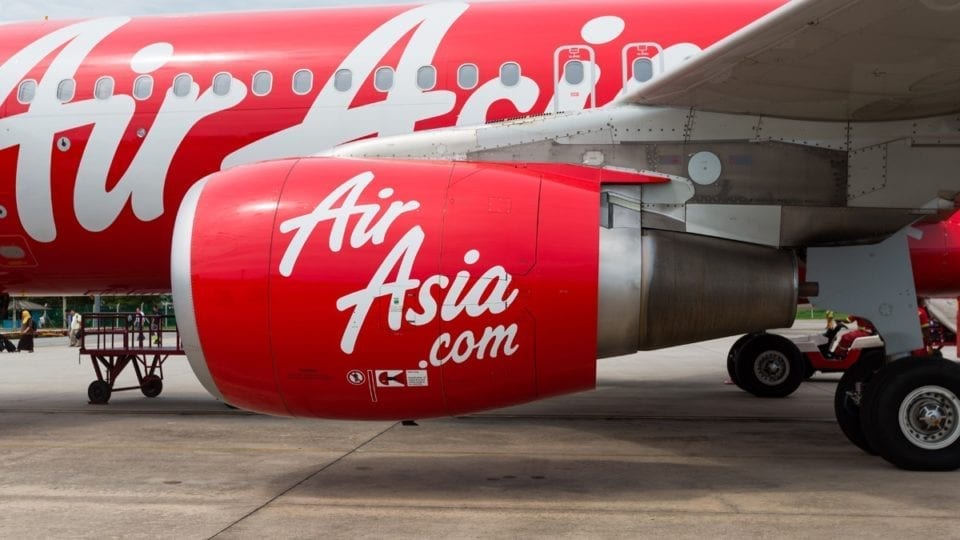
    While the Thai operations of AirAsia Group Bhd continue to drag on the earnings of the low-budget airline group, the falling rate of Covid-19 infections in the region offers optimism for a longer-term recovery, says Maybank Investment Bank Research.

    Thai AirAsia recently reported wider third-quarter losses of THB2.1bil resulting from a suspension of its flight operations to mitigate a third wave of the Covid-19 pandemic in the country

    A “spectre of PN17 classification” looms over the Thai carrier, said Maybank IB, even as the Thai airline embarks on recapitalization and restructuring initiatives. Consequently, Maybank IB forecasts that AirAsia may take a huge hit in the coming financial year.

    “For FY22E, our core net loss estimate is twice than before largely due to AAGB recognizing the huge MYR1.1b in previously unrecognized losses from TAA,” said Maybank IB.

    Over the longer term, the research firm emphasized a swing in the group’s net profit to the black in FY23, underpinned by the decelerating rate of Covid-19 cases in the region.

    There has been a resumption of mass travel in all four of AirAsia’s major markets, including Malaysia, which historically contributed 70% to 80% of group profits.

    Meanwhile, Maybank IB also noted that the Malaysian aviation industry is consolidating, which is positive for Malaysia AirAsia fares.

    “We forecast FY23E to swing to a core net profit of MYR255m from a core net loss of MYR439m before due to higher MAA fares.

    “With a profitable FY23E, we hope AAGB will no longer be classified as a PN17 listed issuer by then (if it is classified as such on 7 Jan 2022),” it said.

    Adding to the future prospects, Maybank IB said AirAsia may also list its digital assets, which will unlock a lot of value for the group.

    Given the improved outlook, the research firm upgraded AirAsia to “buy” from “sell” and raised its target price to RM1.36 from 36 sen previously.

  • VietinBank pioneers online foreign exchange services

    VietinBank pioneers online foreign exchange services

    VietinBank has launched FX Online 24/7, allowing customers to perform transactions at any time, anywhere on platforms VietinBank eFAST and VietinBank Ipay.

    VietinBank focuses on innovating its system to improve FX services. Just by taking some simple steps on a smartphone or a laptop with an internet connection, without having to go to the bank, customers can perform FX transactions online with VietinBank for different currencies.

    Corporate customers can buy and transfer foreign currency online within business hours.

    Corporate customers or individual customers can sell foreign currency online from foreign currency accounts and receive Vietnamese dong into their accounts anytime, including weekends and holidays.

    With a multi-level authorized matrix, VietinBank eFAST can meet the diversified demand of customers for authorization. The system provides security methods meeting the State Bank of Vietnam’s requirements including OTP verification and keypass token verification.

    VietinBank is offering a promotional campaign for corporate customers using the service “Customers sell foreign currency online 24/7” through VietinBank eFAST platform. Customers are offered 20 preferential points with USD/VND transactions; 50 preferential points with EUR/VND and 0.5 preferential point with JPY/VND. There are also special offers for other currency pairs.

  • E-commerce sites report jump in 11/11 sales

    E-commerce sites report jump in 11/11 sales

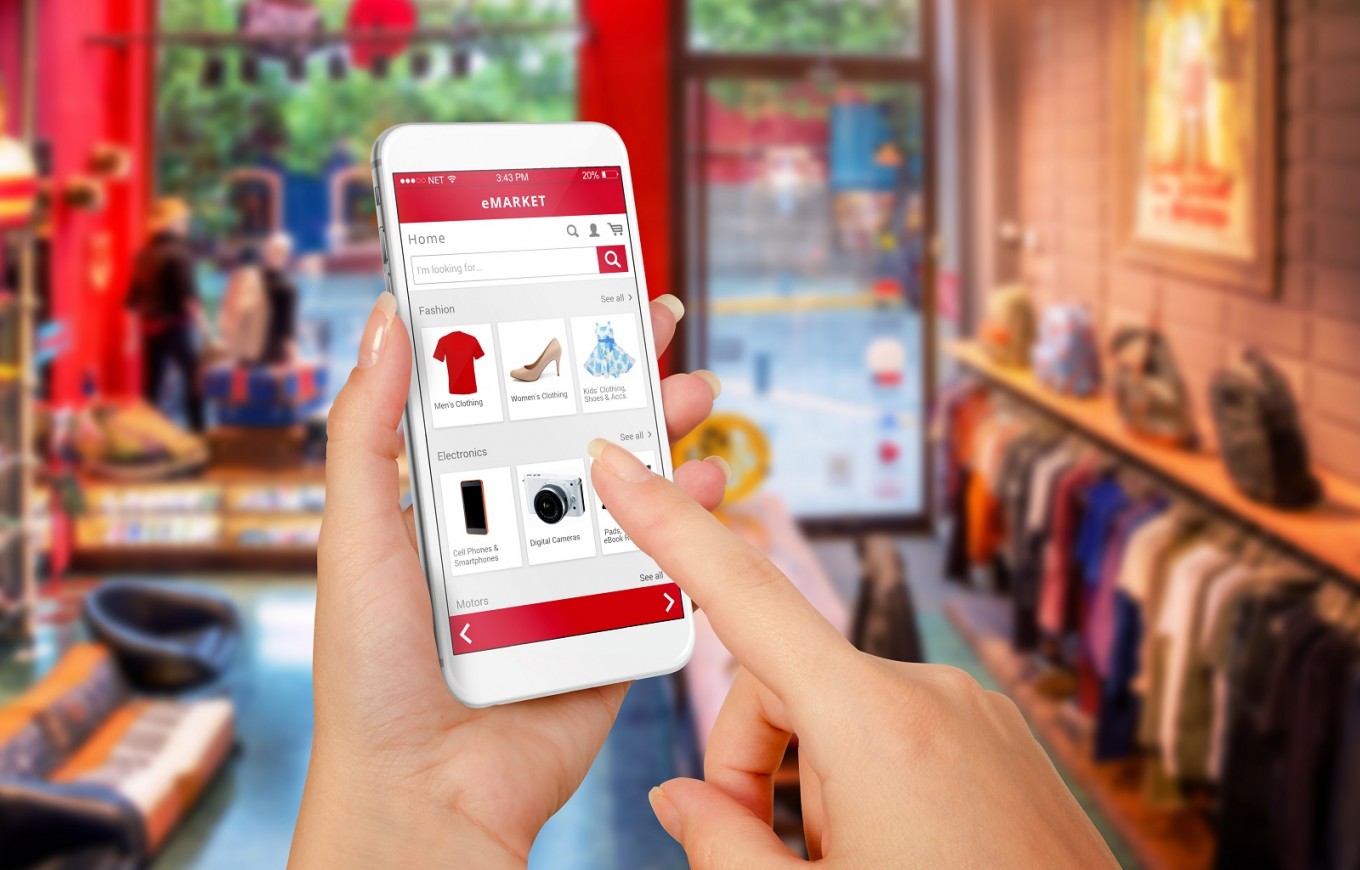
    E-commerce platforms reported a surge in sales on Singles’ Day on Nov. 11, an annual shopping event, with the most popular items being masks and healthcare products. Tiki said revenues were up nine times from last year, and the number of buyers was double that on normal days.

    Face masks, products for babies and mothers, and fast-moving consumer goods were the top sellers, it said.

    It also sold some 10,000 mobile phones, including 500 iPhones, 2,000 electric motorbikes and bicycles, and 6,000 cans and bottles of beer.

    Shopee sold 1.8 million decorative items, including some 100,000 decals and stickers, 1.6 million healthcare products, one million earphones, and 150,000 mobile phone covers.

    Lazada said revenues doubled and the number of customers was up by half. Healthcare and beauty products were its best-sellers, and electronics sales almost doubled, with laptop and desktop sales nearly tripling.

    Sendo said revenues were 40 percent higher than during other promotions such as Sept. 9 and Oct. 10, with fashion, household, and beauty items seeing sales double.

    According to a report called ‘e-Conomy SEA 2021’ released this week by Google, Temasek and Bain & Co., Vietnam’s e-commerce market will increase to $13 billion this year, up 53 percent from last year, and triple by 2025.