Author: Mei Ling Tan

  • Jollibee takes stake in Milkshop

    Jollibee takes stake in Milkshop

    Jollibee Foods Corp has acquired a majority stake of Milkshop International, operator of Taiwanese milk tea chain Milksha, through its subsidiary Jollibee Worldwide.

    The acquisition deal, equivalent to 51 per cent ownership, is valued at approximately US$12.8 million. Meanwhile, one of the co-founders of Milkshop will retain the remaining 49 per cent.

    “This gives JFC the opportunity to participate in this fast-growing beverage category and together with Milkshop’s Founder, grow the Milksha brand globally,” the Philippine multinational company said in a disclosure statement.

    Founded in 2008, Milkshop International is primarily involved in the development, operations and franchising of specialty tea shops under the trade names Milkshop and Milksha (for international markets). Currently, the company operates more than 250 outlets, with 231 stores in Taiwan, four in Hong Kong, two in Melbourne, two in Vancouver and 12 in Singapore.

    Despite the pandemic, the chain generated $47.7 million in system wide sales, higher than the year before when the sales amounted to $66.5 million.

    “Milkshop is generating modest net income and positive earnings before interest, taxes and depreciation,” the company said.

    JFC and its subsidiaries, Fresh N’ Famous Foods and Mang Inasal Philippines, now have the exclusive rights, through a licensing agreement with Milkshop, to sell and market products under the Milksha brand in their stores. Jollibee said Milksha products will be sold in Chowking stores soon.

  • WhatsApp multi-device support will roll out to all in mandatory update

    WhatsApp multi-device support will roll out to all in mandatory update

    The multi-device supportability was introduced this summer in a beta version to select users, and much more recently, became available for testing on a stable version of WhatsApp. Thousands of users took advantage of this and joined the multi-device beta program to be able to use WhatsApp from their laptops or tablets.

    It was a feature you could opt into at your discretion through the phone app itself. If you wanted to be able to log in through a different device, you’d have to specifically enable the feature on your phone, as it’s still technically in beta—that is, until now.

    A report by WaBetaInfo reveals that multi-device support will very soon be more or less forced upon users in an upcoming WhatsApp update. The team at WaBetaInfo discovered that the option to opt-out of the multi-device support program has been removed for users, meaning it is now a permanent feature of their account.

    They can now no longer leave the program, which is certain proof that multi-support is soon to be rolled out to everyone on the platform. And, as it turns out, it will be mandatory rather than optional after the upcoming WhatsApp beta version 2.21.23.10 goes live.

    How will this affect users, you may ask? Well, if you are already using the multi-device support feature, as soon as the update arrives to bring it to everyone, you will be logged out of all your additional devices, and you will have to re-link them to your account if you want to use your WhatsApp on more than just your phone.

    For the record, WhatsApp just recently removed the requirement for users’ phones to be online if they want to use WhatsApp from a secondary device. And for what it’s worth, we know that WhatsApp is already working on bringing the ability to link WhatsApp to more than one phone (and iPads, for that matter). When that update is coming, however, is still far too early to say.

  • Rivian Open Up Sales For Its Electric Van In 2023

    Rivian Open Up Sales For Its Electric Van In 2023

    Rivian which is one of the most well capitalized electric car startup’s has been making waves with its R1T and R1S electric pickup and SUV. But aside from this on the bedrock of a huge investment from e-commerce giant Amazon and Ford, Rivian has also been making an electric van which is meant for logistics operators that were originally meant just for Amazon. Now it has been revealed that it will be opening up sales for the electric van in 2023 after an order of 100,000 vans from the e-commerce giant.

    Rivian is slated to go public later this week with a valuation upwards of $60 billion. It quietly announced details about the plans for its fleet sales where it will even offer the R1T and R1S electric pickup and electric SUV and also has announced a new fleet management platform called FleetOS, alongside the electric van.

    Rivian is slated to be delivering 100,000 to just Amazon alone by 2024 as a part of its efforts to decarbonize its fleet. Amazon owns around 20 percent of Rivian after participating in multiple funding rounds and many had assumed the electric van was exclusive to Amazon, but seemingly that situation has changed which could allow Rivian to unlock more value.

    Rivian is slated to start production and deliveries of the electric van starting in December to Amazon.

    Apart from Amazon, FedEx has a deal with General Motors for EVs with its BrightDrop subsidiary. Even UPS has a deal with EV startup Arrival – so there is a trend that many logistics players are looking towards EVs which certainly is a big market for the EV players around the world.

  • Australia To Speed Up Rollout Of Electric Car Charging Stations

    Australia To Speed Up Rollout Of Electric Car Charging Stations

    The Australian government on Tuesday pledged A$178 million ($132 million) to ramp up the rollout of hydrogen refuelling and charging stations for electric vehicles but did not offer EV rebates or set targets to phase out petrol cars. Prime Minister Scott Morrison said the beefed up Future Fuels Fund provides “an Australian way” to lower transport emissions, reiterating a slogan he introduced recently to describe the country’s middle ground on climate change policy. “We will not be forcing Australians out of the car they want to drive or penalizing those who can least afford it through bans or taxes,” Morrison said in a statement. “Instead, the strategy will work to drive down the cost of low and zero-emission vehicles.”

    The additional investment, which adds to an existing A$72 million commitment and will be spent by the end of June 2025, will also aid purchases of electric cars and buses for government and business fleets. Industry groups and green activists, however, said rebates and tax breaks were necessary to encourage the purchase of cleaner cars in a country where transport is the third-largest source of carbon emissions. “The federal government purports to support choice for Australian motorists, but in fact its strategy stifles choice by making it very challenging for Australia to attract a wide selection of battery electric vehicles to the market,” Clean Energy Council Chief Executive Kane Thornton said.

    The federal funding is only slightly more than a separate commitment by New South Wales, the country’s most populous state, to spend A$171 million on EV chargers over the next four years. Victoria, the second-most populous state, is planning to spend A$29 million on charging infrastructure in regional areas and replacing government cars by 2023. The federal government said its plan should lower carbon emissions by more than 8 million tonnes by 2035, based on its own projection that battery-electric and plug-in hybrid electric vehicles will make up 30% of annual new car and light truck sales by 2030.

    Morrison in 2019 slammed a proposal by the opposition Labor Party to target half of all new car sales to be electric by 2030, saying the policy would “end the weekend” for Australians who want to tow their trailers and boats to go camping. However, a recent survey by The Australia Institute thinktank found 64% of Australians favored requiring all new car sales in the country to be zero-emission vehicles by 2035 and 71% supported government subsidies for electric cars. Battery electric and plug-in hybrid vehicle sales in Australia hit a record 8,688 in the first half of 2021, but made up just 1.6% of total light-vehicle sales. In Norway, the global leader in EV uptake, battery electric vehicle sales made up nearly 80% of new car sales in September.

    The Future Fuels Fund will focus on extending coverage of fast-charging stations to regional areas, investing with private firms in 1,000 public charging stations, and in charging infrastructure at businesses and households. Australia has about 3,000 public chargers installed across the country, according to the Electric Vehicle Council. By comparison, California alone has over 73,000 public and shared chargers. The Electric Vehicle Council said the national plan should have at least included fuel efficiency standards.

    “If Australia continues to be one of the only developed nations without fuel efficiency standards then we will continue to be a dumping ground for the world’s dirtiest vehicles,” council Chief Executive Behyad Jafari said in a statement. The transport infrastructure funding was announced just weeks after Morrison adopted a net-zero carbon emissions target by 2050 in the face of international criticism that the major coal and gas producer was not doing enough to address climate change.

  • WhatsApp will introduce Communities, evidence suggests

    WhatsApp will introduce Communities, evidence suggests

    WhatsApp has been adding new features by the numbers in the past few months, and now the guys at WABetaInfo have dug up yet another upcoming change to the popular messaging app.

    The new feature is called Communities and it was first spotted by XDA Developers as a simple reference in the code of the latest beta version of WhatsApp. Now there are some more details about the upcoming feature, along with screenshots, courtesy of WABetaInfo.

    Judging from the aforementioned screenshots, a Community is a place similar to a group but with a tad more options for the admins. At the moment a Community chat looks much like a group chat, and it’s still a private, encrypted place – not a social network-like feed.

    There are some visual differences too – community icons seem to be more square to distinguish the new feature from group chats. The layout leaked when WhatsApp briefly enabled it by mistake only to remove it soon after.

    The Community feature will offer the ability to host different groups under its hat, and admins will have extended tools to manage those groups. The new feature is still under development for Android and iOS, and there’s no clear rollout schedule yet. More details will become available when Communities hit the Beta version of WhatsApp.

  • Apple Hires Tesla’s AutoPilot Software Pilot Boss

    Apple Hires Tesla’s AutoPilot Software Pilot Boss

    Apple has hired CJ Moore who was Tesla’s head of software for its AutoPilot autonomous driving system. CJ Moore recently had disputed Elon Musk’s claims around AutoPilot and said that it was fundamentally a level 2 ADAS system while Musk has been pitching it as an autonomous driving system. CJ Moore will be reporting to another ex-Tesla executive Stuart Bowers who is the Vice President of engineering at Apple.

    In January Musk had claimed that Tesla’s autopilot will be able to operate reliably to a level better than that of a human driver. Tesla’s FSD driving beta went live only earlier this year but still, it doesn’t make Tesla’s cars fully autonomous. Tesla is also facing an investigation from authorities in the US in relation to crashes while its cars have been in AutoPilot mode. Moore was called in as a witness after a Tesla crash that left two people dead in April.

    The Apple Car project which has been called Project Titan has been in the works for more than half a decade – and has been riddled with issues. Apple recently lost its day-to-day chief of the project Doug Field who also left for Ford. Apple placed operational control in hands of Kevin Lynch the former Apple Watch software chief.

    Apple has also hired Ulrich Kranz, the co-founder of Canoo, and the former Vice President at BMW who helped create its electric cars. Apple has also poached Tesla’s Andrew Kim, Michael Schewkutsch, and Steve MacManus.

    Apple has been struggling to close battery supply from the likes of BYD and CATL while it also still doesn’t have a manufacturing partner having spoken to many players like Magna and Nissan.

  • Netflix games to avoid breaking App Store rules by getting launched individually

    Netflix games to avoid breaking App Store rules by getting launched individually

    After months of testing and controlled releases, Netflix finally released its mobile games library to Android users worldwide on November 2. Unfortunately, the iOS version of the app is yet to receive this new addition of entertainment choice. At the very least, Netflix did let us know that the feature is also coming to iOS.

    In truth, there might be a good reason Netflix games arrived on Android sooner than iOS, and that could very well be the App Store strict rules. With Android, there is a new tab dedicated to the game library. When you choose a game you want to play and tap on it, you are taken to the Play Store to download the app. After a quick sign-in with your Netflix account, you are set to go.

    In the iOS version of the Netflix app, however, likely, we will not see a dedicated game library tab since the App Store rules do not allow it.

    A developer named Steve Moser told Bloomberg that Netflix is planning to release each of its games individually in the App Store. He got to this conclusion after digging inside the Netflix app code. Each title will have to be downloaded separately from the Netflix app. Then, just like with the Android version, you sign in with your account and start playing.

    While this solves the App Store guidelines problem for Netflix, it is not a best-case scenario either. Even though not having a dedicated games tab might seem like a tiny nuisance, it breaks the seamless experience within the ecosystem, which Netflix is trying to build right now. On the other hand, this might not have to continue for too long, as Apple is still getting a lot of pressure regarding the App Store’s guidelines.

  • Airfares lowest in five years

    Airfares lowest in five years

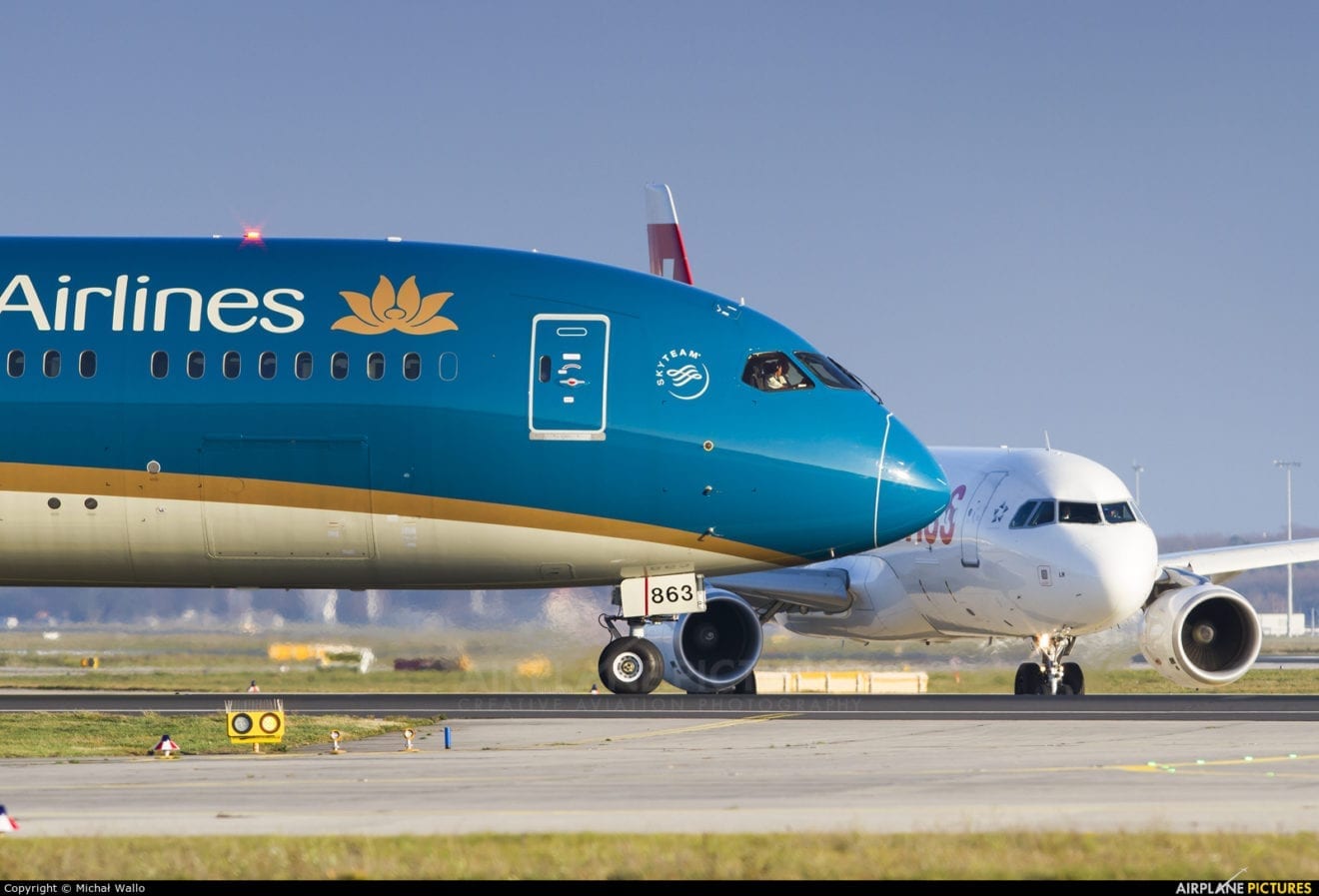
    Domestic airfares are at their lowest levels in five years as demand remains low. Hoa of the central Quang Nam Province said: “I had to pay only VND370,000 ($16.37) for a flight from Chu Lai (in the central provinces of Quang Nam) to HCMC, a rate I have not seen in the last five years.”

    Hoa in Hanoi said a return ticket between the capital and Phu Quoc Island is now around VND1.1 million while even several years ago the cheapest fare was only VND1.5 million.

    Thu, who runs a travel agency in Hanoi, said a one-way ticket for a flight between Hanoi or HCMC to some central provinces now costs VND314,000-450,000, the lowest in five years.

    “But the number of passengers is still very small, except on key routes like HCMC-Hanoi, HCMC-Da Nang and Hanoi-Da Nang.”

    Surveys by VnExpress found that fares from HCMC to the Central Highlands town of Da Lat and the central town of Nha Trang are VND358,000, and to some other destinations are VND483,000.

    Vietjet Air sells a one-way ticket for a flight between HCMC and Hanoi at VND544,000, and Vietnam Airlines and Bamboo Airways at VND1.1-1.8 million, down 15-20 percent from a year ago.

    Carriers said they have yet to attract many customers because people are still worried about the Covid-19 threat and the stringent air travel requirements.

    A Vietnam Airlines spokesperson said: “We have resumed flights on 38 domestic routes and six international one. The number of passengers is still low, but flights between HCMC and Da Nang, and between HCMC and Hanoi are 80 percent full”.

    Vietjet said it would resume flying on 48 domestic routes by Nov. 30. It currently offers free rapid Covid tests for passengers departing from HCMC and Hanoi.

    Recently the Civil Aviation Authority of Vietnam proposed the resumption of international flights to 15 countries and territories in four phases between now and July.

    Vietnam closed its doors to foreign tourists and canceled all international flights in March last year to contain Covid, since then allowing entry only for Vietnamese repatriates and foreign experts and highly-skilled workers.

  • Self Driving Startup Momenta Raises $500 Million

    Self Driving Startup Momenta Raises $500 Million

    Chinese self-driving startup Momenta has raised $500 million in a Series C funding. This round of funding comes after GM invested $300 million in the startup. This means now Momenta is valued at over $ billion.

    Momenta’s product portfolio includes advanced driver assistance systems which it sells to OEMs like GM and another tier 1 suppliers like Bosch. It also does R&D on unmanned level 4 ADAS systems. It has a high-profile constellation of investors including China’s SAIC group, GM, Toyota, Mercedes Benz and Bosch. It also has Temasek which is Singapore’s sovereign fund and Jack Ma’s Yunfeng Capital onboard as institutional investors.

    Momenta’s main point of differentiation is its relationship with automotive OEMs as many of the top ones are its investors as well. Many of its peers have taken a different path as they have developed in-house robotaxi fleets which is a more capital-intensive operation. It harvests data from its customers who are mass-producing vehicles.

    In China, it has Pony.AI and WeRide as its main rivals, and while they have raised a lot of money Momenta’s fundamentals are stronger because of its frugal operations.

    For GM, Momenta deploys a solution that is a mixture of consumer-grade millimeter-wave radars and high definition cameras which will be used in the automaker’s cars sold in China. Momenta also opened an office recently in Stuttgart in Germany probably because of its relationship with Mercedes Benz which is also based out of the same city.

  • Barclays Adds Private Banking Trio in Singapore

    Barclays Adds Private Banking Trio in Singapore

    Barclays Private Bank has strengthened its Asia business with three new appointments in Singapore.

    Adrian Khoo and Jaime Huang join Barclays Private Bank in Singapore, according to a statement, as head of strategic client coverage and a private banker, respectively reporting to newly appointed head of the private bank in Singapore, Evonne Tan.

    Khoo joins from Julius Baer where he was a senior relationship manager covering ultra high net worth (UHNW) and family office clients in Southeast Asia. Previously, he held senior roles at BNP Paribas Wealth Management, Asia Capital & Advisors, Goldman Sachs and Macquarie Bank.

    Huang joins from Bank of Singapore where she spent the last four years as a director advising UHNW and family office clients in Southeast Asia and China. Huang has over 18 years of private banking and investment advisory experience, previously with Citi, HSBC and ABN AMRO.

    Ken Sze has also been named as the Singapore-based Asia head of investments, reporting to Tan and Barclays Private Bank’s global co-head of investments Jean-Damien Marie.

    Sze will relocate from London where he the British lender’s global head of the funds and ETF business and he retains his role as an active member of Barclays Private Bank’s global investments team. Prior to joining Barclays, Sze worked with HSBC Private Bank in various investment roles.

    These senior appointments underscore our commitment to the region and our growth expansion plans,» said Tan in the statement.  I look forward to working with them as we continue to harness the synergies between our strong business platforms across the Asian region and focus on the collaboration opportunities with Barclays leading investment and corporate Bank to bring bespoke solutions to our family offices and UHNW clients in Singapore and Asia.

  • China Records First Case of Money Laundering via CBDC

    China Records First Case of Money Laundering via CBDC

    The pioneer of central bank digital currency, China recorded its first case of money laundering via the electronic yuan.

    Officials arrested 11 members of a criminal group in the Fujian province last week for allegedly laundering money using the country’s central bank digital currency (CBDC), according to Chinese media reports.

    The group allegedly scammed an individual after making false claims of ordering an item with quality issues.

    The victim was instructed to transfer more than 200,00 yuan ($31,000) to multiple accounts provided by the suspects.

    China is widely considered a CBDC pioneer after starting research into the field as early as 2014 and recently rolling out the digital yuan for public use via pilot programs.

    Although there is still no official launch date, many onlookers expect a full introduction in February 2022 in time for the Beijing Winter Olympics.

  • The Best Way That You Can Start Your Own Fashion Business

    The Best Way That You Can Start Your Own Fashion Business

    Every iconic brand has an origin story, regardless of whether they are a marketing company, work in hospitality, or are a clothing line. All of those that dominate today’s high streets and stores will have started from somewhere, and if they can do it, why not you? Of course, there are a few steps to be taken in between starting your business and becoming a major fashion brand, but what are they? The industry can sometimes be so daunting that it is hard to know where you should start. Well, wonder no more. This article will go into more detail about the best ways that you can start your own fashion business.

    Look After Your Employees

    Before we dive into aspects that pertain to fashion specifically, there has to be an emphasis placed on how important it is to ensure that you are looking after your employees. This means getting health insurance quotes and cover to keep them safe if there are any accidents, making your workplace one of fun, and acknowledging their achievements. When you do this, you will ensure you have employees who genuinely want to help your business and will stay with you as you grow.

    Identify a Need in the Market

    The most successful clothing lines won’t be able to continue to succeed simply based on the vanity of their founding designer. You need to make sure that you are taking the time to find a niche in the market that isn’t currently filled. What is this niche? Well, that all depends on you. What is currently missing from the fashion world that you believe you are going to be able to provide?

    Develop a Business Plan

    Having a well-structured and easy-to-understand business plan is essential as it will act as your guide throughout the entire journey. You need to sit there and ask yourself what your end goal for the product is and how you plan on getting there. It is all well and good to have a goal in mind, but without the steps in between start and finish, you aren’t going to have any direction you can travel in.

    Identify your Target Audience

    Your objective is not to simply identify a clothing item that you plan on putting out into the world, but you will need to understand the target audience of said piece of clothing. You need to know this because then you will have a better idea of what you should be charging for your products and how you should be marketing them. A brilliantly designed piece of clothing is going to mean very little if you aren’t able to get it in front of the right sort of customers.

    Think about your demographic. For instance, young people tend to be much more style-conscious and so are going to be more receptive to online marketing. That being said, they might not have as much money to spend, so this will impact the materials you use and how much you charge.


  • Haidilao to close 300 restaurants as Covid curbs eating out

    Haidilao to close 300 restaurants as Covid curbs eating out

    China’s biggest hot pot chain Haidilao is slowing its rollout of new restaurants and increasing diversification of its fare, tempering its rapid expansion during the coronavirus pandemic to cope with a subsequent slump in consumer spending.

    Haidilao, which became so popular in recent years that it appeased customers in hours-long queues for its soups by providing free manicures, snacks and shoe shines, is at the forefront of reckoning in China’s restaurant industry post-pandemic.

    The chain has seen falling table turnover rates and profits as consumers dine out less and new stores cannibalize business at older locations.

    “We will open stores based on market demand, and compared to before, will appropriately slow down our opening pace,” the company said in a written response to Reuters’ questions about its strategy.

    China’s catering industry shrank 4.5% in August, before recovering for growth of 3.1% last month. Analysts said it will likely remain volatile for some time amid the country’s broader patchy economic recovery.

    “This year, fresh waves of the epidemic happened repeatedly, and passenger flow in commercial areas is volatile, affecting the recovery of core business indicators,” Tianfeng Securities wrote in a research note last month.

    Haidilao was initially undeterred by the pandemic, embarking on an expansion drive in early 2020 that has doubled its outlets since then to almost 1,600 currently. It did so by snapping up sites left behind by vacating weaker players, often helped by deep discounts offered by landlords.

    But that expansion pushed Haidilao’s table turnover rate down to 3.0 – or three sets of customers per day on average – in the first half of this year, from 4.8 in 2019.

    Xiabu Xiabu, another Hong Kong-listed Chinese hot pot chain, has said it plans to shut 200 of its 1,010 stores after losing 50 million yuan ($7.76 million) in the first half of 2021.

    Haidilao’s share price has fallen to around HK$30 from a record high of HK$86 in February.

    “The company will need to create demand going forward, which is more challenging than fulfilling demand,” China Renaissance analysts wrote in an August note.

    to turn its fortunes around, Haidilao has opened more than 10 outlets specialising in fast food such as noodles and dumplings, moving beyond the hot pot, the signature dish of southwestern Sichuan province where the company was founded 27 years ago.

    However, with a maximum of just five stores each and an average spending per guest of 10 to 20 yuan – versus 107.3 yuan for the Haidilao restaurants – the sub-brands contributed just 0.5% to first-half revenue.

    Haidilao last month closed a potato noodle restaurant less than a year after opening it in the central city of Zhengzhou, without publicly citing a reason.

    In other diversification attempts, the company has opened bars in three of its Beijing restaurants and is promoting its delivery service, a unit where revenue initially rose during the pandemic.

    However, delivery revenue dropped from 409.6 million yuan, or 4.2% of total revenue, in the first half of 2020 to 345.7 yuan, or 1.7% of total revenue, in the first half of 2021.

    “(Eating) hot pot has a strong social feature so people are less likely to order hot pot at home,” said Zhu Danpeng, an independent food industry analyst.

    Haidilao opened a store on Alibaba’s marketplace Tmall several months ago to sell items including lipsticks inspired by its soup bases with names such as “capsicum rouge” and “summer tomato”.

    Zhu said Haidilao’s multi-brands strategy was the right move but the company did not have a lot of room for growth: “Haidilao has reached a certain phase with its development, as a man has reached his middle age.”

  • Twitter makes it easier to search through subscribers’ tweets on iOS

    Twitter makes it easier to search through subscribers’ tweets on iOS

    A new search icon has been discovered by XDA on the iOS version of the Twitter app. Tapping the magnifying glass icon at the top right corner of a subscriber’s Twitter page will search through the tweets posted by this person or account. It also can be used to go through your own tweets.

    Using the new feature is a snap. Tap on the magnifying glass to reveal the search bar, and simply type in the terms of the search. In the example that we did below, our search term was TikTok.

    That brought up a tweet that we posted late Friday night related to a story about a 16-year-old girl who used a hand gesture that she learned from watching TikTok. The gesture alerted someone in an automobile behind the one that the girl was a prisoner in, that something was not right and that the teen was in distress. Thanks to the hand gesture, the cops were alerted and used a traffic stop to arrest the 61-year-old driver.

    The new feature is actually a shortcut for a feature that Twitter users running the iOS app can already do. By tapping the search icon at the bottom of the screen and typing in From:Username Term (which in the above example is PhoneArena TikTok), you’ll get the same results as if you had used the new tool.

  • Telegram will soon launch subscription service to disable ads

    Telegram will soon launch subscription service to disable ads

    Telegram is one of the services that gained a lot of customers due to the Facebook/WhatsApp outage, but it remains to be seen how many will become loyal users or will return to their “first love.”

    The messaging service has been adding many new features in the last few weeks and we’re certain more will be coming soon. Over the weekend, Telegram’s CEO Pavel Durov made a few announcements concerning the ads that appear on large channels with more than 1000 users.

    If you’re following one or more of these channels and you’re seeing ads, you’ll be pleased to know that Telegram will launch a companion subscription service meant to disable these ads. Of course, if you don’t want to pay for such a service, then you’ll continue to see those ads, but it’s nice to know that the option is there.

    We have already started work on this new feature and look forward to launching it this month. It can be issued in the form of an inexpensive subscription, which will allow any user to directly financially support the development of Telegram and never see official advertisements in the channels.
    Additionally, Telegram’s CEO revealed that those who own big channels will be able to turn off official ads in their channels of all users. For the time being, the company is assessing the “economic conditions” for this to happen. It’s unclear how that would work, but here is what Telegram says: “advertisers will soon be able to place an ‘invisible’ ad on any channel that – assuming there is sufficient cost per impression – will result in no ads on that channel.”

    No subscription price has been announced yet since Telegram is still working on bringing this feature to users, but we’ll learn more once it’s ready for implementation.