Author: Mei Ling Tan

  • Vietnam unemployment rate peaks since Covid onset

    Vietnam unemployment rate peaks since Covid onset

    Vietnam’s unemployment rate rose to 3.72 percent in Q3, the highest since early 2020 when the novel coronavirus was first detected in the country.

    The rate was calculated among the working-age population, defined as those aged 15-60 for men and 15-55 for women, according to the General Statistics Office (GSO).

    Vietnam had around 49.2 million workers aged 15 or more in Q3, down 1.9 million against Q2, and down 2.1 million against the same period last year.

    The unemployment rate in the first nine months of this year stood at 2.91 percent.

    The complicated Covid-19 situations significantly affected people’s lives in the first nine months of this year, the GSO said in a report.

    As of September 21, social security relief of nearly VND13.8 trillion ($600 million) was provided to roughly 17.6 million people. This included VND11.4 trillion spent in 23 cities and provinces hardest hit by the pandemic. Over VND5.446 trillion was spent on more than 4.8 million people in HCMC alone.

    More than 136,349 tons of rice from national reserves was distributed among more than 2.4 million households with nearly 9.1 million members.

    By the end of 2020, Vietnam had a population of 97.58 million, with 36.8 percent living in urban areas and the rest in rural areas. The unemployment rate among its working-age population last year was 2.48 percent.

  • Continental Restructures Technology Unit, Downsizes Board

    Continental Restructures Technology Unit, Downsizes Board

    Continental’s tyres business and the ContiTech division, focused on rubber technologies, will become independent group sectors, while its Automotive Technologies branch will split into five business areas including a new focus on smart mobility and user experience.

    German car parts maker Continental announced plans for a restructuring that will combine from the start of next year business activities around connectivity, mobility, and high-performance computers, it said on Thursday. Its tyres business and the ContiTech division, focused on rubber technologies, will become independent group sectors, while its Automotive Technologies branch will split into five business areas including a new focus on smart mobility and user experience, a statement said.

    The restructuring is a further step by Continental to reorganise its business after spinning off its powertrain unit Vitesco in mid-September.

    Continental will combine business activities around connectivity, mobility, and high-performance computer

    “Mobility of the future is sustainable, automated and connected,” Chief Executive Nicola Setzer said in a statement. “We are thus making the most of the potential presented by our unique strong technology position in all of these fields.”

    As part of the restructuring, management board members Helmut Matschi and Frank Jourdan will step down, nearly three years before the end of their contracts. That will shrink Continental’s board to five members from Jan. 1.

  • Colosseum kits and plastic flowers help Lego’s earnings double

    Colosseum kits and plastic flowers help Lego’s earnings double

    Toymaker Lego doubled its earnings in the first six months of the year as customers flocked to its reopened stores to buy Star Wars building sets, model Colosseums and flower bouquets made from its colourful plastic bricks.

    While parts of the global retail industry are still reeling from the pandemic and related supply chain issues, Lego says it has benefited from its decade-old strategy of placing production close to its key markets, cutting logistical issues and costs.

    “It has made us somewhat more resilient, since we have nt had to send everything around the world urgently,” Chief Executive Niels B. Christiansen told Reuters, adding that Lego has five large factories covering Asia, Europe and the Americas.

    The family-owned company saw a surge in its online sales during the pandemic but reiterated on Tuesday it would continue to bet on physical stores to attract new customers.

    “If anyone doubted whether stores would still have relevance on the other side of Covid-19, we have simply seen both traffic and revenue come back into stores,” Christiansen said.

    Lego said it had outpaced the toy industry in all major markets during the first six months of 2021 as production was uninterrupted by Covid-19 restrictions and most of its physical stores reopened.

    Based in Billund, Denmark, Lego expects to open 174 new stores around the world this year, reaching 851 stores in total. Last year, Lego opened 134 new stores. In the first half of this year it opened 60 new outlets.

    Popular building sets in the first half of the year were Lego Star Wars and the advanced Lego Creator Expert sets, which include flower bouquets and a model of Rome’s Colosseum. They have become popular among adults stuck at home during lockdown periods.

    Lego also opened a new flagship store in Manhattan, New York City in June where customers are able to interact with Lego products, both physically and digitally, such as designing new Lego figures or creating a Lego model of one’s face.

    The new store format will be introduced to around 60 stores this year.

    “It’s less about selling products, more about showing the entire Lego universe to consumers,” Christiansen said.

    Despite facing rising costs for freight and raw materials, Lego more than doubled its operating profit in the first six months of this year to 8 billion Danish crowns ($1.26 billion) compared to the same period last year.

    Revenue grew 46 per cent to 23 billion crowns and online sales across all platforms grew 50 per cent compared to the same period last year, Lego said. It did not give a figure for online sales or their proportion of total sales.

  • Alibaba apps start offering WeChat Pay option after government order

    Alibaba apps start offering WeChat Pay option after government order

    China’s Alibaba Group Holding Ltd has begun offering payment services from Tencent Holdings Ltd’s WeChat on a number of its apps, after the government ordered major tech firms to stop blocking each other’s services and links.

    Local tech blog 36Kr reported on Tuesday that users of Alibaba’s food delivery app Ele.me, luxury goods app Kaola and e-book app Shuqi can now purchase goods via WeChat Pay, one of China’s most popular online payment options.

    Alibaba’s used-goods marketplace app Xianyu and supermarket app Freshippo have also applied for WeChat Pay integration, the tech blog said.

    Alibaba confirmed the contents of the report to Reuters. Previously, the main way users could make payments on those apps was via Alipay, from Alibaba’s financial affiliate Ant Group.

    Earlier this month, the Ministry of Industry and Information Technology said it had asked internet companies to end a long-standing practice of blocking each other’s links and services on their sites. Such practices prevented app users from seamlessly jumping to services between rival companies.

    Days later, Tencent’s WeChat messaging app started allowing users to access links to rival platforms. Previously, it had not allowed users to click on links sent via chat to, for instance, product listings from Alibaba’s Taobao marketplace.

    The changes come as authorities continue to tighten regulation in the internet sector.

    In April, antitrust regulators fined Alibaba a record $2.75 billion for anti-competitive behaviour.

  • UBS Partners With Robeco

    UBS Partners With Robeco

    Over the past years there has been some back and forth between UBS and Robeco. Now the two have joined forces to launch a sustainability fund.

    The investment company Robeco has launched a global engagement equities fund in partnership with UBS’ global wealth management, according to a statement Thursday. UBS will remain an exclusive partner for the next six months and aims to invest $1.5 billion.

    The fund has the sustainable investment objective to drive a clear and measurable improvement in a company’s contribution to the United Nations Sustainable Development Goals (SDGs) over three to five years, the statement says.

    Michiel Plakman is the fund’s lead portfolio manager, supported by Daniela da Costa, Peter van der Werf, Giacomo Moroni and Jan Anton van Zanten at Robeco.

    Robeco is no stranger to UBS: The Swiss bank’s chief sustainability officer Michael Baldinger, was previously CEO of Robeco. Last year UBS teamed up with Zug-based asset management giant Partners Group, on a private market offering for wealthy clients.

  • Temasek and HSBC Launch Platform for Sustainable Infrastructure

    Temasek and HSBC Launch Platform for Sustainable Infrastructure

    The platform will provide debt financing for projects in Asia, with an initial focus on Southeast Asia, as part of efforts to reduce climate change.

    Temasek will be working with HSBC to catalyze financing of marginally bankable sustainable infrastructure projects, so as to address the challenges and opportunities presented by climate change, according to an announcement on Thursday.

    The two sides will initially invest $150 million of equity to fund loans, with a goal to scale up the platform to $1 billion of loans within five years to support the commercial development of the region’s sustainable infrastructure sector.

    Based in Singapore, the platform aims to harness the market’s financial expertise and connectivity to scale up the development of sustainable infrastructure across Southeast Asia in time, the announcement said.

    Neither private nor public sector can close the financing gap alone,» Noel Quinn said. «Collaborations matter in the fight against climate change, and this partnership provides an impactful model for others to follow.

    The platform will target renewable energy and storage, water and waste treatment, and sustainable transport to help meet carbon reduction targets and build resilience to offset the impact of climate change.

    Strategic partners Asian Development Bank will provide technical assistance and project development expertise, while Clifford Capital Holdings will provide its project finance expertise as well as ongoing operational mid and back-office support to the platform.

  • Google winding down traditional Fiber TV

    Google winding down traditional Fiber TV

    Google is trying to be as cost-efficient as possible, especially when it comes to network infrastructure. Early this week, the Mountain View company revealed plans to completely retire its traditional Fiber TV, upgrading customers to streaming options.

    The announcement doesn’t really come as a surprise for some, as Google has started to upgrade its Fiber TV customers to its new TV experience since June. If you’re eligible for an upgrade, you can now get your Chromecast with Google TV and upgraded home Wi-Fi with Google Wifi through your Google Fiber account in just a few clicks.

    Although Google will gradually retire traditional Fiber TV in all markets, those still using the traditional service will get a 90-day notice before their plan will change. Google claims that it has completely upgraded Fiber TV customers in Nashville, Huntsville, Salt Lake City, and Provo, while Raleigh-Durham, Charlotte, and Irvine will finish their transitions by the end of this month.

    Austin and Atlanta will be the next markets to embrace Google’s upgraded Fiber TV at the end of November. Kansas City will follow, but there’s no timeline for this specific market yet.

  • Samsung Electronics Close To Finalising $17 Billion Texas Chip Plant

    Samsung Electronics Close To Finalising $17 Billion Texas Chip Plant

    Samsung Electronics Co Ltd is close to finalizing the construction of a $17 billion semiconductor factory in Williamson County in the U.S. state of Texas, three people with knowledge of the matter said. Samsung told Reuters that it is continuing due diligence in multiple locations and that it has yet to make a decision. The factory will make advanced logic semiconductor chips and is likely to create about 1,800 jobs, Samsung previously said in filings to state officials.

    One of the people said though no decision has been made, the Austin suburb of Williamson County is the frontrunner due to the subsidies on offer as well as the likelihood of stable sources of electricity and water. A winter storm shut down at Samsung’s existing chip plant in Austin during the first quarter caused the equivalent of 300 billion to 400 billion won ($254 million to $339 million) of damage to wafer production.

    All three people declined to be identified as they were not authorized to speak with the media. Samsung previously said it would start construction on the new 6-million-square-foot (557,418-sq-meter) plant in January, with production up and running by the end of 2024. The plan comes at a time when the global auto industry faces a significant semiconductor shortage.

    “With the United States turning semiconductors into a strategic material, it is becoming a risk to be concentrated only in Asia,” said Park Sung-soon, an analyst at Seoul-based Cape Investment Securities. “Samsung wants to be on the ground in the U.S.”

    In the global chip contract manufacturing industry, Samsung is second to TSMC which had 52.9% of market share compared to Samsung’s 17.3% as of end-June, according to analysis provider TrendForce.

  • Samsung turns Galaxy smartphones into digital car keys

    Samsung turns Galaxy smartphones into digital car keys

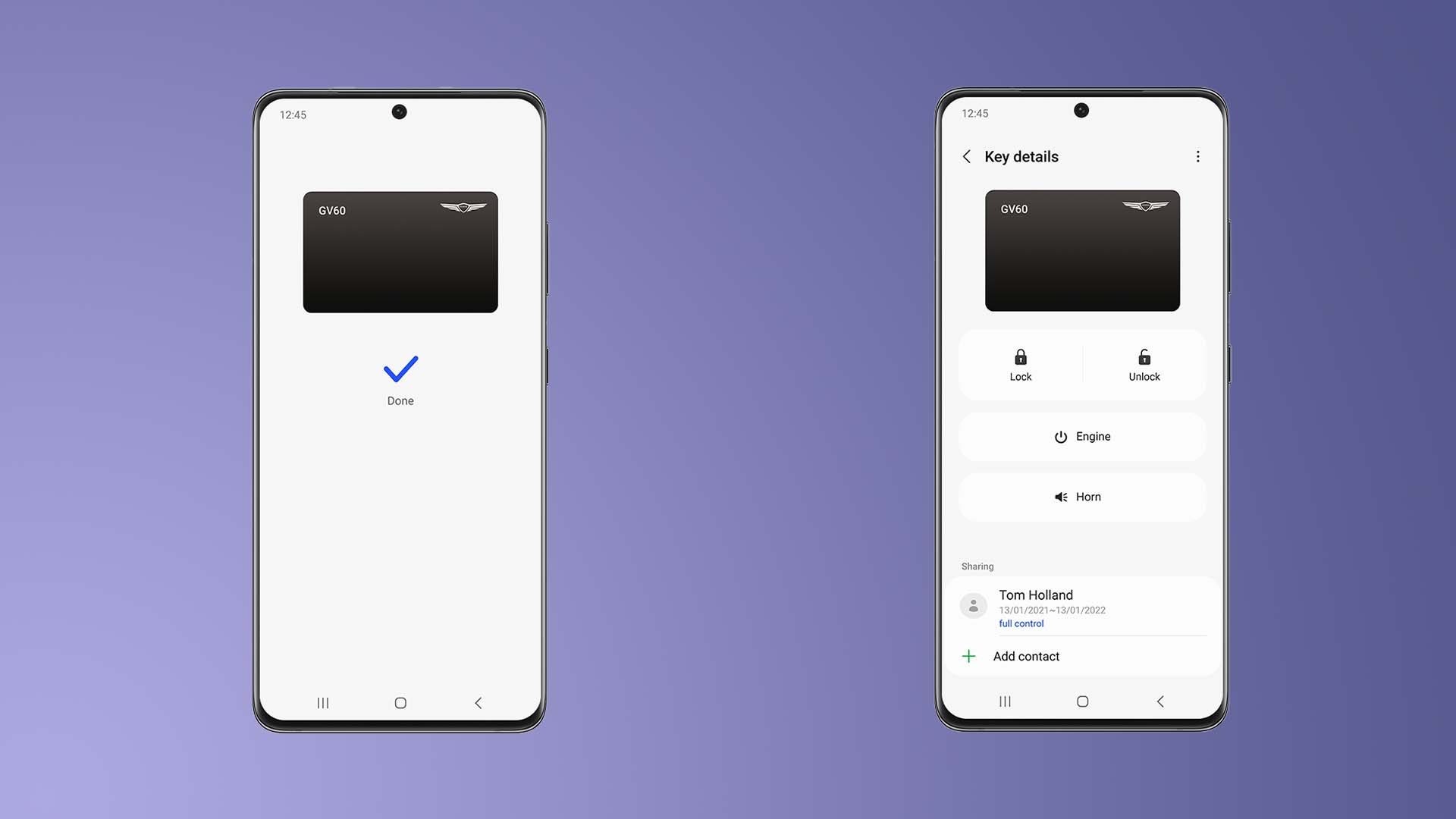
    Samsung is making its Galaxy devices even more useful than they are right now with the addition of a new feature that will turn them into digital car keys. Thanks to the revolutionary UWB technology, Samsung Galaxy users will be able to unlock, lock, and start their cars using their smartphones.

    UWB is a short-range, wireless communication protocol that uses radio waves to function, similar to Bluetooth and Wi-Fi. Unlike these two though, UWB sends radio wave at a much higher frequency, enabling highly accurate spatial awareness and directional capabilities that allow smartphones to correctly understand their surroundings better.

    More importantly, UWB enables passive entry, which means you’ll be able to lock and unlock your car, start the engine, open the trunk and even activate your personalized settings through your smartphone. The digital key can be shared if you’re lending your car to a friend, and you can even set a time limit on how long the shared key will work.

    Initially, Samsung’s digital key will be available in NFC and UWB with the Genesis V60 luxury electric vehicle in South Korea by the end of the year. Also, the smartphone maker announced that the UWB digital key is compatible with Galaxy S21+ and Ultra, Note 20 Ultra and Z Fold 2 and 3.

  • Vietnam private carriers seek zero interest loans

    Vietnam private carriers seek zero interest loans

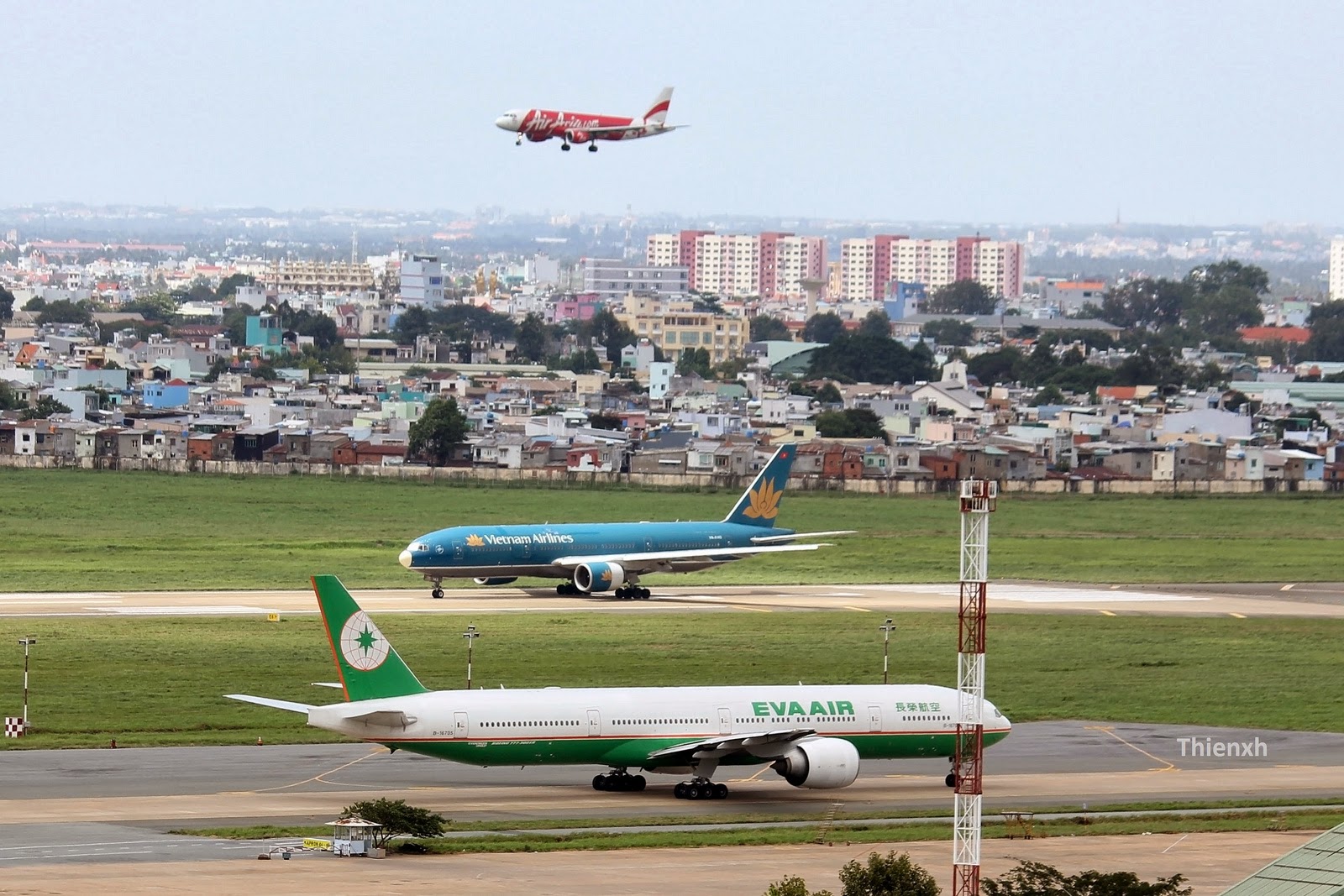
    The Vietnam Aviation Business Association (VABA) has proposed an interest-free loan package for private airlines, similar to the one accorded national carrier Vietnam Airlines.

    The airlines are bearing high costs while revenue has declined drastically, but they have to maintain equipment and workforce so as to restart when the market recovers, VABA vice president and general secretary Bui Doan Ne, said at a recent meeting to discuss a bailout package for enterprises.

    Ne suggested stronger support from the government, including a preferential loan package with zero percent interest, similar to the one given to Vietnam Airlines.

    This year, the State Bank of Vietnam (SBV) has provided a refinancing loan of VND4 trillion ($173 million) at zero percent interest for one year to support Vietnam Airlines.

    The support for aviation businesses is necessary because this is an industry that has the ability to recover quickly when the economy opens and is also a major contributor to the state budget, Ne said.

    Vietnam Airlines, budget carrier Vietjet Air, the Airports Corporation of Vietnam (ACV), and the Vietnam Air Traffic Management Corporation (VATM) contributed over VND22 trillion in taxes and fees to the state budget in 2019.

    He said aviation development will spur tourism in particular and the economy as a whole. Some estimates say aviation growth of 2.5 percent will stimulate 1 percent of GDP growth.

    Nguyen Tuan Anh, head of the central bank’s Credit Department, said that it was planning a VND3 trillion aid package for enterprises.

    Nguyen Quoc Hung, general secretary of the Vietnam Banks Association, noted that not only airlines but a number of other businesses in the hospitality field were also severely affected by the pandemic and need support.

    “We should not support some industries while ignoring others as it would create inequality,” Hung said.

    The aviation industry has been among the hardest hit by the Covid-19 pandemic. In the first seven months of this year, Vietnamese carriers served 13.7 million passengers, down 32 percent year-on-year, according to the General Statistics Office.

  • HSBC Hires Digital Platforms Specialist in Singapore

    HSBC Hires Digital Platforms Specialist in Singapore

    The bank said the newly created role will help one of its key pillars of embedding its solutions into the digital platforms that its clients are adopting.

    HSBC has appointed Aman Narain as head of platforms for global commercial banking, a role in which he will lead its strategy, including the development, commercialization and innovation of propositions, according to an announcement on Wednesday.

    Narain joins the bank from Google, where he was instrumental in the build-out and commercialization of revenue-generating ecosystems, including the launch of Google Pay in Singapore and the design of the GooglePlex account in the U.S.. He previously led digital and marketing transformation for Schroders and held various leadership positions at Standard Chartered.

    Based in Singapore, Narain will report to Stuart Tait, regional head of commercial banking, Asia Pacific.

  • iPhone 13 module production to pick up in October

    iPhone 13 module production to pick up in October

    The delay in iPhone 13 parts manufacturing in Vietnam is set to improve in mid-October as one key facility could resume production after months of Covid-19 disruption.

    The facility in southern Vietnam, a key iPhone camera module manufacturing facility in the country, has gradually resumed production in recent days, an executive familiar with the situation said.

    The delay in making the new sensor-shift optical image stabilization module is causing buyers of iPhone 13 to face longer delivery times, it said.

    “There’s nothing we can do but to monitor the situation in Vietnam every day and wait for them to ramp up the output,” one of the executives with direct knowledge told the news outlet.

    The module is used on all four new iPhone 13 models. Previously, it was only in the premium iPhone 12 Pro Max.

    Vietnam has suffered severe Covid-19 impacts in the fourth wave, resulting in strict restrictions being imposed on factories and transportation in many localities, especially in HCMC and neighboring Binh Duong Province.

  • Triumph Extends Partnership With Distinguished Gentleman’s Ride

    Triumph Extends Partnership With Distinguished Gentleman’s Ride

    Triumph Motorcycles will continue as the main partner and supporter of the Distinguished Gentleman’s Ride for five more years, having supported the charity motorcycle fundraiser since 2014. The Distinguished Gentleman’s Ride, or DGR, as it’s also known, was initially founded to raise both funds and awareness for prostate cancer research and men’s mental health. The DGR has gone on to become an iconic and stylish global event on the motorcycle charity calendar each year, uniting classic and vintage bike riders the world over on a single-day event every year.

    In 2014, the DGR raised a total of $1.5 million, taking place in 58 countries with around 20,000 riders dressing up to participate in the event. In 2019, the event grew to raise a record-breaking $6 million, with 1,16,000 riders participating across 104 countries. As the DGR’s major sponsor since 2014, Triumph Motorcycles has supported DGR founder Mike Hawwa and his team in helping develop the DGR into the global event that it is today.

    “In 2014 when we first partnered with Triumph Motorcycles, I was incredibly excited. They are the only motorcycle manufacturer that I felt perfectly fit with The Distinguished Gentleman’s Ride. We’ve done some wonderful things since then; together we have been able to reward some of our top and most dedicated fundraisers with brand new bikes from the modern classic range and built the custom one-of-one 2021 Triumph Thruxton ₹ Today, 8 years later as we announce the 5-year continuation of this partnership, I am even more excited than I was in 2014 because, with the next 5 years, I know that we can do even more together with the goal of raising funds and awareness of men’s health,” said Mike Hawwa, Founder/Director of The Distinguished Gentleman’s Ride.

    The 2020 COVID-19 pandemic presented a challenge to organize the group ride event that the DGR is. Despite the difficulties and challenges, the DGR developed a new format that made it possible for riders to show their support and passion safely, with the Ride Solo Together event. The DGR community achieved its most global event ever in 2021, with 171 countries and 2,531 locations riding solo together, all connected together through social media.

  • Siri loses the ability to help the blind use their iPhones after the release of iOS 15

    Siri loses the ability to help the blind use their iPhones after the release of iOS 15

    The accessibility menu is where you’ll find features that Apple added to iOS to help those with hearing and vision problems use an iPhone. From that menu, you can add hearing aid compatibility, toggle on the Sound Recognition feature that sends an alert when certain sounds like a fire or smoke alarm go off. Other sounds that will trigger a notification include the sound of glass breaking, the sound of a baby crying, and more.

    Other features found in accessibility include Subtitles & Captioning and there is a listing for Siri. However, some of the things that Siri used to do to help those who have poor vision or are blind have been removed following the iOS 15 update. Apple’s digital assistant will no longer send emails. It also won’t respond to the following commands:

    • Do I have any voicemails?
    • Play my voicemail messages
    • Check my call history
    • Check my recent calls
    • Who called me?
    • Send an email
    • Send an email to [person]

    AppleVis, an online forum for iPhone users who are blind or have poor vision, recently posted a comment from a user named Brian Negus who wrote: “I tried on my iPhone SE with iOS 15.0 and the response from Siri was “sorry, I can’t help with that”. Subsequently, I’ve had the same response on a phone running iOS 12. If this is a deliberate feature removal, it’s certainly a loss to some users with sight loss who find it a convenient way to send a brief email.”

    Negus later revealed that he had heard from Apple Support and they told him that “we are aware of this issue and it is currently under review.” This could indicate that Apple will be sending a software update to exterminate the bug. That certainly makes more sense than Apple haphazardly deciding not to allow Siri to help those with vision problems.

    Interestingly enough, while the first thought is that the issue started with the recent iOS 15 updates, the same accessibility features no longer working with Siri in iOS 15 are also not working when using Siri in iOS 14. Siri will play the latest voicemail that a user has received or read a voicemail from a specific person. But again, the digital assistant will no longer read the list of all available voicemails.

    Siri received something of an overhaul in iOS 15, with speech processing is now done on-device instead of via an Apple server. That’s because the Neural Engine will process speech as well as the off-device server does. The digital assistant will handle some requests offline including setting alarms and timers, messaging, launching an app, controlling the playback of audio, and opening the Settings app.

    Siri will now share content on the screen including photos, web pages, content from Apple Music or Apple Podcasts, Maps locations, stories from Apple News, and more. All you have to say is “Send this to Giancarlo.” If the content on the screen can’t be shared, Siri will offer to send a screenshot instead. And while Google Assistant already does this, Siri will now maintain context when you have a follow-up question to make the interaction with the digital helper more of a conversation.

    Is it possible that somehow, in the midst of making these changes to Siri in iOS 15, some of the accessibility features were accidentally disabled? It doesn’t matter what caused this as the most important thing is for Apple to bring back Siri’s lost capabilities so that those less fortunate can still use their iPhone even if their vision is poor.

    Apple already has a backlog of fixes it needs to send out so we could see all of these bundled together in iOS 15.01, or added to the iOS 15.1 update that Apple is currently testing with the release of its second developer beta.


  • Italian brand Frette opens doors in Singapore

    Italian brand Frette opens doors in Singapore

    Italian home accessories and lifestyle brand, Frette, has expanded its footprint in Singapore with its first boutique in Marina Bay Sands.

    The store also marks the brand’s first mono-brand boutique in the territory. Designed by Milan-based architecture studio Archibrando, the new Frette store features elements used in the brand’s global flagship boutique on Milan’s Via Manzoni and custom furnishings crafted from natural Afara wood, “encapsulating the luxurious ambience and timeless elegance and essence of the brand”.

    Frette Singapore occupies a 65sqm area of the shopping centre, offering crafted linens and decorative home accessories, ranging from embroidery bedding, bath towels, to men’s and women’s loungewear. The Marina Bay Sands boutique also offers custom embroidery and personalisation, bedroom styling as well as installation.

    The 160-year-old brand is known for its “chic, original designs and inimitable finish and feel”. Frette operates nine retail locations in the US and 25 in Asia. The brand has flagship stores in China, South Korea, Taiwan, Vietnam and Cambodia.