Author: Mei Ling Tan

  • Five Guys opens first Australian outlet

    Five Guys opens first Australian outlet

    US burger sensation Five Guys opens its first Australian restaurant, for takeaway only, on 20 September in Sydney’s Penrith.

    Master franchisee Seagrass Hospitality is opening the long-awaited fast-food brand at the Penrith Panthers Leagues Club on the busy Mulgoa Road.

    Robby Andronikos, brand manager of Five Guys Australia, said “It’s been an incredibly fun journey to bring the Five Guys opening to this point. A massive team effort from Five Guys, Seagrass BHG, and the multiple Australian producers and businesses working in partnership to launch this brand with the exacting standards required.

    “I’m excited to finally be able to open the doors to our first store in Penrith with many more Australian restaurants on the horizon already planned.”

    Seagrass BHG has five brands in its portfolio, including Ribs&Burgers, Italian Street Kitchen and The Meat & Wine Co.

    What started as a family-run burgers and fries restaurant in 1986 is now a global franchise with sites across North America, Europe, the Middle East and Asia.

    The next planned expansion beyond the Australian market will be into New Zealand.

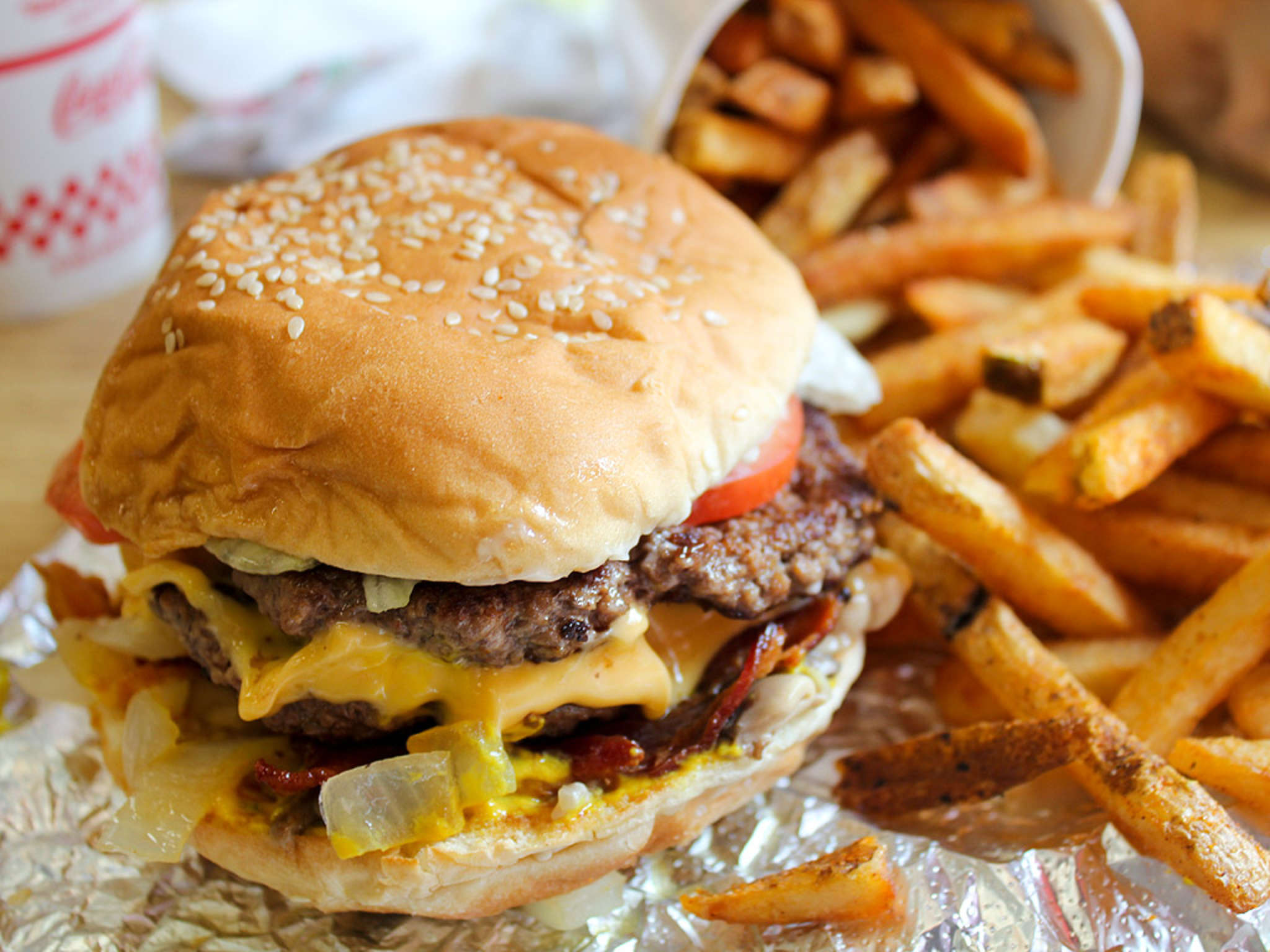
    The Murrell brothers who founded the business has a no freezer, no microwave policy – all burgers and fries are made fresh every day.

    Lean mean patties are made every day on site, while the bread is baked fresh five days a week in a locally contracted bakery.

    Chad Murrell said “From the beginning, we wanted our customers to know that we put all our money into the food. That’s why the décor is so simple; only red and white tiles. We don’t spend money on décor, or guys in chicken suits. We’ll go overboard on food.

    “By maintaining a simple ethos, coupled with highest quality ingredients, we continue to follow through on the vision since 1986.”

  • DoorDash bets big on liquor deliveries

    DoorDash bets big on liquor deliveries

    DoorDash will offer beer, wine, and spirits through the DoorDash Marketplace in 20 U.S. states and Washington, D.C., as well as Canada and Australia, the company announced on Monday. Customers will be able to order alcohol offerings from grocery stores, restaurants and other local merchants through a new “Alcohol” tab in the DoorDash app.

    Alcohol delivery exploded during the pandemic as COVID-19 restrictions shifted happy hour from bars and restaurants to people’s homes. Lawmakers in many states temporarily relaxed regulations to make alcohol available for home delivery and pickup. E-commerce made up just 1% of U.S. alcohol sales by retailers in 2019 by volume but is expected to grow to 7% by 2024, according the Wine & Spirits Wholesalers of America, an industry trade group.

    The boom has created an opportunity for delivery giants like DoorDash and Uber Eats to capitalize on the higher-margin category. It’s also a boom for restaurants as adding alcohol could increase average order values by as much as 30%, according to DoorDash Chief Operating Officer Christopher Payne. “It’s a win-win for everyone. Customers have a wider selection, restaurants can achieve greater sales and Dashers can earn more,” he said.

    The San Francisco-based company commanded 57% of the food-delivery market as of August and has seen sustained growth across segments even as indoor dining has resumed. The dedicated alcohol operation, which counts more than 10,000 retailers, will also benefit from DoubleDash, a feature that lets customers shop from multiple stores and bundle them into a single order. DoorDash’s move heats up the competition with Uber, which purchased on-demand alcohol delivery app Drizly for $1.1 billion in February.

    Because regulations around alcohol delivery differ city-to-city, the new offering will be available only in select markets. DoorDash has ramped up its lobbying efforts alongside the restaurant industry and have seen “great traction” as legislators have been keen to help businesses that were battered when the pandemic shuttered eateries, Payne said.

    DoorDash will employ ID verification prior to checkout and by couriers before delivery to ensure customers are 21 years old or older, the company said in a statement.

    The company has been delivering alcohol from restaurants and through its Drive service, which handles orders from a merchant’s website rather than through the regular DoorDash Marketplace app.

  • UBS China Fund Caught in Tech Maelstrom

    UBS China Fund Caught in Tech Maelstrom

    UBS’s $10 billion China Opportunity fund caught in the downdraft of the country’s harsh tech crackdown.

    It was only last April that Bin Shi gave a fireside chat on a UBS asset management hosted website. The bank’s head of China equities appeared optimistic about the outlook for Chinese equities, saying it was likely the tech sector had seen the worst in terms of anti-trust penalties.

    As a result, he felt confident buying high-quality A-share titles listed in Shanghai and Shenzhen.

    And when Shi talks, investors tend to listen – given he currently manages four different vehicles focusing on Chinese equities, the largest being the China Opportunity Fund.

    It is one of the most important equity funds at UBS. It has a highly successful track record, and assets under management were $14.4 billion at the end of 2020. Over the past five years, it posted an annualized return of more than 12 percent.

    Until this year, Morningstar ranked it as a five-star fund while Citywire has long rated Shi highly.

    What that means is that Shi gets talked about. In Switzerland, the fund seemed to attract new money almost by magnetic force, envious market competitors say.

    But over the past few months that force has likely weakened significantly. Things have not turned out as Shi expected. A-shares continue to tank, as do Chinese securities listed overseas. In summer, the fund recorded double-digit declines and it lost a Morningstar star in July. As of right now, the fund is down almost 22 percent this year.

    That means that it trails the MSCI China Index and many of its peer funds. It still managed $10.4 billion in assets in June with the first half report recording redemptions of about $3.8 billion, although that was still more than offset by inflows of $4.2 billion. But if you factor in market performance, the current shortfall is more likely to be about $1.2 billion.

    That is more than likely to be a big hit for Shi. When asked by finews.com, UBS said that it takes the long-term view when it comes to identifying market prospects and it invests in companies with strong management and a long-term vision that allow them to ably manage geopolitical, regulatory and other external events.

    China is more volatile than other markets, and such an environment creates opportunities for active managers to create value,, a spokesperson said.

    It appears that the fund bet billions of dollars on the Chinese companies bearing the brunt of the anti-cartel and regulatory crackdown. Its holdings of Tencent comprise 9.76 percent of the portfolio, Alibaba and other Jack Ma companies, including Ant, which is being split up, make up 5.74 percent. In comparison to peers, it appears to be overweight in financials.

    In the meantime, the Chinese government seems to be ramping up scrutiny of the insurance sector. One of the largest insurers is Ping An, which is 5.29 percent of the portfolio. Authorities are also taking steps against video games, which is likely to impact major games producer Netease (4.97 percent of the portfolio).

    The brutal decline in Chinese equities has proven controversial, given that it has become mixed up in the U.S.-China trade war, the pandemic and violations of human rights in China. Market legend George Soros has called Blackrock’s recent move into China a «tragic mistake». He warned that the world’s largest asset manager was likely to lose money as a result, warning that the recent steps against the tech sector are a symbol that Chinese President Xi Jinping will do anything to remain in power.

    One of the world’s mostly closely watched investors, Cathie Woods, recently sold off a sizeable chunk of her funds holdings in China tech.

    Blackrock and UBS have no choice but to grin and bear it. The Chinese investment market is a long-term gamble and one in which UBS managed to position itself before other competitors. UBS is also intent on making more investments there. That also holds for the funds business. It is expanding its palette of products and it is shortly expected to launch a new China Healthcare fund.

    But if UBS China funds continue to bleed, that could change. It is mostly investors outside the mainland that have been burned by the tech crash and they make most of their money from them.

    They seem to have had enough of the way Chinese authorities have been acting, which they see as unpredictable and overly draconian.

  • Korean firms to use petrol stations as logistics hubs

    Korean firms to use petrol stations as logistics hubs

    With the expansion of the ‘quick commerce market’, which offers guaranteed delivery within an hour, South Korean firms are employing gas stations as warehouses and logistics hubs.

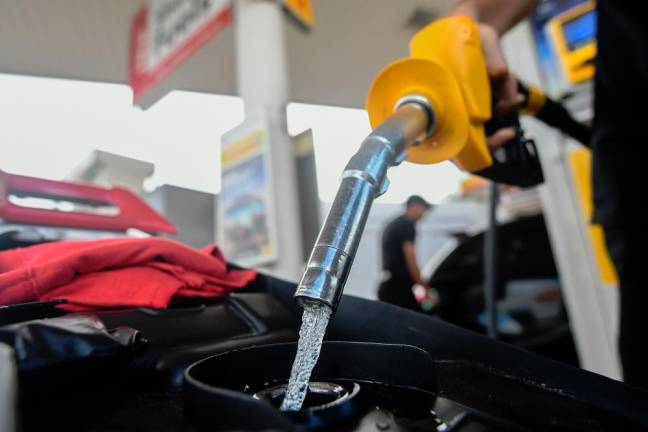
    It has become a new alignment of interest between the quick commerce industry that needs logistics hubs in the heart of the city, and gas stations in search of a breakthrough as they struggle from dwindling sales with the emergence of eco-friendly cars.

    Shinsegae Property, property development unit of retail giant Shinsegae Group, signed an agreement with Koramco Energy Plus REITs to begin the development of gas station sites. The plan is to turn idle spaces at 187 gas stations owned by REITs into logistics hubs.

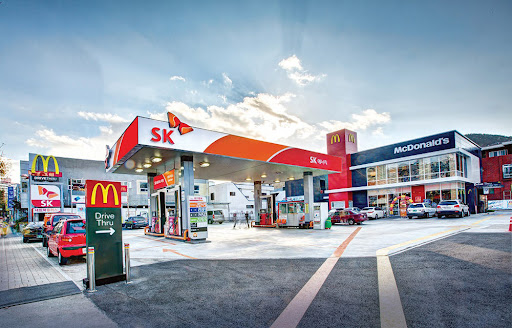
    Major logistics company CJ Logistics also signed an agreement with oil refinery and gas station operator SK Energy late last month to use their gas stations as logistics hubs.

    The plan is to set up small to medium-sized warehouses at these gas stations to keep stock of popular consumer goods to ship them out as soon as an order is placed.

    GS Caltex, South Korea’s second-largest refiner by sales, teamed up with local food delivery firm Mesh Korea last year to come up with plans for establishing logistics hubs at gas stations nationwide that will focus on short-range deliveries.

    This trend is partially the result of gas stations struggling to remain profitable. There were 11,290 gas stations in South Korea as of May and 109 gas stations had closed down in the first five months of the year, according to the Korea Oil Station Association.

    The Korea Energy Economics Institute said in a report published in January that number of gas stations in the country has been shrinking by an average of 1.3 per cent annually in the last 10 years, claiming that only 3,000 gas stations will be operational by 2040.

  • Cult British water brand Dash heads Down Under

    Cult British water brand Dash heads Down Under

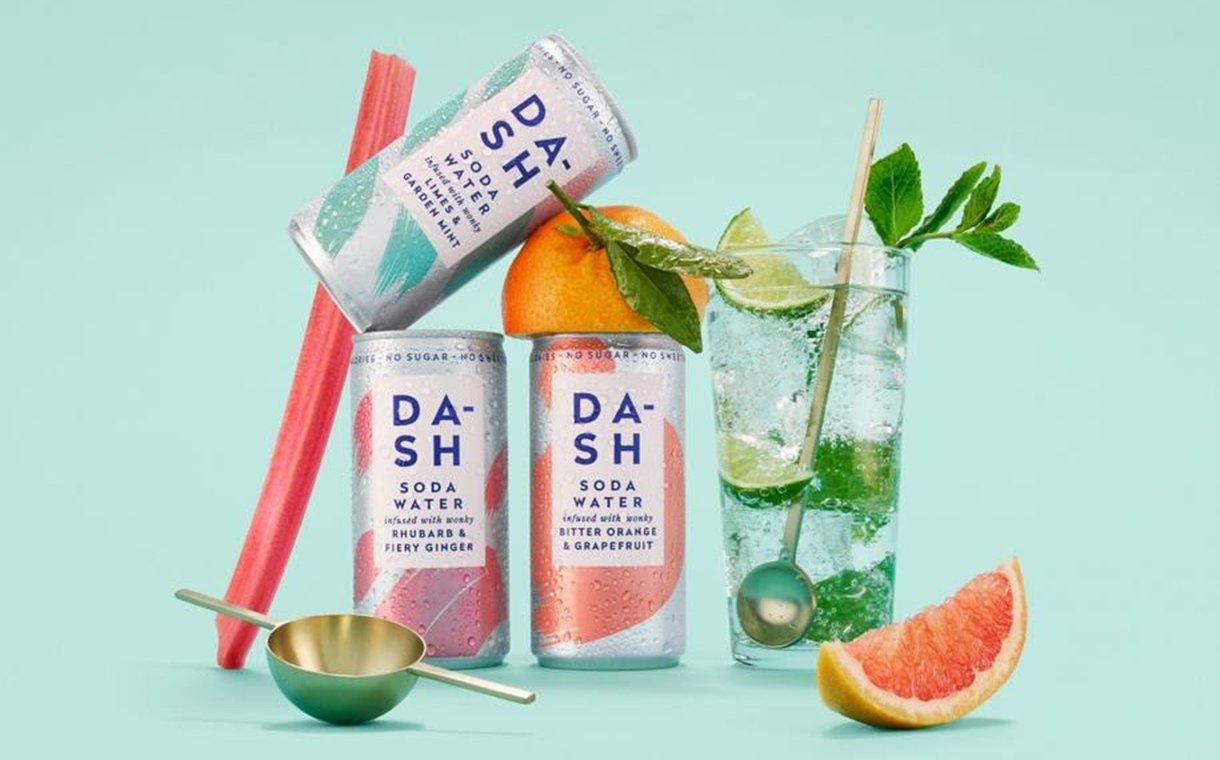
    Dash, the UK drink brand, is making a foray into the Australian soft-drink market with the launch of its renowned ‘wonky fruit’ infused sparkling water.

    Featuring just three ingredients – water, bubbles and wonky fruit – the drinks are sugar-free, zero-calorie and no sweetening is added. As part of the plan to reduce food waste, Dash uses fruits and vegetables that are wonky, bent, curved, knobbly, misshapen, and imperfect – but still delicious.

    Created by Jack Scott and Alex Wright in 2017, the idea came from when the two founders – who have farming backgrounds – saw produce that didn’t meet “beauty standards” going to waste. Dash also says it is on a mission to create a ready-to-use and sustainable drink to encourage people to have a greener lifestyle.

    This expansion of Dash marks the first time the company has produced locally outside the UK. The sparkling water is available at 700 Woolworths stores, and at 800 independent retailers across the country.

    “We noticed that the Australian market is backing the seltzer category in a similar way to the US and UK,” said Jack Scott, co-founder of Dash Water. “Many independent retailers, and Australian supermarkets, are focused on sustainable practices that align with our values as a B-Corporation. We wanted to bring a fresh perspective to the market by continuing to infuse local spring water with delicious wonky fruit, just as we do in the UK. Expanding Dash in Australia gives us the opportunity to expand the business and enter into new and exciting markets.”

    With the slogan “Dash judges on taste, not looks”, the water range can be found in different flavors – raspberry, lemon and cucumber – with an RRP of $8 for a box of four 300ml cans.

  • Singapore’s Yacht 21 rebrands with a new label and purpose

    Singapore’s Yacht 21 rebrands with a new label and purpose

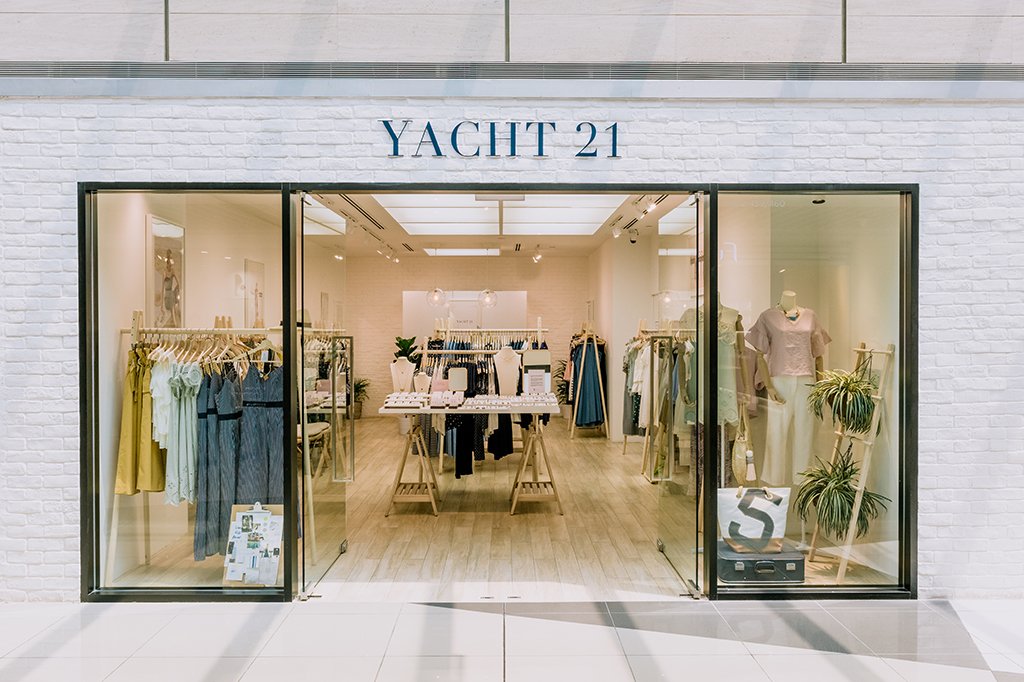
    Singapore fashion label Yacht 21 has been renamed Y21, changing its logo and purpose in response to the change in fashion after the pandemic.

    Founded in 2009, Yacht 21 was known for its travel-friendly and resort collection inspired by Scandinavian designs. As international travel has been put on hold and will not be possible for a while since Covid-19, Yacht 21 has decided to shift its focus to functional, fuss-free and seasonless pieces for women to adapt to the new normal.

    “We believe it is for the better as we learn to embrace the importance of versatility, comfort and quality in our designs to align with the new lifestyles women are leading,” said Jarenis Ho, founder of Y21.

    “Where women used to have different pieces for work, parties and vacations, we now have a more blended existence and need outfits that can be worn anywhere while maintaining a strong sense of purposeful style.”

    Y21 brand colour palette features three colours – grey, beige and orange. The tagline has also been changed from ‘Everyday’s A Holiday’ to ‘Wear Anywhere’.

    Y21 will feature its new image on its website this Thursday.

  • Shanghai encourages ‘duty-free economy’ as part of consumer push

    Shanghai encourages ‘duty-free economy’ as part of consumer push

    The Shanghai government will support companies applying for approval to sell duty-free goods, and encourage duty-free shops to be set up at airports, hotels, malls and other commercial venues, municipal authorities said.

    The development of a “duty-free economy”, which will encourage spending on imported products, including heavily-taxed luxury goods, was outlined in a 2021-2025 consumption plan released on Saturday.

    Presently, duty-free spending in China is largely concentrated in the southern island province of Hainan, where the annual limit on individual duty-free spending was hiked to 100,000 yuan (US$15,467) last year from 30,000 yuan previously.

    Tariffs on imported consumer goods vary in China, with taxes on some luxury items such as perfumes and watches exceeding 30 per cent.

    Lured by the substantially lower prices, millions of domestic tourists flock to Hainan’s malls each year, and the numbers have been boosted by restrictions on overseas travel resulting from the Covid-19 pandemic.

    Otherwise, there are more than 300 duty-free shops across the country selling products from fragrances and cosmetics to clothing and shoes. China Tourism Group Duty Free Corp is the dominant player, with nearly 200 stores.

    Annual duty-free spending is in the tens of billions of yuan.

  • JD opens E-space store in Indonesia

    JD opens E-space store in Indonesia

    JD has introduced its first overseas E-space store through JD.ID – its e-commerce joint venture in Indonesia.

    Dudded JD.ID Electronic Store, the E-space store features an omnichannel model which offers technology and home appliance products from a list of electronics brands, including Huawei, Vivo and Oppo.

    Situated in Aeon Mall Sentul City, West Java, the 1300sqm store also provides experiential zones such as a gaming area and smart home area.

    “The launch of the E-space store in Indonesia proves our commitment to excellent service by offering various shopping platform options to our customers,” said Zhang Li, CEO of JD.ID.

    “We hope that through the inauguration of this newest offline outlet, JD.ID can more closely connect with consumers, especially providing them with convenience, comfort, and freedom in choosing the shopping platform that best suits their needs.”

    The E-space store model was first introduced by JD in 2019 in Chongqing, China, before being brought into other cities.

    Since launching its first omnichannel outlet in 2018, JD.ID has opened five physical stores in Indonesia that focus on omnichannel services.

  • Google and Apple Maps rival explains why their ETA estimates are always off

    Google and Apple Maps rival explains why their ETA estimates are always off

    Ever wonder why your estimated time of arrival (ETA) at a destination that you used Google Maps or Apple Maps to navigate to never matches up with the initial ETA estimate? For example, let’s say that you are traveling from Ludlow, Vermont to Moreau, New York. After tapping the destination into Google Maps, it shows that the drive will take 1 hour and 40 minutes allowing you to get to your destination by 2:45 pm.

    But by the time your journey ends, it is 2:55 pm and you’re ten minutes late. What happened? Google Maps and Apple Maps rival TomTom recently said in a blog post that “We rely on estimated times of arrival (ETAs) now more than ever. Whether we’re waiting on a package, food delivery or taxi ride, an accurate ETA is essential. The problem with ETAs is that they are hard to calculate accurately – and this can lead to both dissatisfied customers and disgruntled drivers.”

    First, why should it matter if your ETA is off by a few minutes? TomTom points out that deliveries could arrive too early or too late which frustrates consumers. A package that arrives too early when no one is home to receive it has a bulls-eye on it that says “steal me.” And a late food delivery could result in food being too cold by the time it gets to your house. And a rideshare that arrives at the airport late might force you to run through the airport as O.J. Simpson used to in television commercials for Hertz back in the day.

    Drivers trying to pick up minutes on their ETA tend to drive faster with no regard to the usual rules of the road. In 2019 Tom Tom spoke with ride-hailing companies (such as Lyft and Uber) and food delivery companies and was told that having an accurate ETA was one of the biggest problems they face in their businesses. That’s because there are so many unpredictable variables that go into figuring out when you will arrive at point “B” after leaving from point “A.”

    Such variables include the weather, driver behavior, and traffic. Part of the problem is that each company has a different reason to provide an accurate ETA. Delivery firms need reliable ETAs while ride-hailing and other firms dealing with commuters want to get their customers from one place to another as fast as possible.

    Inaccurate ETAs can occur because some drivers are aggressive and will speed through yellow lights, drive well above the speed limit, and take other chances. Some drivers are conservative and will stop at a yellow light and drive well below the speed limit. Some companies use algorithms to match deliveries with certain drivers. TomTom says that “These algorithms are the ‘secret sauce’ behind route and ETA planning and perform extremely complex calculations that companies own and may vary from business to business.”

    To improve ETA accuracy TomTom suggests the use of historical data that show how fast traffic flows through certain roads at specific times of the day. Mix that with Real-Time traffic (TomTom has a system that updates real-time traffic every 30 seconds). It is also important to figure information about the road into ETA calculations. The mapping firm points out that “The more accurate the maps, the better for drivers and customers. Road details like curvature, gradient, speed limits, traffic lights, specific traffic rules and lane information are all important to consider.”

    It might sound surprising, but TomTom says that the best route might be one that is longer but is more likely to deliver a more accurate ETA than another route with more traffic lights or accidents. TomTom adds that obtaining an accurate ETA is “both an art and a science.”

  • India’s September Diesel Sales Remain Below Pre-COVID Levels

    India’s September Diesel Sales Remain Below Pre-COVID Levels

    India’s diesel consumption slowed in the first half of September from the previous month, staying below pre-COVID levels as a pick-up in monsoon rains hit mobility and demand for fuel from the agriculture sector, preliminary sales data showed.

    Diesel sales by the country’s state fuel retailers came in at 2.1 million tonnes during Sept. 1-15, a decline of about 1.5% from last year and down 6.8% from the same period in 2019, the data showed.

    State retailers Indian Oil Corp, Hindustan Petroleum Corp and Bharat Petroleum Corp Ltd own about 90% of the country’s retail fuel outlets.

    Sales of diesel, which account for about two-fifths of India’s overall refined fuel consumption, are directly linked to industrial activity in Asia’s third-largest economy.

    India’s monsoon rains revived this month after a patchy spell in August. Local diesel sales during September 1-15 was down by about 0.9% from the same period in August, the data showed.

    Improved electricity supplies also contributed to a decline in demand for diesel.

    In contrast, petrol sales stayed above the pre-COVID levels at 1.02 million tonnes as people continued to prefer using personal vehicles over public transport and shared mobility for safety reasons.

    India has not yet fully opened its public transport sector, which mostly use diesel.

  • Honda Targets Annual Sales Of 70,000 Prologue Electric Vehicles In U.S. From 2024

    Honda Targets Annual Sales Of 70,000 Prologue Electric Vehicles In U.S. From 2024

    Honda Motor Co’s U.S. unit said on Monday it is targeting initial annual sales of 70,000 for its planned electric Prologue sport utility vehicle when it goes to market in 2024. Honda plans to add additional electric vehicle models as it aims to have sold a total of 500,000 electric vehicles in the United States by 2030, and to achieve 100% zero-emission vehicles sales in North America by 2040. It comes as President Joe Biden signed an executive order last month setting a target to make half of all new passenger vehicles sold in 2030 zero-emissions vehicles.

    The Honda Prologue is being co-developed with General Motors Co and is based on the Detroit automaker’s Ultium platform, a modular platform and battery system. Honda and GM are also co-developing an electric Acura-brand SUV. GM will assemble the Prologue and the Acura SUV — both of which will go on sale in 2024 — but Honda has not disclosed which plant will build the vehicles or the name or volume targets for the Acura.

    Following the GM-built models, Honda will introduce a series of electrified vehicles through 2030 based on the Honda-developed e-Architecture, a new EV platform led by Honda, and will assemble electric vehicles at Honda plants in North America.

    Dave Gardner, executive vice president of national operations at American Honda Motor Co, said in a statement Honda will initially focus Prologue sales on California and other states like Texas and Florida. He said Honda plans to add hybrid-electric systems to more U.S. models. “Our strategy is focused on introducing a higher percentage of hybrids in core models in the near term, making a committed effort to achieve higher volume leading to the introduction of our Honda Prologue,” Gardner said.

  • China Tells Firms To Boost Cyber, Data Security Oversight On Connected Vehicles

    China Tells Firms To Boost Cyber, Data Security Oversight On Connected Vehicles

    China’s industry ministry published a notice on Thursday telling companies to step up cyber and data security oversight over connected vehicles, saying that security risks in the industry had become increasingly prominent.

    All relevant companies should establish data security management systems and regularly assess risks from network attacks, the Ministry of Industry and Information Technology said in a statement.

  • Stellantis To Push Into Challenging Indian Market With Citroen

    Stellantis To Push Into Challenging Indian Market With Citroen

    Carmaker Stellantis plans to launch a new model in India and Latin America next year under its Citroen brand, the group said on Thursday, as it aims to push out of its European turf and branch further into emerging markets where it has less exposure.

    The plan marks Citroen’s return to India, a market it left in the 1930s, and comes at a time when some other foreign carmakers are leaving the country after struggling to make a profit.

    Stellantis, which was formed earlier this year by the merger between Fiat Chrysler and Peugeot-maker PSA, has brands like Jeep and Ram in the United States, but is still aiming to reduce its reliance on Europe.

    The company said it plans to produce a new version of the Citroen C3, positioned as a city car in Europe, in India and Latin America for launch in the second half of 2022.

    Citroen said it would be the first of three models which it will produce and aim at India and Latin America over the next three years.

    Stellantis has said it expects India to become the world’s third-biggest car market after China and the United States by 2030 with total new cars in the country reaching 4-5 million cars a year.

    Still, the country has proved challenging for many foreign carmakers, which compete with local manufacturers such as Maruti Suzuki there as well as South Korea’s Hyundai. Ford last week said it was stopping production in India.

    Stellantis aims to grow sales outside Europe to 30% of its revenue by the middle of this decade, compared to 15% now.

  • Seafood companies fear lack of raw materials as Covid hits farm output

    Seafood companies fear lack of raw materials as Covid hits farm output

    The decline this year in shrimp and fish farming in the Mekong Delta threatens to cause a serious shortage of raw materials for processors in the coming months.

    “We have increased shrimp prices, but many farmers are still worried that Covid outbreaks will affect prices later, and so have reduced their production,” Le Van Quang, general director of Minh Phu Aquaculture Group Joint Stock Company, said.

    Speaking at a conference held online on Friday to discuss how to restore processing and exports of agricultural and aquatic produce, he forecast a big shortage in the next three months, and said businesses would be unable to meet foreign orders.

    In Tien Giang and An Giang provinces, farmers have been unable to sell their fish, shrimp and crab harvests for months due to Covid-19 restrictions.

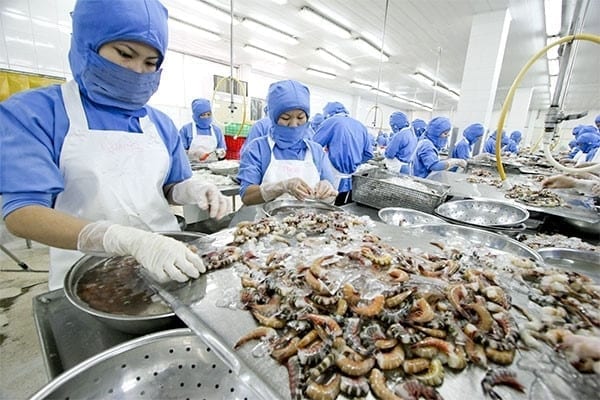
    Many processing plants have been running at 30-40 percent of capacity as stay-at-work requirements cause a labor shortage.

    Nguyen Hoai Nam, deputy general secretary of the Vietnam Association of Seafood Exporters and Producers (VASEP), said the government should come up with policies to encourage shrimp farmers right now so that they could harvest in November to enable exports.

    He also wanted it to prioritize Covid-19 vaccination for seafood companies’ workers so that normal production could resume.

    The southern provinces and Ho Chi Minh City could be divided into three in terms of likely resilience if certain epidemic prevention measures are adopted after September 15, he said.

    The first, where the infection rate is lowest, includes Ca Mau, Bac Lieu, Hau Giang, Soc Trang, Ben Tre, and Vinh Long provinces. Businesses in this shrimp processing hub are expected to return to 60 percent of capacity by October and 80 percent by year-end.

    The second, where the epidemic is gradually being controlled, includes An Giang, Kien Giang, Tra Vinh, and Dong Thap provinces and Can Tho city, and here the rates would be 50 percent and 70 percent.

    The area with the highest risk of infection, including Long An, Binh Duong and Tien Giang and Ho Chi Minh City, would recover to 40 percent and 60 percent.

    Vietnam’s seafood exports were worth $5.5 billion in the eight months of 2021, a year-on-year increase of 6 percent, according to the Vietnam Association of Seafood Exporters & Processors (VASEP).

  • Vietnam Steel exports surge

    Vietnam Steel exports surge

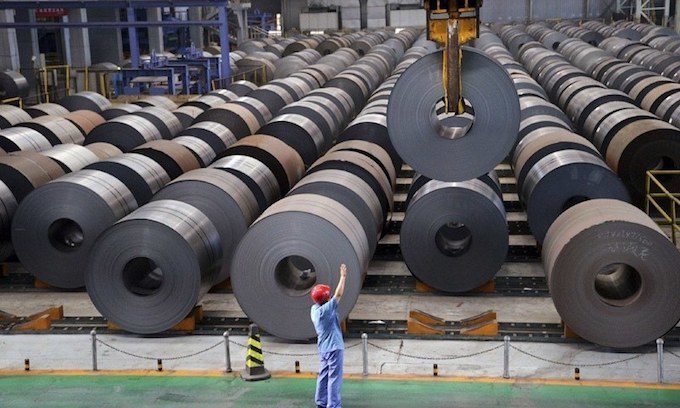
    Steel exports increased by 43.4 percent year-on-year in the first eight months to 8.54 million tons, and were worth US$7.1 billion, a 127 percent rise.

    In August, for a second month in a row, the billion-dollar mark was breached, with the value of shipments increasing 2.5-fold to nearly $1.5 billion.

    The main export markets were Southeast Asia, which bought 2.7 million tons and China (1.8 million tons).

    Exports to the E.U. and U.S. skyrocketed 7.5-fold and four-fold from 12 months earlier as demand there continued to soar.

    Exports to Europe also benefited from the EU-Vietnam Free Trade Agreement, with many companies taking advantage of lower tariffs.

    According to the Vietnam Steel Association, the country’s production capacity is around 24 million tons a year. Output this year is expected to reach 21.2 million tons, enough to meet domestic and export needs.