Author: Mei Ling Tan

  • Yum China and Lavazza plan 1000 cafes across China

    Yum China and Lavazza plan 1000 cafes across China

    Italian coffee chain Lavazza is set to increase its store network in China to 1000 by 2025 through scaling up its existing joint venture with fast-food operator Yum China.

    The joint venture –in which Yum will be Lavazza’s exclusive distributor in Mainland China, will also receive an initial US$200 million funding from both companies for its future growth.

    The expansion plan will see more Lavazza store openings in higher-tier cities with different store formats. As of last month, Lavazza China operated 22 stores across Shanghai, Hangzhou, Beijing, and Guangzhou. It aims to double the store number by the end of this year.

    “The potential for coffee in China is vast; there is a lot of unexplored white space,” said  Antonio Baravalle, CEO of Lavazza Group. “As the largest restaurant operator in China, Yum China is the best partner to further grow the Lavazza brand in this market given its deep understanding of local consumers and market dynamics.”

    The joint venture will also ​​market, sell, and distribute Lavazza’s retail products in Mainland China, including coffee beans, ground coffee, and coffee capsules.

    Lavazza entered China last year with Yum China, with stakes of 35 percent and 65 percent respectively. Lavazza’s first China store, its first international presence, was launched in Shanghai in April last year. The company said sales to its members accounted for about 50 percent of the sales for the first half of this year.

    “The recent progress of Lavazza cafes in China has been encouraging and reaffirms our belief that our partnership is well-positioned to capture the significant coffee opportunity in China with accelerated store network development,” said Joey Wat, CEO of Yum China.

  • Esprit names new COO

    Esprit names new COO

    Hong Kong-listed apparel brand Esprit has appointed an experienced lawyer as its new COO to help continue to drive the brand’s renaissance.

    After four years of rolling losses exceeding US$1 billion, Esprit issued a shock profit warning last month projecting its first half year in the black since 2017. It lost US$503 million in the year to June 2000.

    This week William Pak assumed the role of executive director and COO. Biographable details provided by the company via a stock-exchange filing describe Pak, 42, as an attorney licensed by the New York state bar and the spouse of Christin Chiu, Esprit’s chairwoman and an executive director.

    “Mr Pak is a seasoned executive with extensive operating and management experience. He has over a decade of a successful career in leading companies in the financial services and fund management industry,” said the filing. “His industry expertise also includes technology, alternative energy, mining and real estate. He is experienced in identifying and revitalising underperforming areas and driving favourable results while ensuring sustainable growth.”

    Prior to his career in finance, Pak was a lawyer in the investment funds practise at White & Case’s New York and Hong Kong offices.

    He will be paid US$231,000 annually (HKD1.8 million) and report to CEO Mark Daley who was appointed in January.

    Chiu was appointed to Esprit’s board after Hong Kong company North Point Talent Ltd, became the company’s single largest shareholder mid last year. North Point is the investment vehicle of Karen Lo, a descendent of the Vitasoy founding family.

  • Rocket Internet-backed Flash Coffee plans Asia-wide rollout

    Rocket Internet-backed Flash Coffee plans Asia-wide rollout

    The tech-enabled coffee chain, Flash Coffee, is accelerating its Asian expansion plan, making its Hong Kong debut this month and committing to opening its first stores in Japan and South Korea later this year.

    Launched last year, Flash Coffee already operates more than 100 locations across Indonesia, Thailand, Singapore, Taiwan and Hong Kong. The chain aims to increase its network to more than 300 stores, expanding its footprint into Malaysia, Vietnam and the Philippines next year.

    The Hong Kong launch follows Flash Coffee’s Series A funding round led by tech investment firm White Star Capital last April where it successfully secured US$20 million from a range of investors, including Rocket Internet, whose subsidiaries include Global Fashion Group and HelloFresh.

    Located at Golden Centre in Sheung Wan, the chain’s first Hong Kong store is – like its others – designed to “fit the needs of the ‘new normal’ and cater to a bustling lifestyle”. Customers can order through a mobile app and pay before picking the order at the store or have it delivered. Meanwhile, Flash Coffee connects its customers and baristas through individualized consumer and barista mobile apps, matching the order with a nearby pick-up outlet.

    The chain also offers a digital coffee loyalty program on the app, offering gamified challenges and personalized rewards.

    “Hong Kong is already recognized as a city that is willing to embrace technology,” said Jonathan Tsao, MD at Flash Coffee. “Over the past few decades the city has also built up a reputation for its love of premium coffee – but so far, this has only been available at premium prices.

    “Flash Coffee intends to shake things up, by offering a new coffee culture built around technology, affordability, and digitally-driven customer-focused solutions.”

    The launch of Hong Kong’s first Flash Coffee store will be followed by a series of new store openings in Causeway Bay, Mong Kok and Wan Chai by the end of next month. The coffee chain aims to reach 50 stores in the territory by mid-next year.

  • Pulled Oat joins Australian plant-based foods menu

    Pulled Oat joins Australian plant-based foods menu

    Finnish plant-based food company Gold & Green joins the ranks of businesses offering alt-meat in Australia with the launch of Pulled Oats, an oat-based plant protein.

    As consumers become more aware of their food sources, the market for plant-based protein is rapidly increasing. In the past year alone, Australia’s plant-based meat sector retail sales increased by 46 percent.

    “Many are looking for non-soy-based alternatives, with high protein content and preferably without any weird ingredients they cannot pronounce,” said Annette Kauppinen, CMO, Gold & Green

    “Pulled Oats is a great answer to this as it contains only simple and familiar ingredients and offers great nutritional value and a good source of protein including a balanced amino acid composition.”

    Launching in Woolworths this month, the new plant-based protein is made from six simple ingredients: Nordic oats, faba (broad) bean, pea protein, water, oil, and spices. According to the company, the product is high in protein, can absorb flavor well and is versatile enough to be used as a meat alternative in favourite dishes without compromising taste.

    Founder and CIO of Gold & Green, Maija Itkonen, says she saw an opportunity to be part of the solution in the global environmental crisis after seeing the “untapped potential” of Nordic oats, one of the world’s most ecological crops. Afterwards, she teamed up with an oat scientist to develop a process that combines faba bean and yellow pea protein to create a highly nutritious plant-based protein with a simple ingredient list.

    Maija explains, “From the very beginning, our passion has been to change eating habits for healthier people and planet – with delicious new plant-based food.” she said

    “We wanted to create a protein that does not mimic anything but is a true plant-based alternative that stands on its own. It can be used like chicken, pork or beef, and we do have even some fish recipes, which are amazing.”

    Gold & Green Pulled Oats are available at Woolworths in two flavours, Nude and Tomato, for RRP $8.50 per 240g pack.

  • Masan to leverage retail, telecom synergy by acquiring Mobicast

    Masan to leverage retail, telecom synergy by acquiring Mobicast

    The Sherpa, a subsidiary of Masan, has announced a 70 percent acquisition of Mobicast shares with a total cash consideration of VND295.5 billion ($13 million).

    Investment in Mobicast is the next step taken by Masan to integrate its third piece, digital services, into its ecosystem, after the successful inclusion of grocery and financial services.

    This was carefully mapped out by Masan in 2019 when the group revealed its plan to build a one-stop-shop that satisfies consumers’ essential, financial, educational, social, entertainment, and healthcare needs. For Masan, this is a unified off to online platform, “Point of Life”.

    The entry into the telecommunication and essential service sectors on a digital platform will enable Masan to gain access to approximately 80 percent of the consumer wallet share.

    Operating under the brand Reddi, Mobicast is a Vietnamese start-up, full-serviced Mobile Virtual Network Operator (MVNO). MVNOs are wireless communication service providers that do not have their own frequency spectrum allocation or wireless network infrastructure.

    MVNOs partner with traditional Mobile Network Operators (MNO) to use their wireless network infrastructure to provide telecom and data services to consumers. MVNOs use an asset-light business model by leveraging existing transmission and network infrastructure. MVNOs are a common business model in the telecom space globally. For example, MVNOs command a nearly 20 percent market share of the total United Kingdom mobile market.

    When incorporated into “Point of Life”, Reddi stands to benefit from exclusive access to Masan’s consumer base and physical and online touch points nationwide. This will significantly lower Reddi’s consumer acquisition cost, enabling it to reinvest savings to develop unique digital consumer solutions, given that 44 percent of subscribers predominately use voice and SMS in Vietnam, and customer service experience platforms.

    Masan Group CEO, Danny Le, said: “Reddi is the first step to digitalize our “Point of Life” platform and synchronize our products and services into a unified offering. While we are in the early innings, we have all the strategic components to develop the most cost effective consumer acquisition model, thereby lowering the costs of our services and products for the benefit of our consumers – this is the definition of Point of Life.”

    Previously, in June 2021, Masan launched its first CVLife store that integrates financial services offered by Techcombank and Phuc Long Kiosk into WinMart+ supermarkets (formerly known as VinMart+). As shared by Masan, the current number of over 2,300 WinMart+ stores would be expanded to more than 3,001, with around 700 new stores to be launched, by the end of 2021. The Phuc Long Kiosk model will be integrated into 1,000 WinMart+ stores, thus boosting revenue and profit margins and bringing in more modern customers.According to Masan, Reddi’s target market is modern consumers who are digital savvy. This group of customers is willing to change and try out new products and services to refresh their consumer experience.

    Masan has a wide distribution network as its first advantage, with nearly 2,400 WinMart/WinMart+ supermarkets and stores nationwide to serve more than 300 million customers annually. Added to this is Masan’s strong consumer relationship with 300,000 general trade (GT) retailers. Masan’s distribution network “weaves” across the country, offering convenient and fast access to its services.

    Masan also has a loyalty customer base of nine million WinMart/WinMart+ members, including a large number of young, urban and digital-savvy customers from Phuc Long, five million affluent consumers from Techcombank and millions of customers from other Masan partners.

    These two strategic factors allow Reddi to maximize its cost and time savings in building a distribution network, while optimizing its consumer acquisition and retention cost.

    According to MIC’s Department of Telecommunications, Vietnam had nearly 133 million mobile subscribers as of the end of 2020, while its population is more than 97 million. Of these 133 million subscribers, 56 percent have 3G, 4G and 5G coverage.

    According to the We Are Social 2021 report, the most used mobile apps include: chat apps (94.7 percent), entertainment and video apps (83.4 percent), music apps (58 percent), game apps (57.2 percent), shopping apps (68.5 percent), banking and financial services apps (40.1 percent).

    Entry of a retail company into the telecommunication sector has become a huge success in India, as in the case of Reliance Jio, the largest mobile network operator in the world’s second-largest mobile market. Reliance Industries is India’s largest retailer with nearly 11,000 points of sale, 23 distribution centers and a database with more than 110 million loyal customers.

    In 2016, Reliance stepped into the digital services and electronics telecommunication sectors by launching the Jio network operator. To date, Jio has raced past competitors to become India’s largest mobile operator thanks to its reasonable pricing, good signal quality and appealing, differentiating service plans. Jio currently has about 400 million paying subscribers for services in their ecosystem


  • Uncle Ben’s reinvented under new Ben’s Original branding

    Uncle Ben’s reinvented under new Ben’s Original branding

    Mars Food Australia has revealed the new brand identity for Ben’s Original ready-to-heat rice products, following the retirement of the Uncle Ben’s brand.

    The new packaging features the same orange background and navy-blue font. The rice products are available in 28 flavors, are ready in 90 seconds, and taste the same as the old product range.

    Bill Heague, GM at Mars Food Australia, said the change marks not only a new packaging but also a memorable moment for Ben’s Original: the company has shared its new purpose, committing to investing a portion of its profits over the next five years to contribute to Australia’s disadvantaged communities.

    “This is not just a name and packaging change. We believe everyone deserves to feel welcome, heard, and have access to nutritious food,” said Heague. “That’s why we have committed to funding initiatives that help improve social inclusion and create meals, experiences, and opportunities that offer everyone a seat at the table. We are currently in discussions with a number of community groups in Australia and we look forward to announcing a new partnership early next year.”

  • Coles named as most sustainable food retailer in Australia

    Coles named as most sustainable food retailer in Australia

    The supermarket has come in second in the world for its sustainability efforts.

    Coles was ranked based on its governance, environment, nutrition, and social inclusion practices, beating out of 350 of the world’s ‘most influential food retailers. Furthermore, Coles has ranked tenth in the world in the food and average manufacturing and processors category.

    The WBA found that Coles “ranked first among its retail peers in social inclusion, while landing among the top five in nutrition, and top ten across the governance and strategy, and environment measurement areas.”

    The Chief Sustainability, Property and Export Officer of Coles, Thinus Keeve, shared how the retailer aims to continue its progress to become the country’s most sustainable supermarket. “Coles’ Together to Zero and Better Together ambitions, as outlined in our Sustainability Strategy, underpin the steps we are taking to drive generational sustainability,” he said.

    “Under Together to Zero, Coles has set bold emissions and energy targets, including to be powered by 100 percent renewable energy by the end of FY25, and to deliver net-zero greenhouse gas emissions by 2050 – and we are well on the way to achieving them. We recognize the role we have to play but know that we cannot do this alone, and that we need to work together with our many stakeholders to drive positive change. We know that we are Better Together when we work together with our team members, farmers, suppliers, customers, and the communities we serve.”

    Keeve also explained that despite this impressive feat, the retailer has more work to do. “While sustainability issues are dynamic and evolving, and there is still much to do, we are committed to maintaining momentum on our sustainability journey,” he said.

  • Bamboo Airways launches ‘historic’ direct Vietnam-US flight

    Bamboo Airways launches ‘historic’ direct Vietnam-US flight

    Bamboo Airways conducted its first direct flight from Vietnam to the U.S. Thursday night. The QH9149 flight, using the Boeing 787-9 Dreamliner aircraft, took off at 7:55 p.m. from Hanoi’s Noi Bai Airport for San Francisco.

    The flight, the first of 12 direct flights between Vietnam and the U.S. that Bamboo Airways has won approval from the Transportation Security Administration (TSA), is expected to take over 14 hours.

    The flight crew included four pilots, 14 flight attendants, and several technicians and ground controllers to perform necessary functions at the San Francisco Airport.

    Before the flight took off, a commemoration ceremony was held at the airline’s headquarters on Cau Giay Street the same day.

    Nguyen Manh Quan, deputy general director of Bamboo Airways, said the flight was a historic one, not just for Bamboo Airways also for Vietnam’s aviation industry itself.

    “We will once again affirm the capability for operation, safety, security and infrastructure for Vietnamese airlines and the entire Vietnamese aviation industry in general,” he said at the meeting.

    Nguyen Ngoc Trong, another deputy general director of Bamboo Airways, said the flight’s goals were to serve tourists in both Vietnam and the U.S., foster commercial, diplomatic and cultural exchanges, and to affirm the status of Bamboo Airways, considering that direct flight to the U.S. is among the hardest flight paths to achieve.

    “In the last two years, we’ve managed to see opportunities in developing flights not just within Vietnam, but also in Southeast Asia and Northeast Asia like Japan, Taiwan, and even reaching towards Europe and Australia. And now, to the U.S.,” he said.

    “By introducing direct flights to the U.S. at this moment in time, we’re showing that we are ready to operate commercial flights once the pandemic dies down to meet customers’ demands in both countries,” he added.

    Bamboo Airways had earlier announced plans to organize three direct flights to the U.S. each week, gradually increasing the frequency to 5-7 flights, and then to daily flights.

    Vietnam Airlines has conducted several direct U.S. flights for Covid-19 repatriation purposes. The national carrier said this week it is set to receive its final permit from U.S. authorities.

  • Nike’s Vietnam supply hurdles in focus ahead of quarterly results

    Nike’s Vietnam supply hurdles in focus ahead of quarterly results

    Nike’s updates to its full-year sales outlook on Thursday will likely answer that pressing question for Wall Street as the world’s largest sportswear maker deals with unprecedented supply challenges ahead of the holiday season.

    Three months ago, Nike gave a rosy outlook for the rest of the year as it benefited from consumers splurging on sneakers for running and hiking as they returned to their routines after over a year of staying at home.

    Still, some analysts have cut their outlook for Nike’s sales, predicting that lockdowns and factory closures in Vietnam, where about half of all Nike footwear is manufactured, will cause shortages during the crucial shopping season.

    “We believe the risk of significant cancellations beginning this holiday and running through at least next spring has risen materially for Nike as it is now facing at least two months of virtually no unit production at its Vietnamese factories,” BTIG analysts wrote in a note.

    Many factories in Vietnam’s manufacturing hubs have been shut or are operating with drastically fewer on-floor workers since mid-July as a surge in Delta variant cases forced the government to implement tight containment policies.

    Other apparel companies including Abercrombie & Fitch and Adidas AG have taken a hit to their businesses due to production issues in Vietnam. read more

    Some analysts, however, see Nike using its scale to offset the sales impact from Vietnam shutdowns.

    “The company should be able to mitigate some headwind by shifting production to other countries, like China, and prioritizing top sellers, key products, and its DTC (direct-to-consumer) channel,” Telsey Advisory Group analysts said.

    Since the start of September, analysts have cut their full-year sales expectations for Nike to $49.81 billion from $50.34 billion due to worries about supply shortages

    Full-year earnings per share estimates have also fallen to $4.24 from $4.33, according to IBES data from Refinitiv.

    Nike’s revenue for the reporting quarter is expected to have risen 17.7 percent to $12.46 billion from a year earlier.

    The blue-chip stock has gained 11 percent this year, but is down about 10 percent from its record high hit in August.

  • Crypto Exchange FTX Quits Hong Kong

    Crypto Exchange FTX Quits Hong Kong

    The digital assets derivatives exchange has moved its headquarters to Nassau, the Bahamas, citing friendlier regulation and no mandatory quarantine upon arrival in-country.

    The company’s chief executive officer, 29-year-old billionaire Sam Bankman-Fried told industry publication Blockworks that the proactive stance taken by The Bahamas and its regulatory bodies on cryptocurrencies» is one of the primary reasons FTX is moving to the Caribbean island.

    Ryan Salame, recently appointed CEO of FTX Digital Markets, will be responsible for leading its local initiatives in the Bahamas. In addition, FTX Digital Markets will be expanding its presence in the country to support transferred and local employees.

    Hong Kong authorities have been taking an increasingly hard stance towards cryptocurrencies, barring non-accredited investors from accessing the local crypto market.

    Blockworks experts also cited unclear regulations around custody and inconsistencies with how the city’s different regulatory bodies treat crypto as reasons why firms in this sector are finding it increasingly hard to operate in Hong Kong.

  • Apple gives a $1000 bonus to its employees ahead of the shopping season

    Apple gives a $1000 bonus to its employees ahead of the shopping season

    Surprise surprise, Apple Store employees will receive a hefty $1000 bonus this year. The good news for Apple employees was first reported by Bloomberg. Those who joined the company before March of this year will receive a $1000 bonus. Newer employees will receive $500, which is still a pretty good sum. This information comes from reliable sources of both Bloomberg and 9to5Mac.

    “The bonuses will be an unusual perk since Apple rarely gives companywide payouts. The last major one was $2,500 worth of restricted stock units in 2018. That bonus followed tax changes allowing Apple to bring back cash from offshore accounts at a lower cost. The new bonuses will be issued via cash in paychecks, rather than as stock units, the people said.”

    Apple Store staff won’t be the only one to get a nice bonus this year. AppleCare and online sales employees are getting one grand as well, which means the company is serious about keeping its customer service happy.

    9to5Mac states that the reason the Cupertino company gives such bonuses is that it wants to retain its existing employees before and during the holiday season. As most of you know, the iPhone 13 series is the company’s biggest upcoming release, and it is set to be a big one. This means that Apple will need all the labor force it has to keep its customers happy.

    Plenty of stuff if you ask us. The first thing that comes to mind is buying a new iPhone 13 device. Yes, the iPhone 13 Pro Max costs more, but Apple staff can always go for the $999 iPhone 13 Pro or the even less expensive iPhone 13 and iPhone 13 mini.

  • Airasia’s digitalisation to provide a solid foundation for future growth

    Airasia’s digitalisation to provide a solid foundation for future growth

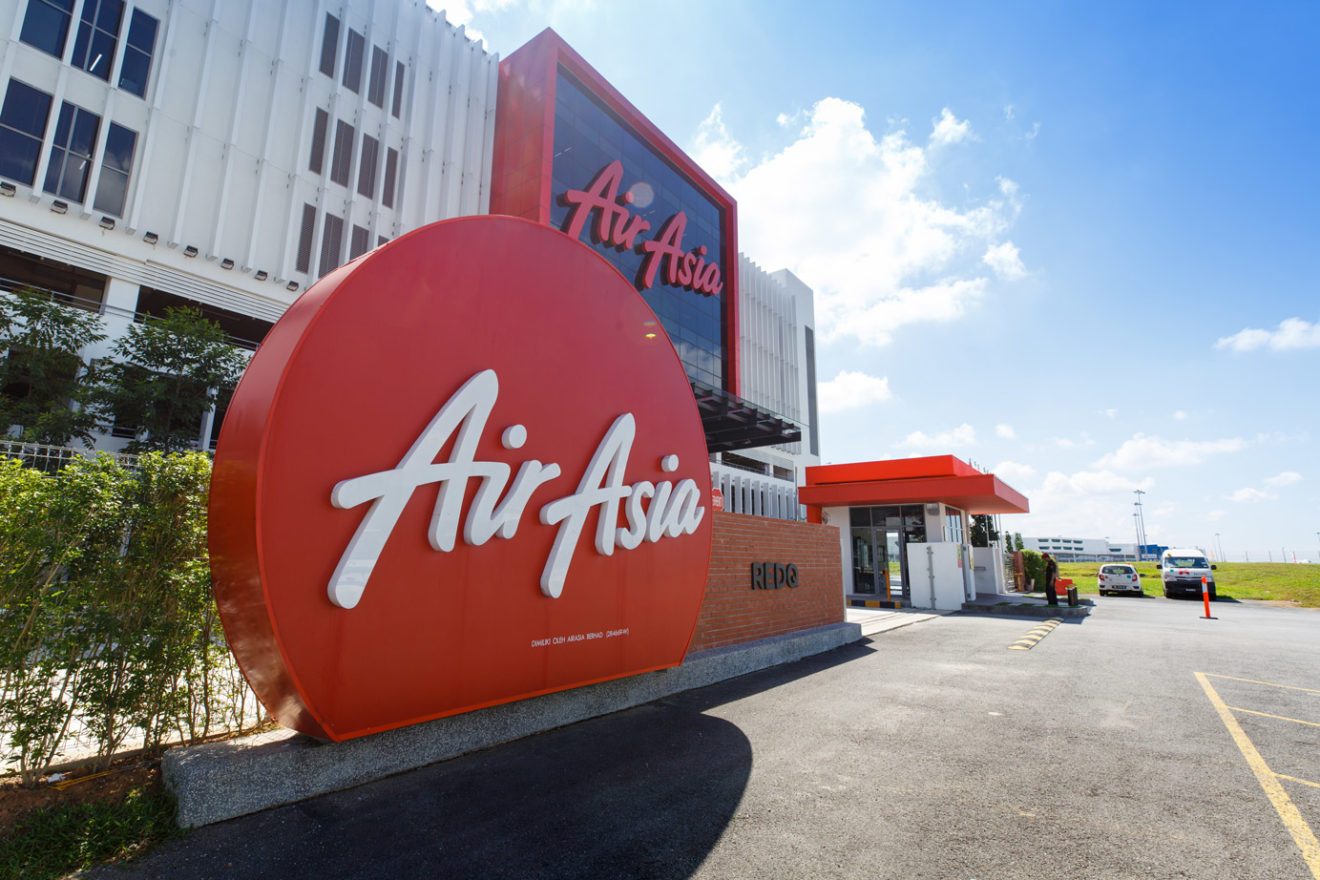
    AirAsia Group Bhd is accelerating its digitalization by emphasizing new technologies and focusing on driving innovation across its entire portfolio of companies.

    The carrier’s engineering arm Asia Digital Engineering (ADE), ground handling division Ground Team Red (GTR) and logistics venture Teleport, are set to soar to new heights through digitization and data.

    “A silver lining of Covid-19 has caused a huge surge in demand for cargo and online shopping deliveries and this is driving many new business opportunities and revenue streams.

    “We see huge potential, not only in our super app and fintech solutions but also in our logistics, aircraft maintenance and ground services divisions,” AirAsia Group president Aireen Omar, who oversees digital operations, said in a statement today.

    Aireen said ADE is set to revolutionise the airline maintenance, repair and overhaul (MRO) industry in Asia.

    ADE performed and completed Teleport’s first A320 cargo plane conversion earlier this year and expects more aircraft modifications of the passenger to cargo aircraft in the future.

    “With an experienced workforce of more than 15 years managing AirAsia’s fleet, strong supplier, lessor and regulatory relationships and through automation and streamlined operations, we foresee that ADE will soon become the next major MRO player in Asean, delivering a significant new revenue stream for AirAsia Group.”

    Meanwhile, she said the company’s logistics venture Teleport is experiencing significant growth in line with the overwhelming demand for cargo and online deliveries.

    “With direct access to the unrivalled Airasia Group network in Southeast Asia, Teleport has put in place the right foundations to truly disrupt the cargo industry in ASEAN.

    “Furthermore, Teleport’s partnership with Freightchain, the world’s first digital air cargo network running on blockchain, is a game-changer for Teleport and the industry, making the online booking process as easy as buying a flight ticket on AirAsia.

    “Importantly it also links AirAsia airlines with other innovative interline partners to ensure maximum efficiency and lowest cost for clients,” she said.

    Similar to its super app ambitions, alongside ADE and Teleport, Aireen said GTR aims to be the ground handling services provider of choice in ASEAN.

    She said with the easing of movement restrictions and return of air travel globally, GTR is anticipating more business collaborations with foreign airlines in major airports across Malaysia.

    “GTR is preparing for strong regional expansion including with third party airlines as soon as travel restrictions ease and international borders reopen,” she said.

    According to Aireen, AirAsia Group has built a complete digital marketplace for travel and everyday lifestyle services on airasia Super App.

    “Logistics, aircraft maintenance, ground handling services and fintech are equally important to complete our ecosystem.

    “They all work in tandem symbiotically, to meet increasing demand in the e-commerce and distribution space,” she added.

  • Globe Telecom deploys Infinera’s Auto-Lamda for 5G network upgrades

    Globe Telecom deploys Infinera’s Auto-Lamda for 5G network upgrades

    Infinera announced that Globe Telecom, Inc. (Globe), a major provider of telecom services in the Philippines, deployed Infinera’s Auto-Lambda solution, featuring autotuneable optics, to upgrade its existing 4G access and aggregation networks and in anticipation of providing future 5G services. By upgrading its access network with Infinera’s autotuneable optics technology, Globe can deliver more capacity on its existing network and scale to address bandwidth growth within its current network architecture while reducing both capital and ongoing operational expenses.

    Globe is the leading mobile network operator in the Philippines and offers one of the largest fixed line and broadband networks in the country. With what is believed to be the industry’s first widescale deployment of autotuneable optics over sophisticated amplified ring architectures, Globe is advancing innovation in its access network to address growing capacity demands while evolving its previously deployed IP network to support the increasing demands in mobile backhaul capacity for 5G. Utilizing Infinera’s Auto-Lambda solution, Globe can easily plug autotuneable dense wavelength-division multiplexing (DWDM) optics directly into its existing aggregation and access nodes, allowing its network to automatically tune each of the optical signals to the appropriate wavelength, which significantly simplifies deployment while increasing capacity.

    “In today’s environment, our customers are always online and want unhindered access and capacity. As one of the leading telecom services in the Philippines, we seek the best technology to support our nation’s connectivity needs,” said Jaeson Evangelista, Head Transport Planning at Globe Telecom.

    “Our network requires a solution that is easy to deploy and scalable to meet the increasing capacity needs of our customers. We chose Infinera’s Auto-Lambda solution because it provides the innovation and benefits our network needs, from operational simplicity and ease of deployment to cost savings and eliminating the need for new networking hardware. Additionally, Infinera’s autotuneable optics provide a unique solution that enables DWDM upgrades directly into third-party devices in our network, making installation and deployment easy for our engineers.”

    “Globe has a rich legacy in the Philippines for its telecommunication services and providing the country with unmatched connectivity,” said Nick Walden, Senior Vice President, Worldwide Sales at Infinera. “Globe’s deployment of Infinera’s Auto-Lambda solution highlights the benefits provided by Infinera’s innovation, including autotuneable optics that provide high-capacity access and aggregation DWDM networks without an extensive overhaul to an operator’s existing network infrastructure.”

  • B2B Payments Firm Spenmo Receives Funding for Regional Build-Out

    B2B Payments Firm Spenmo Receives Funding for Regional Build-Out

    The Singapore-based startup has secured one of the largest Series A funding rounds to date in the country, which will allow it to expand in Southeast Asia.

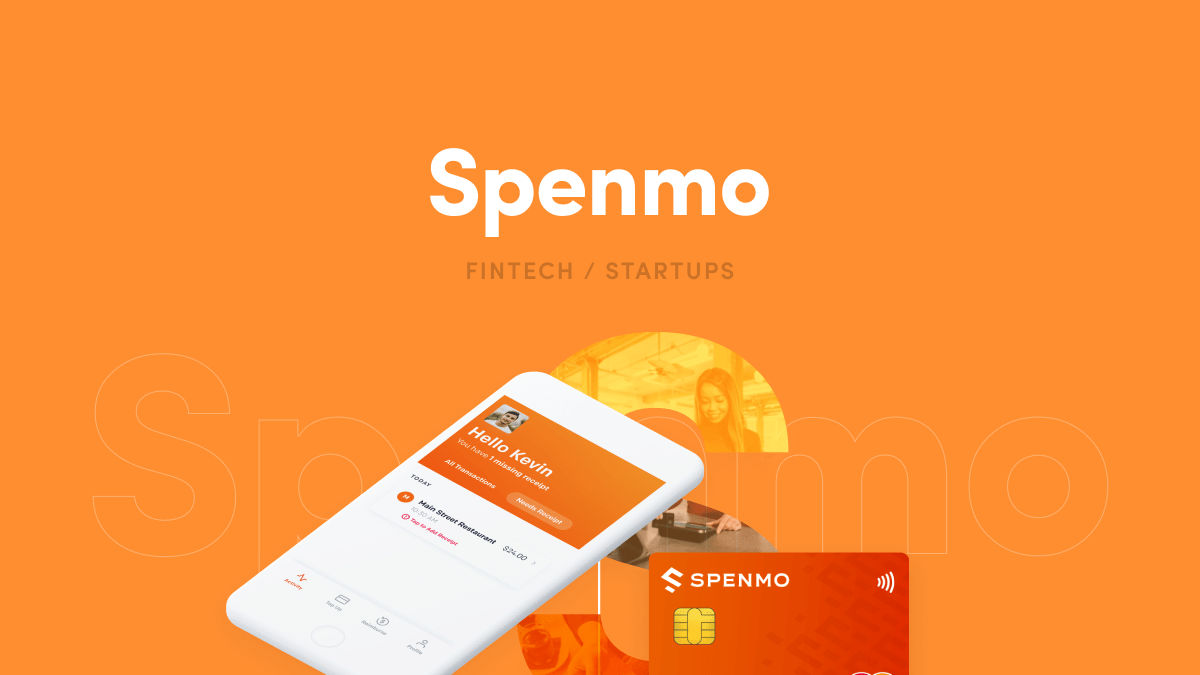
    Spenmo has announced a $34 million raise in a Series A investment round led by New York-based private equity and venture capital firm Insight Partners, according to a statement on Wednesday.

    The fundraising round, which was oversubscribed by a multiple of five, saw the participation of Lee Fixel’s Addition, Salesforce Ventures, Alpha JWC, Global Founders’ Capital, Broadhaven, Operator Partners and Commerce Ventures, alongside several high-profile angel investors.

    Spenmo helps businesses manage payments, and its products include smart corporate cards and automated bill payments. It graduated from the Y-combinator startup accelerator in 2020. Since its launch in Singapore last year, it has expanded across Southeast Asia, bringing on several thousand customers, Spenmo said.

    The company said it sees growth opportunities in the region, which has over 20 million small and medium sized businesses that  largely do not use any software to manage their payables other than piecemeal solutions such as spreadsheets or manpower.

    Our space has typically been thought of as a back-office function, but finance and accounts payables is a critical part of running a business, Mohandass Kalaichelvan, CEO and Founder of Spenmo, said.

  • Inmarsat launches new customer experience platform for airlines to monetise inflight connectivity

    Inmarsat launches new customer experience platform for airlines to monetise inflight connectivity

    Inmarsat announced the launch of its innovative new OneFi customer experience platform (CXP) for airlines. The first-of-its-kind solution will serve as a catalyst to monetise inflight connectivity by bringing a host of onboard services together within a single portal interface, which passengers can easily access using their own personal devices.

    OneFi delivers a rich airline-branded digital platform to enhance the passenger experience onboard flights. It allows passengers to order food and beverages, purchase seat upgrades, receive the latest flight and destination information, and sign-up to the airline’s frequent flyer programmes, all in real-time from the comfort of their seat. In addition, passengers can browse the internet, stream videos and audio, shop online and enjoy other ecommerce offerings, using high-speed inflight broadband that airlines could choose to offer free-of-charge, funded through OneFi’s sponsorship and advertising features.

    The launch of OneFi comes at a critical time for airlines, with the global pandemic having accelerated passenger demand for digital inflight experiences. Inmarsat’s recent 2021 Passenger Confidence Tracker, the largest and most comprehensive global survey of its kind since the pandemic began, found that digital solutions that keep passengers connected and minimise their contact with cabin crew and fellow passengers can go a long way in boosting confidence. In addition, out of the 10,000 respondents worldwide, 41% believed inflight Wi-Fi had increased in importance after the pandemic.

    Philip Balaam, President of Inmarsat Aviation, said: “For many years, Inmarsat has advocated the vast commercial opportunities of inflight connectivity. However, until now, airlines have struggled to realise the full potential of the business model. OneFi is a step change for those looking to monetise their Wi-Fi services and ensure they keep pace with evolving passenger needs. It will empower a digital transformation in the cabin, which is especially important at this critical time for the aviation industry.

    “OneFi allows airlines to improve their brand experience and secure passenger loyalty, with the flexibility to incorporate their own services and use existing and new partners, such as content providers, advertisers and retailers. We are in advanced discussions with leading airlines about adopting this innovative new platform and expect to see a rollout with our first OneFi customer by the end of this year.”

    In recent years, airlines have continued to increase their focus on unlocking new revenue streams through broadband-enabled ancillary services. The market for digital inflight advertising alone is forecast to grow from $266 million today to $3.3 billion by 2030, representing a 10-year compound annual growth rate (CAGR) of 42.9% between 2020 and 2030, according to Valour Consulting.

    The launch of OneFi is a significant step in turning that untapped commercial opportunity into a reality. OneFi promises industry grade targeting features, media inventory and calls-to-action that are made available to the airline and its partners. These ensure that content is contextual and relevant to the individual passenger. It also enables partners to engage in more meaningful ways with passengers and boost sales lead generation rates. The platform’s intuitive, user-friendly interface will enable airlines to boost passenger take-up rates and create a frictionless funnel to purchase.

    In addition, OneFi is network agnostic and uses open architecture, meaning it can integrate with any technology infrastructure and Internet Service Providers (ISPs) used by airlines, ensuring a uniform experience across mixed aircraft fleets. The platform is also scalable, giving airline customers the flexibility to add new third-party services over time and helping to future proof their onboard offering.

    Inmarsat is transforming global aviation by bringing complete connectivity to aircraft and flight paths across the world. It recently unveiled plans for ORCHESTRA to bring existing geosynchronous (GEO) satellites together with low earth orbit satellites (LEO) and terrestrial 5G to form an integrated, high-performance solution, unmatched by any existing or planned competitor offering. ORCHESTRA allows capacity to be boosted in high-density areas such as at airports, eliminating congested network ‘hot spots’ and ensuring the connectivity needs of aviation customers are met well into the future, with capacity scaled directly to match their requirements.