Author: Mei Ling Tan

  • Alibaba-backed fund invests in retail chain Homefarm

    Alibaba-backed fund invests in retail chain Homefarm

    An Alibaba-backed fund has invested an undisclosed amount in Vietnamese retail chain Homefarm.

    The investment by eWTP Technology and Innovation Fund is a “seven-digit figure,” the company’s CEO Tran Van Truong said.

    Homefarm, which has around 150 stores that sell meat, fish and groceries imported from several countries including the U.S., Australia and South Korea, plans to have 1,000 by 2025, he said.

    The funding was through ReDefine Capital Fund, a Singapore-registered investment entity controlled by eWTP.

    The $600-million eWTP Technology and Innovation Fund was set up in 2018 with Chinese billionaire Jack Ma’s Alibaba and Ant Group as cornerstone investors.

    It reportedly invested recently in Vietnamese retail company Ficus Asia Investment and ed-tech firm Educa Corporation.

  • Instagram CEO says that there are no plans to create a native iPad app

    Instagram CEO says that there are no plans to create a native iPad app

    If you don’t own an iPad, you might not know that there is not an Instagram app for Apple’s tablets. But that might not be surprising since stablemate WhatsApp is only now developing an app for the iPad. Instagram chief Adam Mosseri responded to the question “Where’s the Instagram iPad app?” by saying, “I spent a bit of a time on an iPad because I was on a flight, but still no iPad app for Instagram. It would be nice to do, but there’s a lot to do and only so many people, so it hasn’t made the cut.”

    This response doesn’t make sense to many iPad owners. And back in June, Instagram started to allow those accessing the site from their computer to post to it from the desktop. Once iPadOS 15 is released (which could happen as soon as this coming week), a change will allow iPhone apps without an iPad counterpart to be viewed in landscape mode. The scaled-up iPhone version of Instagram will be able to switch orientation on the iPad following the release of iPadOS 15.

    Back in 2010 when the iPad was brand new, Apple wanted to bring apps to the tablet that were available on the iPhone but not yet developed for the iPad. This way iPhone users could purchase an iPad with the knowledge that their favorite apps would be available.

    Currently, Instagram does have a pair of camera apps for the Apple iPad. Hyperlapse creates time-lapse videos using Instagram’s in-house stabilization. This allows users to make time-lapse videos without requiring the use of a tripod or other gear. An entire sunrise can be captured in just a 10-second video and an entire video can be sped up to 12 times normal. Videos can be shared seamlessly over Instagram and Facebook or saved on the camera roll to be shared with any platform.

    The other Instagram camera app available for the iPad is Boomerang. With this app, you can record looping videos. As the App Store listing says, “Find something (or someone!) that’s moving, or create a video selfie by switching to the front-facing camera. There’s just one button. Tap it once and Boomerang does the rest: shoots a burst of 10 photos and turns them into a delightful mini video. Share it on Facebook and Instagram right from the app, or save your video to your camera roll to share later.”

    As delightful as this sounds, iPad users would prefer to have an Instagram app made specifically for the tablet. While Facebook and Messenger do have iPad versions of their apps, it is the rest of the Facebook app family that acts as though the iPad doesn’t exist. The WhatsApp for iPad native app is supposedly incoming but has yet to surface, and of course, there is the lack of an Instagram app for the tablets.

    Facebook purchased WhatsApp in a transaction valued at over $21 billion when it closed in 2014. A couple of years earlier, Facebook purchased Instagram for $1 billion in a deal that has become one of the best investments ever made in the tech space. Bloomberg estimates that Instagram now has a current valuation of $100 billion providing Facebook with a huge paper profit.

    Originally a photo filter, Instagram matured to become more of a social media/messaging app. One of the biggest moves it made was to steal away Snapchat’s stories feature which allows pictures and videos to remain posted for 24 hours before they are removed. Ironically, Instagram’s version of stories has been much more successful than Snapchat’s and other apps have joined the club by offering their own stories-like feature.

  • Google One adds new cloud storage option

    Google One adds new cloud storage option

    Google One is Google’s service offering cloud storage by subscription. The storage is shared between Google Drive, Gmail, and Google Photos. Those with a Google account are gifted 15GB to start. But if you need additional cloud storage, you used to have three options.

    100GB of data costs $1.99 per month, or you could save 16% by paying $19.99 for one year. 200GB of cloud storage is priced at $2.99 monthly or $29.99 for one year, a 16% savings. The latter plan also includes receiving back 3% in-store credit on Google Store purchases. The 2TB option costs $9.99 monthly or $99.99 for the year, saving 17%. It also includes 10% back in store credit on Google Store purchases.

    10TB of cloud storage will run you $49.99 monthly. 20TB and 30TB will cost you $99.99 and $149.99 a month, respectively. Now that Google is no longer providing free storage for photos, depending on how prolific a photographer you are, the free 15GB of storage might not be enough, likewise, the 100GB, 200GB, and 2TB options might not give you enough storage.

    But if you need even more storage, the jump between 2TB and the next step up is a big one. The difference in price between 2TB and 10TB of Google One cloud storage is $40 a month. So the company decided to add a new 5TB option that is priced at $24.99 per month or $249.99 for the year (saving you 17%). The difference between 2TB and 5TB is only $15 per month and the 5TB option still includes the 10% in-store credit you will receive after a purchase made in the Google Store.

    The 5TB subscription also includes access to Google experts, the option to share some of the storage with your family, extra member benefits, and VPN for your Android handset. You can visit the Google One website, or install the Google one apps (iOS, Android).

  • Mounting An iPhone On Your Motorcycle Could Lead To Camera Damage

    Mounting An iPhone On Your Motorcycle Could Lead To Camera Damage

    Tech giant Apple has issued a new warning for iPhone users particularly those who ride motorcycles. The company has shared a support document that suggests that mounting your iPhone on the motorcycle could lead to potential damage to the device. The damage would extend to the camera, which could result in the camera module being broken. The iPhone’s optical image stabilization (OIS) could be damaged as a result of the prolonged vibrations, bringing a drop in the camera quality.

    In its statement, Apple said, “Exposing your iPhone to high amplitude vibrations within certain frequency ranges, specifically those generated by high-power motorcycle engines, can degrade the performance of the camera system.” The manufacturer further added that long-term direct exposure to high-amplitude vibrations within certain frequency ranges may degrade the performance of these systems and lead to reduced image quality for photos and videos. It is recommended to avoid exposing your iPhone to extended high-amplitude vibrations.”

    The issue though isn’t just with Apple but most modern smartphones equipped with OIS and another tech to help you take better shots and iron out movement, vibrations, and other effects. The issue is specific to high-powered motorcycles that are heavy on vibrations, which travel from the engine to the handlebar.

    Essentially, the Apple iPhone’s camera module comprises a sensor that helps compensate for your hand movements to help you get a more stable shot. The sensor moves using little springs correcting the little undulations. On a modern-day iPhone 12 Pro, the camera module can move up to 5,000 times per second. When the iPhone is exposed to the vibrations for a prolonged period, the springs connected to the sensor break. That’s when the phone won’t be able to focus correctly and will give you random blurriness in the pictures instead. This will also extend to the video that will record without clarity.

    A simple way to counter this issue is to use a high-quality phone case that gives the phone enough protection from vibrations. However, it does not completely protect your iPhone camera from damage.

  • Cebu Pacific announces one-week sale of Super Pass

    Cebu Pacific announces one-week sale of Super Pass

    Budget carrier Cebu Pacific on Thursday announced the one-week sale of its Super Pass, which allows passengers to book local flights at one-way base fares of P99 without a fixed date and destination.

    In an advisory, Cebu Pacific said the sale of the Super Pass started 10 a.m. Thursday, September 9, and will last until next Thursday, September 16.

    The vouchers can be redeemed from September 9, 2021 to September 23, 2022, with a travel period of September 16, 2021 to September 30, 2022.

    The Super Pass will serve as a travel voucher that passengers can use to book 30 days before the flight’s departure until seven days before the intended flight, depending on seat availability.

    Guests can avail of 10 vouchers per transaction, but there is no limit on the number of total vouchers passengers can avail until September 16.

  • AirAsia Group to bring back 4 aircraft by the end of 2021

    AirAsia Group to bring back 4 aircraft by the end of 2021

    AirAsia Group updated its 2021 fleet plans. The parent company of five airlines across Malaysia, Indonesia, Thailand, the Philippines, and India aims to end 2021 with 235 aircraft.

    AirAsia Group forecast that all its airline entities will see a gradual pick up in domestic in Q4 2021, led by the global increase in vaccination rates and relaxation of rules for air travel. The group has already noticed promising trends in its load factor, which reached 68% in Q2, 2021, compared to 59% in the same period of 2020.

    The company predicted that the “robust short-haul business model”, as well as lean operations coupled with “pent-up demand”, should ensure AirAsia Group a “quick recovery upon relaxation of travel restrictions,” the group stated in briefing slides.

    “We expect to see a strong resurgence in the visiting friends and relatives as well as the leisure and spontaneous travel markets first,” AirAsia Group said.

    To meet the forecast demand for air travel, the group decided to update its fleet plan. In May 2021, it estimated it would have 231 aircraft by December 2021, now the company‘s plans have changed. AirAsia Group now aims to bring back 4 aircraft, bringing the total number to 235 jets by the end of 2021.

    According to the company, “two third-party leases” of unspecified type aircraft will rejoin the group’s fleet in Q4 2021. Meanwhile, another two Airbus A320 jets, which were temporarily grounded amid pandemic, will return to active operations in Q1 2022.

    “Our network plans are continuously revised to reflect the latest recovery timeline following the ongoing pandemic impact,“ the group added.

    However, the company will still fly 10 jets fewer than in end-2020.

  • Facebook, EssilorLuxottica unveil first smart glasses

    Facebook, EssilorLuxottica unveil first smart glasses

    Facebook launched its first smart glasses on Thursday in a step toward its aim of offering true augmented-reality spectacles.

    The glasses, which were created in partnership with Ray-Ban maker EssilorLuxottica, allow wearers to listen to music, take calls or capture photos and short videos and share them across Facebook’s services using a companion app. Facebook said the glasses line, called “Ray-Ban Stories,” would start at $299.

    The social media giant, which reported revenue of about $86 billion in 2020, makes most of its money from advertising but has invested heavily in virtual and augmented reality, developing hardware such as its Oculus VR headsets and working on wristband technologies to support augmented reality glasses.

    Facebook’s chief scientist said last year the company was five to 10 years away from being able to bring to market “true” AR glasses, which would superimpose virtual objects onto the wearer’s view of the real world.

    Major tech firms including Amazon.com, Alphabet Google, Microsoft, Apple and Snap have raced to develop various smart glasses products, but early offerings like Google Glass proved difficult to sell to consumers put off by high price points and design issues.

    Snap, which unveiled its smart Spectacles in 2016, this year launched AR glasses but they are not for sale and are offered only to AR creators. Snap’s CEO, Evan Spiegel, said in 2019 that he expected it would be a decade before consumers widely adopted AR smart glasses.

  • Amazon developing new point-of-sale system to attract small businesses

    Amazon developing new point-of-sale system to attract small businesses

    Amazon.com is working on a new type of point-of-sale system that can be sold to third-party sellers.

    The new system can handle both online and offline transactions and can also link to other services including Prime and Flex, the report added, citing an internal document.

    The move will allow Amazon to compete with Canada’s Shopify and U.S. payments giant PayPal, which already offer POS systems for payments for small businesses, that have moved online during the pandemic to boost sales.

    Project Santos, created by an internal Amazon team to compete with Shopify, is leading the project, the report said.

    Amazon declined to comment.

  • Ikea opens bistro takeout in Singapore

    Ikea opens bistro takeout in Singapore

    IKEA Singapore has opened its new Swedish Bistro at its Tampines outlet on Sep. 9, 2021.

    Located between the level 1 front-facing entrance and exit, this outlet will feature a grab-and-go concept focused on convenience.

    IKEA Classics

    Those on the go might also want to purchase the Swedish Meatballs (six pieces for S$5) or Plant Balls (six pieces for S$5).

    Swedish Meatballs:

    Swedish Bistro IKEA Tampines

    Address: 60 Tampines North Drive 2, Singapore 528764

    Opening hours:

    Sunday to Thursday, 11am to 9:30pm

    Friday and Saturday, 11am to 11:30pm

  • Be Group appoints new CEO

    Be Group appoints new CEO

    Vu Hoang Yen has been appointed the new CEO of Be Group, which runs the eponymous ride-hailing app, starting Wednesday.

    She replaces Nguyen Hoang Phuong who has resigned citing personal reasons.

    A graduate of the London School of Economics, Yen has previous work experience in e-commerce, finance, banking, and digital conversion. She was one of Forbes Vietnam’s top 10 professional women managers in 2019.

    The group’s targets for the fourth quarter of 2021 and the next year include introducing optimal operational solutions for technology-based transport; and developing digital ecosystems including finance, banking, insurance, flight, and hotel bookings.

    The group says the Be app has been downloaded to 10 million mobile devices and the ride-hailing service currently has 300,000 drivers who work in nearly 30 cities and provinces.

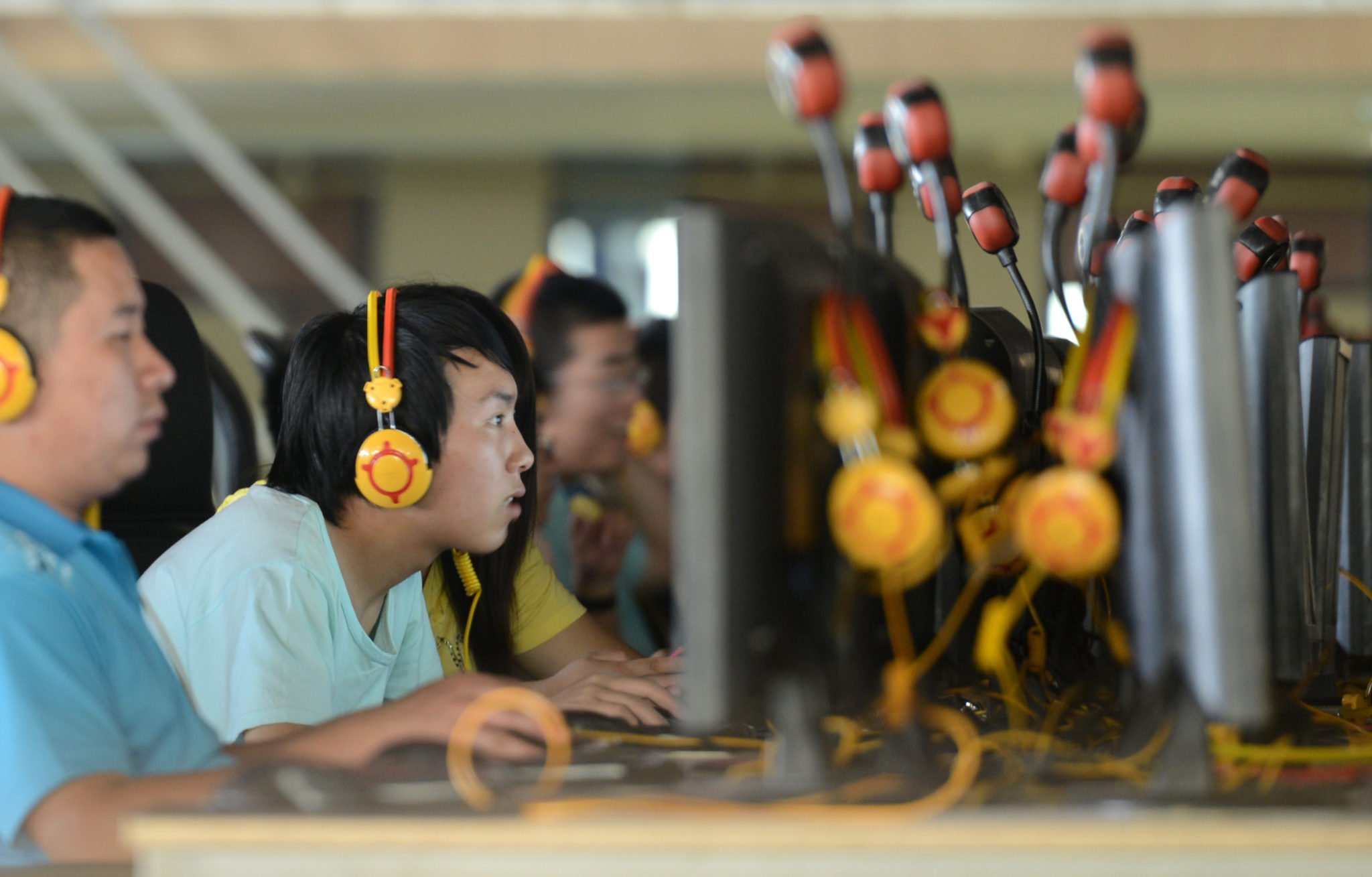
  • China’s move to fight video game addiction will hurt Apple and Google in their pocketbooks

    China’s move to fight video game addiction will hurt Apple and Google in their pocketbooks

    If you love playing mobile video games, China is not the place to be. At the end of last month, the country issued new Draconian rules that severely limit the amount of playing time that kids and those under 18 can spend each week playing video games. The new rules announced by China’s National Press and Publication Administration limit video gameplay by those under 18 to one hour per day between 8 p.m. and 9 p.m. on weekends and legal holidays.

    This is a huge reduction from the previous rules that were out in place back in 2019 which allowed those under 18 to play video games for an hour on most days. Niko Partners senior analyst Daniel Ahmad said, “There are over 110 million minors that play video games in China today, and we expect the new limits to lead to a decline in the number of players and a reduction in the amount of time and money spent in-game by those under 18.”

    A publication related to the state ran an article with a headline referring to video games as “opium.” This comment was later removed and the article revised. Niko’s Ahmad says that there are 720 million gamers in China with 110 million under the age of 18. “Gaming addiction has affected studies and normal life…and many parents have become miserable,” the National Press and Publication Administration said in a statement.

    China has stopped handing out licenses to video games so that they can be listed online. This includes games available on the App Store. Regulators made the decision to stop issuing the necessary licenses. Sources who were briefed on the meeting said, “everything is on hold.” One source said that regulators halted licensing video games because they felt that approval of new games had been “a bit too aggressive” during the first half of this year.

    While the move is believed to be temporary, one source says that the plan is to keep the new rules in place “for a while.” China is hoping to reduce video game addiction in the country and the state believes that cutting the number of available new games will help it achieve its goal. Another source stated that there were discussions related to delaying the issuance of licenses for video games so that China could undergo “a smooth and successful deployment” of its plans to reduce video game addiction.

    From March 2018 to December 2018, China refused to issue any video gaming license. And again, last month, the country refrained from awarding a license to any video game. While the previous ban on video games lasted 9 months, there has been no time frame announced for the current ban.

    China requires video game developers to have a license issued by the Chinese government. While Android-based app stores like the Google Play Store started checking for the license in 2016, the App Store didn’t require that developers had the license until last year.

    When the country stopped issuing video games licenses for most of 2018, there was some financial impact on App Store earnings according to Apple CEO Tim Cook and CFO Luca Maestri. The executives commented again when China had resumed licensing games and said at the time that the company was having fewer issues with App Store revenue. While Apple and Google will see a decline in revenue for their iOS and Android storefronts respectively, Chinese video game companies like Tencent and NetEase will also be affected financially by China’s crackdown on video game addiction.

    Chinese state-run media have not yet disseminated the news about the country’s latest efforts to keep teens away from what the Chinese see as a highly addictive pastime.

  • Sales Of Maruti Suzuki Ciaz Crosses The Three Lakh Milestone

    Sales Of Maruti Suzuki Ciaz Crosses The Three Lakh Milestone

    Maruti Suzuki reports that the total sales of the Ciaz sedan have crossed the three lakh milestone. The Maruti Suzuki Ciaz was launched in 2014 and it becomes the fastest model in its segment to achieve the landmark. The Ciaz is offered only with a 1.5-litre petrol engine which makes 102 bhp at 6,000 rpm against 138 Nm at 4,400 rpm. Customers can choose between a 5-speed manual gearbox and a 4-speed torque converter automatic unit. Prices for the Maruti Suzuki Ciaz start at ₹ 8.72 lakh and go up to ₹ 11.71 lakh (ex-showroom, Delhi).

    Speaking on the milestone, Shashank Srivastava, Senior Executive Director, Maruti Suzuki India Limited, said, “Since its launch in 2014, Ciaz has redefined the segment with its class-leading space, design and sophistication & has witnessed a resounding success in the highly competitive premium sedan segment. The milestone of 3 Lakh sales demonstrates customer’s faith and confidence in the brand”.

    Recently, Maruti Suzuki issued a massive recall for petrol models of the Ciaz, Ertiga, Vitara Brezza and XL6 vehicles. According to the company’s regulatory filing on the Bombay Stock Exchange, a total of 181,754 units, manufactured between May 4, 2018 and October 27, 2020, are said to be affected. The carmaker has said that the recall is for the inspection and replacement of the vehicle’s motor generator unit, which may have a potential safety defect. The company further stated that the inspection and replacement will be done free of cost.

  • PayPal Inks Deal to Expand Asia Reach

    PayPal Inks Deal to Expand Asia Reach

    The U.S. fintech giant announced a mostly cash deal to acquire Japan’s buy now, pay later (BNPL) payments platform Paidy for ¥300 billion (about $2.7 billion) on Wednesday.

    The acquisition will expand PayPal’s capabilities, distribution and relevance in the domestic payments market in Japan, the third-largest e-commerce market in the world, complementing the company’s existing cross-border e-commerce business in the country, PayPal said in a statement.

    According to an investor presentation, shopping volume in Japan more than tripled to around $200 billion in the last 10 years, with more than two-thirds of all purchases paid for in cash, thereby presenting a huge opportunity for BNPL to proliferate.

    Founded in 2008, Paidy has 6 million users. PayPal already has stakes in other BNPL businesses, including Sezzle and Z1P.AX.

    Under the BNPL model, unsecured loans are extended to online shoppers similar to a credit card, but these are smaller in amount and have a shorter repayment schedule. Such platforms have seen a boom in popularity over the past year, though critics see them as a debt trap.

    In another major deal in the space, Square, run by Twitter CEO Jack Dorsey bought Australian Afterpay for $29 billion last month.

  • Google Photos launches more print and canvases size options, home delivery

    Google Photos launches more print and canvases size options, home delivery

    Google Photos is getting some much-needed improvements for users in the United States. Google confirmed that it’s now rolling out larger photo print sizes, a new option to get prints delivered home, as well as new canvas print sizes.

    First off, Google Photos users in the United States will now have the option to have photo prints delivered directly to their home, whereas until now they would need to visit a CVS, Walmart, or Walgreens location to get them.

    Customers in the US can choose between exists 4×6, 5×7 or 8×10, or four additional sizes: 11×14, 12×18, 16×20 and 20×30 prints. To have them delivered to your home, you’ll have to pay $0.18 per print plus shipping. If you don’t want to wait, you can still pick them up from the local CVS, Walgreens or Walmart in the US or 7-Eleven in Japan.

    Additionally, Google announced that in the next few weeks, it will add six more canvas print size options to the Google Photos print store: 8×10, 16×16, 20×30, 24×36, 30×40 and 36×36.

  • Snapchat launches new feature that helps track friends’ birthdays

    Snapchat launches new feature that helps track friends’ birthdays

    Birthdays Mini is the name of the new feature introduced by Snap meant to allow users to track their friends’ birthdays easier than ever. It’s a simple, yet nifty feature that will show Snapchat addicts a list of upcoming and recent birthdays, along with birthdays organized by Zodiac Sign.

    You can wish a friend a happy birthday using some of the unique Snapchat stickers and Lenses, or you can even countdown your own birthday if you want your friends to know. It’s important to mention though that only friends who have opted in to have their birthdays seen on Snapchat will have their birthdays shown in the Birthdays Mini list.

    Equally important is the fact that Snapchat will not display the birth year or age of your friends or even yours. Of course, you will be able to see the full information on your birthdays, but this isn’t going to be visible for anyone else.

    Birthday Mini will be rolled out to Snapchat on both Android and iOS starting today. The new feature can be found behind the rocket icon in Chat or via the Search bar.