Author: Mei Ling Tan

  • Airlines sells in-flight blankets and pyjamas for ‘first-class’ experience

    Airlines sells in-flight blankets and pyjamas for ‘first-class’ experience

    As aviation geeks, many of us have a tendency to want to take some aspects of the flying experience home. For example, this is something United had a huge issue with when they introduced their new Polaris experience, as they found a lot of people were removing the blankets and pillows from the plane, given how comfortable they are.

    United then started selling some of the Polaris amenities online, and I know it has been popular with many. For example, I really love the Polaris duvet, and think it makes a great gift for any aviation geek (and it’s not horribly priced for a duvet either).

    It looks like Emirates is following in United’s footsteps, as Emirates is now selling some of their first-class amenities through their online store.

    The Emirates online store in general has some awesome merchandise for anyone who likes Emirates branded great, but the addition of some first class items is cool as well. Here are the first-class items you can expect to see online:

    Bowers & Wilkins PX Headphones

    The Bowers & Wilkins PX headphones are made to suit every environment you’re in. With 22 hours of battery life, and 3 noise cancellation modes – these headphones have you covered whether you’re in the office, city streets or any flight. Available in two colors with an exclusive Emirates travel case – grab a pair quickly before your next adventure!

    Available in all Emirates Official Stores and www.emirates.store, these must-have headphones retail at AED 1,799.

    Hydra-active Sleepwear (First Class Pyjamas)

    Relax in the world’s first moisturizing sleepwear range to ever be developed for an airline, and drift off like you’re up at 40,000 feet in hydra-active sleepwear pyjamas. Designed to prevent skin dehydration, you’ll feel rested and refreshed every morning. The fabric is crafted with the use of natural ingredients – Shea Buter and Argan Oil – which are released with every motion, keeping your skin moisturized and protected.  The patented Microcapsule Technology locks in the natural benefits, allowing you to wash the pyjamas and use them again them again.

    Catering to female and male sizes – the pyjamas come in four sizes and in a jersey travel pack. The dark grey men’s pyjamas come with wide leg pant and ribbed collar, while the female’s pyjamas come in a light grey tapered pant and reverse darker color collar.

    Available in all Emirates Official Stores and www.emirates.store, the First Class pyjamas retail at AED 200 per piece.

    First Class Blanket

    As the winter and the festive season approach, grab yourself a warm blanket for those special chilly nights spent at home with family and friends. When open, the cream-colored, furry blanket has armholes and pockets to keep hands and feet warm.  This essential item can also be converted into a travel pillow, providing ultimate comfort and support for the neck.

    Available in all Emirates Official Stores and www.emirates.store, the First Class blankets retail at AED 225.

    The Bowers & Wilkins PX headphones are good, but at the price I think there are better ones out there.

    I find Emirates’ new pajamas to not be particularly comfortable.

    And I also don’t think their blankets are great, and actually prefer the United Polaris duvet, if you are in the market for an airline blanket for home.

  • Amorepacific alligns on offline experiences for online shoppers

    Amorepacific alligns on offline experiences for online shoppers

    Amid difficult times for traditional offline retailers, Amorepacific is charting a new course for its operations across many of its most important brands. The goal is not simply to adapt to the so-called New Normal, but to embrace it with new and meaningful experiences for consumers.

    There is no doubt that the foot traffic in offline stores is falling sharply as more and more consumers find what they need via e-commerce. This long-term trend has accelerated due to the prolonged pandemic, and the beauty industry has not been immune. Many retailers have shuttered branches and shopping centers like Seoul’s Myeongdong district, which has long been a hub for attracting tourists from around the world, are experiencing unprecedented difficulties as tourists have stayed away.

    As Korea’s leading beauty conglomerate, Amorepacific has moved quickly to provide differentiated experiences for consumers, seeking to overcome the shock of the crisis with new distribution channels and strategies that embrace a combination of enhanced offline and expanded online approaches, while at the same time pioneering new markets overseas.

    In this new approach, the offline environment takes on an added role as an experience platform. More than just for buying products, it’s a place where customers can begin to explore a new world of beauty through new contents and services. Amorepacific’s aim is to create synergy between online and offline environments in creative ways that strengthen brand loyalty while also attracting new customers.

    “We know that consumer needs are changing and it’s time for us to embrace new and creative ways to approach them,” said Suh Kyung-bae, Chairman & CEO of Amorepacific Group, in his new year’s address, “Amorepacific continues to evolve but we will always focus on providing outstanding beauty experiences for our customers.”

    Amorepacific’s offline stores with outstanding beauty experiences

    • Amore Store Gwanggyo is an experience-based beauty store whare customers can meet and experience 40 brands and 2,000 products of Amorepacific. REFILL STATION opened in October 2020 at Amore Store Gwanggyo which enables customers to choose from 15 shampoo and bodywash products to refill recycled containers made from coconut shells. It is economical, environmentally friendly, and the contents are always at a discount from regularly bottled products.
    • Amore Seongsu is a place where customers can get to know beauty trend and experience Amorepacific’s latest beauty science and technology. BASE PICKER is a new service launched on April 6th at Amore Store Seongsu. Customers can create personalized foundation and cushion products from a choice of 2 textures, 2 product types and 100 colors. BASE PICKER was developed in collaboration with the Korea Advanced Institute of Science and Technology after conducting three years of research on skin tones and foundation colors. Tailored products are mixed on the spot with a special robot operated by patented technology in a fast and hygienic process.
    • IOPE lab is located in Seoul’s Myeongdong shopping district. It’s a place where customers can receive personalized measurement and genetic analysis of their skin type, and obtain personalized skincare solutions. Customers can also try the store’s personalized hydrogel mask service. Created with a 3D printer on the spot, the service received a 2020 CES Innovation Award.
    • FACEFIT by ARITAUM is located in Seoul’s Times Square Mall. Operated with professionally trained face-fit consultants, the store offers one-on-one personalized service optimized for each customer’s individual facial features. Customers can choose from key Amorepacific brands such as HERA, IOPE and HANYUL, and experience “face-only-fitness” as they learn how to exercise their facial muscles. The store also provides mini-makeup services and precise diagnosis of each customer’s skin problems.
  • Citi Commercial Bank Opens China Desk in Singapore

    Citi Commercial Bank Opens China Desk in Singapore

    The new China desk in Singapore adds to CCB’s network of six Asia desks in the region, which supports clients’ banking needs across intra-Asia growth corridors.

    Citi Commercial Bank (CCB) Asia Pacific has set up a China desk in Singapore, facilitating access to the cit-state and wider ASEAN region for emerging corporates from China, it announced on Monday.

    Mona Zhang, previously parent account manager for mid corporates in CCB China’s office, is leading the desk. Zhang brings a wealth of knowledge and experience in understanding the business landscape in China and serving the needs of Chinese corporates.

    She will build the bank’s relationships with China-based clients and support their expansion plans into Singapore and as well as the rest of ASEAN, Citi said in a statement.

    Citi highlighted CCB’s growth across China to Singapore as well as China to ASEAN corridors. Last year, it more than doubled revenue in the China to Singapore corridor, supported by 35 percent growth in new client acquisition. Momentum in new client acquisition also resulted in a doubling of revenue in the China to ASEAN corridor last year, Citi said.

    Singapore and the broader ASEAN region are key markets for growth for expanding Chinese emerging corporates. A majority of these clients set up holding companies in Singapore for their ASEAN units, with the market serving as a treasury and funding hub, Lin Hsiu-Yi, CCB ASEAN and Singapore head, said.

    Other CCB desks in the region include a Korea desk in China, Hong Kong, India and Vietnam; a Greater China desk in Hong Kong; and a China desk in India.

  • StanChart Announces Details on Digital Bank Venture with NTUC

    StanChart Announces Details on Digital Bank Venture with NTUC

    A StanChart veteran has been appointed to lead its digital-only bank in Singapore. Standard Chartered Singapore’s head of consumer, private and business banking, Dwaipayan Sadhu, has been appointed CEO of the bank’s new digital venture with NTUC Enterprise, details of which were released on Monday.

    Sadhu, who has more than two decades of experience across wealth management, payments, deposits, consumer lending, and digital banking, will hold both roles concurrently while transitioning to his new position by the end of the year.

    Standard Chartered will take a 60 percent stake in the venture, worth S$144 million ($107.28 million), with the NTUC’s enterprise arm taking the remaining 40 percent stake, worth S$96 million.

    Singapore is Standard Chartered’s second-largest market after Hong Kong. The bank announced plans for the digital venture with NTUC about a year ago, soon after it obtained the Significantly Rooted Foreign Bank (SRFB) status in Singapore, which gives it significant advantages such as the ability to set up a digital-only unit, lower amounts in paid-up capital and a greater number of places of businesses.

    Four other digital banks, which obtained licenses under a different process, are set to be launched in the republic in the coming year.

    With the new digital bank, Standard Chartered will be the only entity to operate a virtual bank in the region’s two largest hubs. In Hong Kong, it runs Mox – jointly owned with telecom firms PCCW and Hong Kong Telecom, and online travel agency trip.com.

  • JD appoints president, freeing founder to focus on strategy

    JD appoints president, freeing founder to focus on strategy

    China’s JD.com said on Monday Xu Lei will become the e-commerce giant’s first ever president, making way for chief executive and founder Richard Liu to devote more time to formulating long-term strategies.

    Lei, previously the CEO of JD Retail, will fill the new position and lead the day-to-day operation and development of JD.com’s various business units, the company said in a statement.

    Liu, who started the company that would become JD.com in 1998, will also spend more time mentoring younger management and contributing to the revitalisation of rural areas, it said.

    Xin Lijun, who had previously headed up JD Health, will take over from Xu as JD Retail’s chief while Jin Enlin will become JD Health’s new CEO.

    “Looking to the future, the correct long-term strategic design, the growth and development of young talents, and the healthy and coordinated development of various business units will continue to be the driving force for JD in doing the hardest and most challenging, but right and most valuable things for the industry,” Liu said.

  • Australia opens application for low band 5G spectrum auction

    Australia opens application for low band 5G spectrum auction

    The Australian Communications and Media Authority (ACMA) has opened applications for the upcoming 2021 auction of 5G spectrum in the 850/900 MHz band.

    Low band spectrum forms the backbone of 5G connectivity in Australia. Spectrum in the sub‑1 GHz bands can carry signals across longer distances and is essential to the deployment of wide-area networks, such as mobile services and fixed wireless internet.

    ACMA Chair Nerida O’Loughlin said the allocation of 5G-optimised spectrum in the 850/900 MHz band will support new and existing operators to better deliver services across regional, rural and remote areas of Australia, as well as to major population centres.

    “The spectrum available in this auction will facilitate a wide range of new services that will benefit businesses and consumers across Australia,” Ms O’Loughlin said.

    The ACMA will auction 70 MHz of paired spectrum in the 850/900 MHz band across all of Australia. The application period runs from 1 September 2021 to 21 September 2021 with the spectrum auction scheduled to commence in late November/early December 2021.

    “We encourage all interested parties to apply during this window so they can participate in the auction in late 2021,” Ms O’Loughlin said.

    The spectrum auction is an opportunity for interested parties to bid for spectrum that will accommodate the deployment of 5G services in Australia.

    The ACMA has prepared an applicant information package (AIP) for interested parties, which provides a detailed auction guide, information on the spectrum available and starting prices.

    The auction forms part of the Australian Government’s plan to make 2021 the   Year of 5G. The ACMA auctioned high-band spectrum in the 26 GHz band in April this year for a total revenue of $647 million.

  • Cambodia’s newest mall opens in Phnom Penh

    Cambodia’s newest mall opens in Phnom Penh

    The One Mall, a Chinese-backed three-storey shopping mall project in Phnom Penh, is expected to be completed in the second quarter of this year, after missing its scheduled December opening.

    In August, The One Mall Management (Cambodia) Co Ltd, which is a subsidiary of Chinese firm Ming Sheung International Investment Co Ltd and the developer of the project, announced that the mall would be officially opened in December.

    “It will be complete around April this year. Construction is moving along well. Workers are on the job day and night. Around 70 per cent has been completed so far,” a source close to the project told The Post on Wednesday.

    However, the source declined to comment when asked about the project’s delay.

    The project is constructed on a 12,000sqm plot at the site of the former container night market and near The Bridge building in Phnom Penh’s Tonle Bassac commune.

    The value of the firm’s investment has not been disclosed.

    In August, The One Mall Management announced that The One Mall will comprise of shops, a kid’s zone, a fitness centre, restaurants and clothing stores. The project’s construction began in June last year.

    Century 21 Mekong CEO Chrek Soknim told The Post on Wednesday that the retail market is very popular among the Kingdom’s middle-income earners.

    However, demand currently outstrips supply, he said. “Retail is currently making a strong foray into Cambodia – targeting Cambodians with good income and a need for better goods.

    “Mall construction [projects] has not yet met the demand, and it will lead to more retail construction,” he said.

    In August, The One Mall Management chairman Chris Wong said economic growth in the Kingdom prompted the company to invest in a large retail mall in the heart of Phnom Penh.

    He said The One Mall will play host to many local and international brands.

    “To date, we are heartened that The One Mall has received support from long-standing retail brands in the Kingdom.

    “The One Mall has a clear focus on offering different exposure to a social space where people spend their time experiencing, discovering and shopping,” Wong said.

    The company also announced a new mall in Sihanoukville to attract Chinese clientele there.

    A CBRE Cambodia report said there were a total of 19 buildings in Phnom Penh providing 314,000sqm of retail space as of the end of last year.

    At the end of 2018, there were 14 buildings in the capital providing 282,580sqm of retail space, it said.

    This year, CBRE Cambodia expects an additional 261,746sqm in retail space supply, bringing the total in Phnom Penh to 575,700sqm.

  • Singapore retail sales stabilise at below pre-Covid levels

    Singapore retail sales stabilise at below pre-Covid levels

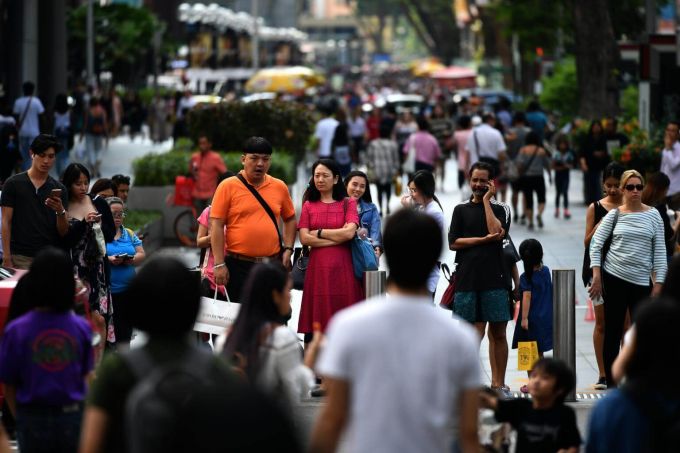
    Singapore’s retail sales rose 79.7 percent year on year in May to S$3.3 billion, rebounding from the low base during the 2020 “circuit breaker”, according to a Singapore Department of Statistics released on Monday.

    This was up from April’s 54 percent jump and exceeded economists’ expectations of a 65 percent rise. Yet retail sales remain below pre-Covid levels, noted Singstat. May’s figures were also down 6.8 percent on a month-on-month seasonally adjusted basis.

    Online sales accounted for 13.7 percent of May’s takings, up from 11.2 percent in April. Excluding motor vehicles, May’s retail sales were up 61.6 percent year on year, but down 5.2 percent on a month-on-month seasonally adjusted basis.

    Due to “the low base in May 2020 when most physical stores were closed for the whole month”, all retail industries saw major year-on-year increases, except for two categories: supermarkets and hypermarkets, and mini-marts and convenience stores. These saw falls of 12.1 percent and 9.2 percent respectively.

    The largest increases were seen for watches and jewelry, with May’s takings more than 20 times the year-ago figure; department stores; and wearing apparel and footwear.

  • Hanoi to restrict motorbike shipper timings

    Hanoi to restrict motorbike shipper timings

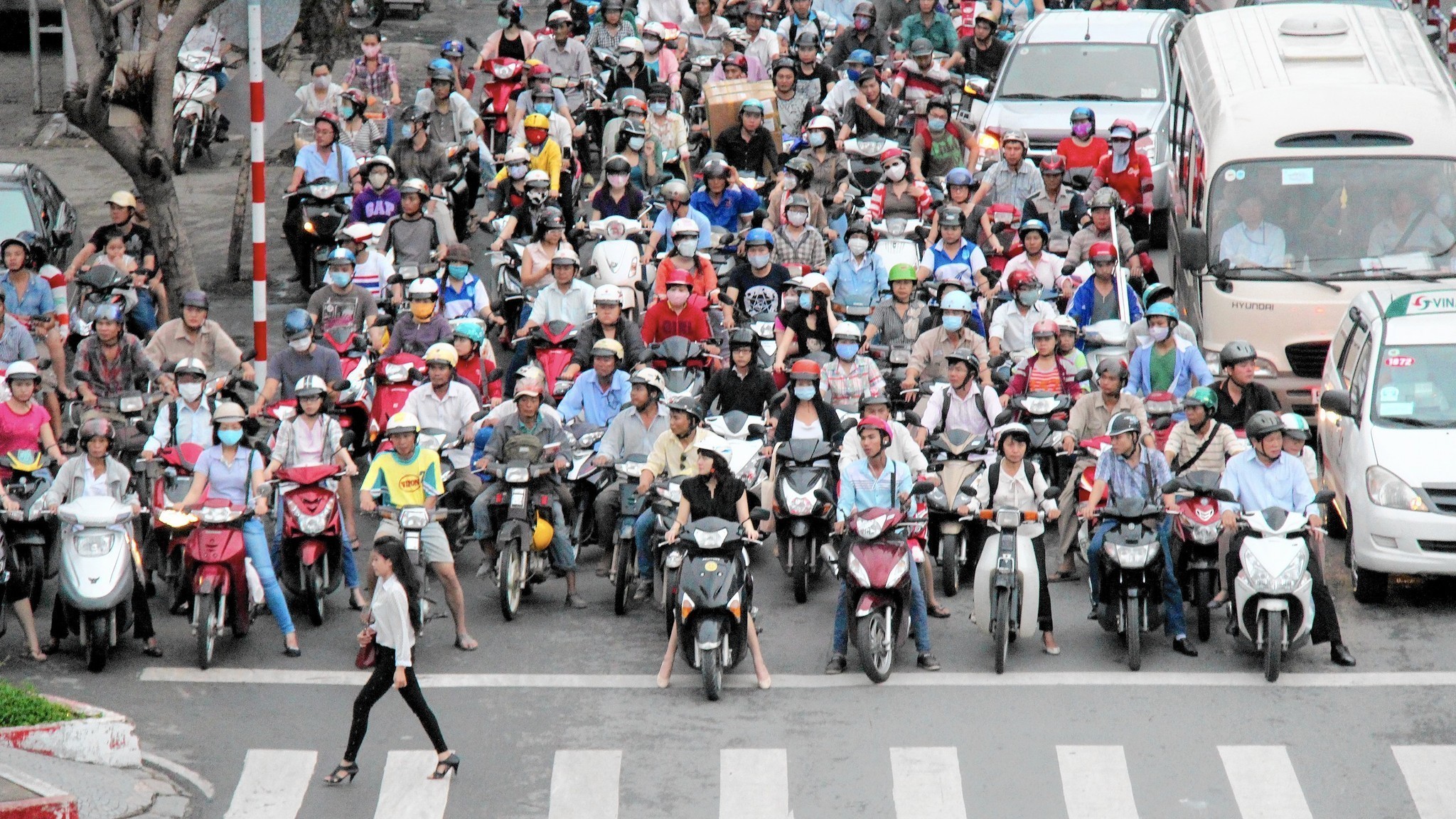
    Hanoi will restrict motorbike shippers’ timings to between 9 a.m. to 8 p.m. every day, starting Monday, while requiring continued compliance with all pandemic prevention and safety measures.

    All shippers, accordingly, will have to furnish a certificate with negative PCR or rapid antigen test results in line with health ministry regulations.

    The timing restrictions are needed because the motorbike delivery service is hard to control and carries the risk of further spreading the coronavirus, officials said.

    Hanoi has allowed delivery people from supermarkets, e-commerce platforms and postal services but not from ride-hailing companies like Grab, Be and Gojek since July 24.

    Hanoi has undergone several social distancing orders since late July. It has recorded over 3,700 infections in the ongoing outbreak that hit the nation late April.

    City authorities have said that they would extend strict lockdown orders in most parts of the city after September 6.

  • Telkomsel chooses Infinet Wireless to provide connectivity in challenging terrain

    Telkomsel chooses Infinet Wireless to provide connectivity in challenging terrain

    Infinet Wireless, the global leader in fixed wireless broadband connectivity, provided its solutions to Telekomunikasi Selular, known by the trade name Telkomsel, one of the biggest cellular telecommunication operators in Indonesia and the sixth largest operator in the world.

    Having most of their Base Transceiver Stations (BTS) with IP microwave technology-enabled, as well as VSAT and optical cable, Telkomsel came to need large bandwidth using more cost-efficient technological solutions at the same time. The telecommunication operator selected Infinet Wireless solutions, such as Quanta 5, among others. It resulted in building up a radio link of 180 km to provide connectivity despite different obstacles, such as obstructive hills in the area, the ocean and the islands.

    Telkomsel selected Infinet Wireless’ orthogonal frequency-division multiplexing (OFDM) radio equipment, ticking the box for the most cost-efficient way for a wireless carrier that provides coverage in rural areas. The company’s technological partner, KISEL Group, a telecommunications services infrastructure provider, supplied the equipment, designed deployment of the links, and carried out support for the deployment of OFDM backhaul. KISEL Group planned to rely on a more cost-efficient solution by taking advantage of the unlicensed 5 GHz frequency band — a steady, carrier-class product, providing high-throughput performance and capable of working in nearLOS / NonLOS conditions.

    KISEL Group turned to Wirakom Sistem, the largest Indonesian Infinet Wireless solutions provider, who contributed to the successful design of a network that delivered the aggregated 108 Mbps service with the longest link ever, which at 180 km is a record-breaking length.

    When comparing vendors’ solutions, KISEL Group representatives spotted Infinet Wireless products’ top-notch technology and necessary resilience to work in extreme weather conditions. Added to this was a high level of user-friendliness when it came to engineers’ work, and the fact that Infinet Wireless solutions are highly cost-effective.

    “We were impressed with Infinet OFDM as one of our rural transmission solutions, especially the new Quanta range, which covers nLOS terrestrial transmission in hilly terrain with good quality and at an affordable price. Thanks also to the Kisel & Wirakom team, which has been supporting us as an intermediary company. It has delivered the service in several projects in Telkomsel, especially related to reducing satellite cost and special area development projects. Infinet has made the impossible propagation possible, delivering sufficient capacity and good quality,” said Teddy Indira Permana, General Manager Transport, Passive & Power Planning Division, PT Telkomsel.

    “The project was challenging due to the remote locations and long-distance of the area we wanted to cover – more than 180 kilometers; but we are more than happy with the Infinet solution deployed. We managed to provide regular and terrestrial areas with the required bandwidth capability needed for the telco systems to run smoothly with high availability performance. In addition, we have also future-proofed the whole wireless infrastructure network for further expansion,” Umar Syatri, Chief Operation Officer / Deputy Chairman of KISEL Group, concluded.

    “We are proud to introduce the best point-to-point solutions to our partner and customer, which have met the requirements. We have delivered a hundred links of Infinet Wireless products, and anticipate Quanta 5 will exceed expectations,” Wiwit Ratno Ongko, CEO of Wirakom Sistem, a distributor of Infinet Wireless solutions in Indonesia, summed up.

    In Indonesia’s diverse landscape, Infinet Wireless technology, especially that of OFDM radio, is proving to be a truly valuable solution, which is why Telkomsel, together with KISEL Group, is planning to expand the current framework. Considering the fact that Infinet Wireless solutions have already proven their productivity, the evolution promises to be even more exciting and profitable.

  • Samsung to expand northern Vietnam plant

    Samsung to expand northern Vietnam plant

    Samsung is set to expand its plant in the northern province of Bac Ninh this year to increase its production capacity of foldable devices.

    The company would kick off the expansion project within the second half of this year, targeting full operation by the end of 2021 or early next year at the latest.

    This is to increase Samsung’s annual production capacity of foldables by 47 percent from the current 17 million to 25 million.

    Experts say once Samsung completes the expansion, the company would be able to produce 10 million units of Galaxy Z Fold models and 15 million units of Z Flip models a year.

    Samsung’s decision to ramp up capacity is mainly driven by soaring market demand. Its third-generation foldable models recorded 920,000 pre-orders in South Korea, 1.8 times more than its latest smartphone Galaxy S21, the report stated.

    “Samsung’s factories that make foldable devices are already operating at full capacity. Samsung has no option but to expand its facilities,” a source told the newspaper.

    It will likely add three more production lines to its current seven, which would allow the company to manage the production volume more flexibly, the source added.

    Samsung, the biggest foreign investor in Vietnam, has six plants and is building a new research and development center in Hanoi, which would open next year. Around 3,000 Vietnamese engineers are set to be employed there.

    The South Korean company has invested over $17.7 billion in Vietnam, has 110,000 employees and exported over $56 billion worth of products last year.

  • Volvo’s Global Sales Down By 10% In August

    Volvo’s Global Sales Down By 10% In August

    Volvo Cars reported global sales of 45,786 cars in August, down 10.6 percent compared with the same period last year. Overall underlying demand in the car industry and for Volvo Cars’ products remained very robust. Since mid-July, supplier shut-downs due to Covid-19 in South East Asia, especially in Malaysia, has worsened an already strained supply situation. These material shortages have led to temporary production halts at Volvo Cars’ facilities in Sweden, Belgium, China and the US, with reduced production volumes as a result.

    Volvo Cars continue to monitor the situation and currently expects that, for the second half of 2021, it will be challenging to achieve the volume levels achieved during the same period in 2020. This will have an impact on revenue and profit. In the first eight months of the year, the company sold 483,426 cars globally, up 26.1 percent compared with the same period last year.

    The sales of Volvo Cars’ Recharge line-up of chargeable models remained strong and accounted for 24.2 percent of all cars sold in the month. In Europe, Volvo Cars reached an all-time high as 47.0 percent of all cars sold in August were from the Recharge line-up.

    The US reported a solid sales performance in August with 10,686 cars sold, a 3.0 percent increase compared with the same period last year. The increase was led by strong customer demand, mainly for the XC90 – which was the best-selling model – followed by the XC60.

    In Europe, Volvo Cars reached an all-time high as 47.0 percent of all cars sold in August were from the Recharge line-up.

    For the month of August, sales in China were impacted by the Covid-19 outbreaks in South East Asia. This led to lowered retail deliveries despite strong underlying demand and order intake. Total volumes for the month reached 13,112 cars, down 17.2 percent compared with August last year.

    European sales for the month were 13,052 cars, a 25.4 percent decline compared with the same period last year. The decline in sales was related to the material shortage, which affected the production volumes and, consequently, the sales performance in the region.

  • Vietnam considers tightening import tax on e-commerce deliveries

    Vietnam considers tightening import tax on e-commerce deliveries

    The Ministry of Finance is considering limiting the import of low-value packages through e-commerce platforms to close a suspected loophole.

    It wants to issue a new decree to limit each organization or individual buyer to be free of import tax on four orders at most each month.

    The proposal came amid the rising popularity of shopping on e-commerce platforms in Vietnam, with many products delivered directly from China.

    Vietnam currently does not apply an import tax on packages with a value of VND1 million ($44) or lower delivered via postal and delivery services.

    However, because there is no limit on the number of packages being sent, many buyers take advantage of this policy and split their goods into small packages to avoid tax, according to the Ministry of Finance.

    In the first six months last year, Hanoi alone imported $1 billion worth of products via postal and delivery services. The value in June was five times that of January, according to the latest data from the Ministry of Finance.

    A Hanoi company that imports products for Shopee and Lazada saw its value of imported products surging 50 times year-on-year to $70 million in the first quarter of 2021, the ministry said.

    Vietnam’s e-commerce market has seen an average annual growth rate of 25-30 percent in the last five years, according to Vietnam E-commerce Association (VECOM).

    Should the growth rate be maintained, Vietnam would rank third in e-commerce market size in Southeast Asia by 2025, behind Indonesia and Thailand.

  • HSBC Plans for Permanent Hybrid Work Model

    HSBC Plans for Permanent Hybrid Work Model

    HSBC is the latest to embrace hybrid working with plans to make it a permanent model for the bank worldwide.

    My own view on the return to office is it would be a waste if we didn’t learn from the last 18 months, said HSBC group chief executive Noel Quinn.

    The bank’s work-from-home embracement is part of broader plans to cut costs including a 40 percent reduction in property footprint in the coming years. It also changed its office policy to include two employees per desk, excluding branches, and scrapped the executive floor of its London-based headquarter.

    We’ve learned to live and operate in a very different way, Quinn said, though he noted that he didn’t want to be overly prescriptive.

    Despite the plans, Quinn highlighted some of the advantages of the physical workspace such as social relationships or spontaneity.

    I don’t want to lose that DNA and that teamwork, he said. I’m really glad to be back in the office, seeing colleagues and having conversations in the corridor or in getting stuff done on the spur of the moment, rather than having to book a VC call or a telephone call.

    Quinn also highlighted traveling in the pandemic era, with the bank expecting budget in this area to shrink by 50 percent.

    I remember one day sitting at home, I traveled the world in a day, talking to clients in different parts of the world, he said. You can’t do that forever. You still want to have face-to-face interaction.

    Global banks remain divided on work-from-home measures with some like Citi and Standard Chartered signaling or planning a permanent shift while others like Goldman Sachs and Morgan Stanley preferring a return to the office.

  • Hyundai’s Global Sales Down By 7.6 Percent In August 2021

    Hyundai’s Global Sales Down By 7.6 Percent In August 2021

    Hyundai Motor Company has announced its global sales for the month of August 2021. Compared to 318,700 units sold in August 2020, the automaker recorded a decline in sales of 7.6 percent as it sold 294,591 units in the last month. On a month-on-month (MoM) basis, Hyundai recorded a de-growth of 6 percent selling 313,451 units in August 2021. The automaker expects the sales could drop further for the rest of this year amid adverse business conditions caused by issues like global chip shortage and COVID-19 resurgence.

    Sales at Hyundai’s home market, Korea, slipped by 6.5 per cent year on year to 51,034 units. Compared to 59,856 units sold in July 2021, the carmaker has registered a Month-on-Month (M-o-M) de-growth of over 14 per cent. The carmaker says the sales were mainly affected due to the COVID-19 resurgence and the disruption of the semiconductor supply chain.

    For markets other than Korea, sales declined 7.8 percent to 243,557 units compared with 264,110 units a year earlier. On a month-on-month (MoM) basis, the automaker witnessed a drop of 4 per cent selling 253,595 units in July 2021.

    Last month, Hyundai has recorded a 2.3 percent growth in India.

    However, there was good news emerging out of India as the carmaker saw a growth of 2.3 percent last month. The South Korean automaker sold 46,866 units last month compared to 45,809 units sold in the corresponding month in 2020.