Author: Mei Ling Tan

  • Bamboo Airways, Vietjet suspend regular flights

    Bamboo Airways, Vietjet suspend regular flights

    Bamboo Airways, Vietjet, and Pacific Airlines have suspended most of their regular routes amid a surging number of Covid-19 cases that have seen demand plunge.

    Bamboo Airways will cease all regular flights for two weeks from July 26 to August 7 amid the severe spread of the disease and social distancing measures imposed in major cities, it stated.

    Websites of Vietjet and Pacific Airlines on Tuesday showed few or no flights between popular destinations like Hanoi, Ho Chi Minh City, and Da Nang.

    Most passenger flights between HCMC and Hanoi have been canceled since July 23 as the capital imposed strict social distancing.

    Vietnam Airlines is the only carrier operating on this route with a maximum of two flights a day allowed.

    Between June 19 and July 18, the number of flights plunged 84.6 percent to 3,772, according to the Civil Aviation Authority of Vietnam (CAAV).

    Vietnam has recorded 105,287 local Covid-19 patients in 62 cities and provinces since the new wave started three months ago.

  • Top 5 Locations to Live in the Philippines

    Top 5 Locations to Live in the Philippines

    The Philippines is an Asian country in the Pacific Ocean. It is made up of around 7400 islands and is categorized into three geographical divisions known as Luzon, Visayas, and Mindanao. The country covers an area of 300,000 square kilometers and has a population of approximately 109,000,000. The landscape of the Philippines is diverse: from the green mountain villages to white sandy beaches to busy, crowded cities such as the capital city, Manila. If you would like to visit the beautiful islands and experience the fascinating culture of this country, here is a guide to the Top 5 Places to Live in the Philippines.

    Mandaluyong

    If you like shopping, you will love Mandaluyong – a city directly east of Manila. The city is well developed and is home to the Ortigas Centre, which is a huge business and commercial building. The number of shopping centers is vast, and you can pick up some real bargains in malls such as SM Megamall, The Podium, and SM Light Mall.

    Those who love a good pampering will love this city as it has many luxury spas and salons where you can receive anything from a pedicure to eyelash extensions. Lovers of music can sing their hearts out at one of the many karaoke bars or dance the night away in a nightclub such as Z Roof Deck.

    If you plan to visit the Philippines soon, you may want to consider looking for long term accommodation in various locations that appeal to you and that way you can try before you buy. For example, if Mandaluyong sounds like a great place to live you could look for a place to rent and see how you enjoy living there before you invest in a property. Try to find an apartment for rent in Mandaluyong which will allow you to get to know the city better and decide which districts would make the perfect location for your permanent abode.

    Tagaytay City

    Tagaytay is around 60 kilometers from Manila and is a beautiful city with lots of parks and greenery. The most popular attraction in Tagaytay is Taal Volcano. This relatively small volcano is the most active of several volcanos in the Philippines.

    If you like a cooler climate, Tagaytay is a great place to live as it isn’t as hot as other parts of the Philippines due to its high altitude.

    During the Christmas season and Holy Week, hundreds of tourists flock to the beautiful churches and shrines in this city.

    Boracay

    If you are a beach lover, you must visit the beach capital of the Philippines – Boracay. This beautiful island has over 12 beaches, including White Beach, which, as its name suggests, is a lovely beach with pale white sand, edged with clean, azure water. Some of the luxury beach resorts along the coast are well worth a visit if you want some pampering in luxurious surroundings.

    Bohol

    Bohol is situated in the central geographical belt of the Philippines, known as Visayas, and is known for its natural beauty. It is an excellent place for nature lovers to visit and Bohol island is home to unique natural wonders known as the Chocolate Hills. These are a collection of 1200 grassy hills which turn brown during the dry season on the island and look like lumps of chocolate formed from the landscape.

    A tiny primate called the Philippine Tarsier is native to the country, and a sanctuary dedicated to caring for these cuddly critters with enormous eyes can be found in Bohol. Visitors can enjoy a night walk through the shelter where they may catch a glimpse of this nocturnal creature.

  • Spotify adds new feed feature on Android and iOS

    Spotify adds new feed feature on Android and iOS

    Spotify has just announced a new feature will be making its way to Android and iOS users in the coming weeks. The new feature will enable Spotify users to discover new music and podcasts, a much-needed improvement considering there are more than 50k+ hours of content uploaded to Spotify every day.

    The new feature is called What’s New and will gather all the new releases from the artists and shows Spotify users follow on the music streaming platform. Additionally, What’s New is updated in real-time, which means Spotify users will listen to new content just as it’s released.

    The new What’s New feed feature can be accessed by clicking the bell icon located at the top of the Home tab on your Android or iOS device. If new songs have been released since your last visit, a blue dot indicator on the bell icon will pop up.

    It’s important to mention that the What’s New feed includes filters that let users sort for new music releases or new podcast and show episodes. To have your favorite artists show up in the What’s New feed when they release new content, simply visit their page on Spotify and tap “Follow.”

    According to Spotify, the new What’s New feature will be rolled out to all users globally on Android and iOS over the coming weeks, so it’s not going to be available to everyone at the same time.

  • New KitKat bar made with Aero Mint

    New KitKat bar made with Aero Mint

    Nestle has merged two of its best-known chocolate brands – KitKat and Aero – with the launch of KitKat Chunky Aero Mint.

    The new bar has three layers of crisp wafer, topped with aerated peppermint and covered in milk chocolate.

    Joyce Tan, head of marketing confectionery at Nestle, said the company wanted to create a new flavour and texture combination that would excite consumers.

    “There’s so much love for both of these chocolate bars, so we’re excited for them to become one and take the KitKat choc mint experience to the next level,” said Tan.

    KitKat Chunky Aero Mint is available in grocery and convenience stores nationwide for RRP $2.

  • Saigon supermarkets to close at 5 PM

    Saigon supermarkets to close at 5 PM

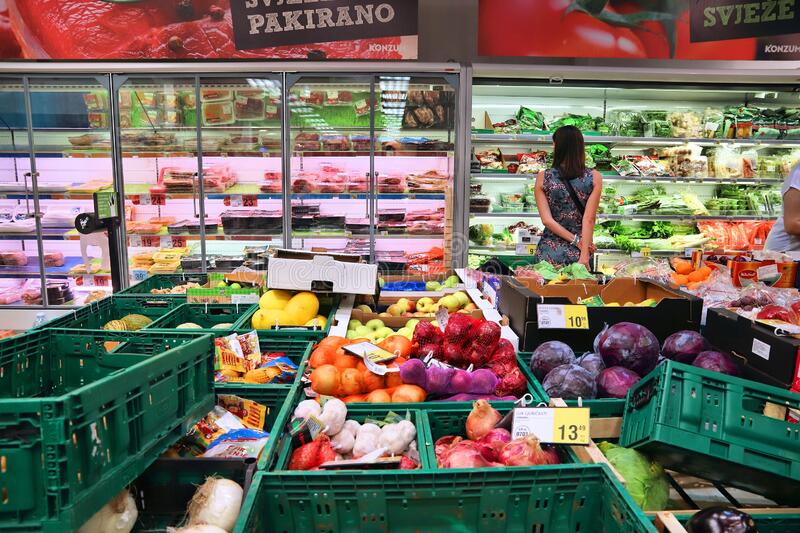
    All supermarkets in HCMC will close at 5 p.m. starting Monday to comply with the city’s suspension of night-time activities amid its Covid-19 battle.

    Retail chains like VinMart and Co.opMart will operate from 7 a.m. to 5 p.m. instead of 10 p.m.

    Big C outlets will open 1.5 hours earlier at 7 a.m. and close at 5 p.m. Aeon Malls and Mega Market will also apply the same hours.

    Most supermarkets in the city had shelves full of eggs, meat and vegetables Monday, with no sign of stockpiling.

    Retail chains have been doubling or tripling their supply to fulfill demand. They also have delivery staff ready in case delivery platforms are banned.

    HCMC banned people from leaving their homes except for emergencies after 6 p.m. starting Monday.

    This is the latest effort to curb the spread of the fourth wave of Covid-19, in which over 62,100 cases have been confirmed in the city out of 97,400 nationwide.

  • Coffee prices surge to seven-year high

    Coffee prices surge to seven-year high

    Arabica coffee prices rose 10 percent more on Monday, after jumping nearly 20 percent last week, to their highest in nearly seven years as unusual cold weather threatens coffee crops in the world’s largest producer Brazil.

    Severe frosts last week damaged a large part of fields in the main Brazilian coffee belt and a new polar air mass is forecast to move over the same areas later this week, which will be the third strong cold front to hit crops this year.

    Coffee trees are extremely sensitive to frost, which can cause severe damage and even kill trees completely. If a farm needs to replant trees, production would take around three years.

    Preliminary estimates from the Brazilian government’s food supply agency Conab said that last week’s frosts had affected 150,000 to 200,000 hectares – about 11 percent of the country’s total arabica crop area.

    “This marks the first time since 1994 that the country has experienced such a weather event,” coffee trader I & M Smith said in a market update, referring to the July 20 harsh frosts.

    Arabica coffee futures prices on ICE rose sharply on Monday, with the September contract climbing to a peak of $2.1520 per lb, the highest for the front month since October 2014.

    “The extent of the damage is still unclear, however, estimates are now between 5.5 million and 9 million (60 kg) bags, up from 2 million to 3 million last week,” said Charles Sargeant, softs and agricultural commodity broker at Britannia Global Markets.

    Sargeant was referring to the 2022 Brazilian crop. This year’s smaller production has been mostly harvested. A good production next year in Brazil was seen as important in balancing the global supply.

    Arabica coffee futures have risen by about 35% since the end of June, raising the prospect that major brands may have to raise prices in the coming weeks.

    Starbucks, Nestle and JAB Holdings, which are among the largest coffee processors and retailers in the world, declined requests for comments regarding possible impacts to the industry and the prospect of reduced availability next season.

    Smaller players would certainly suffer, while consumers will have to pay more.

    “We have stocks only up to September. We raised prices already three times this year, following the market moves, but the situation remains difficult,” said Luciane Carneiro Mendes, a partner at Cafe Carneiro, a small roaster in Brazil.

    Coffee prices in Brazil, she said, have risen from 400 reais ($77.30) per 60-kg bag in December to around 800 reais this month, but there are estimates for further increases ahead to around 1.000 reais.


  • Vietnam defers e-commerce tax by five months

    Vietnam defers e-commerce tax by five months

    Vietnam is set to delay an online tax on e-commerce vendors by five months to support economic recovery amid severe Covid-19 impacts.

    The Ministry of Finance has proposed to the government that the implementation of Circular 40 be postponed until January 1, 2022, Minister Ho Duc Phoc said Sunday. The circular was to take effect on August 1.

    The delay has been proposed as part of several solutions to support the recovery of businesses as the fourth Covid-19 wave spreads in Vietnam, infecting over 105,000 people, most of them in HCMC, often referred to as the nation’s locomotive.

    The circular imposes a 1.5 percent tax on e-commerce vendors with annual revenues of VND100 million ($4,354) or higher.

    E-commerce platforms are responsible for collecting this tax from vendors and paying it to the finance ministry.

    An average of 3.5 million transactions are made on e-commerce platforms each day in Vietnam, and the transaction value has been increasing steadily, according to official data.

    However, e-commerce platforms have proposed that they aren’t made responsible for paying tax on vendors’ behalf as it will create excessive costs and personnel burdens.

    Vietnam’s e-commerce market expanded by 18 percent last year to $11.8 billion, the only one in Southeast Asia to record double-digit growth amid the pandemic, according to the Vietnam e-Commerce and Digital Economy Agency.

  • Tata Motors Sees Demand Recovering, Warns Of Short Term Impact Of Chip Shortage

    Tata Motors Sees Demand Recovering, Warns Of Short Term Impact Of Chip Shortage

    Tata Motors Ltd said on Monday it expects performance to improve from the second half of its current financial year, anticipating an easing of global supply constraints on rapid COVID-19 vaccinations.

    The company said demand remains strong for Jaguar Land Rover (JLR) and India passenger vehicles, with commercial vehicles seeing a gradual improvement. The semiconductor shortage, rising costs of raw materials and pandemic uncertainty will, however, have an impact in the short term, the company warned.

    The company said demand remains strong for Jaguar Land Rover (JLR) and India passenger vehicles, with commercial vehicles seeing a gradual improvement.

    Tata Motors reiterated that it expected the chip supply crunch in the second quarter to be greater than in the first, likely resulting in wholesale volumes at JLR to be about 50% lower than planned.

    The company also said it aimed to have near-zero automotive debt by fiscal 2024. The carmaker had last month raised $425 million through unsecured offshore bonds to refinance existing debt and meet expenses.

    Revenue for the first quarter jumped 108% to 655.35 billion rupees, as the pandemic – which hit sales across the luxury carmaker’s business a year earlier – has also fueled strong demand for personal vehicles.

    The semiconductor shortage, rising costs of raw materials and pandemic uncertainty will, however, have an impact in the short term, the company warned.

    Overall retail sales at JLR, which accounts for most of Tata Motors’ revenue, were up 68.1% from a year earlier. Wholesales were 30,000 units, or 27%, lower than planned due to the semiconductor shortage, the company said

    For the quarter ended June 30, the company logged a consolidated net loss of 44.51 billion rupees ($598.04 million), compared with a loss of 84.38 billion rupees a year earlier.

  • Update to produce a more colorful Google Keep

    Update to produce a more colorful Google Keep

    Google Keep is a free note-taking app found on iOS, Android, and the desktop. Currently, Keep’s interface is nothing that users would get excited about as it shows the drawn image of a light bulb. Whether Google received complaints about the coma-producing UI or it decided unilaterally to freshen up the look isn’t clear, but citing a source who discovered the change.

    Users will be able to select from different background colors by tapping on the icon of an artist’s palette found at the bottom of the screen. Clicking on the icon will also reveal the different background images that the Google Keep app and website will show. Options include a plain background in various colors, a checkered umbrella, a fork retreating from a bowl of spaghetti with pasta intertwined on its prongs, and some others.

    We have yet to see the new background surface which points to the updated UI being rolled out via a server-side update. If you’ve never opened the Keep app before, it allows you to take and save written notes and lists, keep photos, and audio. You can use the app to produce a shopping list, create a to-do list, and more. And these reminders can be set to go off at certain locations.

    You can set the app to display your shopping list when you enter the supermarket or create a time-based reminder to help you get a particular task done without completing it too late. You can install Google Keep from the Google Play Store, or the Apple App Store.

  • DBS Appoints Global Head of Transactions Services

    DBS Appoints Global Head of Transactions Services

    DBS has appointed a group head of global transaction services, succeeding John Laurens who will be retiring.

    Lim Soon Chong has been named to the role, according to a statement, effective August 1 this year.

    Laurens, who first joined DBS in 2014, will remain as a senior adviser to support the transition until December 31.

    Lim is currently group head of investment products and advisory for DBS’ consumer banking and wealth management unit as well as group head of product management for global transactions services. Ex-group head of trade product management and 20-year banking veteran Sriram Muthukrishnan will take over Lim’s latter role.

    Lim joined DBS in 2006 and has taken on various senior roles across the bank’s consumer, wealth, corporate treasury, and risk management divisions. He will maintain his role as head of digital for DBS’ institutional banking group.

    We remain committed to efforts to rotate our senior leaders around different functions and markets to hone their business acumen and technical skill sets to ensure they are well equipped to navigate the challenges and opportunities of tomorrow, Lim said.

  • Seafood firms net big catch from export recovery

    Seafood firms net big catch from export recovery

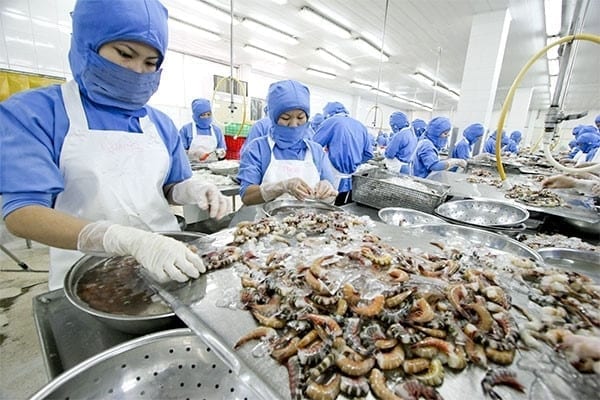
    A seafood export recovery has helped bigger firms boost profits while smaller ones have struggled with the spike in shipping rates.

    Seafood exports topped $4 billion in H1, a year-on-year increase of 15 percent, according to the General Department of Vietnam Customs. In Q2 particularly, seafood export turnover increased by more than 21 percent over the same period last year, reaching nearly $2.4 billion. This led to firms reporting positive business results.

    Vinh Hoan JSC earned over VND2.3 trillion in revenue and over VND260 billion in post-tax profit, up 41 percent and 16 percent year-on-year, respectively. According to its monthly report, VHC’s exports to most markets increased, with the two largest ones being the U.S. and China.

    The Kien Hung JSC (KHS) said its net profit increased 10 times in Q2 as demand from Europe, America, Japan and South Korea temporarily recovered and stabilized. The firm also actively sought imported materials at competitive prices to maintain stable production.

    The Minh Phu Seafood Corporation has yet to announce its H1 business results, but estimates a pre-tax profit of over VND300 billion, a year-on-year increase of 11 percent.

    However, not all seafood exporters reported positive business results, partly because of high freight rates. The Vietnam Association of Seafood Exporters and Producers (VASEP) said that by May, freight rates in some ports had doubled compared to late 2020 and sextupled compared to early 2020.

    The Nam Viet Corporation reported an increase of over 20 percent in revenue in Q2 but a decrease of 26 percent in net profit year-on-year. The corporation attributed the decline in profit to a sharp rise in financial and selling expenses, that latter shooting up 137 percent compared to last year due to a hike in freight and transportation rates.

    The Thuan Phuoc Seafood and Trading Corporation (THP) saw its profit fall even further to VND10 billion, half that of the same period last year, because of rising selling expenses.

    The sea freight, which ups nearly times, cost the firm VND26 billion.

    In early July, VASEP requested the Ministry of Agriculture and Rural Development to report to PM the issues of container shortage and sea freight rates, seeking intervention to have the latter reduced to pre-November 2020 levels.

  • Nearly Half of Singaporeans Own Cryptocurrency

    Nearly Half of Singaporeans Own Cryptocurrency

    Despite market volatility and regulatory pressures, the outlook for crypto adoption remains positive especially in Singapore where nearly half of its residents own the digital asset class, according to a survey.

    43 percent of Singaporeans own cryptocurrency, according to a survey by Independent Reserve, a digital set exchange with operations in the city-state since 2020. And adoption is expected to continue to rise with 46 percent of respondents plan to buy crypto in the next 12 months.

    Naturally, awareness has been high in Singapore with 93 percent claiming they have knowledge of cryptocurrencies and 90 percent claiming they heard of bitcoin.

    Unsurprisingly, younger individuals have led adoption rates at 66 percent for those aged 26 to 45 compared to 31 percent cumulatively for all other age groups.

    The same age group was also twice as likely to buy crypto in the next 12 months at 61 percent.

    Crypto adoption is expected to increase in Singapore with 59 percent of Singaporeans believing it will reach mass-scale adoption and 70 percent for those under the age of 45.

    The price outlook is also positive with half of the respondents expecting bitcoin’s value to rise to S$50,000 by 2030. 13 percent of those under 45 forecast bitcoin’s price to reach S$250,000 by the same year. The data is based on a survey of 1,000 Singaporeans conducted by Independent Reserve.

    Independent Reserve also launched its inaugural Cryptocurrency Index for Singapore and scored it at 63 out of 100 using criteria based on awareness, adoption, trust and confidence.

    With digital currency gaining momentum worldwide, Singapore continues to emerge as a key hub in Asia due to its robust and well-regulated financial markets infrastructure and openness to new technologies,» said Independent Reserve CEO Adrian Przelozny.

    The strong awareness and adoption of crypto among Singaporeans in the survey findings are probably a natural reflection of the country’s progressiveness and commitment to preparing for the future.

  • Allianz Global Investors to Grow Indonesia Presence

    Allianz Global Investors to Grow Indonesia Presence

    The firm has signed an agreement to acquire an Indonesia-based asset manager, where it aims to create an on-the-ground, market-leading setup to grow its footprint.

    Allianz Global Investors (Allianz GI) has announced plans to acquire Indonesia’s RHB Asset Management from shareholders RHB Banking Group and RHB Sekuritas Indonesia, according to a statement on Monday.

    RHBAM had $480 million in assets under management, as of 31 December 2020. With the deal, it will gain access to AllianzGI’s investment expertise and solutions, allowing it to being in new perspectives to the Indonesia asset management market, the statement said.

    The transaction is expected to be completed in 4Q 2021 and is subject to various conditions precedent, including the approval by the Indonesian Financial Services Authority.

    Allianz GI said that strengthening its franchise in Southeast Asia has long been a focus for the firm.

    We see Southeast Asia as the next growth engine besides China; backed by the solid presence of Allianz SE in Indonesia, the proposed acquisition is a confident stride to accelerate our entry into this fast-growing market, Tobias Pross, AllianzGI chief executive officer, said in the statement.

    The firm employs 690 investment professionals in 23 offices worldwide and manages €598 billion in assets for individuals, families and institutions, as of 31 March 2021.

  • UBS and Credit Suisse’s Intertwined Destinies

    UBS and Credit Suisse’s Intertwined Destinies

    It would be premature to draw any conclusions from the large gap that has opened up between UBS and Credit Suisse. Doing so has often proved wrong in the past.

    Credit Suisse will publish second-quarter results this Thursday. It won’t be easy for the bank to exceed UBS’s strong showing, particularly given it still faces enormous problems from the Greensill Capital and Archegos Capital Management losses. Even so, it will be interesting to see how Credit Suisse chief executive Thomas Gottstein takes advantage of the very positive current environment in finance.

    About thirty years ago it wasn’t unusual for both the major banks to coordinate the release of their results. It was a type of good old-fashioned Swiss consensus. One really did want to avoid large discrepancies if possible. The profits of the major banks mirrored each other. And as part of all that, each would advise their (domestic) competitors how much-hidden reserves were being used.

    At the start of the 1990s, increased competition came into play. The Swiss banking cartel was dissolved as banking was liberalized globally and competition law would ban any agreement like that now. In any case, it would be a gargantuan task to balance out the performance between the two this quarter given the disparity between them is so large.

    On one side you have Credit Suisse which keeps getting buffeted by turbulence since former chief executive Tidjane Thiam left. On the other, you have a UBS performing better than it has in years, as the numbers last week clearly show. In short, it would be extremely hard to compare them side by side now.

    But it would be premature to draw conclusions from the conditions at each bank. And any desire to see it last for a prolonged length of time also misses the point.

    Often, such conclusions have turned out to be wrong. UBS and Credit Suisse have closely intertwined destinies and they seem to change positions almost with the regularity of a Swiss watch. One is on top for a while only to then be replaced by the other for another while. History shows that pattern repeating itself over and over.

    Exactly because both banks are so important for Swiss finance, and because their ability to innovate is still pre-dominant, there is little use painting a dire picture of their future or expressing any kind of schadenfreude when one of them is in trouble. The recent events at Credit Suisse have just – again – shown what a lack of responsibility at all levels of a bank can do together with any reasoned, long-term understanding of the banking profession.

    At the end of the day, UBS and Credit Suisse have a long-term responsibility to follow the fundamental rules and laws of the banking business for the Swiss economy and the country’s prosperity in a way that allows them to exercise their strengths, particularly in an international context.

  • India court quashes Amazon, Walmart’s Flipkart bid to stall antitrust probe

    India court quashes Amazon, Walmart’s Flipkart bid to stall antitrust probe

    An Indian court on Friday dismissed appeals by Amazon.com and Walmart’s Flipkart that sought to stall an antitrust investigation into their business practices, dealing a major setback to the U.S. firms in a key market.

    The Competition Commission of India (CCI) last year ordered an inquiry after allegations from brick-and-mortar retailers that the U.S. firms promoted select sellers on their e-commerce platforms and used to business practices that stifle competition.

    The investigation was on hold for more than a year after companies challenged it, denying wrongdoing and arguing that the CCI lacked evidence, but a court allowed it to continue in June. On Friday, the High Court in southern Karanataka state rejected the U.S. firms’ appeals.

    “By no stretch of imagination can inquiry be quashed at this stage. The appeals are nothing but an attempt to ensure that action initiated by the CCI … does not attain finality,” a two-judge bench said while reading the decision in court. “The appeals are devoid of merit, and deserve to be dismissed.-

    The two firms are likely to appeal the decision at India’s Supreme Court, according to people familiar with the case. Amazon did not immediately respond to a request for comment.

    Flipkart said in a statement it would review the court’s order, adding that it remains in compliance with Indian laws.

    Abir Roy of Sarvada Legal, which filed the antitrust case against Amazon and Flipkart on behalf of a trader group, said the court’s decision “further reinforces that the CCI investigation should continue promptly.”

    The CCI investigation is the latest setback for Amazon and Flipkart, which are grappling with prospects of tougher e-commerce regulations and accusations from brick-and-mortar retailers that the companies circumvent Indian law by creating complex business structures.

    The companies face several allegations in the case, including exclusive launches of mobile phones, promotion of select sellers on their websites and deep discounting practices that drive out competition.

    Trade minister Piyush Goyal last month lashed out at U.S. e-commerce giants for filing legal challenges and failing to comply with the CCI’s investigation, saying “if they have nothing to hide … why don’t they respond to the CCI?”