Author: Mei Ling Tan

  • TamJai SamGor concept to open in Lan Kwai Fong

    TamJai SamGor concept to open in Lan Kwai Fong

    Hong Kong noodle chain TamJai SamGor Mixian is expanding its presence in its home market with a flagship concept launch in the nightlife hub of Lan Kwai Fong this week.

    The TamJai SamGor store will also unveil the brand’s new international image, featuring its signature red and black colors together with Hong Kong-style neon light signs.

    “The design demonstrates TamJai SamGor’s ambition of infusing overseas elements into a Hong Kong brand, showcasing the idea of a mix of cultures and growing business in international markets,” the company said in a statement.

    The store facade features a large rectangular window with a neon light frame and a  three-dimensional sign saying ‘TamJai SamGor’ in Chinese characters on one side and ‘TJSG’ on the other side.

    Alcohol and pairing snacks, not available in other outlets, will be rolled out at the restaurant. TamJai SamGor in Lan Kwai Fong is scheduled to open this Friday (July 9).

    Since opening its first store in Hong Kong in 2008, TamJai SamGor Mixian has grown its network to more than 70 restaurants across the city. The noodle chain made its overseas debut in Singapore last year.

  • China’s Didi says app takedown may hurt revenue

    China’s Didi says app takedown may hurt revenue

    China’s biggest ride-hailing firm Didi Global said on Sunday that the removal of its “DiDi Chuxing” app from smartphone app stores in China is expected to have an adverse impact on its revenue.

    Earlier on Sunday, China’s cyberspace regulator ordered app stores to stop offering Didi’s app after finding that the company had illegally collected users’ personal data.

    “The company expects that the app takedown may have an adverse impact on its revenue in China,” the company said in a statement.

    Meanwhile, on Monday the cyberspace watchdog said it is investigating online recruiter Zhipin.com, and truck-hailing apps Huochebang and Yunmanman, ramping up its crackdown on the mainland’s tech companies amid tightened regulations on data security.

    The removal of Didi’s app, which does not affect existing users, comes days after Didi made its trading debut on the New York Stock Exchange in an initial public offering that raised US$4.4 billion.

    In a June filing, Didi reported revenue of about 42.2 billion yuan ($6.5 billion) for the three months ended March 31. Of that, 39.2 billion yuan came from its China mobility division while about 800 million yuan came from its international business.

    Didi has a dominant position in the online ride-hailing business in China and operates in 4,000 locations across 16 countries.

    Didi said it will strive to rectify any problems, and will protect users’ privacy and data security.

    Since late last year, Chinese internet regulators have cracked down more sharply on the country’s tech giants for violations of rules.

    The Global Times, a tabloid published by the ruling Communist Party’s official People’s Daily newspaper, said in a Chinese-language commentary on Monday that Didi’s apparent “big data analysis” capability could pose risks to the security of individuals’ personal information.

    “No internet giant can be allowed to become a super database of Chinese people’s personal information that contains more details than the country, and these companies cannot be allowed to use the data however they want,” Global Times said.

    Didi gathers vast amounts of real-time mobility data everyday. It uses some of the data for autonomous driving technologies and traffic analysis.

    In its IPO prospectus, Didi said “we follow strict procedures in collecting, transmitting, storing and using user data pursuant to our data security and privacy policies.”

    A senior Didi executive said on Saturday that the company stores all China user and roads data at servers in the country and it is “absolutely not possible” that it passed data to the United States.

  • Gap to close all 81 stores across the UK, Ireland

    Gap to close all 81 stores across the UK, Ireland

    The firm said it would close all its stores “in a phased manner” between the end of August and the end of September.

    This includes 19 stores that were already scheduled to close in July as their leases were expiring.

    The company has not disclosed how many employees the closures will affect, but will shortly start a consultation process with the staff.

    The firm said it was “not exiting the UK market” and would continue to offer a web-based store when all the shops had closed.

    A Gap spokesperson said the decision followed a strategic review of its European business.

    Gap was a big hit when it first opened in the UK back in 1987, famous for its hoodies and sweatshirts. But in recent years, it has struggled to stay relevant, resorting to prolific discounting to pull shoppers in. That left Gap in a weak position to withstand the turmoil of a global pandemic.

    It launched a strategic review of its entire European operations last autumn, warning that it was considering closing all its UK stores. Just a few weeks ago, 19 store closures were announced – now the rest of them will close as well.

    Gap blamed what it described as market dynamics – in other words, the huge shift to internet shopping. It’s going online-only, just like Debenhams and Sir Philip Green’s Arcadia group. It’s yet another famous name bidding a retreat from our High Streets, adding to the challenge of what to do with empty shops.

    The closure is because Gap failed to keep up with the competition by not offering enough variety or being as cheap as competitors such as Primark.

    “The brands you want to shop within physical retail have to have so much more than just products on offer, they have to have a purpose,” she says.

    The company said it was in negotiations with another firm to take over all of its French stores.

    In Italy, Gap said it was in discussions with a partner for the potential acquisition of the stores there.

    “We believe in Gap’s global brand power. We are executing against Gap’s Power Plan and partnering to amplify our global reach,” the spokesperson said.

    “We are not exiting the UK market. We will continue to run and operate our Gap e-commerce business in the United Kingdom and Republic of Ireland.”

    A source close to the company said that it had seen rapid uptake of internet shopping for its clothes in the UK since the pandemic-enforced lockdowns.

  • Hugo Boss showcasts its first Japanese flagship store

    Hugo Boss showcasts its first Japanese flagship store

    German luxury fashion house Hugo Boss has launched its first Boss flagship store on Tokyo’s famous shopping street the Ginza.

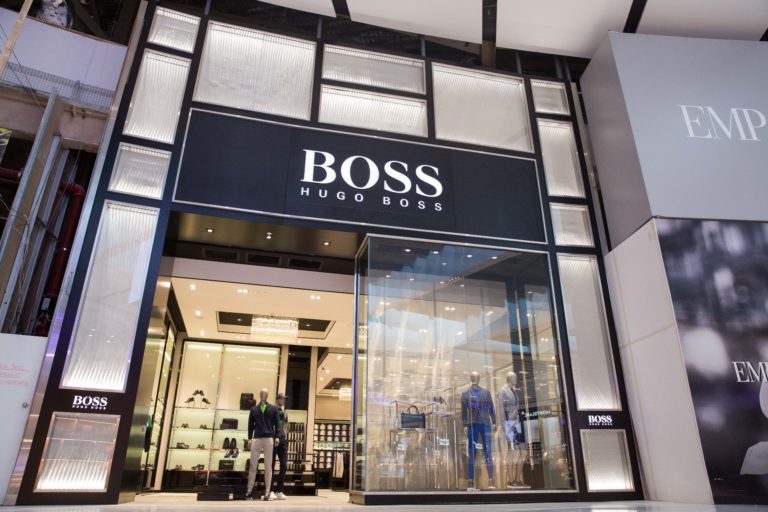
    Spanning two stories, the Hugo Boss Japan flagship occupies 480sqm of the Tokyu Plaza Ginza shopping centre. The store features a giant glass facade where a digital wall is installed to showcase campaign videos and content.

    Meanwhile, the store interior design follows a white, black, and beige colour palette, using materials such as marble, wood and chrome. While the first floor houses men’s and women’s apparel, accessories, and fragrances, the second floor features a personalization space called ‘Made to Measure’, where customers can enjoy tailoring services.

    Marking the launch, the Hugo Boss Japan flagship store also houses a limited-edition capsule collection and a corner offering limited items with HB-Moji graphics, including hoodies, T-shirts, shorts, and caps.

  • Singapore retail sales still running below pre-Covid times

    Singapore retail sales still running below pre-Covid times

    Singapore retail sales (excluding motor vehicles) increased 61.7 percent in May, but the figure was skewed significantly by the low base of the previous year when Covid-related movement orders effectively shut the offline retail sector down for a whole month.

    Of the total estimated retail sales in May of about SG$2.8 billion, excluding motor vehicles, online sales accounted for about 16.1 percent.

    The largest online categories were computer and telecommunications equipment where e-commerce accounted for 54.4 percent of total sales; furniture and household equipment (30.7 percent) and supermarkets and hypermarkets (12.1 percent).

    May’s overall sales increase followed a 39.2-per-cent rise in April – however, Statistics Singapore says sales continue to track at lower levels than before the outbreak of Covid.

  • Rivian’s Amazon Delivery Vans Hitting Mass Production

    Rivian’s Amazon Delivery Vans Hitting Mass Production

    Rivian is one of the hottest EV startups doing the rounds. It has deep pockets thanks to investments from Ford, Amazon, and many venture capital firms. Amazon’s investment in Rivian originally was $700 million which entailed the startup producing 100,000 electric delivery trucks. It was supposed to be delivering the first tranche of 10,000 vehicles by the end of 2022.

    Looks like Rivian is right on track with achieving the same. Its vehicles have already been popping up in cities like San Francisco, Denver, and Oklahoma – but these were prototype vehicles that were doing real-world testing.

    Rivian CEO and co-founder RJ Scaringe has posted a photo of eight Rivian vans which look identical to the one that Amazon has been teasing which even feature the “Powered By Rivian” signage. He also shared tweeted videos that showed the initial production process.

    A lot of it is not known about these vans as they have probably been customized and tailored for Amazon’s logistics. These vehicles are obviously different from the R1T and R1S vehicles which Rivian are going on sale soon in July and August.

    The R1T has been even showcased in the Apple TV+ original “the Long Way Up” and is expected to duel with the likes of the Tesla Cybertruck and the Ford F-150 Lightning.

  • H&M back to profit again, China sales hit by boycott

    H&M back to profit again, China sales hit by boycott

    Fashion retailer H&M’s global sales growth slowed in the second half of June and the Swedish company took a sales hit in China after its concerns over alleged human rights abuses in Xinjiang led to a social media-inspired boycott by shoppers.`
    The world’s second-largest fashion retailer aon Thursday reported a stronger-than-expected profit for its March-May quarter, after a loss in the same quarter last year.

    In China, sales were down 23% in local currencies when H&M was wiped off Tmall and domestic phone makers app stores in March after the retailer expressed concerns about the alleged Xinjiang human rights abuses.

    “With regards to China the situation remains complex. Beyond that we refer to what we have said before,” Chief Executive Helena Helmersson said, as H&M quantified for the first time the impact of the China boycott, which started on social media.

    H&M in late March said in a statement it was dedicated to regaining the trust of customers and partners China and that its commitment to the country remained strong.

    Helmersson said H&M was closely following the situation in Bangladesh – another main supplier – after a spike in coronavirus cases prompted the country to enforce a strict lockdown, although garment factories remain open.

    Group sales for June 1-28 were up a quarter year-on-year but 4% lower than in pre-pandemic 2019 as growth slowed from mid-June, highlighting a patchy recovery from the pandemic.

    Helmersson, speaking to analysts and reporters, attributed the easing in the second half of June to a combination of factors, including tough year-ago and 2019 comparisons, cold weather last week in some European markets, and how coronavirus restrictions were being eased.

    “We see signals of a strong recovery also in June, and that customers appreciate our collections,” she said.

    Analysts said the figures implied sales were down 9% on 2019 in the latter two weeks of June, and noted that rival Primark has also said trading was currently very volatile from week to week.

    “Recent weeks of trading highlight a mixed demand rebuild,” said Jefferies analyst James Grzinic.

    Quarterly pretax profit was 3.59 billion crowns ($419 million) against a year-earlier loss of 6.48 billion.

    “As more and more people are vaccinated and restrictions are eased, the world is gradually opening up and customers can once again visit our stores,” Helmersson said. “Online sales have continued to develop very well even as the stores have opened.”

    H&M said 95 of its 5,000 stores globally remained temporarily closed, against 1,300 at the start of March.

    Chief Financial Officer Adam Karlsson said the company was not unaffected by rising freight rates due to a global shipping backlog but it expected to mitigate them.

    H&M said prospects of paying a dividend for 2020 in the autumn were now very good after it failed to propose one at its annual general meeting in May.


  • Facebook, Google, Twitter considering quiting Hong Kong

    Facebook, Google, Twitter considering quiting Hong Kong

    US tech giants Facebook, Google, and Twitter have privately warned the Hong Kong government that they could stop offering their services in the city if authorities proceed with planned changes to data protection laws, the Wall Street Journal reported on Monday, citing a letter.

    The laws could make the tech companies liable for the malicious sharing of individuals’ information online, the newspaper added.

    A letter sent by an industry group that includes the internet firms said companies are concerned that the planned rules to address “doxing” could put their staff at risk of criminal investigations or prosecutions related to what the firms’ users post online, Journal reported.

    Doxing is an act of revealing people’s personal information such as real name, home address or workplace online without the user’s permission.

    Facebook, Google, and Twitter did not immediately respond to Reuters’ requests for comment.

    Hong Kong’s Constitutional and Mainland Affairs Bureau in May proposed amendments to the city’s data-protection laws that it said were needed to combat doxing, a practice that was prevalent during 2019 protests in the city, the newspaper said.

    According to the newspaper, the letter dated June 25 was sent by the Singapore-based Asia Internet Coalition.

    “The only way to avoid these sanctions for technology companies would be to refrain from investing and offering the services in Hong Kong,” the Journal reported, quoting the letter.

  • Demand for luxury goods increased despite higher retail prices

    Demand for luxury goods increased despite higher retail prices

    Demand for luxury goods is continuing to grow in South Korea, despite price hikes and the Covid-19 pandemic.

    Chanel, a high-end fashion house, has already raised prices in the market twice this year.

    The French luxury brand raised the price of the Classic Flap Bag Medium from 8.64 million won (US$7,600) to 9.71 million won, and the price of the Classic Flap Bag Large from 9.42 million won to 10.49 million won on Thursday. Prices of other products, including Boy Chanel, also rose by a similar rate.

    Despite the increases, customers are flocking to Chanel boutiques at department stores throughout the country, lining up ahead of opening hours.

    While some customers complain about a constant rise in prices, the popularity of luxury goods continues to grow.

    Between May 1 and June 29, sales of luxury goods at Lotte Department Store jumped by 37 percent compared to last year. Sales of luxury goods at Hyundai and Shinsegae Department Stores rose by 54.1 percent and 38.8 percent, respectively.

    “Prices increases for already expensive products give off the impression of rarity and something that only a few can afford, which eventually boosts demand,” said Lee Eun-hee, a consumer studies professor at Inha University.

    “Customers are willing to spend more to buy them.

    “Ownership of luxury goods is seen as a competition among many to demonstrate the ability of an individual, a means to justify discrimination among people,” Lee warned.

  • Investors warned about AI multilevel marketing schemes

    Investors warned about AI multilevel marketing schemes

    Multilevel marketing schemes (MLMs) calling for investment in artificial intelligence (AI) robots said to be capable of making money on their own are illegal, authorities have warned.

    The Vietnam Competition & Consumer Authority under the Ministry of Industry and Trade has put some AI robot related MLM websites and applications on a warning list, including snowai (snowaiapp.com, snowai.cc, snowai.net) and the inb.network (ai.marketing, and aimarketing).

    The websites claim that AI robots will conduct affiliate marketing on the Internet to advertise brands or carry out transactions on virtual and digital currency trading floors.

    Depending on investment packages involving AI robot rentals, investors can enjoy different kinds of commissions when orders are placed for branded products or transactions in virtual currencies are made. The income includes commission from investments made by subsequent investors in the multilevel marketing scheme.

    If investors pour money into such schemes, they face the risk of losing money because they have to hand in real money but their earnings are in virtual or digital money that are not officially recognized.

    The competition authority warned people not to invest in or develop AI robot related multilevel marketing schemes so as to avoid financial and legal losses.

    Doing business using the multilevel marketing mode without a license can fetch sentences of up to 5 years in prison under Vietnamese laws, the authority said.

  • ZA Adds Digital Asset Capabilities

    ZA Adds Digital Asset Capabilities

    ZA International has established a partnership with BC Technology Group which operates the city’s only licensed digital asset platform. ZA International and BC Technology Group have entered into a mutual collaboration agreement, according to a statement. ZA will use BC Technology Group as its exclusive digital asset trading partner via its Hong Kong-licensed digital asset platform OSL.

    On the other hand, BC Technology will leverage ZA’s tech capabilities in areas such as facial recognition and machine learning to enhance user experience on its trading platform.

    Both ZA and OSL remain in growth mode with the former reportedly considering the acquisition of Hong Kong’s largest non-bank lender late last year and the latter recently making a series of global hires.

    The digital asset industry presents a thriving future, and fintech companies are well-positioned to promote the universal application of digital assets in Hong Kong through capitalizing on their technological advantages, said ZA International president Wayne Xu.

  • Coupang faces probe into unfair trade practices

    Coupang faces probe into unfair trade practices

    After stoking a series of controversies, including a fire at a logistics centre and poor working conditions, South Korean e-commerce giant Coupang is now facing a government investigation into alleged unfair trading practices.

    The Korea Fair Trade Commission (KFTC) recently noted that Coupang might have violated the Fair Trade Law and carried out a field investigation at Coupang’s headquarters in Songpa-gu in Seoul late last month.

    Coupang has allegedly manipulated its search algorithm to make its private-label products more visible than the products of other suppliers.

    The company manipulated the algorithm towards prioritizing and placing its private-label products at the top of the search results while placing other products at the bottom.

    The antitrust regulator is also investigating whether Coupang conducted ‘gapjil’ against suppliers. Gapjil is a Korean term referring to power harassment and abuse of power.

    Coupang has allegedly required suppliers to offer their products at the lowest price and penalized those who refused to supply their products at a lower price than the supply price for other platforms.

    In the field investigation, the KFTC checked the allegations that Coupang forced suppliers to purchase advertising space and excluded those who refused to do so from various benefits, including the company’s rocket delivery service.

    Another allegation was that Coupang unfairly returned products to suppliers.

  • New patch for Google Maps on CarPlay addresses annoying issue

    New patch for Google Maps on CarPlay addresses annoying issue

    If you own an iOS device and use any Google apps on it, you are probably no stranger to them being less optimized and maintained than their Android counterparts. One of the more recent cases was a particular bug in the Google Maps app where your chosen route would not show up on the screen when using CarPlay.

    The issue was first spotted during February this year in Google Maps for Android Auto. Many users reported that the blue line highlighting their chosen route had disappeared. The only indicators that remained were the guiding white arrows and the audio.

    Thankfully, the search giant acted somewhat quickly, and after a few weeks, the issue was resolved for Android Auto users. However, almost as an infectious disease in the code, the problem migrated to the CarPlay app for iPhone.

    In the middle of June, Google released patch 5.71 for Maps on CarPlay, partially taking care of the missing blue line issue. Now with patch 5.72, the problem seems to have disappeared entirely. This statement comes purely from users’ feedback, as Google has made no official comment on it.

    Apart from the missing blue line, some had also been reporting inconsistency in the GPS tracking of the app. Simply put, Maps would randomly stop following your location, almost as if it gave up. With the latest update, this issue looks to have gotten resolved, and the app no longer loses the person’s location.

    For those of you out there who are not sure which version of Google Maps you have, here’s how you can find out:

    1. Open Google Maps
    2. Tap on your profile at the top right
    3. Select Settings
    4. Tap on About, terms and privacy
    If you don’t yet have the latest update, just tap on the option in the App Store to manually search for it.
  • A2 milk taking controlling stake in Mataura Valley Milk

    A2 milk taking controlling stake in Mataura Valley Milk

    A2 Milk’s NZ$270 million bid for New Zealand-based Mataura Valley Milk has been given the green light by the country’s Overseas Investment Office.

    The decision clears the way for a2 to pick up a 75 percent interest in the dairy nutrition business, which is now set to occur at the end of July.

    According to the business, the acquisition “provides the opportunity to participate in nutritional products manufacturing, provides supplier and geographic diversification, and strengthens our relationship with key partners in China.”

    “As previously announced, due to the increasing scale of our infant nutrition business, we have been assessing participation in manufacturing capacity and capability,” said A2 Milk Company CEO Geoff Babidge said last year.

    “Our intention would be to invest further to establish blending and canning capacity at Mataura’s facility to support the establishment of a fully integrated manufacturing plant for infant nutrition.”

    A key part of the investment is that Mataura Valley Milk’s current majority shareholder, China Animal Husbandry Group, will retain its 25 percent interest in the business alongside a2’s 75 percent interest.

    China Animal Husbandry Group is the parent company to a2’s strategic logistics and distribution partner in China, CSFA Holdings Shanghai, allowing closer cooperation between the two firms.

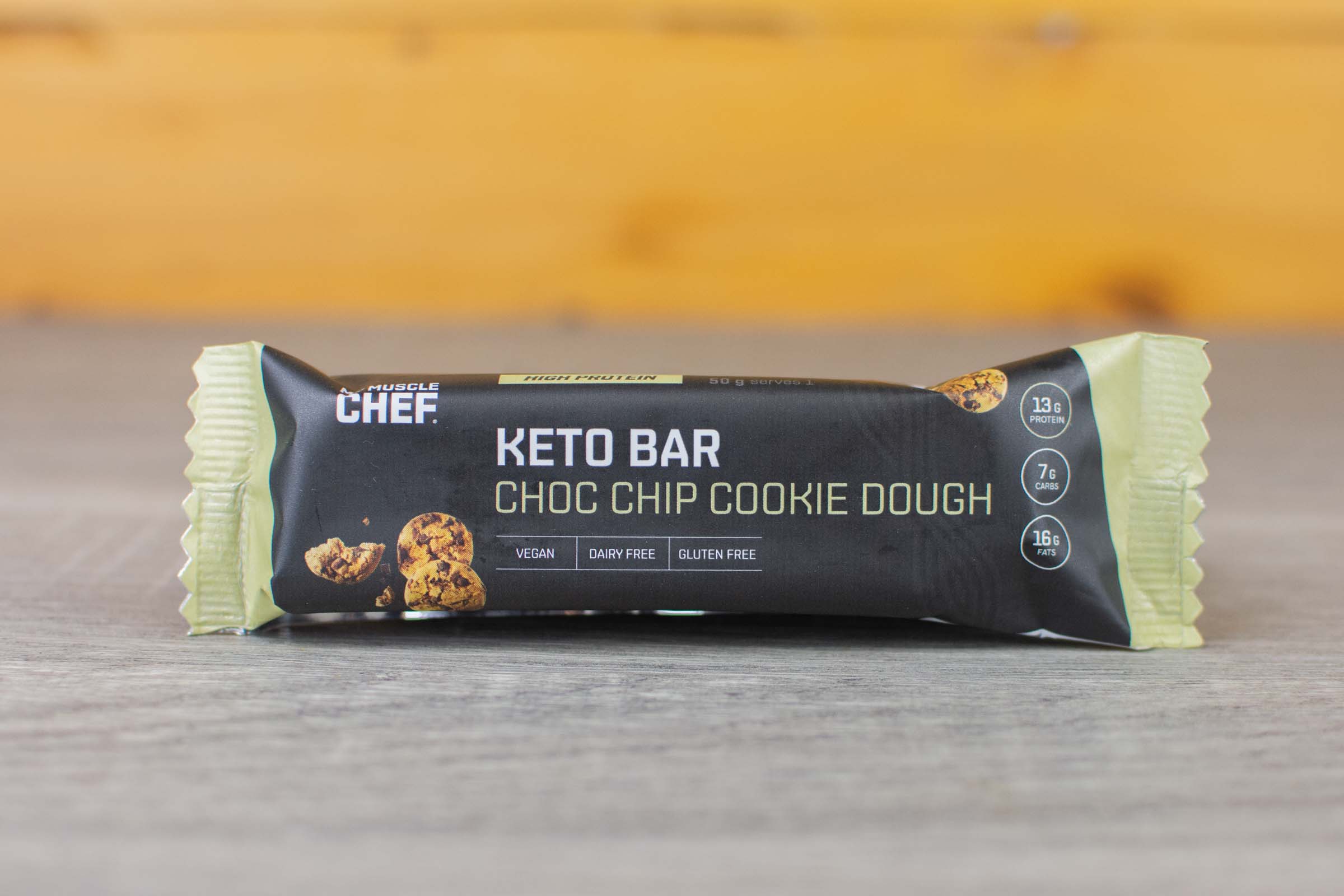
  • My Muscle Chef launches protein cookies

    My Muscle Chef launches protein cookies

    Functional food and beverage company My Muscle Chef has rolled out a new range of protein cookies to help people struggling to hit their protein cookies.

    Macro – short for macronutrients – makes up a food composition in our bodies: fats, carbohydrates, and protein. People who are conscious of their nutrient intake count macros to reach a specific body composition goal.

    Available in three different flavors – Salted Caramel and Macadamia, Choc Chip, and Triple Choc – the new protein cookies are a great choice as an on-the-go snack to top up protein intake while satisfying sweet cravings, said the company.

    “Our new Protein Cookies are a great addition to MYMC’s range of functional, healthy foods and are a great way for our customers to support muscle strength and fuel their recovery,” said Tushar Menon, co-founder, My Muscle Chef.

    Each cookie has 25g of whey protein, nuts, and prebiotic fiber. It also has no added sugars or preservatives and does not use artificial flavors or colors.

    Alex Adcock, head of sales at My Muscle Chef, says most protein snacks on the market are bars and the company has identified an opportunity to offer a more indulgent way for customers to hit their protein goals.

    “With 98 percent of recovery snacks in the market currently being bars, we’ve identified an opportunity for our cookies to meet MYMC’s customers needs perfectly complementing our existing high protein and on-the-go range our customers know and love,“ said Adcock.

    In addition to the Protein Cookies, the company has also launched Custard Protein Bars, and Custard Casein Protein Powder in its range of protein supplements.

    My Muscle Chef Protein Cookies are available online and in select retail stores for RRP $4.50 per cookie.