Author: Mei Ling Tan

  • New high-end apartment supply up 120 pct

    New high-end apartment supply up 120 pct

    In the first six months, 7,040 new high-end housing units were launched in HCMC, up 123 percent year-on-year, accounting for 59 percent of new supply.

    Mid-range supply rose 295 percent to 4,908 units, accounting for 49 percent of new supply, while no new affordable unit was launched, according to a report by the Ho Chi Minh City Department of Construction.

    This shows an imbalance in the HCMC real estate market where developers focus on the high-profit, high-end and luxury market while ignoring the affordable segment, boasting strong demand.

    The HCMC Real Estate Association (HoREA) predicts the imbalance would cause negative consequences in housing security.

    HCMC plans to increase its residential area per capita to 21.04 square meters by the end of the year, up nearly 2 percent from now. To do this, it needs an additional eight million square meters.

  • Apple now allows the App Store to host apps for firms that deliver weed

    Apple now allows the App Store to host apps for firms that deliver weed

    Apple has decided to change its mind and is now allowing apps for marijuana delivery services to be listed in the App Store. Apple made the change last month and the tech giant says that apps related to the consumption of marijuana are restricted to areas where cannabis is lega. In addition, they must be submitted to the App Store “by a legal entity that provides the services, and not by an individual developer.”

    Apple’s original policy said “Apps that encourage consumption of tobacco and vape products, illegal drugs, or excessive amounts of alcohol are not permitted on the App Store. Apps that encourage minors to consume any of these substances will be rejeacted. Facilitating the sale of controlled substances (except for licensed pharmacies), marijuana, or tobacco is not allowed.”

    But on June 7th, Apple changed the policy to read, “Apps that encourage consumption of tobacco and vape products, illegal drugs, or excessive amounts of alcohol are not permitted on the App Store. Apps that encourage minors to consume any of these substances will be rejected. Facilitating the sale of controlled substances (except for licensed pharmacies and licensed or otherwise legal cannabis dispensaries), or tobacco is not allowed.”

    While Apple appears to be more open to the changing policies in the U.S. regarding weed, Google is not. The latter updated its policy in 2019 to prohibit the listing of any app that connects Play Store users with marijuana even if it is legal in the jurisdiction where the user lives. Google says that some examples of violations would be “allowing users to order marijuana through an in-app shopping cart feature” or “assisting users in arranging the delivery or pick up of marijuana.”

    Google also says that “facilitating the sale of products containing THC (Tetrahydrocannabinol), including products such as CBD oils containing THC” is against its policies. So what changed Apple’s policies toward allowing marijuana services apps in the App Store? According to Chris Vaughn, CEO of the California delivery service Emjay, the recent legalization movements in states like New York along with Amazon’s decision to stop testing workers for the substance led Apple to change its mind. Vaughn believes that Google will choose to join Apple and update its policies in favor of listing Pot delivery apps in the Play Store rather quickly.

  • Volkswagen Polo GTI Facelift Unveiled

    Volkswagen Polo GTI Facelift Unveiled

    Now before getting into the details of the new Volkswagen GTI facelift, let us tell you how these official pictures of the 2021 model year surfaced online. So we actually don’t know whether it is one of Volkswagen’s marketing strategies, or Ralf Brandstatter – CEO, Volkswagen Passenger Cars got so excited by looking at these official pictures of this new hot hatch, that he couldn’t help sharing them on his linked in profile. Yes! This is how the range-topping 2021 Volkswagen Polo GTI was unveiled, almost two years after the global debut of the line-up.

    In terms of design, the new GTI gives you exactly what you expect of a facelift as the changes remain subtle and it’s a predictable evolution if you will. It gets fully redesigned headlights along with the slim DRLs extending to the new grille, just like the Golf GTI. Then, there are wider taillights and the overall design has been spruced up with the usual red accents, dual exhaust tips, and a honeycomb grille. It also sports chunkier two-tone alloy wheels with upgraded brakes featuring red calipers and other sporty elements include contrasting black mirrors and roof.

    On the inside, it gets VW’s Discover Pro and Discover Media systems as optional, and the car also receives Volkswagen’s new ‘digital cockpit’ dashboard setup, as used by the Golf and ID 3. Other elements include a 9.0-inch touchscreen unit, panoramic sunroof, voice control, wireless charging, Beats sound system, and 18-inch alloy wheels. In the safety department, the new Polo gets Volkswagen’s Travel Assist system for the first time, which includes adaptive cruise control, lane assist, side assist and rear traffic alert. Autonomous emergency braking is also standard, as is a driver alert system and automatic post-collision braking.

    The new Polo GTI also comes with three driving modes – Eco, Normal and Sport with the last one tuned for enhanced exhaust note. The Polo GTI also gets a bespoke, performance-oriented chassis tune, lowering the body by 15 mm compared with the standard Polo and adding a large stabilizer on the car’s front axle, rigid coupling rods at the front and stiffer axle-locating mounts at the rear. Now Brandstatter is promising a powerful TSI engine under its hood, but mechanical details are not confirmed yet. We expect it to feature the same 2.0-litre, four-cylinder Turbo TSI motor tuned for optimum performance and it should come with the options of both six-speed manual and DSG transmission. Talking about the India context, the new Volkswagen Polo GTI is based on the sixth-generation Polo and both models are not likely to join VW India’s line-up anytime soon.

  • Energica Unveils Liquid-Cooled Electric Motor

    Energica Unveils Liquid-Cooled Electric Motor

    Italian electric motorcycle manufacturer Energica has joined hands with Italian engineering company Mavel, to co-design a new liquid-cooled electric motor that will be used in Energica’s upcoming electric motorcycle range. Called the EMCE (Energica Mavel Co-Engineering), the new liquid-cooled powertrain increases peak power to 126 kW (169 bhp), compared to the outgoing unit’s figures of 110 kW (147 bhp). The motor also offers an increased range by 5-10 percent, while decreases overall weight by as much as 10 kg. The new motor will be used in the firm’s electric motorcycle models for the 2022 model year.

    “The introduction on the market of the new EMCE engine was scheduled for release in 2022, but following the difficulties of our supply chain – due to the global pandemic situation – we decided to anticipate this timing and instead, in just 6 months we have developed this co-engineering with Mavel, into our current model year production,” said Giampiero Testoni, CTO of Energica.

    According to Energica, the new motor features innovative rotor and stators’ geometries that minimize energy losses and maximize performance. The innovative and patented cooling of the rotor is capable of generating an internal flow of air that laps the magnets and cools them. This allows the engine to exploit its potential even at high speeds. According to Energica, the new EMCE powertrain will be introduced in electric motorcycles in Europe later this year, followed by the US, and then Asia. Energica however, doesn’t have a presence in India yet.

  • Vivo files a patent application for a detachable flying smartphone camera

    Vivo files a patent application for a detachable flying smartphone camera

    Vivo has filed a patent for a flying smartphone camera. You read that right, the camera disconnects from the phone and takes to the air to provide the user with unusual photo opportunities to take snapshots and video from. The camera module features four propellers, two dual cameras, three infrared proximity sensors and an extra battery.
    While in flight, the proximity sensors are used to prevent the flying camera module from crashing into other items that have escaped gravity by calculating the distance from a possible hazard to prevent mid-air collisions. Once in the air, the “flight camera” will be able to change positions and we expect to see one camera at the front of the module with another at the top.
    The patent application was filed with the World Intellectual Property Organization (WIPO) and while camera drones are not new, Vivo is the first manufacturer to have a flying camera drone fit into the body of a smartphone. But there is a caveat. To make the camera module fit inside a phone, it has to be made smaller and lighter which means that it can be blown off track because of the wind which can also make images appear shaky.
    The vast majority of smartphone innovations have been coming from Chinese-based smartphone brands. But keep in mind that just because Vivo seeks to patent a flying camera for a smartphone, that doesn’t mean that such a product is coming soon.
  • HSBC Names Malaysia Head of Wealth and Personal Banking

    HSBC Names Malaysia Head of Wealth and Personal Banking

    HSBC has appointed a successor for the role of wealth and personal banking head in Malaysia after it was left vacant for three months.

    HSBC named Renee Bullock-Cann as head of wealth and personal banking (WPB) in Malaysia, according to a statement, succeeding Tara Latini who was named head of WPB in the U.S. in April.

    Bullock-Cann reports to HSBC Malaysia chief executive Stuart Milne and APAC regional head of wealth and personal banking Greg Hinston.

    Bullock-Cann was most recently the head of distribution for WPB in Malaysia after relocating to the country in 2019. Previously, she was head of WPB for HSBC Bermuda.

    According to HSBC, Malaysia is a priority market for the bank which has made various investments including $18 million from 2018 to 2020 to improve branches and client experience; $40 million from 2021 to 2023 to add tech capabilities to branches; the creation of 200 new roles; and the roll-out of various digital services.

    Our ambition is simple: we want to be the bank that Malaysians turn to for their international needs, Milne said.

    We will leverage our unparalleled international network, enhance our range of wealth solutions and focus on building our digital capabilities including our mobile functionality, our in-branch technology, and our people’s digital skills.

  • Aromatica converts Korean store into zero-waste space

    Aromatica converts Korean store into zero-waste space

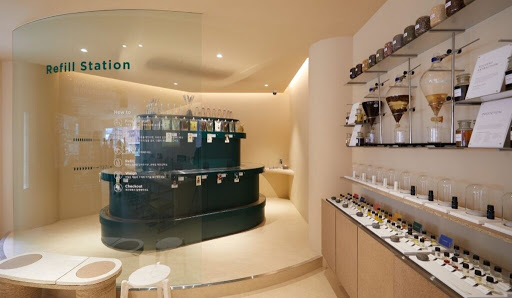
    South Korean sustainable beauty brand Aromatica has introduced its zero-waste beauty refill space, Aromatica Zero Station, in Seoul.

    Aromatica said the space is a combination of retail, refill station, aromatherapy, recycling, and upcycling centre – and features a tea house.

    Aromatica Zero Station features 18 products, including rosemary shampoo, aloe vera gel, conditioner, body oil, and toner. All products are organic, vegan, and directly produced at Aromatica’s eco-friendly smart factory in Osan, Gyeonggi-do. Consumers can buy their post-consumer recycled plastic or glass bottle at the store or bring their own.

    Aromatica Zero Station has an ‘Aromatherapy Zone’ where customers can try a range of natural and organic raw materials and essential oils used in its products. It also displays the traditional method of extracting oils from each raw material – leaves, stems, trees, and roots.

    The tea house offers 11 tea drinks, including Rosemary Mint Green Tea, Jasmine White Tea, Milky Oolong Tea, and Hibiscus Kombucha. Take-out beverages are only available in tumblers – there are no single-use plastics.

    Meanwhile, the recycling space helps visitors learn to separate, recycle and dispose of their empty containers properly according to the material.

    Aromatica is not the first beauty brand to roll out the beauty refill station concept in South Korea. Last October, Amorepacific launched its first refill station in a key area in ‘Amore Store Gwanggyo’, selling the shampoo and body wash by volume.

  • Korean court orders Netflix to pay for network usage

    Korean court orders Netflix to pay for network usage

    Netflix has been ordered by a Seoul court to pay network usage fees to mobile carriers. This decision was reached after Netflix brought SK Broadband, the internet protocol subsidiary of SK Telecom to court, following a complaint filed against Netflix with the Korea Communications Commission in November 2019. Netflix had asked the court to review if the US-based over-the-top (OTT) content provider is obligated to pay for SK Broadband’s network usage.

    After the review, the court ruled in favor of SK Broadband citing: “According to the principle of freedom of contract, whether to conclude a contract and what price to pay is a matter to be decided through the negotiations of the concerned parties.”

    “Netflix is at least receiving network services, including management of the network quality, at a cost.”

    This ruling is seen as a precursor for OTT content providers to pay for bandwidth usage fees in South Korea as the principle of net neutrality is losing relevance amid growing streaming audience and traffic. This is likely to impact the strategy of other OTT content providers such as Disney+ and Amazon Prime who are also looking to penetrate the market.

    According to reports, Netflix accounted for 4.8% of all network traffic in South Korea in the last quarter of 2020. Last year, Netflix’s sales in South Korea reached US$356 million, while operating profits totaled US$7.54 million. Year-on-year revenues grew nearly threefold from the preceding year.

  • Canoo Reveals Renders Of Manufacturing Campus In Oklahoma, USA

    Canoo Reveals Renders Of Manufacturing Campus In Oklahoma, USA

    Canoo, the electric car startup which went public recently via a SPAC merger has shared renders of its manufacturing campus that will be built in Oklahoma. Canoo calls it the mega micro-factory and it is scheduled to be opened up in 2023. In the Tulsa region, it is expected to create more than 2000 jobs. Canoo recently lost both its co-founders, with one, Ulrich Kranz, who led the development of BMW’s i3 and i8 electric cars and then moved to Faraday Future has joined Apple. In fact, Canoo was of great interest to Apple with the company interested in its skateboard. But Apple being Apple wanted to acquire Canoo while the team at Canoo wanted to retain its independence.

    “Oklahoma has always been a pioneer in the energy industry, and this partnership with Canoo shows that our state is an innovation leader in electric vehicle technology,” said Governor Stitt.

    “We are thrilled to partner with Canoo and Chairman & CEO Tony Aquila to provide high-paying jobs for Oklahomans and position America as the global leader for vehicle manufacturing for decades to come,” he added.

    It is developing an all-purpose delivery van and a modular pickup truck. It has a 400-acre campus which will be Tulsa. In a tweet, Canoo shared a 55-second video showcasing the concept design of the campus that it will start building soon.

    As per the tweet, it is right now in a design phase and remains on track to be up by 2023. It expects the facility to be over 1 million square feet. It plans on beginning production and delivery of its first vehicles by Q4 2022 with the help of a third-party manufacturer.

    “We invested millions of dollars to find the right location for our manufacturing facility. We’re proud to be American-made and to bring more than 2,000 jobs to Oklahoma,” said Tony Aquila, Investor, Chairman & CEO, Canoo, Inc.

  • Sweaty Betty opens first Singapore store

    Sweaty Betty opens first Singapore store

    British activewear retailer Sweaty Betty has made its Singapore debut, more than two years after entering Asia.

    Located in the city’s Ion Orchard mall, Sweaty Betty Singapore offers a full range of its lifestyle and activewear, including Pride Collection and Halle Berry x Sweaty Betty Collection.

    The Singapore launch is part of Sweaty Betty’s plan to expand and strengthen its presence in the Asian market. The brand, often referred to as a rival to Canada’s Lululemon, first entered Asia in 2019 opening a store in Hong Kong’s IFC mall.

    Founded in Notting Hill, London in 1998 by Simon and Tamara Hill-Norton, Sweaty Betty is renowned for its bum-sculpting leggings, innovative prints, and technical high-performance fabrics.

    The retailer now operates more than 60 outlets, mostly across the UK and the US.

  • Logistics Company Cogos To Add 2500 EVs To Its Fleet Over Next 24 Months

    Logistics Company Cogos To Add 2500 EVs To Its Fleet Over Next 24 Months

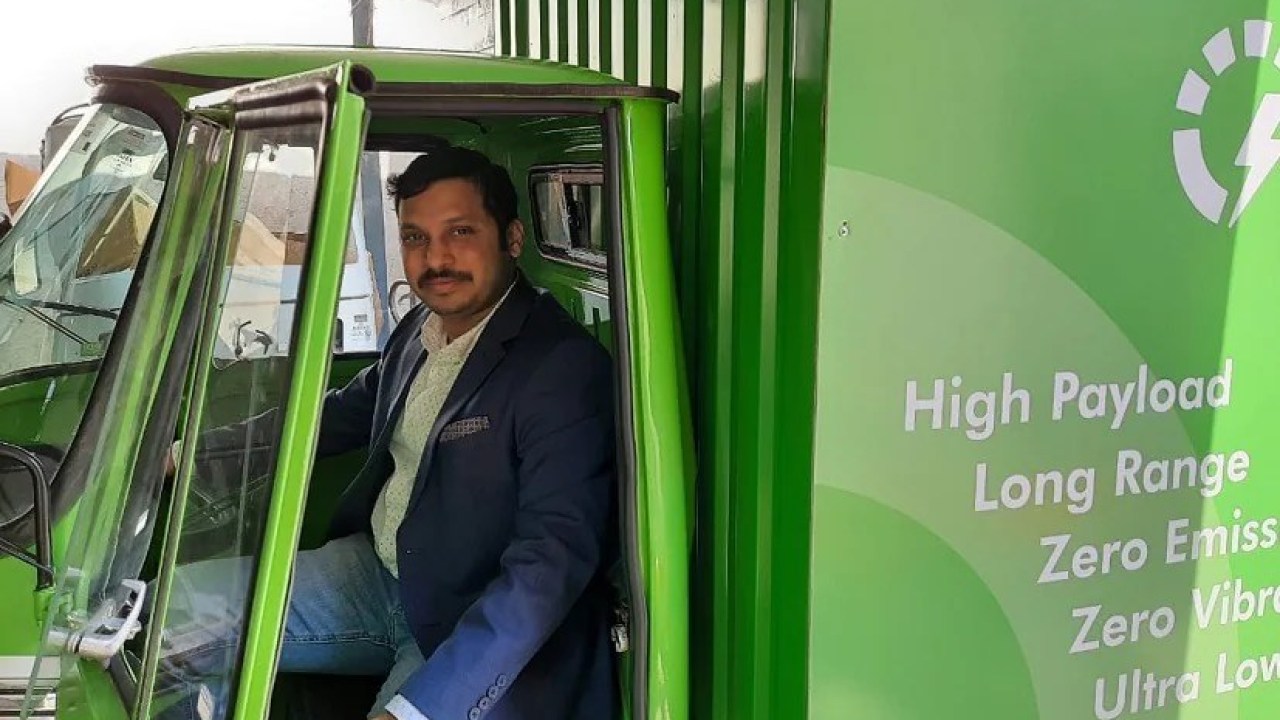
    Bengaluru-based logistics platform, Cogos, has announced that it will be adding 2500 electric vehicles (EV) to its delivery fleet across Bangalore, Hyderabad, Delhi, and Gujarat, and later in Maharashtra and Tamil Nadu. The company claims that it wants to reduce the carbon footprint of its fleet, and this move will help it achieve a reduction of 15000 tonnes of CO2 when running at full capacity, per year. The EVs will be added to the company’s fleet in a phased manner, over the next 24 months. Cogos has partnered with electric vehicle manufacturers like Altigreen, Mahindra, and Piaggio among others procure these EVs.

    Talking about the development, Prasad Sreeram, Co-founder and CEO, Cogos said, “It is important for us, as a logistics company, to focus not just on efficiency and cost, but also on sustainability. With this fleet augmentation of 2500 EVs, we are on track to achieve as much as 30 percent of our revenues from green technologies by 2023. We want to give customers a significant edge in efficient and responsible distribution and last-mile delivery solutions. EV is the future of mobility and city logistics have higher operating costs and lower traveling distances, hence are best suited for EV adoption for the logistics sector.”

    While currently, the company operates with three-wheeler commercial vehicles that have a payload capacity of 500 kgs, it is already working with the OEMs for four-wheeler EVs with a capacity of 1 tonne. The EVs will be used for the e-commerce, grocery, distribution, and mobility sector. Cognos has already entered into deployment agreements of 500+ vehicles for leading E-Com Enterprise and another 300+ with Food, FMCG, and Mobility enterprises.

    Cogos aims to strengthen the ecosystem by promoting EV ownership and creating a pool of fleet-owning entrepreneurs focused on sustainable growth. The company says that it will have a special focus on women empowerment through entrepreneurship and upskilling, along with evangelizing the benefits of EV to finance providers. To realize that, the company has entered into a tripartite agreement with the owner-operator and the financing entity, to support better financing for driver-partners. Cogos is also educating potential fleet owners on the benefits of EVs, like the fact that the cost of operating a commercial EV is only 50 paise per kilometer, which is multiple times lesser than fossil-fuel-based vehicles.

  • Vittoria Coffee launches first instant coffee in its 64-year history

    Vittoria Coffee launches first instant coffee in its 64-year history

    Vittoria has launched its first range of instant coffee since the company’s inception in 1947.

    The company says the new range capture the richness and balance of a traditionally prepared coffee in the convenience of an instant.

    Made from freeze-dried Arabica beans, Vitoria Instant Coffee is available in 100g jars or single-serve bags that roast in a 3-minute steep.

    The 100g instant coffee jar comes in four different blends – Original Classic, Italian, Latte, and Mountain Grown. While the single-serve coffee bag is available in four 20-serve bags in Espresso, Italian, Mountain Grown, and Long Black.

    “We set out to create new, easier coffee experiences for all our customers,” said Rolando Schirato, MD, Vittoria Coffee. “These new products deliver on the distinctive Vittoria taste and offer our customers the convenience to enjoy our legendary 100-per-cent Arabica blends”.

    Vittoria Instant Coffee is available in all Woolworths supermarkets nationwide.

  • Online marketplace YesAsia launching Hong Kong IPO

    Online marketplace YesAsia launching Hong Kong IPO

    Online marketplace YesAsia is set to raise US$17 million in an IPO launch in Hong Kong.

    The company aims to offer 39,540,00 new shares, 90 percent of which will be available for placing with institutional and professional investors while 10 percent will be available for subscription by the public in Hong Kong.

    Founded in 1988, YesAsia offers Asian fashion & lifestyle, beauty, and entertainment products to global customers. The company launched its key opinion leader initiative in 2018, and subsequently its YesStyle Influencer Program in 2019.

    Revenues generated from its influencer marketing initiatives accounted for 1.2 percent, 7.9 percent, and 17.4 percent of the total revenue of YesStyle for the three years ended last December, respectively.

    “We had been able to achieve above-industry revenue growth during the Track Record Period even in the midst of the Covid-19 pandemic, mainly due to our continuous effort in strengthening our marketing strategy to support customer retention and acquisition as well as long-term ecosystem development,” said Lau Kwok Chu, founder and executive director and CEO at YesAsia.

  • L’Occitane posts record profit as China becomes its largest market

    L’Occitane posts record profit as China becomes its largest market

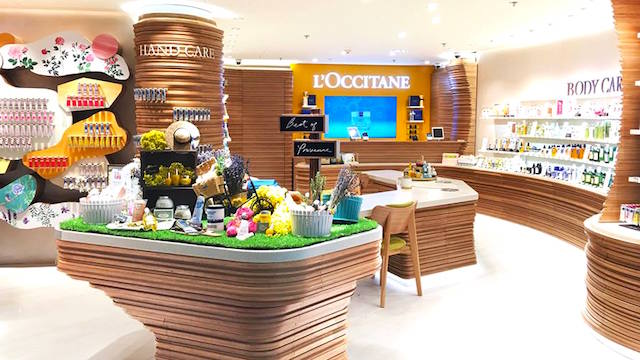
    Beauty products retailer L’Occitane International has reported sales and profit beyond expectation after successfully adapting to the challenges of selling products during a global pandemic.

    Despite the Covid crisis, like-for-like net sales of US$1.83 billion were down just 1.1 percent against the previous year, but net profit grew by 36.3 percent to a record $187 million, representing 10.2 percent of net sales.

    China is now the company’s largest market, with year-on-year growth of 36 percent.

    The overall performance was largely driven by a strong focus on online sales in the absence of travel retail business and long periods of physical store closures – more than 75 percent of the company’s outlets were closed at the peak of the pandemic. Global e-commerce turnover soared 69.2 percent and accounted for more than one-third of overall sales.

    Social selling was a key component of the online push, with 68 projects in Europe alone, including personal shopping concierge services, live streaming, and online consultation services.

    “Thanks to the group’s agility and adaptability in a socially distant world, the strong sales recovery in the second half of the year helped recover most of the ground lost earlier in the year, resulting in only a slight sales decline,” said chairman Reinold Geiger in a Hong Kong stock exchange filing.

    “Importantly, the group made tremendous progress in expanding its bottom line – recording an operating margin of 14.3 percent with contribution from its online channels, excellent performance in key markets in Asia, strong results from its newer brands, as well as greater operational efficiency.”

    He put the strong performance down to the group adhering to five pillars of its strategy to build trust, sustainable growth and profitability: empowering teams; executing fundamentals, especially in a retail context; adopting an omnichannel, mobile and digital approach; engaging customers; and strengthening brand commitments.

    Geiger said China was undisputedly the group’s best-performing market, coinciding with it being among the first to emerge from Covid-19. During the fourth quarter, L’Occitane International’s China sales grew by more than 50 percent, boosted by successful Chinese New Year and Women’s Day promotional campaigns, as well as a low base the previous year. Physical roadshows during Chinese New Year encouraged product sampling and conversion.

    Meanwhile, Geiger says two major restructuring activities will help the business achieve greater efficiency in future years.

    Last October, the company announced a reorganization that led to the loss of some 300 positions globally from its 9000-strong workforce, mostly at corporate offices. And in January, its US subsidiary, L’Occitane, Inc, commenced voluntary Chapter 11 bankruptcy protection in order to accelerate its store rationalization process. By the end of March, 25 underperforming US stores were closed. The Chapter 11 process is expected to achieve savings of up to $12 million annually for the next four to five years.