Author: Mei Ling Tan

  • Alibaba betting big on Vietnam e-commerce potential

    Alibaba betting big on Vietnam e-commerce potential

    Fast increasing online groceries demand and the high growth potential of Vietnamese e-commerce market are factors driving Chinese giant Alibaba’s investment in Vietnam.

    A consortium led by the Chinese e-commerce giant invested $400 million in The CrownX, a subsidiary of conglomerate Masan Group that operates retail chain WinMart.

    The investment was seen as a chance for Lazada, Alibaba’s e-commerce platform, to create a business relationship with WinMart for the online groceries business, Singapore-based technology media company Tech in Asia said.

    Kenny Ho, Head of Investment for Southeast Asia at Alibaba, said the combination of Alibaba’s online retail expertise, Lazada’s e-commerce platform in Vietnam and Masan’s leading offline network will be a strong catalyst for modernizing Vietnam’s retail landscape.

    WinMart will become the preferred grocery retailer on Lazada, while its outlets will be used as pick-up points for online orders, Ho said.

    The investment by Alibaba indicates that the company is tapping into a pandemic-fueled growth in the demand for online groceries, Tech in Asia reported.

    The pandemic has elevated groceries into the hottest e-commerce vertical. Vietnamese consumers who have tried online grocery shopping have doubled in 2020, according to a report from Google, Temasek, and Bain & Company, with over 75 percent indicating they would continue the practice even after the pandemic has subsided.

    Another reason for Alibaba’s investment in Vietnam is its high growth potential. The nation’s e-commerce market expanded by 18 percent last year to $11.8 billion, the only country in Southeast Asia to record double-digit growth amid the pandemic, according to the Vietnam e-Commerce and Digital Economy Agency.

    A report by market research company Global Data’s E-Commerce Analytics said Vietnam’s e-commerce is likely to see compounded annual growth of 18.8 percent between 2020 and 2024, with the value rising to $26.1 billion.

    Vietnam has a stable growth economy, which grew by 2.9 percent last year despite the Covid-19 pandemic. The number of middle-class households in the country is expected to reach 17 million by 2030.

  • 7-Eleven will invest $15m+ in Far North Queensland

    7-Eleven will invest $15m+ in Far North Queensland

    7-Eleven is investing in Far North Queensland for the first time, with about 15 stores expected to open in the region over the next two years.

    General manager – channel, Braeden Lord, said exact locations have not yet been chosen.

    “We are continuing to work with landlords and developers to identify opportunities to secure the right sites to meet the needs of the community.

    “We’re starting in Townsville and Cairns and will be continuing to explore the region which we feel has a huge potential for growth.”

    The convenience store chain is committed to opening stores in Townsville and Cairns before June 2022 and Lord is expecting swift expansion across the region by 2023.

    He said the company’s $15 million+ investment will help drive economic growth in Far North Queensland.

    “Recent investments in our supply chain have made it possible for us to bring our offer to Townsville and Cairns and we are incredibly excited about the chance to serve the local communities in Far North Queensland.

    “7-Eleven is committed to providing regional Australians with access to the same level of choice and convenience that is available to people who live in metropolitan areas,” he said.

    The significant investment in the region brings fresh employment opportunities, with more than 200 full-time jobs expected during the building phase and a further 150 local jobs created for ongoing store operations.

    “There will be a number of leadership positions available, and we hope to have Townsville and Cairns locals join us as leaders,” said Lord.

    Each convenience store will need up to 15 team members in a mix of full-time, part-time and casual roles.

    “We provide extensive training to ensure people are set up for success on opening day so previous experience  , petrol and retail isn’t a requirement.”

    7-Eleven generally operates new stores as corporate retail outlets for at least a year before opening them up to franchising.

    Within the last 12 months 7-Eleven has continued to roll out stores including additional outlets in New South Wales and Victoria.

  • Snapchat brings its AR Lenses to Viber on Android and iOS

    Snapchat brings its AR Lenses to Viber on Android and iOS

    Viber and Snap have teamed up to bring the latter’s new AR Lenses to the messaging platform. The partnership will integrate AR Lenses in the Viber app, enable sharing to Snapchat, as well as bring customizable Bitmoji avatars to the messaging app.

    The new feature will offer Viber users AR-enabled video messaging for the first time ever. In addition to bringing AR Lenses to its app, Viber also launched 30 new lenses, including animal masks and characters, an underwater lens, goofy cat interactions, and more.

    At least 20 additional lenses are supposed to be launched every quarter, while businesses will get the chance to create their own exclusive lenses on Viber. Speaking of businesses, Viber has already revealed that FC Barcelona, the World Wildlife Federation, and the World Health Organization will be among its first partners to offer new lenses on the messaging app.

    The adoption of Snap’s Camera Kit, Bitmoji, and Creative Kit will allow Viber to add new features to its messaging app, including instant AR (augmented reality), new filters, expressive masks, beautification features, and customized Bitmoji.

    Viber also plans to offer sponsored and branded lenses to ensure a stable revenue stream. According to Viber, the new features are now available for iOS users in the following countries: Australia, Austria, Belgium, Canada, Denmark, England, Finland, France, Germany, Greenland, Iceland, Ireland, Israel, Italy, Japan, Liechtenstein, Luxembourg, Maldives, Netherlands, Norway, Portugal, Spain, Sweden, Switzerland, and the USA.

    The AR Lenses are only available on the beta version of Viber for Android, but the company promised to make these new features available to all Android users by the end of August. The same goes for Viber users in countries other than those mentioned above.

  • Fintech startup gets $2 mln seed funding from global investors

    Fintech startup gets $2 mln seed funding from global investors

    Vietnamese fintech startup Infina has raised $2 million in seed funding from five global venture capitalists.

    The investors are Japan’s Saison Capital, Indonesia’s Venturra Discovery, Singapore’s 1982 Ventures, the U.S.’s 500 Startups, and Korea’s Nextrans.

    Some Google and Netflix executives are also taking part in this round.

    The startup has developed an investment app called Infina that enables users to make term deposits, invest in certificates of deposit and exchange traded funds. Most users are between the ages of 25 to 40 and looking for alternatives to investing in long-term asset classes like real estate.

    The seed funding will be used to increase the number of users and diversify the investment portfolio, and hire experts to analyze customers’ risk preferences.

    It plans to expand into other countries in future, but for the time being is focused on the Vietnamese market.

    The company said that around 500,000 securities trading accounts were opened in the first five months of 2021, a 20 percent year-on-year increase, according to the Vietnam Securities Depository.

    This along with Vietnam’s high Internet penetration rate, which was at around 70 percent as of January, and the fact that more than three-fourths of Internet users have used online financial services before, enable apps like Infina to gain traction.

    Infina was launched in January 2021 by James Vuong, who used to be an engineer in the U.S.’s Silicon Valley before returning to Vietnam to serve as vice president of investment at Vietnam’s first venture capital fund IDG Ventures.

    Vuong said many Internet users began using digital services, including for investments, with the interest rate cuts by the central bank to help businesses cope with Covid-19 prompting many investors to look for alternatives with higher returns than bank deposits.

  • Maybank CFO to Head Malaysia Sovereign Wealth Fund

    Maybank CFO to Head Malaysia Sovereign Wealth Fund

    He takes over from Shahril Ridzuan who will be departing to pursue his personal interests.

    Malaysia’s Khazanah Nasional has appointed veteran banker Amirul Feisal Wan Zahir as managing director, effective 16 July, it said in a statement on Tuesday.

    Zahir, 51, began his career at auditing firm KPMG and later joined Citi in the Kuala Lumpur, Singapore and Hong Kong offices until 2004. He joined Maybank in 2008 as head of investment banking but left two years later for government fund manager Permodalan Nasional as executive vice-president of special projects. He rejoined Maybank in 2014 as group head of global banking and was made CFO in 2016.

    Kazanah’s portfolio includes a commercial fund, with a realisable asset value (RAV) of 95.3 billion ringgit ($22.94 billion), and a strategic fund with a RAV of 27.9 billion ringgit ($6.72 billion), as of end-2020.

  • EU Extends Investigation Into Samsung’s EV Battery Plant In Hungary

    EU Extends Investigation Into Samsung’s EV Battery Plant In Hungary

    EU competition enforcers have extended a near two-year investigation into Hungarian state aid for South Korean manufacturer Samsung SDI Co Ltd’s electric vehicle (EV) battery factory after Hungary submitted new data to back its case.

    Samsung SDI, an affiliate of South Korean tech giant Samsung Electronics Co Ltd, began production at the Hungarian plant in 2018, making batteries for 50,000 EVs a year.

    The European Commission opened an investigation in October 2019 to assess whether Hungary’s plans to grant 108 million euros ($128.5 million) in state aid complied with the bloc’s competition rules.

    “Hungary now argues that Samsung could have benefited from an investment grant and a tax exemption in an alternative location outside the EU, which would have increased the viability of the alternative location with respect to Hungary,” the Commission said.

    It said Budapest has also produced new documentary evidence to show that Samsung’s search for a location for the plant had also included a number of new production facilities in Europe and an alternative location in a less developed region in the EU.

    Extending the EU investigation will allow third parties to comment on the Hungarian aid.

    Earlier this year, Samsung said it would invest 942 billion won ($849 million) to expand the plant.

  • Samsung to launch another mid-range 5G smartphone in Europe

    Samsung to launch another mid-range 5G smartphone in Europe

    After Galaxy A52 and A72, Samsung plans to launch yet another mid-range smartphone in Europe, which is supposed to bring 5G to the masses. The unannounced phone is known as Galaxy M52 and it’s likely to be cheaper than the other two Galaxy A series phones.

    Based on a benchmark spotted by GalaxyClub, the upcoming Galaxy M52 will be equipped with Qualcomm’s Snapdragon 778G processor. It’s the same chipset that will be used by Honor inside its 50 series, so it’s bound to be good enough for a mid-range phone.

    Apart from its chipset, we also know that the Galaxy M52 will pack a 64-megapixel main camera, complemented by a secondary 32-megapixel camera in the front. There’s no info yet about the size of the display, but the phone is expected to feature a massive battery, just like the predecessor.

    It’s too early to talk about price, but it looks like information about color variants has already leaked, so we’re happy to let Samsung fans know that the Galaxy M52 will be available in at least three different colors: black, blue, and white.

  • Porsche Cayenne Turbo GT Breaks Cover

    Porsche Cayenne Turbo GT Breaks Cover

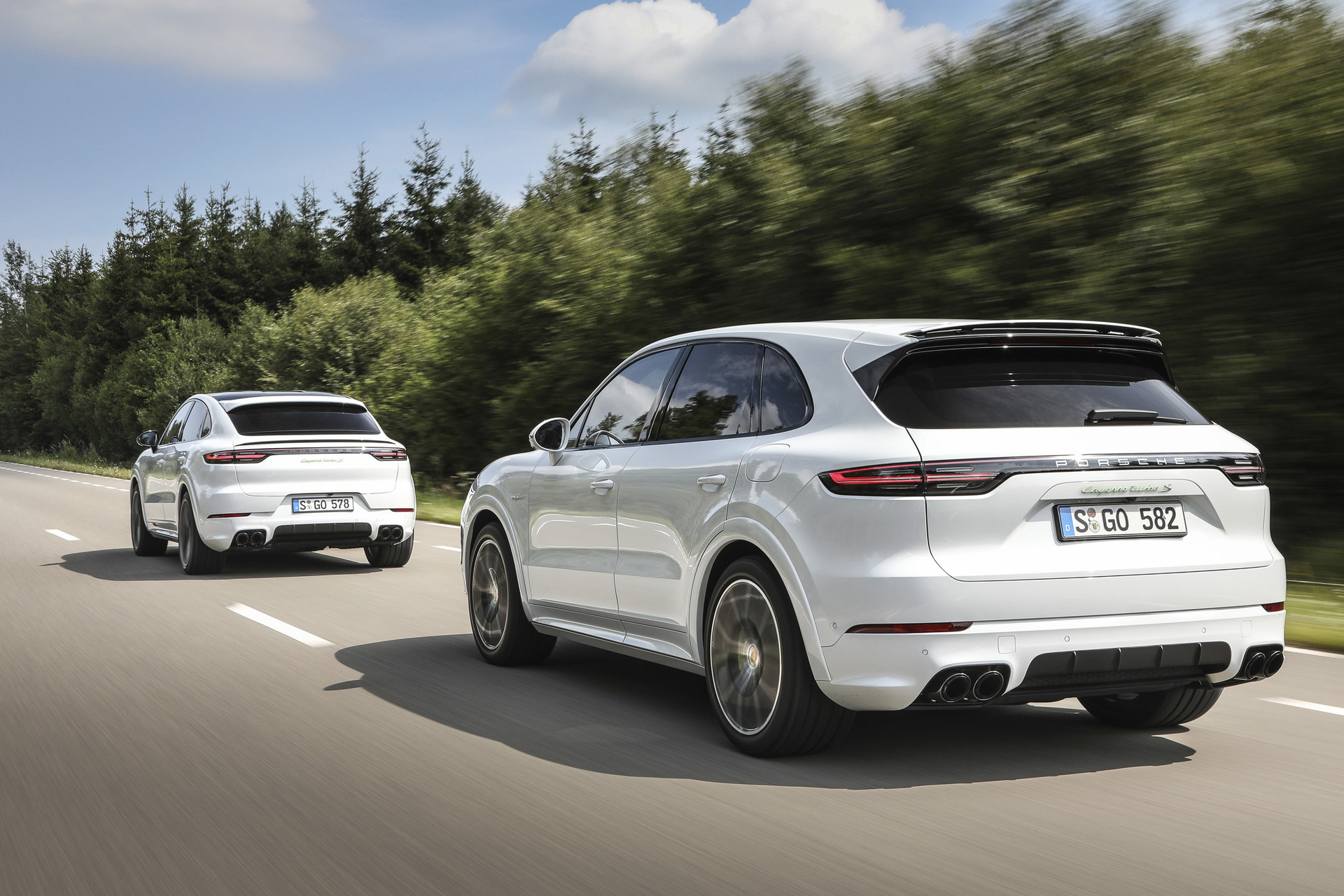
    Porsche has revealed the new Cayenne Turbo GT and yes, it looks absolutely stunning. But let’s directly talk about the engine. The Cayenne Turbo GT gets a 4-litre biturbo V8 which pushes out 632 bhp and 850 Nm of torque. The Cayenne GT Turbo gets 90 bhp more power and an increase of 80 Nm as well compared to the Turbo Coupe. The 0-100 kmph sprint takes 3.3 seconds (0.6 s less than Turbo Coupe ) and top speed is now 300 km/h (an increase of 14 kmph). With even sportier lines and available exclusively as a four-seater Coupé, the Cayenne Turbo GT comes with all available chassis systems fitted as standard and performance tyres developed specially for this model.

    The powertrain and chassis also have a unique set-up specifically tuned for the Cayenne Turbo GT. This has been proven by Porsche test driver Lars Kern, who lapped the 20.832 km Nurburgring Nordschleife with the Cayenne Turbo GT in a time of 7:38.9 minutes, setting a new official SUV record.

    Compared to the Cayenne Turbo Coupé, the Turbo GT rides up to 17 millimeters lower. Based on this, both the passive chassis components and active control systems have been re-engineered and optimized for handling and performance. They also feature specific calibration to guarantee perfect interaction between them. As an example, the rigidity of the three-chamber air suspension has been increased by up to 15 percent, and the damper characteristics of the Porsche Active Suspension Management (PASM) as well as the application of the Power Steering Plus and rear-axle steering have also been adapted. The Porsche Dynamic Chassis Control (PDCC) active roll stabilisation system now operates with performance-oriented control software.

    The result is even better roll stability as well as more precise turn-in behavior at higher cornering speeds. In line with this, the Porsche Torque Vectoring system allows higher torque bias ratios. The comprehensively optimized front axle also improves handling. Compared to the Turbo Coupé, its front wheels are an inch wider and the negative camber has been increased by 0.45 degrees to give the new 22-inch Pirelli P Zero Corsa performance tyres, specially developed for the Turbo GT, a larger contact patch. Braking duties are performed by the standard-fit Porsche Ceramic Composite Brake (PCCB) system.

    The faster-shifting eight-speed Tiptronic S and the Porsche Traction Management (PTM) system have also been modified. There is also additional water cooling for the transfer case. The standard sports exhaust system, with its central tailpipes, is unique to the Cayenne Turbo GT. From the middle of the vehicle, the exhaust system, including the rear silencer, is made from lightweight and particularly heat-resistant titanium. An additional weight saving is achieved through the omission of the centre silencer.

    Optionally available with paintwork in the new Arctic Grey color, the Cayenne Turbo GT gets a GT-specific front apron with striking spoiler lip and enlarged side cooling air intakes, which create a unique front view. A contoured carbon roof and black wheel arch extensions, together with 22-inch GT Design wheels in Neodyme, dominate its side view. The carbon side plates fitted lengthwise to the roof spoiler are GT-specific, as is the adaptively extendable rear spoiler’s lip, which is 25 mm larger than that fitted to the Turbo. This increases downforce at the car’s top speed by up to 40 kilograms. The rear view is rounded off by a striking diffuser panel made of carbon.

    Inside you get eight-way adjustable sport seats and each come GT-specific with perforated seat centre panels in Alcantara, contrast accents in Neodyme or Arctic Grey and ‘turbo GT’ lettering on their headrests. With the Turbo GT, Porsche also brings in the next-generation Porsche Communication Management (PCM) system. PCM 6.0 is fully compatible with Apple CarPlay but now also allows for in-depth integration of Apple Music and Apple Podcasts. In addition, the infotainment system now also includes Android Auto, which means that all popular smartphones can now be integrated.

  • Coffee chains race to establish global presence

    Coffee chains race to establish global presence

    Vietnamese coffee chains are moving to establish themselves in foreign markets as part of expansion plans as well as a strategy to deal with increased domestic competition.

    Tea and coffee chain Phuc Long has just announced plans to open its first store in California in July.

    TNI King Coffee last month launched its first store in the U.S. It has already opened its first outlet in South Korea with a partner.

    Highlands Coffee, one of the biggest Vietnamese coffee chains, has started branching out to other markets since 2011. It now has 39 franchised outlets in the Philippines.

    Cong Ca Phe has six outlets in South Korea and two in Malaysia, while E-Coffee opened its first store in Laos last year.

    The branching out decisions of these brands have happened in the wake of heavy competition in Vietnam’s café chain industry.

    In 2019, Highlands Coffee saw its revenue rise 32 percent year-on-year to VND2.2 trillion ($95 million), after having risen at roughly the same rate in 2018. It was followed by popular competitors like The Coffee House, Starbucks and Phuc Long.

    In terms of outlets, Highlands Coffee ranks top with 437 at the time of publishing, followed by Trung Nguyen E-Coffee with 414, The Coffee House with 180, Phuc Long with 82 and Starbucks with over 60.

    Opening coffee chains in foreign markets, particularly the U.S., is a strategy that Vietnamese chains have been thinking of and preparing for the last 10 years, said branding expert Vo Van Quang.

    “They used to have concerns of going from a small country to a big one, but now they have overcome that fear because they see a lot of potential in entering a huge market,” he said.

    One of the biggest advantages for Vietnamese coffee chains in the U.S. market is that consumers there are not as particular as European ones.

    “Most Americans do not have high standards for coffee. They consider it only as a necessity to help them stay awake to work,” he said, adding that in other markets like France or Japan consumers are more difficult to please.

    Another major advantage is that Vietnamese food and drinks have already established trust in the U.S. as a delicious and healthy alternative to fast food.

    “With two million Vietnamese in the U.S., there are now Vietnamese restaurants in every state. Pho and banh mi have become popular dishes among locals there,” said Quang, referring to the iconic Vietnamese noodles soup and sandwich.

    These types of dishes can be included in the menu of coffee chains to increase their competitiveness, he added.

    The potential of foreign markets has had Vietnamese coffee chains thinking big.

    TNI King Coffee, for example, plans to launch an additional 19 outlets in the U.S. by the end of this year and targets to hit 100 stores there by next year.

    “Opening the first store in the U.S. markets is a strong development step for TNI King Coffee in the global market,” said founder and CEO Le Hoang Diep Thao.

    The company had earlier talked about having 1,000 stores in South Korea, but mentioned no specific time frame.

    Branching out to other markets is a sensible move as local coffee chains have been fighting within a small market in recent years, Quang said, adding: “Recent moves by Phuc Long and King Coffee show that coffee chains have adopted a bigger vision to grow larger abroad.”

  • Ride-hailing firm Grab to launch electric cars in Vietnam

    Ride-hailing firm Grab to launch electric cars in Vietnam

    Ride-hailing firm Grab plans to launch electric car services in Vietnam and Indonesia after piloting a program in Singapore at the end of this year.

    Grab is partnering with South Korea’s automotive manufacturer Hyundai Motor to encourage the adoption of electric vehicles in Southeast Asia.

    Both parties will test new business models including battery and electric vehicles leasing, thus lowering the entry barrier for its driver as the cost to own an electric car is high.

    Grab had said in an earlier report that some of the concerns that make drivers reluctant to use electric vehicles are their price, lack of charging stations and long waiting time for the battery to be fully charged.

    Russell Cohen, Grab’s managing director of operations, said that the company hopes governments will have incentive policies and essential infrastructure like charging stations so that electric vehicles will have many opportunities to develop.

    Grab and Hyundai have been partners since 2018. In 2019, the ride-hailing firm purchased 200 Hyundai Kona electric cars for its car-hiring service GrabRentals in Singapore.

  • China Bond Bankers Flee HSBC

    China Bond Bankers Flee HSBC

    HSBC has reportedly lost four bankers in its debt capital markets team covering Chinese state-owned enterprises as the business faces pressure from the Huawei incident and stressed relations with the U.K.

    Managing directors John Hai and Jiang Song have left HSBC in recent weeks, according to a report citing unnamed sources, with plans to join competing firms after more than a decade with the British lender.

    Hai and Jiang led client coverage of Chinese investment-grade issuers including state-owned enterprises (SOE).

    Two other bankers on HSBC’s China investment grade team have also left.

    The Chinese investment-grade bond team has 12 employees and the overall debt capital market (DCM) unit has about 20.

    According to the sources, HSBC has been missing out on dollar bond deals from Chinese SOE clients following the U.S. probe of Huawei’s chief financial officer Meng Wanzhou.

    Dealmaking was also affected by U.K.-China tensions over political freedoms in Hong Kong.

    Despite the headwinds, HSBC continues to concentrate resources in Asia with reduction or exits from unprofitable operations in the U.S. and Europe.

    In addition to the transferal of three of HSBC’s most senior executives from London to Hong Kong, the bank has also made managing director-leveled hires in global co-head of capital financing Matthew Ginsburg and head of consumer and retail Heidi Chan.

    We continue to invest in our mainland China business – both onshore and offshore – and have seen recent strong momentum for our China DCM business, particularly in [the] public sector, FIG and high yield, said an HSBC spokesperson. As the leading foreign bank in mainland China, we are proud of our track record, and confident and optimistic about our ability to serve the financial and banking needs of our Chinese clients.

  • Boscastle pies to be sold through Woolworths stores in Victoria

    Boscastle pies to be sold through Woolworths stores in Victoria

    Artisan pie brand Boscastle – founded in a gourmet store in Brunswick Melbourne back in 1988 – is now stocked at Woolworths Premium supermarkets across Victoria.

    Pattie’s Foods bought Boscastle’s bakery in 2018, adding it to its portfolio of brands which includes Four’N Twenty and Herbert Adams. Since then, distribution has expanded to 55 retail outlets and cafes across the state.

    “With significant disruptions to in-person dining since the beginning of Covid, we’ve seen a rise in consumers looking for premium food products to enjoy at home,” said Anand Surujpal, Patties Foods group GM of marketing and innovation.

    Research undertaken for Pattie’s Foods shows that since the pandemic arrived, 58 percent of consumers are eating at home more than eating at restaurants, even when government rules allow dining in.

    The Boscastle pies frozen range sold through Woolworths will include Angus Beef and Chicken & Mushroom pies, Gourmet Beef Party Rolls, and Butter Chicken Party pies, sold in single-serve and multi-packs. New packaging allows single-serve Boscastle pies to be heated prior to unwrapping.

  • Tesla Owner Gets Ticket For Parking At GM Plant

    Tesla Owner Gets Ticket For Parking At GM Plant

    In a crazy incident, a Tesla owner was fined with a parking ticket at a GM plant in Wentzville in the US. Apparently, the parking ticket was issued as the attendant thought the vehicle was not an American car. In many American factories, they have dedicated parking lots for brand-owned vehicles, foreign vehicles and made-in-America vehicles. In the case of this parking lot, it was just meant for American vehicles but the attendant didn’t realise the Model 3 in question was as American as a car gets.

    The car was parked in the lot which was meant for non-GM vehicles, so the mistake was quite clear, but regardless the news of this ticket was quite surprising. GM even bothered to comment on the situation.

    “Wentzville, like many of our manufacturing sites, has a parking policy and designated parking locations for GM vehicles, non-GM domestic vehicles and foreign nameplates. Plant security inadvertently thought the Tesla was a foreign car and wrote a ticket accordingly,” the Detroit based automaker revealed.

    The Model 3 is the best-selling electric car in the world. It is also the best-selling executive sedan in the world. It was also voted most American-made vehicle by cars.com’s American-made index just last week.

    In fact, the Model 3 has more American DNA than even GM’s vehicles including the Chevrolet Colorado and GMC Canyon which are manufactured at the Wentzville assembly plat. This ticket was revealed on a Facebook group called Useless, Unsuccessful and/or unpopular signage and has gone viral since.

  • ZTE reveals innovative 5G devices at MWC 2021

    ZTE reveals innovative 5G devices at MWC 2021

    ZTE Corporation, a major international provider of telecommunications, enterprise, and consumer technology solutions for the mobile internet, today has revealed its next-generation 5G Indoor CPE MC8020, and shared its plans for the next under-display camera smartphone at Mobile World Congress 2021. Also, ZTE’s much-awaited devices can be seen at Mobile World Congress from 28 June through 1 July 2021 at 3F30, Hall 3, FIRA GRAN VIA.

    ZTE is integrating its capabilities and expertise across handsets, mobile broadband, terminal chipset modules, and peripheral products to create a smarter 5G ecosystem. A variety of 5G products will be applied into four major application scenarios, specifically health, travel, education and entertainment.

    During Mobile World Congress, attendees can experience the connected 5G ecosystem through products on display, including the ZTE 5G Portable CPE MU5001, ZTE 5G Indoor CPE MC8020, ZTE Watch GT, ZTE LiveBuds and more.

    ZTE is globally recognized for industry-leading 5G terminal devices and technical innovations such as its flagship smartphone ZTE Axon Series.

    The newly launched ZTE Axon 30 Ultra ushers in the next era of mobile imaging technology with its Trinity Camera System, consisting of three 64MP cameras and an 8MP periscope zoom camera. Its high-powered system leverages the triple cameras to achieve new possibilities, such as capturing simultaneous shots for narrative-level storytelling, taking full-focus photos from long, medium, and close-up distance with one click.

    Soon, ZTE will unveil the second-generation under-display camera smartphone, marking another breakthrough in under-display technologies that aims to enhance the display experience.

    The third-generation ZTE 5G Indoor CPE MC8020 supports both 5G SA and NSA modes, as well as Sub-6GHz and mmWave spectrum bands. Featuring the exclusive zlink Boost technology, the device enables dual-path convergence of 5G and wired broadband, allowing dual gigabit access.

    Additionally, the ZTE 5G Indoor CPE MC8020 employs the latest Wi-Fi 6 AX5400 access technology, delivering 200 percent faster access speed than that of the previous generation. The four-way omnidirectional high-gain antenna provides a high-speed 5G network for up to 128 Wi-Fi users simultaneously.

    Since the official appointment of Ni Fei as the new CEO of ZTE Mobile Devices, ZTE has gathered customer and industry insights to address pain points and ride big industry trends, accelerating the rollouts of innovative and highly-recognized products.

    ZTE also integrated its three major smartphone brands, ZTE, Nubia and RedMagic. The integration brought the Nubia Z30 back to market with its heritage of innovation. Furthermore, in partnership with Tencent, ZTE has rolled out the new RedMagic 6, one of the most powerful gaming smartphones in the market.

    ZTE has been investing in its brand with an eye set on next generation and the use of 5G. Most recently, ZTE has collaborated with the Director Zhang Yimou to produce high-quality television spots and appointed the famed Liu Haocun as ZTE’s new brand ambassador.

    ZTE plans to strengthen its direct-to-consumer relationships through offline retail sites. The company is stepping up construction of offline channels with plans to build 5,000 retail sites by the end of 2021. ZTE has completed construction of 3,000 ones to date. Shoppers can visit ZTE’s first 5G experience store in Shenzhen this summer.

    In Q1 2021 , ZTE’s consumer business has achieved year-on-year revenue growth of more than 60% largely driven by the integration of brand, product, and channel – a reply to ZTE’s strategic return to the terminal market.

  • Google introduces new 4K Plus add-on on YouTube TV

    Google introduces new 4K Plus add-on on YouTube TV

    If you think YouTube TV’s price has gone haywire, you’re not wrong. Currently, the price for a YouTube TV subscription is $65 per month, although the service started at a $35 tier several years ago.

    Apart from the price customers must pay to get access to their favorite channels, Google added all sorts of perks that aren’t included in the base package. The most recent one is the 4K Plus add-on that does exactly that: it lets you watch 4K content.

    However, you’ll only be able to watch “select live and on-demand content” in 4K from several channels like Discovery, ESPN, FOX Sports, FX, Nat Geo, NBC Sports, and Tastemade. Not to mention that in order for this to work, you’ll need an additional gadget like a compatible 4K enabled TV and/or streaming device.

    Besides being able to watch 4K content, the new add-on will let you download shows to watch offline. Also, you’ll get unlimited streams at home, whereas until now you would be limited to just three streams.

    Obviously, the new add-on isn’t free, so if you want to watch 4K content, you’ll have to come up with $19.99 per month. The good news is the first month is available for free if you sign up now, and then a price of $10 per month for one year. This is only available for customers in the US who have an active YouTube TV subscription and subscribe to the 4K Plus add-on for the first time.