Author: Mei Ling Tan

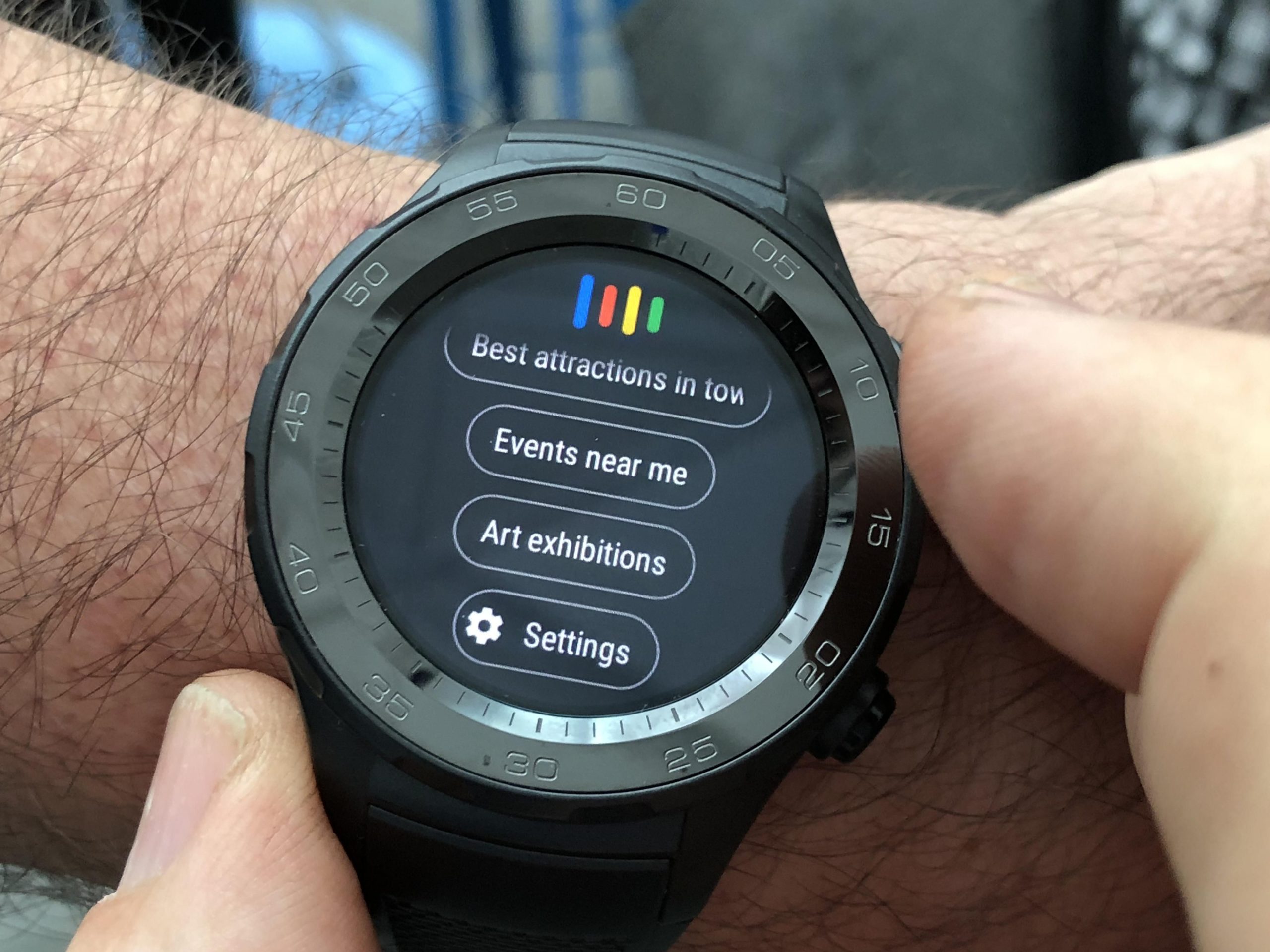
  • Android version of the Google Assistant app has been installed over 500 million times

    Android version of the Google Assistant app has been installed over 500 million times

    If you look up the listing in the Google Play Store for Google Assistant, you’ll see a note near the bottom of the page that says, “You do not need this app to use the Google Assistant if you already have the Google Assistant on your device.” Since the Assistant is found on just about every Android phone that uses Google Mobile Services, the app really doesn’t need to be downloaded by the vast majority of Android users.

    The dedicated Google Assistant app has reached the 500 million installs milestone. And you can’t give credit to all of those iOS users who recognize Siri as being the absolute mess that it is and have installed the iOS Assistant app to use instead; those installations are done through Apple’s App Store and are not part of the half a billion credited to the Play Store.

    Over 500 million installs of Google Assistant have taken place via the Google Play Store

    Downloading the app will allow Android users to add it to their App drawer or home screen. There are other ways for Android users to activate Google without tapping on an app icon. The Pixel Active Edge feature allowed users to squeeze the sides of their phone to activate the Assistant although this was removed on the Pixel 4a, Pixel 4a 5G and the Pixel 5.

    Saying the hot phrase “Hey Google” will also get the assistant open without having to tap the icon or squeeze the phone. With 500 million Google Assistant installs from the Google Play Store, the app is halfway to a billion and could get there sooner than you might think.

  • California Pizza Kitchen expanding in Hong Kong

    California Pizza Kitchen expanding in Hong Kong

    California Pizza Kitchen (CPK) – creator of California-style pizza – today announced the grand opening of its new restaurant in Hong Kong in partnership with Chun Fat Enterprise Limited. With over 27 years of serving guests in the Hong Kong market, the new restaurant, located within the Tuen Mun Town Plaza, the largest mall in Hong Kong’s Northwest New Territories, allows CPK to bring its diverse and innovative California-style menu to new diners within the popular mall location.

    The Tuen Mun Town Plaza location captures CPK’s warm California brand-style throughout the space with sunny tones, wood decor accents, and large windows that pour in plenty of natural light. CPK’s signature hearth pizza oven and open kitchen layout give a welcoming feeling and invites guests to sit, enjoy and watch their meals being prepped for a more engaging dining experience.

    “We are thrilled to expand our CPK Hong Kong presence with CS Lee and the Chun Fat team,” said Giorgio Minardi, Executive Vice President of Global Development & Franchise Operations at CPK. “We have strong momentum in our business and Hong Kong is a critical priority for our long term growth plans. We look forward to bringing ‘California Creativity’ and our diverse menu to local guests in this beautiful new restaurant in the Tuen Mun Town Plaza.”

    CPK continues to aggressively expand its presence in Asia with a focus on Hong Kong, South Korea, Singapore, Japan, and Malaysia. Through its partnership with Chun Fat Enterprise Limited, CPK projects to have four locations in the Hong Kong market by the end of 2022.

    “We’re excited to expand our relationship with CPK to bring its creative California-inspired cuisine to the local community,” said CS Lee, Managing Director of Chun Fat Enterprise Limited. “The new Tuen Mun Town Plaza location is the ideal place to bring CPK’s food and beverage innovations and globally inspired ingredients to the thousands of hungry guests that visit the mall every day.”

    The new location will feature several of the brand’s classic American menu offerings including the iconic BBQ Chicken Pizza, Cali Club Pizza, BBQ Chicken Salad, and Cedar Plank Salmon, among others.

    CPK’s global presence includes more than 200 locations in 8 countries and U.S. territories, which includes 40 international franchise locations in addition to 16 domestic franchise locations in airports, casinos and stadiums across the United States. While Hong Kong is no longer under COVID-19 lockdown restrictions, all CPK locations remain committed to providing a safe and secure dining experience with rigorous cleaning and safety protocols.

  • Amazon, Alibaba race to recruit Vietnamese merchants

    Amazon, Alibaba race to recruit Vietnamese merchants

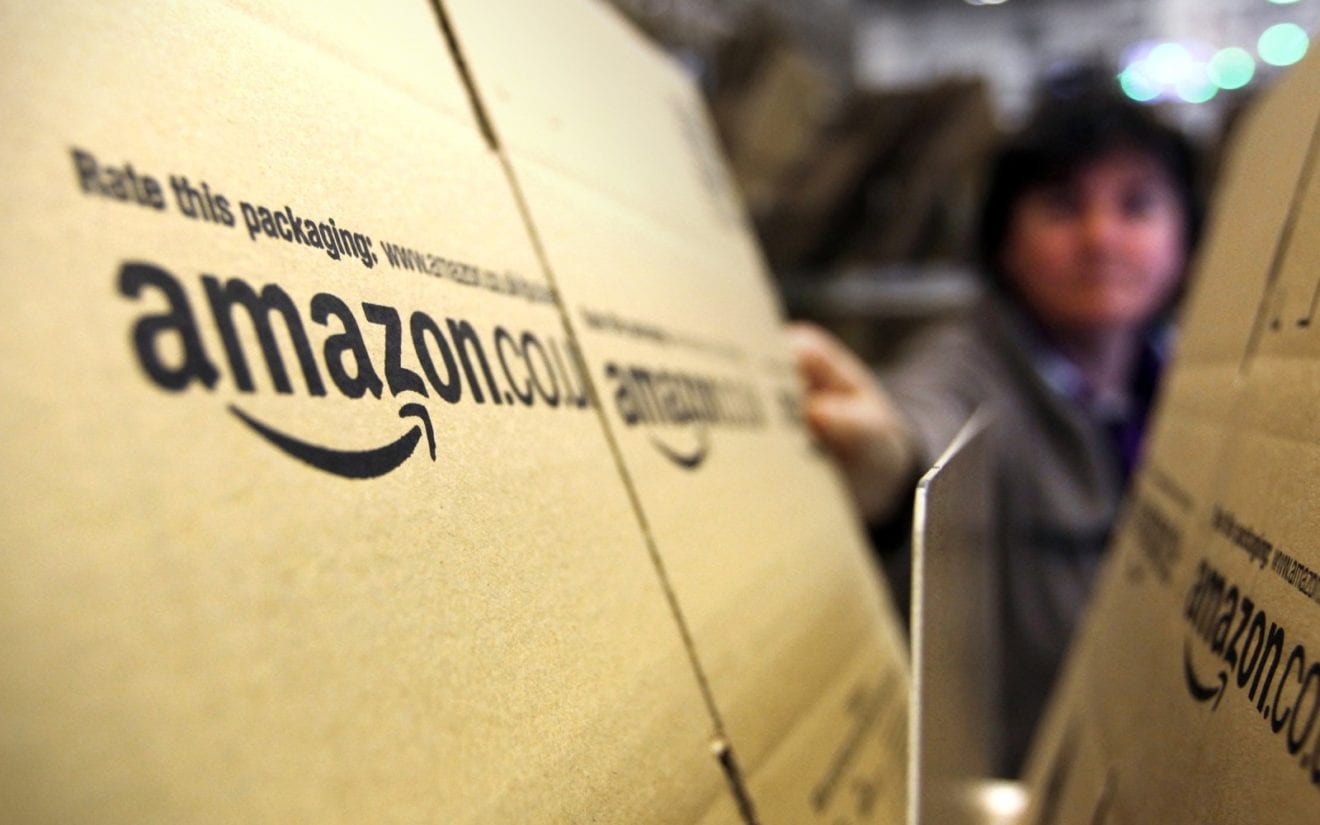
    Global giants Amazon and Alibaba are racing to recruit more Vietnamese vendors on their platforms seeking to boost their share of a booming e-commerce market.

    Amazon saw the number of Vietnamese merchants exporting at least $1 million worth of goods from Vietnam triple last year. The surge was driven by demand for tools, kitchenware, handicrafts, home goods, and apparel.

    “Vietnamese sellers have enriched our global product selection,” Gijae Seong, head of Amazon Global Selling in Vietnam, told Nikkei Asia.

    Amazon Global Selling is a business set up to recruit more Vietnamese merchants on Amazon, seeking to boot e-commerce trade between Vietnam and its largest export market the U.S.

    The company opened a Hanoi office in March to train new sellers, adding to its Ho Chi Minh City branch.

    Seong said companies “have competitive advantages in manufacturing” in Vietnam, where a wave of factories have relocated from China to sidestep the trade war with the U.S. and to reduce other costs and risks.

    China’s Alibaba has also been making moves to have more Vietnamese sellers.

    In March, a company representative said that it planned to have over 10,000 Vietnamese small and medium-sized enterprises selling on its platform by 2025.

    It has been working with government authorities since last year to run training programs for Vietnamese vendors.

    As of March, over 300 companies have been provided consultancy in online cross-border sales.

    The competition between the two giants is heating up as e-commerce booms in Vietnam with rising demand for online shopping amid the Covid-19 pandemic.

    It’s e-commerce market expanded by 18 percent last year to $11.8 billion, the only country in Southeast Asia to record double-digit growth amid the Covid-19 pandemic, according to the Vietnam e-Commerce and Digital Economy Agency.

  • Bamboo Airways to trial digital health pass

    Bamboo Airways to trial digital health pass

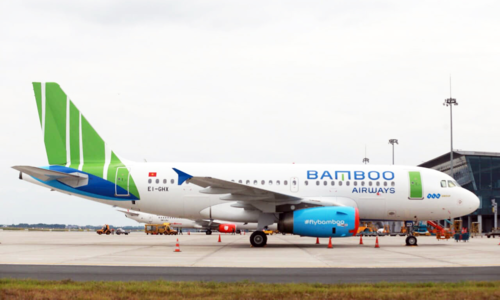
    Bamboo Airways officially entered into cooperation with the International Air Transport Association (IATA) to trial the IATA Travel Pass, laying a solid foundation for the airline’s reopening of international routes.

    In coordination with IATA, Bamboo Airways will begin preparations to trial the IATA Travel Pass on international flights in the coming months. With this move, Bamboo Airways demonstrates its commitment to relaunching international routes, opening borders safely as well as reviving the battered tourism industry.

    IATA Travel Pass is a digital health wallet where passengers can upload and share their Covid-19 tests and vaccination certificates for travel. Health information is an essential factor for both governments and carriers to conduct safe flights during and after the pandemic.

    The IATA Travel Pass is considered a safer and more effective solution compared to current paper-based procedures, especially when it comes to a multitude of test and vaccination data that needs securing.

    The app has been developed with the highest levels of data privacy and security, so passengers always remain in control of their Covid-19 health information. Besides, governments can be confident that passengers who are OK to Travel are in full compliance of Covid-19 travel requirements, said Nick Careen, IATA senior vice president for Airports, Passenger, Cargo and Security.To create the digital health wallet, passengers download the IATA Travel Pass app, and register a digital identity using their passports. Once passengers have been tested and/or vaccinated, labs will securely send data to the individual’s app. It then verifies this information and checks that passengers meet the travel requirements for their destination. If they do, they will receive an “OK to Travel.” Passengers can also choose to share this with airlines and authorities.

    By ensuring passengers meet Covid-19 health requirements for their destination, Travel Pass will facilitate more seamless transportation, playing a crucial role in the reopening of international routes in the near future.

    As of June, more than 60 airlines in the world have announced the pilot of IATA Travel Pass, including Singapore Airlines, Qatar Airlines, Air New Zealand, Air Serbia, Emirates, Etihad, Ethiopian Airlines, Iberia, Korean Air, Malaysia Airlines, Qantas, et

    As a member of IATA, Bamboo Airways is closely collaborating with the body, authorities and related units to pilot the Travel Pass app in line with government regulations on “digital health passports” or “vaccine passports”. With this trial, Bamboo Airways aims to establish an area to check the compliance of passengers at the airport and provide the government with valid information to ensure safe flights and repel the pandemic.

    Bamboo Airways is promoting the digital transformation process and effectively fulfilling the market demand and practical requirements of a “new normal” phase.

    “Alongside the valuable partnership with IATA, it’s our conviction that Bamboo Airways will substantially contribute to the revival and sustainable development of aviation in the future,” said Dang Tat Thang, CEO of Bamboo Airways.

    Thang believes the tech solution would be the cornerstone of international routes reopening, especially Bamboo Airways’ non-stop flights connecting Vietnam and the U.S.

    Bamboo Airways has successfully conducted many repatriation charter flights from South Korea, Japan, Taiwan, Australia, the Philippines, Poland, Norway, etc. The airline is also completing procedures to launch non-stop flights to many countries in Asia-Pacific, including Australia, exploit the European market, and gather pace in the operation of non-stop flights connecting Vietnam and the U.S. as soon as the government allows. Complying with the Civil Aviation Authority of Vietnam on the three-phase plan for restarting international routes, Bamboo Airways has prepared a corresponding scheme and suitable strategy based on close observation of the market and pandemic.

    At the same time, Bamboo Airways is implementing Covid-19 vaccinations for all employees and related affiliates.

    Bamboo Airways strictly complies with disease prevention measures as guided by the National Steering Committee for the Prevention of Covid-19, the Ministry of Health, the Steering Committee of the Ministry of Transport, and the Civil Aviation Authority of Vietnam, including temperature screenings at the airport, providing hand sanitizers and masks at check-in areas, departure gates and on planes, spraying disinfectant after flights, regularly maintaining HEPA filters on aircraft, etc.

    As of now, Bamboo Airways’ Covid-19 prevention process is considered the most comprehensive and effective, achieving an absolute level of 7/7 by Airlines Ratings.

    Bamboo Airways currently operates over 60 domestic and international routes, transporting 7.5 million passengers on safe flights. The airline has also maintained the highest on-time flight rate in Vietnam’s aviation market in three years up to 2021.

    The airline’s international 5-star standard-oriented service has been recognized by domestic and international passengers and media with a customer satisfaction rate of 4.5/5. Bamboo Airways was honored as Vietnam’s Best Airline, Asia’s Leading Regional Airline, and the favorite airline voted for by golfers.


  • Apple may use AirPods to track health data

    Apple may use AirPods to track health data

    Apple’s Vice President of Technology, Kevin Lynch, recently held a lengthy interview regarding the company’s advancements and aspirations within the health sphere.

    In 2014, Apple came out with the Apple Health app to allow users to track and record their heart rate, which was first collected with the original Apple Watch. However, Apple quickly realized the potential in fusing this software with its constantly improving hardware, to bring a whole slew of personal health data to people’s fingertips—and it’s been expanding ever since.

    One of the new sensor-equipped gadgets to bring health-relevant data to users may be none other than Apple’s AirPods, as Lynch slipped to the TechCrunch reporter near the end of yesterday’s interview.

    The latest model of the AirPod earbuds, the AirPods Pro, already feature a pair of dual optical sensors, a motion-detecting accelerometer, a speech-detecting accelerometer, and a force sensor, all inside the tiny chasse fitted inside the ear.

    While we don’t know of any new sensors coming to AirPods Pro in the near future, these existing ones could well be leveraged to monitor a variety of things related to one’s overall health, just like the iPhone and Apple Watch already do.

    Supporting this new information is a Bloomberg report from last month, which promises that next year’s second-generation AirPods Pro are going to have their motion sensors updated with particular attention to fitness tracking. Once they do, this data is sure to be integrated into the Health App—which would be another growth spurt for Apple’s evolving health system.

    Reliable Apple analyst Ming-Chi Kuo has also reported similar information in a separate statement in the past. Kevin Lynch hinted that Apple sees lots of potential for leveraging as many devices as possible to monitor health data—and is likely going to be adding AirPods to the mix.

    Apple’s entire health-monitoring ecosystem all started with a heart rate monitor integrated into the Apple Watch, and a consequent iPhone app developed to easily deliver users that information.

    At first, we were showing people their heart rate, and you could look at it — we were using it for calorimetry. But some users actually were looking at their heart rate when they weren’t working out, and noticed it was high. They would go talk to their doctor, and the doctor would find a heart issue, and we would start getting letters about this. We still get letters today about our work in the space, which is amazing. But some of those early letters were clueing us into ‘Wait, we could actually look for that ourselves in the background’.

    Since then, the existing fusion of Apple’s technologies has come a long, long way. It now not only simply tracks your heart rate, but matches it to your currently assessed level of activity, and comparing that to known health data, can notify you if you have a dangerously low or high heart rate.

    >Of course, that’s only the beginning. Leveraging Apple’s devices, the Health app can also keep track of your activity intensity, calorie burn, metabolic rate—it can even take your sleep metrics. This means that you can monitor your blood oxygen levels during sleep, track how much time you spend asleep, as well as your sleeping respiratory rate.

    We’ll also be seeing mobility metrics being taken later this year, tracked in terms of “walking steadiness,” which assesses your balance, strength, step symmetry, and gait. It will let you know if it detects a lack of balance or symmetry in your walk, or other abnormalities, and let you know if you are at an increased risk of falling.

    With iOS 15 this year, the Health app will also be able to track your food and calorie intake for you. It will also allow you to share your health data both privately (with loved ones worried about your health, for example), or publicly, such as with your doctor.

    There is even talk of a blood sugar monitor coming to the Apple Watch, although it has been confirmed that we’ll have to wait until after the Apple Watch 7 to see it. A temperature sensor may also be coming with the Apple Watch Explorer/Adventure Edition in 2022.

    All of this has become possible in the span of only a few years, but Apple is clearly already looking towards the future for more possibilities and ways to expand its health monitoring services.

  • Laos to supply Vietnam power from Mitsubishi-built wind farm

    Laos to supply Vietnam power from Mitsubishi-built wind farm

    Japan’s Mitsubishi Corporation will develop Southeast Asia’s largest wind farm in Laos to supply electricity to Vietnam, where demand is expected to grow continuously.

    The 600-megawatt onshore project, the first wind farm in Laos, will be located in the southern provinces of Sekong and Attapeu, the company said in a statement.

    By installing a dedicated transmission line to Vietnam, power from the wind farm, which is set to begin commercial operations by 2023, will be sold to national utility Vietnam Electricity for 25 years.

    It is expected that Vietnam’s growing economy will have high demand for power, especially during the dry season, when hydropower generation is limited.

    The onshore wind farm is being developed as part of a memorandum of understanding on power interchange signed between the Vietnamese and Lao governments in October 2016.

    It is expected to be the first cross-border electricity interchange from wind power generation in Southeast Asia.

  • Singapore Reconsiders Economic Reopening

    Singapore Reconsiders Economic Reopening

    A growing cluster of infections threatens to derail Singapore’s economic reopening, while expats in the country are growing restless from being cooped up on the island with no end in sight.

    Singapore’s Multi-Ministry Task Force is closely monitoring the growing number of community cases, particularly the expanding cluster of cases that now numbers 56, which originated from a neighborhood market.

    Day by day, we are seeing the number of unlinked cases – the cryptic cases in the community – is likely to be rising too. Given these developments, we are evaluating the timing and scope of the next stage of reopening, Finance Minister Lawrence Wong said in a video recording posted on Facebook and Instagram on Wednesday.

    The country is set for further relaxation of «heightened alert» restrictions from Monday, following a month of heightened Covid-19 related restrictions, during which community cases fell sharply, a and a week-long first stage of reopening.

    Singapore’s borders have been effectively shut for more than a year now, and many expats are getting restless, particularly as the U.S. and Europe return to normalcy.

    Many feel the country is too slow in reopening its borders, and may depart in the next six months if vaccinations and travel re-opening do not go as planned. Currently, returning residents face three weeks of quarantine – if they are allowed back into the country.

    Singapore said any ease in travel curbs will depend on the pace of vaccinations, which it has targeted for half of its population bu the end of August and 75 percent by October. Currently, about 35 percent of the population is vaccinated.

  • DBS says Tsunami of Money is Flowing to ESG Investments

    DBS says Tsunami of Money is Flowing to ESG Investments

    Companies that focus on environmental, social, and governance (ESG) tend to be high-performing companies, therefore investing in a basket of ESG stock will you cannot do too badly with a portfolio ESG stock, DBS chief executive Piyush Gupta said.

    The truth is that there is a tsunami of money being directed at ESG investments, and therefore, even if the fundamentals don’t bear out, the supply-demand equation will Gupta said at the virtual CNBC Evolve Global Summit on Thursday.

    ESG assets are expected to bring in $1 trillion in investments, Gupta noted. If nothing else, that’s going to take prices up, he said, responding to a question of whether ESG is a passing fad or long-term strategy.

    DBS recently announced a revised sustainable financing target of S$50 billion ($37.53 billion) by 2024, up from its initial target of S$20 billion.

    The bank said there has been renewed focus on sustainability as a result of the Covid-19 pandemic, and as more companies seek to advance their corporate sustainability agenda through sustainable financing,

  • Vietnam gets set to tax e-commerce revenue

    Vietnam gets set to tax e-commerce revenue

    Vietnam plans to tax 1.5 percent of annual e-commerce revenues of VND100 million ($4,297) and higher as part of leveling the field between traditional and online retail merchants.

    A decree with new regulations is set to take effect on August 1, but authorities have said they might give e-commerce platforms more time to prepare for the taxation regime.

    E-commerce platforms will need to provide authorities with monthly reports on their merchants, revenues, bank accounts, and types of goods.

    Tax officials had said earlier that the current taxation regime is unfair to traditional sellers who have to pay other overheads, while online sellers have been escaping several taxes.

    Taxing sellers through e-commerce platforms would also help prevent the sales of contraband and fake goods, the officials said.

    Vietnam’s e-commerce market expanded by 18 percent last year to $11.8 billion, the only country in Southeast Asia to record double-digit growth amid the pandemic, according to the Vietnam e-Commerce and Digital Economy Agency.

  • Qualcomm sheds light on which smartwatches support Google’s new Wear OS

    Qualcomm sheds light on which smartwatches support Google’s new Wear OS

    The reveal of a new Wear OS fully supported by Samsung was a big surprise for the wearable industry. In fact, it was such as surprise that many smartwatch manufacturers don’t know whether or not their products support the platform that’s said to combine the best of Wear OS and Tizen.

    Not even Google was willing to offer a straight answer when asked which of the current smartwatches can be upgraded to Wear OS 3.0, and which ones will remain on their current version of the OS.

    Qualcomm on the other hand has been more generous and shared some info on the matter. XDA reports that a spokesperson for Qualcomm confirmed that Snapdragon Wear 3100 and Snapdragon Wear 4100/4100+ are the only chipsets that would be able to run the new Wear OS 3.0.

    We are working with Google on bringing Wear OS 3.0 to Snapdragon Wear 4100+ and 4100 platforms. Snapdragon Wear 3100, 4100+ and 4100 platforms are capable of supporting Wear OS 3.0, but we are not discussing any specifics at this time.

    Although that doesn’t necessarily mean that all smartwatches equipped with these specific chipsets will receive the Wear OS 3.0 upgrade, at least we know which ones are more likely to be updated.

    Of course, if you’re using a Fossil smartwatch, then you already know you won’t be getting the new Wear OS 3.0 update, as the company has already issued an official statement on the matter not long ago.

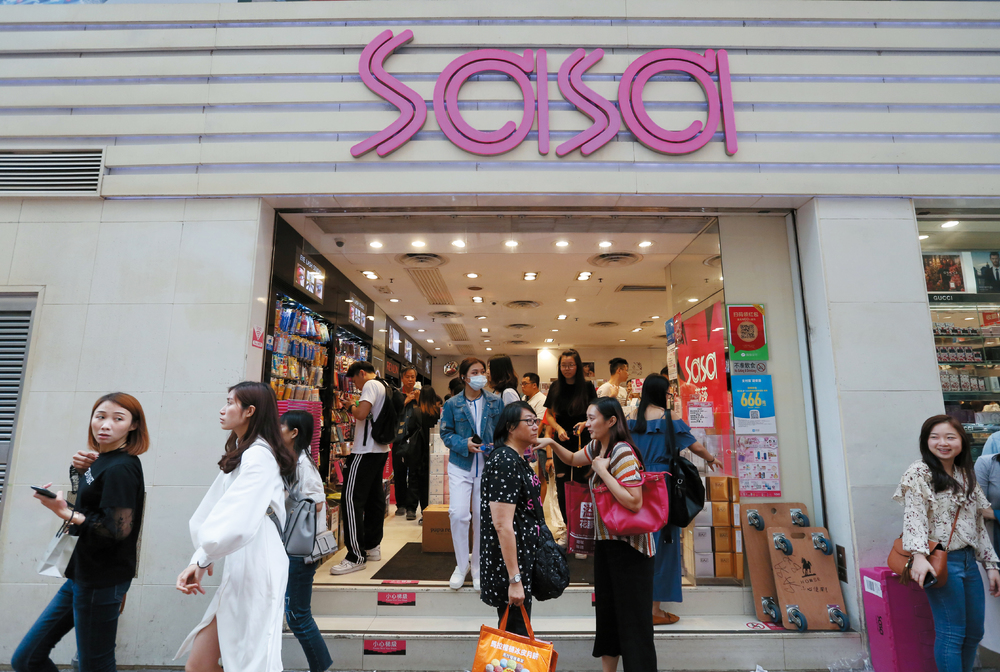
  • SaSa International Closing 20 Hong Kong stores

    SaSa International Closing 20 Hong Kong stores

    Sa Sa International (0178) projects to close 15 to 20 shops in Hong Kong by the end of March 2022, but will add 30 stores in the mainland after recording a net loss of more than HK$350 million for the fiscal year ending March.

    Sa Sa said that it will close some physical stores in Hong Kong, especially in tourist areas, to cut down on rental costs.

    The group stated that the leases of 38 of their Hong Kong shops expired this year. Last year, the renewal rent in tourist areas was reduced by about 70 percent and in non-tourist areas by about 26 percent.

    So far this year, the rent renewal in tourist areas was reduced by 65 percent and in non-tourist areas by about 30 percent.

    As of the end of March, Hong Kong and Macau stores were reduced from 112 stores to 100 stores, Malaysian stores were reduced from 79 to 75, and mainland stores increased from 44 to 57.

    The group will focus more resources on its online business.

    This came after its net loss narrowed by 32 percent year-on-year to HK$351.4 million.

    Basic loss per share amounted to 11.3 HK cents. The board does not recommend the payment of a final dividend.

    Turnover for the continuing operations decreased by 46.8 percent to HK$3.04 billion. Sales of retail and wholesale in Hong Kong and Macau reduced by 57.8 percent to HK$1.99 billion. Mainland revenue rose 15.9 percent in yuan to HK$289.85 million. From April 1 to June 9, sales rose 55.1 percent. Hong Kong and Macau sales rose 53.5 percent and mainland sales rose 30.7 percent due to low base effect.

  • Apple scores big Health Records app win by partnering with the Mayo Clinic

    Apple scores big Health Records app win by partnering with the Mayo Clinic

    While the Wall Street Journal was waxing poetic how Apple’s health industry push has stalled, we wouldn’t be underestimating its transformative potential in the field. Apple, after all, has proven numerous times that it may start slow and tread carefully, but the sheer scale of its market size eventually overcomes the pushback from new industries it is trying to break into.

    The latest case in point are its Health Records app that now has access to your patient portal in the renowned Mayo Clinic network, adding to the list of the already announced Apple Health partners in the HMO intermediary realm.

    The Mayo Clinic access would undoubtedly add plenty to the street cred of the Health Records app, and we don’t need to extoll the institution’s numerous virtues to back up this claim. This partnership is what resulted in the still-unsurpassed ECG function of the Apple Watch that took years to master with the help of Mayo Clinic physicians and databases that spearheaded the algorithm’s creation.

    What can a Mayo network patient can expect from the integration of their data in the Apple Health Records app when the service becomes live this fall? Well, those with an online patient portal account at the Mayo Clinic now have the alternative of the Health Records app to view their health data from multiple providers.

    Android users have the option of a similar app called CommonHealth but Apple has the advantage of sharing the health data derived from its Apple Watch like heart rate and detected falls directly with their physicians.

    While Google hasn’t given up on digitizing your personal health data with a new hospital chain partnership, Apple may eat its lunch in the field by simply leveraging the abundance of information collected in its Health app.

    That’s where all the Apple Watch sensor readings go, for instance, and Apple is now offering you the option to share your health data not only with your doctor, but with friends and family as well, so that users have “a trusted partner on their health journey.”

    New Apple Health app data features in iOS 15:

    • Walking Steadiness – new Mobility algorithms assess balance, stability, and coordination via the iPhone/Watch sensors.
    • Trends – long-term changes in various health and fitness metrics that the Apple Health app integrates.
    • Better Labs – bloodwork lab data tracking and analysis.

    All of these new and old data points can now be securely shared with either your doctor, or your loved ones, so you can have both a specialist and a person that is closer to you, be up to date with your health and fitness points at the same time, for an increased scope of coverage in case something unforeseen happens.

    By the fall, when iOS 15 and watchOS 8 hit your palm and your wrist, respectively, Apple will have likely scooped up many more partners for its Health Records sharing initiative, so we wouldn’t count them out in the health industry realm just yet.

  • Open Finance Startup to Expand Across Southeast Asia

    Open Finance Startup to Expand Across Southeast Asia

    Singapore-based Finantier has closed an oversubscribed seed financing round at more than 20 times its pre-seed valuation.

    Finantier plans to strengthen its presence in Indonesia and Southeast Asia after raising seven figures in seed funding in a round led by Global Founders Capital and East Ventures, it announced on Wednesday.

    Founded in 2020, the fintech provides an application programming interface (API) platform for financial institutions to access and analyze consumer financial data. The new funds will also go towards scaling and enhancing its product offerings and double the size of its team.

    Southeast Asia’s large unbanked population presents challenges for financial institutions who lack access to consumer financial data, handicapping them in providing financial services such as payments, lending, and insurance, among others, Finantier explained.

    To address this, the company works with over 150 companies to aggregate data from alternative sources to give its clients access to a more comprehensive range of datasets and enable the unbanked population to benefit from their digital data footprint.

    Finantier’s clients and partnerships have seen over 50 percent monthly growth in 2021, while its team has grown fivefold to 50 employees, the company said.

    Open finance is an extension of open banking data-sharing principles to enable third-party providers to access customers’ data across a broader range of financial sectors and products, including savings and investments.

    With open finance facilitating the open exchange of consumer data, companies can leverage it to reach more customers while creating more personalized financial services, Diego Rojas, Finantier co-founder and CEO, said.

    Rojas previously worked closely with the co-founders of NYSE-listed LendingClub and was the technical lead at the founding team of GIC-backed Chinese online lending marketplace Dianrong.

    COO Edwin Kusuma was previously from Google and was also formerly CEO of P2P lending firm 360Kredi and director of operations at Kredinesia, while CPO Keng Low was the technical lead for a payments startup in Silicon Valley and previously an Entrepreneur-in-Residence at East Ventures.

  • UOB Taps Digital Platform for Bond Issuance

    UOB Taps Digital Platform for Bond Issuance

    The bank has priced S$600 million of perpetual capital securities at a fixed coupon rate of 2.55 percent – the lowest for benchmark perpetual securities for banks in Singapore.

    UOB is piloting the digital issuance of its latest bond offering on exchange-operated digital asset issuance platform Marketnode, the bank said in an announcement on Wednesday.

    The non-call seven-year additional Tier 1 (AT1) capital securities offering is the industry’s first public capital issuance to reference the Singapore Overnight Rate Average Overnight Indexed Swap (SORA-OIS) rate. The digital bond is run in parallel with the conventional issuance process.

    UOB said the transaction saw a subscription rate of 1.7 times, supported by an extensive investor base comprising both quality institutional accounts and private banking investors

    Marketnode is a joint venture between Singapore Exchange and Temasek. It uses distributed ledger technology to connect various parties – from issuers to investors – and to tokenize capital securities so that smart contracts can be created and conducted for greater efficiency.

    UOB said it is fully behind the development of Singapore’s digital capital markets infrastructure and the smooth transition to a SORA-centred financial market.

    As more global issuers and investors come on board and participate in Singapore’s digital capital markets, we will see further strengthening of Singapore’s status as the region’s financial hub, Wee Ee Cheong, UOB deputy chairman, and CEO, said

  • Indonesia’s Bukalapak aiming for up to $800 million in IPO

    Indonesia’s Bukalapak aiming for up to $800 million in IPO

    Indonesian e-commerce firm Bukalapak is keen to raise as much as US$800 million in an initial public offering (IPO) in August, two people with knowledge of the matter said, the first of two big tech listings in Jakarta this year that will add long-sought luster to the local bourse.

    A mid-year debut could see it become Indonesia’s biggest listing in 10 years and the largest ever for the country by a startup. But those milestones will likely later be overtaken by the planned listing of GoTo – a new company to be formed by the merger of e-commerce rival Tokopedia and ride-hailing and payments firm Gojek.

    Tapping a sharp pick-up in investor interest in Southeast Asia’s rapidly expanding technology sector, Bukalapak, the country’s No 4 e-commerce firm, is aiming to sell 10 to 15 percent of the company and wants a valuation of between US$4-5 billion, the people said.

    A confidential listing prospectus has been submitted to the Indonesia stock exchange, one of the sources said.

    Proceeds from the offering could range between US$500 million and US$800 million depending on investor demand and market conditions, said the sources who were not authorized to speak on the matter and declined to be identified.

    Bukalapak, which said in 2019 it was valued at more than US$2.5 billion, declined to comment.

    The 11-year-old startup which claims to have more than 100 million users has a plethora of big-name investors backing it including Microsoft, Singapore sovereign wealth fund GIC, local media conglomerate Emtek, the investment arm of Standard Chartered, and South Korean web portal Naver Corp.

    Bukalapak was originally aiming to raise US$300 million from its domestic listing before looking to merge with a special purpose acquisition company (SPAC) in the United States, but it is now focusing solely on its IPO, one of the sources said.

    The listing, which sources say is set to take place mid-August, is a victory for Indonesia’s bourse which has been conducting an extensive charm offensive to convince the country’s thriving startups to list locally instead of heading to the US.

    Stagnant for many years, Indonesia’s total IPO deal value took a further hit during the coronavirus pandemic, more than halving in 2020 to US$470 million, Refinitiv data showed. So far this year, 15 companies have raised a combined US$125 million via IPOs.