Author: Mei Ling Tan

  • Unilever buys digital-first skincare brand Paula’s Choice

    Unilever buys digital-first skincare brand Paula’s Choice

    Unilever is to add digital-led skincare brand Paula’s Choice to its portfolio after reaching a purchase agreement with TA Associates.

    The value of the deal – expected to be completed in the third quarter this year – has not yet been disclosed. According to Unilever, Paula’s Choice will join its Prestige division which manages other skincare brands such as Tatcha, Murad, and Dermalogica.

    “Developing Unilever’s portfolio in the high-growth premium skin-care segment is one of our strategic priorities,” said Sunny Jain, president of beauty & personal care at Unilever.

    “Paula’s Choice is a true pioneer in the digital space for beauty and has created a mission-based brand rooted in truth and transparency,” said Vasiliki Petrou, VP and CEO of Unilever Prestige.

    Founded in 1995 by Paula Begoun, the direct to consumer brand Paula’s Choice is known for its science-backed products and digital tools, including its ‘Ingredient Dictionary’ that breaks down the research behind nearly 4000 ingredients, and ‘Expert Advice’, a curated online hub of skincare and ingredient knowledge.

  • HSBC AM Establishes Alternatives Unit

    HSBC AM Establishes Alternatives Unit

    The combined unit will have a 150-strong team and combined assets under management and advice of $53 billion.

    HSBC Asset Management has announced that it is bringing its alternatives capabilities under a single business unit, HSBC Alternatives, which will comprise of HSBC Alternatives Investments (HAIL), which includes the multi-manager hedge fund and private market teams, as well as the firm’s private debt, venture capital, and direct real estate teams.

    With its alternative assets doubling over the past four years, the move is the firm’s the next step in its strategy to reposition the business as a core solutions provider and specialist Asia, emerging markets, and alternatives asset manager, HSBC said in an announcement on Wednesday.

    HSBC has enlisted current global chief investment officer Joanna Munro to lead the combined unit. She will continue to be based in London, reporting directly to Nicolas Moreau as a member of the management committee. Munro joined HSBC in 2005, and held roles including CEO multi-manager and CEO Asia Pacific before becoming CIO in 2019.

    She has been tasked with enhancing and expanding the range of alternative investments available to the firm’s wealth and institutional clients, across indirect and direct alternatives including hedge funds, private markets, and real estate, and will look to grow the firm’s capabilities in Asia, the announcement said.

    Xavier Baraton, currently global CIO for fixed income, private debt, and alternatives, will succeed Munro as global CIO. Reporting to Nicolas Moreau, he will join the management committee and continue to be based in Paris.

    Baraton brings almost 20 years’ experience in investment management. He joined HSBC Asset Management as global head of credit research in 2002 and has been CIO for fixed income since 2010.

  • Ferrero trials recyclable retail displays across Australia

    Ferrero trials recyclable retail displays across Australia

    Beginning August, confectionary giant Ferrero will trial 3000 recyclable Kinder Bueno displays across retail stores nationwide. The initiative is part of the company’s sustainability strategy to reduce its carbon footprint by 2030.

    The retail displays are made from 100-per-cent recyclable dump bins using biodegradable varnish, with each dump bin set to save 3.75 sqm of plastic.

    According to the confectionery company, in-store shoppers won’t notice any difference between the recyclable displays and the ones made with polypropylene plastic discarded at landfills after use.

    The recyclable displays were developed in partnership with point-of-sale supplier Think Display, a company with its own sustainability initiatives such as carbon-neutral shipping and using soy-based inks when printing on display materials.

    The trial is just one of Ferrero’s initiatives as it seeks to make all of its displays 100-per-cent recyclable by 2030. Other projects like recycled bamboo moulded clips are currently being tested to replace plastic Corr-a-clips used in Nutella towers.

  • Elon Musk Considers Tesla Making An HVAC To Advertise Car Air Purification Systems

    Elon Musk Considers Tesla Making An HVAC To Advertise Car Air Purification Systems

    Elon Musk often does weird things and the latest one is him considering making a Tesla-branded HVAC system leveraging the work Tesla has done to develop one for its cars. He also believes the system is so good that it could act as an advertisement for the system that Tesla has implemented in its cars which breaks his no-ad rule.

    Tesla was one of the first car manufacturers to improve the air quality inside the car. It was one of the first to implement a HEPA filter into the HVAC system of its higher-end electric cars. Tesla claims the system can theoretically remove 99.97 percent of the dust, pollen, mold, bacteria, and airborne particles which are of the size of 0.3 microns. All these things, the Tesla HVAC systems handle very well.

    While talking up the HVAC system on the new Model S and also talking about an update that’s inbound for the HVAC system which makes it more silent Musk also talked about how it could be scaled up for home use.

    “Oh man, home HVAC that is super energy efficient, quiet & purifies the air would be great. We developed it for the car, but it can be scaled up for home use,” said the billionaire.

    This is not the first time Musk has talked up the HVAC. He once claimed it was 10 times better than one on any other non-Tesla car. “Most people have no idea just how good the Tesla air purification system is. Literally, 10X better than any other car. Maybe we should advertise informationally just so people know stuff like this exists,” he said a while ago.

  • BMW And Volkswagen Join Quantum Technology Consortium

    BMW And Volkswagen Join Quantum Technology Consortium

    BMW and Volkswagen have joined the Quantum technology consortium which features 10 German corporations that strive to develop quantum computing applications for vehicles. The Quantum technology and application consortium (QUTAC) will develop further the fundamentals of quantum computing and applications that could be used in the automotive space.

    The founding members of this consortium include BASF, BMW, Boehringer, Ingelheim, Bosch, Infineon, Merck, Munich Re, SAP, Siemens and Volkswagen Group.

    “It is clear to the BMW Group that quantum computing is a pioneering technology that holds great potential for a multitude of applications – from materials research to battery cell chemistry and the future of automated driving using quantum machine learning,” says BMW’s Frank Weber.

    “This technology is at an early stage of development and we want to provide the best possible support for cutting-edge research and its transfer into industrial applications,” he added.

    The stimulus and future package that the German government has released accommodates for a boost in the development of Quantum Computer technology. The intent is to work together, identify, develop, run trials and share new-age applications. Applications could be developed for logistics, transport, chemicals and the financial sector which these German corporations can explore. The results and decisions that the consortium comes up with are intended to benefit all participants in the ecosystem, especially in Germany. The QUTAC has to set forth specific steps – which includes the need for the identification of quantum computing in the German economy, and the identification of applications and their implantation at an industrial scale.

  • HSBC Private Banking Launches Online Trading in Asia

    HSBC Private Banking Launches Online Trading in Asia

    HSBC has opened access to online trading for private banking clients in Asia as part of $100 million of investment in its core banking and digital platforms in the coming two years.

    HSBC Private Banking has launched its online trading platform in Asia, according to a statement, opening access to 10 financial markets including Hong Kong, mainland China, Singapore, Japan, the Philippines, Australia, U.K., U.S., Germany, and France.

    Technology is redefining wealth management, giving greater access, flexibility, and control over the management of investments globally,» said APAC regional head of HSBC Private Banking Siew Meng Tan.

    The current offering will include cash equities and exchange-traded funds before expanding to listed warrants and callable bull bear contracts (CBBC), FX spot and forwards, structured notes, non-complex funds, dual currency instruments, and fixed income by 2022.

    Clients can buy and sell securities during market hours with a maximum trade of $2 million per transaction and $10 million per day.

    A dedicated support team will provide coverage of 20 hours per day across each market’s opening hours.

    According to Tan, the private bank will look to invest $100 million over the next two years to build and innovate its core banking and digital platforms.

    Earlier this year, HSBC announced that it planned to invest over $3.5 billion in the next five years in its wealth and personal banking unit which includes private banking.

    HSBC Private Banking has already made various upgrades over the last two years including a new internet banking application; integrated and direct client communications; an investment and research platform with personalized alerts; and instant messaging.

  • Coles spending $2.5bn on digital over the next two years

    Coles spending $2.5bn on digital over the next two years

    Supermarket Coles will spend $2.5 billion over the next two years on improving its digital offer, the business announced today.

    The business will seek to improve its online shopping, as well as its self-service checkouts, data and automation across its warehouses, in an effort to streamline the experiences and make it even simpler for Australians to buy their groceries.

    Coles’ chief executive Steven Cain said following its demerger from Wesfarmers, and the subsequent Covid-19 pandemic, the business is increasing its pace of change.

    “There’s a myriad opportunity facing us. The market in Australia is very good for food and liquor. It’s growing, there’s plenty of opportunities, and we think we’ve got the assets to exploit some of them,” Cain said.

    “It’s making sure you’re confident that you’ve got the right returns before you press the accelerator. And I think what we’re saying today is we’re pressing the accelerator.”

    According to Cain, when Coles was demerged from former parent company Wesfarmers it wasn’t as advanced as it could have been – there hadn’t been enough investment in its online capabilities at the time, something he is hoping to rectify now.

    These changes have been coming for a while. Last year Coles appointed former Walmart SVP Ben Hassing to the position of Coles’ chief executive e-commerce, who said in February the supermarket’s online transformation will focus on creating a seamless and unified customer experience.

    “To activate this, we are connecting e-commerce and content. And then we’ll begin merging online and offline into a unified experience,” he said.

    This became more important as the changes to shopping behavior throughout Covid-19 opened up new pathways to the ‘omnichannel shopper’: customers who shop both online and offline.

    “These digitally-engaged customers are very, very important to Coles. We find them more loyal, they shop with Coles more frequently and they have a higher participation rate in Flybuys,” Hassing said.

    “This is a fast-growing customer segment for us. The year-over-year growth in total spend with Coles is much higher, as well.”

  • Google rolls out Messages end-to-end encryption to everyone

    Google rolls out Messages end-to-end encryption to everyone

    Google Messages is finally getting end-to-end encryption, which means your messages will be secure from prying eyes. Google has been testing improved security for its Messages app since last year, but only a limited number of users had access to end-to-end encryption.

    Starting this week, Google is rolling out end-to-end encryption to all Messages users. However, to take advantage of the new feature, a few aspects are required. First off, you and the person you message must both use the Messages app and have chat features enabled.

    Secondly, you must use data or Wi-Fi for RCS ( messages. Keep in mind though that end-to-end encryption does not cover SMS/MMS messages and group messages. You’ll be able to tell when end-to-end encryption is enabled if you have an arrow icon with a lock on it on the send button when you write a message.

    When you lose chat features and end-to-end encryption will no longer be enabled, you won’t have a lock icon next to the timestamp of the conversation’s latest message or on the send button when you write a new message.

    According to Google, this type of encryption converts data into scrambled text, which can only be decided with a secret key. The latter is a number created only on your phone and the device you message. The secret key is not shared with Google, anyone else, or other devices, and it’s generated again for each message.

    Last but not least, the secret key is always deleted from the sender’s device when the encrypted message is created, as well as from the receiver’s device when the message is decrypted.

  • Baidu’s Apollo Aims To Offer Robotaxi Service to 3 Million Users In 2023

    Baidu’s Apollo Aims To Offer Robotaxi Service to 3 Million Users In 2023

    Chinese tech giant Baidu said on Thursday its smart driving unit Apollo plans to cater to a total of 3 million users in China with a fleet of 3,000 robotaxis in 2023.

    Baidu also announced that it is partnering with BAIC Group’s electric vehicle (EV) brand ARCFOX to develop Apollo Moon, EV robotaxis that are set to be mass-produced at a cost of 480,000 yuan ($74,766.36) per unit.

    The duo will produce 1,000 Apollo Moon EVs in the next three years, Baidu told a press conference in Beijing.

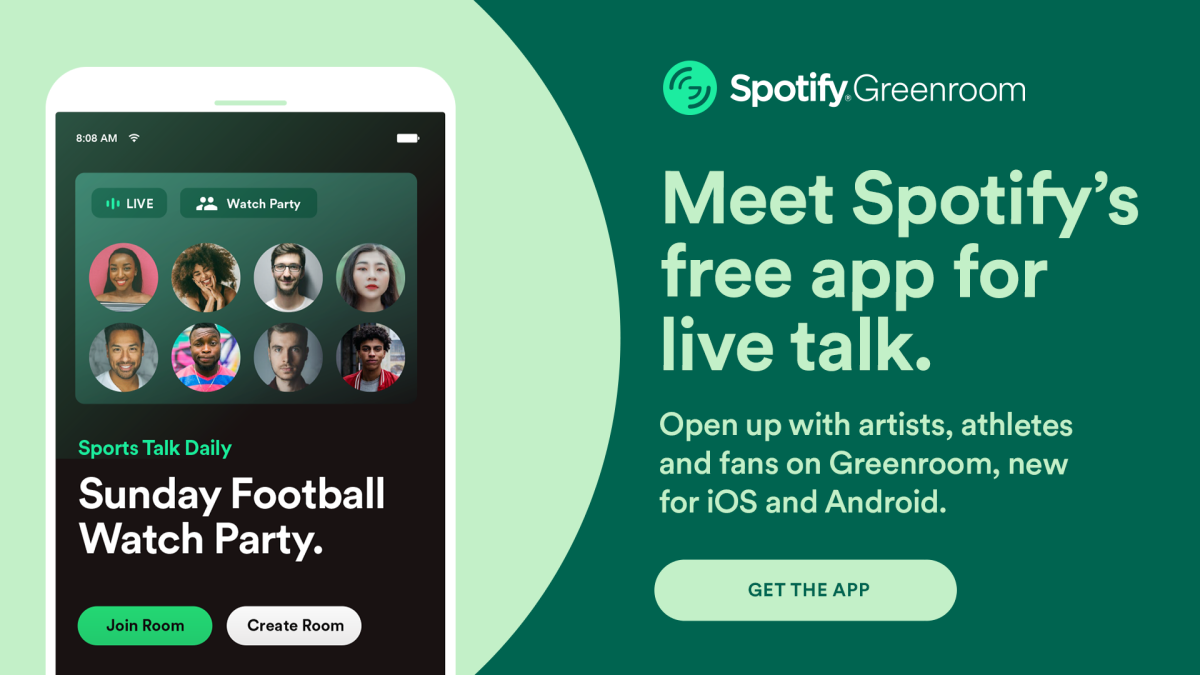
  • Spotify’s rebranded Locker Room mobile app rolling out globally as Greenroom

    Spotify’s rebranded Locker Room mobile app rolling out globally as Greenroom

    Locker Room is the mobile app developed by Betty Labs, a studio that’s been acquired by Spotify a few months ago. Originally, Locker Room was an invitation-only social platform dedicated to sports fans, but after being bought by Spotify, the app’s goals have been expanded to accommodate music lovers too.

    More importantly, the app has been renamed to Greenroom and released to more than 135 markets around the world. The new app is now available in its new form on both Android and iOS devices, and here are some of the new features added after Spotify’s acquisition:

    • New app branding (aka Greenroom) and a new overall look and feel
    • The ability for any user to host or participate in live rooms
    • A way to join Greenroom using your Spotify log-in info
    • A new onboarding experience that puts users’ interests front and center
    • Recording capabilities so you can complement your on-demand content with live conversations
    • Chat controls to ensure the best possible experience

    According to Spotify, more new programming to the platform spanning music, culture, and entertainment topics will be added to the app on top of the sports content the previous Locker Room app has been known for.

    In its current state, Greenroom is meant to optimize interactivity and deep connections between participants in live rooms, as well as make it easier for artists to keep in touch with their fans.

  • India to expedite Amazon, Flipkart antitrust probe

    India to expedite Amazon, Flipkart antitrust probe

    India’s antitrust watchdog plans to expedite a restarted probe into allegations of anti-competitive behavior at Amazon.com Inc and Walmart Inc’s Flipkart, as it intensifies scrutiny of big-tech firms, two people close to the matter said.

    The comments come as major U.S. technology firms including Twitter Inc and Facebook Inc are at loggerheads with the government over issues such as data privacy bills and policies some industry executives have called protectionist.

    The Competition Commission of India (CCI) initiated a probe in January last year on the basis of a complaint alleging Amazon and Flipkart promoted select sellers on their e-commerce platforms and that deep discounts stifled competition.

    The companies have denied wrongdoing.

    Near-immediate legal challenges from the pair stalled the probe for over a year until a court last week allowed it to resume, having dismissed arguments that the CCI lacked evidence.

    Though Amazon and Flipkart are likely to appeal, the CCI plans to demand information from them related to the allegations “as quickly as possible”, said one of the people, who declined to be identified due to the sensitivity of the matter.

    The investigation “will be expedited”, the person said. Such investigations in India typically take months to complete.

    Amazon declined to comment. Flipkart and the CCI did not respond to requests for comment.

    The CCI is speeding up all cases involving big technology firms, including by deploying additional officers for some cases and working to more stringent internal deadlines, said the two people, who are familiar with the watchdog’s thinking.

    “Cases involving digital firms are getting a priority at CCI as they can have a significant impact on the economy and Indian startups,” said one of the people.

    Last year, the CCI began reviewing allegations of Google abusing the position of its Android operating system in the smart TV market, and is likely to soon order a comprehensive antitrust investigation, the people said.

    Google declined to comment.

    Such a probe would be the third against Google, with the Alphabet Inc unit already battling cases relating to Android as well as its payment app.

    The CCI is also investigating practices at MakeMyTrip Ltd and privacy policy changes at Facebook’s WhatsApp.The probe into Amazon and Flipkart is restarting at a time when both are battling accusations from offline retailers that their complex business structures allow them to circumvent foreign investment rules for e-commerce.

    Amazon, which has said it “does not give preferential treatment to any seller”, told the court here it disagreed with the report.

    The antitrust body will examine the Reuters report and could use it as part of its investigation, one of the people said.

    “The CCI’s plan to move faster on such cases is in line with other antitrust regulators globally that are investigating digital markets like e-commerce and online search, which are dynamic and evolving fast,” said an Indian antitrust lawyer who represents tech firms.

  • Cafe de Coral ramps up Mainland China expansion plans

    Cafe de Coral ramps up Mainland China expansion plans

    Hong Kong-listed Cafe de Coral Holdings, one of Asia’s largest restaurant and catering groups operating quick-service restaurants, will speed up its expansion in mainland China with 17 store openings in the pipeline.

    The company revealed its plans after its net profit for 2020 almost quintupled, despite lower revenue in Hong Kong, thanks to pandemic relief and subsidies by the Chinese and Hong Kong governments, and other actions it undertook to save on costs.

    “Our business in mainland China has recovered after the initial severe lockdown. The group will continue to expand its network in the Greater Bay Area,” Sunny Lo Hoi-kwong, chairman of the company, said in a filing with the Hong Kong stock exchange on Tuesday.

    Cafe de Coral was able to take advantage of China’s fast recovery from the economic dislocation caused by the coronavirus pandemic. China’s economy was already growing at 2.3 percent even while Hong Kong’s economy was registering a 6.1 percent contraction in 2020.

    The company “took advantage of the situation to increase the pace of network expansion, opening 13 new stores during the year with a strategic focus on Guangzhou and Shenzhen – and currently has 17 stores in the pipeline to open next year”, he said. As of 31 March 2021, the company had 352 stores in Hong Kong and another 121 in mainland China.

    “As the mainland China market was able to quickly control the severity of the Covid-19 pandemic, domestic consumption is expected to rebound at a faster rate,” Lo said.

    The company’s net profit skyrocketed 3.88 times to HK$359.1 million (US$46.3 million) for the year ended 31 March 2021, from HK$73.6 million in the previous year, according to the filing. In contrast, its revenue fell 15.7 percent to HK$6.7 billion.

    Cafe de Coral received pandemic relief and subsidies from governments in the city and the mainland totaling HK$638.9 million, including HK$486.8 million under the Employment Support Scheme in Hong Kong.

    It also adapted product offerings and operations to a “new normal”, implemented stringent cost controls, manpower deployment, and acceleration of technology upgrades to capture more takeaway and delivery business. These measures, combined with relaxed social distancing restrictions, led to improved revenue in the second half of the financial year.

    Its net profit, however, still does not match pre-pandemic levels of up to HK$569.9 million for the year ended 31 March 2019, before the onset of protests and the coronavirus pandemic. Restrictions prompted by the pandemic barred dinner service for 114 days in the financial year, in addition to the nine days that it voluntarily suspended operations.

    “As the pandemic situation resolves, the group expects business performance to make progress along with the economy,” Lo said. “The industry has faced a severe shock and many weaker players have already exited the market. Those that remain are lean, fit, and aggressive. And we anticipate a sharply competitive environment in the year ahead.”

    A final dividend of 28 HK cents per share was recommended on Tuesday, compared with nil in the previous financial year.

  • Shinsegae, Naver win bidding battle for EBay South Korea

    Shinsegae, Naver win bidding battle for EBay South Korea

    South Korean retail giants Lotte Shopping and Shinsegae Group have submitted separate letters of intent for online marketplace eBay Korea, the retailers’ spokesmen confirmed on Monday.

    It is a deal that will almost certainly shake up the country’s e-commerce retail segment, potentially propelling one of the country’s largest retailers into becoming the leading omnichannel operator in South Korea.

    SK Telecom, South Korea’s biggest mobile carrier, and private equity firm MBK Partners, the largest shareholder of discount store chain Homeplus, reportedly dropped out of the race to acquire eBay Korea, which has been up for sale since last year.

    This week’s formal bidding marks the second attempt to divest its interests by eBay Korea – which represents about 11% of global sales within the U.S.-based eBay corporation – and it wants at least $4.43 billion, a price that is looking increasingly attainable.

    South Korea’s total e-commerce transactions jumped 25% last year according to Trade Ministry estimates and eBay Korea represents about 12.8% of South Korea’s e-commerce market, just trailing Coupang at 13% and market leader Naver with 18%. Its revenue is estimated at $1.17 billion, with an operating income of $76 million.

    Coupang listed on the New York Stock Exchange in March, becoming the largest Asian company since Alibaba to go public in New York and raising $4.6 billion. Founded by billionaire Bom Kim, a Harvard business school dropout, Coupang is now the country’s most valuable start-up with a market capitalization of more than $60 billion, backed by Softbank’s Vision Fund.

    By contrast, Lotte and Shinsegae’s market shares in the country’s e-commerce sector are estimated at just 5% and 3% respectively and the takeover of eBay Korea by either could reshape the country’s online retail segment and fast-track the winning bidder into a market-leading position. Both have struggled to catch up with the major online competitors, especially after the impact of the Covid-19 pandemic.

    However, the picture is complicated. Naver could be one of the biggest beneficiaries if Shinsegae is successful as it is believed to be offering support in financing any acquisition. The retailer and portal established a strategic alliance in March and Shinsegae could switch to Naver Pay as the payment platform for three e-commerce websites operated by eBay Korea: Gmarket, Auction and G9. At present, eBay Korea uses its own online payment system called Smile Pay.

    Top South Korean cellphone carrier SK Telecom and retail group E-Mart were still among the remaining suitors as the preliminary round of bids sought by the U.S. parent closed 16 March.

    Indeed, SK Telecom had been the leading candidate. The group also operates the online platform 11Street through a subsidiary, making SK Telecom the fourth-biggest e-commerce provider. But 11Street has struggled to grow, leading SK Telecom to partner with Amazon AMZN 0.0% in November in a collaboration initially limited to 11Street hosting Amazon products, but likely to expand in scope.

    Meanwhile, Lotte will no doubt view the purchase of eBay Korea as a springboard for rebuilding the group’s online business. In April 2020, the group merged the e-commerce sites of its department stores, supermarkets, electronics shops and other physical retail affiliates under one shopping platform called LotteON but it has failed to make much headway.

    While all the potential suitors have refused to give much away, Kang Hee-tae, CEO of Lotte Shopping, admitted during a spring shareholder meeting: “We’re certainly interested.”

    Launching in 2000, eBay Korea quickly grew and last year earned around $75 million in operating profit. But eBay Korea has been squeezed by rivals in recent years, while activist investors like Elliott Management have urged eBay to shed assets with poor growth prospects.

    The U.S. parent’s hope of securing a lucrative deal initially looked ambitious but then Coupang went public successfully, boosting its hopes.

    Whoever wins the battle for eBay Korea, the fact that the rivals are both major retail players should heat up the market and could lead to an array of collaborations and partnerships to fight scale with scale. South Korea is on the brink of the biggest online shake-up since eBay announced its arrival over two decades ago.

  • RCS becomes a little more Apple-flavored after adding end-to-end encyption

    RCS becomes a little more Apple-flavored after adding end-to-end encyption

    When Google first started disseminating Rich Communication Services (RCS) to Android users, Google tried to copy several iMessage features. Because it uses a data hook up instead of a cellular connection, RCS can deliver much larger messages (8,000 characters up from 160), handle larger video and image files, show read receipts and more.

    One thing that RCS didn’t have that iMessage did was end-to-end encryption. With this feature, a message you send could only be read by the recipient. In May 2020, the buzz around the water cooler was that Google was testing end-to-end encryption for RCS and today the beta label was removed.

    As Google Senior Vice President Hiroshi Lockheimer (@lockheimer) posted on Twitter today, one to one messages on RCS now are equipped with end-to-end encryption. Keep in mind that this means group messages are not included. The first bunch of RCS users to get the feature are those who had not opted into the Google Messages beta indicating that this could be part of a new wide RCS rollout.

    for end-to-end encryption to work with RCS, both ends of the conversation need to have RCS enabled, and you’ll know if a message you’re sending is encrypted end-to-end if you see a lock icon on the send button.

    Little by little, Google is trying to end the blue bubble jealousy that Android users have suffered with through the years. If two RCS users are exchanging a chat, both will have blue text bubbles just like when an iPhone user is sending an iMessage to another iPhone user.

    Originally, all of the major carriers were going to be involved in the Cross Carrier Messaging Initiative (CCMI) allowing each wireless provider to offer a single new RCS app. Ironically, Google was not part of the CCMI which seemed strange in the first place considering that RCS was its baby.

    And earlier this year, the CCMI was canceled as Verizon said, “The owners of the Cross Carrier Messaging Initiative decided to end the joint venture effort. However, the owners remain committed to enhancing the messaging experience for customers including growing the availability of RCS.”

    T-Mobile also released a statement at the time that stated, “We’re committed to delivering RCS interoperability and are working with other providers to make it happen. T-Mobile customers with Android devices can currently enjoy RCS messaging across our network as well as with many other customers worldwide by interoperating with Google.”

    The major U.S. carriers were hoping to profit from the monetization of the CCMI by allowing their customers to chat with their favorite brands without having to switch apps. Users would be able to schedule appointments, pay bills, order rideshare and more through RCS thanks to the CCMI

    Analyst Lynnette Luna of GlobalData noted that RCS is really important to Google, but pointed out that because of Apple’s iMessage platform, there is no reason for Apple to get involved in RCS, and Apple has half of the U.S. smartphone market. She did say that Google continues to push RCS in the U.S. and that is because the company hopes to make money by pushing business to consumer ads.

    Luna added at the time that she didn’t expect Verizon, AT&T or T-Mobile to make a big push for RCS in the states. Consider though that in Japan, 60% of RCS messages are clicked on compared to the 0.001% that click on mobile banner ads. You can understand why Google has such high hopes for RCS as a platform for business.

    And with 1 to 1 chats now encrypted end-to-end, Google could still use RCS to pad the top line some more.

  • Huawei’s 7th Cyber Security and Privacy Protection Transparency Center opens its doors in China

    Huawei’s 7th Cyber Security and Privacy Protection Transparency Center opens its doors in China

    Huawei has opened its 7th and largest Global Cyber Security and Privacy Protection Transparency Center in Dongguan, China, with representatives from GSMA, SUSE, the British Standards Institution, and regulators from the UAE and Indonesia speaking at the opening ceremony. During the opening ceremony, H.E. Dr. Mohamed Hamad Al Kuwaiti, head of cybersecurity, UAE, delivered a keynote on the importance of cyber cooperation for a resilient and vibrant digital future.

    Along with the opening of the new center, Huawei also released its Product Cyber Security Baseline, marking the first time the company has made its product security baseline framework and management practices available to the industry as a whole. These actions are part of the company’s broader efforts to engage with customers, suppliers, standards organizations, and other stakeholders to jointly strengthen cybersecurity across the industry.

    “Cybersecurity is more important than ever,” said Ken Hu, Huawei’s rotating chairman, at the opening of the Dongguan center. “As an industry, we need to work together, share best practices, and build our collective capabilities in governance, standards, technology, and verification. We need to give both the general public and regulators a reason to trust in the security of the products and services they use on a daily basis. Together, we can strike the right balance between security and development in an increasingly digital world.”

    Over the past few years, industry digitalization and new technologies like 5G and AI have made cyberspace more complex than ever, compounded by the fact that people have been spending a greater portion of their lives online throughout the COVID-19 pandemic. These trends have led to a rise in new cybersecurity risks.

    During his speech, Hu also emphasized the importance of cybersecurity and shared responsibility to Huawei. Huawei has been committed to cooperative cybersecurity as early as 2000. There are now more than 3,000 cybersecurity R&D personnel in Huawei. Moreover, Huawei’s annual R&D investment in cybersecurity and privacy protection accounts for about 5% of its total R&D expenses.

    Huawei opened the new Global Cyber Security and Privacy Protection Transparency Center in Dongguan to address these issues, providing a platform for industry stakeholders to share expertise in cyber governance and work on technical solutions together. The center is designed to demonstrate solutions and share experience, facilitate communication and joint innovation, and support security testing and verification. It will be open to regulators, independent third-party testing organizations, and standards organizations, as well as Huawei customers, partners, and suppliers.

    H.E. Dr. Mohamed Hamad Al Kuwaiti, head of cybersecurity, UAE, said, “A public-private partnership will be critical to build collaboration among private, public and government entities so as to establish a globally trusted digital oasis in the UAE.”

    To further a unified approach to cybersecurity in the telecoms industry, organizations like GSMA and 3GPP have also been working with industry stakeholders to promote NESAS Security Assurance Specifications and independent certifications. These baselines have seen wide acceptance in the industry, and will play an important role in the development and verification of secure networks.

    Mats Granryd, director general of GSMA, spoke at the opening of Huawei’s new center. “The delivery of existing and new services in the 5G era will rely heavily on the connectivity provided by mobile networks and will fundamentally depend on the underlying technology being secure and trusted,” he said. “Initiatives such as the GSMA 5G Cybersecurity Knowledge Base, designed to help stakeholders understand and mitigate network risks, and NESAS, an industry-wide security assurance framework, are designed to facilitate improvements in network equipment security levels across the sector.”

    Hu also highlighted the importance of knowledge sharing. At the event, Huawei also released its Product Cyber Security Baseline, the culmination of over a decade of experience in product security management, incorporating a broad range of external regulations, technical standards, and regulatory requirements. The Baseline, together with Huawei’s other governance mechanisms, helps ensure the quality, security, and trustworthiness of the company’s products. Over the years, Huawei has built over 1,500 networks that connect more than three billion people across 170 countries and regions. None of these networks have ever experienced a major security incident.

    Hu emphasized that the more knowledge and best practices we share, the more effectively we can strengthen cybersecurity as a community.

    According to Huawei, the baseline covers 15 categories, 54 requirements, and 112 specific implementation instructions and interpretations, ensuring the high-quality, security, and trustworthiness of Huawei products. It includes 4 categories of legal compliance requirements (prevention of backdoors, prevention of malware and malicious behaviors, protection of user privacy and protection of communication freedom) and 11 categories of security and functional assurance requirements (including secure coding, compilation, sensitive data protection, encryption, secure boot, integrity protection, and lifecycle management).

    “This is the first time we’ve shared our security baseline framework with the entire industry, not just core suppliers,” said Sean Yang, director of Huawei’s Global Cyber Security and Privacy Protection Office. “We want to invite all stakeholders, including customers, regulators, standards organizations, technology providers, and testing organizations, to join us in discussing and working on cybersecurity baselines. Together, we can continuously improve product security across the industry.”

    At present, the industry still lacks a standards-based, coordinated approach, especially when it comes to governance, technical capabilities, certification, and collaboration.

    “Cybersecurity risk is a shared responsibility,” concluded Ken Hu in his opening remarks. “Governments, standards organizations, and technology providers need to work closely together to develop a unified understanding of cybersecurity challenges. This must be an international effort. We need to set shared goals, align responsibilities, and work together to build a trustworthy digital environment that meets the challenges of today and tomorrow.”

    Two years ago, Huawei opened a similar center in Brussels, with others located in the UK, Canada, Germany, Italy, and the UAE.