Author: Mei Ling Tan

  • Paris Baguette enters Cambodia

    Paris Baguette enters Cambodia

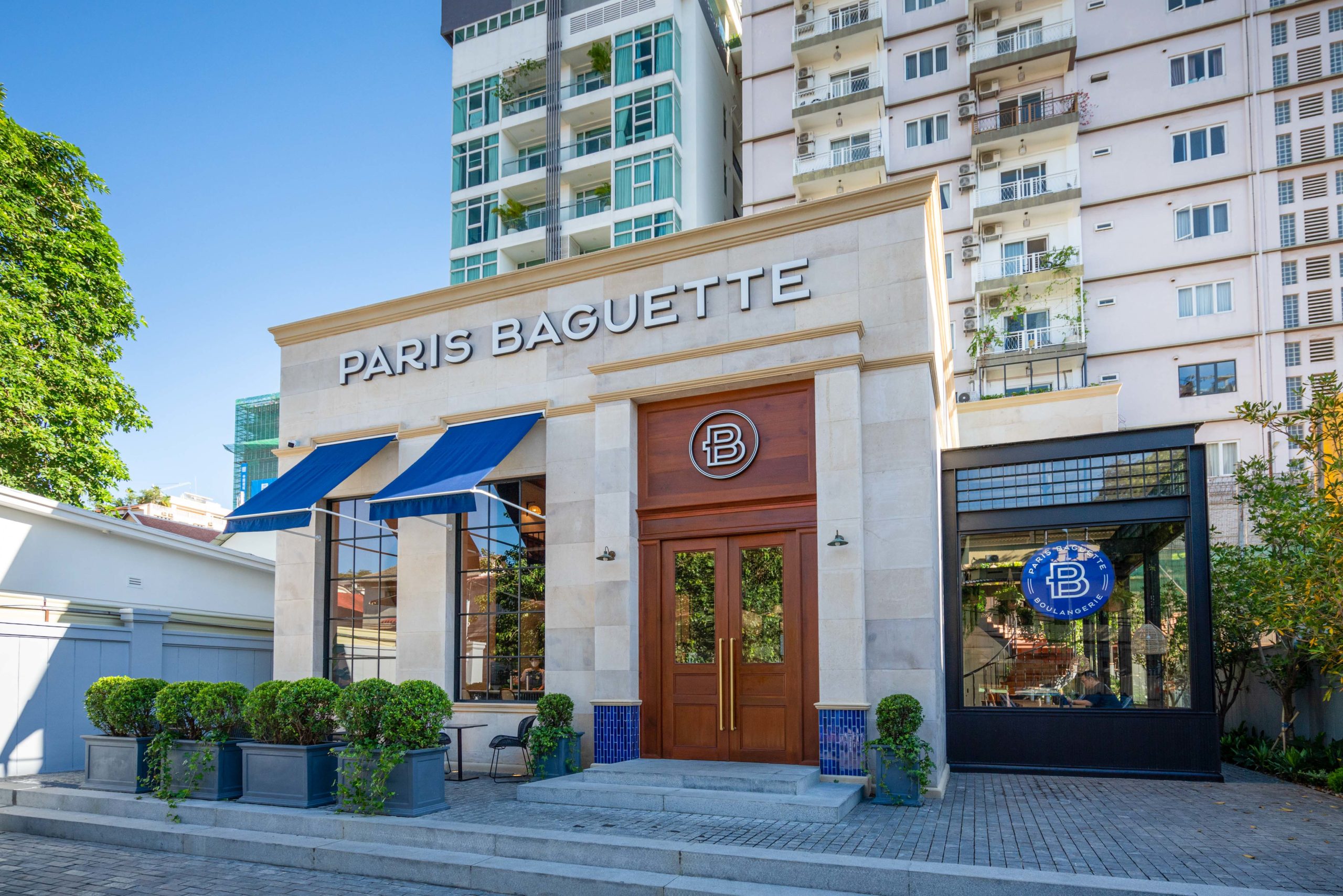
    SPC Group is launching the Paris Baguette bakery franchise in Cambodia, opening the first branch in the country‘s capital city, the company said Wednesday.

    According to SPC Group, the Korean firm behind bakery brand Paris Baguette, it forged ties with Cambodia’s HSC Group to open the first Paris Baguette store in Phnom Penh.

    Cambodia is the sixth country in which Paris Baguette has launched, and it is the first time the bakery operator has formed a joint venture for its overseas business, SPC Group said.

    For the business partnership, Paris Baguette’s affiliate in Singapore established a joint venture, dubbed H.SPC, with HSC Food&Beverages, an affiliate of the Cambodian conglomerate, SPC Group said.

    With the launch of Paris Baguette in Cambodia, SPC Group aims to penetrate into the Southeast Asian market.

    “SPC Group is committed to expanding business in Southeast Asia,” an SPC Group official said.

    “We recently met with a Malaysian senior minister to discuss establishing a halal-certified food factory there, and we are reviewing plans to tap into Indonesia, which has the biggest market in the region. We also plan to enter the Middle East market in the future.”

    The first Paris Baguette store in Cambodia is located in the central area of Boeung Keng Kang in the capital city, occupying the entire space of a three-story building.

    SPC Group operates about 430 Paris Baguette stores overseas in six countries — China, the United States, France, Vietnam, Singapore and Cambodia.

  • SunRice launches cook-in flavour rice sachets

    SunRice launches cook-in flavour rice sachets

    Australian rice company SunRice has launched Flavour Your Rice, the brand’s first range of cook-in flavor rice sachets.

    The easy-to-use paste sachet adds flavor to ordinary rice by using it as a base during the cooking process, making an easy side dish or a meal on its own, said SunRice.

    Flavor Your Rice is available in three different flavors – Indian Spice, Thai Coconut, and Lemon, Chicken, and Herb.

    “Aussie consumers are increasingly looking for products that offer taste and convenience, without compromising on quality,” said Andrew Jeffrey, Head of Marketing, SunRice.

    “Flavour Your Rice is a quick and easy flavor solution bringing authentic Indian and Thai flavors to Aussie tables,”

    There are three sachets per pack and the product is sold in Woolworths and independent grocers nationwide.

  • Oriental Watch profit soars as Chinese shop at home instead of travel

    Oriental Watch profit soars as Chinese shop at home instead of travel

    Most readers would already be aware that Oriental Watch Holdings’ stock increased significantly by 37% over the past three months. As most would know, fundamentals are what usually guide market price movements over the long term, so we decided to look at the company’s key financial indicators today to determine if they have any role to play in the recent price movement. Specifically, we decided to study Oriental Watch Holdings’ ROE in this article.

    Return on equity or ROE is an important factor to be considered by a shareholder because it tells them how effectively their capital is being reinvested. In short, ROE shows the profit each dollar generates with respect to its shareholder investments.

    The ‘return’ is the profit over the last twelve months. That means that for every HK$1 worth of shareholders’ equity, the company generated HK$0.05 in profit.

    So far, we’ve learned that ROE is a measure of a company’s profitability. Depending on how much of these profits the company reinvests or “retains”, and how effectively it does so, we are then able to assess a company’s earnings growth potential. Generally speaking, other things being equal, firms with a high return on equity and profit retention, have a higher growth rate than firms that don’t share these attributes.

    On the face of it, Oriental Watch Holdings’ ROE is not much to talk about. We then compared the company’s ROE to the broader industry and were disappointed to see that the ROE is lower than the industry average of 8.5%. However, we were pleasantly surprised to see that Oriental Watch Holdings grew its net income at a significant rate of 42% in the last five years. So, there might be other aspects that are positively influencing the company’s earnings growth. Such as – high earnings retention or efficient management in place.

    Next, on comparing with the industry net income growth, we found that Oriental Watch Holdings’ growth is quite high when compared to the industry average growth of 8.5% in the same period, which is great to see.

    The basis for attaching value to a company is, to a great extent, tied to its earnings growth. What investors need to determine next is if the expected earnings growth, or the lack of it, is already built into the share price. This then helps them determine if the stock is placed for a bright or bleak future. Is Oriental Watch Holdings fairly valued compared to other companies? These 3 valuation measures might help you decide.

    The three-year median payout ratio for Oriental Watch Holdings is 45%, which is moderately low. The company is retaining the remaining 55%. So it seems that Oriental Watch Holdings is reinvesting efficiently in a way that it sees impressive growth in its earnings (discussed above) and pays a dividend that’s well covered.

    Moreover, Oriental Watch Holdings is determined to keep sharing its profits with shareholders which we infer from its long history of paying a dividend for at least ten years.

  • UBS Remains in Race for Dutch Asset Manager

    UBS Remains in Race for Dutch Asset Manager

    The Swiss bank is among the suitors remaining for Dutch asset manager NN. The competition for NN is strong – but UBS may have an ace up its sleeve.

    The sale of Dutch money manager NN is entering the next round with UBS, DWS, Prudential, and U.S.-based Nuveen submitting bids. None of the reported suitors nor the target commented.

    The potential acquirers are in the midst of due diligence, according to the newswire, though the deadline to place bids for the 300 million euro ($363 million) asset manager is July 1. The other firms which had expressed interest in buying – including Allianz, Generali, and The Royal London Group – have retreated.

    NN aims to take in as much as 1.6 billion euros by selling. UBS has somewhat of an inside track on NN because ING spun it off in 2014 – under then-CEO Ralph Hamers, who moved to the UBS top job last November.

  • Citi to End Small Biz Banking in Singapore

    Citi to End Small Biz Banking in Singapore

    The bank will shut its consumer unit serving small businesses in Singapore in mid-August.

    Citibank has decided to close its Citibusiness unit, which will affect some 2,000 customers, following an ongoing strategic review of the business.

    About 20 to 30 staff will be affected by the changes, a bank spokesperson said, saying that Citi would be re-allocating its resources and our people to support other growth areas and sharpen its client focus.

    Citibusiness, which serves small-sized businesses, is part of its consumer banking division. The bank will continue to serve small and medium-sized enterprise (SME) clients through Citi Commercial Bank.

    Singapore is a priority market for Citi. We continue to invest and focus on growth areas of the bank including the SME and commercial banking business, the spokesperson said.

    Citi recently announced that it is considering downsizing its consumer business worldwide, with an eye on selling some of its businesses in the Asia Pacific region.

    At the same time, the U.S.-headquartered bank has placed its bets on four wealth hubs, which includes Singapore, as it consolidates its operations globally.

    It aims to double its wealth management market share in Singapore from the current 5 percent, and triple the number of clients by 2025. To achieve this, it is looking to hire over 330 relationship managers.

  • Casino operator targets ending losing streak

    Casino operator targets ending losing streak

    Royal International Corporation, which operates a casino in the northern Quang Ninh Province, has set itself a profit target of $500,000 this year after two years of losses.

    It seeks to double revenues to $10.3 million, $5.8 million from the casino and the rest come from its hotel and villas.

    The corporation will continue with last year’s business strategy of targeting foreigners working in Vietnam who are unable to return to their home country due to the Covid-19 pandemic.

    It plans to cut costs and adopt a flexible pricing strategy to attract Vietnamese customers once the pandemic passes.

    It posted a VND82 billion ($4.3 million) loss last year, and said casinos are a unique business that rely on chance but also pointed to the increasing number of casinos in the north, which cut into its revenues.

    RIC, which has a charter capital of $22 million, is listed on the Ho Chi Minh Stock Exchange.

  • MV Agusta May Resurrect Cagiva Elefant Name

    MV Agusta May Resurrect Cagiva Elefant Name

    MV Agusta may revive the Cagiva name, with the iconic Cagiva Elefant adventure bike making a comeback. In an interview to an Italian publication, MV Agusta CEO Timur Sardarov spoke about the motorcycle brand’s future plans, including new products, as well as two new engines that the brand is working on, a 550 cc and a 950 cc, which will include new models. More importantly, Sardarov also talked about a new adventure bike, with the name Elefant, taken from the iconic Dakar-winning Cagiva Elefant adventure bike.

    MV Agusta owns the Cagiva name, but so far it’s not clear whether the Elefant name will be introduced under the MV Agusta brand or as a separate Cagiva Elefant model. In fact, a few years ago, it was widely reported that MV Agusta will revive the Cagiva motorcycle name, but that it will be launched as an electric mobility brand. The latest comments from MV Agusta’s top boss seems to suggest that Cagiva could also be a sub-brand, under the MV Agusta umbrella.

    “Cagiva is a brand that belongs to MV Agusta. Our marketing department is evaluating the possibilities of products with the Cagiva brand and we are also considering whether to define Elefant as a ‘sub-brand’ of MV Agusta or as Cagiva Elefant. The decision has not yet been made,” Saradrov is quoted as having said in the interview.

    Cagiva is an Italian motorcycle manufacturer founded in 1950 by Giovanni Castiglioni in Varese. The brand has a rich history and at one point even owned Ducati and MV Agusta, as well as Moto Morini. In the late 1990s, MV Agusta became the main brand comprising Cagiva and Husqvarna. The brand has been inactive for more than a decade, and with fresh impetus and growth to the MV Agusta brand, Cagiva may just as well make a comeback in the next few years.

    The Sardarov family originally came on board as investors in MV Agusta, but assumed full control in 2019, signaling the end of the Castiglioni family’s historic ownership of the MV Agusta and Cagiva brands. Under the Russian businessman’s leadership, the MV Agusta brand has slowly stabilised, and made appreciable moves to address concerns regarding reliability and ownership experience. Currently, MV Agusta is busy updating its Euro 5 range, and once that is completed, new models will be developed, in the 550 cc and 950 cc platforms.

  • Bank of Singapore Loses Russian Heavyweight

    Bank of Singapore Loses Russian Heavyweight

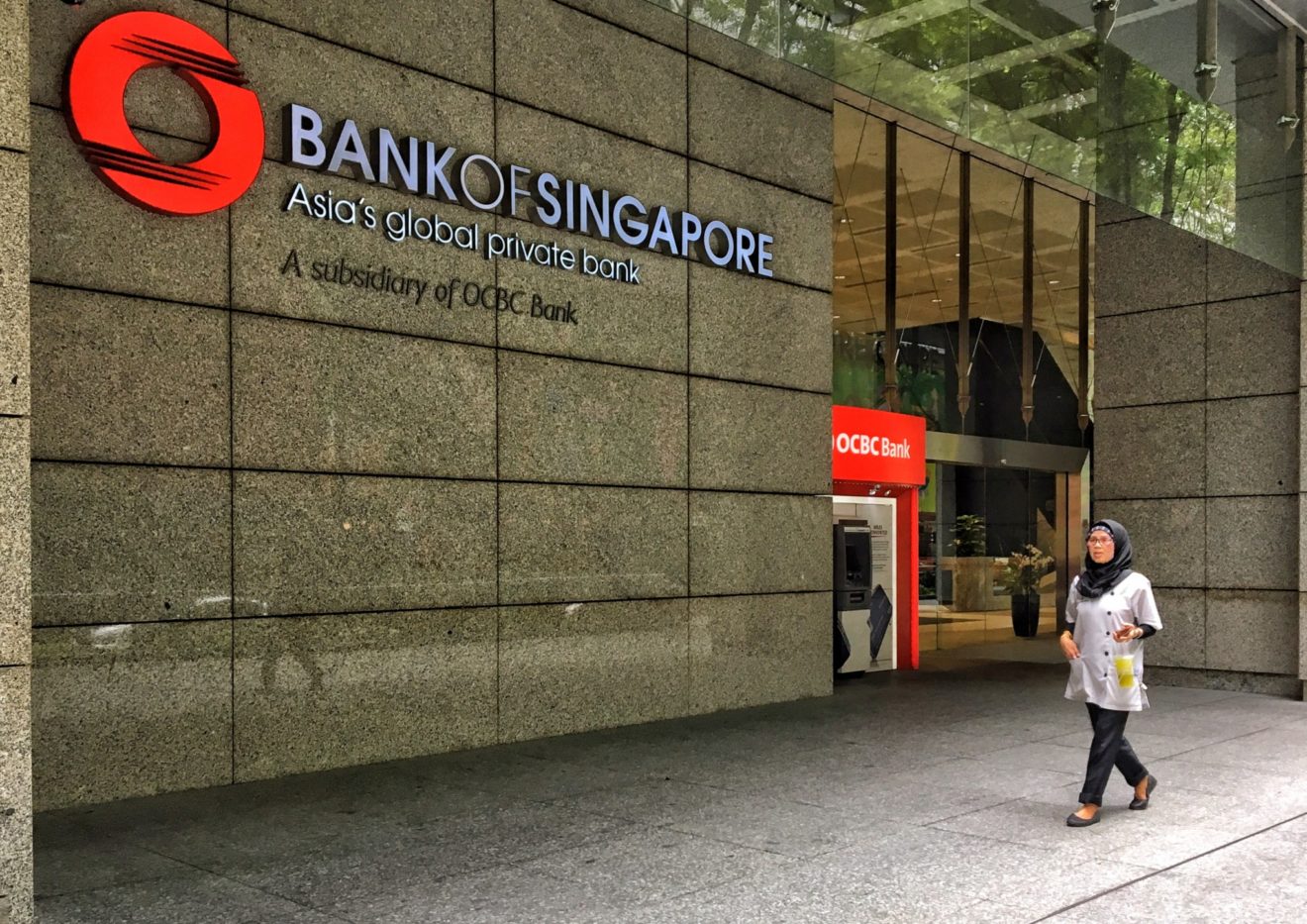
    A key private banker covering the Russian market has left Bank of Singapore.

    Vadim Bondarev, head for Russia and Eastern Europe, is leaving Bank of Singapore (BoS), sources familiar with his exit said.

    A spokesperson from the bank confirmed this information.

    Bondarev joined BoS in 2014 and was responsible for covering ultra-high-net-worth clients from Russia and CIS. He lately relocated from Singapore to build up the European headquarters of BoS in Luxembourg.

  • Bank of Singapore Nets Ex-UBS Wealth Planning Veteran

    Bank of Singapore Nets Ex-UBS Wealth Planning Veteran

    Bank of Singapore bolsters its business with the hire of a 30-year wealth planning veteran from UBS.

    Bank of Singapore hires Paul Chua as its global head of wealth planning, according to a statement, effective June 28 this year.

    In his Singapore-based role, Chua reports to global head of products Lim Leong Guan.

    Chua succeeds Tariq Salem who remains with the bank to focus exclusively on his role as head of structured solutions group.

    Chua has over 30 years of tax and wealth planning experience in advising ultrahigh net worth and multi-generational families on the structuring of their estate, succession, and wealth transfer strategies.

    He was most recently with UBS where he spent 19 years, last as its Singapore head of wealth planning.

    Aside from exemplary leadership qualities, Chua is known as an industry veteran who extends a personal touch when dealing with clients, said Lim, who also joined Bank of Singapore from UBS last year. We are confident that he will be a key addition to our wealth planning team to help develop deeper and more meaningful relationships with our clients.

    At a minimum net worth of $250 million, Bank of Singapore is increasingly focused on the family office segment which has seen clients onboarded triple in 2020 compared to 2019.

    The bank also hired Carrie Ng as head of single-family office advisory – a newly created role – in March this year and Joanna Ho as the Greater China and North Asia head of wealth planning last year.

  • Kraft Heinz gives away bulk ketchup to Melbourne small businesses

    Kraft Heinz gives away bulk ketchup to Melbourne small businesses

    Food and beverage company Kraft-Heinz is giving away 12-liter cartons of Heinz Tomato Ketchup to small business owners in Melbourne, including burger restaurants and other quick-service restaurants.

    As restrictions ease across Victoria, the company says it wants to help business owners affected by Covid-19 lockdowns get back on their feet with complimentary product deliveries. 

    “We know that the Melbourne restaurant industry has been hit hard by the latest lockdowns, with small, independent businesses particularly impacted,” said Marisa Jones, head of marketing foodservice ANZ at Kraft Heinz.

    “Whether you’re a burger bar, cafe owner or run another quick-service restaurant, we want to provide our foodservice community with an offer of assistance,” she said. 

    Eligible businesses are those located in the Melbourne metropolitan area, of 30 employees or less, privately owned and not part of a franchise group. The offer will be limited to one carton per business, who do not have to be an existing customer of Kraft Heinz.

    Business owners can apply for this offer from Kraft Heinz here until June 30 or until supplies last. Each delivery will consist of a carton of Heinz Tomato Ketchup containing three 4-litre bottles. 

  • Citi Hires Ex-EY Partner for Asia Digital Payments

    Citi Hires Ex-EY Partner for Asia Digital Payments

    Citi has hired a former partner from Ernst & Young to lead the upcoming launch of a new digital payment solution in the region.

    James Lloyd joins the treasury and trade solutions (TTS) unit as its Asia Pacific head of Spring by Citi – upcoming digital payments offering – according to an internal memo.

    In his Hong Kong-based role, Lloyd reports to Sanjeev Jain, APAC head of payments and receivables, TTS, and Anupam Sinha, global head of domestic payments and Receivables, TTS.

    Lloyd joins from EY where he was a partner within the strategy and transactions practice, leading the firm’s dedicated regional fintech capabilities and serving as APAC leader for its global payments practice.

    Spring by Citi

    The Spring by Citi offering aims to help corporate and institutional clients reach end-customers by enabling digital payments across preferred methods, be it credit cards, instant payments or digital wallets.

    The offering is scheduled for launch in the fourth quarter this year starting with Singapore, Australia and Hong Kong before adding more markets in 2022.

    A spokesperson for the bank confirmed the new appointment.

  • UOB Pilots Digital Signature Authorization

    UOB Pilots Digital Signature Authorization

    The initiative will remove one of the roadblocks – the need for physical signatures – in fully digitalizing the documentation process.

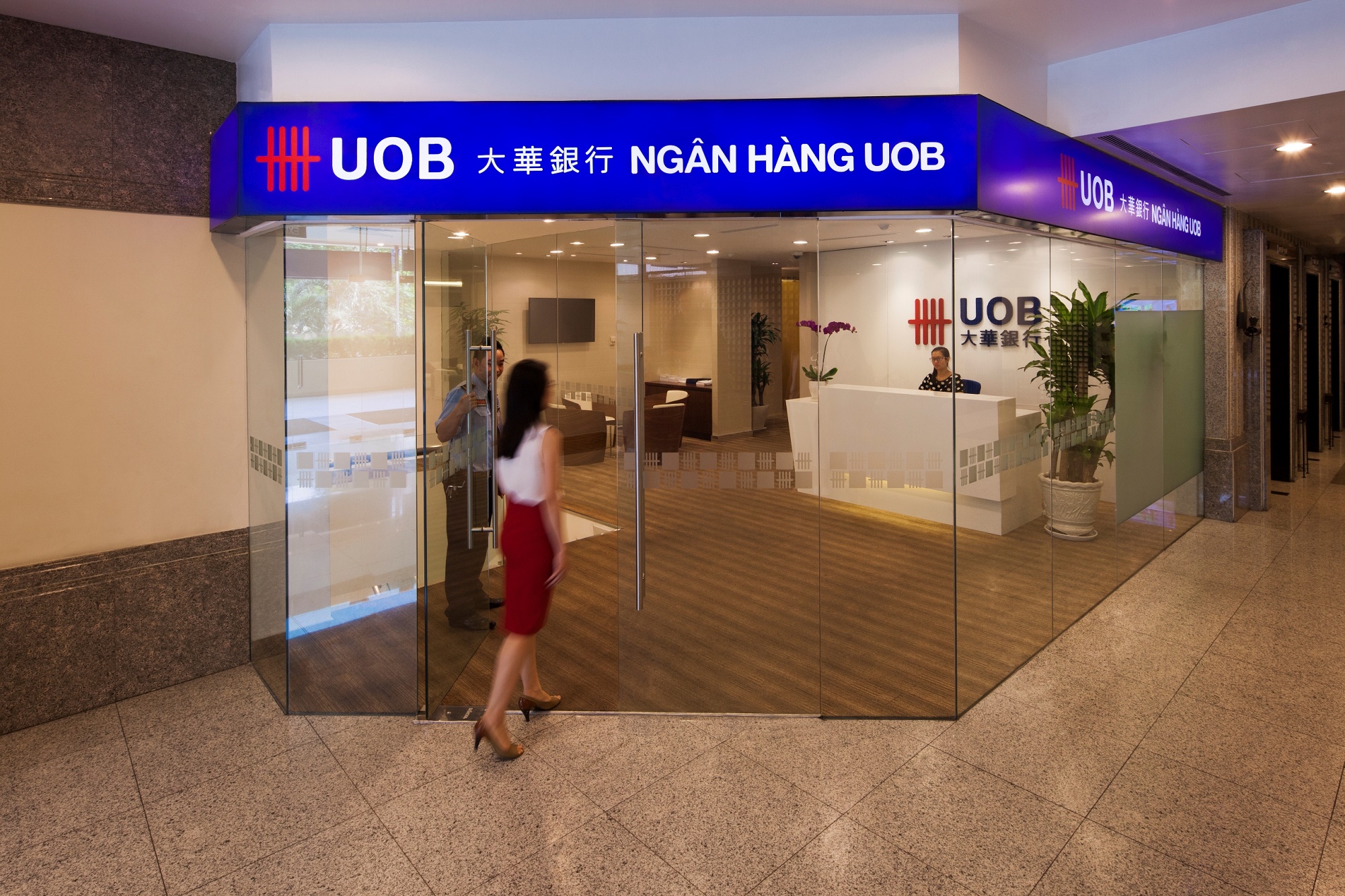
    UOB is starting a 12-month trial to test the use of Government Technology Agency’s (GovTech) Sign with Singpass among its retail and corporate customers, which will be used to confirm transactions such as individual wealth planning services and the PayNow Corporate application using a customer’s digital signature, the bank announced on Thursday.

    The features feature enables customers to use Singpass – the digital identity for Singapore residents that is identifiable and uniquely linked to the user – to sign electronic documents digitally via the Singpass app.

    The bank said it is pushing this innovation as research shows that COVID-19 has accelerated the move to online services, with more than 65 percent of customers expecting banking services to be digital by default.

    The change in customer expectations and experience during COVID-19 has made it imperative that we explore and extend our digital capabilities across more of our financial services and products, Susan Hwee, UOB head of group technology and operations, said in the announcement.

    UOB plans to expand the service to include more of its products and services for both the retail and wholesale segments in Singapore, and to expand its electronic signature capability to the region from 2022.

    One benefit from the move to e-signatures is its reduction of paper usage – more than 2 million multi-page hardcopy documents each year, which in turn will save more than 700 trees per year, once rolled out across its markets.

  • Crypto Exchange Searches Blocked in China

    Crypto Exchange Searches Blocked in China

    Chinese users were reportedly unable to find results for popular cryptocurrency exchanges on major search engines in the country.

    Keyword searches for trading platforms such as Binance, OKEx and Huobi yielded no results, according to various media outlets.

    The searches were conducted on major search engines like Baidu, Sogou, Zhihu, and Weibo.

    This marks yet another sign of further tightening on cryptocurrencies, especially with regards to online content.

    Earlier this month, multiple popular Weibo accounts featuring related content were reportedly suspended or shut down over violation of the social media platform’s rules.

  • Ex-J.P. Morgan Exec Joins UBS Private Markets Unit

    Ex-J.P. Morgan Exec Joins UBS Private Markets Unit

    UBS Global Wealth Management has hired a former J.P. Morgan executive to join its direct investment group.

    Edith Chan joins UBS Global Wealth Management as its Greater China head of direct investment group distribution, according to an internal memo effective June 21. A spokesperson for the bank confirmed the hire.

    Chan rejoins the Swiss bank after previously serving in a similar role as its Greater China head of private markets distribution. She was most recently with J.P. Morgan where she also focused on private markets between 2018 and 2020. She previously worked with various private banks and asset managers including HSBC Private Bank and Deutsche Bank.

    UBS’ direct investment group focuses on investing in private companies via direct participation in primary and secondary equity share placements.

    It is also active in private debt and credit placements as well as real estate and infrastructure funds.

    UBS sources such deals globally from its investment bank, asset manager, and network of blue-chip financial sponsors.

  • Apple manipulated App Store search to favor its own apps over the competition

    Apple manipulated App Store search to favor its own apps over the competition

    Back in 2019, after investigations done by the New York Times and the Wall Street Journal, it appeared that Apple was ranking its own apps ahead of competitors’ similar apps in the App Store search feature. This is an issue that lawmakers are seriously concerned with and it has been associated with other companies that sell their own products alongside third-party brands such as Google and Amazon. Apple denied that it had done anything wrong. The company pointed to a secret algorithm it uses with 42 variables to prevent it from manipulating the App Store search results.

    But now it appears that Apple did boost App Store search results. Email that was released during the Epic vs. Apple lawsuit showed that the tech giant apparently admitted that it had boosted the placement of its own Files app above listings for the competition during a time period that lasted 11 months. Apple app search lead Debankur Naskar hinted that some hanky panky was going on at Apple when he wrote in an email “We are removing the manual boost and the search results should be more relevant now.”

    Naskar was responding to an email from Epic Games CEO Tim Sweeney who was a major Apple partner at the time. Sweeney had “confronted” Apple after the latter’s Files app landed first in the App Store’s search results when he searched for Dropbox. While you might not be able to tell the executive’s tone from written words, you can imagine Sweeney sounding incredulous when he emailed Apple to say that “Dropbox wasn’t even visible on the first page of search results.”

    Apple explained away the issue by telling The Verge that its Files app had a Dropbox integration. Thus, Apple included “Dropbox” in the metadata for its Files app and as a result, Files was always ranked ahead of Dropbox. This response doesn’t match Naskar’s comments about “removing the manual boost.”

    Dropbox has been a problem for Apple going back to 2009 when then Apple CEO Steve Jobs said that iCloud would help kill off Dropbox after Jobs could not convince Dropbox CEO Drew Houston to sell what was then a start-up company to Apple.

    One engineer at Apple changed the algorithm for App Store search in July 2019 dropping the placement of Apple’s own app in the search results. The New York Times back in September 2019 showed how those searching the App Store for “music” would see streamer Spotify at the top of the list with Pandora eighth. Repeating the same search in 2016 resulted in Apple Music appearing at the top of the list with Spotify fourth.

    Two years later, the top six results under “music” consisted of Apple’s own music-based apps. Pandora remained in eighth place. By December 2018, the first eight search results were all for Apple’s own apps, some unrelated to music: (Apple Music, Garage Band, iTunes Remote, Music Memos, Logic Remote, iTunes Store, iMovie, Clips) while Spotify was number 23.

    After Spotify complained to European regulators, the results for April 2019 were much different with iTunes and Apple Music numbers 1-2, but with Spotify fourth and YouTube Music fifth. Apple had no other apps appearing under a search in the App Store under “music.”

    Apple released a statement to The Verge that says, “We created the App Store to be a safe and trusted place for customers to discover and download apps, and a great business opportunity for all developers. App Store Search has only one goal — to get customers what they are looking for. We do that in a way that is fair to all developers and we do not advantage our apps over those of any developer or competitor. Today, developers have many options for distributing their apps and that’s why we work hard to make it easy, fair and a great opportunity for them to develop apps for our customers around the world.”