Author: Mei Ling Tan

  • Chip delays reach crisis territory; Apple, Qualcomm and others are affected

    Chip delays reach crisis territory; Apple, Qualcomm and others are affected

    The worldwide chip shortage is about to hit a benchmark indicative of more serious problems ahead for tech companies. This benchmark measures the lead times for chip orders, or the time it takes between ordering semiconductors and actually receiving the shipment. Bloomberg reports that this measure hit 17 weeks last month according to Susquehanna Financial Group which says that it is a sign that users are getting desperate to obtain the needed components

    Su.squehanna Financial notes that the 17 weeks is the longest period of time it has recorded for this measure since it started tracking it in 2017. Based on that figure, the research firm says that when it comes to purchasing sufficient chips, consumer electronic firms and automobile outfits are in “the danger zone.” Last year at this time, the lead time was 12.53 weeks.

    Susquehanna analyst Chris Rolland disseminated a note to clients yesterday in which he wrote about lead times for analog chips, power management chips, and others. “All major product categories up considerably. These were some of the largest increases since we started tracking the data,” he stated. Apple has said that it could lose up to $4 billion in revenue during the current quarter thanks to shortages of chips and other components, while automakers are on track to report a revenue shortfall of $110 billion this year.

    Rolland wrote that demand for chips might be overstated by actions taken by customers afraid of missing out on supplies. “Elevated lead times often compel ‘bad behavior’ at customers, including inventory accumulation, safety stock building and double ordering. These trends may have spurred a semiconductor industry in the early stages of over-shipment above true customer demand.”

    The analyst said that the 17 week lead time expanded from the previous 16 week lead time and marks the fourth consecutive month that lead time has risen by a “sizeable” amount. Power Management chips lead time weighs in at 23.7 weeks, up about four weeks over the last month. Industrial microcontroller’s order lead times have recently risen by three weeks.

    Susquehanna says that delays are longer for smaller manufacturers; for example, headphone manufacturers have lead times longer than 52 weeks! The expanded lead times has forced firms to redesign, and even drop projects. Rolland says that 70% of the companies he tracks in the chip industry are reporting expanding lead times while 20% have seen lead times drop.

    NXP Semiconductors NV, a company that supplies chips to automakers, has seen lead times rise from 12 weeks late last year to 22 weeks. And STMicroelectronics, another chip supplier for the auto industry, had its lead times rise by 4 weeks in April to 28 weeks.

    Taiwan, the home of the world’s largest independent foundry TSMC, has been dealing with a couple of issues that could impact chip production in the country. The number of COVID-19 cases in the country has been rising and in addition, drought has impacted the country. Water is an important ingredient when it comes to chip making and TSMC has ordered huge deliveries of the ultra-pure water required to run its assembly lines.

    TSMC has plenty of important customers that rely on it to turn chip designs into chips. Among those firms are Apple, Qualcomm and MediaTek. Today, Taiwan’s Centers for Disease Control raised the island’s alert level which spreads COVID-containment measures to the whole country.

    Also today, Taiwan’s Water Resources Agency said that the country needed to use more aggressive water-saving methods thanks to the low amount of rain that has fallen in the country. TSMC responded by saying that it will continue to tighten up its water usage, although it doesn’t believe that it will have to make any changes to its operations even with the countries’ new measures announced today.


  • HSBC to Fund New Climate Solutions

    HSBC to Fund New Climate Solutions

    The bank is collaborating with the World Resources Institute (WRI) and WWF to unlock access to finance to help new climate-based projects create real-world impact. HSBC said it would put in $100 million of funding – half of which will be deployed in Asia – over the next five years to build towards a net-zero economy, according to a statement on Thursday.

    Keeping global temperature rises within safe limits requires new thinking and new technology. Asia is particularly vulnerable to climate change, but it is also where solutions are emerging fast, Peter Wong, HSBC deputy chairman and CEO said in the statement.

    The partnership covers 14 markets in Asia Pacific, including Australia, India, Indonesia, Hong Kong, Japan, mainland China, South Korea and Vietnam, across three funding streams: energy transition, nature-based solutions, and business innovation.

    The bank cited several projects as examples: improving industry access to renewables and green technologies in China, working with partners in Thailand to restore parts of Chiangmai’s degraded forests and advance sustainable agriculture, and supporting Hong Kong start-ups focused on climate innovations.

    Ignoring the human impact on climate will delay reducing inequality and achieving sustainable long-term growth in the region, the bank said.

    The Climate Solutions Partnership is part of the bank’s previously announced ambitious plans to combat climate change, under which it is setting aside $1 trillion in green financing to support customers in the transition to net-zero.

    Climate activists have criticized the bank for its support for the fossil fuel industry, alleging that it has invested some $80 billion in fossil fuels since the Paris Agreement in 2015.

    In March, the bank committed to phasing out support for the coal industry by 2030 in the developed world and by 2040 in the developing world, following pressure from activist investors.

  • India starts anti-dumping investigation of solar cells from Vietnam

    India starts anti-dumping investigation of solar cells from Vietnam

    The Indian Ministry of Commerce and Industry has launched an anti-dumping probe into solar cells originating from China, Thailand and Vietnam.

    It follows a petition by the Indian Solar Manufacturers Association.

    The dumping margins related to the products under investigation have not been disclosed, with the ministry merely saying they exceed the 2 percent threshold.

    The Trade Remedies Authority of Vietnam said producers and exporters should contact the Indian ministry to register for questionnaires and keep breast of relevant information emanating from India.

    Any action deemed uncooperative can lead to India imposing anti-dumping duties, it warned.

    “High taxes will result in Vietnamese producers losing their competitive advantage and lose part or even all of the market share in India.”

  • Buy2Sell Vietnam joins with CJ Logistics to boost innovation

    Buy2Sell Vietnam joins with CJ Logistics to boost innovation

    Buy2Sell Vietnam has signed a memorandum of understanding on cooperation with CJ Logistics to support imports and exports in Vietnam.

    Under the partnership, CJ Logistics will provide logistics services to e-commerce merchants and buyers of Buy2Sell Vietnam nationwide, importing goods from foreign countries into Vietnam and vice versa.

    Entering Vietnam in 1996, CJ Logistics Vietnam belongs to CJ Group, one of the largest companies in South Korea covering a wide range of services like entertainment, food, agriculture, and logistics.

    CJ Logistics Vietnam oversees logistics including Sea FF, Air FF, and W/L. CJ Korea Express Freight Vietnam is the first company in the country to receive the level one certificate from Transported Asset Protection Association in Vietnam. The company offers first-class logistics services in food, FMCG, electronics, steel, textile, and tire industries.

    The company maintains close links with all major airlines, ports, shipping lines, terminals and serves as a global agent for international freight from Vietnam.

    CJ logistics’ services include import and export of cargo, special cargo, cargo insurance, IATA services, and door-to-door shipping, optional trucking services, bulk cargo, oversized cargo services, and heavy-lift cargo.

    Buy2Sell Vietnam is a leading B2B e-commerce platform with the largest source of imported goods in the country since 2015.

    It is distributing more than 200,000 goods from more than 60 countries around the world and has over 120,000 wholesalers in Vietnam. Buy2Sell is in partnership with UOB Bank (Financial lending BizMerchant) and large retailers like Lotte Mart and SC Vivo City.

  • Deutsche Bank Sets Up ESG Center in Singapore

    Deutsche Bank Sets Up ESG Center in Singapore

    Deutsche Bank has set up a Singapore-based center focused on developing environmental, social and governance-related solutions.

    Deutsche Bank’s center will focus on innovation in ESG and fintech to develop new products to address market gaps, according to a statement.

    In addition to internal activities, the center will also share global best practices with regulators and regional bodies in Asia, such as Asean and Asia Pacific Economic Cooperation.

    The center will house a sizeable team that will work across all business divisions, developing solutions across impact monitoring, data management and payments to unbanked communities.

    The transition of Asia towards sustainable practices requires ESG transaction models, products, solutions and regulatory measures which meet international standards while supporting on-the-ground realities in Asia, said Deutsche Bank’s APAC head of ESG Kamran Khan.

  • Mercedes-Benz India Extends Warranty And Service Plans To Support Customers languagedropdown

    Mercedes-Benz India Extends Warranty And Service Plans To Support Customers languagedropdown

    Mercedes-Benz India has announced a host of warranty and service initiatives to support its customers during the COVID-19 pandemic. Given the ongoing lockdown, the carmaker is offering an extension on timelines to honor warranty claims and warranty protection against lapsed service. This means Mercedes-Benz car owners, whose warranty or free service plans have or will expire between April 15 and May 31, 2021, will now get an extension on these benefits until June 30, 2021. The announcement comes just a day after rival Audi India announced a similar initiative.

    These benefits are for Mercedes-Benz car owners, whose warranty or free service plans have or will expire between April 15 and May 31, 2021

    In addition to the extension on standard warranty package and protection against lapsed service, Mercedes-Benz India will also support claims related to extended warranty and motor vehicle insurance (Daimler Financial Services Insurance), until June 30, 2021. This is for customers whose extended warranty or motor insurance has lapsed between April 15 and May 31, 2021. Also, if the vehicle’s standard warranty is expiring during the aforementioned dates and the customers wish to purchase an extended warranty, they will get an extension till June 30. Mercedes-Benz India says that it will also continue to support its customers with the Road-Side Assistance program with special permissions, wherever required.

    Talking about the initiative, Martin Schwenk, MD & CEO, Mercedes-Benz India, commented, “In the current challenging situation it remains our endeavor to assure our customers of complete peace of mind when it comes to their vehicles. Through these specially crafted service initiatives along with our service teams’ ongoing support working remotely, our customers will continue to enjoy a hassle-free vehicle ownership.”

  • Facebook launches new video shopping feature on iOS devices

    Facebook launches new video shopping feature on iOS devices

    Facebook made all sorts of tools available to those who’d like to shop via its social network. The most recent one is called Live Shopping and it’s now available on iOS devices. The new feature combines the fun (or stress) of online shopping with the convenience of live video.

    iPhone users should be able to start using Live Shopping every Friday starting this week through July 16. Facebook users will be allowed to tune in to the Live Shopping streams on each brand’s Facebook Page or by visiting the Shop tab or bookmark on mobile.

    If anything shown during these live presentations catches your eye, you’ll be able to purchase it by tapping the products featured in the stream and checking. Everything can be done directly on Facebook without having to leave the app.

    Furthermore, Facebook announced the three brands will go live around a common theme each Friday: Glow Up, New Fashion Finds, and Self Care Spotlight. Here is when you can tune in to watch these presentations:

    • Glow Up – May 21, June 11 and July 2 12:00 PM – 1:30 PM PT/3:00 PM – 4:30 PM PT
    • New Fashion Finds – May 28, June 18 and July 9 12:00 PM – 1:30 PM PT/3:00 PM – 4:30 PM PT
    • Self Care Spotlight – June 4, June 25 and July 16 12:00 PM – 1:30PM PT/3:00 PM – 4:30PM PT

    Finally, Facebook revealed the full list of brands that will participate in Live Shopping Fridays until July 16: Abercrombie & Fitch, Alleyoop, Bobbi Brown Cosmetics, Clinique, Dermalogica, Dolce Vita, Sephora, and ZOX.

  • The role of telecoms in a growing big data analytics market

    The role of telecoms in a growing big data analytics market

    In today’s data-driven world, more organizations are investing in big data analytics to improve business performance and build business resiliency as the world experiences unprecedented digitalization.

    According to IDC, big data and analytics (BDA) spending in the Asia-Pacific region, has been on the rise. In 2020, revenue for BDA solutions reached US$22.6 billion, representing a growth of 12% from the preceding year. IDC predicts that this revenue will grow with a five-year CAGR of 15.6% for the period from 2019 to 2024.

    Banking is the top vertical leading the overall BDA market, followed by the telecommunications sector, where big data analytics has been applied to predictive customer churn analysis, for instance.

    Since telecom operators handle billions of records every day, the use of big data converts raw data into meaningful insights that are valuable to enterprises and the government.

    In the region, China accounts for the largest share of the BDA solutions market, driven by banking and state and local government. Even Chinese factories have turned to big data to focus on the domestic market when exports were disrupted last year. When overseas demand dropped and China was at the height of the pandemic, factories turned to e-commerce giants like Alibaba and JD.com to track consumer behaviors. Within just three months, Alibaba successfully helped 300,000 Chinese export factories to focus on local consumers.

    To secure tech supremacy, China is investing heavily in emerging innovations. Last month, China’s state media announced a US$3 billion plan to build a supercomputing center to analyze data obtained from space by the end of the year. The center will provide big data services for industries such as the aerospace and marine sectors as early as next year.

    Taking cues from the central government, companies are also investing in big data. Last month, tech giant Tencent and venture capital firm Sequoia China led a US$25 million funding round in a Chinese big data startup to capitalize on global digitalization efforts.

    In Malaysia, where big data analysis is still in its early stages, IDC has forecasted that the BDA market will grow from US$1.1 billion in 2021 to US$1.9 billion in 2025. In this research commissioned by Malaysia Digital Economy Corporation (MDEC), findings show that the services sector will dominate the BDA market, contributing 64% of total spending, followed by banking and telecommunications, with both contributing to a third.

    Malaysia has plans to become a regional data hub leader, with capabilities such as big data, IoT and AI. Last month, Microsoft announced that it is establishing its first data center in Malaysia’s Greater Kuala Lumpur area. Estimated to cost US$1 billion, this investment is expected to create 19,000 jobs and generate US$4.6 billion in revenue for Malaysia.

    New revenue sources across sectors
    Amid big data growth and advances in big data analytics, global telecom operators are well-positioned to take advantage to compete. Apart from transforming customer experiences within to reduce customer churn and improve operational efficiency, the telecommunications industry is in a unique position to mine the sheer volume of data for other sectors as data becomes a key differentiator to stand out among the competition.

    Insights into big data present telecom operators’ monetization opportunities when offered to organizations across increasing industries that are recognizing its perks. Such industries include logistics and shipping, as well as the retail industry.

    In the logistics industry, for instance, historic data and pattern analysis that take into consideration seasons and cycles can be used for predictive analytics. Insights from data can be used to predict future volumes, route planning using real-time analytics on weather and traffic conditions for route optimization, and more efficient dispatch of transportation vehicles to prevent delays. Predictive analysis also enables robotic systems to scale inventory management in warehouses as needed. Essentially, big data analytics offers visibility and transparency throughout the supply chain so that firms can better respond to immediate real-time information for smoother operations.

    Big data also promotes client segmentation and target marketing to attract and retain existing clients in the retail sector. For example, telecom operators can run analytics on consumer data that are sought after by retailers to enhance existing targeted marketing campaigns. More specifically, behavior analytics carried out by telecom operators can help retailers connect with their buyers both online and offline and decide if it is worthwhile opening a store or franchise in a particular precinct.

    Given that the telecommunications industry is inextricably linked to organizations in today’s digital age, data-driven insights are an important driver for the continued relevance and prosperity of organizations across diverse sectors. The onus is on telecommunications operators to tap on this growth area.

  • Maybank Kim Eng Appoints Singapore Chief

    Maybank Kim Eng Appoints Singapore Chief

    He replaces Harmeet Singh Bedi, who left after six years at the firm in 2020 for Prime US Reit, a Singapore real estate investment trust.

    Maybank Kim Eng, the fully owned investment banking arm of Malaysia-headquartered Maybank, has appointed Aditya Laroia as chief executive officer, Singapore, according to an announcement on Wednesday.

    Laroia joined Maybank Kim Eng in 2020 as head of prime brokerage and country head of investment management in Singapore. In his new role, he will be responsible for the firm’s overall securities and investment banking business in Singapore and the execution of its five-year plan that is anchored by a sustainability-first approach.

    The new chief brings over 23 years’ experience in financial markets in New York, London and Asia.

    He was previously head of sales Asia-Pacific at Saxo Markets, responsible for managing all sales and commercial activities for Saxo Group in the region. Before joining Saxo in 2012, he spent 4 years at Nomura in London, and 10 years at Lehman Brothers.

    Singapore is a key home market for Maybank Kim Eng Group as it is a financial gateway for many of its client segments, Group CEO Ami Moris said in the announcement.

    With Aditya’s global experience and strong capital markets knowhow, I am confident that he will strengthen our franchise in Singapore to continue providing Asean-leading solutions to our clients, Moris said.

  • Android 12 Beta is now available for download on these phones

    Android 12 Beta is now available for download on these phones

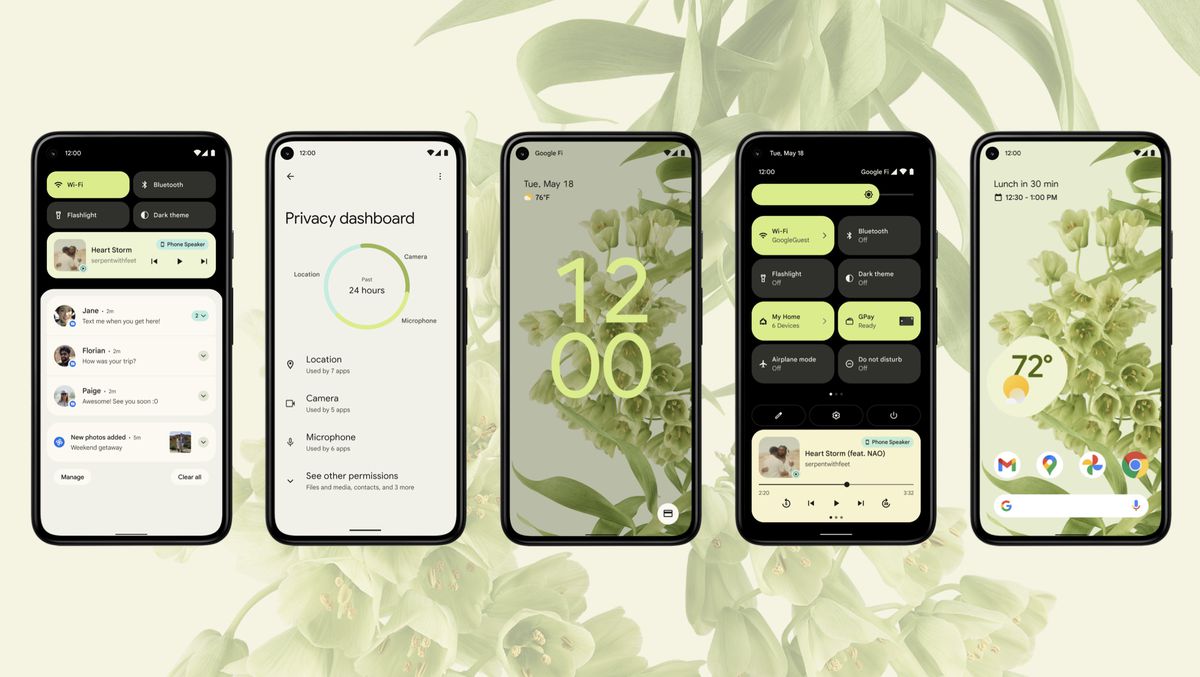
    Android 12 was officially announced during Google’s I/O 2021 event, offering a colorful Material New design and more fun changes. To those curious to try it out – you already can!

    Granted, you’ll need an eligible smartphone and it’s worth noting that running a developer Android beta version is not a good idea unless you’re actually an Android developer yourself. Beta software can be quite unstable, and your phone’s functionality will become limited, so proceed at your own risk or simply wait for the public Android 12 release later this year. In any case…

    Google

    During the I/O event, Google announced that the first smartphones to be getting access to the Android 12 beta will unsurprisingly include Pixel phones. You will need to be using the Google Pixel 3, Pixel 3 XL, Pixel 3a, Pixel 3a XL, Pixel 4, Pixel 4 XL, Pixel 4a, Pixel 4a (5G) or Pixel 5. Google has provided Android 12 beta downloads for each of those phones here.

    Asus

    If you have an Asus Zenfone 8, you can download the Android 12 beta for that phone from Asus’ website. That website also has step-by-step instructions on how to install it, and which features don’t work yet, such as the fingerprint sensor and face unlock.

    OnePlus

    Those using the OnePlus 9 and OnePlus 9 Pro can get the Android 12 developer preview from OnePlus’ website here. The site also explains the installation process for those particular phones.

    Warning: We’ve had reports that the Android 12 beta gets OnePlus devices stuck in a bootloop.

    Xiaomi

    Xiaomi users who own the Mi 11 Ultra, Mi 11, Mi 11i and Mi 11X Pro can download the Android 12 beta for those phones from this Xiaomi page. There Xiaomi has also listed what to expect in terms of bugs.

    Vivo

    Right now only the Vivo iQOO 7 can get the Android 12 beta. If you own that phone, please refer to Vivo’s Android 12 beta download page.

    Oppo

    Currently the OPPO Find X3 Pro can get the Android 12 beta from OPPO’s website.

    Others

    If you’re using a recent Android phone made by Realme, Sharp, Tecno, TCL or ZTE, you can refer to Google’s “Partners and eligible devices” page for relevant Android 12 beta downloads and instructions.

    If your smartphone or brand isn’t included there, then the Android 12 beta isn’t available to you right now, but it could be in the future. You can inquire with your phone’s manufacturer on when and if you can expect an Android 12 beta to become available.

  • Twitter relaunches verified program with a blue badge

    Twitter relaunches verified program with a blue badge

    For the first time since 2017, Twitter is letting anyone on its platform apply for verification. The feature is relaunching alongside strict new criteria, so not everyone is eligible. Here’s everything you need to know.

    To request verification on Twitter and receive the coveted blue badge next to your name, do the following:

    • Open Twitter
    • Head to Settings
    • Tap Request Verification
    • Fill in the details

    If you don’t see the option yet, don’t worry. It’ll be gradually rolling out to all users over the coming weeks.

    All Twitter users will be able to ask for verification once every 30 days, much like Instagram. The requests will be handled by humans rather than algorithms, and users should expect a response within 1-4 weeks.There are currently six account categories that qualify for verification:

    • Government
    • Companies, brands, and organizations
    • News organizations and journalists
    • Entertainment
    • Sports and gaming
    • Activists, organizers, and other influential individuals

    For the individual account category criteria, click here. Twitter has plans to add more categories in the future. In the coming months, scientists and academics will be eligible. Religious leaders will be added by the end of 2021.

    In addition to the above criteria, Twitters users must be able to verify their identity. A complete account is required too, meaning you must have a profile name and profile photo.

    You must also have logged into your account in the last six months, have a confirmed email address or phone number, and not have had an account lockout in the past 12 months (successful appeals are excluded).

  • 3 footballers of Asian descent ahead of the game in the English Premier League

    3 footballers of Asian descent ahead of the game in the English Premier League

    The English Premier League is regarded as the pinnacle of football around the world in terms of the quality of football played but more so, because of the die-hard support from fans across the world. The Premier League is watched in all parts of the world from the most developed nations all the way to the poorest countries. Footballers from a very young age sacrifice everything in the hopes of one day being scouted by one of the major clubs so that they can play in this prestigious league with the best the world has to offer.

    Football is a popular sport in Asia, although the opportunities presented in playing abroad in the English Premier League provides far more opportunity for players of Asian descent. As a result of this, many of Asia’s top footballers are imported to the UK to show their skills in this top league. Over the years, we have seen some shining stars of Asian descent such as Park-ji Sung of Manchester United who, under the lead of Sir Alex Ferguson, was a key figure in the side that lifted multiple trophies. Where premier league betting odds are concerned, you would have been very well off placing bets in favour of Manchester United during his tenure.

    Let’s look at at 3 of the best footballers of Asian descent taking the English Premier League by storm today!

    Son Heung-min

    After having his start in the German Bundesliga, Son Heung-min eventually found his way to London to have his go at the English Premier League. The Korean joined Tottenham Hotspur and soon became a critical player on the team. The 27-year-old has already won 3 AFC International Footballer award in the past five years and has been responsible for seventy-five goals in the previous 4 seasons at the club. His best performance was in the 2018-19 season where he played a decisive role in bringing the English club all the way to the UEFA Champions League final. The outspoken player has recently had some words with super coach Jose Mourinho, which shows just how much influence the player has in the squad.

    Ki Sung-yueng

    Another player to come out of Korea is Ki Sung-yueng, who has had a long road playing at 3 different English clubs and making over 200 game appearances.  The midfielder has played at Swansea City, Newcastle United and Sunderland. His notable achievements are winning the League cup in the 2012-13 season and winning the Swansea player of the season in 2014. The 31-year-old has also made more game appearances than any other player of Korean descent, which is super impressive by any standard.

    Yoshinori Muto

    The Japanese are celebrated for their meticulous and unrelenting pursuit of perfection in whatever they do. This same attention to detail can be seen in the very talented Yoshinori Muto who has made serious waves in the English Premier League. Now playing for Newcastle United, the 27-year-old joined the side in 2018 has impressed ever since. Although there are talks of transferring him soon, we are sure that this player has only just scratched the surface of his potential in the English Premier League.

    Conclusion

    When it comes to players of Asian descent, the Koreans have definitely made the biggest impact over the years. With other nations from the East starting to catch up to the West in terms of their football at grassroots level, we are sure that we will see even more Asian players making an impact in the near future!

  • Gojek and Tokopedia formally announce merger

    Gojek and Tokopedia formally announce merger

    Indonesian ride-hailing and payments firm Gojek and e-commerce leader Tokopedia formally announced their merger today in a transaction that will create a technology powerhouse in the country’s largest deal.

    Sources familiar with the situation had earlier said the companies were seeking a $18 billion merger. Neither firm confirmed a valuation for the merged group, named GoTo.

    The deal comes as Gojek and Tokopedia seek to boost profitability some 10 years after they were founded by offering a bouquet of services under a single platform, extending a regional trend.

    Alibaba Group Holding and SoftBank Group Corp are among Tokopedia’s investors, while Gojek’s include Warburg Pincus and Tencent Holdings.

    Last month, Southeast Asia’s biggest ride-hailing and food delivery firm, Grab, clinched a $40 billion merger with a special purpose acquisition company. Meanwhile Singapore-based regional internet firm Sea Ltd, which operates e-commerce platform Shopee, is also muscling into food delivery and financial services.

  • Global luxury sales could return to pre-Covid levels this year, Bain says

    Global luxury sales could return to pre-Covid levels this year, Bain says

    The luxury goods sector could shrug off the hit from the coronavirus crisis as early as this year as Chinese and US shoppers help sales recover to pre-pandemic levels, consultancy Bain said on Monday.

    Bain now sees a 30 percent probability that sales of high-end handbags, clothes and jewelry will return to or exceed their 2019 level of US$340 billion this year, depending on how quickly vaccines are rolled out and tourism picks up.

    Its more likely scenario is for a full rebound in 2022, which would still imply a faster convalescence than Bain predicted in November, when it said the sector may have to wait until 2023 to put the crisis squarely behind it.

    Luxury goods sales fell by 23 percent to $264 billion last year, the largest-ever drop and the first decline since 2009, as the pandemic forced shop closures and brought international tourism to a virtual halt.

    But the crisis does not seem to have had a lasting impact on consumers’ appetite and spending power for high-end wares.

    Soaring sales in China, the biggest market for luxury goods, and a stronger-than-expected US rebound thanks to a big stimulus program have helped revenues bounce back sharply in the first quarter of 2021.

    “The US market has been the unexpected bright spot,” Bain said. By contrast, Europe is lagging behind, hampered by a slower vaccination campaign and restrictions on tourism.

    The speed of the recovery has been uneven. The industry’s biggest groups such as LVMH, Hermes, and Kering are already above their 2019 levels, while smaller labels like Ferragamo and Tod’s still have to catch up.

    The crisis has forced brands traditionally more reluctant to sell online to fully embrace e-commerce, which is set to become the leading channel for luxury purchases in the next few years.

    Bain said that as people moved to countryside homes and worked remotely, sales in second-tier cities often went better than in big luxury capitals like New York or Milan – a factor brand will have to consider as they review their footprint.

    And while handbags, leather goods and jewelry have been driving the recovery, spending on clothes, makeup and perfumes is expected to pick up too as lockdowns ease and people resume going out.

  • Alibaba, partners invest US$400 million in retail arm of Vietnam’s Masan

    Alibaba, partners invest US$400 million in retail arm of Vietnam’s Masan

    Chinese e-commerce giant Alibaba Group Holding and partners have invested $400 million in the retail unit of Vietnamese conglomerate Masan Group, Masan said on Tuesday.

    The consortium, which includes Alibaba Group and Baring Private Equity Asia, has paid for a 5.5 percent stake in Masan’s retail arm, The CrownX, the company said in a statement.

    The CrownX, founded in 2019, is valued under the deal at $6.9 billion, equivalent to $93.50 a share, the statement said. Parent company Masan will hold 80.2 per cent of retail units.

    The deal will expand Alibaba’s presence in Southeast Asia after its $4 billion investment in e-commerce firm Lazada in 2018.

    “The CrownX will work closely with Lazada to accelerate our digital transformation into an ‘all-in-one platform to serve consumers both offline and online purchases,” Masan said in the statement.

    The company said it was in talks with other investors on an additional investment of between $300 million to $400 million in The CrownX with that deal expected to close in 2021.

    Masan shares opened up 5.57 percent on Tuesday to 110,000 dong after the announcement, giving the company a market capitalization at $5.3 billion.