Author: Mei Ling Tan

  • Causeway Bay deposed as Asia’s most-expensive retail strip

    Causeway Bay deposed as Asia’s most-expensive retail strip

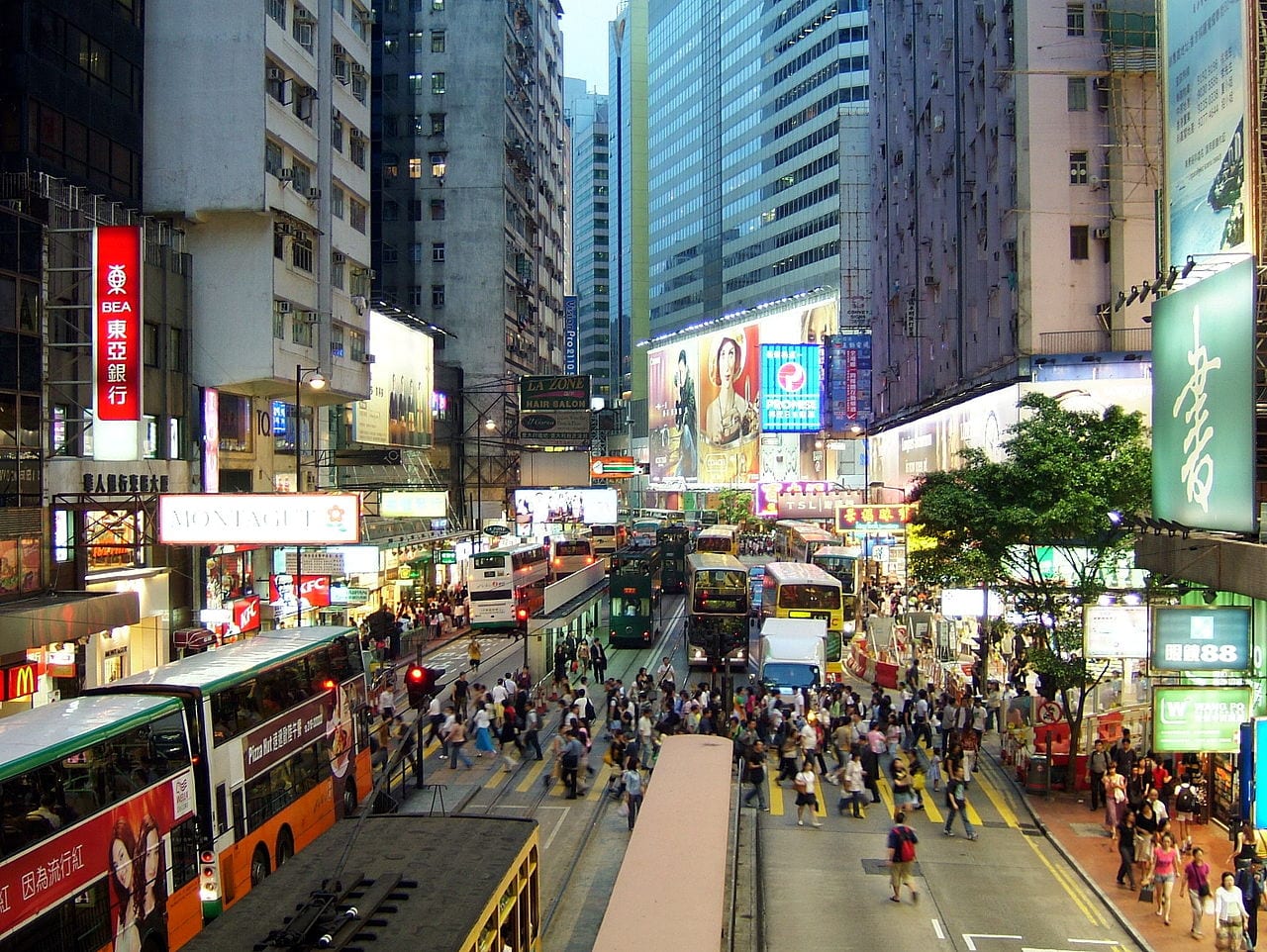
    Two-thirds of retail strips in Asia Pacific saw rental declines in 2020, with Causeway Bay in Hong Kong experiencing the steepest decline at 43%, according to Cushman & Wakefield’s latest Asia Pacific Main Streets Report. Causeway Bay had been #1 across the globe in retail rental value in the last 2 years. Yet, its position was taken over by Tsim Sha Tsui in 2020. Retail rental dropped by 42% and 35% year-on-year for Central and Tsim Sha Tsui respectively. On average, retail space rental value citywide has fell by 38% in Hong Kong over the course of 2020.

    “Ownership diversity is the key differentiator between Tsim Sha Tsui and Causeway Bay retail rental performance. Ownership of Canton Road in Tsim Sha Tsui, the main shopping area, is more centralized when compared with Russell Street of Causeway Bay. In times of crisis, centralized ownership allows for more flexible measures to retain tenants, thus maintaining a more stable trade mix with a cluster of renowned brands with optimal brand impact,” said Mr. Kevin Lam, Cushman & Wakefield’s Executive Director, Head of Retail Services, Hong Kong. “Looking ahead, with international travel made possible again towards the later part of 2021, together with a stable trade mix, we would expect retail rental performance to recover first in Tsim Sha Tsui district for the same reason,” Mr. Lam continued.

    However, the retail sector in Mainland China had the least disruption amongst all the markets in the region, with average rental declines of 5%. In contrast to the Beijing Central Business District (CBD) which had a 14% decrease in rental in 2020, the Luohu district in Shenzhen saw the largest rental growth of 5%.

    Mr. Keith Chan, Cushman & Wakefield’s Director, Head of Research, Hong Kong, commented, “Hong Kong remained in the top position regardless of the average retail rental drop of 38% in 2020. Tsim Sha Tsui still sits 31% above the second place, Ginza of Tokyo. This reflects the exceptionally high retail rentals in Hong Kong regardless of the pandemic outbreak and economic downturn.”

    “The key market drivers in operation due to COVID-19, namely international border closures, lockdowns and work-from-home practices have been universally felt across the region. As a result, we see little change in Asia Pacific rent cost rankings, at least for the top 10 cities, with Hong Kong, Tokyo, Sydney, Seoul and Osaka maintaining their dominance at the top of the list,” noted Dr. Dominic Brown, Head of Insight & Analysis, Asia Pacific at Cushman & Wakefield.

  • Adidas quits Hong Kong Central as retail stagnation continues

    Adidas quits Hong Kong Central as retail stagnation continues

    Adidas is exiting Hong Kong’s Central prime business district. The German sportswear giant signed a HK$4.34 million a month, or HK$52.1 million a year, lease for the 13,000 sq ft shop at 36 Queen’s Road in 2015. Removal staff were seen dismantling shelves and putting away stock on Wednesday.

    “After a thorough review we have decided to close the Adidas Brand Center on Queen’s Road,” the company said on Wednesday. “We continue to have a strong presence in Hong Kong, with more than 20 Adidas stores and multiple franchise stores.”

    Adidas is potentially following in the footsteps of Gap, Topshop, and Esprit, brands that have either shut shop in Central or exited Hong Kong altogether. International brands that rely heavily on mainland Chinese and other tourists for sales in Hong Kong have found themselves unable to sustain business operations after the city essentially closed its borders early last year to combat and contain its coronavirus outbreak. Visitor arrivals dropped by about 94 percent last year to 3.57 million. Retail sales too fell, by 24.3 percent to HK$326.5 billion.

    “It is not surprising to see major retailers closing down, especially their prime flagship shops,” said Hannah Jeong, head of the valuation and advisory services at Colliers International in Hong Kong. “Despite a 25 percent drop in overall retail shop rents, and some prime street shops facing up to a 50 percent reduction in rents, operations costs including rental expenses are still not yet sustainable, given the large cuts in revenue.”

    Rents on Russell Street in Hong Kong’s prime shopping district Causeway Bay stood at US$2,671 per square foot in 2018. By the second quarter of 2019, it was the world’s most expensive shopping avenue, with rents at US$2,745 per square foot a year on average, according to commercial real estate services firm Cushman & Wakefield. The city’s exorbitant rents coupled with plunging retail sales have made business operations unviable for many retailers.

    Adidas’s lease for the space expired last year and it opted for a short-term deal, which suggests “the brand might leave at any time”, said Thomas Chan, research analyst at property agency Midland IC&I. “According to market news, a local bank may lease the premises for over HK$2 million a month, down almost 54 percent compared with the last lease, if the deal is sealed,” he said.

    The city will see more reasonable shop operations, given the softening of the retail market, said Colliers’ Jeong. “Flagship shops will find it difficult to make a profit. Therefore, we will see more brands looking for smaller shops to maximize the dollar spend per square foot. This does not necessarily mean that retail brands are closing down, or withdrawing from the Hong Kong market. It is rather that shop requirements of retailers are changing.”

    Indeed, Adidas itself rented the shop at 36 Queen’s Road at a rate that was 22.5 percent cheaper than that paid by its previous tenant, US luxury brand Coach, according to the Land Registry.

    The number of foreign brands have expanded in Central of late. Casual clothes brand American Eagle has taken up a 7,000 sq ft space vacated by Gap in LHT Tower just a few steps away from the vacated Adidas shop. In October last year, mid-priced French sporting goods retailer Decathlon rented a 9,300 sq ft shop previously rented by luxury leather goods retailer MCM in Entertainment Building in Central.

    “It is quite common to see retailers come and go across different retail districts in Hong Kong, as they adjust their retail strategies. As retail rents have dropped significantly, by as much as 60 percent from their peak in the third quarter of 2014, international retailers are in fact looking for prime spaces to take advantage of the cheaper rents,” said Lawrence Wan, senior director, advisory and transaction services – retail, at CBRE.

  • Twitter launches Professional Profiles for businesses

    Twitter launches Professional Profiles for businesses

    Twitter has officially launched a test of its new profile type called Professional Profiles, aimed to allow businesses to display specific information to potential customers.

    Twitter Business has posted an image showing what the new profile looks like, with a short description reading: “Like our new look? Today we’re launching an exciting test of a new profile type called Professional Profiles!”

    Kayvon Beykpour, Twitter’s product lead, has thrown in additional hype, saying that “Businesses will soon be able to distinguish themselves on Twitter with distinct attributes on their Profile!”

    From the image, posted above, we can see that businesses will be able to display their address and a map of their location directly under the number of followers. According to Baykpour, though, Twitter will soon implement more features, tailored toward business.

    At the moment Twitter is testing Professional Profiles with just a handful of business owners in the US, with a rollout to a wider audience to follow in the next few months.

  • China is Becoming a Global Center of the Pharmaceutical Industry

    China is Becoming a Global Center of the Pharmaceutical Industry

    China’s pharmaceutical industry is in the midst of a transformation. China is one of the largest markets in the world for medicine – and it is poised to become a global hub of drug innovation/a global leader in drug development technology.

    An increasing number of international investors have turned their attention to the healthcare sector as the corona crisis rages on. Weak spots in healthcare systems across the world have been exposed by the pandemic, and it has also triggered a fundamental reset in investor mindsets. One of the winners of these recent events will probably be the healthcare industry in emerging markets – which are also becoming increasingly important as a market for medicines.

    At the center of these developments is Asia, where healthcare systems are facing the same challenges as healthcare systems in the West. Changes in lifestyles and diets associated with rising wealth are having a negative impact on people’s health. For example, the rapidly growing number of overweight people worldwide is leading to a rapid increase in the number of diagnosed diabetes cases.

    A quarter of the estimated 400 million people worldwide who have diabetes live in China and almost a fifth live in ASEAN countries such as Malaysia or Thailand. At the same time, aging populations are leading to an increase in the number of patients diagnosed with cancer, neurological or circulatory diseases. This translates into steadily rising costs for national healthcare systems as more and more citizens require access to efficient and affordable healthcare.

    Asia is forging ahead. This was once again evident as the coronavirus crisis unfolded and Asian companies led the way with their solutions. Meanwhile, a raft of positive data has been published in other areas and improved the corresponding pipeline visibility. Last but not least, the process of digitization has gained momentum, while disruptive technologies are steadily improving access to healthcare.

    China has one of the largest medicine markets in the world. Its overall spending on healthcare is still low compared to many of the industrialized countries. The country is making steady progress in expanding its domestic drug research and development capabilities and its domestic drug production, which helps the government to provide an increasing number of Chinese with access to affordable healthcare.

    The Chinese government is offering tax and other financial incentives as part of a long-term plan to develop an internationally competitive homegrown biopharmaceutical industry. Beijing’s national health policy currently prioritizes efficiency and the establishment of innovation centers, which it is promoting through financial incentives. The main pillars of the government’s approach here are three vast centers of innovation – the Zhangjiang Hi-Tech Park near Shanghai, the BioBay in Suzhou and the Shenzhen innovation hub, which is often referred to as China’s Silicon Valley for pharma companies because it is already home to global companies such as Huawei.

    Sales of innovative drugs in China are forecast to triple from 117 billion yuan this year to 375 billion yuan in 2025. Local biotech companies selected as “partners of choice” for global companies seeking to enter the Chinese market and advance the development, approval and commercialization of their drugs in China will play a critical role in achieving this growth. Innovative homegrown Chinese drugs are also creating excitement worldwide and these drugs are being in-licensed by Big Pharma in the West.

    The current situation is comparable with the situation in the U.S. at the end of the 1980s when the biotech boom began, driven by scientific breakthroughs. We believe China’s medicine market is poised to become a major growth market and is currently transitioning from a «Me-Too» drug market to a «First-in-Class» or Best-in-Class market.

    Valuations in the Asian healthcare sector are currently very inexpensive and stock prices have shown a positive trend since the global coronavirus-induced crash last year. The BB Adamant Asia Pacific Healthcare Fund has outperformed the broader indexes throughout the various market cycles.

    For example, it has delivered an excess performance of more than 50 percent relative to the MSCI Asia Pacific Index since its launch at the end of April 2017. The secular upward trend in Asian healthcare markets should continue going forward, thanks in particular to the growing innovation power of the region, where companies that stand to benefit from structural trends are already winning international acclaim.

  • Climate Activists Target HSBC HQ on Earth Day

    Climate Activists Target HSBC HQ on Earth Day

    Activists said the bank has invested some $80 billion in fossil fuels since the Paris Agreement in 2015.

    Activists from the Extinction Rebellion group hit HSBC’s London headquarters in Canary Wharf in an Earth Day protest on Thursday, shattering 19 windows.

    HSBC has pledged to shrink its carbon footprint to net-zero by 2050. However, the bank’s current climate plan still allows it to finance coal power, and provides no basis to turn away or cancel contracts based on links to the fossil fuel industry, the group said.

    Extinction Rebellion, formed in 2018, describes itself as a «non-violent a direct action movement demanding a response to the climate and ecological emergency.»

    The group protested at the London headquarters of Barclays two weeks ago, accusing the bank of «continued investments in activities that are directly contributing to the climate and ecological emergency.

    Its Money Rebellion campaign also saw its members take part in civil disobedience outside multiple banks in New York, including J.P. Morgan, Bank of America, TD Bank and Citibank.

  • TPBank posts 41 percent surge in profits

    TPBank posts 41 percent surge in profits

    The bank said a surge in net interest income and a cut in operational expenses has boosted its Q1 performance.

    Its net interest income grew 30 percent in the period, while operational expenses dropped 10 percent, according to the bank’s financial statement.

    It said that its pre-tax profit growth was average compared to other lenders’ growth rates of 50 percent or even over 100 percent during the same period.

    For example, the increase in Q1 pre-tax profit was 135 and 110 percent respectively for the state-owned VietinBank and Military Commercial Bank (MBBank). Private lender ACB, meanwhile, saw a 61 percent increase in its Q1 pre-tax profit.

    TPBank’s Q1 revenue was up 15.2 percent year-on-year to VND2.78 trillion.

    By March end, both its outstanding loans and capital mobilization increased 4 percent to VND124.3 trillion and VND120 trillion, respectively. Non-performing loans were at 1.19 percent.

    The bank has set a target of VND5.5 trillion in pre-tax profit for 2021, a year-on-year increase of 25 percent.

  • DBS Expands Trade Financing Via Contour

    DBS Expands Trade Financing Via Contour

    The bank, which made its first deal on the platform last year, has moved from Contour’s beta network to its production network.

    DBS will offer streamlined digital letters of credit transactions, including the transfer of electronic trade and title documents, for customers across Australia, China, Hong Kong, and Singapore from this month on Contour, according to an announcement on Thursday.

    DBS was Singapore’s first lender to join the platform, which provides an end-to-end letters of credit settlement to clients and enables digitalized real-time negotiations, post-endorsement sharing with banks, and real-time tracking of transactions with a full audit trail.

    We recognize that digitization is a powerful enabler to simplify the highly complex nature of trade finance, especially for processes relating to letters of credit, Sriram Muthukrishnan, DBS group head of trade product management, said.

    Digitising trade processes is also an increasingly relevant and heightened priority for corporates to survive and thrive in the new normal and will form an integral component for resilient trade ecosystems of the future, he added.

    Other members of the Singapore-based blockchain trade finance network include BNP Paribas, Bangkok Bank, ING, HSBC, Standard Chartered and Citi Ventures.

    Traditional paper-based LC processes have been a major obstacle to trade growth and created unnecessary complexity, cost and delays, DBS said.

    The bank noted that Asia pacific is a «key region» leading the digitization of trade finance as banks and corporates seek to mitigate risk and enhance cost efficiency in the wake of the challenges caused by the COVID-19 pandemic.

  • Global firms dominate Vietnam electronics exports

    Global firms dominate Vietnam electronics exports

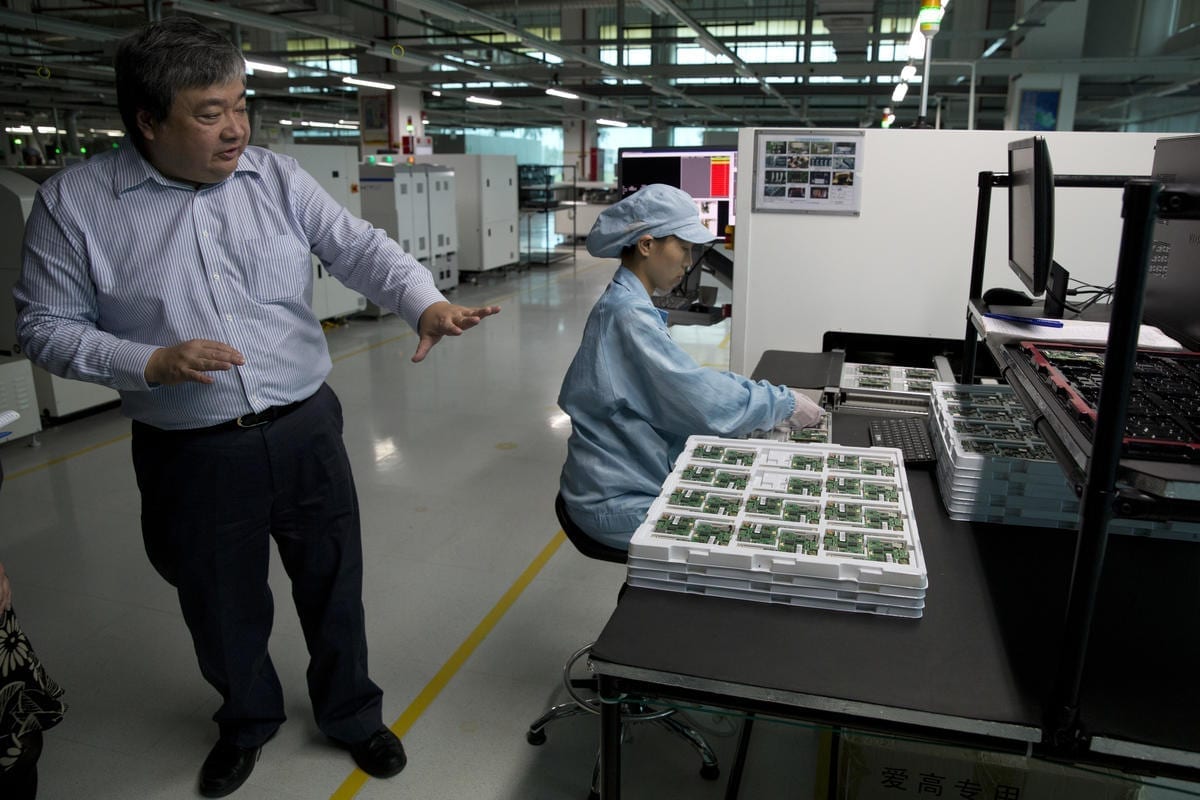
    In the first quarter this year, exports of phones and components were worth $14.1 billion, 99 percent of it by foreign firms.

    Exports of computers and parts exports topped $12 billion, with foreign companies accounting for 98 percent.

    The agency said the rate of use of local parts in the industry is 5-10 percent, with Vietnamese businesses in the supply chain mostly producing low added-value products.

    There are several domestic smartphone brands like Vsmart produced by VinSmart, a subsidiary of conglomerate Vingroup, and Bphone by cybersecurity company BKAV, but the market is dominated by foreign brands.

    The agency said: “The products made by domestic firms do not meet the demand in terms of quality or design. The linkages between foreign firms and their local counterparts remain weak.”

    But it admitted Vietnamese businesses have been striving to improve quality so that they could enter the supply chains of foreign companies, pointing out for instance that the number of local tier-1 suppliers (who supply products directly to a company without going through intermediaries) of Samsung had increased from four in 2014 to 35 last year.

    Local electronics firms should identify their core products, target their market segments, stay ahead of consumer trends, and keep up with the global technological development to create competitive products, it said.

    “They should take advantage of trade deals such as the EU–Vietnam Free Trade Agreement,” the agency stressed.

  • How to watch the Tokyo Olympics this summer on your smartphone

    How to watch the Tokyo Olympics this summer on your smartphone

    The rearranged 2020 summer Olympic games are scheduled to begin in Tokyo in July. Postponed 12 months due to the coronavirus epidemic and resulting lockdowns, the opening ceremony will be staged on 23 July, with the closing ceremony bringing the curtain down on 8 August.

    This has been one of the most talked-about summer Olympics in living memory. For much of last year, it was feared the event would make unwanted history by being cancelled. Thankfully for all concerned, including more than 11,000 athletes involved, the show goes on. Fans will be in attendance at most of the events, but overseas spectators are barred. That should make for a strong home crowd advantage for the Japanese athletes.

    That means the only way to cheer home your favourite athletes is on television or a live stream. We explain how to place bets on Tokyo 2020 at onlinesportsbetting.net, then watch the action for free on your smartphone or tablet device.

    Never miss an event with live streaming

    All major international sports betting companies offer members odds on the outcome of every event at this summer’s games. This allows you to spice up your viewing by having a financial interest in 100m, pole vault and long jump. The Olympics is an exciting watch, but it’s even better when you have the opportunity to land a profit from the results.

    Not only do leading sportsbooks offer several eye-catching betting markets on your favourite events, but they also grant members access to their modern, reliable and HD quality live streaming feeds. This means you can bet on the sport and follow the action live from anywhere in the country on the app, providing you have a strong Wi-Fi connection.

    There’s even better news for those eager to ensure they don’t miss the Olympic games after being forced to wait an extra 12 months. The live streaming service offered by betting sites is free to view if you have a registered account with a bookmaker and place a bet on the result or have funds available in your balance to make an in-play bet.

    Below we walk you through the basic steps to register for a betting account, place a wager on the Tokyo 2020 and watch the live stream for free.

    Create an online betting account

    To bet on and watch Tokyo 2020, you must have a registered online betting account with a licensed, regulated bookmaker legal in your region. Do your research and find a sportsbook that appeals to you and check out the welcome bonus offered to new customers. Most betting apps give new players a free bet when they sign up.

    Registering for a betting account and landing the welcome bonus is easy, taking just a few minutes to complete.

    Here’s how to register today;

    1. Choose your preferred sportsbook and visit their website or mobile app
    2. Click the sign-up button at the top of the homepage
    3. Fill in the registration form, providing name, age and address
    4. Create a username and password
    5. Make your first deposit and bet on sports
    6. Your free bet welcome bonus will be added

    Place a bet on Tokyo 2020

    To be eligible to watch the live streaming free of charge, most betting sites ask that you first make a bet on the outcome. This can be for as little as a 0.50 stake. When your bet is live, you can then watch the sports feed on your chosen device.

    Placing a bet on an event from Tokyo 2020 is hassle-free, taking less than 60 seconds in most cases. You can do this from home on your desktop computer or on the move by downloading the sportsbook’s mobile app.

    Here’s how to place a bet on the Olympic games;

    1. Deposit funds to your betting account from your debit or e-wallet account
    2. Click the Tokyo 2020 tab and browse the available markets
    3. Select the event you wish to bet on and make your prediction
    4. Your pick will be added to your bet slip. Input your stake
    5. Your bet will be live, and Olympic now watch the live stream at no extra cost

    Watch Tokyo 2020 on your mobile

    When your bet is live, you should click the live streaming tab. There you will find all sports events available to view. Choose the one you have placed a bet on and click the live stream link. The stream will begin just before the advertised start time.

    Sit back and enjoy the show.

  • Hidden code reveals very useful feature for Google Assistant users

    Hidden code reveals very useful feature for Google Assistant users

    XDA Developers just discovered an interesting string of code on version 12.15.7.29 of the Google app from the Play Store. One of the changes will allow Google Assistant to complete a voice command even if the user is offline. In addition, Google apparently plans on adding a new feature called “My Actions” that will allow users to create shortcuts for their favorite Assistant requests.

    The strings found by XDA mention the creation of custom actions such as one that lowers the volume to 50% and another one that responds with the current weather. Another pair of strings said “start custom action creation” and “save this new custom action,” while another gives recommendations through a heading that says, “Actions you might like.” Google already allows users to create a chain of events, a routine if you will.

    The upcoming “My Actions” will allow users to press on a button to activate shortcuts. Where this button will end up is not known at this time and one possibility is that the controls for “My Actions” might be found on the home screen. In the past, Google put on the home screen a feature allowing users to create shortcuts for the aforementioned Google Assistant routines.

    XDA was able to bring up the setup screen for “My Actions” and it gives a couple of suggestions that can be used to try out the feature such as “set the volume to 50%” and “what’s the weather.” The most intriguing part of this discovery is the line on the setup screen that says, ” My actions can be configured to do anything Google Assistant can do, in just one tap.”

  • After update, Google Maps will no longer give you the fastest route by default

    After update, Google Maps will no longer give you the fastest route by default

    Google is also working on improving how public transportation in being handled on the app. Along with the previous information that Google Maps would display for buses, trains and the subway, an update done on the QT in some regions has resulted in the dissemination of more detailed route information. The bottom line is that those taking public transportation will be able to see step-by-step information along with timing estimates to help give Maps users a more accurate estimated time of arrival (ETA).

    Recently, public transportation updates for Google Maps was pushed out for both Lyon and Lille, France. Google is working with the public transportation agencies in different regions to provide the aforementioned enhanced public transportation data. Many large cities throughout the world already have worked with Google on this feature which allows those without a car to benefit from Google Maps.<

  • Android users can help an AirTag user reunite with a missing item

    Android users can help an AirTag user reunite with a missing item

    Apple yesterday finally unveiled its long-awaited AirTag item tracker. The accessory uses the U1 chip (found on the iPhone 11 and iPhone 12 series) and the Find My app to help navigate you to a tagged item using AR overlays. This “precision finding” feature is not available on phones older than the iPhone 11 series since those models don’t sport the UI chip and rely on Bluetooth LE to find an item.

    Enabling the Lost Mode setting will alert you or one of the nearly billion members of the Find My network when an AirTag is back within range of an iOS device. A tag that has been discovered and is in Lost Mode can be tapped on its white side by an iPhone or an NFC capable Android handset. A notification should then appear on the screen and when tapped on, it opens a website that shows the serial number of the AirTag and possibly a phone number so that the owner of the tagged item can be called and told that his missing item has been found.

    Apple itself says this about the Find My app; “The Find My app makes it easy to keep track of your Apple devices. Locate items you’ve attached AirTag to. And keep up with friends and family. It works on iPhone, iPad, and Mac — even if your missing devices are offline. And your privacy is protected every step of the way.”

    Apple itself notes that “You can view a Lost Mode message on any NFC-capable smartphone, such as an iPhone or Android phone.” Apple didn’t make much of a deal about this yesterday during the Spring Loaded event, but it did publish a support page that includes this information. The AirTag owner will have to include his contact information during the setup process as well as activate Lost Mode.

    If you hear a sound from an AirTag, Apple explains in simple terms what it could mean. “When moved, any AirTag separated for a period of time from the person who registered it will make a sound to alert those nearby. If you find an AirTag after hearing it make a sound, you can use any device that has NFC, such as an iPhone or Android phone, to see if its owner marked it as lost and help return it.”

    So that you don’t get stalked by an unknown person’s AirTag,the  Find My app will send you a notification if an unknown AirTag is moving along with you. The latter will also generate a sound, even on an NFC-enabled Android phone, so that the alien tag can be found.

    On the support page, Apple adds, “If you can’t play a sound, the AirTag might not be with you anymore. If it was with you overnight, its identifier might have changed. Find My uses the identifier to determine that it’s the same AirTag moving with you.”

    Apple goes on to say that “If you believe the AirTag is still with you, look through your belongings to try to find it, or wait to see if another alert appears as you move from location to location during the day. If the AirTag is within range of the person who registered it, you also won’t be able to play a sound.”

    AirTag orders begin 5 am PDT on Friday, April 23rd and the item tracker will be available on April 30th. Engraving is free and a one-pack will cost you $29. A four-pack is priced at $99.

    Speaking of Android handsets (especially those with NFC capabilities), these are the models that we consider to be the best in 2021.

  • Twitter adds option to upload and view high-quality images on Android and iOS

    Twitter adds option to upload and view high-quality images on Android and iOS

    Twitter is racing Facebook for the title of the world’s most toxic social network, not just because of the lack of features that would prevent many of its users to be mean to others, but also because it rarely punishes users who break ToS (Terms of Service).

    Last month, Twitter announced that it has started to test a new feature that would allow Android and iOS users to upload high-resolution images. The feature was only available to select users, randomly chosen by Twitter, and enabled them to choose when to load or upload high-quality images on their phones: cellular or Wi-Fi.

    More than a month after the original announcement, Twitter confirmed that that the option to upload and view 4K images on Android and iOS is now available for everyone. To start using the new feature, make sure to adjust your preferences in “Data usage” settings, especially if you’re on a capped data plan.

    You’ll probably have to wait for Twitter to roll out the new option to your phone, or you could try updating the app via Google Play Store or App Store. Once you see the option in the Data usage settings, you’ll be able to view and upload images at resolutions up to 4096 x 4096 on Twitter’s mobile app.

  • Google Meet is now more engaging thanks to the latest update

    Google Meet is now more engaging thanks to the latest update

    It’s not the first time that Google Meet is getting a refreshed look, but if you’re using the app, you’ll be happy to know that this time it’s got a handful of new features too. Most of the improvements revealed today by Google will be available starting next month, so if you don’t see them now, that’s the reason.

    First off, Google Meet will soon be able to accommodate more content and others’ video feeds on the screen. A new option to pin and unpin Meet windows has been added too. Google announced that this specific feature will be expanded further to allow users to pin multiple tiles on their screen.

    More importantly, Google Meet users will be able to resize, reposition or hide their own video feed to make room for others people’s video feeds. Also, starting this month, Google will add a Data Saver to the Meet app, which will limit data usage on mobile networks.

    The upcoming update will also add a new AI feature called Autozoom, which should help others see you more clearly by zooming in and positioning you squarely in front of the camera. Sadly, Autozoom will be available to Google Workspace subscribers in the coming months.

    Last but not least, Google announced that it will add the ability to replace the background with a video to help maintain privacy. Initially, three options will be available for Google Meet users to choose from: a classroom, a party, and a forest.

    While many of these changes aren’t yet available in Google Meet, keep your eyes peeled for these new features in the coming weeks.

  • Microsoft to establish first datacenter region in Malaysia to support economy

    Microsoft to establish first datacenter region in Malaysia to support economy

    Microsoft Corp. announced its “Bersama Malaysia” (Together with Malaysia) initiative, which marks a significant commitment to empowering Malaysia’s inclusive digital economy and advancing the nation’s digital transformation across the private and public sectors. As part of the plan, Microsoft will establish its first datacenter region in the country to deliver trusted cloud services locally, with world-class data security, privacy, and the ability to store data in-country. Microsoft also announced plans to skill an additional 1 million Malaysians by end of 2023 to help create economic opportunities for people and businesses in the digital era. Finally, Microsoft will help form the MyDigital Alliance Leadership Council to collaborate on cloud-first and digital-native policy recommendations.

    Today’s announcement represents a significant milestone in Microsoft’s 28-year history in the country and supports the Government of Malaysia’s MyDigital goals to transform the country into a regional leader in the digital economy. According to IDC’s research, Microsoft’s investment in Malaysia will help generate up to USD 4.6 billion in new revenues for the country’s ecosystem of local partners and cloud-consuming customers over the next four years. Additionally, the research estimates Microsoft, its partners, and cloud-using customers will together contribute more than 19,000 new direct and indirect jobs.

    “Today’s announcement represents a major milestone for Microsoft in the 28 years we have been operating in Malaysia. We share the Government’s commitment that digital transformation must be inclusive and responsible. As such, we pledge to empower 1 million Malaysians with digital skills, helping them to take advantage of the opportunities this new investment will bring. Building digital infrastructure is fundamental to advancing a nation’s digital economy. The upcoming datacenter region will be a game-changer for Malaysia, enabling the government and businesses to reimagine and transform their operations, to the benefit of all citizens,” said Jean-Philippe Courtois, Executive Vice President and President, Microsoft Global Sales, Marketing and Operations.

    “We are proud to cement our partnership with the nation to accelerate its digital economy. Public-private partnerships are key enablers to propel Malaysia’s digital economy forward. Microsoft’s Bersama Malaysia initiative reflects our joint commitment in support of the nation’s MyDigital aspirations, as we empower every person and every organization in Malaysia to achieve more. With over 200 employees and 2,000 partners in the country, we will continue to support a digitally-enabled government, empower businesses to build resilience digitally, and bridge the digital opportunities for Malaysians. Together, we stand with Malaysia,” said K Raman, Managing Director of Microsoft Malaysia.

    Digital infrastructure and partnerships to advance Malaysia’s digital economy

    Microsoft will establish its first datacenter region in the Greater Kuala Lumpur area and deliver access to the full Microsoft Cloud, which includes:

    • Microsoft Azure, enabling anyone to invent with purpose using cloud services and capabilities that span computing, networking, databases, analytics, AI and Internet of Things (IoT);
    • Microsoft 365, to connect, collaborate, work remotely and learn online with innovative productivity tools;
    • Dynamics 365 and Power Platform, to rapidly build and manage critical enterprise business solutions at scale with intelligent business applications.

    The new datacenter region will also deliver Azure Availability Zones, providing additional resilience options for highly available applications, and support Microsoft’s sustainability goals. Microsoft has a global commitment to shift to 100 percent supply of renewable energy by 2025. This means Microsoft will have power purchase agreements for green energy contracted for 100 percent of carbon-emitting electricity consumed by all its datacenters, buildings, and campuses, including the planned Malaysia datacenter region.

    Microsoft will work with the government, startups and enterprises to support the country’s digital transformation goals. Specifically, Microsoft in partnership with the Social & Economic Research Initiative (SERI) has established the MyDigital Alliance Leadership Council to collaborate on cloud-first and digital-native policy recommendations. The Alliance’s first meeting discussed digitalization in the education sector to nurture a globally competitive Malaysian digital workforce. Additionally, Malaysia’s leading companies, Petroliam Nasional Nerhad (PETRONAS) and Celcom Axiata Berhad have committed to helping advance Malaysia’s nation building and digital ambitions, as well as using the Microsoft Cloud from the new datacenter region when available.

    “The partnership with Microsoft underlines PETRONAS’ commitment to nurturing a sustainable pipeline of a future-ready workforce equipped to support Malaysia’s digital economy. As a progressive energy and solutions partner enriching lives for a sustainable future, continuous human capital development will be integral to our ability to operate and compete. We look forward to accelerating efforts in upskilling local talents, with a view to creating an inclusive digital future for the benefit of both the people and the nation,” said Tengku Muhammad Taufik, President and Group Chief Executive Officer, PETRONAS.

    “Telecommunications and technology sectors are key lifelines to the nation’s digital economy. A world-class cloud service will become the epitome that shapes the future path in our pursuit towards becoming a digital economy powerhouse in the region. We highly applaud Microsoft’s plans to establish its first datacenter region in Malaysia, providing access to secure, scalable, highly available, resilient and sustainable cloud services for the government, and across multiple industry verticals. As the anchor telco tenant, we look forward to bringing the benefit of this datacenter to our customers and partners. In partnership with Microsoft, we will continue to serve our customers by offering secure and reliable cloud services, leading towards the development of a striving digital ecosystem and achieving the nation’s digital aspirations in a way that is sustainable,” said Idham Nawawi, Chief Executive Officer of Celcom Axiata Berhad.

    Microsoft, together with its local partner Enfrasys Solutions, has been appointed by the Malaysian Administrative Modernisation and Management Planning Unit (MAMPU) to provide cloud services to the Malaysian public sector agencies through 2023. Microsoft will also partner with Censof Holdings, Silverlake Group, and Web Bytes to accelerate digital transformation in the nation’s key industries, including financial services, retail, food and beverage, as well as the public sector.

    Empowering Malaysians with inclusive opportunities

    As part of the Bersama Malaysia initiative, Microsoft is committed to equipping individuals with equal opportunities to thrive in a cloud and AI-enabled digital economy. To achieve this, Microsoft will skill an additional 1 million Malaysians by December 2023. This includes work with the Human Resources Development Fund (HRDF), Social Security Organization (SOCSO), Junior Achievement Malaysia, TalentCorp Malaysia, MAMPU, Grab Malaysia, Biji-Biji Enterprise and local universities to reach people of all socio-economic backgrounds, including young adults and people living with disabilities. This commitment is a continuation of Microsoft’s global skills initiative since July 2020, which has reached more than 110,000 Malaysians to date.