Author: Mei Ling Tan

  • Apple launches in-app subscriptions in its Podcasts app

    Apple launches in-app subscriptions in its Podcasts app

    Apple has just announced a major overhaul to its Podcasts app: within the app, it’s launching Apple Podcasts Subscriptions where people will be able to subscribe to premium content from their favorite creators and get perks like ad-free listening, bonus content, and exclusive access to new series.

    Apple Podcasts Subscriptions launches with partners like Pushkin Industries, QCODE, SME, and NPR, and this list will only grow with time.

    The whole Podcasts app is also getting a fresh design with channels where your favorite creators will recommend you new content, and each channel will have unique artwork, titles and descriptions.

    Initial partners with channels include the likes of Luminary, which was one of the first apps to offer subscription-based podcasts.

    As for prices, they will be set by creators for each subscription, but you will be getting a free trial and sample episodes before you sign up. Billing will happen monthly by default, but creators can also offer annual billing if they decide. On the other side of the fence, content creators will have to pay $20 per year to participate in the program, and Apple will be taking a 30% cut of the revenue the first year and drop that to 15% in the following years.

    Apple Podcasts remains one of the most popular ways listeners reach podcasts, not least because the app comes pre-installed on iPhones. However, Spotify has recently made a big entry in the space attracting some of the big names in the industry like The Joe Rogan Experience, and the latest data from eMarketer showed that this year 28.2 millions of listeners in the US tuned in to Spotify versus 28 million for Apple Podcasts.

    The new Apple Podcasts Subscriptions option is launching in an impressive over 170 countries and it will go live next month.


  • Sony tipped to launch mystery budget phone later this year

    Sony tipped to launch mystery budget phone later this year

    Sony recently unveiled the Xperia 1 III and the Xperia 5 III flagship models as well as the mid-range Xperia 10 III. But if a machine-translated post on Weibo written by a tipster is legitimate, Sony purposely moved up the release schedule of its new 2021 flagships to release both of them during the same time period. This will allow it to release another phone that will either be a budget-priced model or an “Ultra” version of another Sony handset.

    The machine-translated message from a tipster known as ZackBuks, while a bit confusing, seems to suggest that by releasing both 2021 flagships together, it opens up some time to allow a “new U release” to take place months earlier than in past years. Normally Sony unveils its compact flagship model in the fall which is why it was so surprising to see the Xperia 5 III introduced at this time of the year.

    The last such Sony handset to use the “Ultra” title in its name was 2018’s Xperia XA2 Ultra which featured a larger screen, more storage, a larger battery, and an additional front-facing camera compared to the “non-Ultra” Xperia XA2. Another theory is that the “new U release” is a refresh of last year’s budget-priced Xperia L4 model. For those hoping for a top-of-the-line “Ultra” model powered by the Snapdragon 888 SoC, the tipster’s post would seem to make that impossible since he comes right out and states that the 2021 flagships are the Xperia 1 III and the Xperia 5 III.

    The Xperia 1 III features a 6.5-inch AMOLED display with a 4K resolution (1644 x 3840) and a tall and thin 21:9 aspect ratio. Powered by the Snapdragon 888 SoC, this model sports 12GB of memory and 256GB of storage. A quad-camera setup is found on the back.

    The Xperia 5 III is equipped with a 6.1-inch display with a 1080 x 2520 (FHD+) resolution and is powered by Qualcomm’s top-of-the-line Snapdragon 888 chipset. It features 8GB of memory (LPDDR4 RAM), 256GB of storage, and a triple camera setup.

    Speaking of the Xperia 5 III, the phone recently was benchmarked through Ge.

  • Ha Long casino operator posts losses for six straight quarter

    Ha Long casino operator posts losses for six straight quarter

    Royal International Corporation, which operates the largest casino in the northern town of Ha Long, has reported a post-tax loss of nearly VND27 billion ($1.17 million) in Q1.

    This is the sixth consecutive quarter that the HCMC Stock Exchange-listed company has reported a loss.

    In its financial report, the company has blamed the loss on the impacts of the new Covid-19 outbreak that happened late January this year.

    First-quarter revenues were down 24 percent year-on-year to VND27 billion.

    For the whole year, it estimates revenues of VND10.3 trillion ($447.3 million), mainly from its accommodation (hotel and villa) business.

    Last year, the company suffered a loss of VND82 billion ($3.6 million).

    For a long time, the Vietnamese government treated gambling as a social evil that was banned. Even when the allowed casinos to open, Vietnamese citizens were prohibited from them. In January 2019, the country opened certain casinos to local people as part of a three-year trial, saying it would decide the admission policy on a case-by-case basis.

    Vietnamese who want to gamble in a casino must be over 21, earn a minimum of VND10 million ($430) a month and have no criminal record or objection from their family.

    A group of casino owners recently requested the government to let Vietnamese into their establishments to make up for the absence of foreigners under Covid-19 travel restrictions.

  • Gojek Vietnam drives past a driver milestone

    Gojek Vietnam drives past a driver milestone

    The number of motorbike taxi drivers riding for ride-hailing firm Gojek Vietnam has crossed the 200,000 mark with millions of commuters using its app.

    Competitor Be said last month it had 100,000 motorbike and car drivers.

    Singapore’s Grab, the market leader, has not released its driver figures for the two years. It had reported in May 2019 that it had 195,000 driver associates in Vietnam.

    But Gojek and Grab have different interpretations of their figures. Gojek’s 200,000 drivers are “registered and active,” meaning they have recently turned on their apps, but it does not necessarily mean they have necessarily served a customer.

    Grab drivers are categorized as “transacting users,” or those who have served a customer in a recent period of time.

    Gojek is currently focused on three services – motorbike rides and delivery of goods and food. Grab and Be have all of these three services plus car rides.

    Gojek entered Vietnam in August 2018 as GoViet. The company became Gojek Vietnam last year.

    Vietnam’s transport and food Internet market grew by 50 percent year-on-year to $1.6 billion last year, according to a study by Google, Temasek and Bain & Company.

  • Vietcombank, Vinhomes tickers drive VN-Index up

    Vietcombank, Vinhomes tickers drive VN-Index up

    Vietnam’s benchmark VN-Index rose 0.61 percent to 1,268.28 points Tuesday, a new peak, led by Vietcombank and Vinhomes tickers.

    The index was on an upward trend throughout the day, hitting the 1,286 mark in the early afternoon before falling to the 1,260 range. It closed with a near 8-point gain.

    Trading value on the Ho Chi Minh Stock Exchange (HoSE), on which the index is based, rose 17 percent to VND23.1 trillion ($1 billion), the highest of the past five sessions. The bourse saw 187 tickers gain and 227 lose.

    VCB of state-owned lender Vietcombank contributed most to the gain of VN-Index this session with 4.5 points.

    It rose 4.6 percent to a three-month high. The ticker has gained 6.8 percent in the last two sessions.

    VHM of real estate giant Vinhomes contributed 3.6 points to VN-Index’s rise. It closed with a 3.9 percent gain, hitting a new historic peak.

    VNM of dairy giant Vinamilk pushed the index up by 1.8 points. It rose 3.3 percent, with 6.99 million shares being traded, the highest since November 2017.

    PDR of Phat Dat Real Estate Development rose 4.6 percent to a new all-time peak. This is its third session in the green.

    MWG of electronics retail chain Mobile World also hit a new peak with a 3.7 percent gain.

    On the losing side, TCH of real estate company Hoang Huy Investment Financial Services plunged 2.6 percent. It has lost 14 percent in the past 11 days.

    Foreign investors were net sellers for the fifth session in a row to the tune of VND553 billion, down 25 percent, with strongest pressure on VHM, VNM and CTG of state-owned lender VietinBank.

  • Steel makers see profits skyrocket

    Steel makers see profits skyrocket

    Steel manufacturers in Vietnam have seen profits increase as much 30-40 times in the first quarter as demand surges and prices rise.

    In Hanoi, Me Lin Steel saw a post-tax profit surge 41 times year-on-year to VND15.5 billion ($672 million), as steel prices started rising towards the end of last year and the company managed to cut costs.

    Tien Len Group in the southern province of Dong Nai saw its post-tax profit rise 30 times year-on-year to over VND120 billion, meeting half of this year’s target.

    Meanwhile, the Thai Nguyen Iron and Steel (TISCO) company in the northern province of Thai Nguyen, which has been reporting repeated losses, posted its highest first-quarter profit in the last three years at VND44 billion.

    The Hoa Phat Group has not released its profit figures, but saw March sales hitting a new record one million tons, the highest monthly figure ever.

    The profit surge has happened as steel prices skyrocket due to limited availability of materials from China and India even as the global economy recovers from Covid-19 impacts.

    Material prices have risen 30-40 percent from early March and are expected to continue rising until the end of the third quarter, according to the Vietnam Steel Association.

    Analysts with leading brokerage SSI Securities Corporation have said that local steel producers are benefiting from the recovery of the real estate market, foreign direct investment and public spending on infrastructure.

    Some big companies, like HPG of steelmaker Hoa Phat Group, can take advantage of the low supply of hot-rolled coil steel and do even better next year, they said.

  • Gold bullion producer SJC reports 11 pct rise in profits

    Gold bullion producer SJC reports 11 pct rise in profits

    State-owned Saigon Jewelry Company reported a pre-tax profit of VND75 billion ($3.2 million) for 2020, up 11 percent from the previous year.

    The company’s revenue rose 26 percent to VND23.49 trillion in 2020, but its financial expenses tripled because of provisions made for the loss of financial investments.

    Established in 1988, SJC is a wholly state-owned enterprise belonging to Ho Chi Minh City. Revenues were up 26 percent at VND23.49 trillion, well below its target of VND25.7 trillion.

    It has been the sole producer of gold bullion in the country since 2012, and has around 90 percent of the bullion market.

  • Fuji Xerox changes name to FUJIFILM Business Innovation

    Fuji Xerox changes name to FUJIFILM Business Innovation

    Brand change reflects corporate strategic direction and ongoing commitment to innovation. FUJIFILM Business Innovation Vietnam Company Limited (formerly known as ‘Fuji Xerox Vietnam’) today announced it had changed its name as part of a region-wide rebranding initiative, following the name change of its parent company, Fuji Xerox Co., Ltd., to FUJIFILM Business Innovation Corp.

    The move follows Fuji Xerox’s decision to end its technology agreement with Xerox corporation on the agreement’s expiration date of March 31, which provided for brand licenses, technology and sales territories. The name change takes place with immediate effect.

    As FUJIFILM Business Innovation Vietnam Co., Ltd, the company will continue to offer its core printing and document technologies and services, in addition to an expanding portfolio of enterprise software solutions and managed print room services.

    While the company will continue to sell existing products under the Fuji Xerox brand, it will also commence sales and marketing activities of new products under the Fujifilm brand.

    Over the years, Fujifilm’s considerable research and intellectual property has yielded an array of new applications for its technologies, such as using microporous photographic film technology to create yeast filters used in brewing beer, or creating lightweight sensors from the company’s Fujinon lens technology designed especially for outer space and carried aboard satellites.FUJIFILM Business Innovation is one of more than 300 subsidiaries in the FUJIFILM Holdings portfolio, including leaders in diverse fields such as healthcare, biotechnology, imaging, and photography.

    FUJIFILM Business Innovation offers innovation to businesses globally to help maximize their organizational strengths. The company has pioneered numerous technologies and accumulated expertise since being established as Fuji Xerox in Tokyo in 1962.

    As a $9 billion enterprise with approximately 40,000 employees globally, the company portfolio includes R&D, manufacturing and sales of world-class multifunction printers, production printers and IT solutions, and business process outsourcing services.

  • Alameda Research invests in Vietnamese blockchain technology startup

    Alameda Research invests in Vietnamese blockchain technology startup

    U.S. quantitative cryptocurrency trading firm Alameda Research has invested $4 million in Coin98 Finance, a Vietnamese startup and developer of decentralized finance protocols and applications.

    Decentralized finance (DeFi) refers to the financial applications that are built on top of blockchain networks.

    According to Forbes, the deal demonstrates the growth of DeFi across Asia as Vietnam, South Korea and Japan see signs of rising demand for it and an increase in the number of active and experienced teams building crucial infrastructure around it.

    In 2019 Coin98 Finance developed a crypto wallet, Coin98 Wallet, which supports coins and tokens on many blockchains including Bitcoin, Ethereum, Solana, and Binance Smart Chain.

    It saw around $20 million traded in March.

    Thanh Le, the CEO of Coin98 Finance, said the interest from top venture capital firms and investors like Alameda mostly stem from its large existing user base.

    “Before we started doing a raise, we already built Coin98 Wallet and quickly acquired over 200,000 users in Asia. The product is quite established and captured a decent market share in Southeast Asia markets.

    “Compared with thousands of blockchain projects who only come up with only an idea, we already ship the product out and are being used by hundreds of thousands of people.”

  • Car imports from China increase sixfold

    Car imports from China increase sixfold

    Vietnam imported 3,945 completely built-up (CBU) cars from China in Q1, six times over the same period last year, according to the General Department of Vietnam Customs.

    Despite the surging number of cars imported from China, the country was the third-largest car supplier of Vietnam, after Thailand and Indonesia.

    Up to 80 percent of the completely built-up (CBU) cars imported to Vietnam in Q1 were from Thailand and Indonesia. The number of imported cars from Thailand was 19,300 units, up 56 percent year-on-year, while those from Indonesia stood at 8,950 units, down 26 percent year-on-year.

    Thailand and Indonesia have always led the list of Vietnam’s car suppliers ever since the ASEAN Trade in Goods Agreement (ATIGA) took effect in 2018, owing to the zero import tariff. Meanwhile, imported Chinese cars are dealt an import tariff of 47-70 percent.

    Vietnam imported around 35,300 CBU cars in Q1, a year-on-year increase of 31.1 percent.

    Auto sales rose by 36 percent year-on-year between January and March to 70,952 units, according to Vietnam Automobile Manufacturers Association (VAMA).

  • Pandemic grounds 39 Vietnam aircraft

    Pandemic grounds 39 Vietnam aircraft

    Vietnam had 39 aircraft, or over 14 percent of its fleet, grounded in the first quarter after a new Covid-19 outbreak cut travel demand.

    Eighteen of the grounded aircraft belonged to national flag carrier Vietnam Airlines, 14 to budget carrier Vietjet, four to Pacific Airlines and three to Bamboo Airways, according to the Civil Aviation Authority of Vietnam (CAAV).

    Vietnam’s fleet of 269 aircraft is 13 more than it had last year.

    The country closed the borders and canceled all international flights in March last year, allowing in only certain categories of people with stringent conditions.

    Vietnamese carriers served 5.8 million passengers in the first quarter this year, down 45 percent year-on-year.

  • Natixis Expands Global Markets Unit in APAC

    Natixis Expands Global Markets Unit in APAC

    Natixis has made a series of hires for its global markets team in Asia Pacific with a focus on bolstering its capabilities in China and Japan.

    The French investment bank made six new appointments to its APAC global markets unit, according to a statement, as part of its ongoing growth ambitions in the region.

    China and Japan are key geographies for our global markets business and these new appointments to bolster our sales teams will allow us to deepen our client dialogue and enhance our focused development of new activities and products, said APAC head of global markets Viet Linh Ha Thuc.

    Eddison An joins the Hong Kong office as global market sales for China reporting to Greater China head of global markets sales Kirk Liu. An has 19 years of global market sales experience and was most recently the China head of credit sales at Deutsche Bank.

    Marcus Teng joins the Shanghai office as China head of corporate sales for the global markets unit, reporting to Liu and locally to Greater China senior country manager Hong Liu. Teng has 14 years of experience, most recently with ANZ Bank as a director in global markets.

    Beijing-based Jason Lee was named corporate sales for China reporting to Teng and locally to Beijing branch manager Simon Qin. Lee has 20 years of financial advisory and acquisition finance experience most recently also with ANZ Bank.

    Michael Man joins the Hong Kong office as global market sales reporting to APAC head of sales and financial engineering Eric Elbaz. Man has over ten years of experience in prime services and securities finance, most recently with BNP Paribas.

    Hiroshi Hara was named Tokyo-based regional fixed income sales reporting to head of regional financial institutions sales Kazuoki Shirase. Hara has 24 years of banking experience most recently with Nattiest Markets Securities Japan where he was its head of solutions sales for the country.

    Satoshi Harada joins in Tokyo as flow product sales reporting to Hirofumi Satoi, global markets sales, Japan. Harada has 8 years of banking and financial experience, most recently with Société Générale Securities Japan.

  • DBS Deepens Roots in China

    DBS Deepens Roots in China

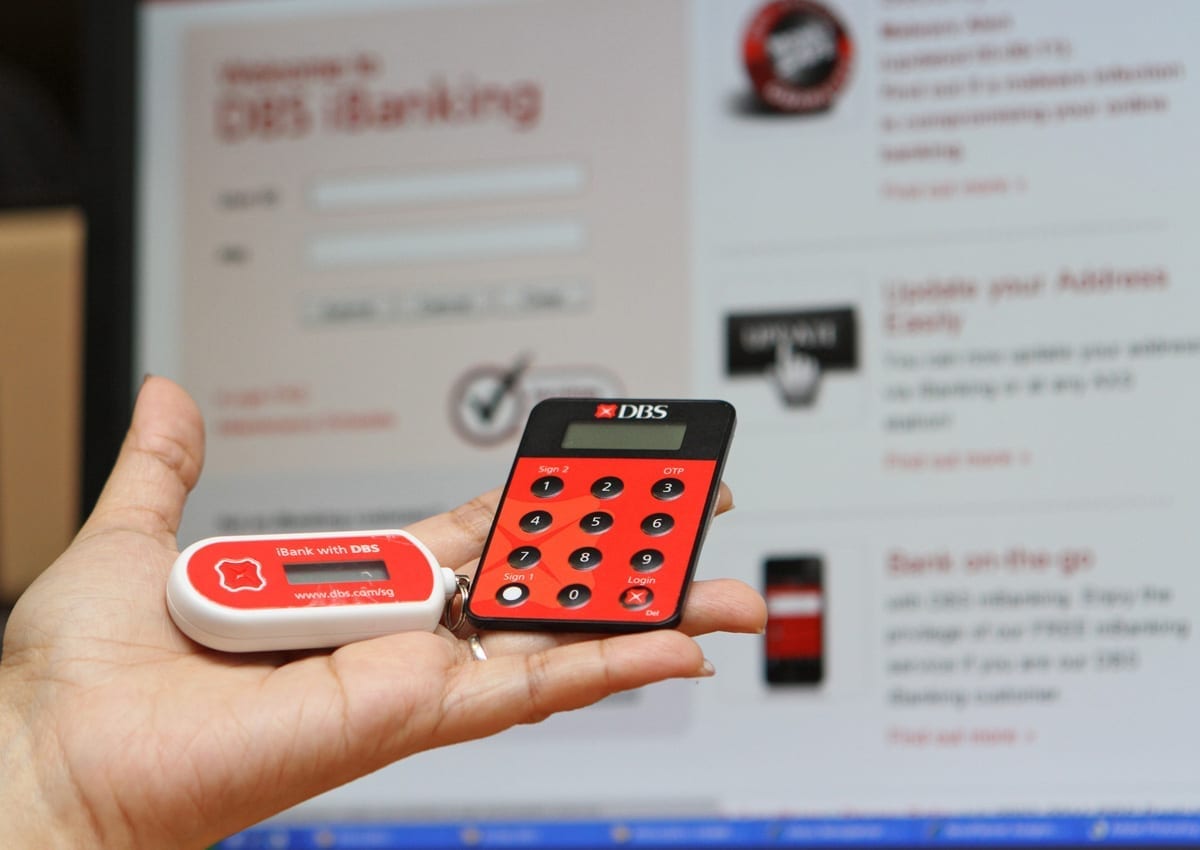
    The bank will accelerate its expansion in the rapidly growing Greater Bay Area with a stake in Shenzhen Rural Commercial Bank.

    DBS has entered into an agreement to acquire a 13 percent stake in Shenzhen Rural Commercial Bank in a deal valued at RMB 5.286 billion ($813.2 million), as part of its strategy of investing in its core markets, the bank announced on Tuesday evening.

    The deal for 1.35 billion new shares at RMB 3.91 ($0.60) per share, representing 1.01 times the book value per share as of 31 December 2020, will make DBS the largest shareholder of SZRCB. DBS will use internal cash resources to fund the investment, which is expected to complete when the deal is approved by regulatory authorities in China.

    Established in 2005, SZRCB currently operates one of the largest bank branch network in Shenzhen, with 210 branches and over 3,600 employees servicing over 5 million active retail customers and over 170,000 active corporate customers.

    Approximately 40 percent of its loans are in the retail segment and the remaining 60 percent are in corporate segment, largely to Shenzhen-based small-and-medium-enterprises. The bank has RMB 519 billion in assets and RMB 404 billion in deposits, and generated RMB 4.8 billion in net profit as of 31 December 2020.

    We see this as a highly complementary strategic partnership that will allow us to double down on the GBA and leverage on SZRCB’s local network and know-how to deepen DBS’ GBA strategy. At the same time, we would be able to support the continued growth and digital transformation of SZRCB through our regional presence and digital capabilities, Piyush Gupta, DBS CEO, said in the announcement.

  • Citi Eyes More China Licenses

    Citi Eyes More China Licenses

    After its consumer banking exit in China, Citi will accelerate the growth of its mainland institutional business with the reported pursuit of new licenses.

    Citi plans to submit an application for a securities and futures brokerage license, according to a report citing unnamed sources, with a focus on underwriting yuan-denominated shares and client trading.

    The American bank plans to submit the application within the next two months with the aim of launching for business in 12 to 18 months.

    A chief executive for the business will soon be named and 50 staff will be initially hired before doubling in the longer term, the report added. Most hires will be external but staff from other mainland businesses will also be transferred.

    Citi is a relative latecomer in terms of expansion in China compared to its rivals which have announced ambitious goals to double or even triple headcount in the historic opening of the mainland’s $54 trillion financial market.

    The bank also recently announced its planned retail banking exit in China as part of a broader pullback across markets in Asia and EMEA.

    Currently, Citi has a bond underwriting and settlement license as well as a domestic custody license received last year.

  • HSBC Adds Coinbase to Crypto Ban List

    HSBC Adds Coinbase to Crypto Ban List

    Despite the growing embrace of cryptocurrencies among institutions and retail investors, HSBC is sticking to its policy of avoiding virtual currencies and stocks correlated to them.

    Europe’s largest bank in Europe, with total assets of $2.715 trillion, is likely to avoid Coinbase’s newly listed COIN stock because of lingering worries about crypto’s role in money laundering and criminal activity.

    HSBC has no appetite for direct exposure to virtual currencies and limited appetite to facilitate products or securities that derive their value from virtual currencies. This is not a new policy, Ankit Patel, HSBC corporate media relations manager, told crypto news platform Coindesk.

    Last week, the bank confirmed that it stopped customers of its online trading platform InvestDirect from adding MicroStrategy stock to their portfolios, calling them a «virtual currency product.» The company holds about $5.5 billion in bitcoin, or about 80 percent of its $6.8 billion market capitalization.

    Coinbase debuted on Nasdaq last Wednesday in a direct listing, in what was seen as another key step towards cryptocurrencies becoming a mainstream medium of exchange.

    The listing of Coinbase’s means that even if average investors don’t want to buy or sell cryptocurrencies on their own, they can still can invest in the cryptocurrency economy by taking a stake in one of its biggest players. After a day of trading, the U.S.’ largest cryptocurrency exchange had a market capitalization of $86 billion.

    To stay competitive amid client demand for digital assets, financial sector giants have ramped out their offerings. These include BNY Mellon, which announced the introduction of crypto custodial services and Morgan Stanley, which will roll out a bitcoin offering to wealth management clients and is reportedly mulling exposure in Bitcoin through its investment arm, Counterpoint Global. Goldman Sachs has also said it would offer investments in bitcoin and other digital assets to its wealth clients.

    Outside of the U.S., notable global banks that have also launched crypto offerings include Standard Chartered and DBS.