Author: Mei Ling Tan

  • Grab Co-Founder Among New Pair of Directors at Wise

    Grab Co-Founder Among New Pair of Directors at Wise

    The London-headquartered online money transfer service plans to expand its product globally over the next few years to lower the cost of international transactions.

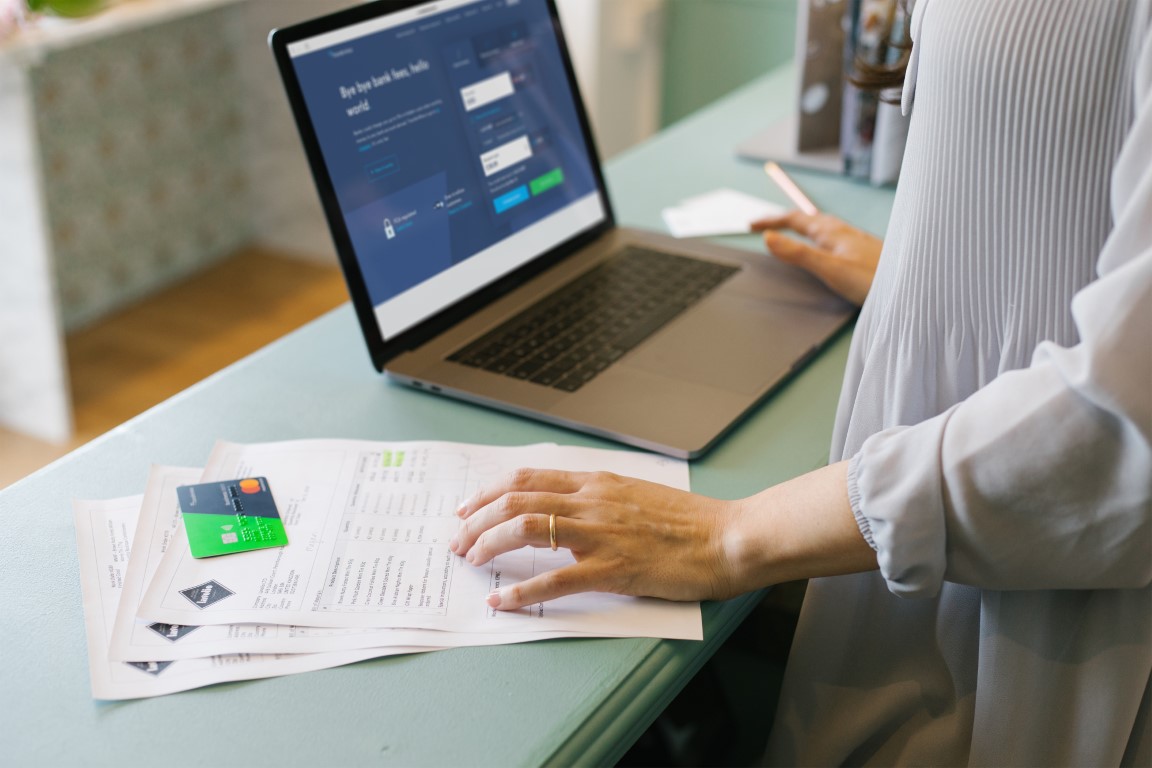
    Wise has appointed Tan Hooi Ling, co-founder of super app Grab, and Clare Gilmartin, former CEO of digital rail ticketing platform Trainline, to its board as director designates, the company announced in a blog post on Tuesday.

    The appointments will help the company with its next stage of growth, particularly in Asia Pacific, where the company operates in seven markets, co-founder and CEO Kristo Käärmann said in a the post. They will also help the board create a more inclusive work environment and more diverse and inclusive products, he said.

    The company, which recently rebranded from Transferwise to Wise, opened a new office in Singapore in February 2021, which will be used as a base for regional growth, while announcing major hiring plans.

    Wise was founded in 2011 by Estonians Taavet Hinrikus and Kristo Käärmann. Today, it boasts 10 million users which process over 4.5 billion British pounds ($6.3 billion) in cross-border transactions every month.

  • HSBC Launches Fund Administration Services in Thailand

    HSBC Launches Fund Administration Services in Thailand

    This move is in line with the change in the securities services landscape in Thailand, which has relaxed outsourcing rules to boost the efficiency of local fund managers’ operations.

    By outsourcing their back-office operations to HSBC, asset owners and managers will be able to focus on their core offerings, the bank said in an announcement on Tuesday.

    The service will be available on HSBC’s Multifonds fund administration platform. HSBC clients already have access to custody and fund supervisory services offered by the bank.

    “Our clients have expressed a keen desire to improve efficiency and reduce cost, reduce operational risk, adapt to their investors’ need and manage regulatory changes effectively, Utumporn Viranuvatti, HCBC head of securities services, Thailand, said in the announcement.

    The bank said it has many other offerings planned a part of HSBC Securities Services’ Asia-first strategy to accelerate growth in the region by ramping up its investment in additional solutions and capabilities.

    HSBC has been expanding its offerings in Thailand as part of its bid to strengthen its Asean coverage. HSBC Private Bank launched its onshore business in the kingdom in February 2021, the bank’s second onshore business in the region after Singapore.

  • Volkswagen Plans Six European Battery Cell Plants By 2030

    Volkswagen Plans Six European Battery Cell Plants By 2030

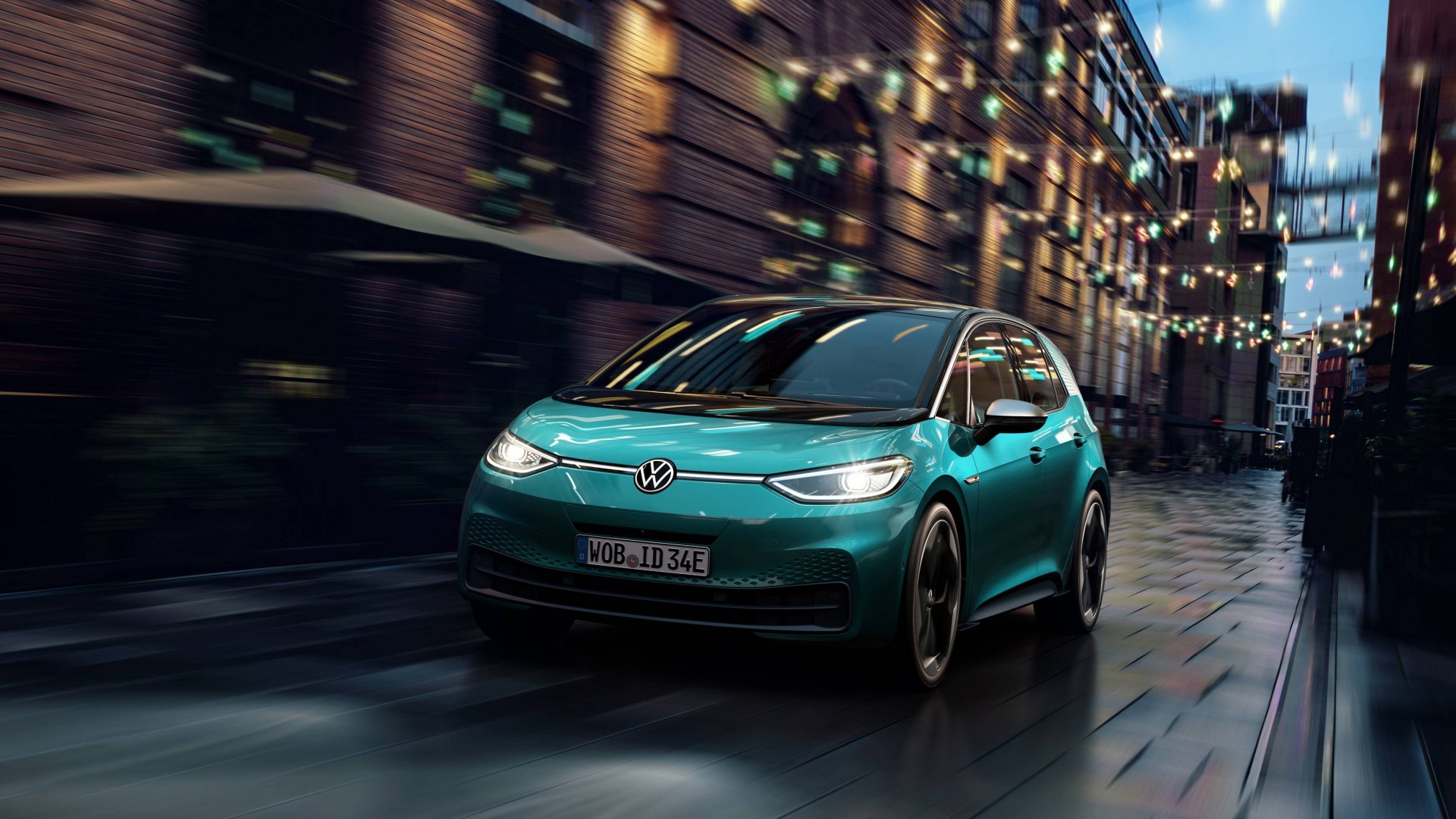
    Volkswagen plans to have six battery cell production plants operating in Europe by 2030 to secure supply for the world’s No.2 carmaker’s electric vehicle ambitions. The plants, to be built in partnerships, will have a production capacity of 240-gigawatt hours a year, VW said.

    “E-mobility has become core business for us. We are now systematically integrating additional stages in the value chain,” Chief Executive Herbert Diess told VW’s Power Day.

    “We secure a long-term pole position in the race for the best battery and best customer experience in the age of zero-emission mobility,” Diess added on Monday.

    The group also said it would enter partnerships with oil major BP and top European utilities Enel and Iberdrola to expand electric vehicle charging infrastructure, still seen as a major hurdle to the mass adoption of battery-powered cars.

  • Samsung To Develop Autonomous Driving Chip For Google’s Waymo

    Samsung To Develop Autonomous Driving Chip For Google’s Waymo

    Samsung Electronics recently won a project for Google parent Alphabet’s autonomous driving unit Waymo to develop chips for next-generation self-driving cars, South Korean media reported on Monday.

    Samsung will develop a chip that computes data collected from various sensors installed in autonomous vehicles or centrally controls functions by exchanging information with Google data centers in real-time, South Korean newspaper Herald Business reported, citing an unnamed industry source.

    The project is expected to be carried out by Samsung’s logic chip development division System LSI’s Custom SOC Business Team, it added.

    Samsung Electronics declined to comment regarding client company matters. Alphabet did not have an immediate comment.

  • ACB expects profits to top $460 mln

    ACB expects profits to top $460 mln

    Asia Commercial Bank has set itself a profit target of VND10.6 trillion ($460.8 million) for 2021, up 10 percent from last year.

    If it manages to achieve the target, it will join a select group of lenders to surpass the VND10 trillion mark comprising state-owned lenders Vietcombank, VietinBank, MBBank, Vietnam’s largest private bank Techcombank, and VPBank.

    It also targets growing its assets by 10 percent and credit by 9 percent and keeping non-performing loans under 2 percent.

    ACB plans to pay 25 percent dividends for 2020 and 2021 in the stocks.

    Its profit target is lower than forecasts by some securities companies. Vietcombank Securities expects ACB to achieve a profit of VND11.7 trillion, while KIS Vietnam, owned by Korea Investment & Securities Co., Ltd, said it is likely to top VND11.3 trillion.

    The expectations are based on its high credit growth in 2020 of 15.7 percent against 11 percent for the banking industry and a bancassurance deal it recently struck with Canadian insurance company Sun Life with an upfront fee of VND8.5 trillion.

    ACB’s profits rose by 27.7 percent last year to VND9.6 trillion.

  • Lazada Marketing Specialist Joins DBS

    Lazada Marketing Specialist Joins DBS

    In her new role, she will help the bank drive sustainability efforts, create social impact, and democratize banking services with digital innovation.

    Michelle Yip has joined DBS as executive director, group strategic marketing and communications, as per a report by Marketing Interactive.

    The marketing specialist was most recently the regional marketing EVP at e-commerce giant Lazada, which she joined in 2015 as a regional category director, later becoming senior vice president of customer experience and chief marketing officer. She was previously a senior marketing manager at Philips and held lead marketing roles at Samsung Electronics.

    At Lazada, Yip led the Alibaba-owned company’s marketing team across branding, social, public relations, online performance marketing, CRM, customer lifecycle management, and strategic partnerships.

    She also led COVID-19 related consumer engagement to support the community as an essential service provider and
    anchored Lazada’s position as a thought leader in the e-commerce space through identification and shaping of industry trends and directions, according to her LinkedIn profile.

  • GM Builds Pickups Without Certain Modules Due To Global Chip Shortage

    GM Builds Pickups Without Certain Modules Due To Global Chip Shortage

    General Motors Co said on Monday that due to the global semiconductor chip shortage the U.S. automaker is building certain 2021 light-duty full-size pickup trucks without a fuel management module, hurting those vehicles’ fuel economy performance. The lack of the active fuel management/dynamic fuel management module means affected models, equipped with the 5.3-litre EcoTec3 V8 engine with both six-speed and eight-speed automatic transmission, will have lower fuel economy by one mile per gallon, spokeswoman Michelle Malcho said.

    Malcho emphasized all trucks are still being built, something GM has repeatedly stressed it would try to protect as pickups are among GM’s most profitable models. She declined to say the volume of vehicles affected. “By taking this measure, we are better able to meet the strong customer and dealer demand for our full-size trucks as the industry continues to rebound and strengthen,” Malcho wrote in an email.

    The change runs through the 2021 model year, which typically ends in late summer or early fall, she said. Malcho said it would not have a major impact on the Detroit automaker’s U.S. corporate average fuel economy (CAFE) numbers.

    “We routinely monitor our fleet for compliance in the U.S. and Canada, and we balance our portfolio in a way that enables us to manage unforeseeable circumstances like this without compromising our overall (greenhouse gas) and fuel economy compliance,” she said.

    GM’s fleetwide fuel economy in the 2018 model year was 22.5 miles per gallon and was projected to rise to 22.8 mpg for 2019, according to a report by the Environmental Protection Agency. To meet federal CAFE requirements, automakers like GM often use credits from either earlier years where they faced less stringent rules and performed better than the requirements or buy credits from other automakers.

    GM said last month the chip shortage could shave up to $2 billion from this year’s earnings. It subsequently said it expected global chip supplies to return to normal rates by the second half of the year. The shortage, which has hit automakers globally, stems from a confluence of factors as carmakers, which shut plants for two months during the COVID-19 pandemic last year, compete with the sprawling consumer electronics industry for chip supplies.

  • HBO Max reveals plans to introduce ad-supported subscription tier in 2021

    HBO Max reveals plans to introduce ad-supported subscription tier in 2021

    HBO Max is the most expensive streaming service of its kind at the moment, as subscribers must pay $14.99 per month to access its offering. However, the company confirmed plans to introduce a cheap alternative for those who can’t afford the high price of a monthly subscription.

    The news was revealed as part of a recent call with investors, along with information about HBO Max’s expansion worldwide. First off, AT&T stated that it expects HBO Max to reach around 150 million subscribers by 2025, which will become possible after expanding the service to 60 international markets this year (39 in Latin America/Caribbean region and 21 in Europe).

    Also, AT&T confirmed plans to launch an ad-supported option (AVOD) in June but didn’t offer any details about pricing. WarnerMedia chief Jason Kilar reaffirmed HBO Max’s commitment to its customers to provide them with original shows and premieres of Warner Bros movies.

    However, he said that the new ad-supported plan will not have access to day-and-date premieres of Warner Bros movies, although everything else will be the same. Also, he confirmed that HBO Max doesn’t plan to put ads on HBO’s original series.

    According to the company’s estimations from October 2019, HBO Max and HBO have around 90 million subscribers. The ad-supported version of HBO Max will only be available in the US in June.

  • Honda Confirms Participation At EICMA 2021

    Honda Confirms Participation At EICMA 2021

    Honda has become one of the first motorcycle brands to confirm participation in the 2021 edition event of one of the world’s most well-known motorcycle trade shows. The EICMA event, held every year in Milan, Italy, is scheduled to take place between November 23-28, 2021. But this year’s event may not see participation from many brands, and it’s still some time away to actually see which way the COVID-19 situation blows, in Europe, as well as across the world. BMW Motorrad has already announced that it won’t be attending any motorcycle shows going forward, and the confirmation from Honda is actually a strong statement, considering the EICMA is possibly the most important two-wheeler event around the world.

    “It is a concrete and conscious approach to protect the value of the event, the public and the whole sector of reference involved, with the structure of EICMA S.p.A. and the manufacturers committed to facing up to the complexity of the organization of the event in a context in continuous development,” Honda said in a statement.

    “The path towards EICMA 2021 is distinguished by a reasonable expectation and a more flexible vision compared to the past. Sharing this new orientation therefore implies a surplus of compactness by all the players involved and the positive confirmation of Honda, together with the other significant names which have already assured their presence, go in exactly this direction. We hope that we can soon communicate other confirmations.”

    “The common objective is that we can once again gather around our passion for the products of this industry and re-conquer the freedom to do what EICMA has been doing for over one hundred years: creating opportunities for companies and offering the public visitor experiences which are increasingly exciting and thrilling.”

    The 2020 edition of the EICMA had to be canceled due to the COVID-19 pandemic. BMW Motorrad has announced that it will focus on its own small motorcycle events and customer events, and will not participate at the EICMA show. With the global economy under pressure, it’s still a matter of speculation of how many brands will eventually turn up at the 2021 EICMA show. But this year’s event is likely to be smaller than before, and it’s still uncertain how the COVID-19 situation pans out over the next few months. Even though vaccination drives are going on around the world, audience participation at the EICMA 2021 is likely to be significantly lower than in previous years.

  • Hong Kong Cross-Border Wealth Scheme Delayed by Pandemic

    Hong Kong Cross-Border Wealth Scheme Delayed by Pandemic

    Banks looking to capitalize on wealth management opportunities from the Greater Bay Area will have to wait until travel bans are lifted, according to the Hong Kong Monetary Authority.

    HKMA chief executive Eddie Yue said that the existing travel bans make it difficult to launch the ‘Wealth Management Connect’ scheme – a cross-border channel that will allow mainland residents of the 11-city cluster to invest in Hong Kong and Macau-based wealth management products.

    Under the current rules, investors seeking such products must physically open an investment account in person for the financial firm to share relevant information and risks.

    The overall scheme allows an individual investor quota of 1 million yuan ($150,000) each and an aggregate quota of 300 billion yuan (US$45 billion) for north and southbound fund movements.

    While it remains to be seen when travel restrictions will be removed – Hong Kong recently recorded another wave of coronavirus cases that led multiple banks to advise employees to work from home – HKMA is actively working with Beijing to simply the process for cross-border account opening.

    According to Yue, a simpler process could be introduced which would require only one-time cross-border travel, compared to the current practice which requires a plethora of documents and often multiple visits.

    Other cross-border initiatives that the HKMA is focused on include the southbound segment of the bond connect scheme which is planned for a launch in the second half of 2020 after the northbound segment was introduced in 2017. Unlike the wealth management connect scheme, cross-border trading does not require physical travel.

  • Huawei Pushes for HSBC Disclosure in Hong Kong

    Huawei Pushes for HSBC Disclosure in Hong Kong

    After being rejected in the U.K., Huawei lawyers seek to make a similar push to pressure HSBC to unveil documents they claim will disprove accusations of fraud against chief financial officer Meng Wanzhou.

    After a 30-minute hearing at Hong Kong High Court, no ruling was deliberated on whether or not HSBC must provide specific documents related to accusations that Meng misled the British lender about business dealings with Iran during a 2013 meeting.

    If proven true, this could help prevent the Huawei CFO and daughter of founder Ren Zhengfei from being extradited to the U.S. to face trial.

    The information that Meng is seeking will «go to the heart of her ability to demonstrate that there were material omissions and misstatements» made in the attempt to extradite her to the U.S., according to a report citing a Huawei spokesperson, and that she has no other means to obtain them other than through court approval.

    The legal pressure against HSBC to disclose the allegedly revealing documents follow similar attempts made in the U.K. by Huawei lawyers which were rejected by a high court judge.

    Another one-day hearing for the case in Hong Kong is scheduled for April 12.

  • HSBC Scales Up Structured Product Capabilities

    HSBC Scales Up Structured Product Capabilities

    Luxury as an investment theme is poised to benefit from strong economic recovery led by Asian economies in the post-COVID-19 world. Against this background, HSBC has rolled out a new structured product linked to a customized index.

    In an effort to further the bank’s ambition of becoming Asia’s leading wealth management bank, HSBC scales up its structured product capabilities in Hong Kong and Malaysia. In addition to a wide array of products linked to standard and thematic market indices, the bank has rolled out a new structured product linked to a customized index, providing an investment opportunity for wealthy clients to capitalize on the growing luxury consumption in Asia, HSBC announced in a statement on Monday.

    Luxury spending from Asia, and in particular mainland China, already accounts for a significant portion of global luxury consumption. Luxury as an investment theme is poised to benefit from strong economic recovery led by Asian economies in the post-COVID-19 world.

    The growth of the wealth management market is unparalleled in Asia, underpinned by the expansion in high net worth population and the increase in their sophistication. Therefore, we are working closely with our Global Markets colleagues to bring innovative structured products to our customers. This index-linked structured product exemplifies our commitment to meet customers’ diverse wealth management needs aligned to prevalent investment themes, Maggie Ng, Head of Wealth and Personal Banking, Hong Kong, HSBC, said,

    HSBC’s new luxury index provides investors dynamic exposure to a list of global stocks that have high exposures to the luxury sector.

    To accelerate the growth of the wealth business in Asia, Global Markets continues to invest in our product manufacturing capabilities leveraging our market expertise, and deliver bespoke solutions for wealth clients, said Justin Chan, Head of Greater China, Global Markets, Asia-Pacific, HSBC.

    HSBC Global Research estimates that the luxury goods market in mainland China will likely achieve 48 percent growth in 2020, doubling its overall share of the global luxury market in 2020, with further growth expected through to 2025. We are also bullish on the sector due to the likely consolidation seen in the industry and the use of more affordable online sales channels», he added.

  • Vietnam posts $665 million trade surplus with the UAE

    Vietnam posts $665 million trade surplus with the UAE

    Vietnam posted a $665 million trade surplus with the United Arab Emirates (UAE) in the first two months of 2021, alongside an increase in both exports and imports.

    Vietnam’s exports to the UAE rose 60 percent year-on-year $737 million, while imports increased 44 percent to $72 million, according to the General Department of Vietnam Customs.

    Total Vietnam-UAE trade value surged 58 percent year-on-year during this period.

    Phones and components were Vietnam’s foremost exports to the UAE with a value of $551 million, up 108 percent year-on-year. Exports of agriculture and aquaculture products also experienced robust growth. Cashew exports hit $10.3 million, a year-on-year rise of 600 percent.

    Vietnam’s main import from the UAE is the plastic raw material, reaching $41.8 million, a year-on-year increase of 66 percent. Among the products imported from the UAE, only petroleum products saw a 42 percent year-on-year decline to $2.5 million.

  • 35 pct of businesses lay off workers due to pandemic

    35 pct of businesses lay off workers due to pandemic

    Thirty-five percent of businesses had to let staff go after being hit by the effects of the Covid-19 pandemic, which disrupted supply chains, a survey has found.

    The dwindling number of workers was one of the four major difficulties businesses faced during the pandemic, the others being difficulties in approaching customers and disruptions in cash flows and supply chains, the survey, done by the Vietnam Chamber of Commerce and Industry (VCCI) and the World Bank, said.

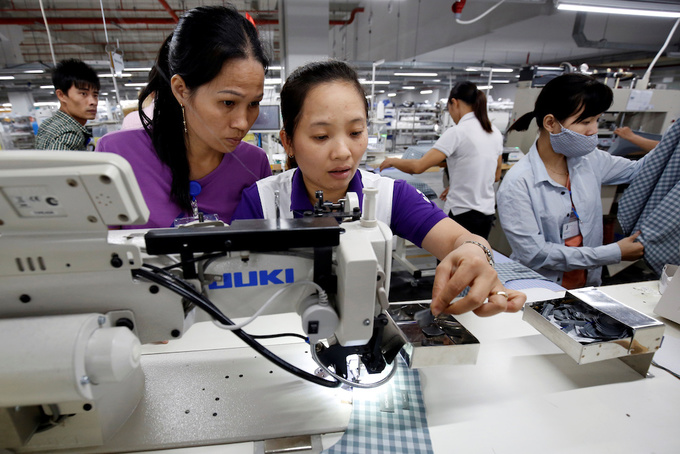
    Textile and garment was the sector with the highest number of companies reporting negative impacts (97 percent), followed by information and communications (96 percent) and electrical equipment (94 percent), the survey, which polled nearly 10,200 businesses, said.

    Overall, 87 percent of companies reported negative impacts.

    Small and micro businesses established less than three years ago were most affected by the Covid-19 pandemic, Dau Anh Tuan, head of the VCCI’s legal department, said.

    But the government’s support policies were helpful, 70 percent of respondents said.

    Businesses called for more long-term solutions such as increasing public investment, completing ongoing infrastructure works, and providing stimulus packages.

    The VCCI has called on the government to provide financial support to companies that maintain a high employment rate and subsidize the cost of training to improve workers’ skills.

    Vietnamese businesses should take the opportunities thrown up by the pandemic as major Japanese, U.S., E.U., and Australian companies are looking to shift their supply chains out of China, it added.

    The VCCI also did a survey of 1,564 foreign companies in Vietnam and found 87.9 percent were affected by the pandemic and 22 percent had to lay off workers.

  • Auto sales up 21 pct in 2021

    Auto sales up 21 pct in 2021

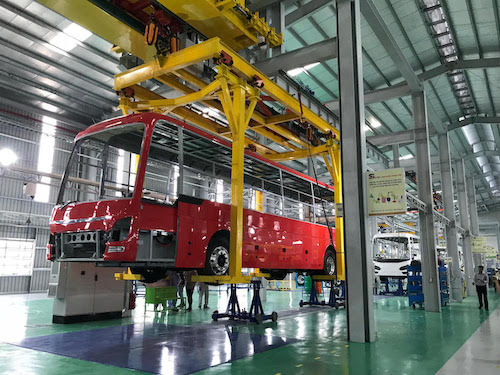
    Auto sales in the first two months of the year jumped by 21 percent to 40,017 units.

    Passenger vehicles dominated sales at 71 percent, according to the Vietnam Automobile Manufacturers Association.

    Local company Truong Hai Auto (Thaco) led the market with 14,964 units representing a 39 percent year-on-year increase.

    It was followed by Toyota (6,848), and Mitsubishi (4,605).

    Honda and Ford rounded off the top five.

    Last year sales had fallen by 8 percent to 296,634 units as the Covid-19 pandemic badly affected the economy, hitting people’s incomes and discretionary spending.