Author: Mei Ling Tan

  • Dropbox Passwords app will soon be free for everyone

    Dropbox Passwords app will soon be free for everyone

    Dropbox is probably one of the most popular cloud services out there. It’s easy to take advantage of what it has to offer and, more importantly, its basic features are completely free. Dropbox Passwords is an extension of the main service that’s meant to provide more security to users who more often than not are using Dropbox to send passwords.

    However, Dropbox Passwords is not a free service and those who want to use it must pay a $9.99 monthly subscription. Passwords is included in the Dropbox Plus subscription along with other benefits, but a free version will soon be available for those who’d like to use it.

    Dropbox announced today that Passwords will be available for free to all users starting in early April. The limited version of Passwords will include some basic features that should be enough for those who don’t want to pay the $9.99 monthly subscription.

    For example, with a free Dropbox Basic plan, users will be allowed to store up to 50 passwords, as well as access them anywhere with automatic syncing on up to three devices. Also, Dropbox will add a feature after launch that will allow users to share any password with anyone through the Passwords app. If you’d like to try out Dropbox Passwords once it becomes available, don’t forget to sign up to be notified when it becomes available.

  • Volkswagen Takes Aim At Tesla With Own European Gigafactories

    Volkswagen Takes Aim At Tesla With Own European Gigafactories

    Volkswagen plans to build half a dozen battery cell plants in Europe and expand infrastructure for charging electric vehicles globally, accelerating efforts to overtake Tesla and speed up mass adoption of battery-powered cars. The world’s No. 2 carmaker, which is in the midst of a major shift towards battery-powered cars, said on Monday it wants to have six battery cell factories operating in Europe by 2030, which it will build alone or with partners.

    “Our transformation will be fast, it will be unprecedented,” Chief Executive Herbert Diess told Volkswagen’s Power Day, which also featured the CEOs of BP, Enel and Iberdrola in an effort to match some of the buzz of Tesla’s Battery Day last September.

    “E-mobility has become core business for us,” he added.

    Volkswagen, whose shares rose as much as 3.8%, did not specifically say how much the plan will cost. It said in December that it planned to spend 35 billion euros ($41.7 billion) on e-mobility as a whole by 2025.

    The group had been laggard on electrification until it admitted in 2015 to cheating on U.S. diesel emissions tests and had to deal with new Chinese quotas for electric vehicles. It now has one of the most ambitious programs in the industry.

    Volkswagen said the European factories will have a joint production capacity of up to 240 gigawatt hours (GWh) a year, adding the first 40 GWh would come from Sweden’s Northvolt, with production starting in 2023.

    As part of the deal, Volkswagen will raise its 20% stake in Northvolt and also take over the Swedish firm’s stake in a planned battery cell venture in the German city of Salzgitter, which will form the second factory from 2025.

    This will be followed by a factory in Spain, France or Portugal in 2026 and a site in Poland, Slovakia or the Czech Republic by 2027. Two more plants will be set up by 2030.

    While the first two factories are already reflected in Volkswagen’s financial planning, the group is currently in “deep discussions” about how the subsequent plants fitted with financial targets, board member Thomas Schmall said.

    Volkswagen is also working on a major expansion of charging infrastructure, a lack of which is still seen as a big barrier to the mass adoption of battery-powered cars. Via existing efforts and partnerships with oil major BP as well as top European utilities Enel and Iberdrola, Volkswagen aims to operate about 18,000 public fast-charging points in Europe by 2025.

    This represents a five-fold expansion of the existing fast-charging network, Volkswagen said, adding it would invest 400 million euros in the initiative.

    In North America, Volkswagen targets 3,500 fast-charging points by the end of 2021 via its Electrify America unit, while in China, the world’s largest car market, the group aims for 17,000 by 2025.

    In China, where Volkswagen last year acquired 26.5 percent of battery maker Guoxuan High-tech Co Ltd, the carmaker now aims to sell more than 2 million electric vehicles a year by the end of the decade.

    Shifting to design, Volkswagen unveiled plans to have a new unified prismatic battery cell from 2023, which will support cost cuts generated by the higher level of in-house cell production and could impact its current suppliers.

    South Korean battery makers’ shares, including in LG Chem, whose unit LG Energy Solution makes batteries for Volkswagen, and SK Innovation, fell as much as 5.8% and 5.3% respectively on Tuesday after the news.

    Electric vehicle makers, including Tesla, are using cylindrical battery cells, which resemble flashlight batteries and are relatively inexpensive and easy to manufacture.

    Prismatic cells, which resemble a thin hardcover book, are housed in a rectangular metal case and are more expensive. Pouch cells, another alternative, are thinner and lighter, and resemble a flexible metal mailing envelope.

    “On average, we will drive down the cost of battery systems to significantly below 100 euros ($119) per kilowatt hour,” Schmall said. “This will finally make e-mobility affordable and the dominant drive technology.”
  • Instagram no longer allows adults to send DMs to underage users

    Instagram no longer allows adults to send DMs to underage users

    Instagram is trying to make itself safer for a certain category of users. Lately, the social network introduced a set of features that limit interactions between Instagram users to protect their privacy. In that regard, the most recent changes announced by Instagram are meant to protect underage users from adults who don’t follow them.

    The new changes will prevent conversations between adults and teens who don’t follow one another. When an adult tries to send a message to a teen on Instagram who doesn’t follow them, they will receive a notification that DMing them isn’t an option.

    In addition to these changes, Instagram will implement prompts to encourage teens to be more careful in conversations with adults they’re already connected to. Instagram will notify teens when an adult who has been “exhibiting potentially suspicious behavior” is interacting with them via direct messages.

    These messages are usually sent to teens if an adult is sending a large amount of friend or message requests to people under 18, and they include various options like block, report, or restrict the adult in question.

    But that’s not all! Instagram announced that in the coming weeks it will make it even more difficult for adults who have been “exhibiting potentially suspicious behavior” to interact with underage Instagram users. Many of these changes will be implemented in some countries this month, but they will be available everywhere by the end of the year.

  • SK Telecom, Shinsegae Group among bidders for eBay’s Korean business

    SK Telecom, Shinsegae Group among bidders for eBay’s Korean business

    South Korea’s SK Telecom, retailer Shinsegae Group and private equity firm MBK Partners were among those that entered non-binding, preliminary bids for the sale of eBay Inc’s South Korean business, the telecom company, and two sources with knowledge of the matter said on Tuesday.

    EBay Korea operates open market e-commerce platforms Gmarket, Auction and G9, and was South Korea’s third-largest e-commerce firm in 2020 with 12.8% market share, according to Euromonitor.

    The sources declined to be identified as not authorized to talk to the media. MBK Partners, Shinsegae Group, and eBay Korea declined to comment.

    Seoul-based analysts said that eBay hopes to fetch up to 5 trillion won (S4.42 billion) with the sale.

    However, they said the actual sale price may be lower, due to its recent drop in market share compared to rivals such as Korea’s No. 1 e-commerce firm Coupang, and disadvantages of the unit’s traditional “open market” form of e-commerce which simply connects sellers with buyers.

    EBay Korea’s market share has been overtaken in recent years by Coupang, which directly handles inventory, differentiated itself with speedy delivery and raised around $4.6 billion in a blockbuster New York listing earlier this month, as well as Naver Corp, which operates South Korea’s dominant online search portal.

    EBay Korea’s 2020 revenue was estimated to be about 1.3 trillion won, with a 5.3% on-year increase in transactions, compared to a 19% growth in South Korean e-commerce market, KTB Investment & Securities analyst Kim Jin-woo said.

  • China retail sales rebounds after Covid-19

    China retail sales rebounds after Covid-19

    China’s industrial output and retail sales surged in the first two months of the year, official data showed yesterday, underscoring the country’s recovery from the COVID-19 pandemic. Industrial production spiked a forecast-busting 35.1 percent on-year, the biggest bounce in decades, while retail sales also beat expectations with 33.8 percent growth.

    However, the Chinese National Bureau of Statistics said the latest surge was in part due to distortions from last year’s “low base in the same period.”

    Both indicators fell in the early months of last year after COVID-19 surfaced in central China and spread rapidly across the nation.

    However, the world’s second-largest economy became the first to bounce back globally after imposing strict lockdowns and virus control measures, clocking a full-year economic growth of 2.3 percent.

    “After removing the base effect, the growth of main indicators is stable and macro indicators are in a reasonable range,” the bureau said.

    Data for January and last month were released together to eliminate the influence of uncertainties brought about by the Lunar New Year holiday, which typically falls within this period.

    Industrial activity was likely boosted by the fact that many migrant workers were discouraged from returning to their hometowns because of COVID-19 restrictions, meaning some factories remained open through the holiday or reopened sooner.

    “We expect activity to remain strong in the near-term, as the easing of virus restrictions boosts consumption and fiscal stimulus among key trading partners should keep exports strong,” Capital Economics senior China economist Julian Evans-Pritchard said.

    Urban unemployment rose to 5.5 percent last month, up from 5.2 percent in December, data showed, but experts said the real rate might be higher owing to the high number of workers in unofficial employment.

    “Even though we do see improvement on the global economic environment, they are still very cautious,” Oversea-Chinese Banking Corp (華僑銀行) Greater China head economist Tommy Xie (謝東明) said on the issue of unemployment.

    While urban unemployment rate remains within the government’s target, the caution was likely due to another potential record number of graduates entering the job market this year, he said.

    He added that there is an “uneven recovery” ongoing as well, with smaller firms and industries, such as travel, not fully recovered from the pandemic hit.

  • Japan’s Lixil adopts DTC model in Singapore retail store launch

    Japan’s Lixil adopts DTC model in Singapore retail store launch

    LIXIL, maker of pioneering water and housing products, today announced the launch of its flagship showroom in Singapore. Located at a heritage shophouse unit at 24 Mohd Sultan Road, the 6,000 square feet store is in the heart of Singapore’s prime lifestyle district. Bringing multiple LIXIL brands under one roof, the store offers a wide range of sustainable living solutions, meaningful design, and cutting-edge hygiene technology.

    The launch of the store comes at a time when the COVID-19 pandemic and the planet’s health have put issues such as sanitation and hygiene at the forefront of consumer minds. Besides offering LIXIL’s unique hygiene technology through the store, LIXIL is also leveraging on its industry-leading experience with a direct-to-consumer business approach and unparalleled retail concept to offer a full bathroom product line-up to reach more consumer segments. The showroom will feature products from GROHE and American Standard, with plans to include INAX, the Japanese brand that manufactures innovative sanitaryware and artistic ceramic tiles.

    Satoshi Konagai, Leader, LIXIL Water Technology-Asia Pacific, said, “We are very happy to inaugurate our flagship showroom and hope to provide the best solutions for their living and working spaces. The customer and retail experience have always been very important to us at LIXIL and we are constantly looking for ways to maximize the value for our consumers.”

    He further added, “Today the world is more concerned than ever about hygiene. Singapore’s recent commitment on sustainability and its exemplary handling of the pandemic showcases a rising awareness on these global issues, and we believe there is a growing demand for solutions to address them. Homeowners expect proven solutions that offer peace of mind. Our technologies such as Touchless faucets and flushing systems, Easy to clean solutions, Double Vortex flushing system, HygieneRim technology and Aqua Ceramic can help to provide the ‘optimum hygiene’ to our discerning consumers.

    Also, in a time where people are unable to travel and spend more time at home, they want to be able to feel relaxed and enjoy a spa-like experience right in their own home. Here our solutions like GROHE F-Digital Deluxe, GROHE SmartControl, GROHE Sensia Arena shower toilet can provide a home spa experience to consumers by bringing the enjoyment of water to them.”

    Built on the brand’s core pillars of hygiene, sustainability, and innovative design, LIXIL’s flagship showroom in Singapore takes an experiential approach at showcasing its award-winning water technology and living solutions.

    Some of the key highlights that consumers can expect to see in the store:

    • Cutting-edge technologies in interior design, such as the GROHE F-Digital Deluxe Spa System which consists of a shower system with lights, steam and sound, controlled by an app; as well as GROHE Sensia Arena shower toilet, one of LIXIL’s most internationally awarded product.
    • LIXIL’s first 3D metal-printed faucet, the GROHE Allure Brilliant Icon 3D faucet retailing at S$34,234.24.
    • Kitchen solutions, such as the GROHE Zedra SmartControl which features our “push-and-turn technology”, as well as GROHE Blue, the brand’s sustainable living water filter system and faucet.
    • American Standard’s elegant hygiene products such as its Line Sensor Technology Faucet, the elegant Acacia SupaSleek Collection, and its Signature Collection — featuring its cutting-edge HygieneClean System for toilets, with its Double Vortex flushing technology, anti-stain Aqua Ceramic material, anti-bacterial ComfortClean technology and rimless Hygiene Rim design.
    • FREE 360-degree virtual bathroom design and proprietary LIXIL’s rendering service CustoMySpace, allowing visitors to shortlist their favourite products and render them in 3D in a virtual bathroom setting for them to bring their ideas to life.
  • Fashion giant H&M’s sales recover in March as stores reopen after lockdowns

    Fashion giant H&M’s sales recover in March as stores reopen after lockdowns

    Sales at fashion group H&M fell slightly less than expected in the three months through February and rose in the first half of March as pandemic restrictions were eased in some markets, allowing hundreds of stores to reopen.

    The world’s second-biggest apparel retailer said on Monday net sales fell 27% from a year earlier, or 21% when measured in local currencies, to 40.1 billion crowns ($4.72 billion).

    Analysts had on average forecast a 30% decline in net sales for the period – the Swedish group’s fiscal first-quarter – according to Refinitiv SmartEstimate.

    “Sales development was significantly affected by the COVID-19 situation, with extensive restrictions and at most over 1,800 stores temporarily closed,” H&M said in a statement.

    “Since the beginning of February, a number of markets have gradually allowed stores to reopen and at the end of the quarter around 1,300 stores remained temporarily closed,” it said, adding that online sales had continued to develop very well.

    RBC analyst Richard Chamberlain, who has a “sector perform” rating on H&M’s shares, said the figures implied that online sales had provided a stronger-than-expected boost in February.

    H&M said sales in the March 1–13 period were up 10% in local currencies as many countries, including single-biggest market Germany, began allowing some stores to reopen. However, about 900 of H&M’s approximately 5,000 stores remained closed due to pandemic lockdowns as of March 13.

    Chamberlain said most stores should be open by mid-April bar new lockdowns in Europe, H&M’s main market.

    “As such, we see the potential for a strong sales recovery in the remainder of the year, with potential for gross margin to surprise on the upside, due to the weaker U.S. dollar,” he said.

    Market leader Inditex, the owner of Zara, last week forecast a return to healthy sales as soon as lockdown are lifted, as it reported a 70% fall in profit for its fiscal year through January. It predicted all its shops would be open by mid-April.

    H&M, whose full December-February earnings report is due on March 31, is bracing for a loss in the quarter after the pandemic slashed 2020 profits by 88%.

    Shares in H&M were up 3% in early trading, taking a year-to-date rise to 32%

  • Alibaba told to divest media assets

    Alibaba told to divest media assets

    Beijing has reportedly told the Chinese e-commerce conglomerate Alibaba to divest its assets in the media sector out of concern over the company’s growing public influence. Its founder, Jack Ma, the ebullient and unconventional billionaire who officially retired from Alibaba in 2019 but remains a large shareholder, has been in authorities’ crosshairs in recent months.

    In November, Chinese regulators halted a colossal $34bn stock market listing by Ant Group, an Alibaba subsidiary for online payments. The following month, regulators opened an investigation into Alibaba business practices deemed anti-competitive. Now authorities have told the tech company to drastically reduce its presence in the media sector, citing people familiar with the matter.

    Alibaba’s highest-profile media assets include Hong Kong’s leading English-language daily, the South China Morning Post, and China’s Twitter-like social media platform Weibo, and online video platform Bilibili. Officials are worried that the company has too much influence over public opinion and were reportedly appalled about the extent of its media holdings, the Journal said.

    The government did not specify whether Alibaba was requested to completely withdraw from the media or divest part of its shares.

    On Friday, the Journal reported that Alibaba risks being levied with a record fine in China for anti-competitive practices, which could exceed the $975m paid by US chipmaker Qualcomm in 2015.

    According to the article, authorities accuse Alibaba of preventing merchants who sell goods on the platform from also selling on rival websites.

  • Chocolate retailer Thorntons to close all its UK stores

    Chocolate retailer Thorntons to close all its UK stores

    Chocolate retailer Thorntons is the latest well-known high street brand to fall victim to the Covid crisis, announcing the closure of all its 61 stores, with the likely loss of 600 jobs. The Thorntons brand will remain on offer in supermarkets and other retailers, while its factory in Alfreton, Derbyshire, will make more chocolate for international markets.

    The 600 staff whose jobs are at risk will receive relocation support if they apply successfully for vacancies at Thorntons’ sites in Alfreton or Greenford in west London, the company said.

    Coronavirus pandemic lockdowns have hit Thorntons particularly hard because they have occurred during its peak times, including Christmas and two consecutive Easters. The closures will represent the latest departure of a longstanding high-street name. Thorntons blamed the changing dynamics of the high street and the shift to online retail, as well as the pandemic, for its decision.

    Thorntons was already struggling before the pandemic. In the year to the end of August 2019 it reported a loss of £36m, only a slight improvement from the £38m loss the year before. Joseph Thornton founded the company in Sheffield, using the slogan “Chocolate heaven since 1911”. It floated on the stock market in 1987, but has since struggled with competition from international rivals.

    Thorntons was bought in 2015 by Ferrero, the Italian chocolate manufacturer, in a £112m deal. At the time of the buyout, Thorntons ran 242 stores in Britain and Ireland. The company has abandoned an earlier strategy of investing in new store formats and cafes in an attempt to stave off the structural forces hitting bricks-and-mortar retail.

    Online sales have continued to perform well, Thorntons said, with sales over the last year up by 71% compared with the year before.

    “Unfortunately like many other retailers, the obstacles we have faced and will continue to face on the high street are too severe,” said Adam Goddard, Thorntons’ retail director. “Despite our best efforts we have taken the difficult decision to go into full consultation to start the permanent closure of our retail store estate.

    “As customers continue to change the way they shop, we must change with them.”

  • Hermes opens giant store in Tokyo’s ritzy Omotesando

    Hermes opens giant store in Tokyo’s ritzy Omotesando

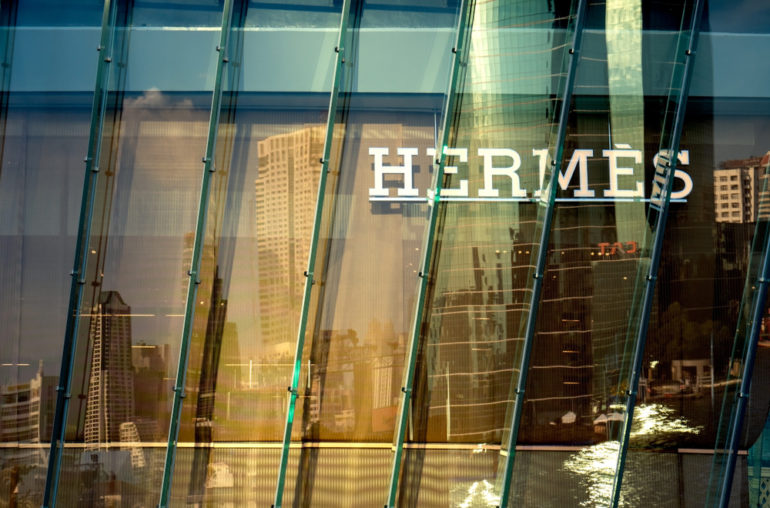
    Hermès is delighted to announce the opening of a new address in Tokyo’s Omotesando district on 28th February 2021. This new 488 square-meter home will be the house’s first free-standing store in Tokyo since the opening of Maison Hermès Ginza in 2001. A beautiful boulevard leading to Meiji Shrine, Omotesando Avenue is today lined on both sides with high-end boutiques and zelkova trees.

    Its intricate back streets are home to Tokyo’s vibrant street culture, attracting designers and artists from all around the world. It is here, on one of the city’s unique streets, adjacent to Shibuya and Harajuku, that the new Hermès store comes to life. The store’s distinctive façade opens directly onto Omotesando Avenue and incorporates the historic stone wall of one of the area’s most notable buildings, which has been preserved by the Parisian architecture agency RDAI.

    The façade is given a contemporary look with a copper-toned stainless-steel grid, adding depth and light to the exterior, just as light and shadows intermingle in a bamboo grove. Upon entering, visitors are greeted by the Ex-Libris in mosaic, inspired by the Hermès Faubourg SaintHonoré store in Paris. On the right side, they can peruse the colorful women’s silk collections, including the new carré Duo Cosmique designed by Kohei Kyomori, and presented exclusively here.

    The window display is also specially designed by this young Japanese artist to celebrate the opening. Further on, fashion jewellery, beauty, and perfume, including the latest men’s fragrance H24 are elegantly displayed. In the beauty corner, the Rouge Hermès lipstick collection will wait to encounter new customers from mid-April. On the left side of the entrance, home collections including tableware and men’s silk are introduced. A leather section at the back of the store welcomes bags, small leather goods, and equestrian collections.

    Walls are covered in wood paneling and bamboo marquetry, accented by fluid curves, and a selection of women’s shoes is displayed on wooden shelves extending from one of the large pillars. The floor is covered with two shades of greenstone, sourced in Asia and laid in a pattern resembling Japanese tatami mats. Custom rugs with a hue reminiscent of forest moss lend a softness to space. Behind the staircase is a refined area for watches and jewelry.

    Finally, customers can pause at a wide table, and enjoy books and a Leporello of unique drawings by French artist François Houtin, displayed in a specially made curved frame. As customers ascend the stairs, they will discover another piece of art, created by Japanese contemporary bamboo artist Shoryu Honda. Inspired by the shape of clouds and infinite Moebius strips, the bamboo sculpture is an example of the sophistication of Japan’s world-class modern bamboo artistry. The sweeping staircase is one of the most striking architectural elements of the store.

    The organic shapes of its vertical columns resemble tree branches, while the stairs call to mind pale green stepping stones. Light filters down from the upper level to the ground floor, just as sunlight glistens between the branches of a forest and invites customers upstairs to dive into the women’s and men’s universes. On the second floor, mobile partitions create an intimate space for each métier while giving the illusion of transparency. There are large fitting rooms for both men and women, with the former designed in order to incorporate made-to-measure orders in the future.

    Among the selection of special objects created for this opening are a skateboard and a surfboard, both revisited in a special edition with Jan Bajtlik’s design Cheval de Fête, and uniquely numbered Mega Chariot carrés and ties by Daiske Nomura. A newly unveiled Hermès bike made of ash wood will also be presented for the occasion. Paying tribute to local artists, materials, and know-how, this new store is a testimony to Hermès’ strong relationship with Japan and invites local customers and new visitors into a discovery of the house’s creativity and fine craftsmanship in a harmonious and warm environment.

  • U.S. Court Reverses Trump Ban on Xiaomi

    U.S. Court Reverses Trump Ban on Xiaomi

    Smartphone giant Xiaomi has been awarded a temporary block for its ban over links with the Chinese military, citing the original move as «arbitrary and capricious».

    U.S. District Judge Rudolph Contreras issued a temporary halt to the ban, claiming that Xiaomi was deprived of the rights for due process and that Xiaomi was likely to win a full reversal of the ban.

    The court is somewhat skeptical that weighty national security interests are actually implicated here, said Contreras on the originally stated concerns by the former administration when issuing the ban.

    In response, Xiaomi will look to continue to request that the court declare its blacklisting as unlawful and permanently remove the designation, according to a statement from the Chinese smartphone company.

    Since Joe Biden took over the White House, an increasing number of firms have pushed back against bans issued by the former Trump administration.

    In addition to Xiaomi, Chinese data firm Luokung Technology said it would sue the U.S. government earlier this month over what it described as an unjustified ban while Boston-based State Street Global Advisors reversed an initial decision against investing in sanctioned entities in the renowned ‘Tracker Fund’ in  Hong Kong.

  • Barrenjoey Raids UBS’ Australia Unit

    Barrenjoey Raids UBS’ Australia Unit

    Startup investment bank Barrenjoey continues to lure talent from UBS’ Australia unit with around ten executives leaving the Swiss bank in the latest wave of moves.

    Multiple executives at UBS, including top analysts, have resigned to join Barrenjoey – an investment banking startup partly owned by Barclays and Magellan Financial Group – according to an Australian Financial Review report.

    Those defecting include banking analyst Jon Mott; mining analyst Glyn Lawcock; the former two’s junior partners Dan Morgan and Minh Pham; gaming and transport analyst Matt Ryan; small caps specialist Josh Kannourakis; associate director of research Craig Stafford; and retail and consumer goods analyst Aryan Norozi.

    In addition to analysts, the investment banking team has also been targeted with equities desk specialist Craig Webb set to join Barrenjoey alongside senior technology, media and industrials banker Luke Bentvelzen.

    Even prior to the mass resignations on Monday, Barrenjoey had already been seeking ex-UBS talent in Australia. Barrenjoey senior managers formerly from UBS include ex-advisory and capital markets managing director Guy Fowler; ex-research head Chris Williams; ex-managing director Matt Hanning; ex-global co-head of flow rates and co-head of global markets Duncan Haig; and ex-senior trader George Kannan.

    Ex-UBS Australia chief executive Matthew Grounds is also rumored to join the investment banking startup following the expiration of a non-compete clause.

    In response to the exits, current UBS co-head of Australasia Nick Hughes said that the local unit had global banking and that it was committed to re-hiring and maintaining high competitiveness in the Australian investment banking sector, though he noted that rapid replacement of loss talent would be a challenge.

  • Leverage for Vietnam agricultural products to take off

    Leverage for Vietnam agricultural products to take off

    International integration offers Vietnam agri-products opportunities to scale the value chain, though with strict requirements. Vietnam typically exports eight types of agricultural, forestry, and aquatic products with an annual turnover of over $1 billion, many of which have achieved high positions in the global market.

    However, experts say Vietnam’s agricultural sector has yet to develop modern production methods due to its small scale and lack of technological applications. As a result, agricultural production has low productivity, competitiveness, and added value.

    To optimize the stages of the agri-product value chain, one solution is to remove bottlenecks in production and preservation. Also, food loss needs to be reduced, transportation costs optimized, and stable output markets found for agri-products.

    Economic experts say to boost the sustainable development of Vietnam’s agri-products, priority policies are needed for Mekong Delta, the nation’s rice basket.

    Government’s resolution No. 120 on the sustainable development of the Mekong Delta in response to climate change has a hundred-year vision with several distinct investment phases. Accordingly, priority must be given to investment in logistics and transport infrastructure, seen as the lifeblood of the economy.

    The government has approved a five-year $2 billion allotment for infrastructural development in the area.

    Nguyen Phuong Lam, director of the Can Tho branch of Vietnam Chamber of Commerce and Industry, said Mekong Delta has recently made heavy investments in infrastructure and diversified transportation means to improve the trade flow of agri-products.

    Once opened for traffic, Trung Luong-My Thuan Expressway is expected to significantly speed up product delivery.

    With regards to logistics, Lam said that for a long time, localities across the Mekong Delta have only focused on stages from the field to factory but paid little attention to those from the factory to port, shipping, packaging, and inspection despite their decisive role in the competitiveness of agri-products.

    “That is the reason why it is very important to develop logistics centers that are capable of handling all stages of agri-production from Mekong Delta to ports and consumption markets. This would reduce waiting times and cumbersome procedures.”

    Logistics companies are urged to resolve this pressing problem. Most recently, the first phase of Hanh Nguyen Logistics Center, a self-contained logistics hub for all agricultural export procedures, entered operation in southern Hau Giang Province. Situated in a prime location, the logistics center provides convenient access to the Mekong Delta and southeast region.

    Pham Tien Hoai, Hanh Nguyen Logistics CEO and board chairman of Tien Thinh Group, said, “After many years of supporting farmers, we want to create a breakthrough for them so their work is less strenuous and they achieve greater results.”

    The opening of a logistics center will connect all stages in the agricultural supply chain and open more markets.

    “Customers and farmers need only bring their products to the center, we will take care of the rest, from cleaning to preserving and irradiating. We also handle the transportation, customs clearance, exports, and financial procedures to find suitable markets for products,” Hoai added.

    The workshop titled “Logistics Leverage for Mekong Delta Agri-products” will take place by the end of March, with the participation of economic and logistics experts, along with representatives of leading agricultural enterprises.

    The initiative will raise many issues that hinder the resilience of Mekong Delta agri-products, offering comprehensive solutions to reach foreign markets.

  • Google Drive update adds new ways to view and manage notifications on mobile

    Google Drive update adds new ways to view and manage notifications on mobile

    Google Drive is slowly becoming an excellent app and it’s not just the desktop version that it’s getting improvements. Google announced earlier today that it’s now rolling out new features to the Android version of Drive.

    The new update is meant to allow Google Drive users on Android devices to keep track of important notifications easier than before. For that to happen, Google added new ways to view and manage notifications in the Google Drive app for Android.

    That being said, with the latest version of Google Drive, Android users will be able to see all their notifications in one place, and that doesn’t require you to enable notifications. On top of that, Android users can now choose filters to control the types of notifications they receive.

    Also, the updated app will show more file information directly from the notification and will allow users to take actions such as share files directly from the notifications they receive. Last but not least, you’ll be able to delete and dismiss any notification that you don’t want on your phone.

    The new features are rolling out to all Google Drive users on Android as we speak, although it will take up to two weeks for these improvements to become visible to everyone. Simply open the app, head to Priority, and find the Notifications tab on the top part of the screen to browse through your notifications.

  • PG Bank merger plans collapse… again

    PG Bank merger plans collapse… again

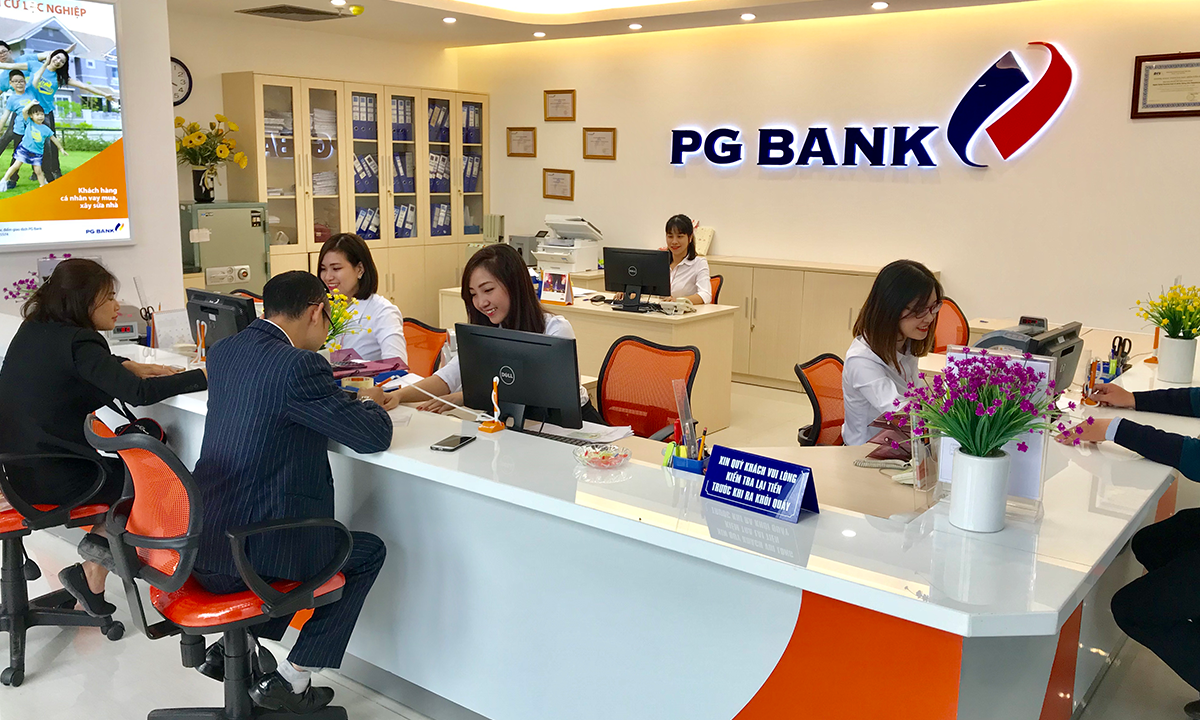
    The proposed merger between PG Bank and HDBank is set to be called off, making it the former’s third failed merger bid in the last six years.

    The management of fuel distributor Petrolimex, which owns a 40 percent stake in PG Bank, has expressed disappointment in the delay in merging at the bank’s last two annual general meetings. Its earlier aborted merger bids were with state-owned VietinBank and Military Bank (MB).

    PG Bank announced in 2014 plans to merge with VietinBank. Bank mergers usually mean a larger bank acquiring a smaller one or two banks merging into one and acquiring a common identity.

    Vietnam saw its share of such deals at that time like SCB acquiring Tin Nghia Bank and De Nhat Bank, SHB acquiring Habubank and Western Bank merging with PVFC to form PVcomBank.

    But PG Bank wanted to keep its own brand and operate as “a bank within a bank,” something without precedence, and predictably the deal collapsed despite four years of talks.

    MB announced the same year that it was looking for potential acquisitions and PG Bank was one of its targets. The two held negotiations but no deal was signed.

    HDBank immediately came up with a merger proposal, but three years on the two have not been able to finalize a deal.

    The repeated failures have taken a toll on the bank. It has not been able to expand since 2014 since an expansion would affect the valuation.

    Its charter capital remains unchanged at VND3 trillion ($130 million).

    In 2019, it had said the delay in merging with HDBank was affecting its business and caused employee turnover to increase.