Author: Mei Ling Tan

  • Bank Permata CEO to Head Indonesia’s New Wealth Fund

    Bank Permata CEO to Head Indonesia’s New Wealth Fund

    The fund, which currently has around $15 billion in assets, is targeting to grow to $100 billion.

    Ridha Wirakusumah, who has been CEO Indonesia’s Bank Permata since 2017, will become the chief executive officer of the country’s new strategic development sovereign wealth fund, the Indonesia Investment Authority said in an announcement on Tuesday.

    Wirakusamah has held a number of leadership positions in his career, including president and CEO of AIG Consumer Finance Group Asia, Asia Pacific president and CEO at AIG, president CEO for AIG Finance (Hong Kong), head of corporate finance at Banker Trust Indonesia, APAC CEO at General Electric and head of banking at GE Money Asia.

    We want INA to reduce the gap in domestic funding needs and development financing, and provide development financing, especially for national infrastructure,» Indonesia President Joko Widodo said in a briefing on Tuesday.

    The Indonesia Investment Authority’s slate of executives includes Arief Budiman, a former director of oil and gas giant Pertamina, who will serve as deputy CEO. Also joining the fund is Stefanus Ade Hadiwidjaja, previously with private equity firm Creador Capital Group, who will be director of investment.

    Marita Alisjahbana of Citibank Indonesia will be director of risk, while Eddy Porwanto, formerly the chief financial officer of flag carrier Garuda Indonesia, joins as director of finance, the announcement said.

  • Singapore Fintech Partners MoneyGram

    Singapore Fintech Partners MoneyGram

    The integration and implementation of Lightnet’s technology with MoneyGram’s money transfer services will provide customers with a wide selection of payout services across Southeast Asia.

    The Singapore-headquartered fintech company will provide its Bridgenet solution to enable money transfer operators to connect with MoneyGram’s money transfer service, broadening the range of payout services, the company said in an announcement.

    The success of this collaboration reflects Lightnet’s commitment towards improving the efficiency, convenience, affordability and accessibility of cross-border remittances. Lightnet is working tirelessly to make these kinds of services available to everyone, Tridbodi Arunanondchai, group CEO and vice chairman of Lightnet, said.

    Lightnet was co-founded in 2018 by Chatchaval Jiaravanon – a family member of the Charoen Pokphand group in Thailand – and Arunanondchai, a tech entrepreneur and former investment banker.

    The startup raised $31.2 million in 2020, in a Series A funding round led by UOB Venture Management. It also partnered Swiss crypto bank Seba to offer remittance services for migrant workers in Asia, and partnered Velo Labs and Visa to serve the micro, small and medium enterprise (MSME) lending market.

  • Luxury Hong Kong Apartment Breaks Sale Record

    Luxury Hong Kong Apartment Breaks Sale Record

    Located in Hong Kong’s exclusive Mid-Levels neighborhood, the apartment is Asia’s priciest, according to «Bloomberg.»

    A 3,378 square foot penthouse at the 21 Borrett Road development was sold on Monday for HKD $459,408,000 ($59,258,165) to an unnamed buyer, according to transaction details published by the developer.

    The apartment on the 23rd floor also comes with its own swimming pool and three parking lots, according to its prospectus. The first phase of sales at the development, which was delayed from 2019, includes 15 units measuring between 2,075 and 3,378 square feet.

    Developer CK Asset Holdings, which is run by tycoon Victor Li, delayed sales of the project amid social unrest in the special administrative region, and the luxury property market has been reeling from the fourth wave of Covid-19 infections and economic downturn, according to Hong Kong daily The Standard.

    The sale of the apartment, which broke the record made by another luxury development in Mount Nicholson in 2017, could be a sign that the local property market is looking up.

  • How micro-fulfilment is re-shaping the Southeast Asia grocery supply chain in 2021

    How micro-fulfilment is re-shaping the Southeast Asia grocery supply chain in 2021

    The pandemic has accelerated the proliferation of eCommerce by up to six years, and the grocery sector has been one of the most impacted, albeit positively, due to vast surges in online sales. However, there are associated challenges when it comes to eCommerce fulfilment and delivery, particularly in parts of Southeast Asia where there is a high reliance on imports, but land availability and limitations on international travel are disconnecting the flow of the eCommerce supply chain.

    Online grocery delivery and rapid ‘store-to-door’ delivery exploded in Southeast Asia during the pandemic, with businesses such as foodpanda in Singapore offering delivery of over 40,000 products across groceries, drinks, health, pharmaceuticals and electronics in under 25 mins through a mobile app. Singapore’s largest online supermarket, RedMart, also offers fast and flexible delivery with a ‘sunrise’ 7am next day delivery option catering to professionals who want their groceries delivered before work, as well as an eco-friendly option that allows RedMart to deliver to more homes in an area within certain windows of time.

    As online sales and ‘store-to-door’ delivery popularity is set to continue to rise well beyond the end of the pandemic – research from GoogleTemasek Holdings Pte and Bain & Co. shows eCommerce is set to grow from $62 billion in 2020 to $172 billion by 2025 in Southeast Asia – many grocers and retailers are struggling to keep up with the competitiveness and turn a profit from online deliveries. To combat this, one innovation gaining pace for a proactive and resilient supply chain is micro-fulfilment centres.

    Micro-fulfilment is the new 2021 supply chain

    COVID-19 did not just fast-track eCommerce uptake, it also accelerated advances in technology, pushed corporate boards to revaluate their traditional business models and forced them to rethink relationships between retailers, disruptive start-ups, and automation innovations. This set the scene for a potentially radical shake up of fulfilment strategies across Southeast Asia and the world into 2021 and beyond.

    At its core, micro-fulfilment aims to speed up the delivery of goods to consumers by bringing the product closer to the consumer. As the name suggests, micro-fulfilment sites are far smaller than the traditional retail model of sprawling, labour-intensive distribution centres located in just a few remote locations. By adding more automated operations to smaller urban sites and even the backs of physical stores, retailers have the goal of slashing delivery times for online orders, allowing products to reach customers in a matter of hours, rather than days.

    Micro-fulfilment also comes with a number of additional benefits. Cheaper than larger, fully robotics-equipped warehouses, the approach of a fully automated micro-fulfilment improves COVID-19 safety, reducing the costs of floorspace and expediting the picking process. It also enables late ordering cut-offs, which reduces the carbon footprint of delivery networks by being closer to the consumer and providing additional collection points away from busy store locations, which in a region like Southeast Asia, can become incredibly advantageous.

    The fundamentals of micro-fulfilment

    Beyond the challenges of adapting to a more entrepreneurial mindset, the practical aspects of making micro-fulfilment centres work efficiently rests on three core pillars. Firstly, making sure that you have an effective omnichannel offering that connects eCommerce orders to the appropriate micro-fulfilment centres is essential. Secondly, ensuring you have complete visibility of inventory is an equally important factor for maintaining accurate insights into stock availability, so you will never end up out of pocket. Finally, making sure you have an in-warehouse system in place to meet the exact delivery demands of the end customer will see you through to a well-managed and proactive micro-fulfilment strategy.

    Other beneficial aspects of micro-fulfilment centres for retailers in Southeast Asia are the options available when it comes to setting them up. You can set up micro-fulfilment centres to primarily service customers in the local area of one store, or you can also set up a ‘spoke-hub’ distribution model where one centre is able to serve many different stores. Another approach could even be to set up a ‘dark store’ as a micro-fulfilment centre.

    Smart fulfilment to streamline 2021 supply chain operations

    While there is no doubt that the pandemic accelerated a more flexible and innovative approach to supply chain operations for many businesses in 2020, 2021 will push even more business in Southeast Asia to redefine their fulfilment strategy to future-proof operations. As many grocers and retailers remain reluctant to use their current store base for eCommerce fulfilment – because it can interrupt customers and cause issues around social distancing – concepts such as automation and micro-fulfilment will likely be the winners this year and beyond.

    While there are still many challenges ahead, we should have a positive outlook. 2020 showed the willingness of retailers and senior leadership decision makers in Southeast Asia to go above and beyond normal conventions, and as this approach carries into 2021, this should herald an exciting year during which fresh innovations, such as micro-fulfilment, build momentum.

    Receive up-to-date product, customer and partner news directly from Manhattan Associates on Twitter and Facebook.

    About Manhattan Associates

    Manhattan Associates is a technology leader in supply chain and omnichannel commerce. We unite information across the enterprise, converging front-end sales with back-end supply chain execution. Our software, platform technology and unmatched experience help drive both top-line growth and bottom-line profitability for our customers.

    Manhattan Associates designs, builds and delivers leading edge cloud and on-premises solutions so that across the store, through your network or from your fulfilment centre, you are ready to reap the rewards of the omnichannel marketplace. For more information, please visit www.manh.com/en-au

    By, Richard Wright, Managing Director, SEA, Manhattan Associates


  • Ford Dissolves Its 7.6% Stake In Velodyne Lidar

    Ford Dissolves Its 7.6% Stake In Velodyne Lidar

    Ford Motor Co has dissolved its stake in Velodyne Lidar Inc, a maker of sensors used in self-driving cars, according to a regulatory filing on Monday.

    As of Sept. 30, Ford had a passive stake of 7.6% or 13.07 million shares in Velodyne.

    Velodyne is one of several companies vying to supply automakers with lidar, a sensor that generates a three-dimensional map of the road ahead.

  • SoftBank-backed Coupang reveals revenue surge ahead of US IPO

    SoftBank-backed Coupang reveals revenue surge ahead of US IPO

    South Korean e-commerce giant Coupang, backed by Japan’s SoftBank Group Corp, on Friday filed to go public on the New York Stock Exchange, hoping to cash in on strong demand for high-growth tech stocks as it reported a near-doubling of annual revenue and narrowing losses.

    Coupang is aiming for a valuation of around $50 billion in its U.S. initial public offering (IPO), according to a person familiar with the matter.

    This would make it the largest IPO in New York by a company based outside the United States since Alibaba Group Holding in 2014, Dealogic data showed.

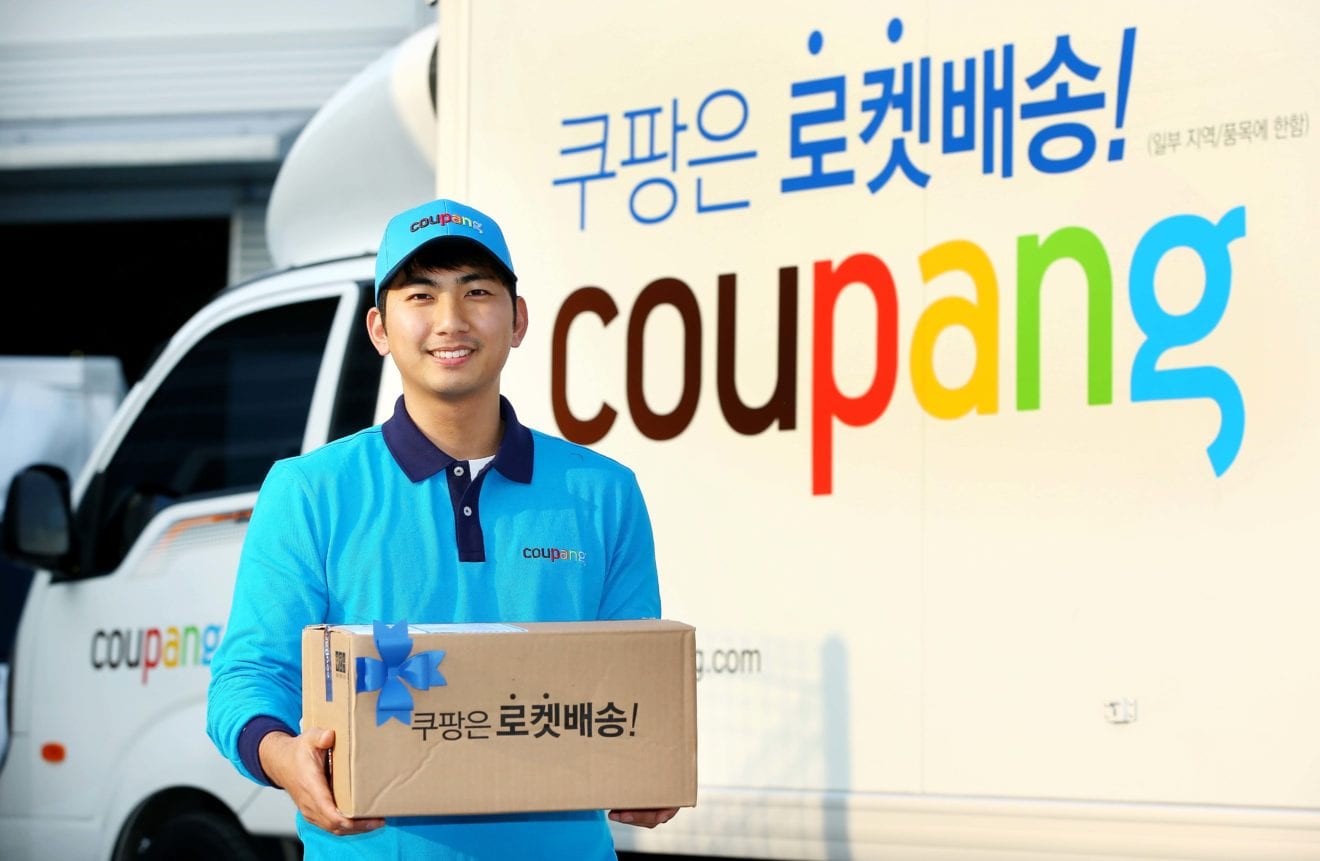
    Founded in 2010 by Harvard graduate Bom Kim, Coupang made a splash in Korea with its ‘Rocket Delivery’ service, which promised delivery within 24 hours, shaking family-owned retail conglomerates such as Shinsegae and Lotte.

    Coupang was valued at $9 billion in its last private fundraising round in 2018, according to data provider PitchBook.

    In a regulatory filing, Coupang said total revenue jumped 91% in 2020 to $11.97 billion, while net losses narrowed to $474.9 million from $698.8 million.

    The company, viewed as a rival in South Korea to e-commerce giant Amazon.com Inc, received $1 billion in funding from SoftBank in 2015 and $2 billion from its Vision Fund in 2018.

    Coupang’s other investors include BlackRock Inc, the world’s largest asset manager, venture capital firm Sequoia Capital and billionaire investor Bill Ackman.

    The U.S. IPO market is at its strongest in more than two decades, and investors are flocking to buy shares in technology companies that have benefited during the COVID-19 pandemic.

    Coupang plans to list under the symbol “CPNG”. It has yet to provide a target asking price for its shares.

    Goldman Sachs, Allen & Co, JP Morgan, BofA Securities and Citigroup are among the underwriters.

  • South Korea’s online food market booming due to Covid-19

    South Korea’s online food market booming due to Covid-19

    In South Korea, some of the world’s biggest food delivery firms are scrambling to surf an estimated $4 billion wave of new orders, contracting thousands of new riders in a boom triggered by the scourge of the global economy – the coronavirus pandemic.

    Koreans had already developed such an appetite for meal deliveries that the country ranked third in the world last year for food order services, according to consultancy Euromonitor. Now, tough social distancing rules and work-from-home policies to counter the pandemic have fuelled explosive growth.

    South Korea’s food delivery market is expected to jump 40% this year to around $15.4 billion from $11 billion in 2019, Euromonitor data showed, topped only by China and the United States.

    Surging coronavirus-era consumer demand has stoked orders, supported meal pricing and made the prospect of a career as a self-employed rider – earning more per hour than many other part-time jobs – an attractive option for many after the pandemic drove Korea’s jobless rate to a 10-year high earlier this year.

    Contractor jobs like delivery riders will keep growing in number amid the pandemic, predicted Kim Sung-hee, professor of labour studies at Korea University, highlighting the need for government scrutiny of “non-regular work”.

    “A lot of the contractor jobs, including riders, have minimal access to labour rights,” Kim said, “they have no access to occupational health and safety insurance and no employment safety net.”

    Responding to the demand surge, Woowa Brothers, the operator of leading food delivery service Baedal Minjok, said it expanded its pool of motorbike delivery riders this summer by nearly 50% from 2,100 previously. Smaller peer Barogo, which like Woowa Brothers doesn’t disclose details of its financial performance – said it is recruiting 5,000 more, creating openings for some otherwise unlikely riders.

    Among those is Chey Young-ah, a 37-year-old former art teacher in Seongnam, 20 km (12.43 miles) south of Seoul. After the pandemic forced classes at her day job to shut, she saw brisk delivery orders at a fried chicken restaurant where she worked part-time, opted to become a rider herself instead in mid-August.

    “I feel lucky I found this field at a time when deliveries are booming,” she said. “One of the merits of this job is that the entry barrier is low. They don’t care whether you’re a man or a woman, you don’t need a job interview.”

    Chey, who already owned a motorbike, says she earned around 1.8 million won ($1,565.22) last month while working six to eight hours a day, seven days a week – already nine times the pay as an art instructor.

    Chey rides for Baedal Minjok and Coupang Eats, operated by SoftBank-backed e-commerce firm Coupang. Like other services, delivery jobs are offered to riders on call via an app, with riders selecting which jobs to take depending on distance and payment terms.

    Riders say most orders earn them around 3,300 won per delivery – the minimum rate – with the influx of new riders creating greater competition even to secure those deliveries, and to get the job done faster.

    “The competition is getting fiercer … Some (riders) violate traffic rules to make one more delivery, putting their safety at risk,” said Chey, who herself has already been involved in a minor accident.

    Delivery companies are also offering bonuses hoping to secure faster riders. Coupang Eats said riders can earn up to 15,000 won per order, depending on order volume and weather conditions.

    Data from Rider Union, a labour union representing the new dispatch workers, showed one of its members earned as much as 585,700 won – comparable to 68 hours of work by minimum wage – on a single day in August.

    Numbers like this are a magnet in an otherwise depressed jobs market.

    You Young-sik, a 28-year-old Seoul internet cafe worker who has seen his pay halved since the coronavirus hit and now fears losing his job, recently signed up for motorbike lessons to get his licence.

    “As I was looking for new openings, I figured delivery business is in vogue these days,” said You, who currently makes below 1 million won a month. “Riders’ salary looks way higher than what I get paid now.”
  • L’Oreal predicts ‘Roaring 20s’ retail resurgence post Covid

    L’Oreal predicts ‘Roaring 20s’ retail resurgence post Covid

    Beauty giant L’Oréal, besides posting financial results that beat expectations, is offering high-level optimism, promising a resurgence in sales and a new “Roaring ’20s.”

    “Like a flower after winter, beauty is ready to blossom after COVID goes away,” says Nicolas Hieronimus, the Paris-based conglomerate’s incoming chief executive officer, in a webcast for investors.

    Adding that the company is already seeing fiesta-like gains in China, “we are confident that, like in the roaring ’20s, there will be a big beauty party. Beauty is and always will be essential.”

    Those upbeat remarks are likely to cheer up many in the industry. Between working from home, wearing masks and keeping six feet away from anyone, consumers felt little reason to buy makeup or spritz on fragrances, depressing sales.

    The NPD Group, a market research company that tracks beauty sales, reports that prestige cosmetics tanked 19% for the full year, falling to $16.1 billion. Makeup dropped the most, down 34%.

    L’Oreal’s Hieronimus made his remarks as the company presented solid quarterly results. Even as industrywide sales tumbled, L’Oréal bucked the trend. Comparable sales rose 4.1% in its fourth quarter, and the company says it is winning significant market share gains in many categories.

    The company’s ecommerce revenues soared 62%, with gains in all geographic regions. It now accounts for a record 26.6% of the total sales for the year. “The huge surge is helping to democratize beauty,” he says. “And consumers of beauty remain strong. We saw rapid recovery everywhere when stores reopened.”

    Hieronimus also says he expects the company to continue to benefit from skincare’s growing importance, which now accounts for 40% of sales.

    In terms of marketing, he says digital spending now accounts for 60% of its budget.

    Describing beauty as “both a need and an aspiration,” Hieronimus says he believes the company will continue to outperform competitors because of its focus on data, AI, research and innovation. “We are ahead of the curve in digitalization.”

    And he says consumers will continue to reward companies with a strong brand purpose, a commitment to social values and “acting for the greater good. We create the beauty that moves the world.”

  • Starbucks opens its largest coffee store in Thailand

    Starbucks opens its largest coffee store in Thailand

    Starbucks today celebrates 20 years of delivering the Starbucks Experience to customers throughout Thailand with the recently opened Central World store– its largest store in Bangkok. Located on the first floor of CentralWorld, the store features a Starbucks Reserve Bar and, for the first time in Asia, Starbucks® DRAFT beverages infused with nitrogen.

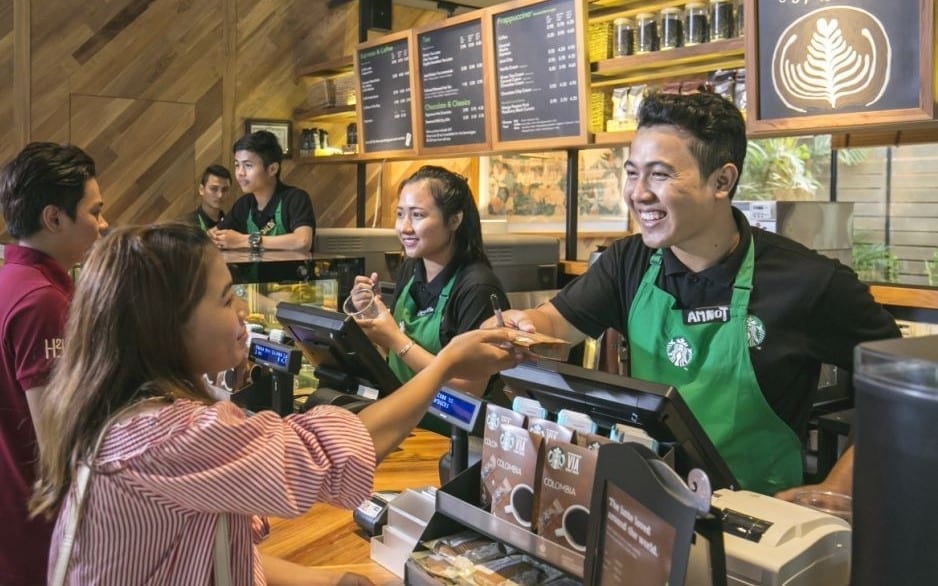
    Starbucks CentralWorld is Thailand’s largest Reserve Bar store composed of Starbucks traditional coffee bar as well as the Starbucks Reserve Bar, which invites customers to deepen their coffee knowledge. Featuring the Black Eagle espresso machine for unique, espresso-forward beverages and various brewing methods such as the Siphon, Chemex, and Pour Over, customers can taste Starbucks Reserve, small-lot coffees for a premium coffee experience specially-crafted by Starbucks Coffee Master partners (employees) whose passion and knowledge of coffee is highlighted by their black aprons.

    Starbucks DRAFT makes its Asia debut in the store on a four-tap system delivering Starbucks Cold Brew and nitrogen-infused Starbucks Cold Brew, tea and milk. This latest beverage innovation draws in customers with its velvety texture cascades from the taps causing a sensory experience to both taste and see. The Starbucks DRAFT counter, found on the first floor of the store, highlights select nitro beverages including Nitro Cold Brew, Nitro Peach Tea, Nitro Green Tea Latte, Nitro Caramel Macchiato and Nitro Flat White.

    “From the success of Starbucks Nitro Cold Brew coffee, we continue to search for beverage innovation to elevate the customer experience. Today, we are pleased to launch Starbucks® DRAFT, an innovative cold beverage offering a rich, creamy texture for each beverage.” says Nednapa Srisamai, managing director of Starbucks Coffee (Thailand) Ltd. “This is a new cold beverage experience not to be missed.”

    This beverage innovation is the first-of-its-kind in Starbucks across Asia further elevating the cold beverage experience. Starbucks® DRAFTis also available today at one location in the U.S.

    As customers enter the space for the first time, their eyes will be drawn to the high, gold ceiling inspired by the natural terraces where coffee is grown, paying homage to the landscapes of coffee-growing terrain. The ceiling begins the coffee journey for customers by inviting them to come in from the outside and move towards the central Starbucks Reserve bar where the aroma of coffee can be enjoyed all around.

    The 760 metre store has more than 230 seats and two large rooms is designed to host community events or small gatherings surrounded by locally-relevant art installations throughout the store. Local artists Rukkit Kuanhawate created a feature piece highlighting the various coffee growing regions through regional wildlife including, the Sumatran Tiger, Kenyan Elephant and Guatemalan Quetzal bird. Similarly, Irin (Ann) Ariyatanap and her team handpainted murals using drawings of coffee botanicals and Thai floral motifs alongside imagery of the Starbucks Reserve coffee silos found exclusively at the Reserve Roasteries.

    Continuing on the coffee journey, customers are delighted upon entering the store with wooden coffee scoops engraved with messages and colorful motifs describing the various parts of the coffee tree. Similarly, the walls of both meeting rooms serve as tribute to the bean-to-cup story through natural hemp woven art, hand painted ceramics and a floor-to-ceiling wood carving.

  • UBS Loses Investment Banking Co-Head

    UBS Loses Investment Banking Co-Head

    Swiss bank UBS said the co-head of its investment bank since 2018 is departing, leaving a trading veteran as the sole head of the unit.

    Zurich-based UBS’ Piero Novelli is leaving at the end of next month, UBS said in a statement on Monday, to retire from the banking industry to pursue new opportunities. The 55-year-old was co-head of UBS’ investment bank since 2018, with Rob Karofsky.

    Novelli, a 55-year-old veteran Italian dealmaker and close associate of designated Unicredit boss Andrea Orcel, is leaving in favor of a boardroom career and to teach finance and business, UBS said. This puts UBS’ investment bank into the hands of Karofsky, a veteran trader who has been with UBS since 2014.

    The duo had taken over as co-presidents of UBS’ investment bank when Orcel left three years ago. Novelli’s is the first top management exit for Ralph Hamers, who took over as CEO of UBS three months ago.

  • Fresh infusion takes LG Display’s Vietnam investment to $3.25 bln

    Fresh infusion takes LG Display’s Vietnam investment to $3.25 bln

    LG Display will invest an additional $725 million in its manufacturing facility in the northern port city of Hai Phong to take its total investment to $3.25 billion.

    The money will be used to expand the factory starting in March. Manufacturing will begin in May.

    It will create 5,000 new jobs, and contribute around $5 million annually to the government’s coffers.

    LG Display first invested in Hai Phong in April 2016, and currently employs over 13,900 people.

  • Amazon’s Vietnamese partner reports surge in profit

    Amazon’s Vietnamese partner reports surge in profit

    Textile company Gilimex said its net profits almost doubled in 2020 thanks to a number of high-value contracts with international retailers.

    It reported record revenues of VND3.45 trillion ($150 million), up 36 percent from 2019, and net profits of VND308 billion for the year.

    Gilimex’s main products are handbags and backpacks.

    It tied up with Amazon, the world’s largest online retailer, in 2016 and seen average revenues grow at 20 percent a year since then.

    Its other large foreign partner is Swedish furniture retail giant IKEA with whom it has eight long-term contracts worth $16.2 million.

    The firm also develops new products for Dutch baby products maker Bugaboo and Puma, the German multinational that manufactures athletic and casual footwear, apparel and accessories.

  • E-Red Packets Gain Traction

    E-Red Packets Gain Traction

    With physical gatherings limited, red packet gifting via digital channels on the first two days of the Lunar New Year grew considerably from the year before.

    Efforts to digitalize the longstanding custom of giving hong bao (red packets) during the Lunar New Year have been given a boost by the pandemic and limited social gatherings in Singapore, according to local banks, which reported a rise in e-hongbao adoption.

    DBS reported more than 9,000 DBS eGift transactions on Friday and Saturday – a 108 percent increase from last year – and 215 percent more at S$595,000, with some S$2 million loaded on 32,000 of the bank’s QR gift cards compared to S$660,000 on 18,000 QR gift cards in 2020. Transactions on OCBC Bank’s Pay Anyone app rose more than 140 percent compared to last year, while the volume of PayNow transactions made by UOB customers tripled on the first two days of the Lunar New Year from 2020, the banks said.

    Limitations with regard to physical interactions and gatherings, and new cashless habits adopted in the past year among consumers contributed were behind the rise in digital giving, a spokesman for Standard Chartered, which saw PayNow transactions rise 400 percent, told the paper.

    While community transmission of the Covid-19 virus in Singapore is largely contained, households in Singapore are limited to a maximum of eight visitors per day, which has put a dampener on celebrations.

    Despite the rise in digital alternatives, old habits die hard, as evidenced by the efforts of banks that have continued to produce red packets with elaborate designs.

  • Singapore Banks Throw Weight Behind Green Vehicles

    Singapore Banks Throw Weight Behind Green Vehicles

    Ahead of Tesla’s launch in Singapore, DBS is has announced financing for new and used electric and hybrid cars, while a partnership with OCBC will boost the availability of electric vehicle charging points.

    As part of DBS’ efforts to incentivize the adoption of green practices and carbon footprint reduction, the bank is rolling out Singapore’s first green car loan, which is priced at 1.68 percent per annum, it announced on Monday.

    The bank said there is much room for growth, citing Norway’s 54 percent electric car market share, compared to Singapore, where there are 43,000 electric and hybrid cars – only 6.8% of the car population.

    It also said that lending to the electric vehicle instead of the combustion engine vehicle sector has lower environmental and social costs of approximately 40 percent and 16 percent respectively.

    To accelerate the greening of Singapore’s land transport sector, OCBC Bank announced a strategic partnership with Charge+, an operator and provider of electric vehicle (EV) charging solutions that plans to install 10,000 EV charging points islandwide by 2030.

    Under the memorandum of understanding signed by the two parties, OCBC Bank will encourage its property developer and property owner customers to install charging points at their premises, implement digital payment solutions for the charging service, and look into the financing for the infrastructure, an announcement on Monday said.

    Just having the infrastructure is not good enough. There must be public adoption to enable a clean energy transportation system too. OCBC can therefore play the role as a meaningful financial services enabler in the electric vehicle ecosystem, Elaine Lam, OCBC head of global corporate banking, said in the announcement.

    Last week, electric carmaker Tesla began taking orders for its Model 3 Standard Range and the Model 3 Performance in Singapore, which are priced from S$116,334 ($88,000), excluding COE.

    The cars have a Vehicular Emissions Scheme (VES) banding, which entitles potential buyers to a S$25,000 rebate. Under the Electric Vehicle Early Adoption rebate scheme announced in 2020, customers who buy a new electric car also qualify for a 45 percent rebate on its Additional Registration Fee, capped at S$20,000.

    The Singapore government in 2020 said it aims to phase out fossil fuel vehicles by 2040.

  • UBS Investment Bank Enjoys Trading in Driving Seat

    UBS Investment Bank Enjoys Trading in Driving Seat

    The exit of Piero Novelli from UBS leaves its investment bank without its weightiest sponsor of deals for the super-rich. The trading business was and remains elementary within the big bank.

    When the 55-year-old Italian dealmaker leaves at the end of next month, he leaves an investment bank that boomed against the backdrop of the pandemic: the unit pre-tax more than tripled last year, thanks to buzzing trading.

    It managed to reduce its cost-income ratio to below 71 percent – unheard of efficiency – and hit a return on equity of nearly 20 percent. The UBS unit also loaded up on risk, adding another $13.2 billion in risk-weighted assets, but dramatically improved the return on them from 8.2 percent to ten percent.

    UBS’ investment bank is in fine fettle because of global markets, the purview of co-head Rob Karofsky. The trading arm – which encompasses equities, debt, foreign exchange, and interest rate products – has posted nearly three times the revenue of the advisory arm overseen by Novelli every year since the duo took over in 2018.

    The relation underscores that the balance of power lies with Karofsky, who joined UBS as head of equities globally in 2014 from Alliance Bernstein, where he held the same role. The 53-year-old American picked up the nickname Killer Karofsky at Morgan Stanley, where he worked until 2005 before heading for Deutsche Bank.

    The market turmoil sparked by Covid-19 gave UBS’ investment bank a timely lift last year: in 2019, the unit foundered in the wake of Andrea Orcel’s absence – reportedly in large part because the notoriously intense Italian banker «had his hands around 10,000 throats», as one UBS banker put it to the Financial Times.

    Novelli was also the bridgehead of an effort begun in 2019 to build a bridge between other super-wealthy private banking clients and the funding needs of private firms. Private capital markets» was rolled out last year with global as well as regional teams under Ros L’Esperance and Javier Oficialdegui, UBS’ global banking co-heads.

    Alan Felder runs a U.S.-based team, Isabelle Toledano-Koutsouris is responsible for Europe, while Nicolo Magni manages Asia-Pacific. The unit doesn’t disclose any metrics, or even examples of deals as Credit Suisse does for an international sales and trading push under Yves-Alain Sommerhalder.

    A UBS spokesman said only the bank was pleased with the private capital market progress. Credit Suisse also bulked out its efforts, under banker Christian Meissner and long-time executive Bab