Author: Mei Ling Tan

  • Pizza Hut, KFC sales shrink in China as Covid-19 locks restaurants out

    Pizza Hut, KFC sales shrink in China as Covid-19 locks restaurants out

    Running restaurants in China is tough when a big part of the population stays home to avoid catching the coronavirus.

    Yum China , operator of KFC and Pizza Hut in the country, gave a glimpse of the current predicament in results posted after the U.S. close Wednesday. It has temporarily closed more than 30% of its restaurants in China, and business has been bad even for the ones that remain open. Sales during the Lunar New Year holiday were down 40%-50% compared with last year, excluding newly opened outlets.

    The company, which was spun off from Yum Brands in 2016, said it may report operating losses for this quarter—and even for the full year if the trend continues. Yum China’s New York-listed shares fell 3% in after-hours trading.

    KFC and Pizza Hut aren’t the only chains that have had to shut restaurants because of the outbreak, which has infected nearly 30,000 and killed more than 500 so far. Starbucks and McDonald’s have also temporarily closed some of their outlets in China. The former, in particular, could get hurt as customers opt to stay at home instead of chilling out in its coffee shops.

    Yum China could soften the blow with its delivery business, which accounted for nearly a quarter of its revenue last quarter. It said it would also try to reduce its costs. Some of these—food, labor, advertising and rent—are variable, but the company will still incur substantial fixed costs through the closure period.

  • HSBC Considers Relocation of Top Execs

    HSBC Considers Relocation of Top Execs

    The bank is reportedly considering moving a number of its top executives to Hong Kong or Singapore to strengthen its push in Asia.

    Among the relocations being considered are the two co-heads of its investment bank, Greg Guyett and Georges Elhedery, who are currently located in London, reported on Thursday.

    The move of its top decision-makers to Asia, where the bank makes most of its money, comes almost a year into its restructuring under chief executive Noel Quinn. The bank is preparing to announce the outcome of a strategic review later this month.

    HSBC has been undergoing an overhaul to focus on fee-generating businesses and reducing its operating costs. The bank has also said it intends to increase its rate of investment in Asia, particularly in wealth, the Greater Bay Area, South Asia, trade finance, and sustainable finance while scaling back investments in Europe and the U.S.

    Earlier this week, HSBC has internally appointed Daniel Chan, its current Hong Kong business and commercial banking head, to lead the bank’s new Greater Bay Area office, located in Guangdong.

  • Valiram names new regional executive team

    Valiram names new regional executive team

    Premium retailer Valiram has announced a series of executive appointments across the group, including regional outposts in Thailand and Indonesia.

    Linda Lim is named Country General Manager, Thailand, while Kunal Kapoor has been appointed Country General Manager, Indonesia. Warodom Pranbunpook takes on the role of General Manager of the retail group’s sports division.

    As reported, former DFS Group Global Fashion Operations Director Jason Blejwas recently joined Valiram as group-level Senior Vice President Merchandising and Planning.

    Valiram said the appointments would steer its business to new heights amid challenging times.

    Valiram Chief Executive Officer Ian Lim commented: “Valiram has always been committed to creating exceptional experiences for our customers throughout our businesses across the region, and we believe that these individuals will continue to uphold that commitment and drive success in their respective divisions and markets.”

    Linda Lim has experience in luxury retail in both local market and travel retail formats. She was instrumental in the growth of the Kate Spade New York brand in Malaysia, Singapore, Indonesia, Australia, and Vietnam, overseeing the launch and operations of 30 stores.

    Her experience in Valiram’s travel retail division includes managing the beauty and fragrances category as well as fashion brands Dunhill, Coach, Hugo Boss and Polo Ralph Lauren in Kuala Lumpur International Airport in Malaysia and Resorts World Sentosa, Singapore.

    Kapoor has over 15 years in luxury and fashion retail, including management experience in the Middle East.

    He joined Valiram in December 2019 as General Manager of the group’s travel retail division.

    Pranbunpook has 19 years of experience in management of leading global brands in Thailand and Southeast Asia. Prior to joining Valiram, he was ASICS Country General Manager Thailand.

    As General Manager of Sports, he will oversee the expansion and development of the sports division, which, according to Valiram, has been on a growth trajectory since its launch in May 2020, with the opening of Thailand’s largest Nike store.

  • Instagram working on TikTok-like vertical Stories feed

    Instagram working on TikTok-like vertical Stories feed

    Instagram borrowed the short-form video format from TikTok and rebranded it as Reels. Now, the Facebook-owned platform is looking to clone another one of TikTok’s ideas.

    The social media giant has announced that it’s in the process of testing a TikTok-like vertical feed for Instagram Stories, a feature that was rather ironically borrowed from rival Snapchat.

    Alessandro Paluzzi was the first to spot the new feature and his screenshots reveal a fairly simple UI that informs users about the new ability to scroll vertically to view Stories.

    Instagram, which confirmed the feature’s development to TechCrunch, is probably planning to prioritize videos over photos moving forward, hence the updated Stories feed.

    Adam Mosseri, the Head of Instagram, recently implied that Reels and IGTV videos could be merged into a single content format alongside regular videos. After all, most users likely don’t know the difference. This would leave Instagram with a much cleaner and, more importantly, clearer UI for users to navigate.

  • Vietnam Airlines suffers $483 mln loss

    Vietnam Airlines suffers $483 mln loss

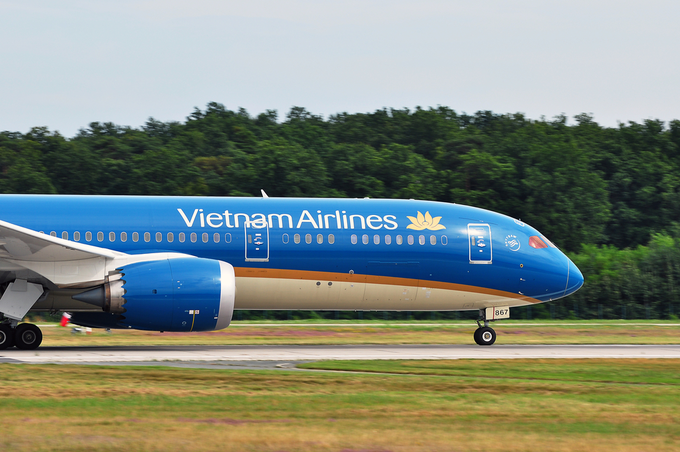
    Vietnam Airlines reported a loss of over VND11.1 trillion ($483 million) last year as the Covid-19 pandemic grounded all its international flights.

    The figure was lower than its projection in December of over VND12 trillion.

    Revenues were down nearly 59 percent to VND40.83 trillion as its total number of flights fell by over 27 percent to 86,978.

    The government recently approved a bailout for the carrier, with the State Bank of Vietnam (SBV) allowed to provide a refinanced loan of up to VND4 trillion at zero interest.

    Vietnam Airlines also received permission to issue more shares to existing shareholders to increase its capital.

    The country’s aviation industry suffered badly last year due to flight restrictions to curb the spread of the novel coronavirus, and the number of air passengers plunged by 41 percent to 32.3 million, according to the General Statistics Office.

  • Growing 5G demand will drive major 2021 smartphone market recovery

    Growing 5G demand will drive major 2021 smartphone market recovery

    The global smartphone market was only one of the major industries to suffer a big and largely unexpected decline in 2020 as a direct consequence of the coronavirus pandemic, but while the COVID-19 threat is projected to linger this year and potentially even beyond that, 2021 should mark the beginning of a beautiful rebound.

    The first signs of an imminent recovery showed up during last year’s third calendar quarter, when shipments were down around the world by a measly four percent compared to the same period of 2019, becoming evident in the final three months of 2020, as the year-on-year sales decline further contracted to one percent according to Counterpoint Research. In contrast, the same market intelligence firm estimated the mobile industry’s Q1 and Q2 slumps at 13 and a record 26 percent respectively.

    Clearly, there’s no way to go but up now that people are slowly regaining their appetite for both mid-range and high-end handsets pretty much in all key regions, and according to a hot new report published by Gartner, worldwide sales could register a healthy total increase of 11 percent in 2021.

    While that’s unlikely to be enough to boost the market to its pre-pandemic levels, this year’s forecasted 1.53 billion units would come incredibly close to the 1.54 billion smartphones sold in 2019. The aforementioned 11 percent growth is expected to be mainly driven by “mature” markets across Western Europe, Asia Pacific, and Latin America on a regional level, as well as rising demand for 5G-enabled devices essentially everywhere.

    Affordable 5G models starting as low as $200 could be particularly successful in 2021, especially in emerging European and Asian countries. Overall, 5G smartphones are likely to exceed 500 million unit sales, accounting for around 35 percent of the entire market. In comparison, 2019 saw less than 20 million 5G-capable handsets reach the hands of their owners, with said number growing to more than 200 million last year.

    Unfortunately, Gartner’s latest report doesn’t go into any detail regarding the prospective evolution of the world’s top mobile device vendors this year, so it’s not entirely clear yet who will drive the 11 percent global hike from that perspective.

  • Standard Chartered Grows CCIB Unit in Singapore

    Standard Chartered Grows CCIB Unit in Singapore

    The bank has made a pair of Singapore-based senior appointments to its Corporate, Commercial and Institutional Banking (CCIB) segment as it increases its focuses on growing this business.

    Former regional head of client coverage, CCIB, ASEAN and South Asia, Chow Wan Thonh, has been named global head of the bank’s Global Industries Group, Standard Chartered announced in a statement on Thursday.

    Chow joined the bank in 2019, bringing with her over 25 years of experience in the banking industry, having held a number of senior leadership roles in international banks supporting corporate and institutional clients.

    At the same time, Heidi Toribio, who joined the bank in 2013, will replace Chow as Asia co-head of client coverage. She was most recently the bank’s global head of financial institutions. Toribio counts 25 years of banking experience, having previously worked at international banks in a variety of management positions.

    Standard Chartered said the pair have played a key role in accelerating the growth of its CCIB business in Singapore and globally.

    Paul Skelton, Global Head of Client Coverage in CCIB, said in the announcement that corporates’ financing needs are rapidly evolving, as businesses navigate uncertainties while seeking new growth opportunities

  • Facebook appears to be using misleading data to attack Apple’s new privacy feature

    Facebook appears to be using misleading data to attack Apple’s new privacy feature

    Starting with iOS 14.5, iPhone users will be asked to decide whether they want to opt-in to getting tricked by third-party apps. Allowing the trackers to do their thing means that when users do make a purchase online or merely visit an online store, they will get inundated with ads for related products on their phones and tablets. Facebook, which generated nearly $85 billion in ad revenue during the fourth quarter of last year, says that its advertising business could shrink by as much as 50% because of Apple’s new feature. The social media network also claims to be concerned for small businesses that will be hurt if most iOS users, as expected, decide not to allow themselves to be tracked.

    Facebook has been giving evidence of the damage that Apple could do to small businesses by citing certain examples. However, a pair of marketing professionals have written a piece in the Harvard Business Review claiming that this so-called evidence uses figures that have been “overstated,” “cherry-picked,” “misleading,” and are part of a disinformation campaign.”

    For example, Facebook claimed in a full-page newspaper ad that “Without personalized ads, Facebook data shows that the average small business advertiser stands to see a cut of over 60% in their sales for every dollar they spend on ads.” However, as marketing pros Bart de Langhe and Stefano Puntoni wrote in the Harvard Business Review, this data is misleading because Facebook bases the data on a metric known as ROAS or return on ad spend. The information this provides is the amount of revenues associated by advertising as opposed to the amount of revenue caused by advertising.

    If certain consumers were going to make purchases anyway, their spending is not caused by the advertising and the resulting decline would be less than 60%. As the two marketing pros wrote, “The problem with the 60% figure is that Facebook doesn’t report anything about the two kinds of campaigns it was comparing. For all we know, they might involve different industries, different companies, different products, different times, different places — and if they did, then Facebook’s comparison wouldn’t mean much. In fact, it might just show that companies who knew their customers well achieved a higher return on advertising spend than companies that didn’t.”

    Besides the above example, Facebook also incorrectly repeated certain figures. For example, Facebook posted on its website and in its ads that “Forty-four percent of small to medium businesses started or increased their usage of personalized ads on social media during the pandemic, according to a new Deloitte study.” But that figure was misleading; the authors looked at Deloitte’s numbers which included the percentage increase in targeted advertising on social media for companies in nine industries. Telecom and Technologies had the largest increase at 34%. Facebook’s figure of 44% was not only overstated, the industry that Facebook chose to use was the one best suited to fit its argument.

    Let’s examine this again. Facebook said, “Forty-four percent of small to medium businesses started or increased their usage of personalized ads on social media during the pandemic.” If you read this without double-checking the figure, you’d believe that Apple’s new opt-in policy on targeted ads was affecting as much as 44% of small and mid-sized businesses. However, as noted above, the largest industry increasing its targeted advertising during the pandemic was Telecom and Technologies with a 34% hike. As de Langhe and Puntoni wrote, “Facebook, it seems, cherry-picked the data that best supported its case, and then increased the size of the cherries it picked by a third.”

    The authors say that they are not trying to dismiss the concerns that small businesses have over Apple’s new privacy policy. However, “Under Apple’s new plan, companies will have to explain their data-collection practices when submitting new apps or making updates, and many users won’t give permission to have their behavior tracked online. Facebook says it wants to stand up for small businesses in the face of these changes, which it is perfectly entitled to do. But disinformation about advertising effectiveness isn’t the way to do that.”

  • Covid-19 brings heavy drop in Hong Kong retail profits past December

    Covid-19 brings heavy drop in Hong Kong retail profits past December

    Hong Kong’s retail environment showed further signs of improvement in November, although the recovery may have been short-lived as the city was hit with a fresh wave of virus infections and imposed new restrictions late in the month. The provisional value of total retail sales in November 2020 was HK$28.7 billion ($3.7 billion), down by 4% compared with the same month in 2019.

    The provisional value of total retail sales in November 2020 was HK$28.7 billion ($3.7 billion), down by 4% compared with the same month in 2019. That was better than the median forecast of -7.4% in a Bloomberg survey of economists and an improvement from a revised -8.7% in October. Sales by volume fell 4.7%, according to the government statement.

    The economy showed some signs of improvement in the second half of 2020 alongside recoveries across the region as China’s rebound fueled demand. However, that’s been dampened by fresh waves of infections since November, with the city re-imposing social distancing restrictions including shuttering bars and nightclubs to help curb the outbreaks.

    Restrictions were tightened further in December ahead of the critical year-end shopping season, with restaurants forced to halt in-person dining after 6 p.m. On Monday the government also pushed back the re-opening of classrooms for more than a month as part of measures to stamp out the spread of the virus.

    “As inbound tourism remains at a standstill, and the fourth wave of the local epidemic has weighed on local consumption sentiment since the latter part of November, the business environment of the retail trade will remain challenging in the near term,” the government said in the statement.

    The government allocated additional support to businesses hurt by the shutdowns and Financial Secretary Paul Chan said in a blog post-Sunday that the economy will probably return to growth in 2021 as the recovery strengthens in the second half of the year.

  • Amazon’s Bezos to step down as CEO; quarterly revenue tops $100 billion

    Amazon’s Bezos to step down as CEO; quarterly revenue tops $100 billion

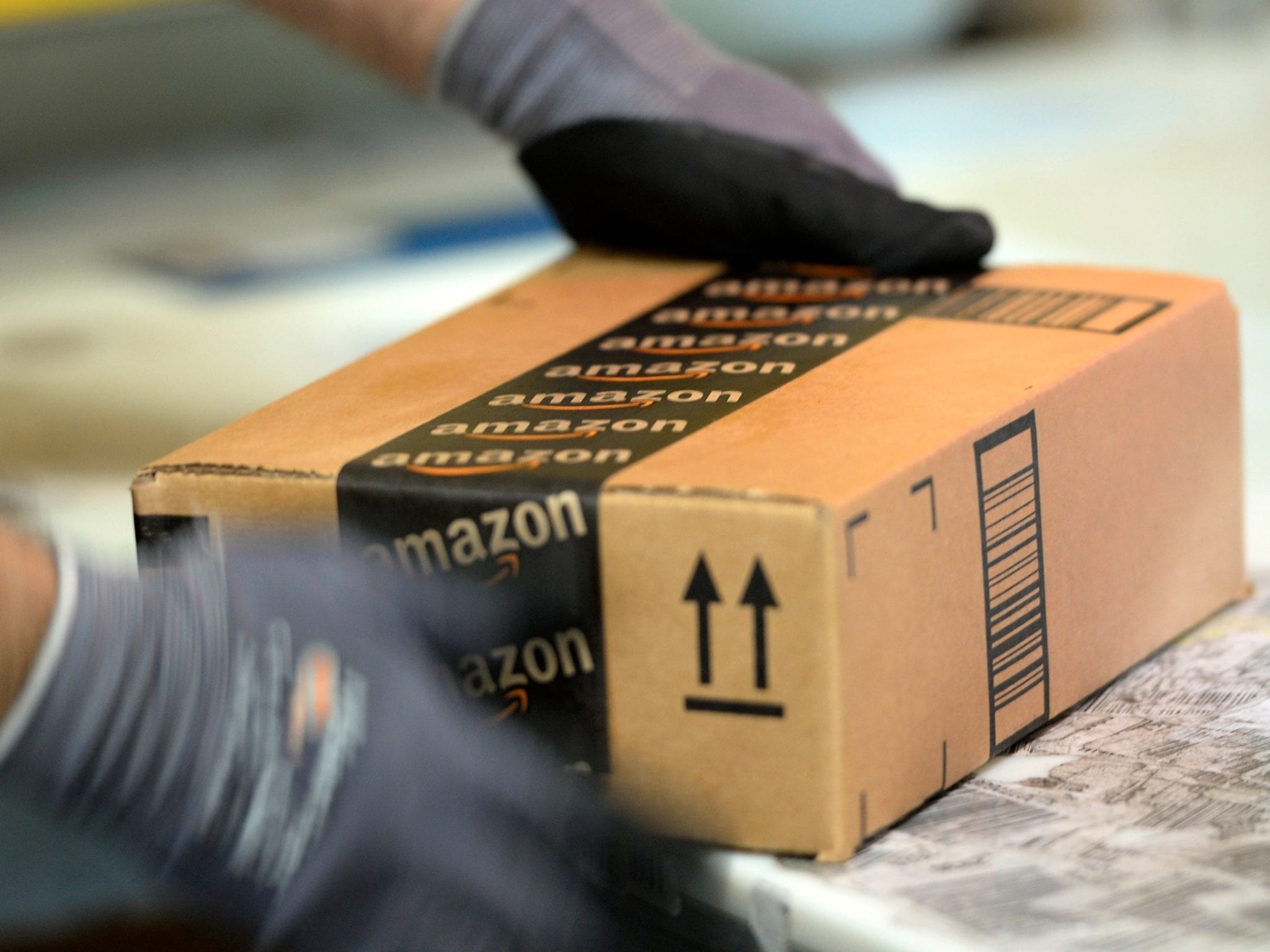
    Amazon.com on Tuesday (Feb 2) said founder Jeff Bezos will step down as CEO and become executive chairman, as the company reported a third consecutive record profit and quarterly sales above US$100 billion for the first time.

    This summer, Bezos, 57, will hand the keys of the world’s largest online retailer to Andy Jassy, head of its cloud computing division. The announcement ends a long-running question about who would succeed the world’s second-richest person at the company’s helm.

    Jassy, 53, joined Amazon in 1997 after Harvard Business School, founding Amazon Web Services (AWS) and growing it to a cloud platform used by millions, the company’s website said. He had been a clear contender for the top job since Amazon created two CEO roles reporting to Bezos, the other held by recently retired consumer CEO Jeff Wilke.

    Tom Johnson, chief transformation officer at Mindshare Worldwide, said Jassy’s promotion underscored the importance of web services to Amazon’s future.

    “Jassy’s background in steering AWS shows just how the top of mind those services are to Amazon’s business strategy. It’ll be interesting to see how that affects their strategy and balancing that priority with a growing ad business and the commerce behemoth,” he said.

    Jassy is known for understanding technical details, and he has regularly taken jabs at legacy player Oracle and cloud rival Microsoft, which AWS continues to exceed in sales.

    Under Jassy’s leadership, Amazon’s cloud business has signed major customers including Verizon, McDonald’s and Honeywell. The division’s quarterly revenue consistently rose by double digits, helping cement its position as the market leader.

    One contract AWS failed to win was the US$10 billion “JEDI” contract from the Pentagon, which was awarded to Microsoft.

    Jassy has bestowed a rock-star aura to keynotes at AWS’s annual Las Vegas conference, speaking before more than 60,000 attendees in 2019 after upbeat music preceded his talk.

    Bezos, who started the company 27 years ago as an Internet bookseller, said in a note to employees posted on Amazon’s website, “As Exec Chair I will stay engaged in important Amazon initiatives but also have the time and energy I need to focus on the Day 1 Fund, the Bezos Earth Fund, Blue Origin, The Washington Post, and my other passions.” Blue Origin is Bezos’ space company, and the Post is his private newspaper holding.

    Amazon’s net sales rose to US$125.56 billion as consumers turned to the world’s largest online retailer for their holiday shopping, beating analyst estimates of US$119.7 billion, according to IBES data from Refinitiv. Amazon shares were up less than 1 percent in after-hours trading.

    Jassy’s AWS, traditionally a bright spot, fell slightly short of expectations in the fourth quarter. While the cloud computing division announced deals in the quarter with ViacomCBS, the BMW Group, and others, it posted revenue of US$12.7 billion, short of the US$12.8 billion analysts had estimated.

    Amazon said it was not announcing an AWS replacement for Jassy at this time.

    Meanwhile, Amazon’s e-commerce business has never been as big. Since the start of the US coronavirus outbreak, consumers have turned to Amazon for delivery of home staples and medical supplies. While brick-and-mortar shops closed their doors, Amazon, recruited another 400,000 workers to keep up with demand.

    That has placed the Seattle-based company at the center of workplace tumult. More than 19,000 have contracted COVID-19 as of September, and some staff have protested and demanded facility closures. Others, at Amazon’s Bessemer, Alabama, warehouse, are seeking to be the first at the company to unionize in the United States, with an election to begin next week.

    Chief financial officer Brian Olsavsky told reporters on a conference call that costs associated with the pandemic in the first quarter are expected to total US$2 billion, down from US$4 billion in the fourth quarter as shopping volumes decrease. The company has taken an array of COVID-19 precautions and written government officials – including US President Joe Biden – saying it is eager to offer vaccine shots to staff.

    A boost in revenue came from moving Amazon’s marketing event Prime Day – usually in July – to October, lengthening the holiday shopping season.

    Net sales for the current quarter are expected to be between US$100 billion and US$106 billion.
  • Alibaba beats revenue forecast as Chinese regulators hover

    Alibaba beats revenue forecast as Chinese regulators hover

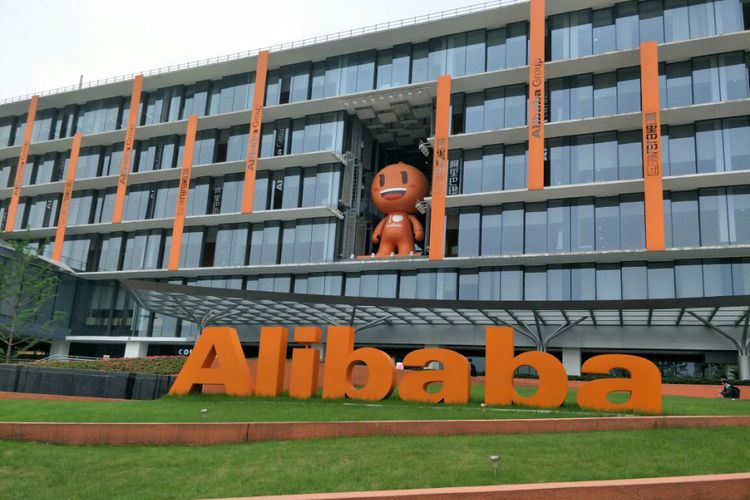
    China’s Alibaba Group Holding Ltd beat estimates for third-quarter revenue on a pandemic-driven jump in e-commerce, but its shares dropped amid regulatory heat for founder Jack Ma’s business empire.

    It also announced a bond sale worth as much as $5 billion through sources have said plans for the fundraising were in the works before the regulatory clampdown.

    Ma’s current woes stem from an Oct. 24 speech in which he blasted China’s regulatory system, leading to the suspension of his Ant Group’s $37 billion IPO just days before the fintech giant’s listing.

    Regulators have since launched an anti-trust probe into the tech sector, while tighter regulations for Ant are also being considered.

    Ma, who has been keeping an uncharacteristically low profile these past three months, was also conspicuously snubbed this week by his omission in a state media list of entrepreneurial leaders.

    Alibaba CEO Daniel Zhang said changing regulations for internet and fintech firms in China presented a near-term challenge.

    “We regard this as important opportunities for re-assessing and improving business practices,” he told an earnings call.

    Alibaba also said it was “unable to complete a fair assessment” of the impact that Ant’s stalled IPO will have on the company. Zhang said, however, that any potential reduction in consumer credit offerings from Ant would not have an impact on Alibaba’s e-commerce business.

    Shares in Alibaba dropped 4% in Hong Kong on Wednesday, having closed down nearly as much on the New York Stock Exchange.

    Alibaba’s total revenue rose 37% to 221.1 billion yuan ($34.2 billion) in the three months ended Dec. 31, above analysts’ estimates of 214.4 billion yuan, according IBES data from Refinitiv.

  • The evolution of fashion week with see now and buy direct approach

    The evolution of fashion week with see now and buy direct approach

    The fashion industry loves a bandwagon, and the see-now-buy-now one keeps rolling along. A murderer’s row of major brands, from Burberry and Ralph Lauren to Tommy Hilfiger and Moschino, has incorporated at least some element of instant gratification into their recent collections. Burberry and Lauren presented immediately shoppable runway shows, with the latter inviting attendees straight into the store after his spring 2017 show.

    Hilfiger made his Tommy x Gigi collaboration available to buy fresh off the runway, and Moschino’s Jeremy Scott has been offering capsules of his most poppy, instantly recognizable pieces — like this season’s slogan sweatshirts and trash-can bag. But it’s been tough, from an outside perspective, to see how they stack up — when a collection is trumpeted as “sold out,” it’s rarely revealed how many pieces were even available, or how long that process took.

    In recent weeks, see-now-buy-now’s image as the silver-bullet savior of fashion has taken a hit. Designer Thakoon Panichgul, who had completely overhauled his business to focus on seasonless dressing and e-commerce, announced he was putting his brand on “pause” to rethink the concept. And Tom Ford, who tried out see-now-buy-now for one season, decided it wasn’t for him, telling Women’s Wear Daily, “The store shipping schedule doesn’t align with the fashion show schedule … you can’t have a show with clothes that have been on the selling floor for a month.”

    Fashion has been bullish on instant shopping for several years now, with the conventional wisdom claiming that our immediate-gratification culture has spurred a Veruca Salt customer. (“Don’t care how, I want it now.”) And for people who follow fashion religiously, that is definitely the case. When I interviewed Jeremy Scott several years ago, he told me that his young customer was impatient for fashion: “I live in a world of Instagram fans who ‘like’ things,” he said, “and don’t understand when they’re ‘liking’ it, why it’s basically not coming out of that phone right there for them.”

    But as Cathy Horyn pointed out after Lauren’s show, the strategy may work better for mid-price labels than it does for luxury ones. Contemporary brands like Rebecca Minkoff have been demonstrably successful at leveraging the possibilities of instant shopping — CEO Uri Minkoff tells the Cut that the brand’s sales were up 64 percent year after year, after adopting see-now-buy-now. “When we create an experience, the format is not as relevant as ‘What is the experience, who is involved?’” he says.

    For example, their show last month at the Grove in L.A. was open to consumers and was stocked with influencers whose combined following totals over 20 million on Instagram alone, including Chiara Ferragni and Aimee Song. Some pieces were available to buy right after the show, while others dropped 30-45 days later, and Minkoff said that both sold “way better than normal,” with even the dress the designer wore for her bow selling out briskly online. Still, says Minkoff, “That’s what works for us. I’m not saying that everyone should do it. In a luxury sense, having a longer-term relationship and a romanticizing of something over a period of time, that’s great.” Minkoff’s brand operates at what he calls “a more spontaneous purchase level.”

    To bridge that gap between romance and spontaneity, some high-end designers have waded into instant shopping by offering small see-now-buy-now capsules and continuing to show the rest of their collection as before. But according to Ken Downing of Neiman Marcus, “I don’t feel like doing just a capsule is the only way to attack this, because I actually think it confuses the consumer even more.” Downing is a strong advocate of see-now-buy-now as an overall approach – he mentions customers who come with photos of a runway model or a celebrity in something they just wore. “If they can’t find what they’re looking for that’s all about that moment, I’m sure they’re finding it in fast-fashion stores,” he says.

    Elizabeth von der Goltz of Bergdorf Goodman echoes this line of thinking. “When people have these see-now-buy-now capsules that they put enough marketing and social media behind, they work extremely well,” she says. “But you need to come up with a full strategy that’s not about this one shot. How do you continue driving your business through the season, versus this one time?”

    One surprising discovery that emerges is that this new world of immediate shopping has some old-school aspects to it. (Maybe not that surprising — if you think about it, the old-school couture fitting and trunk show was the original see-now-buy-now.) Stores are putting their muscle into experiences. Von der Goltz points to recent events Bergdorf has done with Kith, Nike, and Fenty, as well as what she calls its “right off the runway” events, where customers can meet designers, see and touch the clothes, and place preorders. Downing, who was on his way to a customer event in Houston when we spoke, says, “they’re actually very successful events because it’s an experience. You’re interacting with a fashion authority who can give them ideas on how to put clothes together. It’s making the clothes that they’ve seen for some time look new by the way that we’re styling it.”

    While its roll may have slowed slightly, everyone I spoke to agreed that see-now-buy-now is not going anywhere, even if a few brands have soured on it. Fashion consultant Julie Gilhart said she thought it would just become more commonplace, predicting that “many of the up-and-coming brands will just build this see-now-buy-now concept into their initial business start-up.” Minkoff even imagines consumer fashion shows becoming a draw in themselves. “Wouldn’t it be fun for consumers to be able to come to New York,” he muses, “and see three or four fashion shows rather than saying, ‘I’m going to see a Broadway show?’ He thinks that a few seasons from now, that could be the reality. “I don’t think the world is slowing down,” he says. “We are betting the ranch on this model.”

  • Tesla To Recall 135,000 U.S. Vehicles Under Pressure From Auto Safety Regulators

    Tesla To Recall 135,000 U.S. Vehicles Under Pressure From Auto Safety Regulators

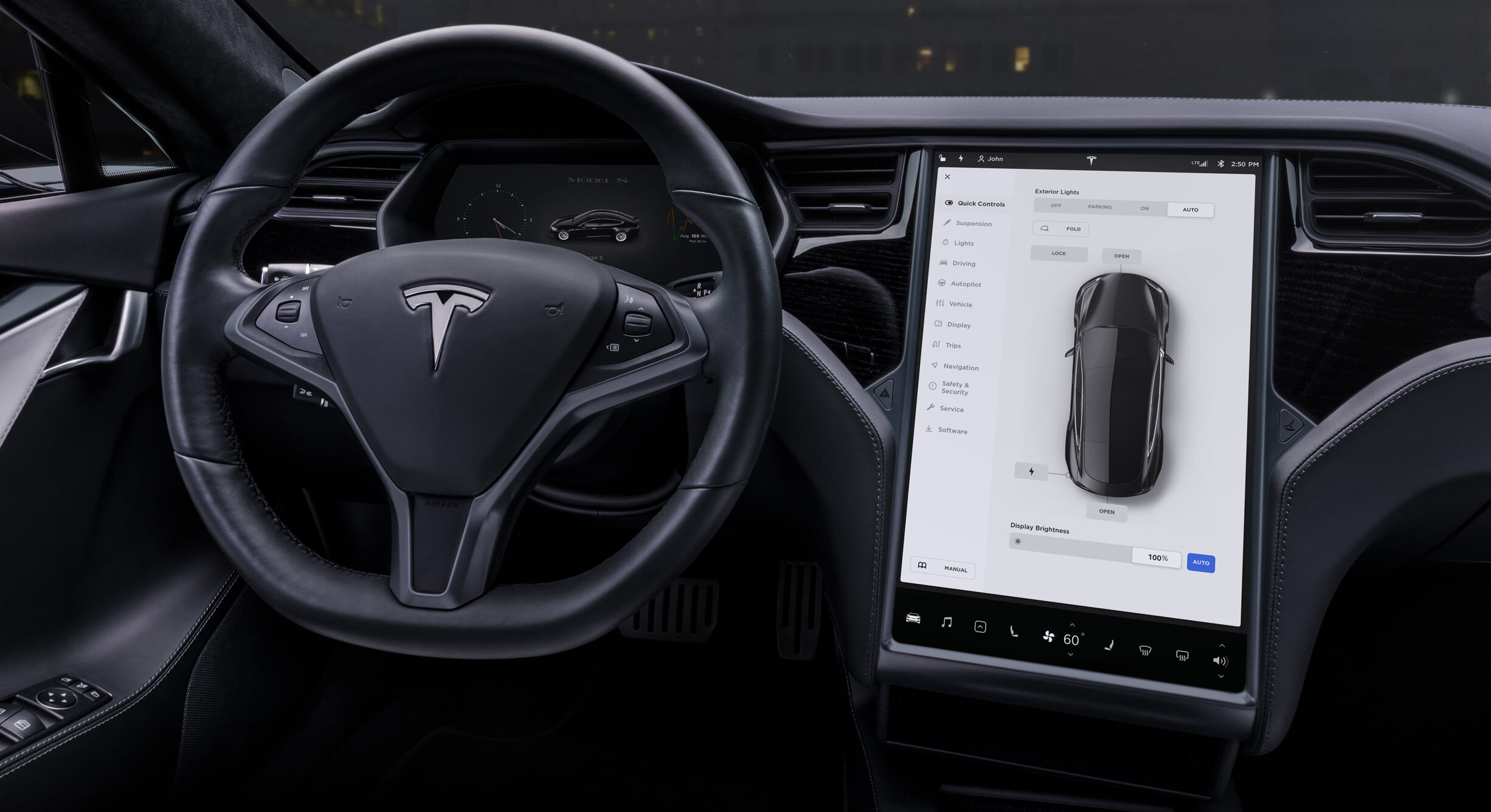
    Tesla Inc has agreed to recall 134,951 Model S and Model X vehicles with touchscreen displays that could fail and raise the risk of a crash after U.S. auto safety regulators sought the recall last month, according to a recall posted on a government website Tuesday.

    The National Highway Traffic Safety Administration (NHTSA) made the unusual recall request in a formal Jan. 13 letter to Tesla, saying it had tentatively concluded the 2012-2018 Model S and 2016-2018 Model X vehicles pose a safety issue. Automakers usually agree to voluntary fixes before the auto safety agency formally seeks a recall.

    The agency said touchscreen failures posed significant safety issues, including the loss of rearview or backup camera images, exterior turn-signal lighting, and windshield defogging and defrosting systems that “may decrease the driver’s visibility in inclement weather.”

    Tesla said in its filing with NHTSA that “in the interest of bringing administrative closure to the investigation and to ensure the best ownership experience for our customers” it agreed to a voluntary recall.

    NHTSA opened a probe in June 2020 into complaints that media control unit (MCU) failures led to touchscreen displays not working.

    The agency said other automakers issued numerous recalls for similar safety issues stemming from the touchscreen failure.

    NHTSA said in November when it upgraded its probe that it reviewed 12,523 claims and complaints about the issue.

    NHTSA said last month that “during our review of the data, Tesla provided confirmation that all units will inevitably fail given the memory device’s finite storage capacity.”

  • Strong China sales fail to ease European Covid pain for Capri

    Strong China sales fail to ease European Covid pain for Capri

    Capri Holdings is expected to post a fourth straight fall in quarterly revenue on Wednesday as the blow from fresh lockdowns in Europe eclipses a China-driven recovery in sales of its luxury handbags and apparel.

    A spike in coronavirus infections from late last year forced many European governments to put their economies back into lockdown, keeping consumers away from stores during the crucial holiday shopping season.

    Capri not only has to deal with store closures in Europe and sluggish department store traffic due to the pandemic but also a “stale” Michael Kors brand image, Jane Hali & Associates retail analyst Jessica Ramirez said.

    Investors will be hoping that Capri’s Versace and Jimmy Choo brands can emulate fashion giant LVMH’s growth in China, which helped cushion some of the pandemic’s impact in other markets.

    Sales of luxury goods in China have been rising since the easing of COVID-19 measures in the second half of 2020, sparking hopes that one of the world’s biggest markets for high-end fashion could ease the pain of companies suffering in regions where the virus continues to rage.

  • Yeah1 suffers another year of loss

    Yeah1 suffers another year of loss

    Media company Yeah1 reported a post-tax loss of VND151 billion ($6.55 million) last year, its second straight year of losses, as it developed a new business.

    Amid the Covid-19 pandemic the company, one of the largest digital media ecosystems in Vietnam, decided to set up a new multi-channel trading platform, Giga1, which seeks to cut out intermediaries and deliver goods directly from manufacturers to customers.

    “In 2020, we spent a lot of resources on this ecosystem of consumption and retail, which led to higher spending and affected the company’s profits,” Nguyen Dang Quynh Anh, deputy director of Yeah1, said.

    Revenues fell by 16 percent last year to VND1.22 trillion. In March, its contract with YouTube was terminated due to a violation of policies.

    It began as an operational error but later “turned into a real crisis for the company,” chairman Nguyen Anh Nhuong Tong said.