Author: Mei Ling Tan

  • Temasek Bolsters Sustainability with Ikea Hire

    Temasek Bolsters Sustainability with Ikea Hire

    Temasek names a new former head of sustainability from Ikea to replace Robin Hu, who will we leaving the role by the end of 2020.

    Temasek’s current sustainability head Hu will have some of his key function’s taken over by ex-Ikea chief sustainability officer Steve Howard, according to an effective as of January 1 next year.

    Hu will remain with Temasek and the senior leadership while transitioning to another role.

    He first joined the state investor in December 2016 and is currently a senior managing director. During his time with Temasek, his role encompassed the oversight of public affairs, institutional relations, foundations and endowments, and its sustainability policy alongside directorship at some of the firm’s portfolio companies.

    Previously, he was the CEO of Hong Kong’s South China Morning Post under the former owner and Malaysian billionaire Robert Kuok.

    At Temasek, its sustainability goals include a strong focus on carbon emissions where it targets halving in its portfolio by 2030 and full reduction by 2050. This target covers only the firm’s own operations and purchased energy while excluding the broader effects of the related supply chain.

    At Ikea, Howard spearheaded its sustainability efforts until 2017 and is also the co-founder of We Mean Business, a unit of firms and advocacy groups aiming to cut corporate carbon emissions.

  • HSBC Securities Services Joins BlackRock’s Provider Network

    HSBC Securities Services Joins BlackRock’s Provider Network

    The move allows asset managers and asset owners to connect seamlessly with HSBC through a single platform.

    HSBC on Tuesday announced that it will offer access to its Securities Services’ products via «Aladdin» – a Blackrock-run platform that helps assets managers check risk in their portfolios, trade, manage data management, and other operational tasks, from the first half of 2021, starting in Hong Kong and Singapore.

    Aladdin – or asset, liability, debt, and derivatives investment network – was conceived by the New York-based firm in the late 1990s as an internal tool. Today, it is one of Blackrock’s most powerful tech tools that it sells to smaller rivals, in a bid to stave off pressure on its active management fund arm from cheaper index funds.

    Sebastien Danloy, HSBC Securities Services’ global head of asset owners and managers, said joining the network adds to HSBC’s capabilities to connect to its clients’ front-office platforms and to offer front-to-back solutions in an open architecture environment to the asset management community.

    Integrating HSBC’s middle office, custody, and fund administration services with Aladdin will help clients access real-time data, streamline their workflows, reduce their manual processes and improve their operational efficiencies, the bank said in the announcement.

    HSBC currently administers $500 billion in assets for 20 global asset managers who already use Aladdin.

  • Facebook could be forced by the U.S. to sell Instagram and WhatsApp

    Facebook could be forced by the U.S. to sell Instagram and WhatsApp

    Facebook is going to be spending a lot of time in court after the U.S. Federal Trade Commission (FTC) and almost every U.S. state sued the social media company today. At issue is the “buy or bury” strategy used to snap up rival firms and keep smaller competitors away. Facebook was charged in two lawsuits of using its financial power to buy out rivals. In 2012, Facebook spent $1 billion to buy Instagram, which at the time was a photo-filter related app.

    Eventually, Instagram added a Stories feature that made it extremely popular. At the beginning of this year, Instagram had 1 billion monthly active users and an estimated valuation over $100 billion.. That means that Facebook was the beneficiary of one of the most profitable transactions ever made with a profit of more than $99 billion on paper. Two years later, Facebook paid $19 billion for the messaging app WhatsApp. By the time that deal closed, the rise in Facebook’s shares turned the value of the purchase to more than $21 billion.

    Both federal and state regulators want the deals to be overturned even though both were approved by the FTC years ago. If the regulators do agree to start the process of overturning the Instagram and WhatsApp deals, you can best believe that there will be legal challenges initiated by Facebook. 46 states are taking part in the suit with Alabama, Georgia, South Carolina and South Dakota sitting on the sidelines. New York Attorney General Letitia James, speaking on behalf of the coalition of the 46 states, Washington, D.C. and Guam that are suing Facebook, said, “For nearly a decade, Facebook has used its dominance and monopoly power to crush smaller rivals, snuff out competition, all at the expense of everyday users.” James said that Facebook acquired the companies before they got big enough to challenge Facebook.

    Jennifer Newstead, Facebook’s general counsel, called the lawsuits “revisionist history” and said that antitrust suits don’t exist to punish successful companies. She added that Instagram and WhatsApp became successful after Facebook spent billions of dollars on improving the apps. Newstead added that “The government now wants a do-over, sending a chilling warning to American business that no sale is ever final.” She pointed out that because of the merger, consumers benefited from the decision to make WhatsApp free. Prior to the deal, WhatsApp used to cost $1 to download and a dollar per year for service.

    Facebook co-founder and CEO Mark Zuckerberg did not help his own cause with a statement he made in 2008. According to at least one antitrust expert, Zuckerberg wrote in an email “it is better to buy than compete.” Seth Bloom of Bloom Strategic Counsel made an interesting point when he said that it will be hard for the government to “order divestitures of many years ago.” The transactions made by Facebook that are being challenged are six to eight years old and many courts would probably refuse to order Facebook to give up Instagram and WhatsApp. Daniel Morgan, a portfolio manager at Synovus Trust in Atlanta, Georgia, said, “I do not know if the FTC or DOJ will be successful in breaking Facebook up. I’m assuming this will be dragged out in the courts as FB defends itself.” Back in July, Zuckerberg made it clear that Facebook will “go to the mat” to defend itself against a federally ordered divestiture. The executive called the government’s actions “an ‘existential’ threat.”

    Interestingly, breaking up big tech seems to be something that both Democrats and Republicans are agreeing on. Both sides have been in favor of breaking up Google and Facebook. Many see the legal actions against the two tech firms as being the biggest antitrust cases against tech since Microsoft’s antitrust case from 1988.

  • BMW Group And AWS Collaborate To Develop IT Solutions

    BMW Group And AWS Collaborate To Develop IT Solutions

    Amazon Web Services (AWS) and the BMW Group announced a comprehensive strategic collaboration. The goal of the collaboration is to further accelerate the BMW Group’s pace of innovation by placing data and analytics at the centre of its decision-making. The companies will combine their strengths to jointly develop cloud-based IT and software solutions that increase efficiency, performance, and sustainability across all company processes, from vehicle development to after-sales services.

    As part of the wide-ranging collaboration, the BMW Group will migrate data from across its business units and operations in over a hundred countries to AWS. The move will encompass a number of the BMW Group’s central IT systems and databases for functions such as sales, manufacturing, and maintenance, and will help increase agility, achieve new insights from data analysis and more quickly innovate new customer experiences. In addition, the companies will invest in enabling and training up to 5,000 software-engineers in the latest AWS technologies to empower the BMW Group’s global workforce to make better use of data.

    Alexander Buresch, CIO and Senior Vice President, BMW Group IT said, “We are making data central to the way we work and we look forward to collaborating with AWS to merge our talents, continuing to raise the bar for innovation among automakers and delivering exciting new experiences for our customers around the world.”

    A key element of the collaboration is the further development of the Cloud Data Hub of the BMW Group. It is the central platform for managing company-wide data and data solutions in the cloud. The Cloud Data Hub offers BMW Group employees across all corporate divisions a central starting point for implementing analytical and data-driven applications. Via the Cloud Data Hub, employees use various AWS services already today to process, interrogate and enrich development-, production-, sales- and vehicle performance data in the order of several petabytes and to gain insights through the application of machine learning. For example, this will enable the BMW Group to better forecast the demand for its range of vehicle models and equipment options worldwide. In this way, planning in purchasing, production and sales can be optimized and, as a result, customer satisfaction can be increased.

  • Toyota Working On New Electric SUV

    Toyota Working On New Electric SUV

    Toyota has revealed that it will debut a new full-electric SUV in 2021. The details about the new EV are scant but it will be built on the company’s new e-TNGA platform. In terms of size, it will be similar to the current RAV4. Toyota aims to focus on the European market with the new electric SUV which is yet to be named. Toyota believes that a compact SUV can accommodate the needs of most regions in which the company operates and there are more volumes in that segment. The new battery-electric SUV will be one of the first of six EVs to be coming from the e-TNGA platform.

    Koji Toyoshima, Deputy Chief Officer, ZEV Factory, Toyota Motor Corporation, said, “Toyota will shortly take the next step in the rollout of its forthcoming battery-electric portfolio by first previewing an all-new mid-sized SUV in the coming months. The versatility and flexibility of e-TNGA technology allows us to design and create vehicles that are not just battery-electric, but also exciting to drive and beautiful to look at.”

    The new platform gets a clever design and Toyota says it is both highly versatile and easily adaptable for a range of product types. The basic architecture principle is that a number of key elements remain fixed whilst others vary. This allows the company to bring in variance in different parameters such as vehicle width, length, wheelbase and height. The e-TNGA platform can accommodate front, rear or four-wheel drive layouts. With a wide-range of battery and electric motor capacities that can be adapted to suit various vehicle types and usage profiles, Toyota is likely to use this platform increasingly in the near future. The development time of different model variants can be reduced and individual models can be developed in parallel to each other.

  • WhatsApp launches Carts for small businesses to sell in app, online

    WhatsApp launches Carts for small businesses to sell in app, online

    WhatsApp has added a feature called Carts to its business app, offering a more “seamless and intuitive” shopping experience on the chat program.

    The Carts feature will allow customers to quickly add goods or services they want from a business’ catalog, and then send the order as one message to the business. WhatsApp says this makes it easier for customers to order products and for businesses to keep track of order inquiries.

    Due to the Covid-19 pandemic, a significant number of small businesses in Hong Kong and Singapore have moved their focus to digital tools like WhatsApp Business to keep close connections and high interactivity with their customers.

    The app has turned into a potential channel for brands as about 175 million people around the world message a WhatsApp Business account every day. This trend in conversational commerce is rising across many industries – from fashion and beauty, to food and beverage, and even home and living.

  • Bonjour subsidiary faces winding-up petition over unpaid rent

    Bonjour subsidiary faces winding-up petition over unpaid rent

    Hong Kong’s Bonjour Holdings, parent of the namesake cosmetics retail chain, has confirmed it is being sued for unpaid rent relating to a tenancy dispute.

    In an advisory note to the city’s stock exchange, the company said its subsidiary Bonjour Cosmetic Wholesale Center, is the subject of a winding-up petition lodged by Apexwealth Investment which will be heard in court on March 10.

    Apexwealth claims Bonjour has failed to pay HK$4.03 million (US$520,000) in rent, air-conditioning charges, management fees and interest following “an alleged breach of a tenancy agreement”.

    Bonjour said in its statement that it was seeking legal advice relating to the petition which it says will have no material impact on the business and normal operations of the company and its subsidiaries.

    Like most Hong Kong retail chains whose business models rely on high volumes of spending by Mainland Chinese and other inbound visitors, Bonjour has been closing underperforming stores in tourist areas since the social unrest of last year and the advent of the Covid-19 pandemic early this year.

    In August, the company reported a loss attributable to shareholders of US$17.93 million on sales down 59.7 percent to $42.93 million. At the time it said it was continuing to review its store network, closing underperforming outlets and negotiating rent discounts with landlords.

  • Korea’s Emart set to scale back in Vietnam

    Korea’s Emart set to scale back in Vietnam

    South Korea’s largest supermarket chain operator Emart Inc. is pulling out of Vietnam, the second major Asian market after China, in the face of regulatory hurdles.

    The retailer opened its first outlet in Vietnam’s Go Vap district in 2015 and had procured a site at Ho Chi Minh City for a second opening last year. But the project has been delayed due to licensing setbacks, disrupting its plans to open five to six more outposts.

    Emart’s direct foray has proven difficult as Vietnam, like China, prioritizes joint ventures in permitting a foreign business. Emart started operation in Vietnam in 2014 after setting up a wholly-owned local entity.

    A retail industry source said a hypermarket needs at least 10 outlets to have bargaining power with vendors and maintain logistics efficiency. Unable to meet this number, Emart may have concluded it was better to fold the business, the source added.

    The retailer has been rolling back investments in the country. In its 2019 semiannual report, it had vowed to invest 460 billion won ($424.3 million) in its Vietnamese entity through 2022. But it had slashed that amount to 247.8 billion won in the third-quarter report.

    An Emart representative, however, denied the exit rumors and said it was studying other options such as strategic alliance or business partnership.

    Industry observers believe Emart is wary of making the same mistake as in its Chinese operation.

    Emart entered China in 1997 and aggressively expanded its operations, running at one point 26 outlets across the country. But it failed to overcome Beijing’s stiff regulations and saw losses snowball to 150 billion won over four years from 2013.

    In 2016, it found itself caught in the crosshairs of a diplomatic feud over Korea’s decision to build an anti-missile system, a move China vehemently opposed on national security grounds. Emart, along with many other Korean brands, suffered the brunt of Beijing’s retaliatory nationwide boycott on all things Korean. After suffering steep losses, the retail chain in 2017 sold off its remaining five outlets in China to a Thai company and pulled out of the country altogether.

    After scaling back its Asian operations, Emart is expected to focus more on the U.S. market, where Korean brands have been making rapid grounds. According to its regulatory filings, Emart generated 1.28 trillion won in the first three quarters of this year from overseas, up 122 percent from the same period last year and topping last year’s full annual sales of 778.5 billion won.

    Emarts’ robust overseas performance owes largely to its U.S. subsidiary Good Food Holdings, which the Korean retail conglomerate acquired for $275 million in 2018. The Los Angeles-based company owns five upscale food retailing brands, including Bristol Farms, Lazy Acres Natural Market, Metropolitan Market, New Seasons Market, and New Leaf Community Markets, operating mostly in the West Coast.

    Good Food Holdings raked in sales of 1.2 trillion won in the January-September period, up 136 percent from a year ago, on explosive demand for food products among people sheltering at home during the coronavirus outbreak. The company alone was responsible for nearly 93 percent of Emart’s total global sales in the period.

    Emart plans to invest 83.7 billion won through 2022 to expand its U.S. footprint. It is scheduled to launch PK Market, a shop specializing in Asian goods including Korean food, as early as next year in downtown Los Angeles.

  • UBS CEO Ralph Hamers’ Fintech Trends for 2021

    UBS CEO Ralph Hamers’ Fintech Trends for 2021

    The Singapore Fintech Festival is currently discussing the hot new trends for the fintech business in 2021. UBS Chief Executive stayed in Switzerland, but he can be trusted to know where things are heading.

    Ralph Hamers – Mister Fintech among the banking CEOs – has been in charge of Switzerland’s largest bank, UBS, for about a month. He didn’t fly out to attend the Singapore Fintech Festival in person.

    Instead, he took part at an event hosted by Switzerland Global Enterprise, which on Monday had launched the information platform finance.swiss at an event billed as World Fintech Festival in Switzerland.

    He used his time to present an overview of the big trends in fintech in the coming year.

    1. Neobanking: Source of a New Business Model?

    As a CEO of a traditional bank, Hamers maintains the view that neobanks such as Revolut, Monzo, or N26 have no business model to speak of. Neobanks may be digital and mobile, but their sole characteristic from a business point of view is growth. But that’s hardly a business model to speak of.

    Hamers believes that the so-called Freemium-Model, which entails a basic free-of-charge service, won’t suffice to run a successful business. To be true, neobanks have so far defined themselves by the number of clients won as well as the number of financing rounds completed. But one day, investors will want to get a return on their investment. Hamers says time will tell how the new banks will manage to earn money.

    2. Robo-Adviser: Whereto Henceforth?

    Robo advisory seems doomed in Switzerland. They only work in connection with personal advice from a bank in a kind-of hybrid model. Hamers believes that robo advisers and algorithms have proven their ability to deliver good results. But only few people actually want to entrust their money to a robot. Therefore, the raison-d’être of robo advisers gets lost – namely the leveraging and the ensuing benefit of scale.

    To get clients to trust the robot advisory system, advisers have started offering personal consultancy services. The problem of how to scale the business remains though, Hamers says. He believes that efforts will be made to address the problem in 2021.

    3. Tokenisation: Huge Potential?

    UBS CEO Hamers pronounced himself a great supporter of tokenization and digitization of assets. He may have been obliged to say so given that the event was hosted by SIX CEO Jos Dijsselhof and Chairman Thomas Wellauer at the Convention Point. The digital exchange SDX aims to become the first regulated exchange for tokens and digital assets.

    Tokenization is a fintech trend with huge potential, Hamers said. UBS has been working on such projects for some two years. He believes that there is work to be done still to free the full potential of tokenization.

    4. Green Fintech: Two Trends Merged

    Green fintech – a no-brainer according to Hamers: fintech and sustainable investing are trends and combining the two is simply perfect. In Switzerland, green fintech is a trendsetter and has become a founding principle for the financial market strategy. In November, the government launched the green fintech network that brings to one table business, associations, risk capital, universities, consultancies, and law firms.

    One great example of what green fintech is able to is the application provided by Yova, where clients can engage in impact investing. Zurich-based Globalance Bank helps clients understand the ins and outs of green investing by displaying the emissions and energy use of a portfolio.

    5. Open Banking: Perfecting a Symbiotic Existence?

    Not a new trend, but one that might prove disruptive, according to Hamers: open banking. If banks don’t open their business to a third party, they risk disintermediation, the destruction of supply chains. If banks however choose to open their business, they can retain client access, even if the best offering for a specific service no longer is its own one. UBS is moving toward open banking, as was shown by its announcement on Monday that it will cooperate with finance platform Financescout24.

    Open banking is creating a win-win situation, says Hamers: fintech that lacks the resources to build their own customer base, receive access to an established market. And the banks get access to technology and digital services they couldn’t develop themselves.

    6. E-Identity: Key Behind It All

    The e-identity is a hotly disputed political issue, and not a trend. On March 7, 2021, Swiss voters will decide on the legal framework for a state-approved electronic identity. The contentious issue is the separation of powers between state and economy. Only the approval of a signature will remain a state prerogative, while private firms can launch an e-ID.

    Hamers understands the issue of data protection and demanded an international framework agreement on the protection of personal data when still at ING. But he equally firm in his belief that no digital economy can survive without an e-identity. It is the key to success behind any fintech trend, he said in Zurich.

    He may have read up on the fine print of Swiss direct democracy because if the electronic identity fails, many a fintech trend will founder. It would tend to take another two to three years before Switzerland will count on an E-ID. And that’s a long time in the digital economy.


  • Amazon looking at $100 million investment in India’s Apollo Pharmacy

    Amazon looking at $100 million investment in India’s Apollo Pharmacy

    Amazon.com Inc is considering a nearly $100 million investment in India’s pharmacy chain Apollo Pharmacy, facing up to Reliance Industries Ltd and Tata Group in the country’s fast-growing drug market, the Economic Times reported on Wednesday, citing two people aware of the plans.

    Amazon already delivers medicines in India and the potential investment would come amid rising competition from Mukesh Ambani’s Reliance, which bought a majority stake in online pharmacy Netmeds.

    Tata Group here, meanwhile, was reportedly in talks to pick up a majority stake in e-pharmacy firm 1mg.

    Both Amazon and Apollo Hospitals, which owns Apollo Pharmacy, declined to comment.

    The growth of e-pharmacies, however, has left many Indian trader groups feeling threatened, who say online drugstores can contribute to medicine sales without proper verification and the entry of large players can cause unemployment in the sector.

    Amazon’s plan to further expand in India also comes close on the heels of its launch of an online pharmacy to deliver prescription drugs in the United States, increasing competition with drug retailers such as Walgreens, CVS Health and Walmart.

  • AirAsia up 5.49% after Fernandes said he’s ‘quietly optimistic’ about 2021, in talks for three new airlines

    AirAsia up 5.49% after Fernandes said he’s ‘quietly optimistic’ about 2021, in talks for three new airlines

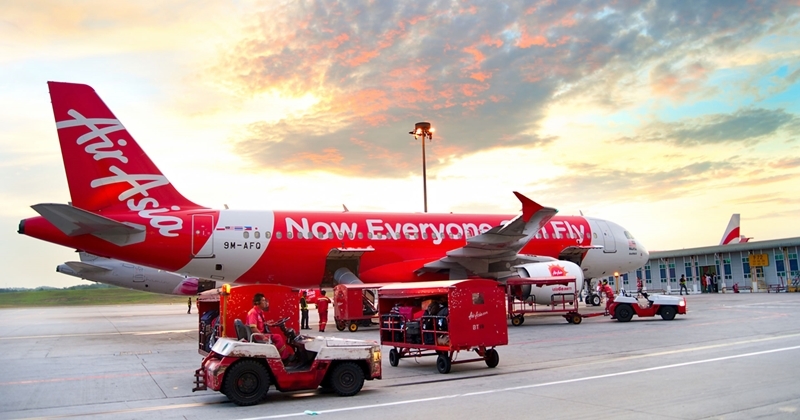
    AirAsia Group Bhd rose as much as 4.5 sen or 5.49% to a five-month high of 86.5 sen in early morning trade today after the group said it expects travel to return to pre-Covid levels in the next six to 12 months.

    At 10.09am, the counter had pared some gains at 85 sen, still up three sen or 3.66%.

    The counter, among the most actively traded stocks this morning, saw 24.33 million shares traded.

    The stock has rebounded 63.46% from its recent trough of 52 sen on Nov 3.

    At 85 sen, the company was valued at RM2.82 billion.

    In an interview yesterday, group chief executive officer (CEO) Tan Sri Tony Fernandes said he is “quietly” optimistic about 2021 with a focus on expanding the group’s base in Southeast Asia.

    He added that the group is in discussions about starting three new airlines in the region, and its plan to raise up to RM2.5 billion is on schedule.

    Meanwhile, Rakuten Trade head of research Kenny Yee said yesterday a successful development of Covid-19 vaccines would lift cross-border travel restrictions and worldwide travel bans, benefiting AirAsia.

    “AirAsia’s share price is in consolidation mode now following the previous run; we expect buying momentum to resume as it is one of the potential recovery plays,” he said.

    MIDF Research also in its report last Thursday upgraded the aviation sector to “neutral” from “negative”.

    “We foresee that air travel demand will recover meaningfully, but only at a portion of pre-pandemic levels in FY21 (the financial year ending Dec 31, 2021). With vaccine introduction and subsequent administration on the horizon, we believe that there is light at the end of the tunnel for aviation players,” it said.

  • Volkswagen adopts new sales model in Mainland

    Volkswagen adopts new sales model in Mainland

    Volkswagen AG is launching another sales model in China that will see the automaker open showrooms in city centres for electric vehicles (EV) and offer fixed prices.

    The move marks a departure from the conventional sales system used by the wider industry in China.

    Last week, Volkswagen’s joint venture with SAIC Motor opened its first showroom under this system in the eastern city of Hangzhou, according to a social media post. The store, named “ID. Store X”, sells its ID. range of family cars.

    The German automaker said customers can order vehicles at a fixed price directly through the company website, phone app or from authorized dealers. The stores are invested and operated by selected dealers, not the automaker.

    The dealers get a commission from vehicle sales and do not need to maintain the car inventory, Volkswagen said.

    Traditionally automakers including Volkswagen, GM and Toyota set the official price, but dealers are expected to keep an inventory of vehicles and often allowed to offer discounts or price them higher depending on the demand for the models.

    The German automaker’s new attempt still differs from Tesla’s direct sales model that bypasses dealers entirely. Tesla’s model allows the US carmaker to manage the process from production to pricing to sales to delivery while adding operational costs of running the wholly-owned stores.

    Showroom strength is becoming an important differentiator for EV makers in the world’s biggest auto market, as they line up model launches. Tesla currently has over 150 showrooms and service centres in China while Nio has 189 stores. Xpeng had 116 and Li Auto has 45 showrooms, as of the end of September.

    SAIC-Volkswagen said it would open 40 ID. Store X stores in 29 Chinese cities in the next 18 months. Volkswagen’s other venture with FAW Group has yet to announce a detailed sales plan for EVs.

    Volkswagen said last month that it will launch eight ID. family models in China by 2023 with its local partners SAIC and FAW.

    Sales of electric, plug-in hybrid and hydrogen-powered vehicles in China are forecast to rise to 20 percent of new car sales by 2025 from just 5 percent now, the State Council said last month.

  • Fintech Sector Shows Resilience Amid Pandemic

    Fintech Sector Shows Resilience Amid Pandemic

    Singapore’s fintech investments rebounded in the second quarter of 2020, with investors recognizing the opportunities existing in Southeast Asia.

    Despite an initial decline in funding (-49 percent in Q1 2020 vs. Q4 2019), fintech investments in Singapore grew more than fourfold to $278 million in the second quarter of 2020, compared to the quarter before, according to the «Singapore FinTech Landscape 2020 and Beyond» report, released on Tuesday.

    Over the past five years, the number of fintechs in the city-state has grown from less than 100 to over 1,000, with the number of employees growing from about 1,100 to more than 10,000, the report said.

    The report, published by the Singapore Fintech Association (SFA) and Oliver Wyman, highlights Singapore’s evolution as a fintech innovation center over the past five years and forecasts the trends expected in the next five years.

    Singapore is Asia’s highest-ranking fintech city, according to Findexable’s «Global FinTech Index 2020,» with more than 40 percent of Southeast Asian fintech’s based in the republic.

    The key enablers that have contributed to Singapore’s success include innovation-focused investors, a close-knit network of corporates, banks and partners, as well as progressive government and industry associations, the report said.

    Looking ahead, the report recommended several themes to ensure the republic remains attractive for fintech firms: continue to keep regulation current, further open up financial services infrastructure, and work towards harmonizing standards.

  • Venture funds commit $815 mln to Vietnamese startups

    Venture funds commit $815 mln to Vietnamese startups

    Vietnamese startups earned pledges of $815 million over the next five years from 33 foreign and domestic venture funds.

    The pledges, announced at the recent Vietnam Venture Summit, came from several foreign funds who’ve been active in Vietnam in recent years, like CyberAgent Capital, AlphaJWC, Monk’s Hill Ventures, as well as several domestic funds like VinaCapital Ventures, Do Ventures, and Viet Capital Ventures.

    At the same event last year, 18 funds had committed $415 million to Vietnamese startups for three years, and $220 million of this was disbursed in the first half of this year.

    Investment in Vietnamese tech startups in the first six months fell 22 percent year-on-year to $222 million due to the Covid-19 pandemic, according to a report by Ho Chi Minh City-based venture capital firm Do Ventures.

    Among six major economies in Southeast Asia, Vietnam accounted for 16 percent of the latest investment pledges, ranking third behind Singapore (37 percent) and Indonesia (30 percent), it added.

    A recent report by U.S.-based consulting firm McKinsey & Company says 12 large digital ecosystems (companies providing services across sectors) will be established across retail and services in Vietnam by 2025, creating a revenue pool of about $100 billion.

  • Amazon has over 100,000 Vietnamese sellers

    Amazon has over 100,000 Vietnamese sellers

    Over 100,000 Vietnamese sellers have successfully debuted on Amazon, with fashion and household goods being some of their best-selling products.

    Gijae Seong, head of Amazon Global Selling Vietnam, said amid the Covid-19 pandemic, sellers have been focusing on products with high demand such as kitchenware, sports gear and house decoration items.

    The world’s largest e-commerce company has also been working with Vietnamese exporters to sell medical masks to the U.S., and would continue this partnership to sell masks, gloves and protective clothing, he said.

    Before demand surged for pandemic-related products, the most popular items sold by Vietnamese sellers had been women and children’s fashion, 3D cards and paper flowers, he added.

    Tran Van Tuoi, CEO of Sea Grapes Vietnam, which sells sea grapes on Amazon, said this year his company participated in the Black Friday and Cyber Monday promotions for the first time and saw sales rise by 300 percent. They rose by 500 percent on Thanksgiving, he added.

    Amazon has in recent years been recruiting Vietnamese sellers by organizing workshops to teach them how to reach out to global customers.

    Eric Broussard, Amazon’s vice president of international marketplaces and retail, said Vietnam is a country with strengths in manufacturing and a large number of good sellers, which is why his company has been investing and expanding there in recent years.

    Amazon Global Selling on Tuesday unveiled a task force in Hanoi to support Vietnamese sellers and launched a Vietnamese version of its sellers’ information center.

    But their initial success notwithstanding, Vietnamese sellers need to make improvements to reach more customers.

    Lai Viet Anh, deputy head of the Ministry of Industry and Trade’s Vietnam e-Commerce and Digital Economy Agency, said local firms need to educate themselves on e-commerce, study foreign customers’ preferences and overcome language barriers as cross-border sales require direct interaction with buyers.