Author: Mei Ling Tan

  • Samsung’s official 5G Galaxy S21 teasers have leaked

    Samsung’s official 5G Galaxy S21 teasers have leaked

    It may be Tuesday, but this week is already proving to be a massive one for Samsung Galaxy S21 leaks. Concept renders based on photos of Samsung’s next-gen flagship lineup were published yesterday morning and were followed hours later by the first live image of the Galaxy S21+ and S21 Ultra.

    The teaser videos that show off the Galaxy S21 and Galaxy S21+ depict both smartphones in the new Phantom Violet finish, which is perhaps Samsung’s most adventurous colorway since the Galaxy Note 10’s Aura Glow.

    Rather than settling for a single color across the phone, Phantom Violet pairs a violet rear panel with a copper-colored frame. The latter is presumably made out of aluminum, whereas the rear panel is made out of plastic on the Galaxy S21 and glass on the Plus-branded smartphone.

    When it comes to the finalized design, Samsung’s decision to use a new camera design on its next flagship lineup has essentially been confirmed by the videos. The new camera module blends into the frame on both the left side and top edge.

    In the case of the Galaxy S21 and Galaxy S21+, it houses three cameras, although there is an LED flash positioned next to it too. On the hardware front, these cameras won’t introduce anything groundbreaking because they have been borrowed from the Galaxy S20. A range of software improvements is very likely, though.

    Coupled with everything mentioned above is a punch-hole display. The panel measures in at 6.2-inches on the Galaxy S21 and 6.7-inches on the S21+ and, as confirmed by the teaser videos, settles for flat edges.

    One-upping the vanilla models is the Galaxy S21 Ultra, which features a quad-camera setup on the back. It consists of a 108-megapixel main sensor, a 10-megapixel 3x telephoto zoom shooter, a 12-megapixel ultra-wide, and a 10-megapixel 10x periscope zoom.

    These components sit alongside an LED flash and a laser autofocus system. The latter was present on the Galaxy Note 20 Ultra as well and ultimately helps avoid the autofocus issues that plagued the Galaxy S20 Ultra earlier this year.

    Of course, due to the extra cameras and laser autofocus system, the overall camera bump is much larger, although it still blends into the frame. Speaking of which, the frame should be carved out of stainless steel and paired with a glass back panel.

    As for the color, the Galaxy S21 Ultra is shown off in Phantom Black, which is paired with a matte finish. On a separate note, the punch-hole display can be seen in the longer video with curved edges. It boasts a diagonal of 6.8-inches, per recent reports.

    Samsung is understood to have scheduled its next Unpacked event for Thursday, January 14. It will unveil the whole Galaxy S21 series at the event and its next pair of earbuds, the Galaxy Buds Pro.

    Pre-orders are rumored to kick off the same day ahead of shipments on Friday, January 29. The flagship lineup could start at $849, with the Plus-branded device landing at $1,049 and the Ultra coming in at $1,249.

  • A Guide to Starting a Successful Business

    Starting your own business is anything but simple. Throughout the journey, there will be obstacles, rejection, and the chance of financial worry. Despite that, with a solid idea, your business could turn into something huge. If you have always dreamed about being your own boss, then here is a guide to starting your own successful business and joining the masters in leadership.

    Start with Education

    Like with many other endeavors, first, you must get educated. Business isn’t something anyone knows off the bat, so it’s important to give yourself all the knowledge you can. A masters in leadership will enable you to learn all the necessary skills you need to become a successful leader of a company.

    If you have already started your business, don’t worry about a lack of education. There are plenty of courses and resources online for you to level up your knowledge. Over time, you will learn all about being a leader through experience, but education is crucial for giving you a head start.

    Research, Research, Research

    Don’t jump into a business plan without first doing plenty of research. If you are selling clothes, check out any fierce competition. You could even take a leaf out of other people’s books. Market research never ends, but it is especially crucial in the beginning.

    The best masters in leadership tend to keep a notebook with them at all times. You never know what you might learn in your day-to-day life. If you’re selling a product, a trip to the mall counts as research. Research can be perusing the web in your PJs with endless cups of tea, too – it’s all about what kind of product you are putting out there. Get into good habits early on for an increased chance of success.

    Write a Detailed Business Plan

    All masters in leadership know you cannot wing your business route. A plan is an essential part of starting up, so make sure you make it as detailed as possible. Some things to include are:

    . Your competition

    . Your audience

    . Your company goals

    . Marketing strategies

    . Budgeting

    Create a folder with your business plan so you can always refer to it or adjust it if need be. It will help guide you through the highs and lows of your journey, and when you’re lost, you can use it to help you find a way forward.

    Understand the Skills Required

    Being a successful business owner takes a wide range of skills, some you’ll pick up over time, and some you’ll already have. A masters in leadership will help you acquire the skills you need to succeed, which include:

    Motivation: On the days when everything seems to be falling apart, you must be able to find the motivation to push through.

    Organization: A business without organization is destined to fail. The ability to stick to deadlines, plan, and budget properly are all crucial for masters in leadership.

    Commitment: When starting, it’s likely that you won’t find time to switch off. Commitment to your business is important for pushing through challenges.

    Leadership: When your business expands, you will need to lead other people to success. Masters in leadership start learning how to manage before even having someone under them.

    Communication: Great communication is essential. You will be speaking with clients, customers, and co-workers daily, so you must be able to use your words wisely.

    Find Your Audience

    There’s no use in marketing your business if you don’t know who your audience is. This will usually tie into research, but it is a particularly important part of it. Spend some time figuring out who your audience is, and analytics can help you get there. Once you’ve managed to decipher the types of people who are interested in what you have to offer, you must then understand what exactly they want. By doing this, you can then tailor your marketing and product towards them, resulting in more engagement and sales.

    Open a Business Bank Account

    Opening a business account is a relatively simple part of starting your business, but it’s one that should be done as early as possible.

    There is a great risk involved in combining your personal finances with your business’, so get out of the habit of that as soon as possible. It can cause issues with taxes, and you might find that you end up spending your money that was for personal bills on your company by mistake. A well thought-out budget comes in handy here. If you want to expand your organizational skills, then attaining a masters in leadership will help you.

    Find a Loan or Investor

    Another area of finance to focus on is applying for loans and finding investors. Your business plan will come in handy when applying for loans, and for it to be appealing, you will want to make it as clear and succinct as possible, highlighting why your business has a high chance of success.

    Investors can be tricky to come by, so you should get used to making connections early on. Don’t expect the first person you speak with to throw money in your lap! Masters in leadership have a natural-sounding pitch for speaking with potential clients. Create one of your own so when you come into contact with a potential investor, you know exactly how to sell your business to them.

    Find a Location

    Many small businesses start at the kitchen table, and while there is a charm to that, it is not necessarily viable in the long run. If you plan on hiring employees or you simply need extra space to store your stock, then finding a workspace is necessary.

    Office spaces come in a large variety, so you’ll need to take into account the needs of your business. Do you need lots of space? How many employees are you planning on having work there? How many desks will need to fit in? There are other aspects to consider, too, like natural light to boost workplace positivity. You must aim to find a location that is comfortable and spacious enough without going over budget. Masters in leadership understand how crucial it is to have a workspace that feels right for everyone.

    Keep an Open Mind

    When running a business, you never know what is around the corner. There will be obstacles you never expected and triumphs you never thought would occur. Surprises are all a part of the experience.

    If you had a well thought-out, detailed business plan to begin with, but evidence shows it is simply not working out, then it is your job to shift it around. As a business owner, adjusting your expectations is key. Many masters in leadership understand that there are times when things will not go according to plan, but they can adapt to whatever the business throws at them. Learn to do the same by keeping an open mind and never keeping all your eggs in one basket.

    By keeping an open mind, you open the door to a potential improvement in areas you never thought of. For example, if you never use someone else to manage your social media, then you might find that you lose time, and your social media engagement dwindles. If you dare to try something new by giving control of your accounts to a professional, there’s a chance you could save yourself lots of time and greatly increase engagement on the platforms, leading to more customers heading your way. Join the masters in leadership by keeping your mind as open as possible.

    Grow a Back Bone

    “In order to succeed, we must first believe that we can,” said Nikos Kazantzakis.

    It is no secret that running a business takes great strengths. You will face rejection, and you must learn to take it in your stride. Build yourself up so you don’t even think about falling, and you will find that you overcome each obstacle far more easily. Attaining a masters in leadership will help you learn how to stay strong even when things are tough. Over time, your backbone will only grow stronger and stronger, but to get started, you must believe in yourself from the beginning.

    Learn to Budget

    Budgeting is an enormous part of a successful business, and the greatest masters in leadership are the most organized with it. No matter how much profit is rolling in, without a budget, you could end up losing money. This is where your organizational skills come in handy. At the beginning of each year, you should make an estimate of how much profit you expect to make, how much your outgoings will be, and then leave some extra wiggle room for any emergencies. Budgeting is something you will need to do at the beginning, and you will continue to do it all the way through, so it’s important to learn how to budget efficiently early on.

    Choose Your Marketing Strategies

    Your product or services could be the best in the world, but without consistent, effective marketing, nobody will know to come to you.

    Most masters in leadership are not boring and repetitive in their marketing strategies. Remember, your competitors are likely to be adopting similar methods to you, so it helps to get creative. Of course, with some marketing strategies, repetition is necessary, for example, SEO content. When it comes to social media, however, it’s beneficial to shake things up now and again. You could host competitions, start a fundraiser, or even start a giveaway. Your goal is to keep potential customers consistently interested.

    Embrace Leadership

    “Before you are a leader, success is all about growing yourself. When you become a leader, success is all about growing others,” said Jack Welch.

    To become a successful business owner, you must become an excellent leader. Some people are born with leadership skills, whereas others need guidance to get them where they need to be. Attaining a masters in leadership is a handy step for teaching you exactly how to manage a team well. You will learn to guide others in the right direction, bringing out the best of their abilities rather than bringing up their weaknesses. If you commit to becoming a leader, soon you will join those who can call themselves masters in leadership.

    Find an Excellent Team

    When it’s time to build your business’ team, you want to find the best of the best. This takes some work, but the outcome is worth it.

    First of all, you must learn the ways of the recruiting process. You may find yourself swamped with tons of resumes without knowing what direction to go in. First, you should figure out exactly what you are looking for so you can be as specific as possible on the job description.

    When it comes to interviewing, it helps to have a range of questions ready and tailor them depending on how the interview is going. A promising interview tends to end up sounding more like a conversation rather than a simple question-answer scenario. While it might be tempting, don’t just go with your gut. Unless they’re applying for a role in customer service, charm doesn’t equal a great worker. What you should look for is passion, commitment, and whatever else you need to get your business running smoothly. The best masters in leadership start by acquiring a fantastic team.

    Focus on Quality

    Whatever distractions you may come across when leading your business, you should always prioritize the quality of your product or services. Your marketing strategies and organization skills are crucial, but without high-quality services, your customers won’t be satisfied.

    Keep the Passion – and the Motivation

    Above all else, stay passionate about your business. Remember, you started it for a reason, so when you find your motivation dwindling, remind yourself of that.

    On the days when passion seems impossible, it’s important to stay motivated. The best masters in leadership have passion, but they don’t rely on it. Committing to your business doesn’t just mean committing when you’re excited, it also means you need to stay motivated even when the day is falling apart.

    Starting a new business is an exciting adventure and one that no one is ever fully prepared for. By using this guide, you will find the road has less traffic and more green lights, resulting in you joining the ranks of the true masters in leadership.

  • Moncler aqcuiring Stone Island

    Moncler aqcuiring Stone Island

    Italian designer clothing brand Stone Island has just been snapped up by Italian winter wear’s favorite Moncler SpA (BIT: MONC). While some retailers are winding up operations and slipping into administration, others are seeing an opportunity to expand. Designer goods are selling surprisingly well this year, and many analysts think 2021 will see a massive recovery in the sector.

    Last month we discussed how exclusive streetwear brand Supreme was acquired in a $2 billion deal by VF Corporation (NYSE: VFC). Now it’s the turn of Stone Island, which is being acquired by Luxury Italian group Moncler for $1.39 billion.

    Family-owned Stone Island was founded in 1982 by Massimo Osti. In the prior years, he’d created an unusual fabric that went onto become an integral part of Stone Island’s popularity. The Tella Stella fabric is a tarpaulin like weight, heavily stonewashed, and dyed in a variety of colors. In 1983 Carlo Rivetti, the current CEO and owner of Stone Island, bought his 50% stake in the company. In the ensuing years, the brand enjoyed increasing popularity. Inspired by both the military and traditional workwear, the pair created innovative new jacket designs with unusual features. For instance, a color-changing jacket that responds to temperature through its liquid crystal coating and a reflective jacket coated in a thin layer of glass.

    The brand’s popularity spiked in the nineties as English football hooligans embraced it. The founder left the company in 1994. In 2009 the brand began collaborating with others such as Adidas and then Supreme in 2014. The Supreme collab caught the eye of rapper Drake, who loved it and became a major fan and unofficial ambassador of the brand. This transitioned it away from the hardman image of football thugs to the trendy streetwear image popularised by sports brands. And Drake’s fan base was a boon to Stone Island, increasing its popularity stateside.

    Stone Islands’ growth has surged in recent years. In 2018, Stone Island’s revenue was approaching €200 million from around €56 million in 2012. It sold a 30% stake to Singapore’s sovereign wealth fund in 2017.

    CEO and owner Carlo Rivetti still owns just over 50% of Stone Island, and his family owners own an additional 19.9%. Skiwear-turned-fashion-brand Moncler is buying it from them in cash. It is buying the other 30% from Temasek, which also has a small stake in Moncler. All parties are being offered the same terms, but Temasek also has the option of taking newly issued Moncler shares for up to 50% of the cash consideration.

    Chairman and CEO of Moncler, Remo Ruffini said: “We are coming together at a challenging moment both for Italy and the world, when everything seems uncertain and unpredictable but I believe it is precisely in these moments that we need new energy and new inspiration to build our tomorrow,”

    What the Moncler and VF Corp. deals signify is the arrival of streetwear in a world of its own. No longer simply cheap and cheerful clothes for skaters, tradesmen or football fans. These brands cover all manner of outdoor pursuits, but in a trendy, designer way that makes even the laziest youngsters look cool. The streetwear market has an estimated value of $50 billion and is expected to enjoy double-digit sales growth by 2024.

    VF Corp now owns Supreme, along with The North Face, Dickies and Vans, but this isn’t stopping Supreme taking part in its exclusive collaborations with other popular brands. These surprise drops are what keeps it in demand. Customers love it, and they’re often oversubscribed in next to no time. Supreme just joined forces with Stone Island last month, when they dropped another sell-out collection. They’ve been partnering on occasion since 2014, and their limited-edition outerwear remains as popular as ever.

    This latest collab features both Supreme’s logo and Stone Island’s compass. Pieces include hand-painted shearling jackets, which have become one of Stone Island’s signature edits, as well as wind-resistant crinkle down jackets in camouflage print. There are also corduroy jackets, hoodies and some of Supreme’s quirky accessories, such as a glow-in-the-dark balaclava and swimming goggle inspired sunglasses.

    Dual branding opens up potential buyers to a much wider audience. It also gives a unique spin to a garment, but keeps it exclusive and therefore highly profitable. Despite the economic uncertainty facing the world, designer streetwear is on the up, with social media the perfect place to showcase and drop their latest offerings. Emerging markets are bringing youth and wealth, hungry to add the coolest fashion garb to their image streams. Both Stone Island and Supreme look to be headed for several years of continued growth ahead.

  • Acecook to open instant-noodle buffet restaurant in Vietnam

    Acecook to open instant-noodle buffet restaurant in Vietnam

    Called ‘Acecook Noodles Cup Buffet’, the store allows customers to create and mix instant noodles to their own preference. Customers can also customize their noodles cup design with stickers and pencil crayon provided.

    Besides providing the buffet service, the store also has a dedicated display area for Acecook’s new noodles range as part of its marketing plan. The store is scheduled to launch on December 19.

    “This is also a tribute to the companionship and support of customers for Acecook Vietnam over the past 25 years,” said Kajiwara Junichi, general director at Acecook Vietnam. “I hope the restaurant will be an attractive destination for our customers, who love instant cup noodles and want to experience new things.”

    The launch is part of Acecook’s strategy to increase the cup noodles sales in the country. According to Nikkei, the Japanese instant-noodle maker aims to achieve about 350 million servings by 2022. Acecook estimates cup noodles will account for 9 percent of its sales in the country by then.

    Prior to creating the instant-noodle buffet concept, Acecook Vietnam entered the retail market with its Japanese restaurant chain Ringer Hut.

  • Vietnam to purchase more power from Laos

    Vietnam to purchase more power from Laos

    National utility Vietnam Electricity (EVN) has signed three memoranda to purchase power from Laotian companies amid expected energy shortages.

    EVN will buy power from two hydropower plants and one coal-fired power plant in neighboring country Laos starting 2024, according to the memorandums of understanding signed Sunday.

    The 84-megawatt Nam Yeuang hydropower plant and 300-megawatt Nam Phan coal-fired thermal power plant developed by Phongsubthavy Group are set to transmit electricity to Vietnam starting 2024 and 2025.

    Another hydropower plant, Nam Neun 1, with a capacity of 124-megawatt and developed by Kong Sup Hydro Development of Nam Neun 1 and Nam Neun 3, will also start delivering power to Vietnam in those two years.

    EVN in January signed five deals with two Laotian companies to purchase 1.5 billion kilowatt-hours of power each year in 2021 and 2022.

    The Ministry of Industry and Trade had earlier warned of power shortages of 3.7 billion kWh in 2021 and nearly 10 billion kWh the following year, as the construction of new thermal and gas-fired plants fall behind schedule.

    2023 will be the most stressful with the shortage expected to be around 15 billion kWh. From then on, it will decrease, with shortages expected to drop to 7 billion kWh and 3.5 billion kWh in 2024 and 2025 respectively.

    The ministry stated the only way out is to import more from Laos and China, although this is only a band-aid solution. In the long run, it would be necessary to speed up work on large power generation projects, it added.

  • GrabBike riders strike over increased commission rate

    GrabBike riders strike over increased commission rate

    Hundreds of GrabBike riders on Monday turned off their app and gathered at the company’s office to protest its increased commission rate after the government raised tax.

    The office of ride-hailing firm Grab in Hanoi’s Cau Giay District was swamped by large, green-clad-rider crowds demanding the company reimpose its previous rate of commission.

    The gathering came after Grab increased its commission on each GrabBike trip from 20 percent to 27.27 percent starting December 5 following the government’s newly-imposed 10 percent value-added tax per general ride-hailing trip, a move seeking to create a level playing field for traditional tax firms.

    The Grab riders said they had called for a strike via Facebook over the weekend and on Monday morning shut down their apps, traveling around Hanoi in groups to protest the increased commission rate.

    Hung, a rider who asked to be identified by his first name only to avoid company retribution, called the new commission rate “cruel” since after fuel costs are taken into account, he only retains around 50-60 percent of the fare for each trip compared to the previous 70 percent.

    Son, who partnered with Grab last year, works 15-16 hours a day in Hanoi to be able to transfer VND6-7 million a month to his family in central Thanh Hoa Province.

    “I’m worried the increased commission rate will make it impossible to take care of my family. I support paying taxes but I want Grab to share the tax burden with drivers.”

    Before the new tax policy took effect, Grab drivers got to keep around 80 percent of the fare, while the company only paid 10 percent tax on its 20 percent income. The driver paid 3 percent VAT on his 80 percent.

    Although the new tax policy no longer requires drivers to pay their 3 percent VAT, they said their actual income per trip has dropped because Grab has raised its commission to make up for the higher VAT.

    Grab’s calculations show drivers’ income would have been reduced by around 7.3 percent with the new tax policy.

    However, a Grab spokesperson said the company on Dec. 5 had hiked its fares by 5-6 percent to reduce drivers’ loss of income to around 1 percent.

    “The new fares still ensure Grab’s competitiveness on the market. Grab already bears a part of VAT to share the burden with customers and driver partners during this difficult time,” the spokesperson stated.

    Vietnamese officials have long been pondering whether ride-hailing companies are technology service providers or transport companies, but the new decree makes it clear they are the latter.But this hike in rates does not satisfy drivers, who said the increase might see customers opt for competing services and make their income fall even more.

    Ta Thi Phuong Lan, deputy head of the department of tax administration for small and medium enterprises and individuals, said VAT rates for companies like Grab and Gojek have hitherto been too low and tax authorities need to raise it to the correct level.

    Although Lan said the new tax rate is not aimed at drivers, the latter say they are victimized now Grab raised the commission rate.

    “We just want Grab to go back to the 20 percent commission rate, maybe an increase of 2 percent or 3 percent would be fine, but over 7 percent is too much,” Hung said.

    The rider said he and his colleagues would continue to boycott the app and drive around Hanoi in the next couple of days, hoping to “put a dent” in the company’s revenues and urge it to lower the commission.

  • JD is China’s first online platform to accept digital Yen

    JD is China’s first online platform to accept digital Yen

    Chinese e-commerce firm JD.com said it has become the first online platform to accept the country’s digital currency.

    The announcement on Saturday comes as part of another real-world major trial for the digital yuan in Suzhou, a city that’s about 65 miles west of Shanghai.

    A total of 20 million yuan ($3 million) will be up for grabs in a lottery, according to a WeChat post by JD Digits, JD.com’s fintech arm. Winners will receive a so-called “red packet” via an app containing a maximum of 200 yuan of the digital currency. A hundred thousand of these red packets will be distributed.

    Those who receive digital yuan can spend it on JD.com’s online shopping platform.

    This is not the first time that China is handing out a large sum of its digital currency. In October, a total of 10 million yuan was handed out to citizens in China’s technology hub Shenzhen in a lottery.

    The digital yuan, which is controlled and issued by the People’s Bank of China, is what’s known as a central bank digital currency (CBDC). The central bank calls its project the Digital Currency Electronic Payment or DCEP, though it has remained quite tight-lipped about its development.

    Central bank digital currencies are unlike cryptocurrencies such as bitcoin, or even the Facebook-backed digital coin Libra. That’s because they are controlled and issued by a central bank.

    Bitcoin, which recently hit a record-high price, is decentralized — that means it’s not controlled or issued by a single entity.

    Central banks are looking closely at digital currencies because they promise features such as more efficient cross-border payments as well as moving countries toward cashless societies.

    The BIS, a group of central banks, said earlier this year that 80% of the world’s central banks “had already started to conceptualize and research the potential for CBDCs.”

    China’s central bank appears to be the most advanced in its rollout of a digital currency compared to other major economies, though it has stopped short so far of a nationwide rollout and has instead focused on pilot projects.

  • Ikea sunsetting catalogue after 70 years

    Ikea sunsetting catalogue after 70 years

    After almost 70 years, Swedish furniture giant Ikea is scrapping its iconic catalog.

    The company will no longer produce print and digital versions of the book, it announced Monday.

    It’s been touted as the most widely-distributed publication in the world, and more copies of the catalog are printed each year than the Bible or Quran.

    Ikea’s decision to scrap the catalog didn’t come lightly. The company collected extensive customer feedback, it said, and decided to focus on its online store instead.

    Ikea has seen a significant shift in consumer behavior thanks to the digital boom. In 2019, its online retail sales grew 45% worldwide.

    Fewer people are using the catalog because of changing media consumption, it added.

    The company will release a book of home furnishing inspiration “as tribute” in fall 2021.

    “For 70 years it has been one of our most unique and iconic products, which has inspired billions of people across the world,” Konrad Grüss, managing director of the chain’s global franchisor Inter IKEA Systems, said.

    Ikea described the decision as “emotional but rational.”

    Perhaps surprisingly, Ikea didn’t didn’t explicitly cite its environmental credentials as a reason for the decision.

    The company has increasingly focused on sustainability as it works towards its goal of becoming carbon positive by 2030, and in November it started buying back and reselling UK customers’ used furniture to counter the mass consumption associated with Black Friday.

    This is the second time Ikea’s catalog has hit the headlines this fall.

    In October, Ikea reissued some editions of its 2021 catalog because it included an image that it admitted could reinforce racist stereotypes

    The first 68-page Ikea catalog was released in 1951 by the furniture chain’s founder Ingvar Kamprad, eight years after the company launched.

    Its print run of 285,000 copies was distributed across southern Sweden

    Fast-forward to 2016, and the catalog reached its highest print run. Around 200 million copies were distributed in 69 different versions, 32 languages, and more than 50 markets. Since 2000, Ikea has launched a full digital version of the catalog, too.

    The catalog as we now know it is a massive affair for Ikea, taking around nine months to design each year. It shoots the images in its own studios in Älmhult, Sweden, which is one of the biggest photo studios in Europe.

    The Ikea Museum, which is located in the same city, includes an exhibition on the catalog’s history.

  • Goldman Sachs MENA Head Retires

    Goldman Sachs MENA Head Retires

    Wassim Younan will retire from his position after nearly three decades with the bank and seeing its Middle Eastern expansion up close.

    Younan, 58, will retire by year-end, according to a report, and his role thereafter will be replaced by co-chief executive officers Fadi Abuali and Zaid Khaldi. The two will continue to retain their existing responsibilities in asset management and investment banking, respectively.

    Khaldi will relocate to Dubai and Abuali will stay based in London and split time with the bank’s MENA offices.

    Younan’s time with Goldman Sachs saw its expansion in the region since 2006 which included various milestones including the establishment of offices in Dubai, Doha and Riyadh as well as the achievement of key deals such as Saudi Aramco’s record $29.3 billion IPO earlier this year.

  • Vietcombank set for lower profit as lending slows

    Vietcombank set for lower profit as lending slows

    Vietcombank’s profits are set to decline for the first time since 2013 due to slower credit growth amid the Covid-19 pandemic, a brokerage forecast.

    The country’s most profitable lender’s pre-tax profit could fall by 1.6 percent to VND22.75 trillion ($984 billion) this year after credit growth in the first nine months virtually halved year-on-year to 6.5 percent, RongViet Securities Corporation (VDSC) in Ho Chi Minh City said in a note.

    Provision for bad debts in the period rose 25 percent to VND6 trillion as companies suspended business.

    Its investment in securities resulted in a loss of VND14.5 billion as against a profit of VND116.5 billion last year.

    RongViet forecast 16 percent growth in pre-tax profit next year at VND26.37 trillion if the pandemic is under control by then.

    The bank signed an exclusive bancassurance deal with insurance firm FWD, which will give it $400 million in prepaid fees for the next five years.

    That will help increase the bank’s top line this quarter by 23 percent year-on-year, the brokerage said.

  • Uber Sells Its Controversial Self Driving Unit To Aurora For $4 Billion

    Uber Sells Its Controversial Self Driving Unit To Aurora For $4 Billion

    Uber’s self-driving car unit which incorporated Otto, the self-driving trucking start-up founded by Waymo’s co-founder Anthony Levandowski was at the heart of its feud with Alphabet. It was also a long term project for Uber founder Travis Kalanick. Uber now, has sold its Advanced Technology Group to self-driving start-up Aurora for $4 billion.

    Uber’s deal with Aurora values the start-up at $10 billion but it also comes with a few riders. Uber makes an investment of $400 million into the start-up, it gets a 26 percent stake in the company and its CEO Dara Khosrowshahi gets a seat on its board. This deal entails Aurora taking over Uber’s self-driving project in its entirety and continuing that work, presumably with Uber being one of the prime customers for the technology.

    This is neat inflation of the valuation of Aurora which was previously valued at $7.25 billion over 20 months ago with counting the likes of SoftBank, Denso and Toyota as its investors. It is also backed by Amazon, Hyundai and venture capital biggies like Sequoia and Greylock. Suffice to say, it has a hefty tailwind behind it.

    Aurora notably is also a self-driving start-up which was founded by Chris Urmson who was also the leader of Google’s self-driving car project which turned into Waymo. He was, ironically, Levandowski’s boss. He exited Google in an amicable way, unlike Levandowski who left disgruntled as Urmson was made the head of the project.

    Aurora was founded in 2017 after he left Google along with Sterling Anderson, the former director of Tesla’s Autopilot technology and Drew Bagnell who led Uber’s autonomy and perception tech before the arrival of Levandowski.

    “With the addition of ATG, Aurora will have an incredibly strong team and technology, a clear path to several markets, and the resources to deliver,” Chris Urmson, co-founder and CEO of Aurora, said in a statement. “Simply put, Aurora will be the company best positioned to deliver the self-driving products necessary to make transportation and logistics safer, more accessible, and less expensive.

    “Few technologies hold as much promise to improve people’s lives with safe, accessible, and environmentally friendly transportation as self-driving vehicles,” said Khosrowshahi in a statement. “For the last five years, our phenomenal team at ATG has been at the forefront of this effort-and in joining forces with Aurora, they are now in pole position to deliver on that promise even faster.”

    This marks an end to the contentious and safety riddled self-driving project that Uber pursued since 2015. Levandowski and the Otto acquisition trigged arbitration requests from Google for Levandowski and Lior Ron which were denied. By 2017, Waymo had filed a case against Uber for trade secret theft and patent infringement, but this case was settled by 2018 when Khosrowshahi was in-charge.

    Despite the lawsuit, Uber pursued the technology. It even wanted to pursue it after the settlement but when one of its test cars with a driver behind it struck and killed a pedestrian, it caused Uber to stop all testing. By 2019, the unit was spun off after getting $1 billion in funding from Toyota, Denso and the Vision Fund by SoftBank.

    Despite this, the Uber ATG group was losing money. In November, the ATG group and other technologies unit which includes Uber Elevate lost $303 million in nine months with the quarter ending September 30, 2020. In its S1 document, it further revealed that $457 million of R&D expense was incurred by the ATG and other technologies group. This was happening at a time where Uber’s core ride-hailing business was ravaged by the pandemic.

    While all this has happened, Anthony Levandowski, whose start-up was a strategic acquisition for Uber’s self-driving overtures for Uber founder and former CEO Travis Kalanick finds himself in jail for 18 months after pleading guilty for theft of trade secrets. In a way, the saga comes a full circle.

  • Singapore Fintechs Exceedingly Optimistic on Growth Prospects

    Singapore Fintechs Exceedingly Optimistic on Growth Prospects

    The majority of fintech companies in Singapore are bullish about their prospects over the next three to five years, as they see new opportunities emerging in the post-pandemic world.

    The majority of companies surveyed in the «Fintech Talent Report 2020» said they are planning to hire more people in the coming months to support their expansion plans, and are gradually shifting towards hiring local talent.

    Demand for talent is even higher than last year, despite the pandemic and economic situation, the report said.

    This shows that the FinTech industry is resilient and continues to be a strong source of growth in the market. In fact, the challenge is the availability of talents with the right skillset and mindset,  Wanyi Wong, fintech leader at PwC Singapore, said.

    The report, published by PwC Singapore, the Singapore FinTech Association (SFA), and the Banking and Financial Services Union (BFSU), surveyed 1,491 individuals working at fintech firms with a presence in Singapore.

    It said that the introduction of digital banks in Singapore is likely to have spillover benefits to the wider fintech community, increasing the availability of local talent across the industry.

    The combination of banking and fintech is seen as offering the best of both worlds and driving interest in people to learn the necessary skills to work in such institutions,» the report said.

  • I.T Group founder and CVC plans to delist from stock market

    I.T Group founder and CVC plans to delist from stock market

    Fashion retailer I.T Group has proposed to privatize its business in a cash deal worth $168 million on Sunday, according to a Hong Kong Stock Exchange filing.

    The deal, backed by private equity firm CVC Capital Partners, will see non-founder shares bought at $3 Hong Kong dollars apiece in cash, which is a 55 percent premium to the stock’s last closing price on Nov 30. Under the proposal, company founder Sham Kar Wai will retain 50.65 percent ownership, with CVC owning the remainder 49.35 percent after going private. The deal is still subject to shareholder approval.

    In recent years, I.T Group has faced a similar fate as its Hong Kong-based peers such as Lane Crawford, Joyce, and Swank, struggling to keep up with retail’s digital transformation, which is dominated by Alibaba and JD.com in the mainland Chinese market.

    “While the company has adopted online strategies, it has been unable to transform business operations sufficiently for online growth and related cost-savings measures to offset a decline in sales from retail outlets,” the filing read. “In the six-month period prior to August 31, 2020, turnover for the company declined by 31.9 percent, following an annual net loss for the financial year ending February 29 2020 of $745.8 million dollars.”

    “The company foresees a long and challenging journey ahead until a full restoration of consumer confidence across most regions where the company operates…These factors require the company to re-strategize, undertake a deeper business transformation, and restructure in order to achieve long-term sustainable growth,” the filing said.

    As with the wider industry, I.T has faced sharp declines in consumer spending across several key markets due to the outbreak of COVID-19, but it also earlier grappled with the impact of pro-democracy protests in Hong Kong. I.T’s outlets themselves also became targets in protests earlier this year because of a perceived pro-Beijing stance of its founder, Sham. Meanwhile, inbound tourism to Hong Kong has plunged this year, with arrivals during the third quarter declining by 99.7 percent from a year earlier.

  • Singapore retail sales down in October

    Singapore retail sales down in October

    Retail sales in Singapore fell by 8.6 percent year-on-year in October, said the Department of Statistics (SingStat) on Friday (Dec 4), although the decline was not as steep as the revised 10.7 percent fall seen in September.

    Most retail industries continued to register declines in sales in October. Food and alcohol, department stores, as well as cosmetics, toiletries and medical goods continued to be among the hardest-hit sectors, with takings down by 44.7 percent, 35.2 percent, and 30 percent respectively, according to the Retail Sales Index released on Friday.

    Wearing apparel and footwear, as well as watches and jewelry fell by more than 20 percent.

    The best-performing sector was again supermarkets and hypermarkets, with sales up by 22.3 percent.

    Takings also improved for the furniture and household equipment, recreational goods, motor vehicles, and mini-marts and convenience stores sectors.

    Compared to the previous month, seasonally adjusted retail sales expanded 0.2 percent, with most sectors reporting growths.

    Takings at petrol service stations increased the most at 5.1 percent as more people returned to the workplace. In contrast, retailers in the watches and jewellery; cosmetics, toiletries, and medical goods; and food and alcohol recorded a decline in sales.

    The estimated total value of retail sales in October was about S$3.3 billion, of which 10.5 percent was spent online.

    Food and beverage sales continued to decline in October as well on a year-on-year basis, although they showed a seasonally adjusted month-on-month improvement across the board, according to the Food & Beverage Services Index.

    “Sales of food and beverage services fell 23.5 percent in October 2020 on a year-on-year basis, an improvement over the 29.1 percent decline in September 2020,” SingStat said. “On a seasonally adjusted basis, sales of food & beverage services increased 5.6 percent in October 2020 over the previous month.”

    Food caterers again suffered the biggest drop in year-on-year turnover – 76.4 percent – although they saw a 6.4 percent increase in sales compared to September.

    “The total sales value of food and beverage services in October 2020 was estimated at S$692 million,” SingStat said. “Of these, online food and beverage sales made up an estimated 19.7 percent.”

  • Cole Haan opens new concept store in Tokyo

    Cole Haan opens new concept store in Tokyo

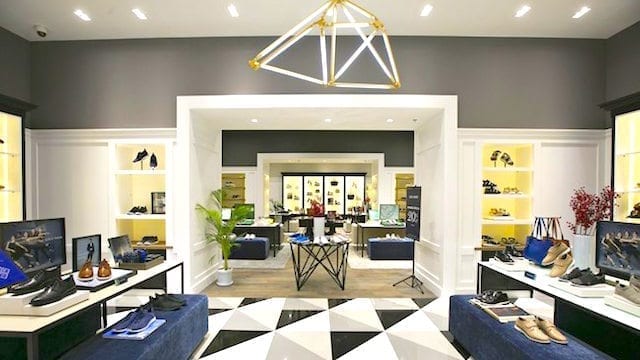
    American luxury fashion brand Cole Haan has launched its concept store in Tokyo at Grandshop – Cat Street, Harajuku. The flagship houses a selection of footwear and lifestyle products, including the exclusive GrandPro Rally Court Sneakers range in collaboration with Indian-American comedian Hasan Minhaj.

    “Japan holds a special place for the Cole Haan brand as we’ve been there for more than a quarter-century,” said  David Maddocks, brand president at Cole Haan. “It only made sense to bring our most innovative retail concept to one of the most iconic shopping destinations in the world — Harajuku district’s Cat Street.”

    The store facade includes a window integrated with a transparent LED screen showcasing Cole Haan’s product. Digital touchpoints such as QR codes and a selfie station are implemented inside the store.

    The Cole Haan Harajuku is also the brand’s third Grandshop. Founded in 1928, Cole Hann is now sold in more than 60 countries.