Author: Mei Ling Tan

  • Tesla Plans To Produce Electric Car Chargers In China

    Tesla Plans To Produce Electric Car Chargers In China

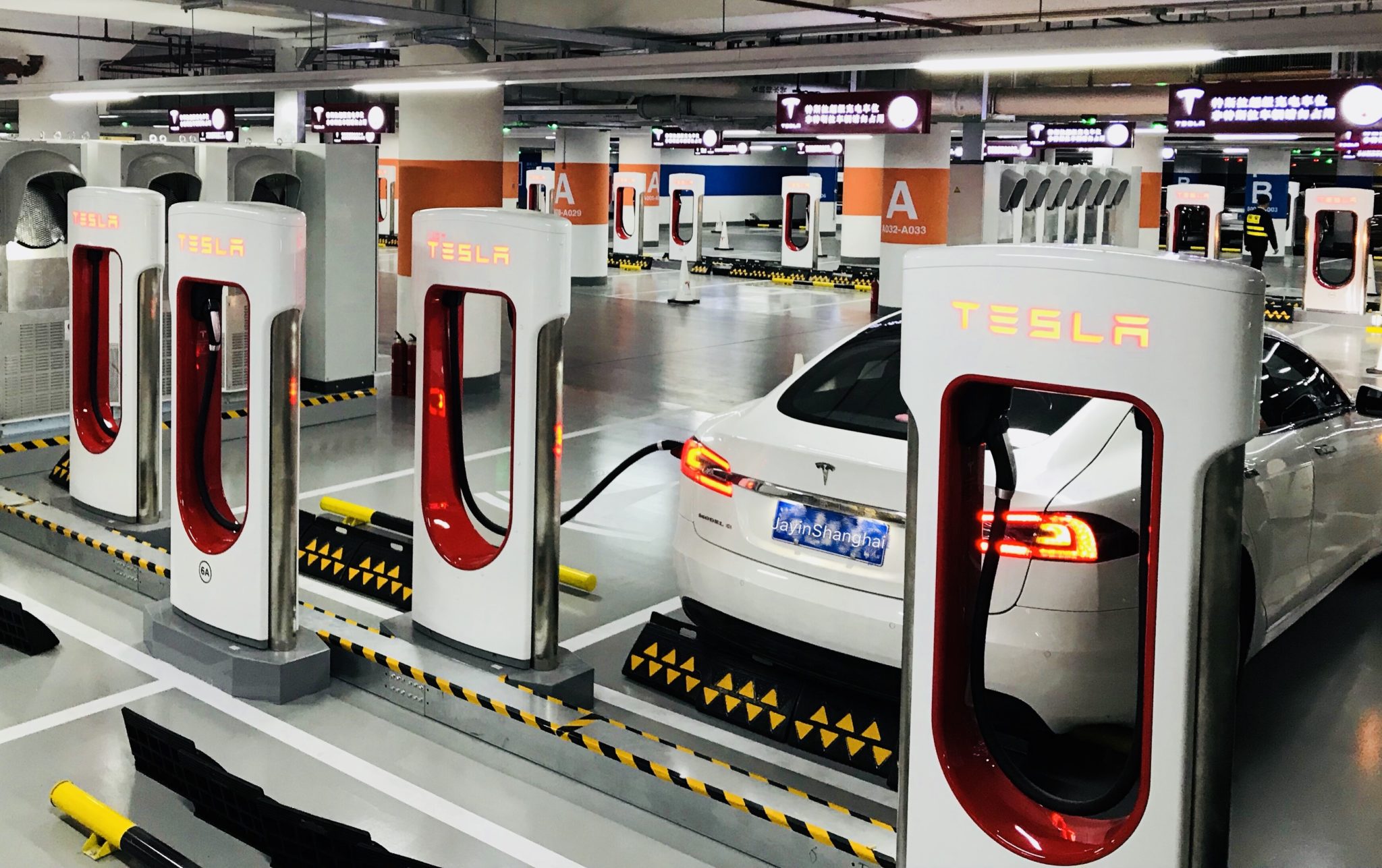
    Tesla Inc plans to start manufacturing electric vehicle (EV) chargers in China in 2021, according to a document submitted to the Shanghai authorities by the U.S. firm which is seeking to expand sales in the world’s biggest car market.

    Tesla, which now sells its Model 3 electric cars in China and plans to deliver its Model Y sport utility vehicles in 2021, plans to invest 42 million yuan ($6.4 million) in a new factory to make the chargers, also known as charging piles, near its car plant in Shanghai, the document seen by Reuters said.

    China, which offers hefty subsidies for electric vehicles as it seeks to cut down on pollution from petrol or diesel cars, has been expanding its nationwide network of charging points, one of the biggest challenges to encouraging the adoption of EVs.

    The factory, which Tesla expects to complete in February, will have the capacity to make 10,000 chargers a year, according to the document submitted by Tesla

    It now imports the chargers, usually installed in charging stations or car parks, from the United States.

    Tesla, which sold over 13,000 vehicles in China last month, did not immediately respond to a request for comment.

    The Shanghai car factory, central to Tesla’s global growth strategy, aims to produce 150,000 Model 3 sedans this year and has started exporting some vehicles to Europe.

    Executives at Tesla said this year that the firm would expand its charging network to provide better service.

  • Air Asia develops digital health pass

    Air Asia develops digital health pass

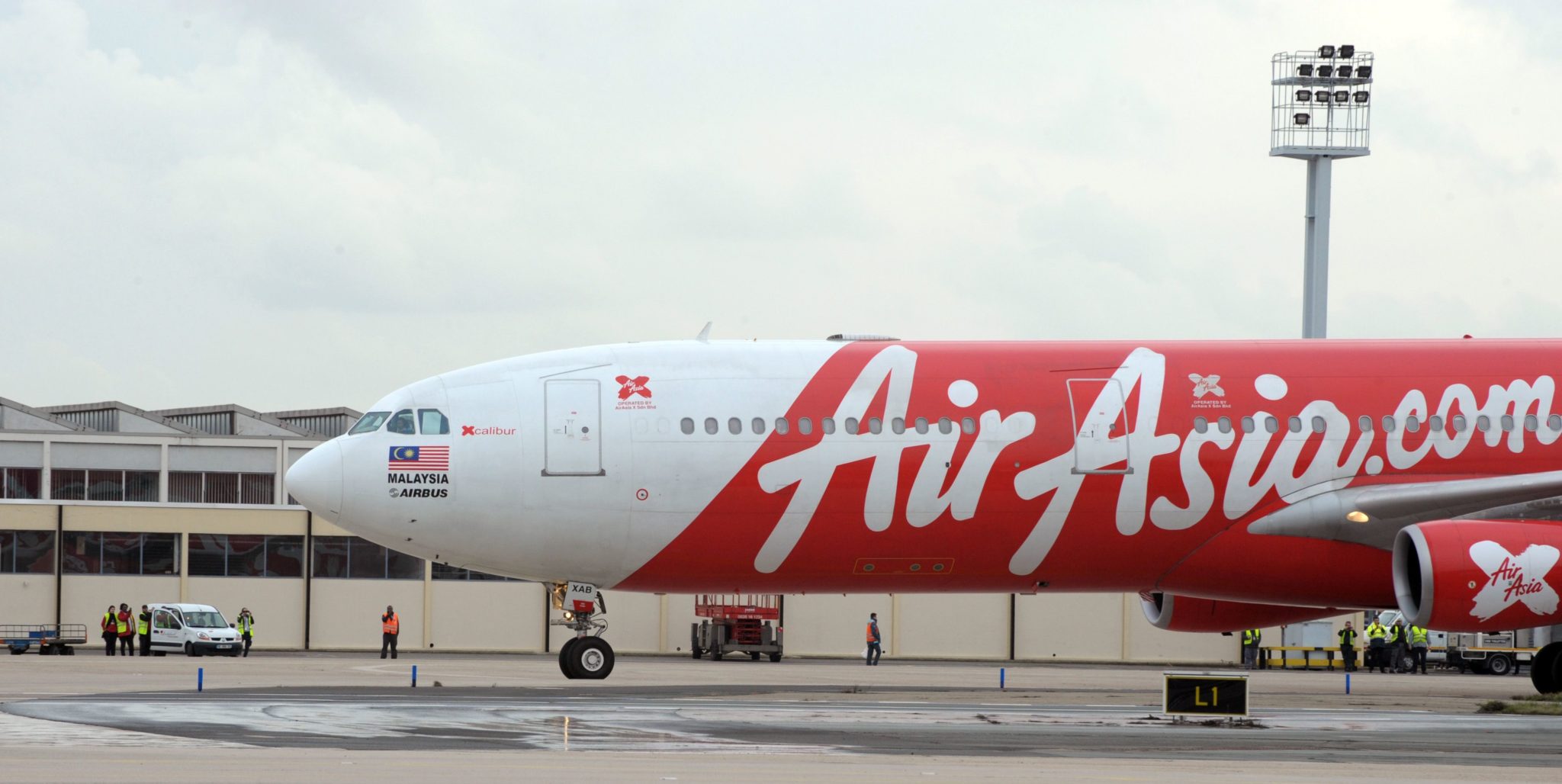
    Air Asia has launched its digital health pass, Scan2Fly, to streamline health document checks and determine eligibility to travel.

    Developed in partnership with analytics company GrayMatter, Scan2Fly has already launched on routes from Kuala Lumpur to Singapore, Surabaya, and Jakarta. About 4 in 10 passengers on these flights are already using the system, according to the airline.

    Scan2Fly will enable passengers to scan and upload medical certificates at the time of online check-in. Entry documentation required by the destination country, including Covid-19 test certificates, is verified in real-time. The airline said the technology, which helps travelers minimize contact with airport staff, will eventually be rolled out to other Air Asia destinations.

    Javed Malik, chief operating officer at Air Asia Group said:

    “Covid-19 gave us the opportunity to fast track numerous new technologies to make flying not only safe and affordable but also more hygienic and contactless. We believe this innovation, alongside numerous others that we are rolling out across Air Asia Group, will help restore consumer confidence and stimulate future air travel.”

    Air Asia’s proprietary digital health pass comes amid global efforts to harmonize standards in verifying passenger health data.

    Cathay Pacific and United Airlines are among carriers trialing CommonPass, a digital health pass developed by the World Economic Forum and Commons Project Foundation. International SOS, a travel security company, is also in the process of developing AOKpass with trials in the Middle East. Meanwhile, the International Air Transport Association (IATA) is in the final development phase of its IATA Travel Pass.

    Covid-19 testing and document verification is a priority for the airline industry as it lobbies governments for borders to reopen and international travel to resume.

    Some governments, including China, have regulations to ban airlines if a certain number of passengers test positive upon arrival. Digital health passes, like traditional passport and visa checks, can help airlines reduce the risk of penalties for non-compliance.

    “We have built Scan2Fly with both scalability and global compatibility in mind. Should there be an agreed global tracing app or vaccination app, our solutions can seamlessly integrate and or exchange relevant data as and when required,” Malik added.

  • Tiffany beats profit estimates on soaring China demand

    Tiffany beats profit estimates on soaring China demand

    Tiffany & Co, which is being bought by French luxury giant LVMH, beat Wall Street expectations for quarterly profit on Tuesday as the U.S. jeweler benefited from an over 70% rise in sales in China and a recovery in demand at home.

    The results bode well for the upcoming holiday season for the jeweler and other luxury retailers in general, which have been hit hard by the pandemic. They also underscore the growing importance of sales within mainland China to offset dependence on tourism, especially on Chinese tourists visiting fashion hubs like Milan and Paris.

    “We had a strong third quarter …. which speaks volumes about the enduring strength of the Tiffany brand and gives us confidence as we enter the important holiday season,” Chief Executive Officer Alessandro Bogliolo said, nodding to “the successful completion of the merger transaction with LVMH in early 2021.”

    Tiffany and LVMH ended a bitter legal battle last month and agreed to a new deal that would see the French firm buy out the U.S. jeweler at a slightly lower price of $15.8 billion, or at a discount of $425 million.

    Tiffany said sales in the Asia-Pacific region rose 30%, while sales in the Americas region declined 16% – much smaller than the 46% drop seen in the preceding quarter.

    Tiffany forecast a mid-single-digit percentage decline in holiday quarter sales, while analyst had predicted a 3% drop. It also expects a high-single-digit percentage increase in earnings for the current quarter.

    The health crisis also forced the New York-based retailer to invest in its online business and to introduce curbside pick-up at certain stores. This helped e-commerce sales surge 92% in the quarter.

    Best known for its diamond engagement rings, Tiffany could face more challenges ahead as COVID-19 cases are surging in much of the U.S. and across the world, spurring Britain and other countries in Europe, and many American states, to go into another lockdown.

    As of Oct. 31, most of Tiffany’s 320 retail stores worldwide were fully or partially opened, in accordance with local government guidelines, it said. As of Nov. 20 though, approximately 60% of Tiffany’s retail stores in Europe were temporarily closed.

    But analysts remain optimistic.

    “Q3 results also reiterate our confidence that the Tiffany brand will continue to shine through the holidays,” said CFRA analyst Camilla Yanushevsky.

    According to a CFRA site traffic analysis of Alexa Internet’s data, there is “growing traffic momentum” to tiffany.com entering the all-important holiday season, Yanushevsky added.

    Shares of the company were up marginally on low volumes in premarket trading.

    Excluding certain item, Tiffany earned $1.11 per share, surging past the average expectation of 66 cents.

    Tiffany’s net sales fell about 1% to $1.01 billion in the third quarter ended Oct.31, but beat expectations of $980.71 million, according to IBES data from Refinitiv.
  • Online investment takes into Gap profits

    Online investment takes into Gap profits

    Gap Inc. said Tuesday that it enjoyed a 61 percent jump in online sales during its fiscal third quarter ended Oct. 31 — offsetting a 20 percent fall in in-store sales due to the ongoing pandemic. The retail giant also said that its Athleta chain’s sales rocketed even as revenues plunged at Banana Republic Global.

    “With our teams focused on sales growth and returning to profitability, we’ve made investments in demand generation that are driving engagement, particularly in this dislocated market as customers are looking to trusted brands to provide easy and safe shopping options,” Gap Inc. Chief Executive Officer Sonia Syngal said in announcing the results.

    Management said results at its flagship Gap Global division included a formidable digital performance that partly offset decreased brick-and-mortar presence and lowers physical traffic trends. But all in, Gap Global’s net sales dropped 14 percent year over year, with comparable sales for the brand falling 5 percent from Q3 2019.

    Banana Republic Global fared even worse, with net sales plunging 34 percent year on year for the quarter. However, management said that was a “slight improvement” from Q2.

    Management said that Banana Republic is continuing to focus on acclimating to shopper preferences and bolstering inventory mix by moving away from the label’s usual workwear selection and into casual fashion in the “current stay-at-home environment.”

    On the plus side, Athleta’s sales jumped 35 percent year on year, with comparable sales rising 37 percent to the highest level in the brand’s history. Sales at the company’s Old Navy Global unit likewise rose 15 percent, with comparable sales up 17 percent.

    “Old Navy continued to experience meaningful acceleration in its online business as strong customer response to product was further bolstered by compelling and relevant digital marketing investment,” management said.

    Gap added that it finished Q3 with $2.6 billion in cash, cash equivalents, and short-term investments — way up from $1.1 billion at Q3 2019’s end. Management added that Gap ended the latest quarter with 3,785 retail locations in 43 nations, including 3,178 company-operated stores.

    As for its overall results, Gap reported 25 cents earnings per diluted share on $3.99 billion in net sales. That fell short of analyst estimates of 32 cents per share in earnings but came out ahead of a $3.82 billion forecast in revenue.

  • Harvey Norman sales suffer in Asia

    Harvey Norman sales suffer in Asia

    Australian electronics and furniture retailer Harvey Norman suffered an 18-per-cent decline in sales in its Singapore store network last year.

    While sales dropped 26.1 percent in local currency during the second half-year due to the Covid-19-related lockdown, first-half sales – described by the company as “poor” – were down as well, by 11.9 percent. In Australian dollars, sales benefited from a 5.8 percent appreciation in the Singaporean dollar in the period.

    Harvey Norman’s 12 company-operated stores in Singapore closed on April 7 and still remain closed by government decree. The retailer has continued to trade online during the store closures, and anticipates being able to reopen offline later this month.

    Meanwhile, in Malaysia the company closed its 23 stores from March 18 to April 17, in line with government requirements, and gradually reopened individual stores, starting with just the electrical and computer categories, and eventually furniture and bedding, between April 18 and May 12. Online trade resumed from April 18 for the electrical and computer categories only.

    Sales were down 4.2 percent year on year in constant local currencies for the six months to May 31, and up 6.5 percent for the full year, thanks to a strong 15-per-cent uptick during the first half.

    In Australian dollars, sales were positively affected by a 5.2-per-cent appreciation in the Malaysian Ringgit during the year.

    In New Zealand, Northern Ireland, Slovenia and Croatia, where the retailer operates wholly-owned company stores, sales were down across the board.

    The only outlier was Ireland, where Harvey Norman operates wholly-owned company stores and saw a significant sales increase in the second half, despite only being allowed to fully reopen stores on June 8.

  • Soaring gold price, China recovery boost Chow Tai Fook results

    Soaring gold price, China recovery boost Chow Tai Fook results

    Chow Tai Fook Jewellery Group Limited, a Hong Kong Main Board listed company with over 90 years of heritage, today announces its interim results for the six months ended 30 September 2020.

    The Group’s revenue declined by 16.5% to HK$24,673 million in 1HFY2021. Gross profit remained stable at HK$8,143 million. The adjusted gross profit margin was lifted to 35.1% in 1HFY2021, thanks to the improvement in the like-for-like gross profit margin of gold products resulted from the surge of international gold price. Core operating profit benefitted from the adjusted gross profit margin improvement with core operating profit margin widened to 16.5% in 1HFY2021. The Group’s profit before taxation increased by 49.3% to HK$3,284 million.

    Profit attributable to shareholders of the Company increased by 45.6% to HK$2,232 million mainly benefitted from our like-for-like gross profit margin improvement, one-off government subsidies and rent concession, plus foreign exchange gain, netting off impairment on assets. Basic earnings per share were reported at HK$0.22. The Board has declared an interim dividend of HK$0.16 per share. The payout ratio approximates 71.7% in 1HFY2021.

    While business in Mainland China witnessed a steady recovery on the back of the easing COVID-19 situation in 2QFY2021, performance in Hong Kong, Macau and other markets remained lackluster. Thus, Same Store Sales (“SSS”) in Mainland China stayed flat in 1HFY2021 supported by a positive Same Store Sales Growth (“SSSG”) in 2QFY2021 as business activities and consumer sentiment revived. In Hong Kong and Macau, SSS was down by 65.7% during the period as customer traffic remained stagnant.

  • Porsche Could Make More Than 20,000 Taycan EVs In 2020

    Porsche Could Make More Than 20,000 Taycan EVs In 2020

    Porsche has announced that it is on target to produce more than 20,000 Taycan electric cars in 2020. This is quite an achievement for the German automotive giant considering the pandemic has ravaged the demand for vehicles and also the fact that the Taycan is the first full-electric car produced by Porsche.

    The pandemic hasn’t been able to slow down the sales of the Porsche Taycan. “Despite the closure of dealerships and factories during the first corona wave, we will exceed our original target of 20,000 vehicles sold this year,” said Oliver Blume, Porsche’s CEO in an interview with auto motor und sport.

    This news comes a day after the company announced that the Taycan had broken the world record for drifting. It drifted 42 kilometres in 55 minutes in Germany using the RWD version of the Taycan that’s only sold in China.

    The interesting bit is that the sales figures that Porsche is claiming indicate a revival of the automotive market. Till the first half of the year, Porsche had only sold 4,500 Taycans. Porsche then claimed that number had doubled by the end of October, which means in just two months the German automotive manufacturer is looking to double that figure too,  which is staggering.

    The Taycan has been such a success that it has become Porsche’s best-selling car in Europe taking over the Panamera. Porsche at some point will look to deploy a 40,000 Taycan production capacity which will make it its best-selling car this year.

  • Jason Freeny Asia Experience store opens at K11

    Jason Freeny Asia Experience store opens at K11

    Renowned sculptor and designer Jason Freeny is bringing his famed art toys to Hong Kong just in time for Christmas.

    Taking place in the city’s K11 Art Mall, “OUTSIDE IN: An Unconventional World of Art Toys” will be the largest and most comprehensive experience store of Freeny’s work to take place in Hong Kong. The showcase will feature many of his most iconic creations, including a 3-meter tall anatomized XXRAY Elmo (Snow Edition), the One Piece character XXRAY Luffy, Dissected POPek, and the Squatting Balloon Dog the creative designed alongside London-based artist Whatshisname.

    Aside from the showcase, K11 will also hold an “OUTSIDE IN” Jason Freeny Asia XXRAY experience store which will carry over 100 of the artist’s toys, including special edition drops made in collaboration with MIGHTY JAXX as well as the exclusive DISSECTED POPek (Metallic White & Silver Edition) once again by Whatshisname and Freeny.

    The Jason Freeny “OUTSIDE IN” experience store will take place in K11’s Atrium and chi K11 art space between November 21 and February 28, 2021, every day from 11 a.m. to 10 p.m. Additionally, items from the experience store will be available for pre-order via a special landing site for K11 Art Mall, “OUTSIDE IN: An Unconventional World of Art Toys.”

    K11 Art Mall
    18, Hanoi Road
    Tsim Sha Tsui
    Hong Kong

  • L’Oreal names Gemma Chan as its new brand ambassador

    L’Oreal names Gemma Chan as its new brand ambassador

    English actress Gemma Chan (陳靜) has been announced as L’Oréal Paris’s newest spokeswoman. Already a familiar face to many readers, from an extensive résumé dating back to the mid-2000s—Doctor Who, Sherlock, Secret Diary of a Call Girl, and Humans among her TV work—Chan was probably noticed more by US audiences when she appeared in Crazy Rich Asians in 2018, followed by Captain Marvel in 2019. Her role in the anthology series I Am, which she co-developed and where she played Hannah in the third entry (‘I Am Hannah’), was highly acclaimed. In December, Chan will star alongside Meryl Streep in Steven Soderbergh’s Let Them All Talk, and next year, in Eternals, another Marvel entry. She also founded her own production company, with the aim of promoting more minority voices.

    An Oxford University and Drama Centre London alumna, Chan has worked as an advocate for or supporter of numerous causes, including UNICEF, the Time’s Up movement, the Justice and Equality Fund, and Cook-19 supporting London health care workers.

    It is her rising international profile that seems to have L’Oréal Paris interested, especially with Chan venturing into blockbuster hits. Says its global brand president, Delphine Viguier-Hovasse, ‘Gemma Chan is proof of the success that happens when you have the confidence to follow your own dreams, and speak up for others to be able to follow theirs. Committed to her causes with innate female strength, she’s a source of inspiration beyond the screen, for young women to be the change. We’re delighted to welcome Gemma to the family.’ Chan added, ‘I’ve always believed that we should embrace our difference as our strength. So I’m thrilled to join L’Oréal Paris, a family of empowered women of all origins standing together to show the power and beauty of diversity. The L’Oréal Paris message to every woman, “Believe in your self-worth,” is as needed today as ever.’

  • E-Land hit by ransomware attack as McAfee warns retailers of more to come

    E-Land hit by ransomware attack as McAfee warns retailers of more to come

    One of South Korea’s largest retailers had to shut down nearly half of its retail stores on Sunday after a ransomware attack.  E-Land said its corporate network system was attacked early in the morning, forcing it to close 23 of its 50 NC department stores and NewCore outlets.  According to Yonhap, E-Land quarantined part of its corporate network system to contain the damage and police are now investigating the attack’s origins.  Ransomware is malicious software that blocks us.

  • Twitter now warns you when you like a misleading post

    Twitter now warns you when you like a misleading post

    Twitter’s battle with misinformation has been ferocious in the past few months and especially during the US elections. The company rolled out new labels for misleading content and started to show a warning when users try to retweet such disputed tweets. Now the social network is adding yet another weapon in its arsenal – a new alert will pop-up when people try to like a post that is labeled as misleading.

    Twitter announced the change via its official Support profile, stating that the aim is to reduce the spread of misinformation about sensitive topics like the COVID-19 situation for example. The official post shows how the pop-up warning works – users will see a large exclamation mark with a text saying “This is disputed”. A “Find out more” button will link to an explanation of what Twitter calls “credible information”.

    According to the social network, the warnings showing when people try to quote misleading tweets helped decrease the spread of false information by 29% so the company is hoping to expand on this with the new alert. The update is rolling out for iOS and the web, while Android users will have to wait a couple more days.

  • Samsung’s Galaxy Note 20 and Note 20 Ultra 5G can be yours at $500 off

    Samsung’s Galaxy Note 20 and Note 20 Ultra 5G can be yours at $500 off

    You’d probably expect a Google-owned mobile virtual network operator to go the extra mile to try to sell as many phones as possible manufactured by, well, Google, but while everyone from Amazon to Best Buy and B&H has discounted the unlocked Pixel 5 ahead of Black Friday, the MVNO seems to be making a better effort to promote Samsung’s 5G-enabled handsets.

    Believe it or not, one of the best Black Friday 2020 deals on a Samsung smartphone is available at Google Fi right now, where you can shave a whopping $500 off the list prices of the recently released Galaxy Note 20 and Note 20 Ultra 5G without jumping through too many hoops.

    Don’t get us wrong, you will need to meet a few essential requirements, but if you don’t have anything to trade in, that’s perfectly fine. Big G will still let you save the full $500… as long as you’re a new Fi customer willing to port in your existing number from a different carrier. New members of existing Google Fi group plans are also eligible for the same monumental discount, as are existing customers looking to activate the Note 20 or Note 20 Ultra on a “full service” plan within 30 days of receiving their shipment confirmation email.

    The $500 will be automatically taken off the two phones’ regular prices during the checkout process, mind you, so instead of $999.99 and $1,299.99, you’ll be spending just $499.99 or $799.99 for the 5G-capable Galaxy Note 20 and Note 20 Ultra respectively. Obviously, you can split that into 24 monthly payments if you so choose, and even better, you’re free to combine the massive $500 discount with an additional trade-in deal to maximize your savings.

    We’re talking up to an extra $450 for a mint-condition Galaxy Note 9 or a maximum $400 trade-in discount as far as Apple’s iPhone 8 Plus is concerned. Of course, that’s merely to give you a taste of how great the Google Fi trade-in program is right now, as you can naturally ditch many other pre-owned devices in exchange for hefty savings.

    Needless to say a $499.99 Galaxy Note 20 5G is basically the textbook definition of a bang for buck champion, but if you prefer a member of the slightly older Galaxy S20 5G family, all three of those are also on sale at the time of this writing for $400 less than usual with qualified Google Fi activation. Last but not necessarily least, the already inexpensive Samsung Galaxy A71 5G is marked down from $599.99 to an absolutely irresistible $249.99 under the same conditions detailed above.

  • Airasia joins forces with Turkish Airlines to prepare for return of international travel

    Airasia joins forces with Turkish Airlines to prepare for return of international travel

    In anticipation of a potential revival in international travel, airasia.com has partnered with Turkish Airlines to allow it to enhance its strong pan-Asia flight network.

    The collaboration will enable airasia.com to tap into Turkish Airlines’ comprehensive destination map, which is the world’s largest in terms of the countries and international points flown by a global carrier, the low-cost carrier said in a statement today.

    AirAsia Group chief executive officer Tan Sri Tony Fernandes said airasia.com welcomes the opportunity to promote Turkey as a major gateway to Europe, to prepare the airline once borders gradually reopen next year.

    “Today airasia.com with its comprehensive portfolio of travel and lifestyle products is well-poised to promote the best that Turkey and the wider European market have to offer.

    “We will continue to collaborate creatively with other industry players to stimulate travel demand and complete our product offering as the one-stop platform for all our customer’s travel and lifestyle needs,” he said.

    While using its virtual interlining technology, airasia.com will now be able to combine Turkish Airlines’ extensive flight inventory with AirAsia flights and offer itineraries with attractive discounted fares from normal fares.

    AirAsia said the partnership is expected to generate a substantial synergy between the two parties through the cross-promotion of destinations, with the mission of being proactively prepared to tap into forthcoming return of travel.

    Travellers can also enjoy the convenience and great value of an end-to-end product offers across airasia.com ecosystem, from flights to hotels and activities, it added.

  • 7-Eleven to invest $1 billion to reach carbon neutrality

    7-Eleven to invest $1 billion to reach carbon neutrality

    Seven & I Holdings, 7-Eleven’s guardian company, is to invest US$1 billion to reach carbon neutrality by 2050.

    The company goals to scale back its greenhouse gasoline emissions to zero at its retail shops, the place greater than 90 percent of its energy consumption takes place. Seven & I stated it’ll additionally invest $960 million into the environmental sector over the subsequent 5 years.

    To reach the goal, the retail conglomerate will set up photovoltaic panels and LED lamps throughout its retailers whereas partnering with Toyota Motor to run fuel-cell vehicles for the distribution. Renewable energy vegetation, together with wind farms and hydroelectric vegetation, will even be invested

    In the US, 7-Eleven will characteristic charging stations at 250 retail shops, encouraging electric-car use.

    Seven & I generates 2.2 million tons of greenhouse gasoline per yr, accounting for the best quantity amongst Japan’s retail retailer operators. Similar to 7-Eleven, Japanese retailer Aeon has additionally joined the carbon neutrality mission, concentrating on zero emissions by 2050.

  • Entertainment firms bank on smartphone apps

    Entertainment firms bank on smartphone apps

    Entertainment companies in Vietnam are investing in digital transformation with a focus on the smartphone experience as they seek to reach more young users.

    Television content producer MCV Group recently signed a deal with a digital consulting firm to develop an entertainment and dating app called NetLove.

    It will have a live-streaming feature, which operating director Pham Tu Liem said is key since many users want to interact with celebrities.

    Since the company is already the producer of several popular dating shows on television, it will also include in its new app a dating feature to help connect people online.

    “In the digital era, access to and consumption of entertainment content like reality shows or concerts is no longer bound inside a bulky TV,” Liem said, adding that people now want all their favorite shows on their smartphones.

    Other entertainment companies are also keen on digital transformation.

    Galaxy Studio, which runs a nationwide cinema chain, recently opted for an omnichannel collections solution from a bank to provide various types of payment services to customers but all united in one single cash flow to the company.

    This means customers can pay for movie tickets from bank accounts or e-wallets but Galaxy will only need to partner with the one bank that provides the omnichannel service.

    “E-payment is growing and is replacing cash,” Dinh Thi Thanh Huong, CEO of Galaxy Studio, said. “Young people are leading the trend and we need to take advantage of that.”

    There is potential for online entertainment services if companies continue to invest in digital transformation.

    A study by Germany-based data portal Statista found that the online dating market is expected to be worth $18 million this year and grow at an average rate of 16.9 percent annually in the next four years.

    There are now 3.3 million online dating users in Vietnam, and the figure could reach 4.4 million by 2024.

    A survey found that the most popular apps in the first four months of this year were gaming and karaoke ones.

    Trinh Ho, founder of advertising firm Fresh Media, expected the online dating market to see strong growth based on the trends she has witnessed in the U.S. and China.

    It would attract investors with deep pockets, she said.