Author: Mei Ling Tan

  • Tesla To Buy German Battery Assembly Maker

    Tesla To Buy German Battery Assembly Maker

    Tesla, the California-based electric vehicle manufacturer will soon be acquiring a German battery assembly manufacturing company. As per a report filed by Reuters, the EV maker has agreed to buy ATW Automation company, which is a subsidiary of the Canadian ATS Automation Tooling Systems Inc. It majorly focuses on assembling battery modules and packs for the auto industry. As per a German media report in September, the company was on the brink of liquidation due to a massive slump in orders.

    Last month, the company announced that certain assets and employees at one of its Germany-based units would be sold and transferred to a third party. However, the company did not disclose the name of the company. Based in western Germany, ATW has completed over 20 battery production lines for international automakers.

    As far as Tesla is concerned, the company plans to ramp up battery production in the coming year. And, the EV maker recently confirmed during an event that it would sharply reduce the cost of battery packs within the next three years. The company is also building its third Gigafactory near Berlin, which will also include a battery plant. It also aims to initiate construction at its new vehicle factory in Texas later this year.

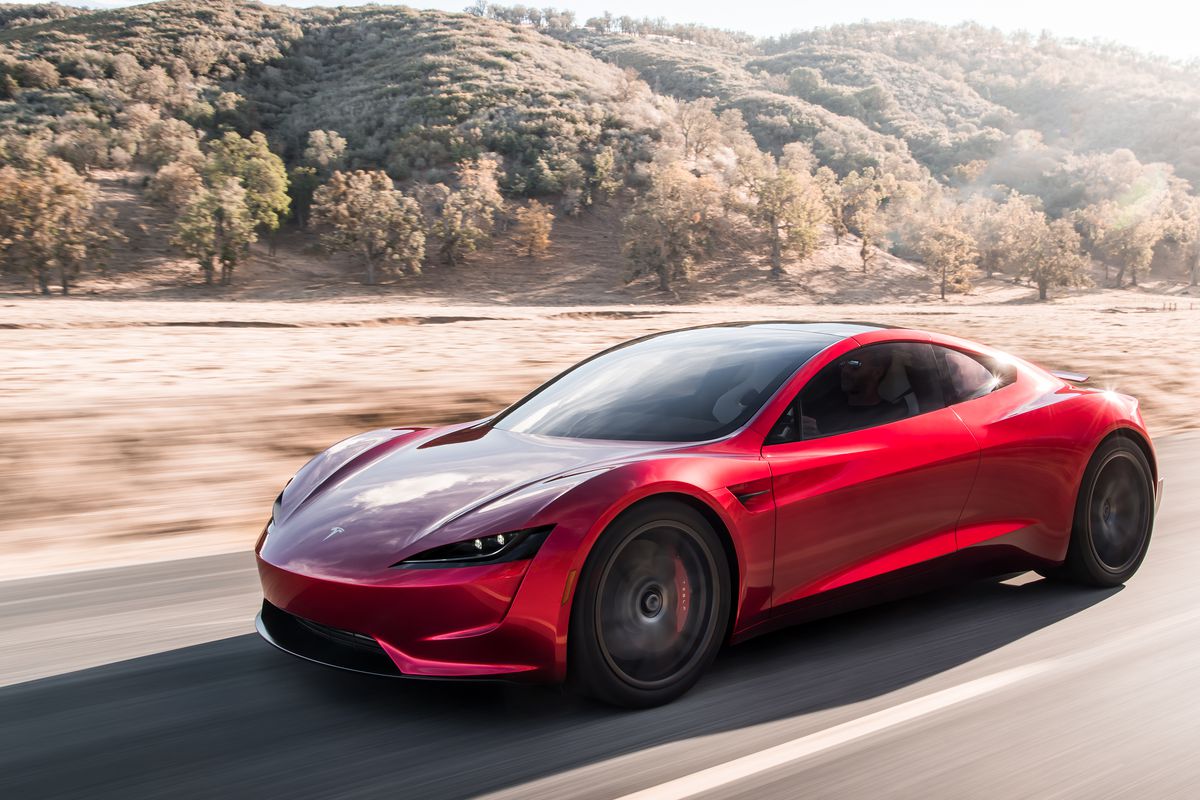
    Tesla’s future product line-up includes the light-duty Cybertruck and the Semi truck. Both vehicles will require higher battery capacities. The company on Friday announced that it had delivered over 1.39 lakh vehicles globally in the third quarter and aims to sell half a million vehicles by the end of 2020.

  • Coloring foods black, a growing trend in Vietnam

    Coloring foods black, a growing trend in Vietnam

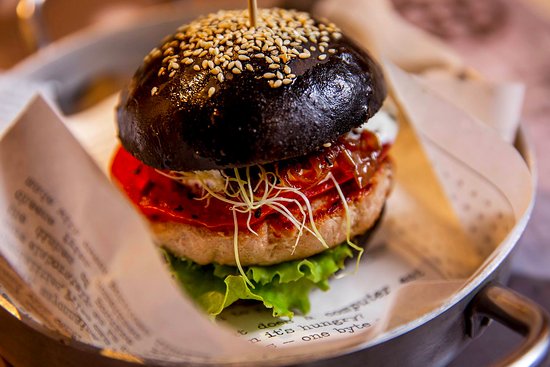
    Whether its bread, ice cream, or moon cake, Vietnamese are increasingly preferring it to be black-colored. Tuan, owner of a bakery in northern Ha Long Town, sells 300-700 black banh mi (Vietnamese sandwich) a day for VND25,000-45,000 ($1.08-1.94) each.

    He makes the bread using flour and bamboo charcoal, which is believed to be a natural detoxifier though there has been no formal research into it.

    He said many people come to buy the sandwiches for their unusual look and taste.

    Similar black sandwiches are also sold in Ho Chi Minh City, Binh Duong, and Dong Nai in the south. Hieu in HCMC’s Phu Nhuan District sells over 1,000 of them a day. A friend had suggested the idea to him after returning from Japan, where bamboo charcoal is a popular ingredient in food and beauty products.

    During the Mid-Autumn Festival this year, on October 1, black charcoal moon cake was a sought-after item. Hang in HCMC’s District 3 sold out all 3,000 of her black moon cakes a week before the festival though they cost more than regular cakes.

    But there are concerns about the use of imported bamboo charcoal without quality standards, he said. Bamboo charcoal is also used in ice cream. Mai Truong Giang, the owner of fried chicken chain Otoke Chicken which sells this product, said bamboo charcoal has been used in food in many countries for long to create an unusual look.

    Coloring food black could just be a fad and fade away after a while, he speculated.

  • Apple sues recycling firm seeking $22.7 million for theft of over 100,000 iPhones

    Apple sues recycling firm seeking $22.7 million for theft of over 100,000 iPhones

    Apple is back at its home away from home; in court, we mean. The tech giant is suing a Canadian recycling firm called Geep Canada alleging that the firm stole 100,000 Apple devices including iPhones, iPads, and Apple Watches. Apple has been using the firm since 2014 to strip down these devices and recycle them.

    The interesting thing is that Geep Canada doesn’t deny that the devices in question were stolen. But in a countersuit filed by the firm, it claims that three rogue employees were responsible for the thefts which reportedly occurred without the company’s knowledge. Apple says that the three so-called “rogue employees” are actually members of Geep Canada’s senior management.

    The filing that Apple submitted to the court says that between January 2015 and December 2017, the company shipped 531,966 iPhones, 25,673 iPads, and 19,277 Apple Watches to Geep Canada. When Apple visited the recycler’s warehouse to perform an audit, it discovered that some of its devices were being stored separately from devices from other companies. When Apple discovered that there were no security cameras monitoring that gear, the company decided to check the serial numbers of all of the devices it sent to Geep Canada. What it discovered was that 18% of the devices it had sent to Geep to be stripped for parts, a total of 103,845 phones, tablets, and watches, were active on networks belonging to wireless providers. Apple notes that the actual number of stolen devices is higher since the non-cellular iPad and Apple Watch models wouldn’t show up on the carriers’ lists.

    Apple’s lawsuit shows that “At least 11,766 pounds of Apple devices left Geep’s premises without being destroyed – a fact that Geep itself confirmed.” The manufacturer is seeking $22.7 million from Geep Canada. Since someone was able to sell the devices in question, you might wonder why Apple just didn’t decide to sell them itself. But the tech giant told The Verge that “Products sent for recycling are no longer adequate to sell to consumers and if they are rebuilt with counterfeit parts they could cause serious safety issues, including electrical or battery defects.” Selling these devices when they are no longer safe or good to use can not only harm consumers, doing so can also harm Apple’s reputation if these products can’t perform up to par. Apple filed the suit in January 2020 although the thefts were discovered in 2017-2018. Since Apple confronted Geep Canada, it has stopped working with the company.

    At the beginning of this year, we told you that Apple is looking to recycle all of the parts used on its devices and become a closed-loop manufacturer. Apple also relies on robots like Daisy that can strip and keep the parts of 200 iPhone units an hour. But not everyone believes that Apple is best served by recycling old products. Consider Kyle Wiens, the founder of device repair company iFixit. He would prefer that Apple repair older iPhones rather than strip them down and recycle the parts.

    Daisy the robot can disassemble an iPhone (think of it doing the opposite of what Foxconn’s assembly line does) using a blast of freezing cold air weighing in at -176 degrees Fahrenheit. Apple removes and keeps screws and modules and sends some parts to recycling firms tp extract the minerals. Cobalt is removed from the batteries inside these older devices and is used on new batteries. Once Daisy removes an iPhone’s display, sensors, screws, logic boards, and the wireless charging coil, all that is left is an aluminum chassis. The aluminum is reused on newer devices while the solder used to mount components on new devices is produced from 100% recycled tin.

  • Cartier opens Sanya flagship

    Cartier opens Sanya flagship

    Cartier has teamed up with China Duty Free Group to unveil its new-look boutique at Sanya International Duty-Free Shopping Complex.

    The Cartier Sanya boutique features an activation pad, which plays a “central” role in the concept, bringing the boutique “to life” for new launches and gatherings.

    In the brand’s first-ever rollout of a new waiting lounge concept, guests at the shop are welcomed in a décor featuring subtle shades of champagne and wood details, accompanied by curled walls in a rectangular space.

    To mark the boutique’s opening Cartier has curated pieces including the Panthère de Cartier Jewellery Collection – as modelled by actress and singer Victoria Song at the opening event – as well as a number of other highly sought-after signature Panthère de Cartier pieces.

    They include the Révélation d’une Panthère Watch, La Panthère Watch, Panthère de Cartier Necklace, Panthère de Cartier Ring, and Pasha de Cartier skeleton steel watch.

  • H&M launches E-commerce initiative on Zalora Philippines

    H&M launches E-commerce initiative on Zalora Philippines

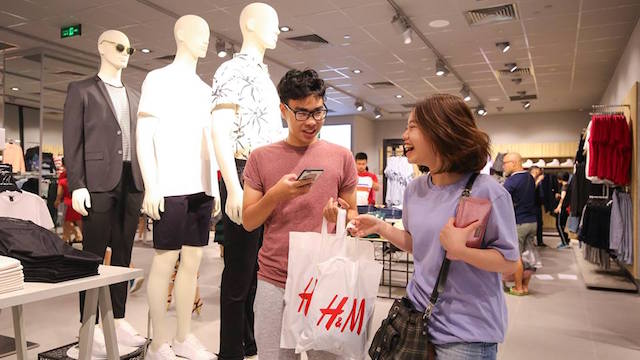
    Global Fashion Group (GFG), the leading online fashion & lifestyle destination in growth markets announces the launch of a two-month partnership between H&M and ZALORA Philippines.  ZALORA is the first e-commerce platform H&M has worked within the region.

    The two-month partnership with global fashion brand, H&M will be available from 1 October to 30 November 2020 on the ZALORA Philippines website where customers can shop a diverse range of H&M apparel, shoes, bags, and accessories ranging from Ladies, Young Ladies, Men and Kids.

    “We are delighted to collaborate with ZALORA on this new journey that we are exploring in the Philippines. For us to meet new and existing customers where they are and when they want is something we have been looking forward to. They will be happy to find stylish and basic essentials that are affordable and friendly to our planet, true to our business idea of offering all our customers fashion and quality at the best price in a sustainable way. ZALORA’s values and culture align well with ours and we admire their commitment to providing good and trustworthy customer experience, something that we deeply commit to at H&M,” shares Sylvain Crouzat, Country Sales Manager for H&M Philippines.

    This partnership is not only ZALORA’s biggest brand launch in 2020 to date but also broadens access to innovative options for the conscious shopper. H&M’s Ladies Fall Collection will feature sustainable pieces built around recycled materials—giving new life to old PET bottles, old garments, or textile off-cuts. All the pieces from the Kids Category are also made with 100% sustainably sourced cotton and zero harmful chemicals. Shoppers may easily search for these sustainable finds by using ZALORA’s Earth Edit filter on the website and app.

    “In true ZALORA style, we are kicking off the final quarter of the year with a bang through this very exciting partnership with H&M. Since we launched ZALORA, H&M has been among the most sought-after brands by our customers so we’re excited to allow them to conveniently shop their favorite brand from the safety of their homes, especially during this time,” shares ZALORA Co-Founder and CEO, Paulo Campos III. “As advancements in technology continue to push fashion to more progressive heights, H&M and ZALORA are at the forefront of this endeavor. The collaboration reflects how both brands are committed to expand opportunities and options for shoppers in the digital age,” he adds.

    H&M is now available on ZALORA at  zalora.com.ph/hm with prices starting at PHP 299.

  • New investment venture UCG to buy hip brands and scale them for China

    New investment venture UCG to buy hip brands and scale them for China

    Unified Commerce Group, an exciting new retail acquisition and advisory group designed to drive innovation in the retail industry, and Frank And Oak, Canada’s award-winning sustainable fashion brand, today announced UCG’s strategic investment in Frank And Oak. Through access to its multi-disciplinary retail experts and vast industry network, UCG will provide Frank And Oak with the necessary resources to continue to nurture the brand’s strong following within Canada as well as fuel its expansion into the United States and its growth into new markets, including Asia.

    UCG was founded in 2020 by Omnichannel & New Retail pioneer Dustin Jones and Wall Street veteran Greg Freihofner to build a portfolio of purpose-driven brands that connect with consumers on a global scale and in the world’s most dynamic markets. Frank And Oak is UCG’s first strategic investment and sets the stage for future global brand investments and acquisitions. UCG’s tech-enabled platform drives scale for its brands through unified services; harmonizing strategy and execution to design, operate, and push boundaries in retail.

    “We are delighted to welcome Frank And Oak to UCG,” said Dustin Jones, co-Founder and Chief Executive Officer of Unified Commerce Group. “Frank And Oak is exactly the type of brand we set out to work with and we are excited to embark on its next chapter. In collaboration with the brand’s skilled CEO Jeremy Brown and the talented team in Montreal, we look forward to furthering the brand’s success in Canada and abroad.”

    Launched in 2012 by long-time friends Hicham Ratnani and Ethan Song, alongside a small group of passionate creatives, Frank And Oak design men’s and women’s apparel and accessories from its Montreal headquarters that are made to last with the highest standards to keep up with our demanding lifestyles, while ensuring minimal impact on the planet. A certified B Corporation, Frank And Oak is beloved in Canada and the US for its core values of sustainability, transparency, and functionality that are reflected in both its products and business practices. Like many retail brands worldwide, Frank And Oak has been significantly impacted by the Coronavirus pandemic and, as a result, filed a notice of intention to make a proposal in June 2020. The brand’s restructuring and its newly announced partnership with UCG are to be implemented through an asset sale transaction for which Modasuite Inc., the current Frank And Oak operator, is seeking the approval of the Superior Court of Quebec. Provided such approval is obtained, it is anticipated that the transaction will close shortly thereafter.

    Jeremy Brown, Chief Executive Officer of Frank And Oak said, “We are privileged to partner with Dustin, Greg, and the multi-faceted team at UCG who truly embody our values and share our optimism and vision for Frank And Oak. The support and guidance from UCG will allow us to drive sustainable long-term growth for Frank And Oak.”

    Hicham Ratnani, co-Founder and Chief Operating Officer of Frank And Oak said, “UCG provides an exciting path forward with a group that appreciates and will invest in our unique assets, vision, and team. I’m immensely proud of all that we have accomplished and overcome and the direction we are moving in as a brand.”

    As UCG and Frank And Oak embark on their partnership, together they will work to further Frank And Oak’s commitment to sustainability, and introduce the brand to new markets. Frank And Oak will proudly remain headquartered in Montreal – the city that inspired its creation and continues to fuel its evolution.

  • Hypebeast opens its first cafe, in Hong Kong: Hypebeans

    Hypebeast opens its first cafe, in Hong Kong: Hypebeans

    Following the reopening of the HBX Hong Kong location, HYPEBEAST is now officially launching HYPEBEANS. Serving as HYPEBEAST’s first step into the realm of culinary culture, HYPEBEANS is a communal destination centered around quality coffee.

    Located inside the retail expression, the offshoot offers a menu created with quality over quantity in mind. HYPEBEANS strives to accent lifestyles, effortlessly becoming part of daily routines. HYPEBEANS is a reflection of the intimate friendship between Kevin Ma and world-renowned barista Hiroshi Sawada, connected by mutual friend Hiroshi Fujiwara. The two became closer through a shared interest in fashion and the culinary arts, commemorating their bond through space where like-minded individuals in the city can gather.

    “Here at HYPEBEANS, we want to promote a lifestyle surrounded by culture,” says Kevin Ma, CEO and founder of HYPEBEAST, “we encourage creative collaborations here as an extension of the HYPEBEAST community.”

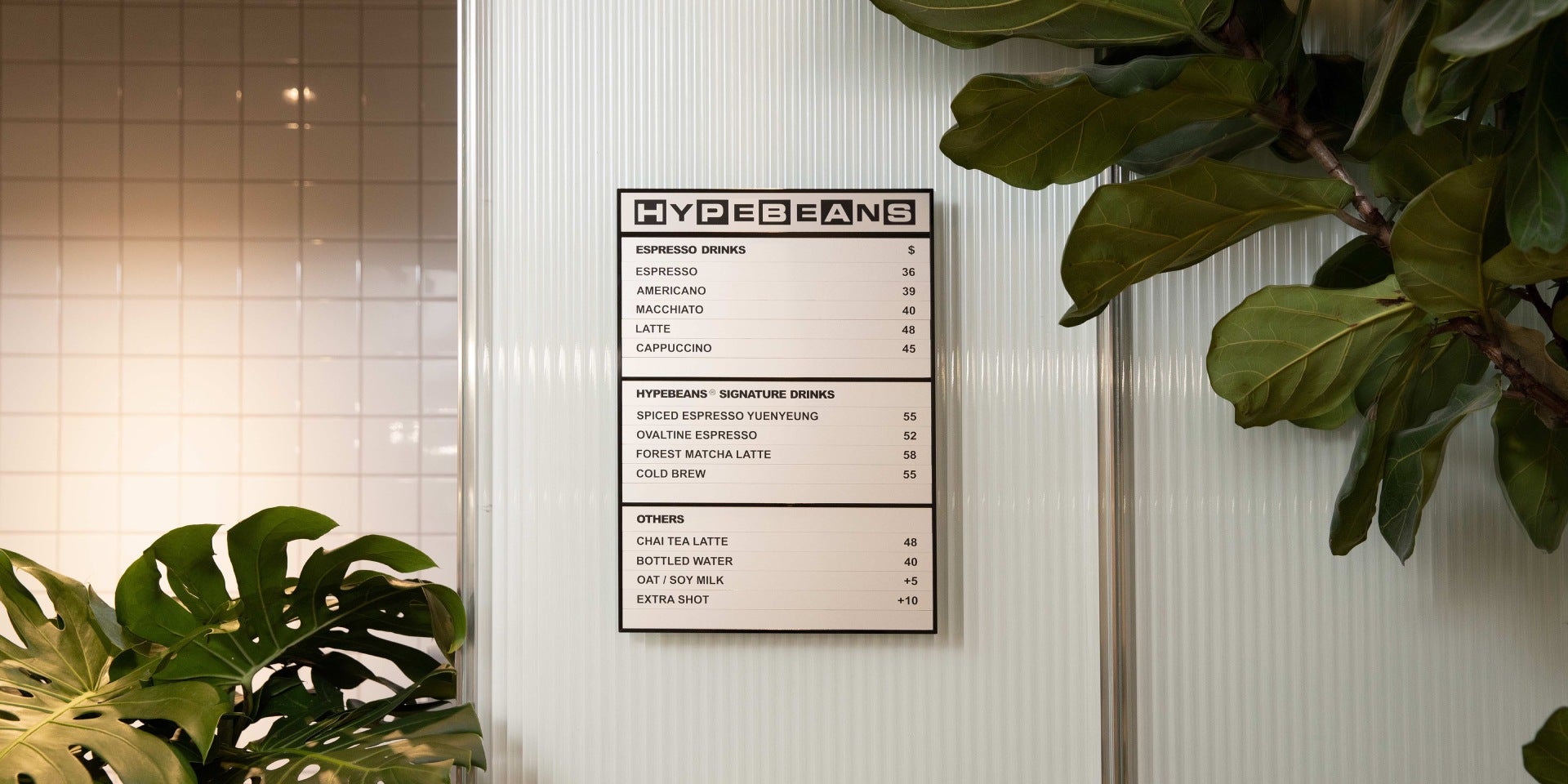
    For the menu, Sawada drew inspirations from Hong Kong-style cafés to present contemporary creations with nostalgic flair and traditional beverages crafted with a unique blend of coffee beans roasted by Japanese artisans. Signature drinks include the Spiced Espresso Yuenyeung – inspired by the iconic black tea and coffee drink and finished with star anise, Ovaltine Espresso – a milky drink utilizing the classic milky malt extract, Matcha Latte – a signature at SAWADA COFFEE USA centered around a custom blend of matcha and espresso, along with the HYPEBEANS Cold Brew.

    Take a look at the space below and check out some of the offerings at HYPEBEANS above.

    HYPEBEANS
    Shop B30, LANDMARK MEN, LANDMARK ATRIUM
    15 Queen’s Road Central
    Central, Hong Kong
    Opening Hours: Monday – Friday: 8 a.m. – 6 p.m. / Saturday, Sunday & Public Holidays: 10 a.m. – 7 p.m.

    For more food and beverage news, Shake Shack recently introduced its interactive “Shack Camp” family experience.

  • Tipster says that Samsung will soon introduce the chips that will power the Galaxy S21 line

    Tipster says that Samsung will soon introduce the chips that will power the Galaxy S21 line

    A tweet disseminated on Saturday by tipster MauriQHD (@MauriQHD) says that the next Exynos chipset will be introduced by Samsung at any moment. According to the tweet, the Exynos 2100 will be the successor to the Exynos 990. A recent Geekbench test of the Exynos 2100 allegedly running on the Galaxy S21+ had a single-core score of 1038 and a multi-core score of 3060. That pales in comparison to the Geekbench results recently posted for the Apple A14 Bionic SoC that will power the iPhone 12 series. That chip, tested while powering an iPad, had single-core and multi-core scores of 1583 and 4198 respectively. At this point, it is possible that the Exynos 2100 score is based on a test using unoptimized firmware so we need to hold off on making any direct comparisons.

    Both the A14 Bionic and the Exynos 2100 will be manufactured using the 5nm process which means that more transistors will fit inside a square mm allowing for greater performance and improved energy consumption. Like the Exynos 2100, the Qualcomm Snapdragon 875 chipset will be manufactured by Samsung Foundry using the 5nm process node. We could see the new Snapdragon flagship chip unveiled in December during the Snapdragon Summit.

    The tipster also said in his tweet that the Exynos 2100 should be “way better” than the Exynos 990. Considering that the latter was manufactured using the 7nm EUV process (EUV is a technique used to mark wafers with very thin ultraviolet beams allowing more transistors to be placed inside a chip) compared to the more powerful and energy-efficient 5nm Exynos 2100, this is pretty much a sure thing.

    The Exynos 2100 and Snapdragon 875 will both be found in consumer devices starting early next year. The A14 Bionic, which Apple already introduced when it unveiled the fourth-generation iPad Air last month, could be in consumers’ hands as soon as later this month as the chip will power both the aforementioned tablet and the 2020 iPhone models, both of which are expected to be released later this month. Another 5nm chip manufactured by TSMC this year is Huawei’s Kirin 9000 chipset. The chip will power the Huawei Mate 40 line and the Huawei Mate X2 foldable model. But due to a change in U.S. export regulations, Huawei can no longer get deliveries of this chip sent to it by the foundry. The Chinese manufacturer has been building up a stockpile of Kirin 9000 chips that it will be able to use until the inventory is all gone.

    So how will the Exynos 2100 compare with the Snapdragon 875? Both 5nm chipsets, as we pointed out, will be manufactured by Samsung, but Twitter tipster Ice Universe said back in August that while Samsung will close the gap, the Snapdragon 875 will still be the superior chip (note that the Exynos 1000 is a rumored name for the same chip that we are calling the Exynos 2100). While Samsung is moving to AMD for the GPU on its new component, Qualcomm is debuting the 7 series for the Adreno GPU found inside the Snapdragon 875.

    The Exynos 2100 SoC will most likely make its debut on the Samsung Galaxy S21 line which will probably include the Galaxy S21, Galaxy S21+, and the Galaxy S21 Ultra. If Samsung sticks with tradition, the Exynos 2100 will power the vast majority of Galaxy S21 series models; those in the U.S., China will get the version of the phone powered by the Snapdragon 875. However, for the Galaxy S20 line this year, Samsung equipped all of the units shipped everywhere but Europe with the Snapdragon 865. That humiliated Samsung employees in the company’s home country of South Korea. But the Exynos 990 just did not have the performance capabilities that Sammy’s executives were hoping for. This year, we could see Samsung return to the Exynos chip for its first flagship line of the year in most markets

  • AirAsia Japan may be closed down

    AirAsia Japan may be closed down

    Low-cost airline Air Asia is exploring all options over its dwindling operations in Japan, including closing it down.

    There have been reports that the group is planning to discontinue the operations of its affiliate, AirAsia Japan, due to the weak demand following the Covid-19 pandemic.

    Chief executive officer Tan Sri Tony Fernandes did not deny the reports. “We have to look at every option, including closing down the operation. We haven’t reached a decision yet, ” he said when asked to comment on the recent reports.

    On the termination of AirAsia’s flights from Malaysia to Japan, he said that was merely speculative and the board had not made a decision.

    Currently, he said, the airline is unable to fly to Japan due to the international border shutdown, and since its presence in Japan is relatively small, the board was currently evaluating possibilities, including the cessation of its flights there,

    Fernandes, who was speaking to reporters after the launch of the Redbeard Academy, said the academy was initially established in the belief that the digitalization of its airline operations may lead to many of its staff being left redundant.

    “We have to look at every option, including closing down the operation. We haven’t reached a decision yet, ” Fernandes said.

    “Hence, we have Redbeat Academy. But now, of course, we are in a position where the airline has to make retrenchments, and it’s unavoidable. Many of them, hopefully, will come here (Redbeat) and reskill themselves as well, ” he added.

    AirAsia Group’s digital arm, AirAsia Digital, has partnered with Google to launch Redbeat Academy as part of its continuous digital transformation journey.

    AirAsia Digital president Aireen Omar said admissions to the academy, which was previously open only to AirAsia’s staff, is now available to the public and businesses.

    The academy offers a series of tech workshops in areas such as Artificial Intelligence, Machine Learning, Software Engineering, Cybersecurity, Big Data and Infrastructure. Aireen said the course period ranged from two months to a year.

    “For those who have no technology background, they might have to go for a fundamental course, which takes about a couple of months or so, ” she told reporters at the launch.

    The academy was launched by Science, Technology and Innovation Minister, Khairy Jamaluddin.

    Also present were AirAsia Group executive chairman Datuk Kamarudin Meranun and Google Malaysia country head Marc Woo.

    Aireen said the tuition fee was affordable and the curriculum suited to market needs.

    “This is all based on our own experience on the kind of talent we need. The classes will be both online and physical; some classes need to be instructor-led because it’s too difficult to teach online, ” she said.

    During the event, Redbeat Academy also signed a partnership with Malaysian Industry-Government Group of High Technology to reskill a pool of talents in software engineering and high-tech projects.

    The academy also inked a partnership agreement with Universiti Teknologi Malaysia, Universiti Malaya and Asia School of Business, in collaboration with MIT Sloan Management, in awarding a micro-credential to Redbeat Academy’s courses and acknowledging it as part of the Accreditation of Prior Experiential Learning.
  • Standard Chartered Names Management Team for New Unit

    Standard Chartered Names Management Team for New Unit

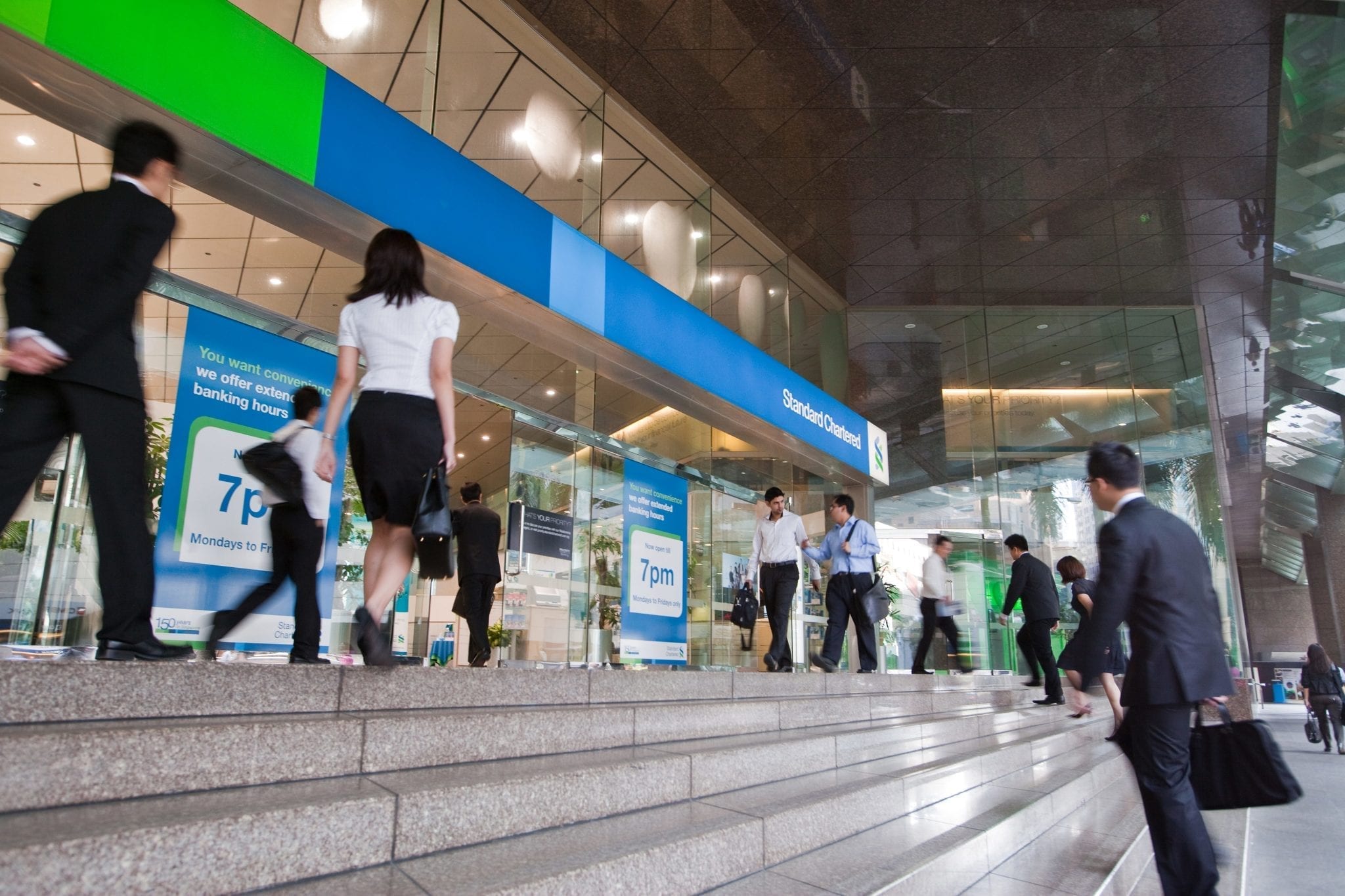
    Announced in March, the Financing and Securities Services (FSS) unit brings together Securities Services (previously under Transaction Banking) and Portfolio Risk Management in the Financial Markets business.

    Standard Chartered Bank on Thursday named its FSS management team, who will support Singapore-based co-heads Margaret Harwood-Jones and Emmanuel Ramambason.

    Members of the FSS senior management team include:

    • Francois Verlaine – Regional Head, FSS, ASEAN & South Asia
    • Simon Kellaway – Regional Head, FSS, Greater China & North Asia
    • Luke Brereton – Global Head, FSS Sales and Business Development
    • Ryan Cuthbertson – Global Head, FSS Products
    • Liu Chee Wei – Head, Central Funding Desk and XVA, ASEAN & South Asia, Greater China & North Asia
    • Sam Phillips – Head, Central Funding Desk and XVA, Africa & Middle East, Europe & Americas
    • Madeleine Senior – Regional Head, FSS, Europe & Americas
    • Scott Dickinson – Regional Head, FSS, Africa & Middle East
    • Marten Bengt – Head, Modelling and Analytics Group
    • Tan Ying Ying – Chief Operating Officer, FSS

    The reorganization aims for the bank to become more client-centric and having targeted and integrated engagement with clients across various solutions and services, Standard Chartered said.

    Separately, the bank announced the addition of independent non-executive director Maria Ramos, with effect January 1, 2021.

    Based in South Africa, Ramos was chief executive officer of ABSA Group (previously Barclays Africa) from 2009 to 2019. Before joining ABSA, she was the group chief executive of state-owned freight transport and logistics service provider Transnet and served as director-general of South Africa’s National Treasury (formerly the Department of Finance).

    Standard Chartered also appointed independent non-executive director David Tang to the Board Risk Committee. Tang brings deep understanding of the bank’s key market of Greater China, and will contribute his expertise in relation to emerging technologies, digital and associated risks.

  • H&M to close 250 stores globally as customers move online

    H&M to close 250 stores globally as customers move online

    The world’s second-biggest fashion retailer, Sweden’s H&M, says it plans to cut 250 of its stores globally. The closures will come next year after the firm said the Covid-19 pandemic had moved more shoppers online. Although it said sales had continued to recover in September, they were still 5% lower than the same month in 2019.

    The firm has 5,000 stores worldwide, but it is not yet clear how many closures will be in the UK.

    It said it was “too early for us to give any details on this, the numbers will differ from national market to market”.

    H&M has the contractual right to renegotiate or end leases on about a quarter of its stores every year. The retailer said that it planned a “net decrease of around 250 stores” next year.

    While its pre-tax profits fell to 2.37bn Swedish krona (£210m) for the nine months to 31 August, this was better than analysts had expected.

    However, it said 166 of its stores worldwide remained closed, and a large number still had local restrictions and limited opening hours

    Analyst Richard Lim of Retail Economics said: “What we have seen generally over the past few months of the pandemic has been a step-change in the number of sales going online.

    “That has affected all parts of the industry, but particularly clothing and footwear.”

    He also said that in terms of consumers physically visiting stores to do shopping, there had been a move from High Streets and shopping centers towards retail parks.

    “People can go in their cars instead of using public transport, and they are also able to buy in bigger bulk at retail parks,” Mr Lim said.

    H&M said it would now accelerate its plans to increase digital investment to cope with growing online demand.

    The Stockholm-based firm said it had taken “rapid and decisive action” to manage the impact of the coronavirus, including changes to purchasing, investments, rents, staffing and financing.

    Chief executive Helena Helmersson added: “Although the challenges are far from over, we believe that the worst is behind us and we are well placed to come out of the crisis stronger.”

    Sofie Willmott, from analytics firm GlobalData, pointed out that H&M’s sales in September “fell just 5% demonstrating the relevance of its product offer as shoppers start to feel more confident returning to stores”.

    But she said the firm “must enhance its online proposition given the importance of digital channels, to succeed in a very tough market”.

    In addition, Ms Willmot said H&M should consider “more significant changes” with regards to shop closures, or it will “continue to be hindered by its excessive store estate”.

  • Visa Partnership to Tap on Growth in Digital Economy

    Visa Partnership to Tap on Growth in Digital Economy

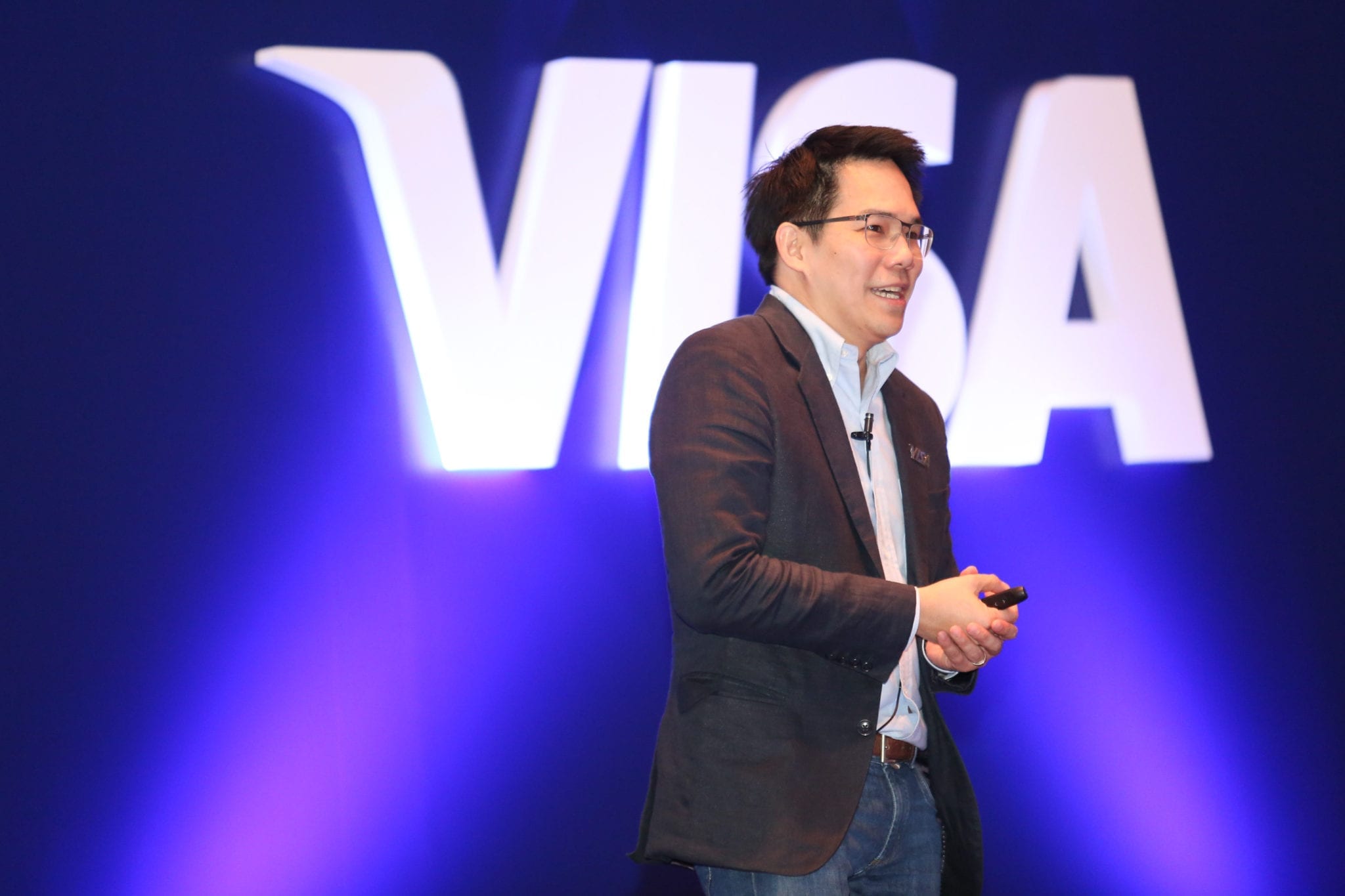
    Visa has announced a five-year regional strategic partnership with e-commerce platform Shopee that intends to spur greater participation in Southeast Asia’s digital economy.

    The agreement includes collaboration on a number of initiatives to extend access to the digital economy for micro, small, and medium enterprises (MSMEs) across Southeast Asia.

    These businesses will be incentivized to digitalize their business on Shopee and adopt digital payments through Visa. The payments giant will also tap on Shopee’s extensive user base to expand its presence with Southeast Asia MSMEs and online shoppers, the announcement said.

    Shopee and Visa will also launch co-branded credit cards in selected markets in partnership with local banks in the next few months. The cards will offer shoppers integrated and seamless rewards and allow Visa to reach more local consumers, Shopee said.

    When a small business goes digital, it’s plugged into a much broader commerce landscape. Visa is working to help any business, regardless of their size or location, better attract and serve more local and global customers by getting enabled to accept digital payments in a safe and secure manner,» Neil Mumm, Visa’s regional head of merchant sales and acquiring, Asia Pacific, said.

    The announcement noted that Southeast Asia is on track to become the fourth-largest economy by 2030, with an increasing share of GDP driven by the digital economy.

    The region’s e-commerce market is estimated to be worth $150 billion by 2025, up from $38 billion in 2018, according to a report by Google.

    Shopee, which is owned by internet gaming, commerce and digital payments firm Sea, is a force to be reckoned with in Southeast Asia. Launched in 2015, the platform accounted for nearly a quarter of the combined gross merchandise value in Singapore, Malaysia, Thailand, Indonesia, the Philippines and Vietnam in 2019.

    Sea’s second-quarter earnings, released in August, indicated revenues of $1.3 billion – almost double from the quarter before, fuelled by revenue gains in online gaming and e-commerce, jumping 62 percent to $716 million and almost tripling to $511 million, respectively.

    The company remains unprofitable, with losses for the quarter growing 59 percent year-on-year to $373 million, largely due to Shopee’s costly battle for market share with regional rivals Lazada, which is owned by Alibaba, and Tokopedia in Indonesia, also backed by Alibaba.

  • Google Maps’ coolest new feature becomes more useful to Android and iOS users

    Google Maps’ coolest new feature becomes more useful to Android and iOS users

    Last year, Google Maps tested a beta version of what it calls AR Live Mode that uses augmented reality to layer the Maps UI over a real-time image from your phone’s front-facing camera. The result is the navigation for those-perhaps yourself-who enjoy getting around by walking around a city. The mode points out landmarks, how far they are from you, and how to get there. For example, if you’re walking through the Big Apple and happen to find yourself in Midtown Manhattan, you might see some information in AR Live Mode directing you to the Empire State Building.

    Google posted a blog today in which it says that the landmarks highlighted in Live View include well-known places, like local parks and tourist attractions. Besides the Empire State Building in New York, other noteworthy places include the Pantheon in Rome. 25 cities worldwide will soon have their Landmarks available to be viewed using Live View. Those cities include Amsterdam, Bangkok, Barcelona, Berlin, Budapest, Dubai, Florence, Istanbul, Kuala Lumpur, Kyoto, London, Los Angeles, Madrid, Milan, Munich, New York, Osaka, Paris, Prague, Rome, San Francisco, Sydney, Tokyo, and Vienna.

    Live View can be accessed by tapping on the button of the same name when looking up a place on Google Maps. It now can be used on the transit tab if part of your journey includes walking. Google points out that this is useful when you exit a transit station but don’t know which way to go once out of the station.

    Google also announced today that the Live View feature that previously was added to Location Sharing for Pixel users will soon be available to all Android and iOS users worldwide. Google explained this in today’s blog by noting that if a friend has chosen to share their location, you can tap on his icon and then on Live View to see where and how far away he is. Overlaid arrows and other directions make it easy to figure out how to get to where your friend is.

    Lastly, in Live View, using Machine Learning and Google’s understanding of the world’s topography, Google can more accurately place a destination pin. In the accompanying images, you can see how much closer Lombard Street in San Francisco appears when using Live View.

  • Trading in Tokyo Resumes Following Glitch

    Trading in Tokyo Resumes Following Glitch

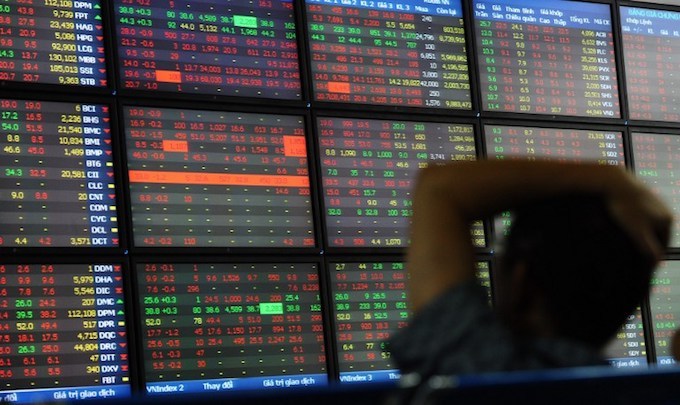
    The Tokyo Stock Exchange (TSE) has resumed regular operations on Friday after a technical outage that lasted all day Thursday.

    TSE is currently planning to replace the hardware and taking steps, including other maintenance, to ensure normal trading from tomorrow onwards, bourse operator Japan Exchange (JPX) said on Thursday evening.

    There was no indication that the exchange’s biggest glitch in a decade was caused by hacking or other cybersecurity breaches.

    JPX explained that Thursday’s outage was the result of a hardware failure. «The switchover from the failed device to the backup device did not work properly, and as a result, market information could not be distributed, JPX said.

    JPX has been on the receiving end of criticism over its crisis management and poor communication to investors regarding the outage.

    The matter has also raised questions over Japan’s digital systems and infrastructure, particularly as the country seeks to boost its status as an international financial hub.

  • Tesla Autopilot Scores Low For Driver Engagement In European Safety Rating

    Tesla Autopilot Scores Low For Driver Engagement In European Safety Rating

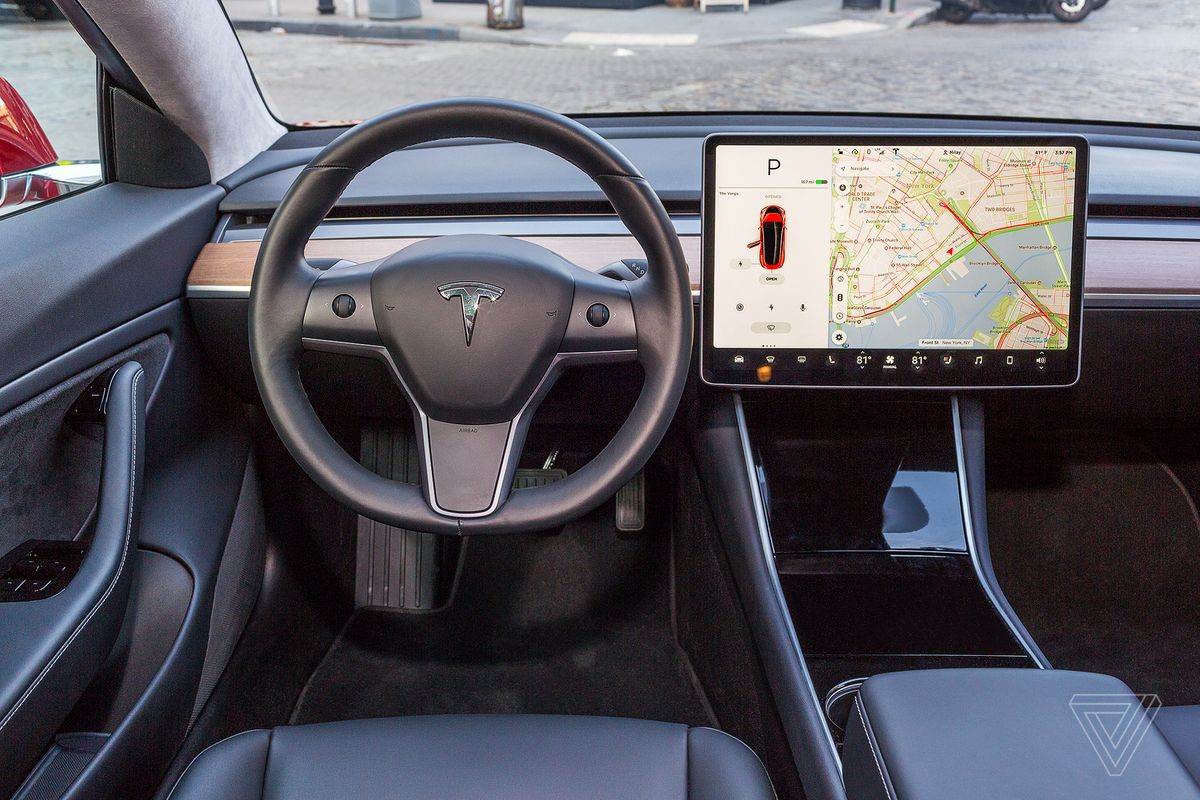
    Tesla’s Autopilot has ranked sixth in 10 driver assistance systems evaluated in a European safety assessment, scoring low on its ability to keep drivers engaged. The Tesla Model 3’s Autopilot scored just 36 when assessed on its ability to maintain a driver’s focus on the road. But it gained the highest marks for performance and ability to respond to emergencies, receiving an overall score of 131 and a rating of ‘moderate’.

    In contrast, the Mercedes GLE’s system, which had the highest overall score of 174 and received the top rating of ‘very good’, received a score of 85 for driver engagement. Most other vehicles had scores of 70 or above for driver engagement.

    The European New Car Assessment Program (NCAP), which worked with UK insurance group Thatcham Research, called the assessments the first consumer ratings specifically focused on driver assistance systems – technology that automates some tasks, including acceleration, braking and steering support.

    Safety and insurance researchers have frequently warned of the risks of consumers overestimating the systems’ abilities, a misconception increased by some automakers calling their products Autopilot, ProPilot or CoPilot.

    Tesla’s Autopilot has been criticized by the U.S. National Transportation Safety Board for allowing drivers to turn their attention from the road and U.S. regulators have investigated 15 crashes since 2016 involving Tesla vehicles equipped with Autopilot.

    “Unfortunately, there are motorists that believe they can purchase a self-driving car today. This is a dangerous misconception that sees too much control handed to vehicles that are not ready to cope with all situations,” said Matthew Avery, a Euro NCAP board member and research director at Thatcham Research.

    In addition to the Mercedes GLE, the BMW 3-Series and the Audi Q8, received the highest rating of ‘very good’ while two models, the Renault Clio and the Peugeot received the lowest rating of ‘entry’.