Category: Automotive

Retail News Asia is committed to providing both local and global retailers with the latest Auto and Car news throughout the Asian market. This on a daily base.

  • Hyundai Motor offering a bigger, better Universe

    Hyundai Motor offering a bigger, better Universe

    Hyundai’s Universe is about to get bigger. Hyundai Motor unveiled an updated version of its luxury coach, the Universe, on Tuesday, increasing its size and adding safety features. The updated coach, scheduled for release next March, has an extended wheelbase of 12.5 meters (41 feet), 0.5 meters longer than the existing model. Distance between seats has been increased.

    The vehicle comes with a variety of new safety features applied for the first time in a coach in the local market, such as an engine fire extinguishing system, driver attention warning and a rear-view monitor.

    Hyundai Motor explained that the Universe’s driver attention warning system and smart cruise control are now offered to prevent drowsy driving and other avoidable accidents. The new Universe also has a refreshed exterior design with headlight changes and will be available in three trims.

  • KT, Hyundai Mobis join to develop connected-car tech

    KT, Hyundai Mobis join to develop connected-car tech

    KT said Thursday that it will collaborate with Hyundai Mobis to develop self-driving and connected-car technology.  The two companies agreed to work on real-time navigation technology and vehicle-to-everything technology, which will allow cars to communicate with connected devices. To enable development, the telecommunications company said it will install 5G infrastructure at the Hyundai Mobis test-drive course in Seosan, South Chungcheong.

    The fast 5G network will allow sensors on a Hyundai Mobis self-driving car to send significant amounts of data to servers immediately to allow for accurate real-time traffic navigation. The process takes minutes in existing 4G networks.

    The cooperation comes as the two prepare for the fast-growing connected car market. Industry researcher IHS Markit predicted connected-car sales to reach 72.5 million units by 2023 from 24 million units in 2015.

  • Mercedes EV to launch in Korea

    Mercedes EV to launch in Korea

    Mercedes-Benz Korea is setting its sights on the local eco-friendly auto market with the introduction of an all-electric vehicle (EV) along with hybrid offerings this year. The Korean unit of the German brand announced Thursday that it will be introducing 14 new models to the local market this year including the EQC, the first model under its electric EQ brand, as well as four plug-in hybrid EVs at a New Year’s press conference at the Hotel Shilla in central Seoul.

    “2019 will be the year of the EQ,” said Dimitris Psillakis, CEO of Mercedes-Benz Korea. “We will do our utmost to provide the best products and services in the upcoming era of future mobility.”

    The premium electric SUV EQC, unveiled globally last September, is the German automaker’s current flagship EV. The promised hybrid models will range from SUVs to sedans, according to the automaker.

    Along with its entry into the local EV market, the German brand announced that it is also preparing its charging infrastructure.

    Mercedes-Benz Korea said EQC buyers will have access to its combined charging network, which will offer a wide range of charging stations nationwide. EQC drivers will also have access to a one-on-one concierge service that will recommend the nearest charging station to drivers.

    Mercedes-Benz Korea’s push into eco-friendly vehicles comes as it was embroiled in controversy last year regarding its vehicles’ emissions certifications.

    Last month, the automaker said it will appeal a court decision after it was found guilty of violating environmental and customs laws regarding the emissions certification process. The company was fined 2.81 billion won ($2.5 million) and an employee in charge of certifications was handed an eight-month sentence.

    Regarding the legal action, Psillakis promised that the company is following up on the newest regulations.

    “We have a very different changing and toughening regulatory environment around us,” said Psillakis. “We place processes to safeguard so that we can adapt to the new regulations as fast as possible.”

    The company also addressed concerns surrounding recall plans for its vehicles equipped with faulty Takata airbags, saying that it is planning a mass recall in the second quarter of this year of around 30,000 vehicles.

    The German automaker was the best-selling imported brand last year, selling 70,798 vehicles in the country.

    With last year’s sales, the Korean market is the fifth-largest market for the brand after China, the United States, Germany and Britain.

  • Hyundai develops safer airbag deployment system

    Hyundai develops safer airbag deployment system

    Hyundai Motor Group, Korea’s biggest carmaker by sales, said Monday it has developed a safer airbag deployment system to better protect people from multiple crashes. The advanced airbag system immediately prepares for additional crashes once it recognizes an initial collision, in cases where the collision is not serious enough to warrant a deployment, the conglomerate said in a statement.

    “If the first collision is a minor one, but the vehicle continues on and collides with something else, such as trees or street lamps, the airbag system optimizes itself to prepare for additional crashes,” a company spokesman explained to reporters over the phone.

    It is the first time a Korean carmaker has developed such a multi-crash airbag system, the statement said.

    Existing airbag systems do not inflate once they determine the initial collision is minor, even if subsequent impacts involve greater force and can lead to serious injury, it said.

  • Hyundai, Kia move ahead with recall in U.S.

    Hyundai, Kia move ahead with recall in U.S.

    Despite a government shutdown, Hyundai and Kia are moving ahead with a recall of about 168,000 vehicles to fix a fuel pipe problem that can cause engine fires. The problem stems from improper repairs during previous recalls for engine failures. The affiliated Korean automakers have been dogged by fire and engine failure complaints from across the nation. They’re both under investigation by the U.S. National Highway Traffic Safety Administration, which has been trying to figure out whether initial recalls covered enough vehicles. But the agency is mostly closed due to the shutdown.

    In addition to the recall, each automaker says it will do a “product improvement campaign” covering a total of 3.7 million vehicles to install software that will alert drivers of possible engine failures and send the cars into a reduced-speed “limp” mode if problems are detected.

    Nhtsa employees who do safety investigations and recall notifications are not at work. Under normal circumstances, the agency would review the recalls to make sure they are adequate and post details on the agency website. It would also monitor notices to customers, and ensure customers could check to see if their vehicles are included.

    Kia spokesman James Bell said the company is proceeding with the recall and campaign regardless of government delays.

    “Making our customers comfortable is vastly more important than making sure we’re following additional government processes right now,” he said. Kia sent letters to dealers around Jan. 10 notifying them of the recall, he said.

    But a U.S. auto safety advocate called the recalls inadequate and said the product improvement campaigns should instead be recalls that are overseen by Nhtsa.

    An Nhtsa spokeswoman said she could not comment due to the shutdown.

    Hyundai and Kia started recalling 1.7 million vehicles in 2015 – about 618,000 of which are Kias – because manufacturing debris can restrict oil flow to connecting rod bearings. That can cause bearings in 2-liter and 2.4-liter four-cylinder engines to wear and fail. The problem can also cause fires. The repair in many cases is an expensive engine block replacement.

    Now the companies are acknowledging that the engine replacements may not have been properly done in all cases by dealers. A Kia statement says the high-pressure fuel pipe may have been damaged, misaligned or improperly tightened while the engines were being replaced under recall. That can allow fuel to leak and hit hot engine parts, causing fires.

    Kia says it has six reports of fires among the vehicles being recalled for possible fuel leaks, while Hyundai says it has no fire reports. Neither company had any reports of injuries.

    The fuel injector pipe recall covers some 2011 through 2014 Kia Optima cars, 2012 through 2014 Sorento SUVs, and 2011 through 2013 Sportage SUVs, all with 2-liter and 2.4-liter four-cylinder engines. Also covered are many 2011 to 2014 Hyundai Sonata cars and 2013 and 2014 Santa Fe Sport SUVs.

    More than 2 million 2011 Sonatas from the 2011 through 2018 model years and Santa Fe Sports from 2013 through 2018 are covered by the software and engine-knock sensor updates. About 1.7 million Kias, including the 2011 through 2018 Optima, the 2012 through 2018 Sorento and 2011 through 18 Sportage, are covered.

    The companies say owners of the recalled vehicles will be notified by letter. Dealers will check the fuel pipe for leaks and replace the pipe if needed.

    Kia is only doing the fix on 68,000 of its 618,000 vehicles recalled for the engine problems, while Hyundai is recalling 100,000 of more than 1 million. Hyundai said only vehicles that had engines replaced in the previous recalls are covered by the new recall.

    He also raised concerns about the government shutdown’s impact on Nhtsa, which he said should be open to handle critical safety recalls.

  • Korean SUV sales soar globally

    Korean SUV sales soar globally

    SUVs have recently grabbed the spotlight in Korea, breaking both local and export sales records. According to the Korea Automobile Manufacturers Association (KAMA), the number of exported SUVs by five local automakers reached a new record of 1.38 million units in 2018, a 6.7 percent increase from the previous year. In just 17 years, the figure rose by 700 percent – exports recorded merely 196,111 units in 2000.

    Over the same period, overall exports of passenger vehicles declined 3.1 percent to 2.34 million units. The share of SUVs also reached an all-time high.

    Compact SUVs from Korea were most popular in export markets.

    GM Korea’s Chevrolet Trax was shipped the most, at 239,800 units, followed by Hyundai Motor’s Tucson at 228,461 units.

    Small-sized SUVs also performed well, with 202,779 units of Hyundai Motor’s subcompact SUV Kona shipped abroad, a 437 percent rise from the previous year.

    Kia Motors’ Stonic exported 58,989 units, increasing 75.8 percent from 2017.

    Much of the enthusiasm surrounding SUVs in markets abroad was also present in the local market.

    Last year, 519,883 SUVs were sold in Korea, passing the 500,000 unit mark for the first time.

    With a 12.7 percent rise from 2017 sales figures of 461,385 units, SUVs currently take up a 40.1 percent share in the overall passenger car sales figures.

    Meanwhile, passenger car sales, excluding SUVs, dropped 6.9 percent last year from the previous year.

    Hyundai Motor’s mid-sized SUV, the Santa Fe, was the most popular in Korea, selling 107,202 units. This was the first time that an SUV model recorded an annual sales figure over 100,000 units.

    The SUV market is expected to grow this year.

    As compact and small-sized SUVs are poised to lead exports and medium and small-sized SUVs the local market, large-sized SUVs are also being rolled out this year.

    Hyundai Motor’s Palisade, unveiled last November, recorded over 25,000 preorders in just three weeks, hitting 62.5 percent of the automaker’s annual sales target of 40,000 units for the model.

    It will likely take customers around seven months to receive the vehicle if ordered now.

    According to Hyundai Motor, the large-sized SUV is popular among older drivers. Customers in their 40s accounted for 37 percent of orders and those in their 50s made up 26.9 percent.

    “As high-quality amenities and vehicle stability that used to be developed through sedans is now applied to SUVs, there was quite a bit of progress,” said Kim Pil-soo, a professor of automotive engineering at Daelim University.

    “This year’s SUV sales and market share will grow as local and foreign SUVs have adopted the advantages of sedans,” added Kim.

  • Hyundai takes top honors at Nactoys

    Hyundai takes top honors at Nactoys

    Hyundai Motor Group took home the top prizes in two of three categories at the 2019 North American Car, Utility and Truck of the Year Awards (Nactoy), the company said last Tuesday. It is the first time a Korean carmaker has won in two categories at the annual awards. Hyundai Motor’s Kona and Kona Electric crossover utility vehicle won in the utility category, while the G70 sedan sold under the carmaker’s Genesis brand won in the car category.

    A jury consisting of journalists and analysts based in the United States and Canada voted for the winners of each category, choosing between three finalists. This year, 54 journalists from print, online and broadcast media participated in the assessment.

    The award organizer said in a press release that jurors voted on the finalists based on segment leadership, innovation, design, safety, handling, driver satisfaction and value for the dollar.

    Hyundai’s Kona competed with Honda’s Acura RDX and the Jaguar I-Pace.

    “The Kona Electric is the first mass-market electric car that truly works for the mass market,” said Jamie Page Deaton, executive editor at U.S. News & World Report Best Cars. “A livable EV range, affordable price and practical cabin combine with lively driving dynamics to make the Kona EV a true pleasure.”

    The G70 competed with the Honda Insight and Volvo S60. The Genesis-brand was evaluated to exceed luxury segment mainstays like the BMW 3 Series, Audi A4 and Mercedes-Benz C-Class in driver engagement and value for the dollar.

    The last Hyundai car to win top honors at the awards was the Avante sedan, sold as the Elantra in North America, in 2012.

    Previously the award only had two categories – car and truck – however, utility vehicles earned an independent category from 2017, considering the rising popularity of the segment.

    A Hyundai spokesperson said it will market the Kona and G70 more actively in the North American market with boosted presence from the awards.

    The winners were announced at the North American International Auto Show in Detroit on Monday. Hyundai also introduced its Veloster N TCR high-performance racing car at the show, while Kia Motors premiered its Telluride SUV. The SUV will only be sold in the North American market.

  • Nissan Korea fined 900 million won for inflating mileage figures

    Nissan Korea fined 900 million won for inflating mileage figures

    Korea’s antitrust watchdog said Wednesday that it has fined Nissan Korea 900 million won ($802,100) for inflating gas mileage figures for its Infiniti Q50 2.2d sedans. The Japanese car’s fuel efficiency reaches 14.6 kilometers per liter (34.3 miles per gallon), but the local unit of the Japanese carmaker overstated the fuel efficiency as 15.1 kilometers per liter in its stickers, catalogues and magazines between February and November 2014, according to the Fair Trade Commission.

    Nissan Korea sold 2,040 Infiniti Q50 2.2d sedans valued at 68.68 billion won during the cited period.

    “There are concerns that Nissan Korea’s advertising could hurt fair trade by distorting consumers’ reasonable choice, considering that fuel efficiency is a priority factor when they buy vehicles,” the commission said.

    Repeated calls to Nissan Korea seeking comment went unanswered.

  • Imports of commercial vehicles fell last month in Korea

    Imports of commercial vehicles fell last month in Korea

    Sales of imported commercial vehicles plunged 38 percent last month from a year earlier amid slower economic growth, a local automobile association said Tuesday. The number of newly-registered imported commercial vehicles fell to 283 units in December from 390 a year ago, the Korea Automobile Importers and Distributors Association (KAIDA) said in a statement.

    “The construction industry faces a slowdown as the government pushes for regeneration projects in residential areas instead of building new apartments or homes. This is driving down demand for commercial vehicles,” a spokeswoman for Volvo Trucks Korea said.

    Imported commercial vehicles are widely viewed as being more upmarket than domestically produced rivals and offer more choices for users.

    For the whole of 2018, the number of imported commercial vehicles sold in Korea declined 1.6 percent to 4,394 units from 4,464 a year earlier, the statement said.

    Major imported commercial vehicle brands are MAN, Mercedes-Benz, Volvo Trucks, Scania and Iveco.

    There are three kinds of trucks. Two of them are regarded as commercial vehicles, but the third, referred to as a dump truck, is classified as construction equipment.

    KAIDA began to compile sales data for imported commercial vehicles in January 2017.

  • Toyota fined W817 million for false advertising

    Toyota fined W817 million for false advertising

    Korea’s antitrust watchdog said Tuesday that it has fined Toyota Motor Korea 817 million won ($729,000) for deceptive advertising of its RAV4 sport utility vehicle (SUV). Toyota Motor Korea advertised that its RAV4 obtained a top safety pick in five test categories, including the driver’s side small overlap front and roof strength, from the U.S. Insurance Institute for Highway Safety (IIHS) in 2015.

    In 2016, the RAV4 earned the Top Safety Pick Plus rating from the independent nonprofit organization that aims to reduce deaths, injuries and property damage from motor vehicle crashes, according to the Fair Trade Commission.

    The commission said that RAV4 models sold in the United States in 2015 and 2016 were equipped with a bracket, or shock absorber, that allowed it to get the top rating.

    The same SUV model sold in Korea during the same period was not equipped with the bracket, but Toyota Motor Korea advertised the RAV4’s earning the Top Safety Pick rating from the IIHS.

    “Toyota Motor Korea concealed and omitted that there was a difference between RAV4 models sold in the United States and Korea,” the commission said.

    It said the advertisement could mislead Korean consumers into believing that RAV4 models sold in Korea had all the safety features covered by the Top Safety Pick rating.

    Toyota Motor Korea said it cannot give an immediate comment on the issue and that it is reviewing the commission’s decision.

    Toyota is the second foreign automaker to be fined this year. BMW Korea was fined 14.5 billion won last week for manipulating documents on emissions.

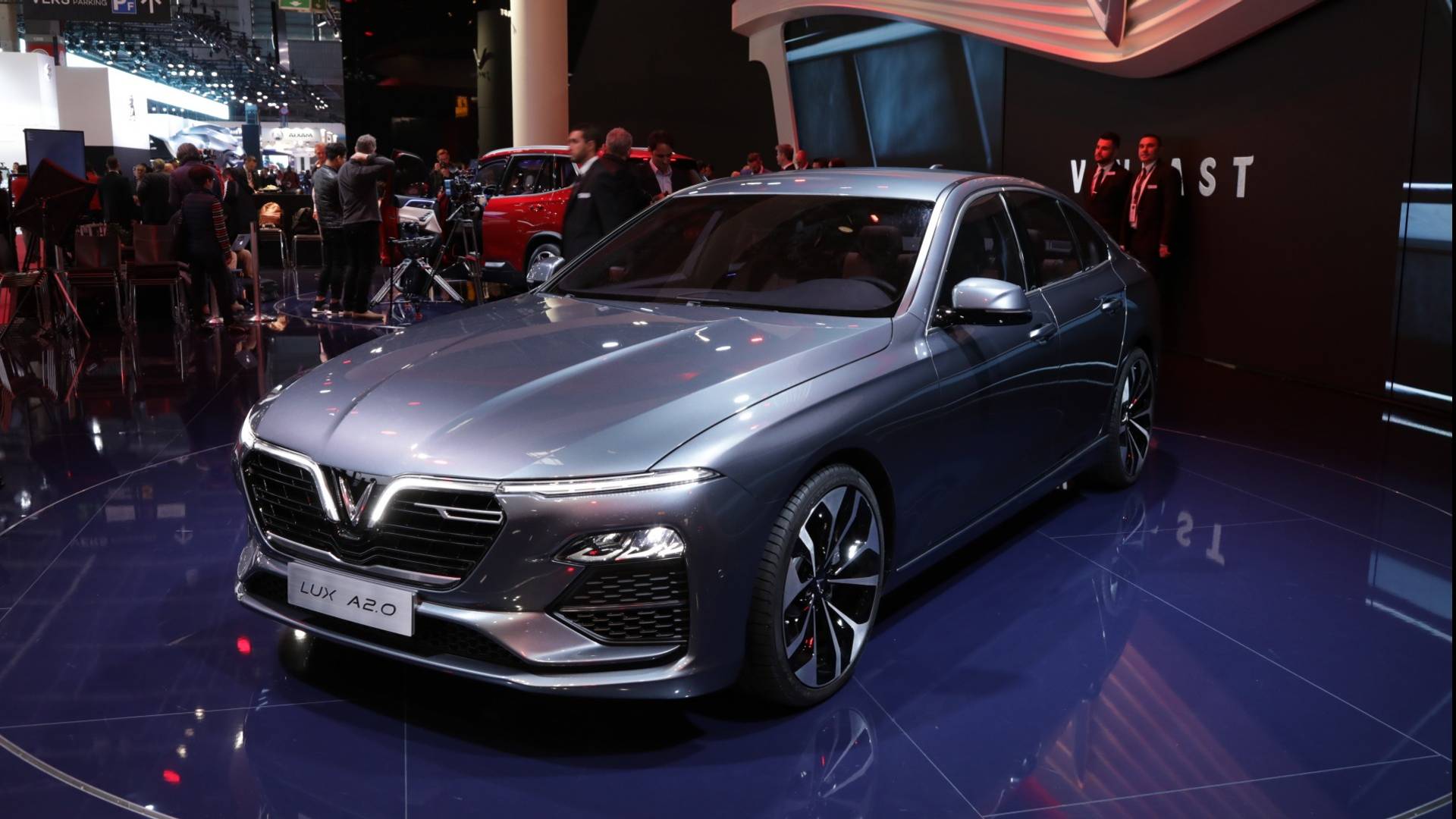
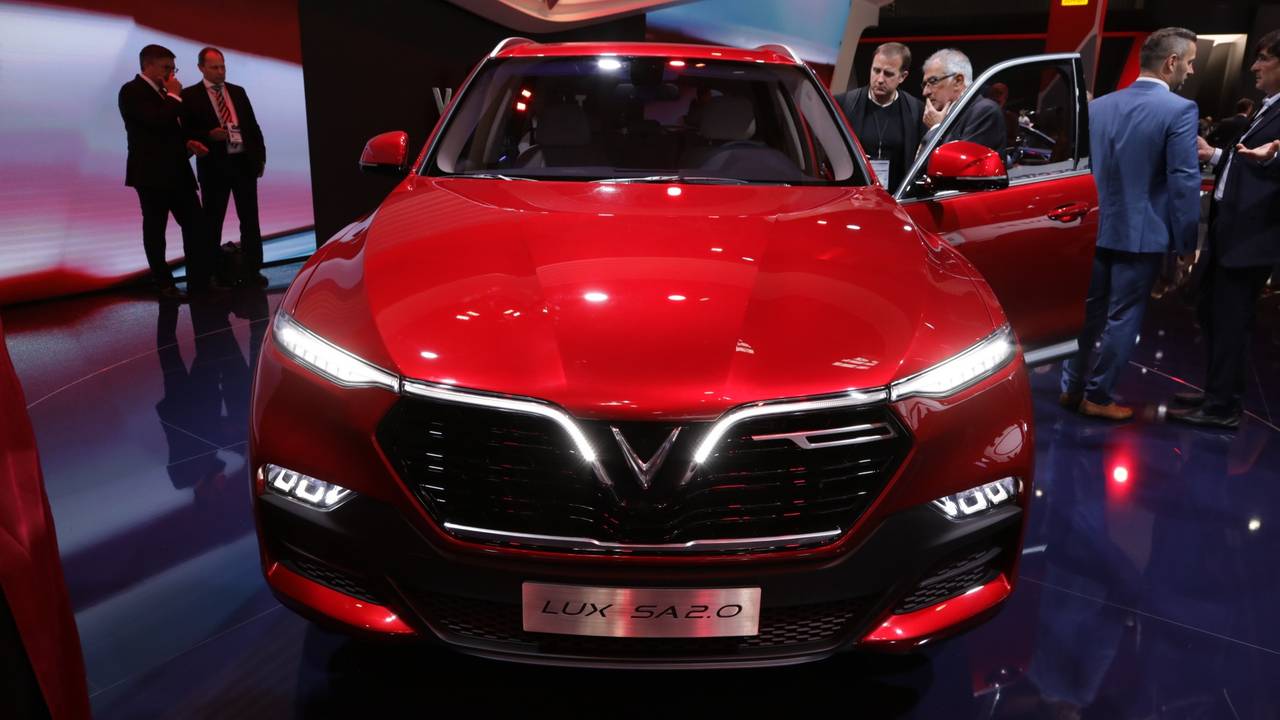
  • VinFast announces seven new car models

    VinFast announces seven new car models

    VinFast, Vietnam’s first fully-fledged car manufacturer, plans to launch seven new ‘premium’ models. Following the first line of Lux (short for Luxury) automobiles aimed at the high-end segment, VinFast, a unit of Vietnam’s largest private conglomerate, Vingroup, has announced it will launch a Pre (short for Premium) car line with the aim of tapping a larger customer base.

    The company has opened a polling page for customers to vote on the seven most popular models out of a potential 35.

    The seven Pre models will include a hatchback and a CUV (crossover SUV) for the A and B segments; one Sedan and CUV for the C segment; and 1 Sedan, 1 SUV and 1 family car for the D segment.

    VinFast will continue to work closely with the famous Italian studios, Ital Design, Torino Design, and Pininfarina on designing the new models.

    VinFast showed off its first two car models, a sedan and an SUV, at the Paris Motor Show in France last October just a year after its incorporation, grabbing the attention of the local and international media.

    VinFast’s first production models built under its own badge hit the streets in August 2019.

    According to the Vietnam Automobile Manufacturers’ Association, total car sales in the country topped 288,000 units in 2018, up 5.9 percent from around 272,000 units in 2017.

  • BMW Group Malaysia achieves another record year of sales

    BMW Group Malaysia achieves another record year of sales

    BMW Group Malaysia delivered a total of 14,338 units of BMW, MINI and BMW Motorrad vehicles last year, marking its eighth consecutive year of record sales. The total number of vehicles delivered last year was 13% higher than 12,681 units delivered in 2017. The group said in a statement that the strong performance in Malaysia reflects the group’s business performance worldwide last year, where a total of 2.65 million BMW, MINI and BMW Motorrad vehicles were delivered.

    Globally, the BMW brand delivered a total of 2.12 million (+1.8%) vehicles, while MINI saw 361,531 new owners. BMW Motorrad also achieved record deliveries with 165,566 new owners, an increase of 0.9% compared to 2017.

    “In 2018, BMW Group Malaysia achieved numerous milestones which contributed to the success we celebrate today. Over the course of the year, we introduced 12 new models across the BMW and MINI brands – of which four were electrified vehicles. We also unveiled two new concept vehicles for the first time ever not only in Malaysia, but in Southeast Asia,” said BMW Group Malaysia managing director Harald Hoelzl.

    Hoelzl said the group also grew its infrastructure for electromobility in Malaysia by introducing new BMW i Charging Facilities in four different states to facilitate its vision for future mobility in Malaysia.

    In 2018, the BMW brand saw 12,008 new owners in Malaysia, 13% higher than 10,618 new owners in 2017 while MINI recorded a double-digit growth of over 18%, delivering 1,200 vehicles last year compared with 1,011 units previously.

    BMW Motorrad saw 1,130 new owners in 2018, which recorded a growth of over 7% compared to 1,052 in 2017.

    BMW Group Malaysia also recorded its best performance for its electrified vehicles in 2018. Of the total cars delivered, 57% comprised of electrified BMW and MINI (7,532).

    Meanwhile, BMW Group Financial Services Malaysia achieved a strong business portfolio with over 6,100 contracts signed in 2018. It successfully financed every four out of 10 BMW and MINI vehicles delivered last year as well as every six out of 10 BMW Motorrad vehicles last year.

    “2019 will be another exciting year for the BMW Group in Malaysia with a strong portfolio of products to be introduced here, mirroring the biggest model offensive for the company worldwide,” said Hoelzl.

  • Frost & Sullivan calls for strong incentive policy for electric vehicles in Malaysia

    Frost & Sullivan calls for strong incentive policy for electric vehicles in Malaysia

    Frost & Sullivan which is “mildly positive” on growth of total industry volume (TIV) for vehicles in 2019, said a strong incentive policy is required for electric vehicles (EVs) to take off in Malaysia. “Currently what we are waiting for is if the (NAP) National Automotive Policy mentions anything about EV. Unless there is a strong policy coming up focused on EV, otherwise we will not see any major uptake in EV sales in Malaysia,” said associate partner and senior vice president of mobility at Frost & Sullivan, Vivek Vaidya.

    He said the uptake for EV will also depend on factors such as incentives for manufacturers, forward distributors and customers coupled with the development of infrastructure for charging stations. Vivek added that there is a possibility of the new national car being an EV given leads of it being low energy and technology neutral.

    A survey carried out by Frost & Sullivan found that 30% of its respondents were willing to consider EVs even though such vehicles are yet to make a presence in Malaysia, signaling a latent demand for EVs.

    On the overall automotive market, Vivek expects Malaysia to registers vehicle sales of 609,700 units in 2019, 1.4% growth against 601,300 units in 2018, driven by growth in domestic consumption, private investments and new model launches.

    The passenger vehicle segment is expected to perform better than the commercial vehicle segment, which is likely to be impacted by low public spending.

    The passenger vehicle volume is projected to grow to 544,121 units in 2019 from 536,371 units in 2018, while the commercial vehicle volume is estimated to rise to 65,579 units from 64,929 units.

    Worth noting is that demand for vehicles went up by 4.2% during the tax holiday period last year.

    “Usually after a tax break period, the volume shrinks in the subsequent quarter but in 2018, strong consumer sentiment ensured Q4 volume matched last year figures to end the year on a positive note,” Vivek said.

  • Proton aims to double exports in 2019

    Proton aims to double exports in 2019

    Proton Holdings Bhd aims to double the export of its cars to at least 3,000 units this year from 1,388 units in 2018. “In 2017, we exported 248 units. This year we want to export more,” its CEO Li Chunrong said. With the support from the Malaysian government, he said, the group could export up to 4,000 to 5,000 units this year. Asked on the group’s plans to enter the Pakistani and the Middle Eastern markets, Li responded by saying that Asean will remain as the group’s focus for its export business, but it does not intend to abandon other markets.

    “We don’t want to forget the other markets (as well). We are trying our best to enter other markets,” he added.

    On response to the Proton X70 that was officially launched on Dec 12, 2018, the group said bookings for the sports utility vehicle have exceeded 15,000 units, with over 2,000 units delivered so far.

    Earlier, Proton deputy CEO Datuk Radzaif Mohamed said the group expects to bring an initial investment of RM47 million into the country through the second set of collaboration agreements between its vendors and their overseas counterparts.

    On Oct 10, 2018, Proton hosted its first signing ceremony where eight colla-boration agreements were signed and they are expected to help bring in an initial investment of RM170 million into the country.

    Radzaif said the collaborative agreements will range from technical tie-ups and joint ventures to 100% foreign direct investments with foreign vendors investing into the Malaysian economy.

    Aside from the investments in facilities and technology, he said, the collaborations are also expected to create about 450 new jobs in the automotive industry that range from assembly to design engineering.

    Additionally, these vendors will supply parts to Proton’s manufacturing facility in Tanjung Malim, which is undergoing expansion at a cost of RM1.2 billion.

    Meanwhile, Deputy International Trade and Industry Minister Ong Kian Ming, who witnessed the signing ceremony, said the government is targeting RM15 billion from exports of local automotive components and spare parts by 2020.

    Malaysian Automotive, Robotics and IoT Malaysia (MARii) CEO Datuk Madani Sahari shared that the value of exports for automotive components and parts could have easily touched the RM12 billion mark by end of December 2018.

  • Jaguar’s first electric car roars into Korea

    Jaguar’s first electric car roars into Korea

    Luxury carmaker Jaguar introduced the I-Pace, its first electric vehicle (EV), to the Korean market Monday at the Paradise City hotel in Incheon, joining a growing number of EV automakers in the country. The luxury brand’s all-electric sport-utility vehicle (SUV) sports an electric powertrain that produces up to 400 horsepower and a 333-kilometer (207-mile) driving range.

    “The I-Pace is a high-performance electric car that has battery and electric motor technology developed from our experience in electric motor sports Formula E,” said Baek Jung-hyun, CEO of Jaguar Land Rover Korea. “Jaguar will lead the future of premium electric cars through the I-Pace.”

    The vehicle, originally unveiled in the global market early last year, was delayed for launch in Korea due to the certification process, according to Jaguar Land Rover Korea.

    The automaker has prepared charging infrastructure for the product’s launch, installing 52 charging stations in 26 of its showrooms. The company has also installed 52 chargers and 26 fast-charging stations in its service centers.

    The fast-charging stations can charge vehicles to up to 80 percent in just 40 minutes.

    For maintenance, the carmaker promised to establish 10 new service centers so that there will be a total of 37 by the end of this year.

    Jaguar Land Rover Korea is also promising an eight-year or 160,000-kilometer warranty for its battery system and will install home-charging systems for free for those customers who receive their vehicles by March 31 this year.

    The luxury brand’s all-electric car enters the budding local EV market that has seen rapid growth over recent years.

    A total of 21,375 EVs were sold between January and September last year, up from 13,826 sold in 2017. The Ministry of Environment plans to have 350,000 EVs and 10,000 fast-charging stations in the country by 2022.

    Jaguar’s newest offering joins the short list of electric SUVs in Korea, which include Tesla’s Model X and Hyundai Motor’s subcompact SUV Kona EV, both released last year in the local market.

    The I-Pace will be sold from Jan. 23 with a starting price of 110.4 million won ($98,300) that climbs to 128 million won for its highest trim, the EV400 First Edition.