Category: Automotive

Retail News Asia is committed to providing both local and global retailers with the latest Auto and Car news throughout the Asian market. This on a daily base.

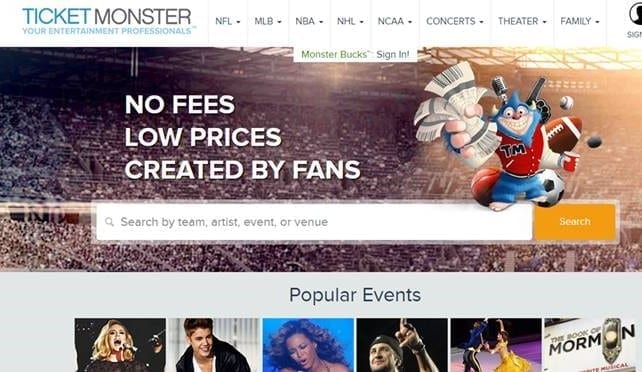
  • South Korean e-commerce site ‘Ticket Monster’ starts luxury car sales

    South Korean e-commerce site ‘Ticket Monster’ starts luxury car sales

    South Korea’s major e-commerce site, Ticket Monster on Monday said it has started sales of British luxury car brand Jaguar. Ticket Monster put on sales of 20 Jaguar XE Portfolios and R-Sports on Monday morning, marking them down 7 million won (US$6,317) from the regular retail prices to 48.1 million won and 46 million won, respectively. The two models were sold out in three hours, the company said.

    Ticket Monster said it could sell all of the vehicles on the first day because it offered the best available price and even promised a refund if it was not the cheapest.

    “Although new cars have been sold by overseas online shopping malls, it is the first time that a Korean e-commerce site sells new cars online,” a company official said. Consumers made a one-time payment on the website and will take over the vehicles from designated dealers or visit dealer shops, officials said. Ticket Monster said the latest move was aimed at changing customers’ expectations and leading the new trend in the highly competitive market.

    “The sales of imported cars is part of Ticket Monster’s efforts to change the retail paradigm,” Ha Sung-won, the chief operating officer of Ticket Monster, said.

  • Tesla may open first dealership in Korea

    Tesla may open first dealership in Korea

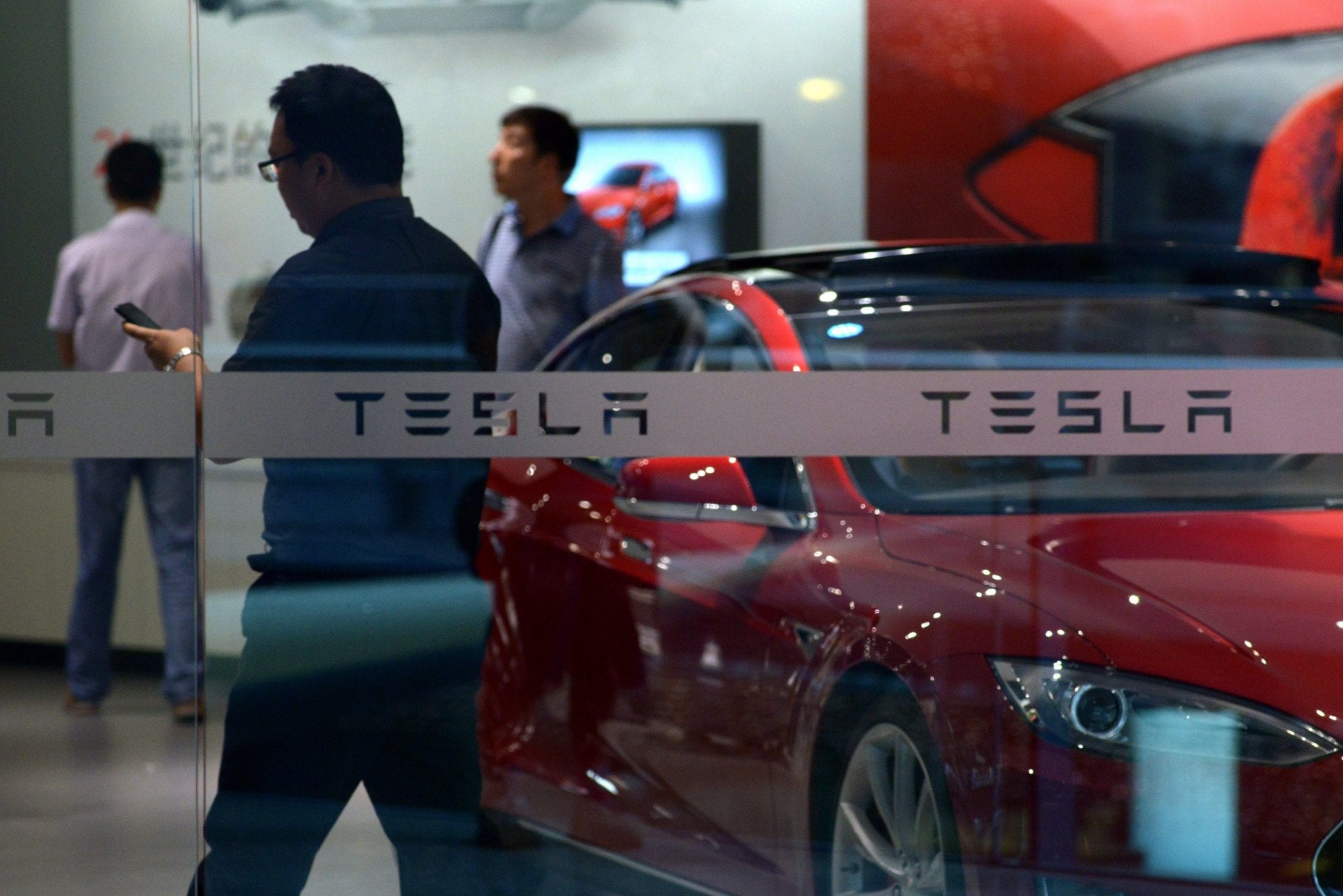
    Tesla Motors, the Silicon Valley-grown electric vehicle manufacturer, may open its first Korea dealership in a Shinsegae Group shopping complex within this year.

    “The talks are positive, for sure, but the final confirmation has yet to be reached,” said a Shinsegae Group spokesperson.

    “If the final confirmation is made, Shinsegae Property, which is pursuing the deal with Tesla, will give us notice,” he added.

    According to industry sources Thursday, if negotiations succeed, Tesla will open its first Korean dealership in Shinsegae’s Starfield Hanam shopping complex in Gyeonggi as early as November. The complex is a 30-minute drive from Seoul’s Gangnam District.

    Tesla CEO Elon Musk also confirmed Seoul as one of his next targets along with Taipei and Mexico City for the company’s high-end electric vehicles.

    “We are also accelerating store openings and plan to add a new retail location every four days on average during the remainder of Q3 and through Q4,” said Musk in an earnings report distributed Wednesday.

    “We are adding stores in new population-dense markets like Taipei, Seoul, and Mexico City, while also adding stores in our most mature markets like California,” he added.

    Scheduled to open early next month, Starfield Hanam is Shinsegae Group Vice Chairman Chung Yong-jin’s ambitious project to make a retail complex that includes not only shopping venues but all sorts of entertainment- and leisure-related facilities such as a waterpark, cinema and aquarium. Korea doesn’t have such a complex.

    In addition to offering some 750 retail brands, the complex will also house Asia’s first BMW dealership that handles both the original BMW and Mini vehicles. Luxury motorcycle brand Harley Davidson will have a store that displays not only vehicles but also its clothes and accessories lines.

    Since last December, Tesla has been gearing up to enter Korea by registering the corporate name Tesla Korea Limited and sending out job advertisements for car dealers and mechanics.

    Korea’s retail giants have been sending out feelers to the prestige car company, counting on its attractiveness to the general public.
    Lotte World Mall in Jamsil District, eastern Seoul was considered a candidate to house a Tesla shop, but the negotiation fell apart early this year.

    Opening an independent dealership in Gangnam District was raised as another possible choice and Tesla is still reported to be considering that option.

    Tesla is known for a unique way of directly operating and managing its branches, instead of franchising dealerships as most carmakers do.

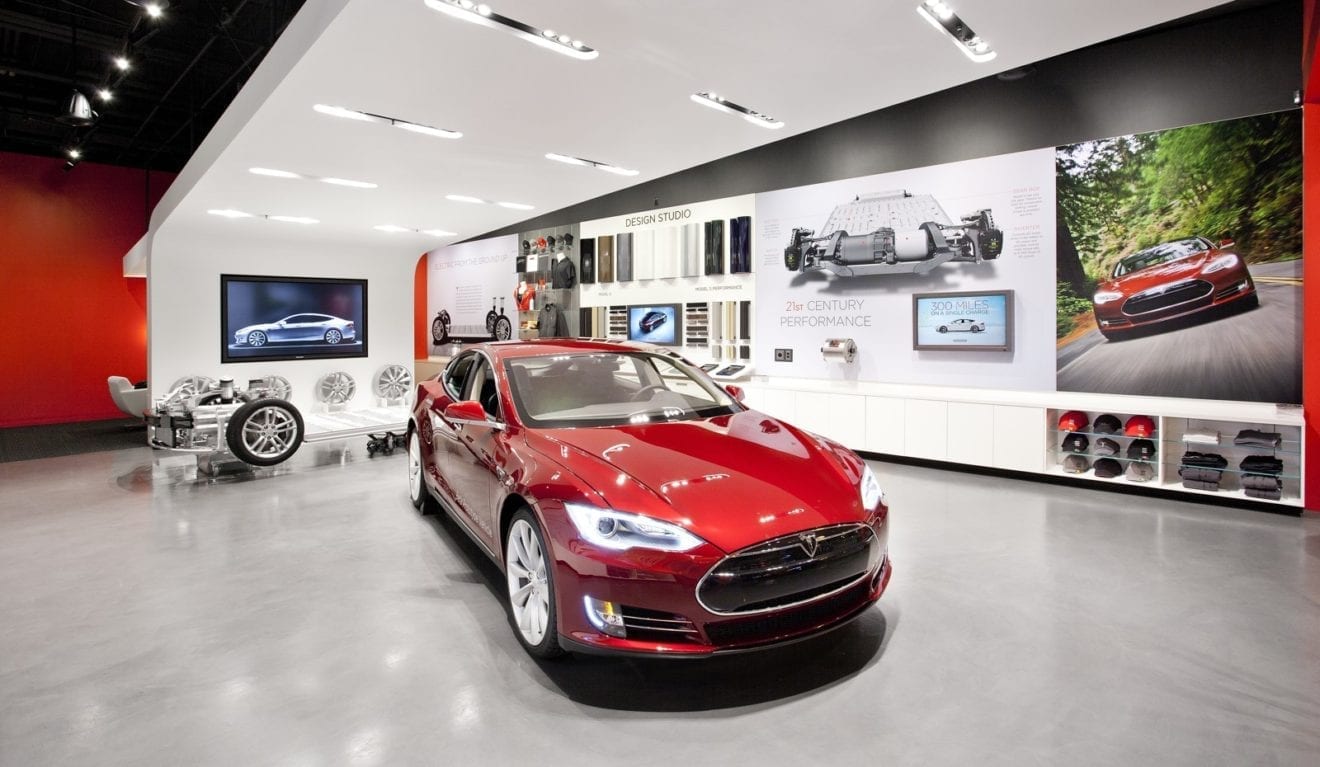
    Its first New York showroom, which Musk located in the funky Red Hook neighborhood of Brooklyn earlier this year, symbolizes the concept. It shows that a Tesla shop is not exclusively for car shoppers but is open to anyone interested in futuristic car technology. That also explains why many Tesla dealerships are in U.S. shopping malls.

    “The quality of our new locations is also improving as many shopping malls now consider us the new standard for an anchor tenant based on the amount of foot traffic that we draw and our very high revenue per square foot,” said Musk in the earnings report released Wednesday.

    If Shinsegae’s negotiations with Tesla succeed, its shop in Starfield Hanam will operate as a display until the Korean government allows the luxury electric vehicles on Korean roads

    In the meantime, Tesla’s second quarter earnings announced on Wednesday fell short of analysts’ expectations. It posted a $293 million net loss in the second quarter, a more than 60 percent drop compared to last year’s Q2 operating loss of $184 million.


  • Skoda Auto to invest Rs 100 crore in India

    Skoda Auto to invest Rs 100 crore in India

    Having consolidated operations in India in the last couple of years, Czech car maker, Skoda Auto is pursuing volumes from 2017.

    The company plans to invest Rs 100 crore in revamping the dealership network with new identity and introduce series of service initiatives to bring in transparency.

    The company is likely to end 2016 with 15,000 units in 2016 posting a flattish numbers, but with 4 new products planned for 2017, Skoda is eying 30% growth in volumes to over 20,000 units in 2017.

    According to people in the know, Skoda will be launching the face lifted Rapid, which has been significantly engineered locally, followed by premium SUV Kodiaq in the Toyota Fortuner category. The company is also likely to bring in a variant of Octavia in the coming 12-18 months.

    Sudhir Rao, MD of Skoda Auto said, the company is not going after the volumes game, but aims to position itself as a value luxury car maker positioned between volumes car maker and luxury car maker, with clear eye on segment leadership or be amongst the top three of segment the company participates in.

    “We are looking at higher volumes but not at the cost of profitability. We have gone a long way in improving our operational efficiency and ownership experience. We will aim for leadership in the segment we participate and we expect these segments to become main stream in near future,” added Rao.

    Skoda is also investing a lot on digitisation of the brand and the customer interface. The company will be launching the MySkoda app from 1st of September, which will increase the transparency with customers.

    The company will launch the industry first 4 year warranty of the car service.

    The company sells an average of 125 units of Superb in a month and has a segment share of 60% in premium saloon space and it sells about 200 units of Octavia per month with a segment share of 60%. Skoda sells another 1000 units of Rapid per month.

    The company expects the new models to bring in incremental volumes from 2017. With the existing portfolio, Skoda addresses just 20% of overall car market, but aims to grab more than half of Rs 10 lakh to Rs 40 lakh price bracket.

  • South Korea suspends sales of most Volkswagen models

    South Korea suspends sales of most Volkswagen models

    South Korea on Tuesday suspended sales of most Volkswagen AG (VOWG_p.DE) models in a fresh blow to the German automaker as it struggles to overcome the global repercussions of its emissions-test cheating sandal and rebuild its tattered image.

    The government revoked certification for 80 model variants of VW, Audi and Bentley vehicles, and fined Volkswagen 17.8 billion won ($16.06 million) for allegedly forging documents on emissions or noise-level tests.

    The move could slam the brakes on sales for Europe’s biggest automaker in the Asian market, where its local unit had more than tripled revenue to 2.82 trillion won over the past five years before becoming mired in the emissions scandal.

    Volkswagen described the ruling as “most severe” and said it would consider a legal challenge.

    In all, 209,000 VW vehicles have been de-certified in South Korea, mainly over emissions-related problems, since November – or 68 percent of the vehicles the automaker had sold in the country since 2007, the environment ministry said.

    While South Korea is a relatively small market for Volkswagen, it is a major market for its luxury marques Audi and Bentley and one of the fastest-growing markets for all brands.

    It could take more than three months for the affected brands to be back on showroom floors, officials said.

    “It usually takes three months for vehicle certification, but this may take longer for Volkswagen, as we will take thorough steps,” environment ministry director Hong Dong-gon told reporters.

    Any delay in recalls previously ordered over emissions test manipulation could be met with an order for VW to exchange those vehicles for other models, Hong added.

    LEGAL ACTION

    In a letter to customers posted on its South Korean homepage, Volkswagen said it would consider requesting an “injunction of execution”.

    It also could take legal action against the government’s decision “if this will help recover our company’s business reputation and benefit our consumers, dealers and other partners,” it added.

    Volkswagen voluntarily halted sales of most of its models in South Korea from July 25, ahead of the government’s decision.

    The company reported a 12 percent drop in quarterly profit at its main passenger car division last week, showing the challenges it still faces since admitting in September to using software to falsify pollution tests on some diesel cars.

    In addition to billions of dollars in costs related to the scandal, it is also tangled in legal action in the United States, Germany, South Korea and elsewhere.

    South Korea has taken a particularly tough line, with prosecutors raiding Volkswagen’s Seoul offices and arresting an executive in June.

  • Toyota, Daihatsu jointly debut new ‘green’ cars in Indonesia

    Toyota, Daihatsu jointly debut new ‘green’ cars in Indonesia

    Toyota Motor Corp. and Daihatsu Motor Co. jointly launched two different cars in Indonesia on Tuesday, a day after Toyota acquired all of Daihatsu’s shares.

    “It is a new relationship between Daihatsu and Toyota,” Daihatsu President Masanori Mitsui said during the launch in the industrial town of Karawang in West Java Province, where the cars are manufactured.

    Toyota launched the Calya, which means “perfect” in Sanskrit and will be sold at between $9,973 and $11,538, while Daihatsu launched the Sigra, which means “fast response” in the same language and will sell at between $8,153 and $11,461.

    The two companies earlier collaborated in producing the Avanza and Xenia in 2003, the Rush and Terios in 2006, and the Agya and Ayla in 2013.

    According to Mitsui, they have reached a huge achievement in production resulting from their cooperation.

    Toyota Managing Director Hiroyuki Fukui shared that view and said the collaboration will improve the companies’ performance amid tough global competition.

    The Calya and Sigra are multipurpose vehicles, which each can carry seven passengers. They are categorized into low-cost green car, a type of car highly encouraged by the Indonesian government.

    “Those kinds of cars in great demand, so we’re hoping for a positive response (from the market),” said Sudirman Maman Rusdi, president of PT Astra Daihatsu Motor, an Indonesian subsidiary of Toyota.

    According to him, his company has invested about 1.1 trillion rupiah (about $84.61 million) for the two cars’ production.

  • Yamaha, Honda, Suspected of Cartel Practice

    Yamaha, Honda, Suspected of Cartel Practice

    PT Yamaha Indonesia Motor Manufacturing (YIMM) and PT Astra Honda Motor (AHM) have been suspected of involved in motorcycle cartel practice. The suspicion was raised after an investigation conducted by the Commission for the Supervision of Business Competition (KPPU). Both companies are suspected of controlling prices of 110 to 125cc Automatic Scooter products.

    KPPU’s investigation team, led by Frans Adiyatma, explained that they have found an electronic mail sent by YIMM President Director Yoichiro Kojima to Yamaha Indonesia marketing team.

    “Kojima instructed the marketing team to adjust their prices in accordance with Honda motorcycle price increase,” Frans said on Tuesday.

    The price fixing was suspected to occur following an agreement made between Kojima and Mr. Inuma, President Director of Astra Honda Motor. An email dedicated to YIMM Vice President Dyonisius Beti mentioned that “President Kojima-san has requested us to follow Honda price increase many times since January 2014, because of his promise with Mr Inuma, president of AHM at a golf course.”

    KPPU Chief Syarkawi Rauf said that the investigation was carried out to protect consumers and to allow consumers to purchase motorcycles at competitive prices.

    In response to the allegation, Yamaha General Manager M. Masykur argued that his company had never been involved in cartel practices. “Yamaha has been doing business in Indonesia for 42 years, the company will certainly comply with Indonesian laws,” Masykur stated.

  • Volkswagen’s Audi plans electric car push to put heat on Tesla

    Volkswagen’s Audi plans electric car push to put heat on Tesla

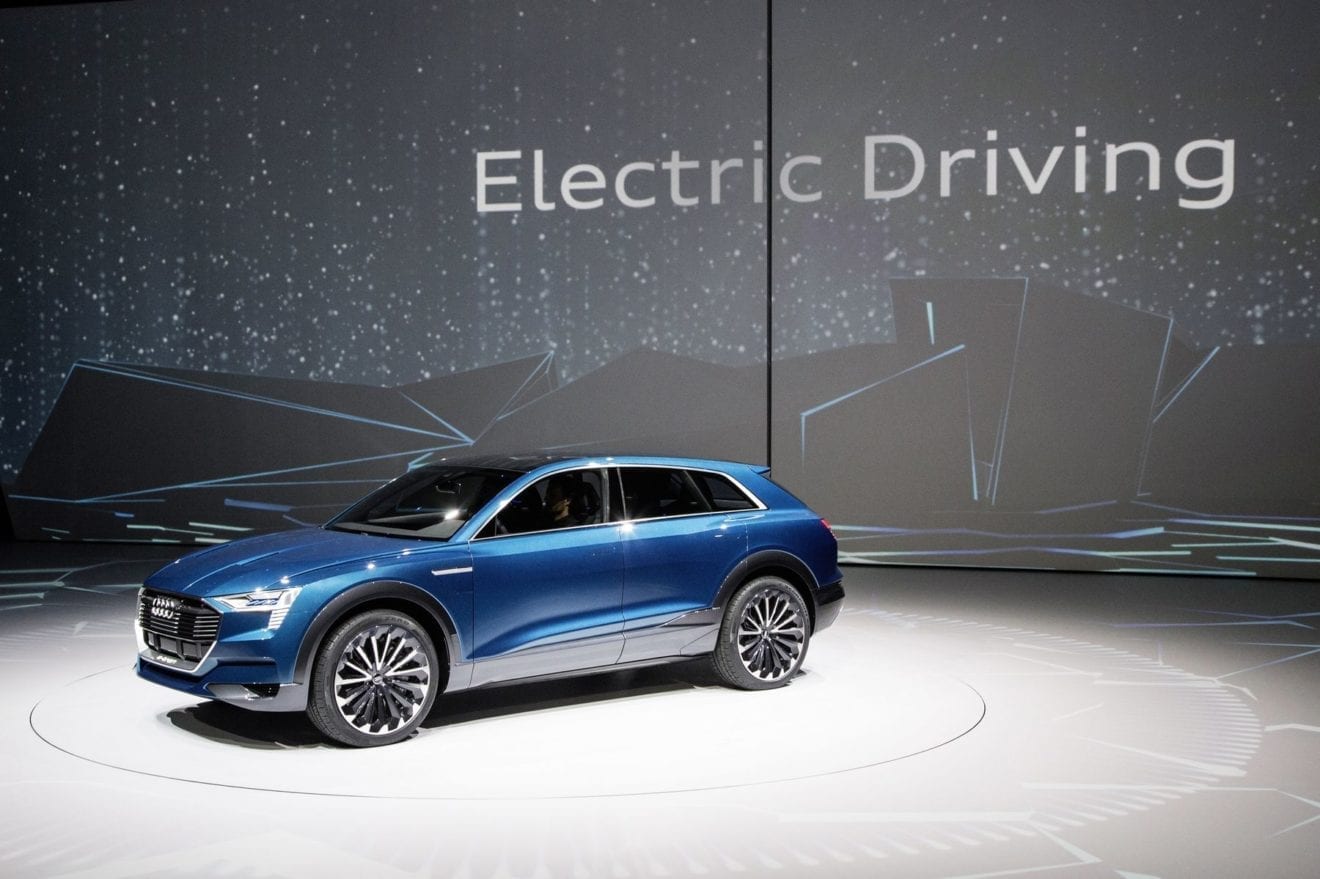
    Audi will aim for electric cars to account for a quarter of its sales by 2025 as part of a strategic overhaul following the emissions scandal at parent Volkswagen, company sources said, in a move that could step up the challenge to U.S. group Tesla.

    Audi, which has been slow to embrace battery-powered vehicles, will now invest about a third of its research and development (R&D) budget into electric cars, digital services, and autonomous driving, two company sources told Reuters.

    Based on the 1.8 million cars sold by the German automaker last year, that would mean it selling at least 450,000 electric cars a year. Factoring in an expected rise in sales, that could turn Audi into a major competitor to Tesla (TSLA.O), which believes it can sell 500,000 electric cars by 2020 or sooner.

    With the exception of BMW (BMWG.DE), Germany’s luxury automakers have been late to develop electric vehicles, a market which is still loss-making. But Audi’s parent Volkswagen (VOWG_p.DE) is under pressure to clean up its image in the wake of its emissions-test cheating scandal.

    Audi CEO Rupert Stadler plans to outline details of the new business roadmap to more than 2,000 managers on Wednesday at a closed-door conference in Munich, the sources said.

    An Audi spokesman declined to comment. German business daily Handelsblatt reported late on Monday about Audi’s plans.

    Figures compiled for Reuters by LMC Automotive show German trio BMW, Mercedes-Benz (DAIGn.DE) and Audi – the world’s largest producers of luxury cars – rank 12th, 14th and 22nd respectively when it comes to annual sales of electric and hybrid vehicles, trailing Toyota, Honda, Lexus and Nissan.

    LACK OF DEMAND

    In the wake of Volkswagen’s diesel test cheating, regulators around the world have intensified a clampdown on toxic fumes, potentially providing a boost in demand for zero emission cars.

    Customers have, however, been slow to adopt electric cars which have a limited operating range and long recharging times.

    Of the 14,202,024 new cars registered in the European Union and the European Free Trade Association last year, only 186,170 were electric vehicles and 234,170 were hybrids, figures from European auto association ACEA show.

    Year-to-date growth for electric vehicles has been slowing. While sales jumped by 55 percent last year, they have risen just 15 percent to 37,000 so far in 2016, according to JATO Dynamics.

    “Some governments in Northern Europe where most of the electric vehicles are sold have announced fewer incentives. At the same time there hasn’t been any important new launch in the electric vehicle segment,” said Felipe Munoz, global automotive analyst with JATO.

    The lack of an electric sport utility vehicle, and broad demand for hybrid vehicles, has dampened demand in pure electric cars, JATO added.

    To free up funds for the new strategy, Audi plans cutbacks in its conventional combustion car program including steps to reduce country-specific variants of engines and transmissions, the sources said, without being more specific.

    Volkswagen last month announced plans to spend billions of euros on electric cars, ride-hailing and automated driving to become a world leader in green transport by 2025.

    In 2015, Audi spent 4.24 billion euros ($4.69 billion) on R&D. Of the brand’s 50 or so models, only two are electric or semi-electric and Audi is now taking orders on a third, the Q7 e-tron plug-in hybrid.
  • Tesla in talks for store in Korea’s biggest mall

    Tesla in talks for store in Korea’s biggest mall

    Tesla Motors Inc. is in talks to open its first store in what will be South Korea’s biggest mall, according to the shopping complex’s owner Shinsegae Group.

    The two parties are negotiating over an outlet at Starfield Hanam, which is set to be the country’s largest mall when it opens in September, according to Shinsegae Group. Built jointly by Shinsegae Group and Taubman Asia, the four-story complex occupies an area the equivalent of 70 football fields and is located about six miles east of Seoul.

    Premium automakers including BMW are opening showrooms in retail districts to attract walk-in customers who wouldn’t otherwise visit car dealerships. Shinsegae Group owns Shinsegae Co. and E-MART Inc. and is South Korea’s second-largest retail conglomerate, behind Lotte Group.

    Atsuko Doi, a spokeswoman for Tesla in Tokyo, didn’t immediately reply to an email request for comment. Tesla said last month it plans to set up an office in Seoul, without giving further details. The U.S. electric vehicle maker advertised positions in sales, engineering, service and marketing in Seoul on its website. South Korea would be Tesla’s fourth market in Asia after China, Hong Kong and Japan.

    Separately, Hyundai Motor Co. said in an email that it will open its first premium Genesis brand store in the Starfield mall later this year.

  • KDDI taps Gemalto for connected cars and IoT

    KDDI taps Gemalto for connected cars and IoT

    Japan’s KDDI has selected Gemalto to provide the platform to enable secure connectivity for connected cars and IoT applications worldwide.

    Gemalto will provide its LinqUs On-Demand Connectivity (ODC) subscription management solution and embedded SIMs (eSIMs) to the operator.

    As a result, KDDI can expect to provision any requested operator’s profile on connected cars equipped with pre-embedded eSIM.

    Motorists can access optimized real-time information about traffic and nearby amenities, navigation, vehicle diagnostics, and emergency services, anytime, anywhere.

    Gartner forecasts that by 2020, there will be around 250 million vehicles on the road with some form of wireless connectivity, making connected cars a major element of the Internet of Things. The lack of flexible and interoperable remote subscription management is a major challenge in deploying IoT.

    Gemalto’s solution, based on global GSMA specifications, is designed to simplify logistics for OEMs.

    “Gemalto’s solution is based on interoperable GSMA standards, and will provide a common and consistent way to connect devices in the future,” said Keiichi Mori, executive officer and general manager of KDDI’s IoT business development division.

    “With long-lasting relationships with over 500 mobile operators worldwide and a strong local presence, they can help us expand our services to other IoT applications, to obtain rapid growth in the connected world.”

    Michael Au, Gemalto president for South Asia and Japan, said IoT is increasingly turning connected cars into powerful hubs for value-added services such as infotainment, real-time vehicle telematics, and usage-based insurance, offering plenty of opportunities to OEMs and service providers.

  • South Korea May Halt Volkswagen Sales

    South Korea May Halt Volkswagen Sales

    South Korea’s environment ministry has accused local VW officials of fabricating reports on emissions and noise-level tests.

    As a result, Volkswagen may have sales of its vehicles in South Korea suspended later this month. The environmental authority in South Korea, the National Institute of Environmental Research, will decide at a hearing on July 22 whether to suspend the sale of 32 VW Group models, which includes the Audi brand too, currently available in the market.

    Prosecutors last month raided the Seoul offices of the German automaker and arrested an employee as part of the investigation. The automaker stands accused of fabricating reports on 26 different VW Group models including the VW Golf and the Audi RS7.

    The South Korean unit of Volkswagen has seen sales slide dramatically in the first half of 2016. Sales are down 33 percent to 12,463 units for January through to June compared to the same period last year.

    Volkswagen has said it may take legal action to fight any decision to halt sales.

    The situation with VW isn’t without precedent.

    Earlier this year, South Korea suspended sales of the Nissan Qashqai after accusing the Japanese automaker of manipulating the model’s emissions control system. The local Nissan unit has filed a lawsuit against the environment ministry in response.

  • Self-driving bus unveiled in Tokyo

    Self-driving bus unveiled in Tokyo

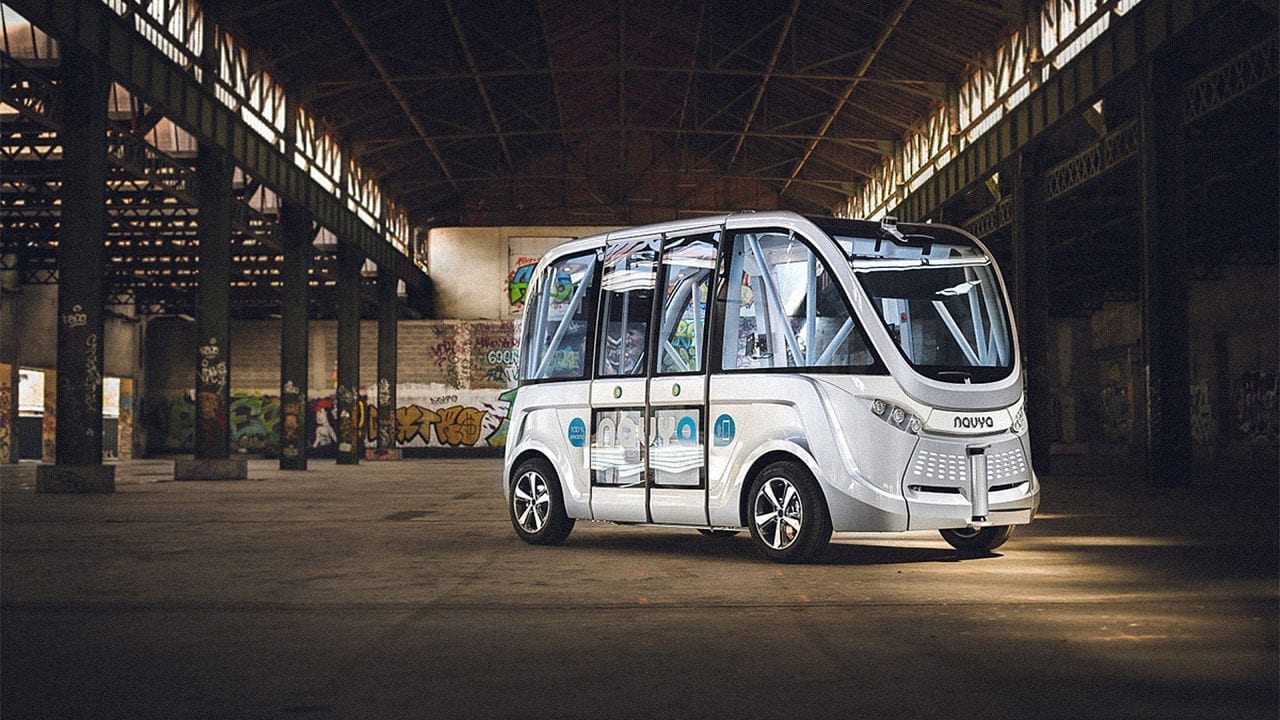
    Japanese technology firm DeNA Co. showcased its first self-driving bus in Tokyo on Thursday, unveiling a vehicle that runs on electricity and can carry 12 passengers.

    The EZ10 Robot Shuttle, developed in conjunction with French company Easy Mile, will first be used at a shopping facility in Japan’s Chiba prefecture next month and has a maximum speed of 40 kilometres per hour (25 miles per hour).

    Last month bus company PostBus unveiled a self-driving electric shuttle in the Swiss city of Sion. Automated driving technology is currently in the spotlight with the U.S. National Highway Traffic Safety Administration investigating a May 7 fatality of a Tesla Model S driver using autopilot technology.

    “We take safety very seriously,” Hiroshi Nakajima, general manager of DeNA’s automotive business, told a news conference. “Because we worry that there may be a serious accident, we take double or triple safety checks and begin from there.”

  • Toyota plans to cut 800 jobs in Thailand

    Toyota plans to cut 800 jobs in Thailand

    Toyota Motor Corp’s Thai unit has launched a voluntary redundancy program aimed at cutting around 800 subcontractors in Thailand due to economic problems in the southeast Asian country and abroad.

    Thailand’s economic slowdown, along with uncertainty over the global economy, have affected both the domestic automotive industry and exports since the beginning of the year, it said in a statement.

    That has caused a reduction in production volume, overtime hours and monthly income offered to employees, it said.

    The company has offered the redundancy package to around 800 subcontractors but more workers have applied for the scheme, Phuphal Samata, the president of Toyota Thailand Worker’s Union, told Reuters.

    “There isn’t overtime payment anymore, so many subcontractors may want to find other work and take this compensation package,” he said.

    Toyota commands about a third of the local auto market and has 18,000 workers in Thailand, 40 percent of whom are subcontractors, he said.

    Thailand is a regional production and export hub for the world’s top carmakers. The sector accounts for around 10 percent of the country’s gross domestic product.

    Domestic auto sales have declined almost every month on a yearly basis since May 2013 following the ending of a government car subsidy scheme in 2012.

    In January, Toyota forecast Thailand’s total domestic car sales would fall 10 percent in 2016 from a year ago to 720,000 units. It sees its own annual auto sales falling 9.8 percent from last year.

    Job cuts at Toyota are unlikely to spread to other automakers as the firm has hired many workers since the car subsidy scheme, said Surapong Paisitpattanapong, spokesman for the Federation of Thai Industries’ Auto Industry.

    “I don’t think others will immediately follow suit because May’s auto production, exports and domestic auto sales are growing. There’s still hope,” he said.

  • BMW to develop driverless car technology with Intel, Mobileye

    BMW to develop driverless car technology with Intel, Mobileye

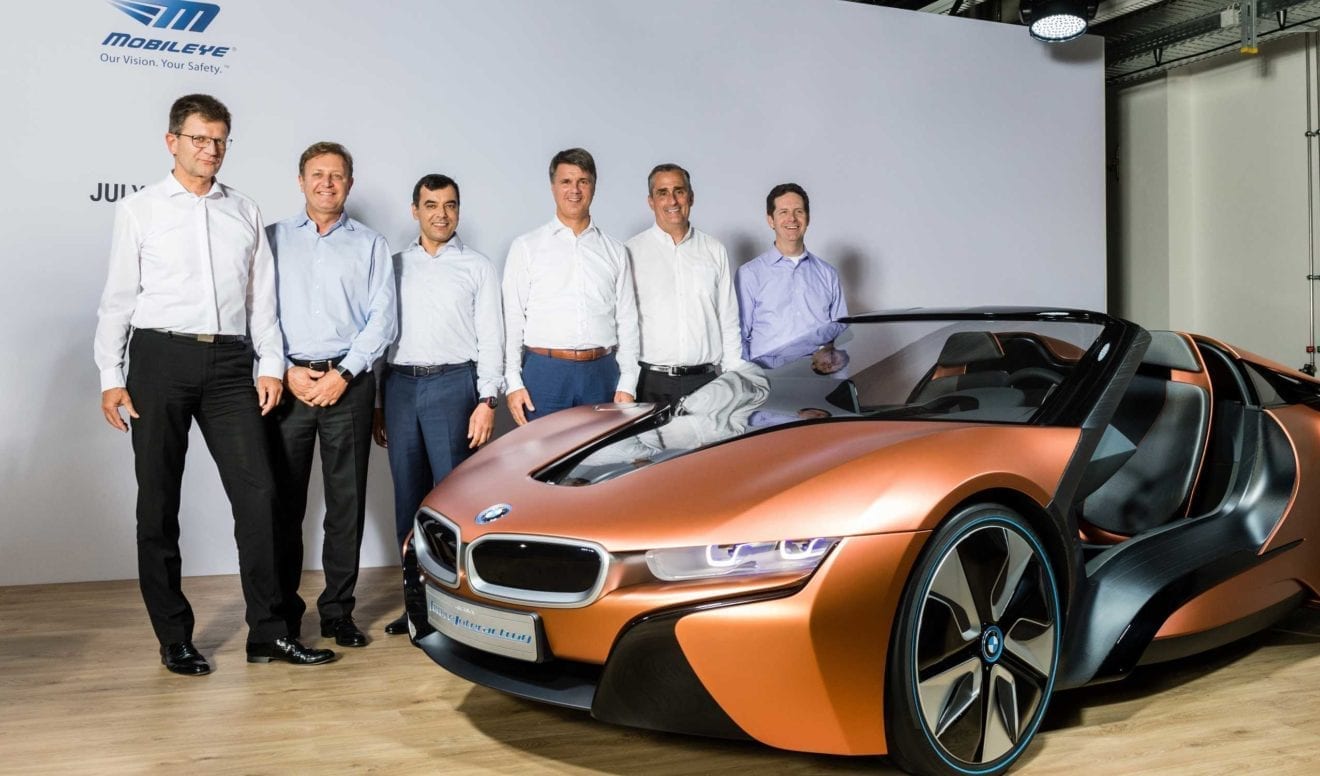
    BMW is teaming up with Intel and Mobileye to develop new technology for the auto industry that could put self-driving cars on the road by around 2021.

    The alliance highlights a shift in the dynamics of research and development in the car industry, which until recently saw automakers largely dictating terms for suppliers to manufacture their proprietary technologies at specified volumes and prices.

    Now carmakers are increasingly striking up partnerships with technology firms using open technology standards, seeking to harness their expertise in areas including machine learning and mapping as they race against Silicon Valley companies such as Google, Tesla and Apple to develop driverless vehicles.

    “Highly autonomous cars and everything they connect to will require powerful and reliable electronic brains to make them smart enough to navigate traffic and avoid accidents,” Intel Chief Executive Brian Krzanich said on Friday at a joint news conference announcing the alliance.

    The three companies said their new platform would be made available to multiple carmakers and they expected vehicles with highly and fully-automated driving would be brought into mass production by 2021. It is too early to say which other carmakers would join the alliance, BMW Chief Executive Harald Krueger said at a news conference on the outskirts of Munich on Friday.

    Sophisticated cruise control systems already enable “hands off” driving as cameras and computers allow cars to automatically brake, steer and accelerate in traffic at low speeds. But drivers are required to stay in control.

    Now BMW, Intel and Mobileye will develop cars with even higher levels of automation described as “eyes off,” “mind off,” and “driver off”. This requires much more computing power and software know-how, forcing traditional carmakers to collaborate more closely with technology specialists.

    Both industries see huge revenue opportunities in the market for autonomous vehicles, although it is unclear how many drivers will be prepared to relinquish control and how quickly laws will be put in place to allow fully autonomous vehicles on the roads.

    But creating common technology standards would help all manufacturers update their vehicles faster, Intel Chief Executive Brian Krzanich said. “That will be critical for advancing the safety aspects of this.”

    A common approach to standards will also make it easier for regulators to understand and approve the roadworthiness of a vehicle while still leaving enough scope for individual car manufacturers to customize their cars, Mobileye Chairman Amnon Shashua said.

    Beyond technological hurdles there are legal questions over who is responsible when a crash occurs. On Thursday, the driver of a Tesla Model S car, operating in Autopilot mode, was killed in a collision with a truck in the United States, prompting an investigation by federal highway safety regulators.

    When asked about the crash, BMW CEO Harald Krueger said: “The accident is very sad …. We believe today the technologies are not ready for series production,” he added, explaining the alliance had not forecast that until 2021.

    “For the BMW group, safety comes first,” he said.

    As part of the new alliance, Intel, the world’s largest computer chip maker which has been looking to expand into the automotive electronics market, will supply the microprocessors – or central processing units – to control an array of sensors.

    Auto camera and software maker Mobileye will supply its Road Experience Management (REM) technology and make its latest EyeQ5 chip available to be deployed on Intel computing platforms.

    The three companies said they would demonstrate their technology in a prototype in the near future.

  • Alibaba launches internet-enabled smart car

    Alibaba launches internet-enabled smart car

    Alibaba Group has announced the launch of OS’Car, the first mass-produced internet car powered by the company’s YunOS smart car operating system.

    The company has developed OS’Car RX5 in collaboration with SAIC Motor Corp. The new car will be supported by a cloud-based platform that enables data streaming, modeling and reporting to augment the driving experience.

    YunOS provides drivers will features such as an intelligent map with accurate location tracking without Wi-Fi or GPS, as well as integrated screens including an intelligent rear-view mirror for safer driving.

    The vehicle supports voice commands – in fact audio is the primary mode for controlling the system. It can automatically recognize the driver through connected smartphones or smart watches and provide personalized services such as greetings or preferred music.

    “What we are creating is not ‘internet in the car’, but a ‘car on the internet’. This is a significant milestone in the automobile industry. Smart operating systems become the second engine of cars, while data is the new fuel,” Alibaba Group chairman Dr Wang Jian said.

    “Going forward, cars will become an important platform for internet services and smart hardware innovation. We will be embracing a world where everything is closely connected.”

    YunOS has been designed as an open platform to support third party hardware and services.

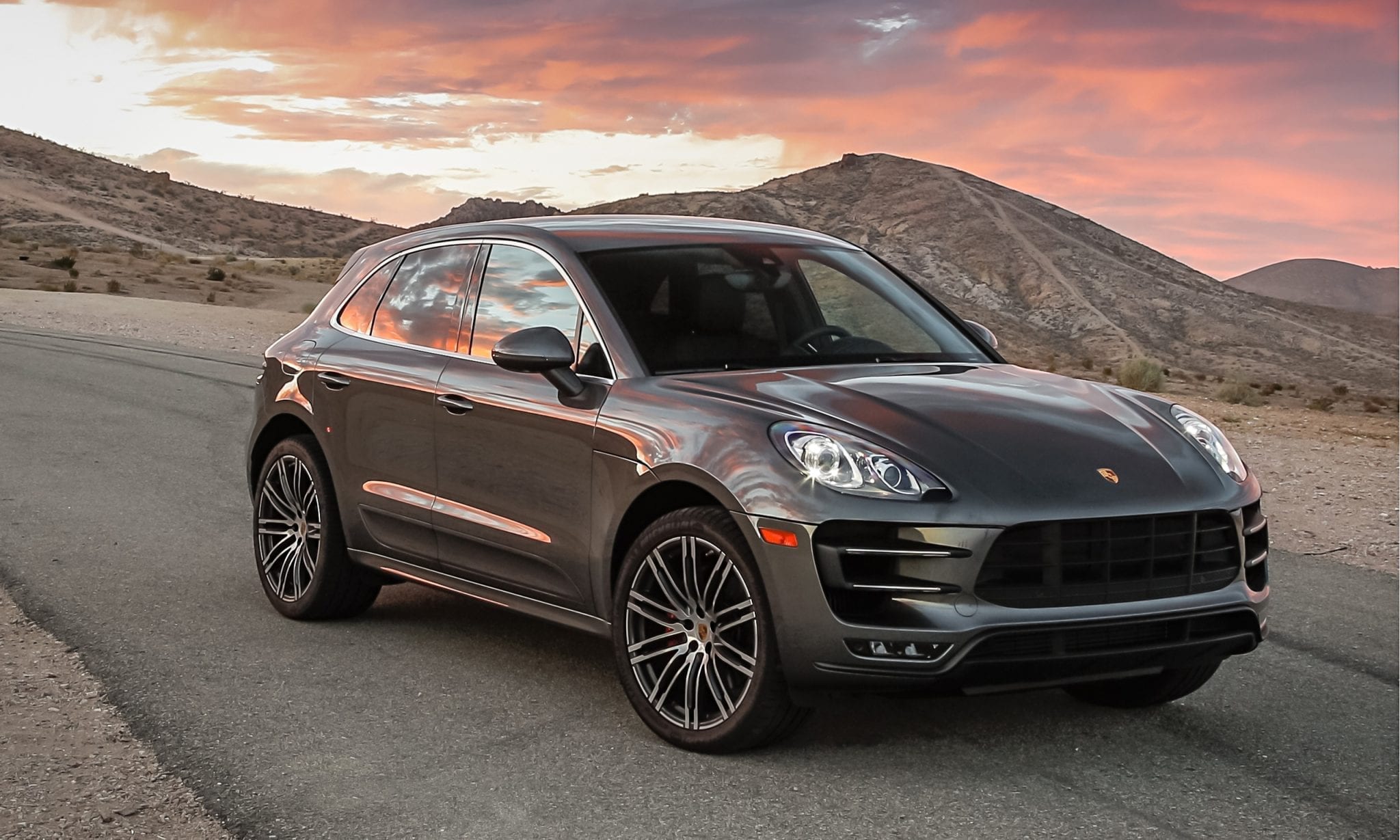
  • 2016 Porsche Macan retail prices confirmed, from RM415,000

    2016 Porsche Macan retail prices confirmed, from RM415,000

    Sime Darby Auto Performance (SDAP), authorised importer of Porsche vehicles in Malaysia, has finally confirmed prices for the entry-level Porsche Macan. Starting at RM415,000, the confirmed base prices are some RM20,000 lower than was previously indicated during the launch, at RM435,000.

    The updated Macan features minor styling enhancements, added standard infotainment equipment such as the Porsche Communication Management system (PCM) and a power hike of some 15bhp, now totalling 252bhp between 5,000rpm and 6800rpm, while a 20Nm increment of torque now totals 370Nm, enjoyed between 1,600rpm to 4,500rpm.

    The optional list of equipment is exhaustive, as with any Porsche – including Porsche Dynamic Light System Plus (PDLS Plus) which continuously adjusts the headlight level and the Sport Chrono Package which cuts down 0.2 seconds on the 0-100km/h sprint to just 6.5 seconds.