Category: Automotive

Retail News Asia is committed to providing both local and global retailers with the latest Auto and Car news throughout the Asian market. This on a daily base.

  • General Motors Unveils Futuristic Flying Cadillac Concept Vehicle

    General Motors Unveils Futuristic Flying Cadillac Concept Vehicle

    General Motor on Tuesday presented a futuristic flying Cadillac – a self-driving vehicle that takes off and lands vertically and carries the passenger above the streets and through the air. A senior GM executive described the concept as “reimagining the future of personal transportation”. The single-passenger Cadillac – technically, a vertical take-off and landing (VTOL) drone – will be able to travel from urban rooftop to urban rooftop at speeds up to 55 miles per hour.

    It is fully autonomous and all-electric, with a 90kW motor, a GM Ultium battery pack and an ultra-lightweight body with four pairs of rotors.

    The flying Cadillac was presented in a video as part of a virtual keynote presentation by Chief Executive Mary Barra, along with a family-friendly Cadillac electric shuttle.

    Barra last year revealed the automaker was exploring such alternative transportation modes as aerial taxis.

    The concepts in the CES video were introduced by GM design chief Mike Simcoe, who described the VTOL as “the Cadillac of urban air mobility”.

    “VTOL is key to GM’s vision for a multimodal future,” he said.

    The autonomous Cadillac shuttle, described in the video as “arriving soon,” features a boxy silhouette that recalls the Cruise Origin, also designed by Simcoe’s team. It features fore and aft sliding doors and a panoramic glass roof.

    The cabin has wraparound lounge-like seating, plus biometric sensors, voice control and hand gesture recognition.

    GM declined to disclose further details.

    Other automakers, including Toyota Motor, Hyundai Motor and Geely Automobile, have previously have shown concept aerial vehicles as part of their future planning.

  • International Driving Permits Can Now Be Renewed While Abroad

    International Driving Permits Can Now Be Renewed While Abroad

    The Ministry of Road Transport and Highway (MoRTH) issued a notification about a week ago to the effect that Indian citizens can now renew their International Driving Permit (IDP) while they are abroad, in case their IDP expires. The new amendment allows Indian citizens to apply for renewal of their IDP through Indian embassies and Missions abroad. The said applications will then be moved to the VAHAN portal in India and will be considered for renewal by respective RTOs. After renewal, the IDPs will be couriered by the RTOs to Indian citizens at their respective addresses abroad.

    The amendment also removes the requirement of providing a medical certificate and a valid visa at the time of applying for IDP in India. MoRTH believes that a citizen who has a valid driving license should not have a requirement for another medical certificate. Plus, there are countries that offer a visa on arrival or cases where visas have been issued at the very last moment. Keeping these conditions in mind, the government will now allow IDP applications without a visa.

    The Ministry of Road Transport and Highways (MoRTH) has extended the validity of vehicular documents till March 31, 2021. The Ministry decided to take this step to prevent the spread of COVID-19. MoRTH has also issued a directory to the States and Union Territory administrations regarding the extension for the validity of documents. As per the notification, vehicular documents like fitness certificates, permits, driving license, registration certificates, and others will remain valid till the end of March 2021.

  • Baidu Plans Smart EV Company, To Make Cars At Geely Plant

    Baidu Plans Smart EV Company, To Make Cars At Geely Plant

    China’s Baidu Inc plans to form a company to make smart electric vehicles (EV), two sources familiar with the matter said, with manufacturing to be carried out at plants owned by automaker Geely. Baidu, the leading search engine company in China, will take a majority stake and absolute voting power in the new company. The venture will revamp some of Geely’s existing car manufacturing facilities to make the vehicles, with in-car software input from Baidu and engineering know-how from Geely, sources told Reuters.

    The companies are in talks to use Geely’s EV-focused platform, Sustainable Experience Architecture (SEA), for future product development, one of the sources, who declined to be identified as the plan was private, said.

    Baidu, which is developing autonomous driving technology and internet connectivity infrastructure, did not immediately respond to a request for comment. Geely declined to comment.

    Baidu’s Nasdaq-listed shares jumped more than 4% after Reuters reported the plan.

    Reuters had already reported last month that Baidu was contemplating making its own EVs and had held talks with Geely, Guangzhou Automobile Group Co Ltd (GAC) and China FAW Group Corp Ltd’s Hongqi on a possible venture.

    Baidu’s rival Alibaba has formed an EV joint venture with China’s biggest automaker SAIC Motor Corp while China’s Didi Chuxing is making EVs designed for ride-hailing services with BYD. Cheered by Tesla Inc’s success in the commercialization of EVs, internet giants including Tencent Holdings Ltd, Amazon.com Inc and Alphabet Inc, have also developed auto-related technology or invested in smart-car startups. People familiar with the matter said last month Apple is pushing to design an electric vehicle and batteries, aiming at a possible 2024 launch.

    Hangzhou-based Geely, China’s highest-profile automaker due to group investments in Volvo Cars, Daimler AG and Malaysia’s Proton, is expanding EV production. Shares of its main listed company, Geely Automobile, which aims to sell 1.53 million vehicles this year, jumped over 10% on Friday.

  • Biggest Drop In UK New Car Sales Since World War Two

    Biggest Drop In UK New Car Sales Since World War Two

    British new car sales fell nearly 30% last year in their biggest annual drop since 1943 as lockdowns to curb the spread of the coronavirus hit the sector, an industry body said on Wednesday. Demand stood at 1.63 million cars in 2020, according to data from the Society of Motor Manufacturers and Traders (SMMT). It was particularly hard hit by a 97% fall in April, the first full month of a national lockdown.

    Dealerships gradually reopened in June on differing dates across the United Kingdom’s four nations.

    “We lost nearly three-quarters of a million units over three or four months, which we never got back,” said SMMT Chief Executive Mike Hawes.

    Showrooms in England have closed again during a second lockdown in November but many were better prepared with “click and collect” options, allowing more purchases, but still leading to a 27% year-on-year slump.

    The performance leaves new car sales at their lowest level since 1992, and suffering the biggest drop since 1943, when sales fell by more than 90%.

    Then, Britain was fighting World War Two, and the industry was repurposed for the effort.

    In 2020, diesel car registrations more than halved, while nearly 30% of sales were electric, hybrid, and mild hybrid vehicles as Britain brought forward a ban on the sale of new combustion engine-only cars to 2030.

    The sector was also awaiting a trade deal with the European Union. An agreement was reached on Dec. 24, meaning immediate tariffs and disruption were avoided, but the sector has warned of additional costs.

    The car sector, like others, now faces the challenge of new lockdowns announced in England and Scotland this week.

    The SMMT expects sales to be below 2 million this year, with the sector nervously looking ahead to March, one of the top two selling months of the year due to the change in the license plate series.

    “Where the industry is focussed at the moment, is what do we need to do to try to sustain sales …, sustain manufacturing over the next two to three months, especially with March being such a critical month for the industry and that will undoubtedly be affected,” said Hawes.

  • Tesla Hunts For Design Chief To Create Cars For China

    Tesla Hunts For Design Chief To Create Cars For China

    Tesla Inc is searching for a design director in China, part of efforts to open a “full-function” studio in Shanghai or Beijing and design electric cars tailored to Chinese consumer tastes, according to three people with knowledge of the matter.

    The U.S. carmaker’s human resources managers, as well as several headhunters, have been trawling the industry over the past four months, the sources said.

    They are looking for “bi-cultural” candidates with 20 or more years of experience who are familiar with Chinese tastes and can bridge the gaps between China and the United States, they added.

    Some candidates have been interviewed by Tesla’s global design chief Franz von Holzhausen, according to the people, though it was not clear how many potential candidates had been approached by the company and recruiters.

    Tesla is also planning to set up a design studio in China but will likely wait for more clarity on strained U.S.-China relations under a new U.S. president

    China is the world’s biggest auto market, plus the largest for all-electric vehicles with sales volumes expected to reach roughly 1.5 million vehicles there this year, according to consultancy LMC Automotive. It is also Tesla’s No.2 market after the United States.

    The carmaker’s plans for the design studio are not fully developed, and the sources believe Tesla will likely wait for more clarity on strained U.S.-China relations under a new U.S. president before making a final decision on the move and all its details.

    The talent search, which the sources said was mainly focused within China, fits with comments from Tesla boss Elon Musk early last year.

    “I think something that would be super cool would be … to create a China design and engineering centre to actually design an original car in China for worldwide consumption. I think this would be very exciting,” he said at a media event in Shanghai.

    Musk’s interest in developing cars in China is part of a broader push by Tesla to boost the company’s global sales volume well past the 500,000-vehicle-a-year mark, which it came just 450 short of hitting in 2020.

    All three sources said Tesla’s search for a China studio director began around September, and that there was a flurry of activity as recently as December when a number of headhunters used LinkedIn and other means to approach candidates.

    One of the sources, who has knowledge of Tesla’s headhunting activities in China, said that once a design director was hired, Tesla would recruit the director’s team which would likely be around 20-strong and include designers plus modelers who help turn design renderings into clay models.

    All the sources said the planned center aimed to be a comprehensive design outfit, with one describing it as a “full-function studio”, which would not only help conceptualize the design of a car but also come up with the final shape – digital three-dimensional data – of a model.

    The data could then be handed over to Tesla’s vehicle engineers, who are mostly based in northern California.

    Two of the sources said Tesla’s China studio would likely also carry out research on Chinese consumer tastes, as well as work for cars expected to be produced at Tesla’s vehicle assembly plant in Shanghai, where designs are tweaked to make sure specific components fit within engineers’ specifications.

    “They want to give vehicle design a lot more bias toward China; they have already done a lot here, setting up a major manufacturing site and having sold a ton of EVs, but it seems Tesla’s ready to put roots down,” said one of the sources.

    This push might lead to a more independent Tesla China, added the person, who has spent more than a decade in the country working at design centres run by global automakers, among other places.

    Chinese consumers bought around 145,000 Tesla vehicles last year, accounting for roughly a third of the company’s overall global volumes, LMC said.

    Two of the sources said one likely “China-specific” model was a lower-cost volume generator such as a $25,000 electric car that Musk referred to at a Battery Day event in September, which he said Tesla might aim to bring to market in about three years.

    Musk said Tesla was confident it would be able to hit the market with “a very compelling $25,000 electric vehicle that’s also fully autonomous”.

    At that price, according to two of the sources as well as industry experts, it was likely to be a compact car, smaller than Tesla’s Model 3, which would be as affordable as some mainstream gasoline-fueled vehicles.

    Compact cars are not big sellers in the United States where bigger, taller vehicles such as Ford’s F-150 pickup truck and SUVs, as well as midsize sedans, rule the road.

    They account for about 10% of America’s overall vehicle market. By contrast, compacts make up 25% of sales in China, or around 5-6 million cars a year, according to consultancy LMC Automotive.

    That’s why the planned $25,000 car Musk has discussed would be better suited to the China marketplace, according to the two sources and industry experts.

    “A compact Tesla car would do well in China, as well as the rest of Asia and Europe,” said Yale Zhang, head of Shanghai-based consultancy Automotive Foresight. “It could potentially put a serious dent in sales of cars like Toyota’s Corolla and the Volkswagen Golf.”

  • Honda 2Wheeler India Likely To Start Production On Gujarat Plant’s Third Line In Next 2-3 Years

    Honda 2Wheeler India Likely To Start Production On Gujarat Plant’s Third Line In Next 2-3 Years

    Honda Motorcycle & Scooter India is likely to initiate production on the third line of its Gujarat Plant in the next two to three years. According to a recent report from PTI, the two-wheeler manufacturer took this step as demand has shrunk in the market due to the coronavirus pandemic. The company commenced the construction activity of a third line to add six lakh units per annum at its Gujarat plant to increase total capacity to 12 lakh units per annum.

    Yadvinder Singh Guleria, Director – Sales & Marketing, HMSI said, “As for our new line which we had made in our fourth factory in Gujarat, we call it our third line. The construction activity and other activities went on as per schedule. However, we have put on hold the decision on when to start production at that line because the overall market has shrunk. In terms of demand, the existing lines and existing capacity are good enough to take care of the demand, which is currently in the market and in the coming next two years or so.”

    He further said, “It depends on how quickly the market rebounds and the new demand shoots, green shoots visible to us. That is the only time we will decide to start production in the third line. From today’s point of view, since the overall market condition is very fluid and a lot of unpredictability around, it looks like two to three years”.

    The company’s business is majorly contributed by scooters which constitute 60 to 65 percent while the remaining business comes from motorcycles. Currently, the two-wheeler maker has four production facilities across the country that are located at Manesar in Harayana, Tapukara in Rajasthan, Narsapura in Karnataka and Vithalapur in Gujarat. The total annual production capacity of all these four plants stands at 64 lakh units.

    The company official said the Indian two-wheeler industry has been hit adversely due to the pandemic which is down by 25 percent. While motorcycle and scooter segments are down by 22 percent and 33 percent respectively. However, the company had to face its challenges as the business is majorly driven from urban India, which had been in the lockdown for a significant number of days than the rural India that reflected on the business.

  • Bentley Posts Highest Ever Sales Numbers In 101 Years In 2020

    Bentley Posts Highest Ever Sales Numbers In 101 Years In 2020

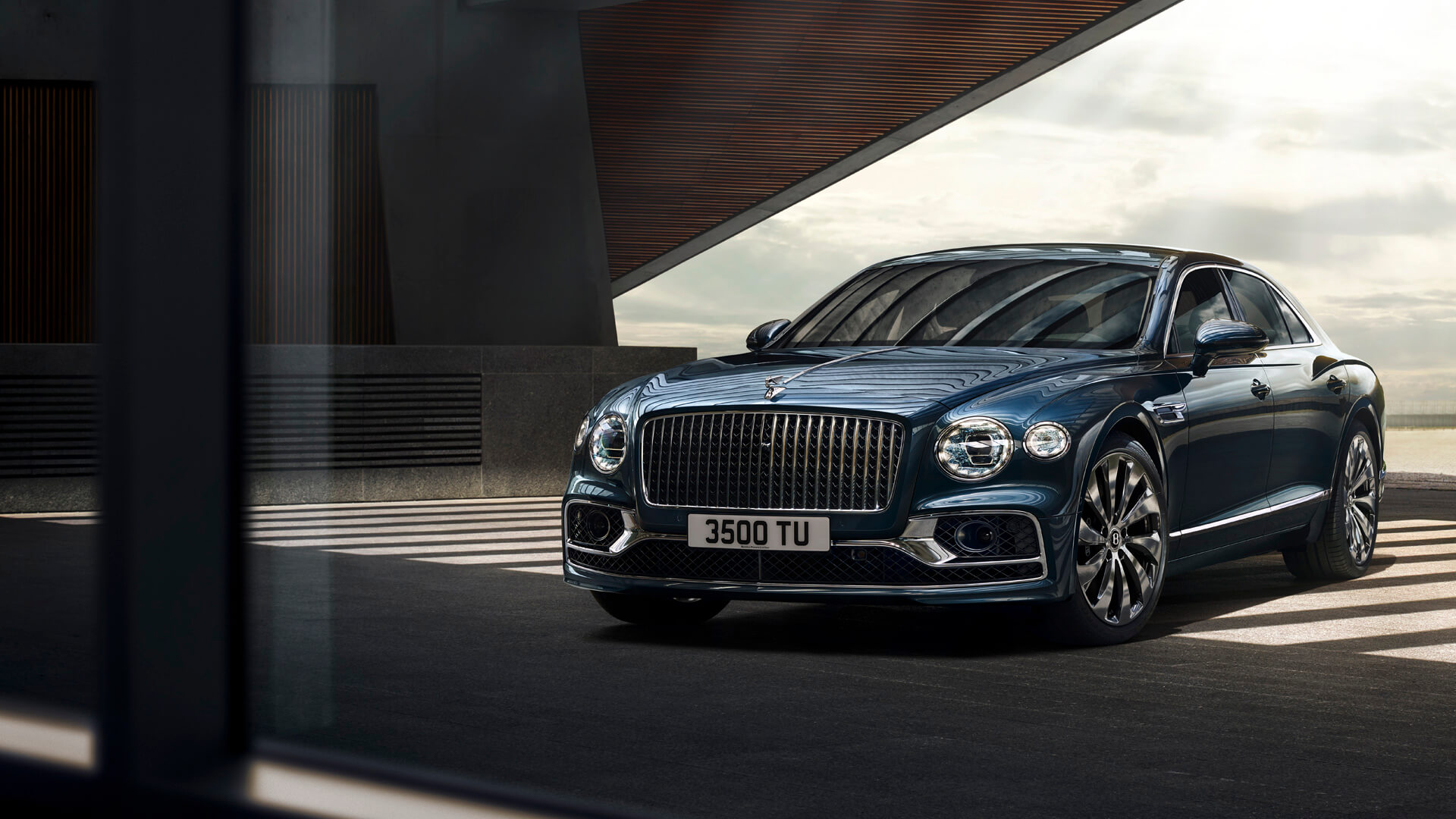
    Bentley Motors announced total sales of 11,206 in 2020, an increase of 2 percent over 2019. Although the pre-COVID sales forecast was much greater, new model introductions fuelled this significant achievement which was the highest sales performance in any of the luxury British marque’s 101 years. Bentley’s production was shut down for seven weeks beginning in March, and running at a 50 percent output for a further nine weeks thereafter, as social distancing measures were

    The Americas remained Bentley’s number one region although a strong performance in China, posting an increase of 48 percent came in a close second. The Bentley Continental GT (24 percent) and GT Convertible (15 percent) together accounted for 39 percent of total sales. However, in spite of the run out of the previous generation model, and delays to market entry of the all-new Bentayga due to the COVID-19 pandemic, the SUV was still the biggest selling single model, accounting for 37 percent of total sales.

    The Americas region delivered 3,035 cars, an increase of four percent on the corresponding figure for 2019, 2,913. Placing the region as Bentley’s number one market, this strong performance was boosted by the introduction of the Flying Spur and a full year of sales of the Continental GT and GT Convertible luxury Grand Tourer.

    Bentley’s biggest growth was reserved for China, posting a sales increase of 48 percent, 2,880 cars, against 1,940, as the traditional sedan market welcomed the introduction of the all-new Flying Spur, with Bentayga sales remaining strong.

    Europe closed the year with the delivery of 2,193 cars, against a figure of 2,670 in 2019, a decrease of 18 percent with the region impacted because of the market entry delays of the all-new Bentayga.

    Bentley’s home market in the UK continued its consistently strong performance, recording sales of 1,160 cars. This represented a decrease of 22 per cent over the previous year. Bentley delivered 735 cars to the Middle East in 2020, against a total of 852 the previous year.

  • Sony Starts Testing Vision-S Electric Car On Public Roads

    Sony Starts Testing Vision-S Electric Car On Public Roads

    It was last year at the 2020 Consumer Electronics Show (CES) in January when Sony Corporation surprised everyone by showcasing its fully electric car – Vision-S. The Japanese technology giant revealed the electric prototype which comes packed with high-end technologies including camera sensors, entertainment systems and much more. Sony’s Vision-S Prototype reached Tokyo in July 2020 for advancing its sensing and audio technologies. Though the car is not expected to go on sale anytime soon, the company seems to have started testing the electric car on public roads in Austria.

    Built by an in-house AI and robotics team, the Japanese company claims that it has been fully road-tested. This is just to ensure that the EV and its platform Vision-S will comply with applicable safety norms and regulations. Moreover, Sony is also working Magna-Steyr to ensure that the vehicle is well-equipped to hit the road in Europe.

    Sony’s driverless prototype comes embedded with 33 sensors which can easily sense people and other vehicles both inside and outside the car to provide driving support. It takes advantage of the brand’s expertise in the field of imaging, entertainment and sensors, which could be employed in the next-generation electric vehicles. The company is already supplying these technologies to Japanese automakers, however, it now wants to develop an individual product that can be supplied as an all-purpose solution.

    Sony hasn’t shared any details about what powers the vehicle. However, it has revealed some key specifications of the car. Dimensionally, this prototype vehicle from Sony measures 4,895 mm in length, 1,900 mm in width and 1,450 mm in height. The wheelbase and ground clearance of the car stands at 3,000 mm and 120mm (up to 135 mm) respectively. The company claims that the Vision-S can sprint from 0 to 100 kmph in just 4.8 seconds before hitting the top speed of 240 kmph.

    It is also equipped with Sony’s 360 Reality Audio offering ensuring an unprecedented and immersive audio experience. The company uses object-based spatial audio technology for recreating vivid realism. Every seat comes with built-in individual speakers so that every passenger can enjoy their music their seats with a personalised sound configuration option. Additionally, there’s a panoramic screen which offers a diverse array of content that can be accessed by driver and passengers.

  • JK Tyre Partners With Hyundai To Supply Tyres For The Creta

    JK Tyre Partners With Hyundai To Supply Tyres For The Creta

    JK Tyre India has joined hands with Hyundai Motor India to become its official tyre partner for the Creta. JK Tyre has been introducing hi-technological products that are specifically designed for Indian roads. The top-end variants of the Hyundai Creta are equipped with 17-inch alloy wheels and JK Tyre will be supplying its UX Royale 215/60 R17 radial tyre to the Korean carmaker. The tyre has been designed to suit the dynamics of the model and bring in a good balance between handling and right comfort.

    Commenting on the partnership, VK Misra, Technical Director, JK Tyre and Industries said, “We are proud to further strengthen our partnership with Hyundai India for one of India’s best-selling SUV’s Creta. Through this collaboration, we aim to provide supreme quality tyres with cutting-edge features to complement the ride quality for the customer. JK Tyre’s best-in-class technologies in radial tyres and tyre testing mechanism will ensure safety of customers driving Creta in multiple terrains. We are confident that this association will further strengthen our market presence and we look forward to a continued and reinforced partnership with Hyundai Motors.”

    Commenting on the partnership, Hyundai Motor India said, “All New Creta has been a benchmark SUV ever since it was launched in March 2020. Offering customers exceptional performance, unparalleled comfort & convenience as well as opulent aesthetics, the Creta continues to be the customers’ brand of choice. Our partnership with JK Tyre to offer the Creta with UX Royale 215/60 R17, continues to carry forward this SUV’s premium offering with superior handling & driving dynamics.”

    JK Tyre is claiming that the UX Royal 215/60 R17 tyre is the perfect fit for Hyundai Creta. With its 5-Rib asymmetric design, variable draft groove technology, stable shoulder tread blocks, waffle groove and aero wing design, it supports the dynamics of the car very aptly. JK Tyre is also the official tyre partner of Kia Motors for the Seltos.

  • Honda Two-Wheeler India Announces Voluntary Retirement Scheme For Employees

    Honda Two-Wheeler India Announces Voluntary Retirement Scheme For Employees

    Honda Motorcycle and Scooter India has initiated a voluntary retirement scheme (VRS) for the company’s permanent employees. The decision comes in the middle of challenging market conditions and a downturn in the Indian economy, although the automotive industry has seen somewhat of a bounceback after the challenges from the COVID-19 pandemic. The VRS will run from January 5 till January 23 this year and cover permanent employees, barring director-level officials. Permanent employees who have completed 10 years with the company as on January 31, 2021 or who are above 40 years of age can opt for the V ₹

    In a statement, HMSI said that the Indian auto industry is going through an exceptionally challenging phase from the past three years “considering the prolonged demand slowdown and overall economic fallout from the COVID-19 pandemic.”

    “The VRS scheme announcement for our associates is a part of Honda’s overall production realignment strategy across all 4 factories to improve our operational efficiency with the objective of ensuring long-term business sustainability,” HMSI said in a press statement.

    “As part of this strategy, the Voluntary Retirement Scheme (VRS) option for all eligible permanent associates. It gives a new opportunity to those associates who may wish to explore new dimensions in their life and empowers them with best among the industry financial and healthcare benefits, while helping the organisation improve its overall operational efficiency,” the statement added.

    Under the VRS, Senior Managers, Vice-Presidents and permanent workmen can get a maximum amount of ₹ 72 lakh. Managers can get ₹ 67 lakh, Deputy Manager , Assistant Manager, Senior Executive, Executive and Assistant Executive. The company is also offering ₹ 5 lakh extra for the first 400 employees who opt for the scheme.

    In December 2020, HMSI reported domestic sales of 2,42,046 units, just a 5 percent increase over the same month a year ago. Exports accounted for 20,981 units, with total December 2020 sales at 2,63,027 units. The October to December 2020 quarter stood out as the first quarter of the current financial year where Honda reported positive sales.

  • Foreign automaker says it is in talks with Apple to develop self-driving car

    Foreign automaker says it is in talks with Apple to develop self-driving car

    Late last month we discussed speculation that the self-driving Apple Car would undergo production as soon as 2024. There were thoughts about whether Apple would be able to handle the onerous task of manufacturing a vehicle. Many pointed out that it is not the same thing as producing a phone. As a result, some theorized that instead of making an automobile from scratch, Apple would provide its self-driving technology to a mainstream car developer for a price, perhaps via a royalty deal.

    On Thursday, South Korea’s Hyundai Motors said that it is in talks with Apple about working together to develop a self-driving car. News of the talks electrified investors who sent Hyunda’s shares up over 20%. CNBC’s Chery Kang was told by Hyundai earlier today, “We understand that Apple is in discussion with a variety of global automakers, including Hyundai Motor. As the discussion is at its early stage, nothing has been decided.” A report from the Korea Economic Daily said that it was Apple that suggested working with Hyundai and that the latter firm was in the process of reviewing the proposed terms of a collaboration between the two companies.

    Development of the vehicle and the battery were reportedly included in the proposal. The car could be released in 2027 said CNBC’s report. Speaking of the battery, last month we pointed out that the cell rumored to be used on the vehicle is considered to be “next level” and would feature a “monocell” design. More room would be made available inside the battery for the placement of additional active materials. This would allow a car to travel longer distances between charges.

    TF Securities analyst Ming-Chi Kuo, the man who knows more about what Apple will do in the future than anyone outside of CEO Tim Cook, says that everyone is getting too bullish about the Apple Car. Part of the reason why Kuo made this comment is that by his reckoning, the vehicle might not be released until 2028. The project, known as Project Titan inside Apple, has supposedly passed a review inside Hyundai. An approval is still required from Hyundia chairman Chung Eui-son.

  • US absolves Vietnamese tire exporters of dumping

    US absolves Vietnamese tire exporters of dumping

    The U.S. has made a preliminary determination that most Vietnamese tire exporters did not dump products in the U.S. and not subjected them to anti-dumping duties.

    Six producers and exporters of passenger vehicle tires from Vietnam, who account for over 95 percent of Vietnamese tire exports to the U.S., were found to not dump following an investigation by the Department of Commerce that began last June.

    But some other companies were hit with a 22.3 percent anti-dumping duty, with the Trade Remedies Authority of Vietnam saying it was because they did not fully cooperate with U.S. authorities.

    The U.S. has imposed duties of 13.25-98.44 percent on South Korea, Taiwan and Thailand. A final determination will be issued on May 14.

    The U.S. imported nearly $4 billion worth of tires from the four in 2019, with Vietnam accounting for $469.64 million.

  • Tesla Shares Set To Start 2021 At Record High

    Tesla Shares Set To Start 2021 At Record High

    Tesla Inc shares were set to open at a record high on Monday after the electric-car maker reported better-than-expected vehicle deliveries in 2020, extending a meteoric rally that has seen the stock surge more than 700%.

    It delivered 499,550 vehicles last year, above Wall Street estimates of 481,261 vehicles, according to Refinitiv data, but 450 units short of Chief Executive Officer Elon Musk’s target.

    “We are raising our forecasts to reflect higher 4Q deliveries and reports of strong demand for the Model Y in China, which is also suggestive of higher future deliveries,” J.P. Morgan analysts said in a client note.

    Tesla has reported profit in five straight quarters, defying last year’s auto industry trends of slumping sales, quarterly losses and global supply chain disruptions.

    Shares of the company, which joined the benchmark S&P 500 index in December, were up 3% in premarket trading.

  • Polestar 2 To Get Pixel LED Headlights

    Polestar 2 To Get Pixel LED Headlights

    Polestar 2 is already gunning to be a big player in the EV scene, come this winter solstice, the company revealed insights into the advanced lighting technology it’s using in the headlamps and the tail lights of the electric car.

    Reportedly, the Polestar 2 is fitted with Pixel LED headlights as a standard in the launch edition. These feature active high beam technology which allows drivers to leave their lights on high beam, to move forward in complete visibility, without blinding oncoming drivers or having to switch between modes.

    Each lamp on front of the compact EV has 84 individual LED pixels forming a matrix – within these clusters each LED is controlled individually both while driving and when the car is unlocked. This enables Polestar 2 drivers to leave the car on high beam while maneuvering in the dark to automatically shade when a car approaches without affecting the sight of other drivers.

    Per Polestar, this active high beam technology can accommodate up to five oncoming vehicles, working fully automatically. The front fog lights are also getting a twist – the LEDs in these lamps automatically activate at low speeds and light up on turning of the steering to further enhance visibility on curves and zig-zag stretches.

    At the rear, the Polestar 2 has an exciting lighting strip running across the trunk. The full-width wrap-around light bar comprises 288 LEDs featuring adaptive lighting – in the day the LEDs shine bright for optimal visibility and automatically dim by the night to prevent drivers in the tail from being dazzled.

    Interestingly, this Pixel LED tech is available in all markets where legislation allows – this excludes the States where regulations don’t permit such fancy lighting in cars. Polestar promises to push out the feature as an over-the-air (OTA) update, when and if the regulations change in the US and other markets where Polestar 2’s extravagant lighting show is not permitted currently.

  • Henrik Fisker Drops Hint On Next EV From The Automaker

    Henrik Fisker Drops Hint On Next EV From The Automaker

    Famous car designer and the Chairman and CEO of Fisker Inc., Henrik Fisker, recently confirmed that its next product could be a lifestyle EV truck. He is known for some of the iconic cars such as BMW Z8, Aston Martin DB9, Aston Martin V8 Vantage, and Fisker Karma. Fisker confirmed this development through his official LinkedIn profile, teasing the rear quarter shot of the EV truck, which seems to be aggressively designed. The EV maker aims to create the lightest and most efficient pickup truck in the world. However, the image is just a teaser, but the final product will be way more radical.

    Last month, the designer took to Twitter confirming that he has started designing his new vehicle, which will be radical. The company will also be launching its first all-electric luxury SUV globally next year.

    In a LinkedIn post, Fisker said, “Ok, yes, next vehicle might be a lifestyle pick up truck! But not just any truck! We want to create the lightest, most efficient EV pick up in the world! Making it, the most sustainable! image is just a teaser! Not the final: final will be way more radical!”

    We know that the upcoming electric pickup truck will be christened Fisker Alaska that was teased on Twitter last month. The company also plans to launch a range of new, advanced and radical electric vehicles, faster than any EV maker yet. We are not sure if this is the same truck that Fisker teased in December. But it’s worth noting that the CEO used the world radical for both the teasers.