Category: Automotive

Retail News Asia is committed to providing both local and global retailers with the latest Auto and Car news throughout the Asian market. This on a daily base.

  • Toyota’s e-Palette Autonomous Vehicle To Be Put To The Test In The Real World

    Toyota’s e-Palette Autonomous Vehicle To Be Put To The Test In The Real World

    Toyota Motor announced an operations management system to support the providing of services that will enable practical use of the e-Palette, a battery-electric vehicle for autonomous mobility. In collaboration with a range of partners, it is also planning to operate the vehicles in Woven City, a fully connected prototype city, while targeting commercial use in multiple areas and regions in the early 2020s.

    Toyota has developed an operations management system for e-Palette vehicles based on the Toyota Production System (TPS) ideology.

    When announcing his goal to transition Toyota to a mobility company at the January 2018 CES, President Akio Toyoda also announced the e-Palette as a symbol of mobility that goes beyond cars to provide customers services and new value. The e-Palette, with automated driving functions, had its debut at last year’s Tokyo Motor Show. It will provide a loop-line bus transportation service for athletes and related staff in the Olympic and Paralympic villages at the Olympic and Paralympic Games Tokyo 2020 that were postponed until July this year.

    Toyota has developed an operations management system for e-Palette vehicles based on the Toyota Production System (TPS) ideology. This operations management system will be provided as new functions on Toyota’s Mobility Services Platform (MSPF)*2 and will consist of the Autonomous Mobility Management System (AMMS), for connecting to vehicles and the e-Palette Task Assignment Platform (e-TAP) for connecting to people. The system will reduce customer waiting times and alleviate congestion to ensures services provide safety, peace of mind and comfort.

    With the aim of achieving the ultimate TPS-based just-in-time mobility service, AMMS is able to dispatch e-Palette vehicles when needed, where needed, and in the amount needed. Operation schedules can be changed flexibly, with vehicles automatically dispatched and returned, according to real-time mobility needs. When additional vehicles are introduced into service, the intervals between vehicles are adjusted to ensure even spacing of services. Vehicle abnormalities are also automatically detected and, if that happens, the vehicles are automatically returned to the depot and replacement vehicles are immediately dispatched on the route to ensure the stability of operation. In an emergency, the vehicles can be stopped and returned to service remotely, with an extra level of safety management, to provide passengers with peace of mind.

    Keiji Yamamoto, President of Toyota’s Connected Company, commented, “As per the Toyota Philosophy that President Akio Toyoda introduced at our recent financial results announcement, we see our vision as “Creating Mobility for All” and believe that every person working at Toyota should take action that delivers happiness to mankind in line with our mission of Producing Happiness for All. One of the platforms for executing these actions is the e-Palette. With the addition of an operations management system, the evolved e-Palette will be refined and will grow with the never-finished, ever-growing Woven City.”

    Human-centric, Woven City is a prototype city for testing and developing technologies such as automated driving, MaaS, personal mobility, robotics, smart homes and artificial intelligence, with e-Palette vehicles planned for operation there. Operating within a real-world environment where people live will provide a range of lessons through which the platform will continually evolve to enable services that provide customers with safety, peace of mind and comfort. Going forward, Toyota aims to work with partners to commercialize the e-Palette vehicles in multiple areas and regions in the early 2020s.

  • Daimler AG And Infosys Announce Strategic Partnership For IT Infrastructure

    Daimler AG And Infosys Announce Strategic Partnership For IT Infrastructure

    Daimler AG and Infosys announced a long-term strategic partnership for a technology-driven IT infrastructure transformation. After the receipt of all regulatory approvals, Daimler AG will transform its IT operating model and infrastructure landscape across workplace services, service desk, data center, networks and SAP Basis together with Infosys. The partnership will enable the company to deepen its focus on software engineering and to establish a fully scalable on-demand digital IT infrastructure and anytime-anywhere workplace. The collaboration will empower Daimler to strengthen its IT capabilities, and Infosys, its automotive expertise.

    As software becomes modular, digital infrastructure continues to play an important role in defragmentation. Daimler will work towards a model that ensures a robust IT infrastructure across its plants and regions and supports consolidation of its data centers, scaling its IT operations, and bringing innovations to the fore. Some of the key deliverables from this partnership include – a smart hybrid cloud, leveraging Infosys Cobalt and leading cloud providers, accelerating the multi-cloud journey with a focus on open source adoption. A carbon-neutral solution, by consolidating and rationalizing data centers across all regions. Standardized technology stack by bringing in an eco-system of best of breed partners. Creation of a state of the art Zero Trust network with seamless technology upgrades. Persona-driven and cognitive, AI-powered anytime-anywhere workplace solution that empowers the end-users.

    As a part of this partnership, automotive IT infrastructure experts based out of Germany, wider Europe, the U.S., and the APAC region will transition from Daimler AG to Infosys. Infosys is well placed to realize this transition as an expert having integrated more than 16,000 employees through other partnerships in recent years with a high acceptance, retention, and satisfaction rate. The transfer will also enable Infosys to bolster and grow its automotive business while offering employees strong prospects for long-term career growth and development.

    Talking about the partnership, Jan Brecht, Chief Information Officer (CIO) of Daimler and Mercedes-Benz, said, “Software becomes modular and IT infrastructure becomes big. Daimler will take three steps at once to transform its IT infrastructure: consolidation, scaling, and modernization. We need to think of infrastructure beyond the size of our company. With Infosys we found a partner to scale, to innovate and to speed up. Moreover, this is a strategic partnership for Daimler’s IT capabilities and Infosys’ automotive expertise. Infosys wants to grow with us in the automotive industry, which gives career opportunities for our employees. With this partnership, Daimler also strengthens its overall technology investment and partnership strategy.”

  • Tesla’s 4680 Battery Cells Are Manufactured By Panasonic

    Tesla’s 4680 Battery Cells Are Manufactured By Panasonic

    Tesla has confirmed that its new tab-less 4680 battery cells are going to be produced by Panasonic which already has a dedicated facility at the Gigafactory in Nevada. This report comes via Nikkei Asia which states,  “Panasonic will set up a prototype production line at existing facilities. The cost of the project is expected to run into the tens of millions of dollars.”

    Tesla has been working on its own battery cell chemistry for years, but it has also maintained deep ties with traditional battery cell makers as it is more focused towards the module and the pack itself.

    For years, Panasonic has been Tesla’s go-to partner but in recent times it has also started working with LG Chem and CATL. These new tab-less batteries were unveiled in September at its “Battery Day” event.

    For these batteries, the company said that it will produce them itself with production machinery designed in-house. However, Elon Musk has stated that it will continue to work with external parties and acquire as much battery supply it can so that it can fuel its ambitious growth.

    Recently, there were reports which claimed that even LG Chem was manufacturing batteries similar to Tesla’s tab-less batteries. It could be that Tesla is tapping into both Panasonic and LG Chem for the same while also doing its own thing as it scales its business to new markets. Recent reports suggest that Tesla is also planning to enter a major market like India which from a long-term point of view could be strategic for the company even if it doesn’t have the scale in the short term.

    Currently, the new 4680 batteries are only being manufactured in the Fremont facility though Panasonic has a huge facility inside the main Gigafactory in Nevada and Tesla could even scale this model to its new GigaFactory in Berlin and other locations.

  • Honda To Pull The Plug On Car Sales In Russia In 2022

    Honda To Pull The Plug On Car Sales In Russia In 2022

    Honda Motor Company has said that it won’t be supplying new cars to its authorized dealers in Russia in 2022 as the company is trying to restructure its operations. The Japanese automaker has confirmed that it would keep its presence in the Russian market with motorcycle and power equipment sales only. The news comes after a drastic drop of 50 percent in its sales operations last month in Russia.

    Even in India, Honda has shut down its Greater Noida plant and has shifted its entire production unit to the company’s other facility in Tapukara, Rajasthan. The carmaker has said that it has realigned its production operations “to maintain sustainability by leveraging production and supply chain efficiencies.” To that effect, from this month, the manufacturing operations for vehicles and components will happen at the Tapukara plant for all domestic sales and exports. Until last month, the Greater Noida plant produced models like the Honda City sedan, CR-V SUV, and the Civic sedan. While the transition will see the production of the City move entirely to the Tapukara unit, at present, the company has also stopped the production of its flagship models, the Civic sedan and CR-V SUV.

    As far as the Russian market is concerned, Honda does not have any manufacturing unit in Russia unlike its other Japanese counterparts like Toyota and Nissan. All Honda models are sold as CBUs in the Russian market and the carmaker sold just 79 units last month. Its sales from January to November were down by 15 percent at 1,383 units, while over 1.3 million new cars were sold in Russia during that period.

  • Tesla Working On Amazon And Apple Music Integration

    Tesla Working On Amazon And Apple Music Integration

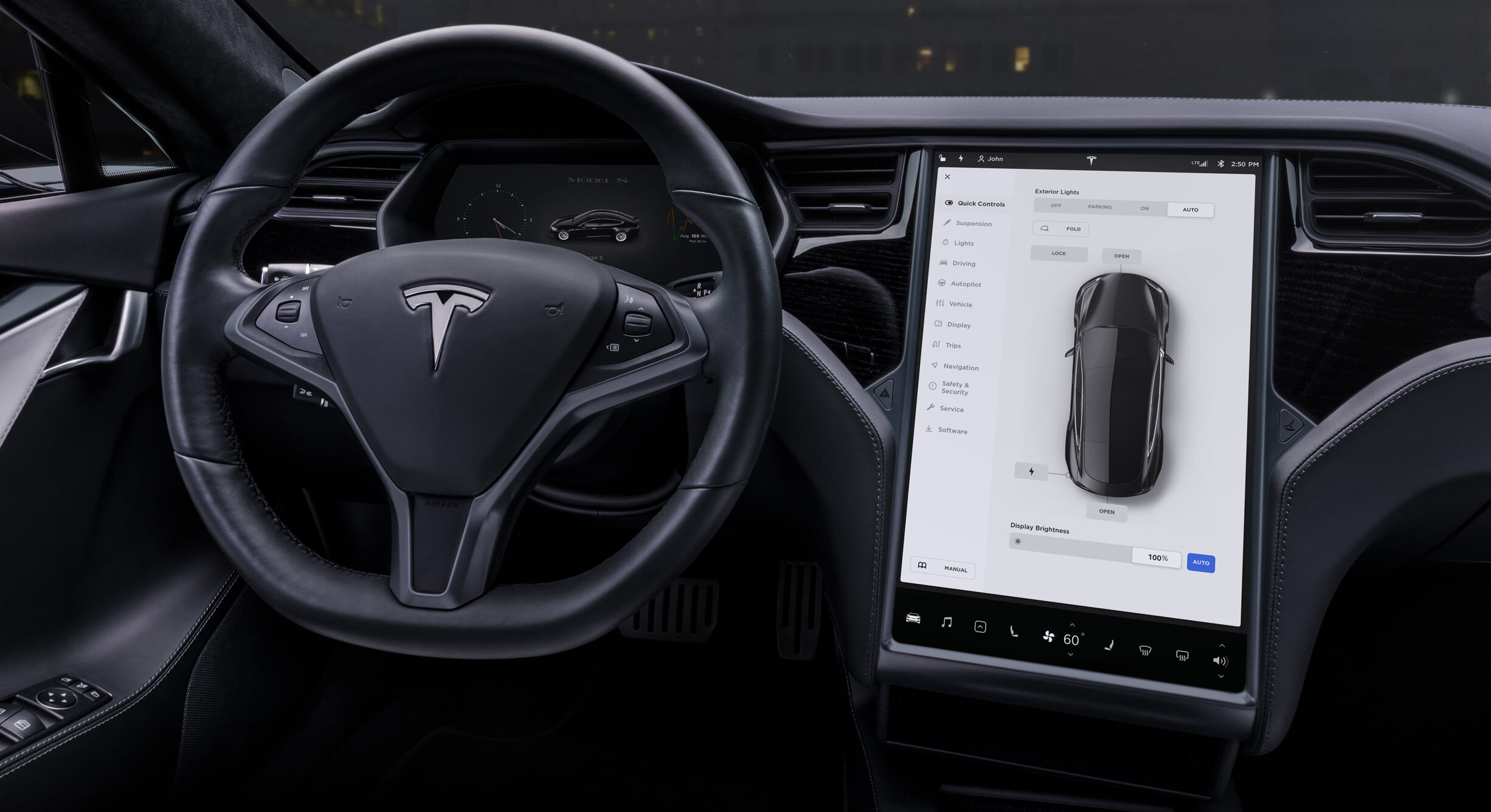
    One of the biggest influences for the massive in-dash display for the Tesla Model S was the iPad. But even though Teslas have offered this sophisticated in-car infotainment experience, what’s strange is that lack of native Apple Music and Amazon Music integration. Instead, Tesla’s offer native Spotify integration. But this is set to change.

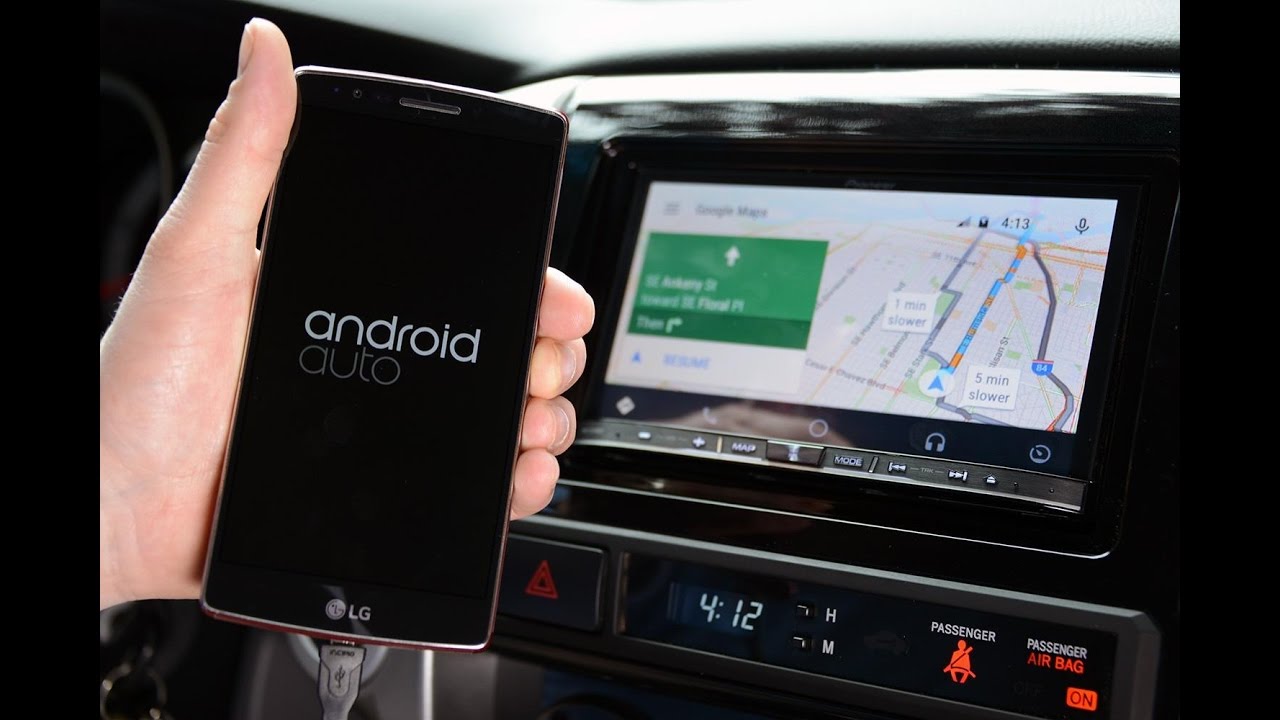
    Tesla notably doesn’t support phone mirroring options like Apple’s CarPlay and Android Auto so if you use Apple Music or Amazon Music as your streaming service of choice you can only play music via Bluetooth but not enjoy the advances of a deep user interface integration.

    Elon Musk has already stated that Tidal, lossless high fidelity audio streaming service will be integrated into the dashboard experience of the Teslas. However, now Electrek is reporting that the world’s largest automaker is also integrating Apple Music and Amazon music into the dashboard.

    The Electrek report cites a hacker called “green” who has spotted early versions of the integration in Tesla’s UI which he has also shared in a post on Twitter. He noticed this update in a recent software update which has enabled Tidal, Pandora, SiriusXM, and Audible. TuneIn Radio, Amazon and Apple Music remain disabled. But they should be coming soon as Audible is also owned by Amazon.

    There is no timeline as to when this will become official but considering Tidal is already active, it seems to be the furthest along in development. Apple Music and Amazon Music will almost certainly have a more delayed official release.

  • India Seeks Comment On Proposal To Make Airbags Mandatory For Car Front Passengers

    India Seeks Comment On Proposal To Make Airbags Mandatory For Car Front Passengers

    India on Tuesday sought public comment on a proposal to make airbags mandatory for the front passenger in all cars from next year, in a move that could raise costs for automakers slowly seeing a revival in demand.

    Carmakers are required to provide an airbag only for the driver, though Indian officials have been talking about the need to improve safety.

    All new models manufactured from April 1, and existing models made from June 1, will have to meet the new guideline if approved, the Ministry of Road Transport and Highways said in the notification dated Dec 28.

    It asked for suggestions and objections from the public within 30 days from Tuesday before the rule is implemented.

  • Tesla To Commence India Operations By Early 2021

    Tesla To Commence India Operations By Early 2021

    Tesla, the American electric carmaker is expected to make its debut in the Indian market by early next year. The company reportedly will be accepting pre-bookings for the Model 3 and deliveries will follow later in the year, probably by the end of the first quarter of 2021-22. In a recent interview with Indian Express, the Union Minister for Road Transport and Highways and MSME, Nitin Gadkari has confirmed that the electric giant will start operations in the country by early 2021.

    Nitin Gadkari told Indian Express, “The minister underlined the push for electrical cars in the country and said a lot of Indian companies were also working on electrical vehicles that might be more affordable, but technically as advanced as the Tesla. He said Tesla will start operations first with sales and then maybe look at assembly and manufacturing based on the response to the cars. India is going to become a number 1 manufacturing hub for auto in five years.”

    It was earlier this year in October when CEO Elon Musk confirmed Tesla’s entry into the Indian market by 2021. This information was revealed by Musk while replying to a Tweet from a handle – ‘Tesla Club India’. Moreover, the electric vehicle manufacturer is also exploring options to open an R&D centre and a battery manufacturing facility in India.

    Tesla is expected to make its India debut with the Model 3, which reportedly could be a more affordable version. Moreover, it will come to India as Completely Built-Up (CBU) unit. Likely to be priced somewhere around ₹ 55 lakh, it might not be retailed in the country via dealerships as the EV will be handing direct sales. However, there is no official confirmation from the company regarding the same.

  • Volkswagen Taigun Teased Ahead of Launch

    Volkswagen Taigun Teased Ahead of Launch

    Volkswagen India has officially teased the upcoming Taigun compact SUV, suggesting the launch is around the corner. The carmaker released a teaser video of the Taigun on its official social media account. The SUV has been listed on VW’s official India website for collecting online enquiries. Specifically designed for the Indian market, the SUV was showcased at the 2020 Auto Expo in February. It will be based on the company’s MQB A0 IN platform, which will also be used on VW Group’s upcoming models, such as the production version of Skoda’s Vision-IN concept.

    This all-new product from Volkswagen will be slightly inspired by the T-Cross that is already on sale in the international markets. It will flaunt elements like wider grille with horizontal chrome slats and logo in the center, horizontally positioned LED headlights with LED DRLs, muscular bonnet, neatly designed bumper, large intakes, fog lamps. The production version is expected to get sporty alloys, wheel arch cladding, roof rails and LED taillamps connected by a reflective strip and smoked details similar to the concept model. The rear profile will be underlined by a muscular rear bumper, faux diffuser, heavy chrome/silver details, and matching side skirts.

    On the inside, the SUV will feature dual-tone black and grey upholstery along with a premium interior with body-colored panels on the dashboard, centre console and doors. The SUV is expected to come equipped with an all-digital instrument console, bigger touchscreen infotainment system, fast-charging USB slots, and app-based connected features, flat-bottom steering wheel, rear AC vents, automatic climate control and more.

    Mechanically, the soon-to-be-launched Taigun compact SUV will be powered by a 1.0-liter three-cylinder turbocharged TSI petrol engine. The unit is likely to develop 113 bhp and 200 Nm of peak torque. Transmission options could include a 6-speed manual gearbox as standard along with an optional 7-speed DSG automatic. The company will not offer an all-wheel-drive (AWD) variant of the SUV. When launched, it will rival the Hyundai Creta, Kia Seltos, Renault Duster and the MG Hector.

  • More Japanese firms opt for Vietnam after China

    More Japanese firms opt for Vietnam after China

    Twenty-two more Japanese firms have registered Vietnam as their next investment destination under a scheme in which the Japanese government will fund a production shift from China.

    With the latest additions, 37 out of 81 Japanese firms receiving the government’s subsidies to move factories out of China and set them up in Southeast Asian markets have opted for Vietnam, Japanese ambassador to Vietnam Yamada Takio said at a conference between Japanese firms and the Vietnamese government Monday.

    In July, the Japan External Trade Organization (Jetro) released an official list of 15 Japanese firms that had chosen to move to Vietnam. Most of these firms make medical equipment while the rest produce semiconductors, phone components, air conditioners or power modules.

    “Vietnam currently tops the list of potential investment destinations among Japanese firms choosing to diversify their supply chains,” Yamada said, adding that Thailand came second with 19 firms.

    He said while many economies around the world were struggling to fight against the Covid-19 pandemic, Vietnam has successfully contained outbreaks and is one of the few economies posting positive growth in 2020, estimated at 2.48 percent.

    In the first 11 months of this year, Vietnam’s total export value reached $489 billion, up 3.5 percent year-on-year.

    “In the world, only Vietnam has achieved such great success,” Yamada said. As a result, Vietnam has become more attractive for foreign investors, including Japanese enterprises, he said.

    The Japanese government had earlier announced a 243.5-billion-yen ($2.3 billion) stimulus package to help Japanese companies move production out of China. Jetro said the Japanese government will give each company 0.1-5 billion yen for the move.

    Though Vietnam has emerged as an attractive destination for Japanese investors, there are investment environment problems that need to be resolved, it added.

    Many Japanese firms have complained to the Vietnamese government about complicated administrative procedures.

    Nakagawa Tetsuyuki, general director of Aeon Mall Vietnam, said their projects often take a long time to complete admin procedures. Some projects have to wait more than one year to receive the investment registration and land use right certificate.

    For projects that need approval under the Prime Minister’s licensing authority, it takes even longer, Tetsuyuki added.

    Therefore, Japanese businesses expected the government to shorten and speed up administrative procedures to improve business environment.

    Japanese firms are also concerned about tax incentives, equitization and entry and quarantine policies, infrastructure, and human resources.

    Japan was the fourth-largest foreign direct investor in Vietnam in the first eight months of this year with a total registered capital of $1.64 billion, behind Singapore, South Korea and mainland China.

  • South Korea Gets New Solar Panel Covered Bike Lane

    South Korea Gets New Solar Panel Covered Bike Lane

    Last year, we got to know about the SolaRoad in the Netherlands where the road was replaced by solar panels and its infrastructure was self-sufficient to power the lighting system of the highway. Now there’s a new highway in South Korea that runs between Daejon and Sejong and its entire bike lane on the 32 km stretch is covered with solar roof panels. These panels not only generate electricity but also protect cyclists from the sun and other vehicles on the highway.

    The two-way bike lane runs between both cities and is constructed right in the middle of the lanes, while there are three lanes for vehicles to travel on both sides. Furthermore, the lane is divided by the side barriers that block the view of the surrounding road and also obstructs high beam lights of oncoming vehicles. The vehicles are still visible on the medium strip but you don’t get the entire view of the opposite lane.

    These lanes generate more than enough electricity to power the lighting and the charging sockets for electric cars. The stretch is a new innovation in civil engineering and while it connects Daejon and Sejong like any other highway, it does so in a much efficient and safer manner.

  • BMW 3 Series Gran Limousine India Launch Date Revealed

    BMW 3 Series Gran Limousine India Launch Date Revealed

    BMW is set to launch its largest product offensive in India in 2021 and it’s starting with the all-new BMW 3 Series Gran Limousine (GL). The BMW 3 Series Gran Limousine will be launched in India on January 21, 2021 and it will be the longer wheelbase version of the standard 3 Series leveraging more legroom on the inside. It will be the longest and most spacious entry-level luxury sedan in India while will share the mechanicals and overall design with the standard car, save for the long profile.

    It is likely to share its underpinning with the standard car as well, being spawned by the CLAR platform and while the interior layout is likely to remain similar too. You can also expect it to get all the features that we have already seen in the new BMW 3 Series like the Hey BMW connected car tech, wireless charging, wireless Apple CarPlay, BMW live cockpit professional, 3D navigation, rear park assist, a 12.3-inch digital instrument cluster and a 10.25-inch infotainment screen among others.

    It’s also likely to share its engine line-up with the BMW 3 Series sedan. Under the hood, it is likely to get the 2.0-litre, four-cylinder, turbocharged petrol motor tuned to churn out 255 bhp and 400 Nm of peak torque. If BMW decides to bring the diesel iteration as well, it will be the 2.0-litre, four-cylinder, turbocharged engine that produces 188 bhp and 400 Nm of peak torque. Both engines are expected to be paired with an eight-speed automatic gearbox as standard. BMW will also launch the 2 Series Gran Coupe Petrol, 5 Series Facelift and the 6 Series GT Facelift late in 2021.

  • Apple to build a car by 2024, with ‘next level’ battery

    Apple to build a car by 2024, with ‘next level’ battery

    Apple Inc is moving forward with self-driving car technology and is targeting 2024 to produce a passenger vehicle that could include its own breakthrough battery technology, people familiar with the matter said.

    The iPhone maker’s automotive efforts, known as Project Titan, have proceeded unevenly since 2014 when it first started to design its own vehicle from scratch. At one point, Apple drew back the effort to focus on software and reassessed its goals. Doug Field, an Apple veteran who had worked at Tesla Inc, returned to oversee the project in 2018 and laid off 190 people from the team in 2019.

    Since then, Apple has progressed enough that it now aims to build a vehicle for consumers, two people familiar with the effort said, asking not to be named because Apple’s plans are not public. Apple’s goal of building a personal vehicle for the mass market contrasts with rivals such as Alphabet Inc’s Waymo, which has built robo-taxis to carry passengers for a driverless ride-hailing service.

    Central to Apple’s strategy is a new battery design that could “radically” reduce the cost of batteries and increase the vehicle’s range, according to a third person who has seen Apple’s battery design.

    Apple declined to comment on its plans or future products.

    Making a vehicle represents a supply chain challenge even for Apple, a company with deep pockets that makes hundreds of millions of electronics products each year with parts from around the world, but has never made a car. It took Elon Musk’s Tesla 17 years before it finally turned a sustained profit making cars.

    “If there is one company on the planet that has the resources to do that, it’s probably Apple. But at the same time, it’s not a cellphone,” said a person who worked on Project Titan.

    It remains unclear who would assemble an Apple-branded car, but sources have said they expect the company to rely on a manufacturing partner to build vehicles. And there is still a chance Apple will decide to reduce the scope of its efforts to an autonomous driving system that would be integrated with a car made by a traditional automaker, rather than the iPhone maker selling an Apple-branded car, one of the people added.

    Two people with knowledge of Apple’s plans warned pandemic-related delays could push the start of production into 2025 or beyond.

    Shares of Tesla ended 6.5% lower on Monday after their debut in the S&P 500 on Monday. Apple shares ended 1.24% higher after the news.

    Apple has decided to tap outside partners for elements of the system, including lidar sensors, which help self-driving cars get a three-dimensional view of the road, two people familiar with the company’s plans said.

    Apple’s car might feature multiple lidar sensors for scanning different distances, another person said. Some sensors could be derived from Apple’s internally developed lidar units, that person said. Apple’s iPhone 12 Pro and iPad Pro models released this year both feature lidar sensors.

    Apple had held talks with potential lidar suppliers, but it was also examining building its own sensor.

    As for the car’s battery, Apple plans to use a unique “monocell” design that bulks up the individual cells in the battery and frees up space inside the battery pack by eliminating pouches and modules that hold battery materials, one of the people said.

    Apple’s design means that more active material can be packed inside the battery, giving the car a potentially longer range. Apple is also examining a chemistry for the battery called LFP, or lithium iron phosphate, the person said, which is inherently less likely to overheat and is thus safer than other types of lithium-ion batteries.

    ”It’s next level,” the person said of Apple’s battery technology. “Like the first time you saw the iPhone.”

    Apple had previously engaged Magna International Inc in talks about manufacturing a car, but the talks petered out as Apple’s plans became unclear, a person familiar with those previous efforts said. Magna did not immediately respond to a request for comment.

    To turn a profit, automotive contract manufacturers often ask for volumes that could pose a challenge even to Apple, which would be a newcomer to the automotive market.

    “In order to have a viable assembly plant, you need 100,000 vehicles annually, with more volume to come,” the person said.

    Some Apple investors reacted to the Reuters report on the company’s plans with caution. Trip Miller, managing partner at Apple investor Gullane Capital Partners, said it could be tough for Apple to produce large volumes of cars out of the gate.

    “It would seem to me that if Apple develops some advanced operating system or battery technology, it would be best utilized in a partnership with an existing manufacturer under license,” Miller said. “As we see with Tesla and the legacy auto companies, having a very complex manufacturing network around the globe doesn’t happen overnight.”

    Hal Eddins, chief economist at Apple shareholder Capital Investment Counsel, said Apple has a history of higher margins than most automakers.

    “My initial reaction as a shareholder is, huh?” Eddins said. “Still don’t really see the appeal of the car business, but Apple may be eyeing another angle than what I’m seeing.”

  • What Volkswagen India’s SUVW Strategy Entails

    What Volkswagen India’s SUVW Strategy Entails

    How many times have you seen a Volkswagen Beetle and not given it another look? Well, the answer is zero and that’s because its design is timeless, ageless. That’s also why we can’t help but look at the new-gen models from Volkswagen India like the Jetta, Polo, Vento, Polo GTI or now even the Tiguan, T-Roc, and even the Tiguan AllSpace. It’s the design of all these cars evoke the same reaction – wow!

    And it’s because these cars have a strong lineage. They all are a culmination of what the company has been able to learn in so many years of being part of the global automotive fraternity. That’s why you see the technology funnel down to cars like the Polo GT TSI making it one of the best hot hatches in the country. In fact, it was the car that started the hot hatch trend in India and remains to date one of the most loved driver’s car in the country.

    But with SUVs fast becoming a trend in global markets, VW had to go back to the drawing board and figure out what it could do. It’s not as if the company had no SUV in the market earlier. Remember the Touareg? Yes, the one with the V6 engine. But it was ahead of its time, in fact, Indian buyers weren’t looking at buying SUVs back then, they were more into sedans. But as the market matured, VW India adapted to the change. The big step then in the SUV direction was in 2017, when the company introduced customers to the 5-seater Tiguan.

    With the Tiguan, Volkswagen tested the shores to understand the response and yes, it was a good one. The fact that you get German engineering, precision driving capabilities and of course great build quality, customers knew exactly what to expect from these products. And that was one reason why there’s a more strong focus on bringing in SUVs to India under the India 2.0 Project.

    With the Group investing ₹ 8000 for the India 2.0 project, there was going to be a strong focus on three aspects a) building cars with a high amount of localization content, b) align the business to make sure that service costs come down, and finally, make cars in India for the world!

    The company has already inaugurated a tech center in Pune in 2019 which will look into the development of these upcoming products but the attention is more on the new localized MQB-A0-IN platform. Just like the modular architecture of the MQB platform, where a number of body styles are made on a single platform, the A0-IN will also serve a similar purpose but given the high level of local content on the cars, all the products based on it will be price competitive. To put things into perspective, currently, the localized content in VW cars like the Polo and Vento is around 82 percent that will go up to 95 percent and that’s a massive leap.

    The Volkswagen Taigun will be one of the first SUVs to be built on the new localised MQB-A0-IN platform.

    The first car to be based on this platform is going to be the Taigun which was showcased just ahead of the Auto Expo 2020 and you got to see the car in the flesh back then. And this car will lead the charge for everything that comes post it. Now, the Tiguan AllSpace and the T-Roc have already had their fair share of success, so yes, it’s perfect timing for the Taigun to enter the market. The SUVW strategy then is falling into place and in 2021, we’ll see the Taigun and one more product coming to India. We can’t wait to drive everything that comes our way!

  • Volvo Cars To Produce Electric Motors In Skovde, Sweden

    Volvo Cars To Produce Electric Motors In Skovde, Sweden

    Volvo Cars will assemble electric motors at its powertrain plant in Skovde, Sweden, and plans to establish complete in-house e-motor production by 2025. It will invest 700 million SEK to this end in the coming years. The company is committed to becoming a premium electric car company and aims for its global sales to consist of 50 percent fully electric cars by 2025, with the rest being hybrids.

    Volvo Cars announced earlier this year that it is investing significantly in the in-house design and development of e-motors for the next generation of Volvo cars. With the planned investments in Skovde, it now takes the first steps towards in-house e-motor assembly and manufacturing. In the first stage, the Skovdefacility will assemble e-motors. At a later stage, the company intends to bring the full manufacturing process for e-motors in-house into a facility in Skovde.

    Bringing the development and production of e-motors in-house will allow Volvo Cars engineers to further optimize electric motors and the entire electric driveline in new Volvos. This approach will allow engineers to make further gains in terms of energy efficiency and overall performance.

    Design and development of the company’s electric motors take place in Gothenburg, Sweden, and Shanghai, China. Earlier this year Volvo Cars opened a new electric motor lab in Shanghai, in addition to ongoing e-motor development in Gothenburg, Sweden, and state-of-the-art battery labs in China and Sweden.

  • Maserati Grows Presence In APAC and Enters Cambodia

    Maserati Grows Presence In APAC and Enters Cambodia

    Maserati has announced the opening of a new market in Asia Pacific as the brand enters Cambodia. Maserati is represented in Cambodia by HGB Group. The showroom is situated in Cambodia’s capital Phnom Penh. The facility includes a showroom of 610 sqm displaying the Maserati product line-up and a workshop of 1.760 sqm equipped with 3 work bays.

    Bernard Loire, Chief Commercial Officer Maserati, said, “Selecting the right partner and having great products are the foundations for success across the region. Maserati is entering in a period of intense changes with revolutionary new cars, innovations, and projects. Now for us, the focus is strongly on the future, including hybrid and electric models.”

    Maserati’s complete range will now be available in Cambodia in addition to more than seventy markets internationally. The company already has partners in Singapore, Malaysia, Thailand, Vietnam, and Indonesia in the South Asian market.

    Cambodia is a very promising market for Maserati as the luxury car market is estimated to grow at a Compound Annual Growth Rate of 14 percent from 2017 to 2020.