Category: Automotive

Retail News Asia is committed to providing both local and global retailers with the latest Auto and Car news throughout the Asian market. This on a daily base.

  • Mitsubishi Motors Delays Factory Restart In China Due To Coronavirus

    Mitsubishi Motors Delays Factory Restart In China Due To Coronavirus

    Mitsubishi Motors is postponing the restart of its factory with Guangzhou Automobile Group in Hunan province until 27 due to the coronavirus outbreak, the Japanese automaker said on Friday.

    Spectacular sculptures at Harbin’s Ice and Snow Festival

    Drone footage of giant frozen castles and ice sculptures at one of the world’s largest ice and snow festivals in Harbin, in China’s northeast Heilongjiang province, which draws millions of visitors each year.

    It had previously planned to resume operations as early as Feb. 17.

    Mitsubishi has also delayed the restart of its engine plant with Shenyang Aerospace in Liaoning province and another with Dongan Automotive Engine Manufacturing in Heilongjiang province following Lunar New Year holidays.

  • Volkswagen’s Group Deliveries In China Fall 11.3% In January 2020

    Volkswagen’s Group Deliveries In China Fall 11.3% In January 2020

    Volkswagen, one of the world’s biggest carmakers, on Friday said deliveries in China declined by 11.3% in January as the auto sector feels the effects of the coronavirus outbreak.

    The German company said the group, which includes brands like Volkswagen and Audi, delivered 343,400 vehicles in China and Hong Kong. The country is VW’s biggest market.

    Worldwide, group deliveries dropped by 5.2% to 836,800 vehicles, Volkswagen added.

    The China Association of Automobile Manufacturers said on Thursday that the country’s vehicle sales likely fell by almost a fifth in January, marking a 19th consecutive month of decline, hurt by Lunar New Year holidays that started earlier than last year and by the coronavirus outbreak.

  • Maserati Announces Plans To Develop Its Electric Range

    Maserati Announces Plans To Develop Its Electric Range

    Maserati announced that it will develop, engineer and build its cars in Italy, and will adopt hybrid and battery electric propulsion systems. Following on from the announcement of testing of the new full-electric powerplants to be installed on future Maserati models, the development and production plans for the Trident Brand’s electrified range are now presented. Maserati’s electrification program starts this year, and the first hybrid car to be built will be the new Maserati Ghibli.

    Production of the new Maserati GranTurismo and GranCabrio, will commence in 2021. Maserati has decided to build the GranTurismo and GranCabrio at the Mirafiori production hub, with an investment of 800 million Euros.

    However, Maserati’s heart is still in Modena, where it has its Headquarters, where the cars in its range are developed and tested, and where the new super sports car is to be built. For Maserati, Modena is the place where extraordinary cars have been produced for over 80 years, all outstanding in their luxury, elegance, style, performance, and quality, and which are sold in over 70 markets.

    Also upcoming is a new Maserati utility vehicle, to be built at Cassino and intended to play a leading role for the Brand, thanks to its innovative technologies. About 800 million Euros will be invested in the construction of the new production line, scheduled to begin at the end of the first quarter of 2020. The first pre-production cars are expected to come off the line by 2021.

  • Skoda’s First Electric SUV To Be Called Enyaq

    Skoda’s First Electric SUV To Be Called Enyaq

    Skoda Auto today revealed that its first electric SUV will be presented soon. It, in fact, let out what it will be called. Skoda will call it the Enyaq and yes even we want to know where that name comes from. According to the company, the name Enyaq is based in the Irish language and expresses the vehicle’s dynamism and efficiency. The Enyaq then opens a new chapter in the 125-year history of the Skoda brand. It will be Skoda’s first electric car which will be built on the MEB platform, and will also launch a new family of model names. Of course, Skoda already has an electric car to its name, the Citigo iV and so it’s not new to the EV space, however, the all-electric SUV will definitely ind it a wider appeal

    Skoda SUVs have traditionally had names ending in the letter Q, and the new Enyaq follows this tradition just like the Kamiq, Kodiaq and the Karoq. But the new model’s first letter shows that this tradition is merging with the eMobility era, referenced by the letter E at the beginning of the name. The name, Enyaq, is derived from the Irish name Enya, which means ‘source of life’,

    We’ll know more about the electric SUV very soon, but it’s clear why the company wants to start its journey in the electric mobility space with an SUV. Well, the clear trendsetters now are the SUVs globally and so this decision does not come as a surprise. As to which markets the Enyaq will be introduced? Well, there’s no clarity on that yet and we’ll know more very soon.

  • Daimler’s Mercedes Sales Drive Higher But Charges Put Brakes On Profit

    Daimler’s Mercedes Sales Drive Higher But Charges Put Brakes On Profit

    Daimler reported its biggest drop in annual profit in a decade on Tuesday, a 64% fall reflecting more than 5 billion euros in charges as well as an investment as Mercedes-Benz pushes into electric and hybrid vehicles. Mercedes saw record sales to retain its title as the world’s top-selling premium automaker but net profit fell to 2.7 billion euros from 7.6 billion hurt by 4.2 billion euros in charges related to diesel-related probes and legal proceedings. To offset its extra costs Daimler is restructuring, scrapping its Mercedes-Benz X-Class pick-up truck and downsizing its mobility services unit last year, meaning further charges of 828 million and 405 million euros, respectively.

    Alongside the hefty charges, the company slashed its dividend by 72% to 0.90 euros per share. The earnings had been flagged in preliminary figures on Jan. 22. Kaellenius said restructuring at the vans division would deliver results this year but cautioned Daimler’s passenger car operations face a tough couple of years as the company launches electric and hybrid vehicles.

    “We are going to restore the financial health of this company and take the measures we have to take to get back on track,” Kaellenius said. “Yes, it will take some time on some of the issues. There are no quick fixes.”

    The 50-year-old Swede, formerly the company’s research and development chief, took over as CEO last May.

    He said the carmaker was offering staff buyouts and working on next-generation models that will be less complex to produce.

    Kaellenius is tasked with safeguarding Daimler’s success as the industry undergoes sweeping changes including tougher environmental rules and a costly shift to electric power.

    That challenge is seen in Daimler’s share performance: its stock is down 12% year to date versus an 84% rise in electric car producer Tesla, Refinitiv Eikon data shows.

    “There is very little scope for optimism at Daimler. It will take years until margins recover to levels worthy of a premium manufacturer,” said Michael Muders, fund manager at Union Investment.

    Mercedes-Benz is readying a major push into electric and hybrid cars, with the proportion of electrified vehicles in its fleet set to jump to 9% from 2% in 2020 with a production of an electric A-Class, electric van and electric SUV.

    Pressure is mounting on carmakers to build low emission vehicles to avert heavy European Union (EU) pollution fines as customers gravitate towards buying larger and heavier sports utility vehicles.

    Mercedes-Benz’s push into electric and hybrid cars will see the proportion of electrified vehicles in its fleet jump to 9% from 2% in 2020 with the launch an electric A-Class and an electric van.

    “In the medium term I am confident. 2020 and 2021 will be a challenge,” Kaellenius said about the prospect of EU fines.

    Mercedes-Benz is also working on developing its own software vehicle operating system, a project that will require significant investment and take up to four years to go into production, Kaellenius said.

    The company said it aims to keep property, plants and equipment and R&D spending at roughly the same level as last year.

    It will look for savings of more than 1.4 billion euros by the end of 2022 through cuts in administrative and personnel costs and expects a significant rise in operating profit and free cash flow this year.

    “Our goal is to ensure solid net liquidity to protect the necessary investments, and at the same time to pay attractive dividends,” Chief Financial Officer Harald Wilhelm said.

  • Harley-Davidson Global Annual Sales Fall In 2019

    Harley-Davidson Global Annual Sales Fall In 2019

    Harley-Davidson has announced annual results, and the sales numbers for 2019 aren’t very encouraging. The American motorcycle brand’s worldwide sales declined 4.3 percent with a total of 2,18,273 units sold worldwide. Even more worrying is the sales slowdown in Harley-Davidson’s home market, the US. The Bar & Shield brand’s sales in the USA fell by 5.2 percent to 1,25,960 units in 2019, from 1,32,868 units in 2018, while international sales fell 3 percent to 92,313 units in 2019, from 95,183 units a year ago. Harley-Davidson’s 2019 sales in almost all global geographies are in the red, with the Asia Pacific region showing a slight glimmer of hope with 2.7 percent growth.

    With 29,513 units sold in 2019 in the Asia-Pacific region, this is now Harley-Davidson’s third most important geography in terms of sales, after the US market, as well as Europe, Middle East and Africa (EMEA). Sales in EMEA fell 5.4 percent in 2019, down from 46,602 units in 2018 to 44,086 units in 2019. The Latin American geography also ended the year in the red, declining 3.9 percent from 10,167 units in 2018 to 9,768 units in 2019. Harley-Davidson’s sales declined the most in Canada, falling 7.7 percent from 9,690 units in 2018 to 8,946 units in 2019.

    On the financial side of things, Harley-Davidson reported annual revenue growth of 5.5 percent in 2019, up from $ 7,48,229 in 2018 to $ 7,89,111 in 2019. As part of the company’s More Roads To Harley-Davidson program, the American brand intends to introduce a whole new range of motorcycles over the next few years, to generate a new generation of customers, both in US, and more importantly, in newer markets abroad, like the Asia-Pacific.

    Later in 2020, Harley-Davidson is expected to introduce the Bronx Street Fighter, in a completely new segment, which is a departure from the company’s traditional cruiser-styled motorcycles. The Harley-Davidson Pan America will be the brand’s first adventure touring bike, and will be the brand’s first foray into the segment. More important though, will be a new small motorcycle, developed with Chinese partner Qianjiang Motorcycle. The 338 cc Harley-Davidson will be based on the Benelli 302 platform and will be manufactured in China, to be targeted at Asian markets.

  • Porsche Taycan Electric Sports Car Will Come To India By Late 2020

    Porsche Taycan Electric Sports Car Will Come To India By Late 2020

    The all-new Porsche Taycan electric sports car will be introduced in India by late 2020. Pavan Shetty, Director Porsche India confirmed the 4-door electric car’s arrival while addressing the Indian media today the Skoda Auto Volkswagen India’s first-ever media night. The Taycan is the first fully electric sedan from the Stuttgart-based luxury/sports car maker and it was first revealed at the 2019 Frankfurt Motor Show.

    Based on the Porsche Mission E Concept that was showcased in 2015, the electric sports car is touted as a huge technological step for the company and forms a new direction for Porsche in the EV space. The new Porsche Taycan will sport two permanently excited synchronous electric motors that can churn out a maximum of 600 bhp and will a range of over 500 km thanks to its high voltage lithium-ion batteries. The electric car will get 800-volt chargers with fast charging capability, which can offer a 400 km range in 15 minutes of charge time. It can go from 0-100 kmph in under 3.5 seconds.

    The Porsche Taycan comes with quad-LED headlamps, sculpted bonnet and muscular front bumper. The rear too looks very elegant with the very slim wraparound LED tail-lamp and muscular haunches. With a Cd value from 0.22, the aerodynamically optimized basic shape makes a significant contribution to low energy consumption resulting in a long-range.

  • Nissan Weighs Restarting China Production In Dongfeng Venture After February 10

    Nissan Weighs Restarting China Production In Dongfeng Venture After February 10

    Nissan Motor said on Tuesday it is considering restarting production in China in its venture with Dongfeng Motor Group sometime after Feb. 10, citing government guidance and its assessment of the coronavirus epidemic.

    The Japanese carmaker also said production in Hubei province, the epicenter of the epidemic, will start sometime after Feb. 14.

    The production plan is subject to change after reviewing the coronavirus situation in the days ahead, a company spokeswoman said. The virus outbreak has killed over 420 people, spread around the world and raised fears about global economic growth.

  • Toyota Reveal New Safety System To Avoid Accelerator-Brake Mix-Up

    Toyota Reveal New Safety System To Avoid Accelerator-Brake Mix-Up

    Toyota Motor Corp unveiled an emergency safety system on Monday that uses big data to ignore the accelerator if it determines the driver steps on the pedal unintentionally. Japan’s biggest carmaker will roll out what it calls an “accelerator suppression function” in new cars from this summer, beginning in Japan. The system is a response to an increasingly common cause of traffic accidents in aging Japan where the driver, often elderly, mistakes the accelerator for the brake.

    Some 15% of fatal accidents on Japanese roads in 2018 were caused by drivers who were 75 years or older, showed a report from the government, which actively encourages elderly drivers to give up their licenses. Toyota’s announcement comes as automakers globally invest heavily in so-called active safety features as they work to develop fully autonomous cars. It also comes in the same year Toyota will act as an exclusive mobility sponsor for the Tokyo Olympics, where it will showcase its fully self-driving e-Palette transportation pods carrying athletes around the Olympic village at low speeds. Among competitors, Honda Motor Co Ltd plans to launch a car this year capable of full autonomy in highway traffic jam situations.

    Nissan Motor Co Ltd released the second generation of its ProPilot driver-assist system last spring, offering hands-free operation for single-lane highway driving. Toyota rolled out its first-generation Safety Sense package in 2015, which included automated emergency braking and a lane departure alert.

    The second generation became available in 2018, adding assisted single-lane highway driving and making the car capable of recognizing pedestrians at nighttime and bicycles. Its new feature was developed using data collected from the internet-connected cars it has on the road.

    Unlike the car maker’s existing safety options, the new system does not require the presence of an obstacle to function.

  • Renault-Nissan Can Overhaul Alliance Without Ownership Change

    Renault-Nissan Can Overhaul Alliance Without Ownership Change

    he comments from Jean-Dominique Senard point to an emphasis on more cooperation and operational efficiency as the automakers and junior partner Mitsubishi Motors Corp strive to rebuild profits, which have slumped in the wake of former chairman Carlos Ghosn’s arrest in 2018.

    Renault and Nissan have struggled to repair a relationship badly strained after the arrest of Ghosn, who fled Japan to his childhood home of Lebanon at the end of last year. He has been charged with financial misconduct, which he denies.

    “We all share a sense of urgency,” Senard told reporters in Yokohama, after he and the heads of the three automakers met. He said there was “no other option” but to change, but added reforms could be made without a shift in the capital structure. “The priority as clearly stated was to increase significantly the efficiency of the alliance,” he said.

    Renault SA, which is part-owned by the French state, owns 43% of Nissan Motor Co, while the Japanese firm has 15% of the French carmaker, with no voting rights – a structure that has caused friction in Japan, given Nissan is the larger of the two.

    Renault has previously indicated a desire to move towards a full merger, something Ghosn is said to have championed and which Nissan has strongly opposed.

    Nissan CEO Makoto Uchida told reporters that in order to leverage their respective strengths, Nissan would take an operational lead in China, where it leads its partners in sales, Renault on its home turf in Europe and Mitsubishi in southeast Asia, an area it dominates.

    A similar model will be taken for engineering, where one company will lead in developing a key technology that would then be shared among the partners, the companies said in a statement.

    Fuel economy credits would be pooled by the three in Europe, they added.

    The three companies, which together sold nearly 11 million vehicles in 2018, will announce revised mid-term plans by May, Uchida said.

    The automakers need to improve profitability to compete with global rivals, which are investing heavily to develop electric vehicles, self-driving cars and other new technologies that are transforming the industry.

    Reuters reported this week that Nissan was set to eliminate at least 4,300 white-collar jobs and shut two manufacturing sites as part of broader plans to add at least 480 billion yen ($4.4 billion) to its bottom line by 2023.

  • Android Auto update adds option to disable notification sounds

    Android Auto update adds option to disable notification sounds

    Google has been trying to fix and improve Android Auto for years, but there’s still a lot of features missing or not working as intended. The latest Android Auto app update doesn’t fix anything but adds a new feature that should have been there a long time ago.

    A new option added after the latest update lets Android Auto users disable notification sounds while they’re driving. Spotted by a Reddit user, the option to disable notification sound is not really new, as Google added and removed the feature a few times before.

    This time, however, Google opted for a toggle, so it’s now much easier to completely disable sounds from notifications whenever you want to focus on driving. The problem is this option does exactly what it says, it disables the sounds, so you will still get notifications on the screen. Not only that, but some users report that notifications will remain on the screen until you manually dismiss them.

    Although the update was released last week, it appears that a wider rollout is happening right now, so everyone should see the new app in the Google Play Store in the next couple of days.

  • Maruti Suzuki Announces Price Hike On Select Models

    Maruti Suzuki Announces Price Hike On Select Models

    Maruti Suzuki cars have become costlier from today owing to an increase in prices of select models. The company has increased ex-showroom prices by up to 4.7 percent and new prices come into effect from today. The company had earlier announced that it will increase prices in December 2019 which was supposed to come into effect from January 1, 2020. However, the company had postponed the price hike to a later date. The increase is a part of cyclical price revision due to an increase in input costs which has now become a norm in the industry.

    Earlier in December, the company had said in a BSE filing, “The cost of the company’s vehicles has been impacted adversely due to an increase in various input costs. Hence, it has become imperative for the company to pass on some impact of the above additional cost to customers through a price increase across various models in January 2020. This price increase shall vary for different models”

    The company has not disclosed the models that have undergone price revision, but we expect the majority of its models have witnessed a price hike.

    Maruti Suzuki cars have become costlier from today owing to an increase in prices of select models. The company has increased ex-showroom prices by up to 4.7 percent and new prices come into effect from today. The company had earlier announced that it will increase prices in December 2019 which was supposed to come into effect from January 1, 2020. However, the company had postponed the price hike to a later date. The increase is a part of cyclical price revision due to an increase in input costs which has now become a norm in the industry.

    Earlier in December, the company had said in a BSE filing, “The cost of the company’s vehicles has been impacted adversely due to an increase in various input costs. Hence, it has become imperative for the company to pass on some impact of the above additional cost to customers through a price increase across various models in January 2020. This price increase shall vary for different models”

    The company has not disclosed the models that have undergone price revision, but we expect the majority of its models have witnessed a price hike.

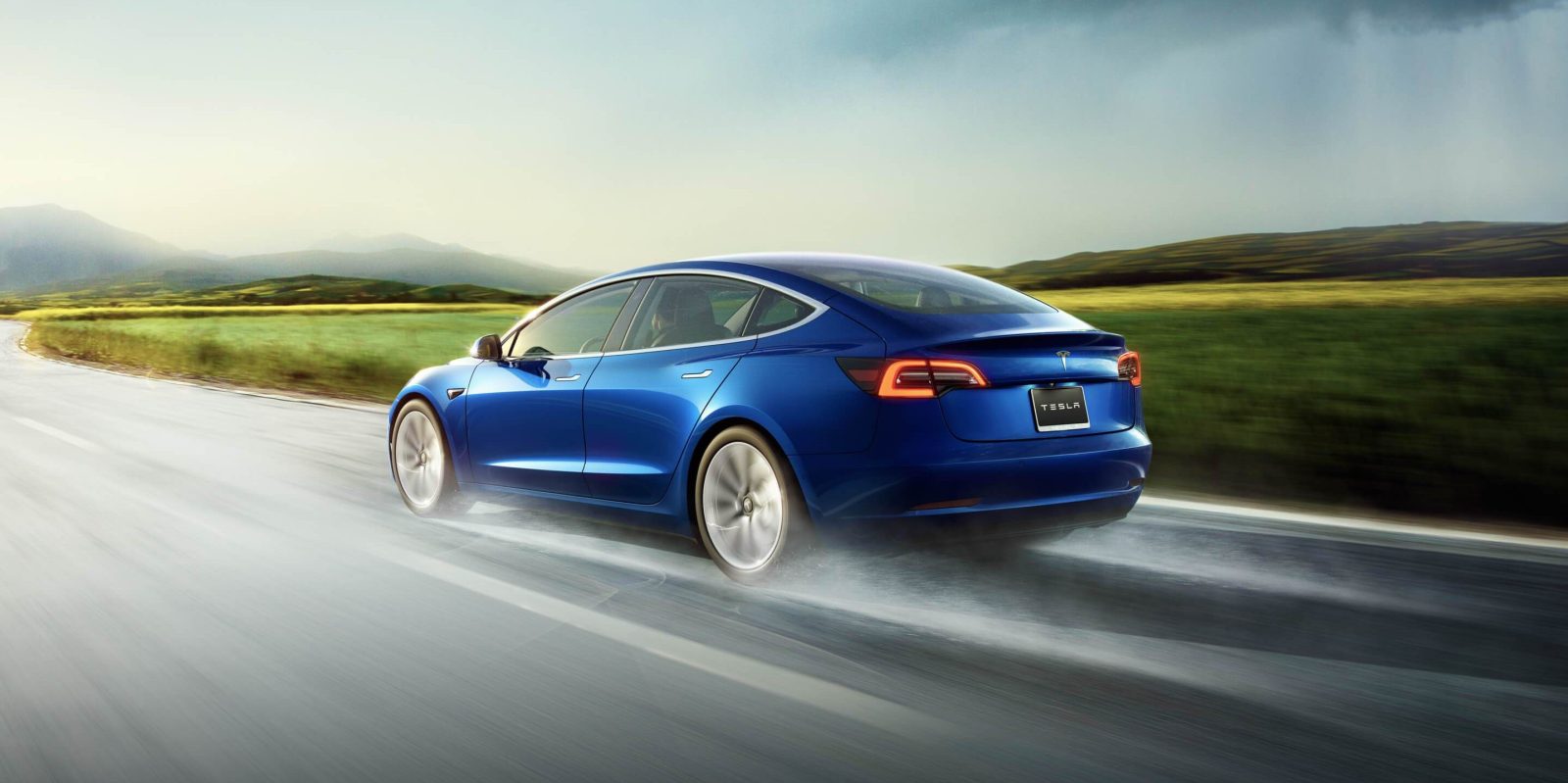
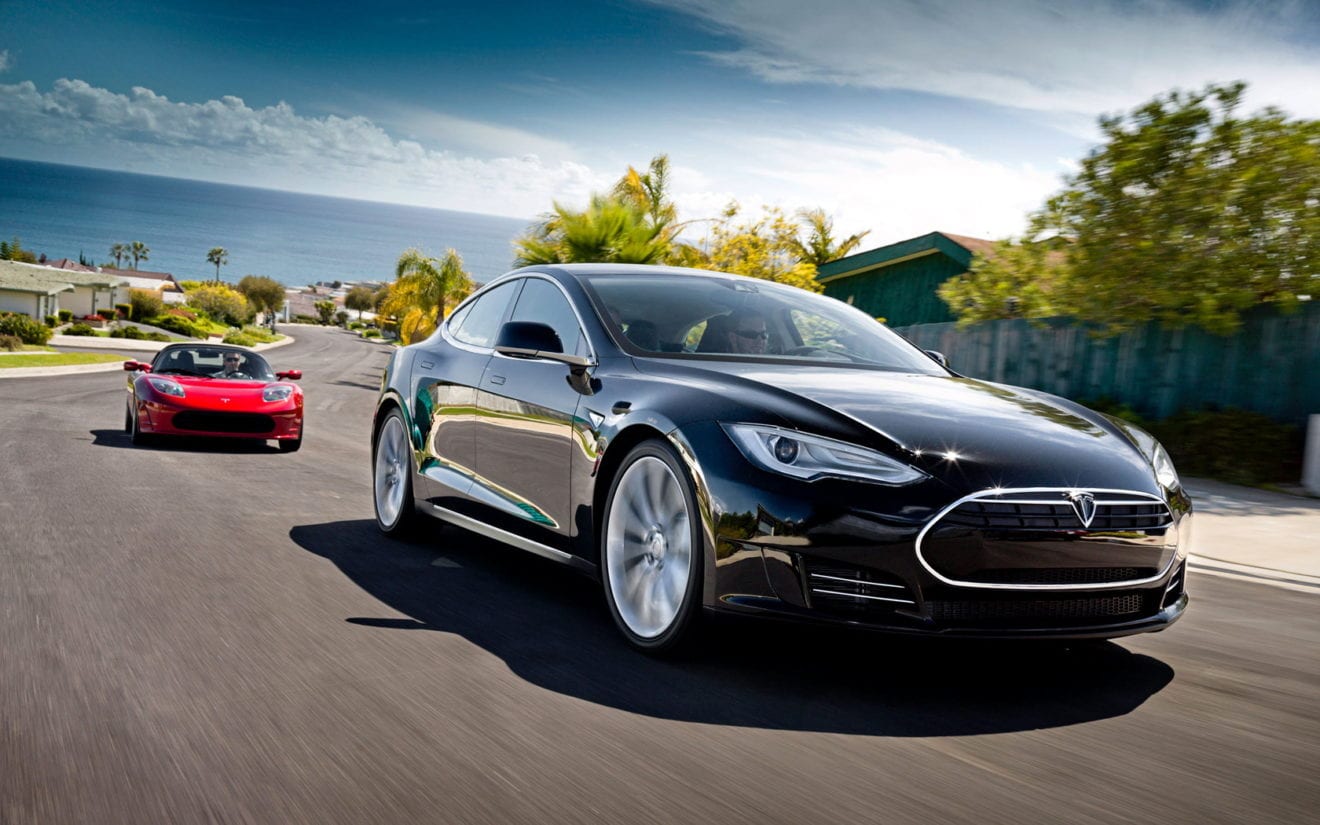
  • U.S. Senator Slams Tesla’s ‘Misleading’ Name For Autopilot Driver Assistance System

    U.S. Senator Slams Tesla’s ‘Misleading’ Name For Autopilot Driver Assistance System

    A U.S. senator on Friday urged Tesla Inc (TSLA.O) to rebrand its driver-assistance system Autopilot, saying it has “an inherently misleading name” and is subject to potentially dangerous misuse.

    But Tesla said in a letter that it had taken steps to ensure driver engagement with the system and enhance its safety features.

    The electric automaker introduced new warnings for red lights and stop signs last year “to minimize the potential risk of red light- or stop sign-running as a result of temporary driver inattention,” Tesla said in the letter.

    Senator Edward Markey said he believed the potential dangers of Autopilot can be overcome. But he called for “rebranding and remarketing the system to reduce misuse, as well as building back up driver monitoring tools that will make sure no one falls asleep at the wheel.”

    Markey’s comments came in a press release, with a copy of a Dec. 20 from Tesla addressing some of the Democratic senator’s concerns attached.

    Autopilot has been engaged in at least three Tesla vehicles involved in fatal U.S. crashes since 2016.

    Crashes involving Autopilot have raised questions about the driver-assistance system’s ability to detect hazards, especially stationary objects.

    There are mounting safety concerns globally about systems that can perform driving tasks for extended stretches of time with little or no human intervention, but which cannot completely replace human drivers.

    Markey cited videos of Tesla drivers who appeared to fall asleep behind the wheel while using Autopilot and others in which drivers said they could defeat safeguards by sticking a banana or water bottle in the steering wheel to make it appear they were in control of the vehicle.

    Tesla, in its letter, said its revisions to steering wheel monitoring meant that in most situations “a limp hand on the wheel from a sleepy driver will not work, nor will the coarse hand pressure of a person with impaired motor controls, such as a drunk driver.”

    It added that devices “marketed to trick Autopilot, may be able to trick the system for a short time, but generally not for an entire trip before Autopilot disengages.”

    Tesla also wrote that while videos like those cited by Markey showed “a few bad actors who are grossly abusing Autopilot” they represented only “a very small percentage of our customer base.”

    Earlier this month, the U.S. National Highway Traffic Safety Administration (NHTSA) said it was launching an investigation into a 14th crash involving Tesla in which it suspects Autopilot or other advanced driver assistance system was in use.

    NHTSA is probing a Dec. 29 fatal crash of a Model S Tesla in Gardena, California. In that incident, the vehicle exited the 91 Freeway, ran a red light and struck a 2006 Honda Civic, killing its two occupants.

    The National Transportation Safety Board will hold a Feb. 25 hearing to determine the probable cause of a 2018 fatal Tesla Autopilot crash in Mountain View, California.

  • Suzuki Motor Will Respond To Dutch Emissions Probe By Mid-February

    Suzuki Motor Will Respond To Dutch Emissions Probe By Mid-February

    Japan’s Suzuki Moto is co-operating with the Dutch authorities over their findings its diesel vehicles had broken the country’s emissions rules, and it is required to respond to the investigation by mid-February, it said on Friday.

    The Dutch road authority ruled on Thursday that Suzuki’s Vitara and Fiat Chrysler’s Jeep Grand Cherokee diesel models broke emissions rules and must be fixed or face a ban on sales across Europe.

    In a statement, Suzuki said diesel versions of its Vitara and S-Cross vehicles used engines and emissions software supplied by Fiat Chrysler.

    The Dutch authorities said the vehicles in question, which are no longer in production, showed emissions levels higher than allowed following a software update in 2017, Suzuki said.

    Earlier this week, the German authorities said they were investigating Mitsubishi Motors Corp for suspected use of illegal, emissions defeat devices installed in its diesel engines.

    Regulators across the world have been clamping down on emissions devices used in diesel models since Volkswagen admitted in 2015 that it used illegal software to cheat U.S. emissions tests.

  • Peugeot To Repatriate Staff From China’s Wuhan Area After Coronavirus Outbreak

    Peugeot To Repatriate Staff From China’s Wuhan Area After Coronavirus Outbreak

    French automotive group PSA, maker of the Peugeot and Citroen brands, said in a statement it will repatriate expat staff and their families from the Wuhan area in China, which is at the center of an outbreak of coronavirus.

    It said that 38 people would be evacuated and that the initiative will be executed in full collaboration with the Chinese authorities and the French general consulate.

    PSA said the evacuees will remain in quarantine in Changsha before traveling back to their home countries.