Category: E-Tailing

Retail News Asia is committed to providing both local and global retailers with the latest E-Commerce & Etail news throughout the Asian market. This on a daily base.

  • Shop with Batman in Macau

    Shop with Batman in Macau

    Casino and resort developer Melco Crown Entertainment has unveiled a US$3.2 billion cinema-themed casino, resort and retail destination in Macau.

    Studio City will “transport the visitor into a stunning cinematic world with awe-inspiring entertainment offerings, delivered by the world’s leading entertainment partners, positioning this new destination resort as Asia’s entertainment capital”, the company said in a statement.

    US-based shopping mall developer Taubman will manage a 300,000 sqft themed retail experience named The Boulevard at Studio City featuring a range of international retail brands.

    “Showcased in a movie-studio environment, seamlessly transporting guests from an upscale arcade to high energy lifelike streetscapes, shoppers will be entertained at every turn,”Melco promises.

    The mall will focus on the “hottest fashion brands”, luxury fashion, timepieces and “chic accessories”.

    “Studio City, along with its sister property, the City of Dreams Macau, represents the next phase in Melco Crown Entertainment’s ongoing strategic mission to aggregate, develop and deliver world-leading, highly innovative entertainment brands catering to the rapidly growing leisure and entertainment demands of enthusiastic leisure destination travelers, both regionally and internationally, seeking unique and ever more exciting travel experiences.”

    The exterior of the new integrated resort complex will feature a Gotham City theme, with a 1600-room twin-tower hotel rising above an Art Deco-inspired casino and retail complex.

    “Studio City will represent Asia’s ‘next generation’ of immersive, world-leading, entertainment-driven gaming and leisure destination experiences, as we work to support Macau’s tourism development and diversification,” said Lawrence Ho, co-chairman and CEO of Melco Crown Entertainment.

    “It will take the entertainment-inspired leisure destination concept to new levels, in a cinematic setting developed in partnership with the world’s leading entertainment brands.”

    Melco has partnered with Warner Brothers and DC Entertainment to bring a portfolio of iconic DC Comics’ Super Heroes and Warner Bros’ classic characters to life in the complex.

    This will include Batman Dark Flight, a virtual-reality ride that will allow fans of the Caped Crusader to soar over Gotham City, and the Warner Bros Family Entertainment Center, where families and children can play among many of their favorite characters.

    A space station-themed Cosmos food court dining experience will feature holographic projection technology re-creating space travel with a gigantic viewing window looking out in to deep space.   

    Visitors can “dine like the stars”, with a diverse array of gourmet experiences across a range of exciting restaurants and bars to suit every taste. Studio City will offer a lineup of more than 30 dining outlets including Asian and international fine-dining, together with cafe, lounge and casual eatery options.

    The complex will also be home to a new Pacha Nightclub, one of the world’s biggest names in nightclubs with venues in Ibiza, New York, Dubai, Buenos Aires and Sydney, among other cities.
  • Alibaba, Tencent spend billions in race to be China’s one-stop online shop

    Alibaba, Tencent spend billions in race to be China’s one-stop online shop

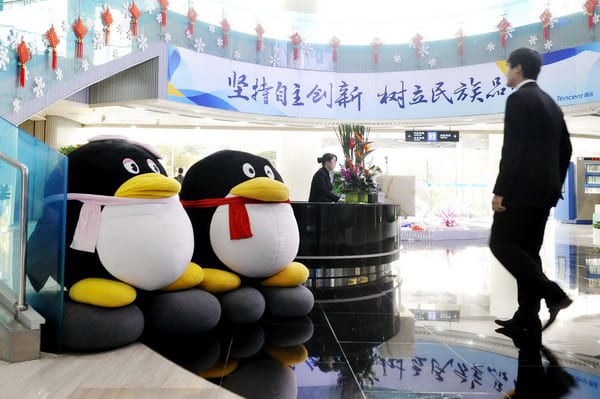
    Alibaba and Tencent spent more than USD8 billion last year alone backing often strikingly similar ventures, as the Chinese Internet giants race to create online one-stop-shops to win the digital loyalty of a tenth of the world’s population.

    Before China became the biggest smartphone market, there was little overlap between the businesses of e-commerce leader Alibaba Group Holding Ltd, social networking firm Tencent Holdings Ltd and search engine provider Baidu Inc.

    Now, as more and more Chinese use their phones for everything from shopping to booking restaurants, the three companies are increasingly stepping over each other – and investing in the same services – to attract the same users.

  • Tommy Hilfiger launches innovative digital showroom

    Tommy Hilfiger launches innovative digital showroom

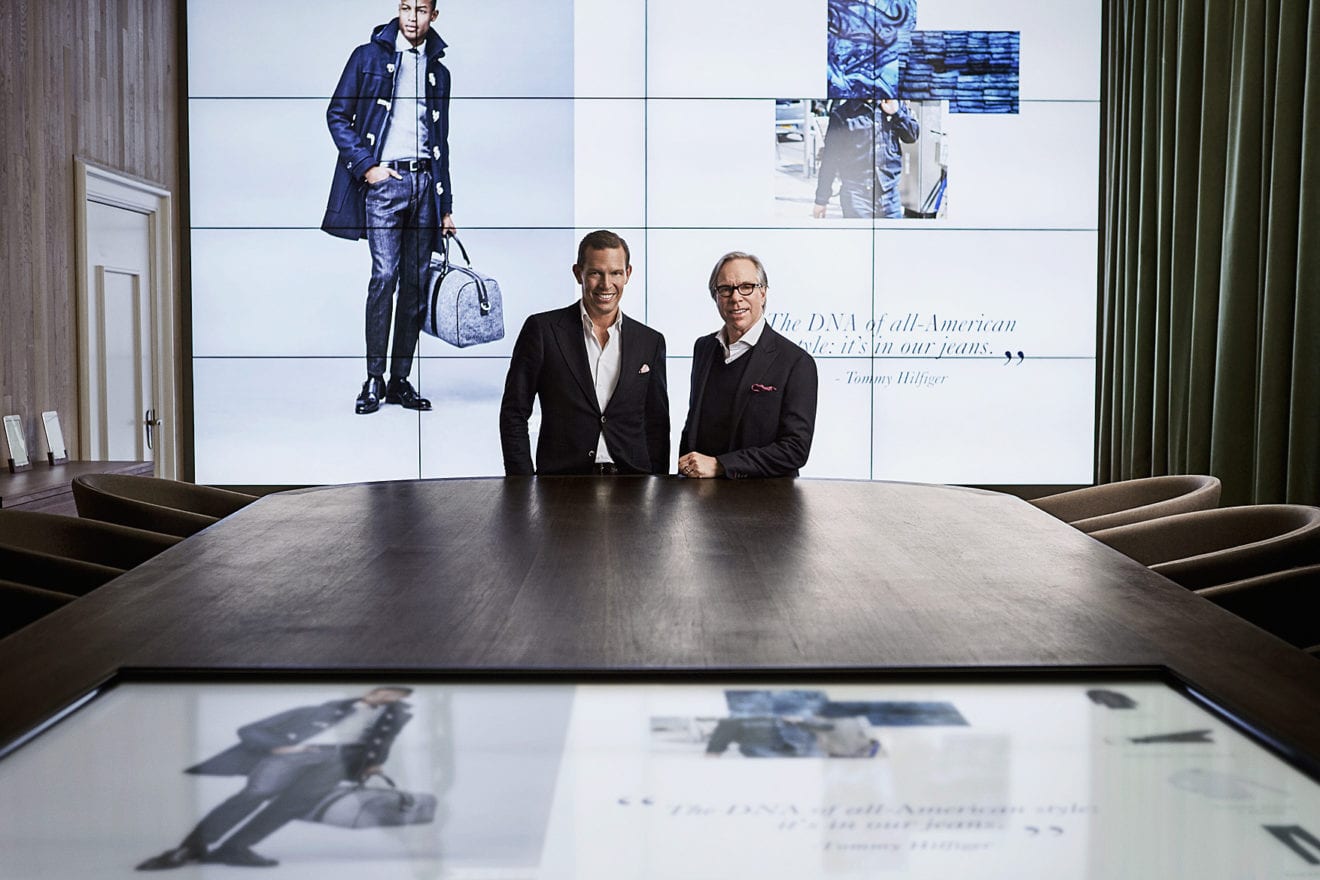
    Tommy Hilfiger on Wednesday launched an innovative digital sales showroom at its global headquarters in Amsterdam, The Netherlands. The interactive system blends collection information, sales tools and brand content in one seamless touchscreen interface.

    “Our digital showroom revolutionizes the buying and selling journey for our retail customers and internal sales teams,” said Daniel Grieder, CEO, Tommy Hilfiger. “We are passionate about providing our clients with the best service, experience and quality.

    Our new digital showroom concept completely reimagines the traditional buying approach and establishes a new fashion industry benchmark for business to business sales. The concept also supports our ongoing focus on efficiency and will significantly streamline and enhance the Tommy Hilfiger sales experience.”

    The centrepiece of the digital showroom is an interactive half-meter by one-meter touchscreen table set in a sleek walnut frame, which connects to a four-meter-high wall-to-wall grid of ultra-high-definition 4K screens. Customers can digitally view every item in the Tommy Hilfiger sportswear and Hilfiger Denim seasonal collections and create custom orders with all product categories laid out across a single screen. They can view head-to-toe key looks, zoom in with incredible detail to see unique design features, and click on a garment for specific information such as colour offerings and size ranges.

    The product selection and ordering experience builds on a traditional sales approach, reimagined through the digitalised system that streamlines and simplifies the process. The interactive interface allows for in-depth discussions on styling, merchandising and deliveries that are tailored to each client. Furthermore, by complementing traditional sales tools with an array of brand information, the digital showroom effectively immerses the customer in the complete Tommy Hilfiger brand experience.

    The digital showroom concept also supports Tommy Hilfiger’s ongoing sustainability mission, as it reduces sample production, eliminates the need for printed order forms, and diminishes the ecological impacts of shipping. In turn, the environmental impacts of sample creation are significantly reduced, from the supply chain and manufacturing to packaging and international shipping.

    The fashion retailer is establishing a global roll-out plan to expand the concept into markets worldwide.

  • Domestic online giants to overtake MNC rivals as China’s favourite retailers

    Domestic online giants to overtake MNC rivals as China’s favourite retailers

    New consumer research shows that domestic online retailers are becoming as popular as multi-national brands amongst shoppers in China. eCommerce brands such as TMall (Alibaba Group) and JD.com (invested by Tencent) are now increasingly trusted businesses, offering far more than just cheap prices and convenience. At their current rate, one of them will likely take the top spot in the next two years, according to OC&C Strategy Consultants Greater China.

    Although sportswear brands, Adidas and Nike, once again topped the latest rankings in Second Mover Advantage – The OC&C Retail Proposition Index China 2014 (The Index), Tmall now appears in the top three for the first time. In total, four of the top ten places are now occupied by Chinese online-only retailers – TMall, JD.com, YHD.com and Taobao. The rankings are based on the views of over 2,000 consumers across China who rated retailers against criteria including, trust, value for money and product suitability.

    The growth in popularity of eCommerce retailers means that the Chinese retail landscape is starting to become more like other global markets where generalist, online-only players such as Amazon, tend to be dominant.

    “As retail execution and consumer expectations increasingly mirror what we see in Western markets, it may only be a matter of time before a pure online-only player becomes the most popular retail brand in China,” said Jack Chuang, Associate Partner at OC&C Strategy Consultants Greater China. “Chinese consumers are becoming more confident and independent in their shopping habits and exercising greater choice between retail brands, particularly online.”

    “This means that foreign retailers are losing their inherent advantage over their Chinese counterparts as the high-profile, trusted brands of choice with shoppers. The era of relying on their brand strength and its implied trust is coming to an end. Retailers will need to respond by tailoring their products specifically to the local target market.” he added.

    The growth of eCommerce in China will continue over the next few years. The evidence from The Index highlights that the key challenge for traditional bricks and mortar retailers will be developing an attractive multi-channel offering (online as well as offline) to consumers. Some retailers in western markets are starting to fight back against the competition from online-only retailers and, in the long-term, this will likely also be a feature of the Chinese market.

  • JD.com eyes rural areas to tap huge potential

    JD.com eyes rural areas to tap huge potential

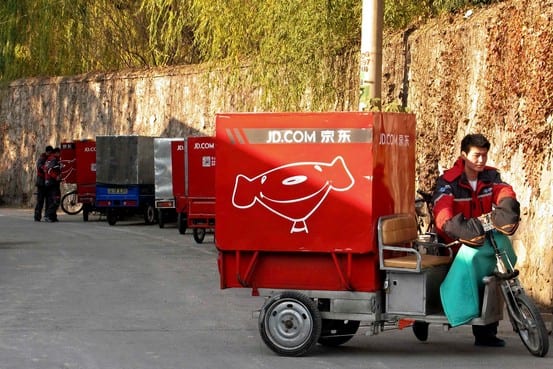
    China’s online retailer JD.com said it plans to open more than 500 county-level service centres this year to boost deliveries to lower-tier cities and inland regions as it bids to boost its market presence.

    The centres will hire local staff and delivery men to expand the firm’s delivery network into regions with few third-party courier companies. The firm will also open up to 1,000 service stores targeting home appliance buyers and help vendors provide one-stop service of installation and repairing of household appliances sold to rural consumers.

    It is hoped that the county-level centres and the planned hiring of promotion staff will help rural consumers become better acquainted with JD.com as well as online purchasing and after-sales service by the end of June.

  • Stranded online parcels claim ‘partly untrue’

    Stranded online parcels claim ‘partly untrue’

    China Post has said reports that thousands of parcels from overseas have been languishing at a Shanghai port for months because it owes millions of yuan in port fees are “partly untrue.” This follows online claims that 200 containers mostly containing haitao — goods bought online from overseas — brought by ship to the city are piled up at a Shanghai port. Items transported by air are unaffected. They are mainly said to be items bought from Japan between October and November — including diapers and other infant products ordered by parents. It has been claimed online that the delay is because the China Post Express Mail Service owes some 5 million yuan (US$817,730) to Shanghai International Port Group and has refused to pay.

  • E-retailer Zalora bets big on Southeast Asia

    E-retailer Zalora bets big on Southeast Asia

    Asian fashion e-commerce start-up Zalora aims to become a multi-billion dollar company, and according to managing director Michele Ferrario, Southeast Asia’s burgeoning market holds the key to achieving that goal.

    “Singapore is well-served in terms of online and offline retail, but when you think about smaller towns in Indonesia, the Philippines, Vietnam and Thailand, people there do not have the same access to fashion as people in developed markets,” he told CNBC’s “Managing Asia.”

    Home to more than 600 million consumers, the region’s internet retail market is at an “inflection point,” according to a UBS report published last June. Analysts estimate online spending across Southeast Asia is poised to hit USD35 billion by 2020, on the back of high internet penetration and widespread smartphone usage.

  • Citizen Card to facilitate online shopping in Myanmar

    Citizen Card to facilitate online shopping in Myanmar

    A citizen card launched by payment services provider 2C2P and Myanmar Citizens Bank is expected to support e-commerce in Myanmar.

    The reloadable prepaid card is accepted by MasterCard merchants and comes with an optional smartphone application that allows cardholders to manage transactions in real time.

    “Targeted at the retail, and travel and tourism sectors, Citizen Card will facilitate both physical and online shopping. It will also be of use to Myanmar tourists when they travel overseas, as consumers can enjoy special benefits and privileges at destinations such as Thailand and Singapore, with a number of partner merchants in the airline, food and beverage and hospitality sectors,” said.

    Initially, supply of the Citizen Card will be limited to 5,000 units but plans are underway for options to roll out more within the year.

    According to McKinsey & Co, Myanmar is expected to quadruple the size of its economy from USD45 billion to over USD200 billion by 2030, with per capita GDP rising from USD1,300 in 2010 to USD5,100 by 2030.

    “Building on this momentum, we are pleased to partner with 2C2P and launch MCB’s very first prepaid card, which will help support the imminent growth in Myanmar e-commerce,” said U Myint Win, Managing Director of Myanmar Citizens Bank.

    2C2P has also introduced in Myanmar iACCEPT, a mobile point-of-sales system with Visa, MasterCard, Myanmar Citizens Bank and Myanmar Hotels International. In July, 2C2P partnered with Creative Web Studios, a Yangon-based e-commerce solutions provider, working to drive financial inclusion and develop Myanmar’s contactless payment infrastructure.

  • Richemont Group reports declining sales in Asia-Pacific

    Richemont Group reports declining sales in Asia-Pacific

    World’s second largest luxury conglomerate, Swiss based Richemont Group reports flat sales at constant exchange rates (sales increased at 4 percent at actual rates) in the quarter to 31 December 2014. Growth in Europe/Middle East and the Americas was offset by a significant decline in Asia-Pacific. Overall, third quarter trading was below the first six months of the year.

  • Microsoft partners with Alibaba to enhance IP protection for its products

    Microsoft partners with Alibaba to enhance IP protection for its products

    An agreement between Microsoft (China) and Alibaba Group Holding Limited (Alibaba Group) is expected to enhance the protection of Microsoft’s intellectual property rights (IPR) on the two most popular e-commerce platforms in China operated by Alibaba – Taobao Marketplace and Tmall.com.

    The cooperation is also expected to strengthen anti-counterfeit measures already in place on both platforms.

    Both sides said they will work to raise awareness among consumers about the threats posed by counterfeit and unlicensed software to their information security, privacy and personal data.

    Tim Cranton, Microsoft’s Associate General Counsel and Greater China Region’s Chief Legal Counsel, said legitimate businesses and innovators in China will also benefit from a safer and more robust e-commerce marketplace with safeguards to protect intellectual property rights.

    Under the agreement, Taobao and Tmall will remove product listings suspected of offering counterfeit or unlicensed Microsoft products. Alibaba Group and its associated companies like Alipay will cooperate with relevant parties and provide necessary information to those consumers who mistakenly buy unauthorized software to receive compensation from the sellers according to relevant laws.

    Microsoft’s cooperation with Alibaba Group dates back to April 2007 when Microsoft signed a memorandum of understanding with Alisoft as the two parties joined hands in providing information service for small- and medium-sized businesses.

    In December 2013, Microsoft launched its flagship online store on Tmall.com, the largest e-commerce platform in China with to promote genuine Microsoft software.

  • Walmart India head likely to meet Sitharaman

    Walmart India head likely to meet Sitharaman

    Under pressure from the US, the government might again be compelled to review the foreign direct investment (FDI) policy in multi-brand retail trading (MBRT). At the forefront is American retail giant Walmart, demonstrating a renewed interest in entering India’s fast growing retail market, estimated at USD600 billion. Currently, Walmart operates 20 cash-and-carry or wholesale stores in the country, for which there’s no foreign investment cap.

  • foodpanda partners with HSBC in HK, Southeast Asia

    foodpanda partners with HSBC in HK, Southeast Asia

    Online food delivery service foodpanda is partnering with HSBC in Hong Kong and Southeast Asia.

    Customers and cardholders in eight Southeast Asian countries – Hong Kong, Vietnam, Indonesia, Singapore, Malaysia, Taiwan, Philippines, and India – will benefit from the partnership through discounts.

    In the first quarter of 2015, cardholders will get 25 percent off on all orders, and will enjoy HKD50 off on their first order for the rest of the year; subsequent orders will be discounted 10 percent for standard cardholders, and 15 percent for Premium cardholders.

    food panda has nearly nearly 500 restaurants in the region and offers the largest variety of restaurants and cuisines of any food delivery service in Hong Kong.

  • Myntra rejigs top management

    Myntra rejigs top management

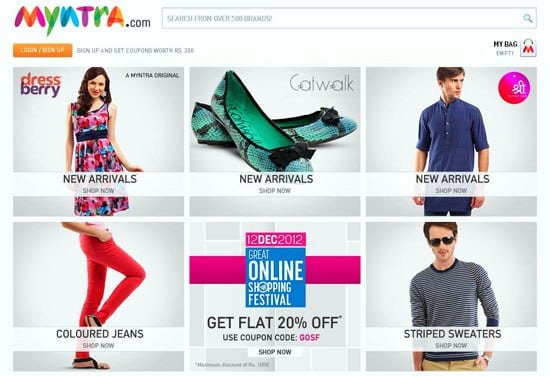
    Ganesh Subramanian, Chief Operating Officer at Myntra.com, has been given a new responsibility as Head – New Initiatives with immediate effect. Confirming the development, Subramanian told BusinessLine: “As a company, we are thinking long term. Therefore, we are investing to look at continuously creating unique value for customers by challenging the way the fashion business is run at present. For instance, it takes 12-15 months to deliver fashion products from concept to retail to consumers; why should it take so long?”

  • Study: Asia-Pacific to account for 41.4pc of global e-commerce sales

    Study: Asia-Pacific to account for 41.4pc of global e-commerce sales

    Asia-Pacific will account for 41.4 percent of worldwide e-commerce sales and is set to overtake the US as the world’s biggest e-commerce market, the latest research by Worldwide Business Research (WBR) shows.

    The research was conducted as part of the 3rd Annual e-Tail Asia conference to be held in Singapore in March.

    The study also found that e-commerce leaders in the region sees customer experience as the most crucial focus in 2015, followed by mobile marketing and cross border marketing.

    In the latest research conducted by Worldwide Business Research (WBR), e-commerce leaders across Asia-Pacific identified Customer Experience as the most crucial focus area for 2015, followed by Mobile Marketing and Cross border Marketing.

    The research was conducted as part of the 3rd Annual e-Tail Asia conference to be held in Singapore in March.

  • Alibaba to invest about USD575m in Indian online-shopping service, Paytm

    Alibaba to invest about USD575m in Indian online-shopping service, Paytm

    Chinese e-commerce giant Alibaba Group Holding Ltd. and its financial-services affiliate have agreed to jointly invest about USD575 million in India’s One97 Communications Ltd.’s online-payment and marketplace businesses, a person familiar with the matter said.