Category: E-Tailing

Retail News Asia is committed to providing both local and global retailers with the latest E-Commerce & Etail news throughout the Asian market. This on a daily base.

  • Amazon expands anti-counterfeit project to Singapore

    Amazon expands anti-counterfeit project to Singapore

    Amazon has expanded its anti-counterfeit program Project Zero to seven new countries, including Singapore and Australia, taking the number of operational territories to 17.

    The project combines Amazon’s technologies with brands’ knowledge of their own intellectual property to counter the trade in forged products. The system works by scanning the more than 5 billion attempted daily product listings on Amazon for suspicious products, using a machine-learning algorithm that is constantly improving.

    Project Zero also provides a self-service tool allowing brands to directly remove counterfeit goods listings from Amazon stores.

    More than 10,000 brands have already enrolled in the initiative.

    “Amazon is committed to protecting our customers and the brands we collaborate with worldwide,” said the firm’s VP of worldwide customer trust and partner support Dharmesh Mehta.

    “Project Zero has been a leap forward in protecting brands, especially for those that use all three of its components.”

    Brands currently using Project Zero that already have a trademark enrolled in one of the newly added countries can use it automatically in their additional stores.

  • Amazon Project Zero Launches in Seven New Countries

    Amazon Project Zero Launches in Seven New Countries

    Amazon announced the expansion of Project Zero to seven new countries – Australia, Brazil, Netherlands, Saudi Arabia, Singapore, Turkey, and the UAE – making it available in 17 countries where Amazon has a store. Project Zero combines Amazon’s advanced technology, machine learning, and innovation with the sophisticated knowledge that brands have of their own intellectual property so we can together drive counterfeits to zero.

    Launched in 2019, Project Zero builds on Amazon’s long-standing work and investments to ensure that customers always receive authentic goods when shopping on Amazon. Over 10,000 brands – from large, global brands to emerging entrepreneurs including Arduino, BMW, ChessCentral, LifeProof, OtterBox, Salvatore Ferragamo, and Veet – have already enrolled in Project Zero.

    “Amazon is committed to protecting our customers and the brands we collaborate with worldwide,” said Dharmesh Mehta, Vice President of Worldwide Customer Trust and Partner Support. “Project Zero has been a leap forward in protecting brands, especially for those that use all three of its components.”

    BMW, one of the world’s leading automotive brands with a portfolio of global trademarks, said: “Project Zero has been a very easy and effective tool at protecting BMW on Amazon. We are very appreciative of the tools Amazon has built to enable us to protect our brand.”

    “We are excited to see that Project Zero is expanding into the new marketplaces,” said Adrienne McNicholas, Co-Founder and CEO of Food Huggers. “The program has already had a very positive impact on our enforcement efforts and we are glad to see Amazon’s continued commitment to protecting our brand across the world.”

    Brands that are enrolled in Amazon Project Zero and already have a trademark enrolled in one of the newly launched countries will automatically be able to use Project Zero in these additional stores. New brands can learn more about and enroll in Amazon Project Zero at: https://projectzero.com/sg.

    Project Zero uses three key components to protect and empower brands:

    • Amazon’s automated protections proactively and continuously scan more than 5 billion attempted daily product listing updates globally to look for suspicious listings. These automated protections are powered by Amazon’s machine learning and are continuously fed new information, so we continue to get better in automatically preventing and blocking potential counterfeit listings.
    • We have invested significant resources over the years to proactively prevent counterfeits and continue to innovate and build technology-based solutions. Project Zero goes further with a self-service tool to empower brands and provides them with an unprecedented ability to directly remove listings from our store. These removals also feed into our automated protections, so we can better catch potential counterfeit listings proactively in the future.
    • Product serialization is enabled by a unique code that brands apply within their manufacturing or packaging process, and it allows us to individually scan and confirm the authenticity of every single purchase of a brand’s enrolled products from Amazon’s stores. While product serialization is optional, brands enrolled in Project Zero are seeing the best results when using product serialization.

    Project Zero is among a suite of tools Amazon has introduced to empower brands to protect their IP.

    • Amazon IP Accelerator helps businesses more quickly obtain intellectual property (IP) rights and brand protection in Amazon’s stores. The program was designed specifically with small and medium businesses in mind and is available to entrepreneurs worldwide that are looking to secure intellectual property in the U.S. IP Accelerator connects entrepreneurs with US law firms with expertise in trademark applications. Entrepreneurs also benefit from pre-negotiated rates. To learn more: https://brandservices.amazon.com/ipaccelerator
    • Amazon Brand Registry, a free service that gives brand owners access to a powerful set of tools that help them deliver an accurate and trusted customer experience on Amazon while protecting a brand’s IP. To enroll and learn more: https://brandservices.amazon.com/
  • ShopBack officially launches in Vietnam following months of strong growth during Beta phase

    ShopBack officially launches in Vietnam following months of strong growth during Beta phase

    ShopBack, Asia Pacific’s leading rewards and discovery platform, will officially launch its website and mobile app in Vietnam on 8 August, in line with an 8.8 launch campaign. Online shoppers in Vietnam can now earn up to 25% cashback from ShopBack Vietnam’s roster of over 150 merchants. These include international and regional brands like Lazada, Shopee, Watsons, and Booking.com, as well as local brands like Tiki, Sendo, Juno, G Kitchen, Vascara, and Fahasa.

    Founded in Singapore in 2014, ShopBack now serves over 20 million users in nine markets across Asia Pacific, including Malaysia, the Philippines, Indonesia, Taiwan, Thailand, Australia, South Korea, and Vietnam. ShopBack rewards its users with cashback across a wide range of categories including general merchandise, travel bookings, fashion, health and beauty, groceries, and food delivery.

    “At ShopBack, one of our six core values is ‘Never-Ending Customer Obsession’, and we hope to bring the high-quality ShopBack experience that our users know and love to consumers in Vietnam. The increasing number of internet users, rising internet penetration, and steady increase of the e-commerce share of total retail sales in Vietnam makes it a core and high-potential market for us,” said Josephine Chow, Head of Expansion, ShopBack.

    ShopBack Vietnam was launched in Beta at the end of 2019, and since then has acquired over 150 merchants and around 800,000 users. ShopBack Vietnam has seen consistent month-on-month growth of over 1.5x increase in sales and over 1.5x increase in orders this year. To date, 4 billion VND in cashback has been given out to ShopBack users in Vietnam.

    “According to a survey conducted by McKinsey, Vietnamese are feeling the impact of COVID-19 on their livelihoods, with some 70% expecting to be more careful with their spending going forward. With a strong and clear value proposition – to simplify the shopping experience and bring users savings on time and money – we are confident that ShopBack is well-positioned to attract consumers in Vietnam, especially those who are looking to cut costs and maximize savings during this challenging period. In fact, ShopBack Vietnam has been very well received since its beta launch late last year. We are thrilled to be officially launching ShopBack Vietnam and excited for what’s in store next,” said Jacky Ha, Commercial Director, ShopBack Vietnam.

  • Taobao looks to boost young entrepreneurs showing originality talent

    Taobao looks to boost young entrepreneurs showing originality talent

    Chinese social commerce platform Taobao has inaugurated a new rating system to reward deserving young creators and small enterprises with broader market exposure on the fifth anniversary of the firm’s Taobao Maker Festival.

    The exposure is designed to bring more attention to outstanding creativity and better promote products to the platform’s 840 million users.

    Taobao’s new system is the latest example of the firm’s content-driven commerce strategy that has been part of its promotional apparatus since 2016, transitioning the platform from being primarily transactionally driven to a broader social-commerce playbook.

    “The new rating system promotes and celebrates originality and creativity,” said Alibaba Group CMO Chris Tung. “It will enable merchants to leverage their participation in the Taobao Maker Festival into a source of year-round benefit for growing their business and customers.”

    “We continue to leverage our unique content-driven strength to help young entrepreneurs and small businesses win market traction and bringing a better experience to consumers,” said the head of Taobao operations Kaifu Zhang.

  • Li & Fung Partners with JD.com to Accelerate Development of Digital Supply Chain

    Li & Fung Partners with JD.com to Accelerate Development of Digital Supply Chain

    Li & Fung, today announced a strategic investment of US$100 million from JD.com , with newly issued capital to further develop its digital supply chain. The Fung Family will continue to retain control of the Company with 60% of the voting shares.

    Li & Fung has been on a journey to create the Supply Chain of the Future and the strategic cooperation with JD will accelerate this development with a proven digital partner. Li & Fung will also grow its business in China by partnering with JD on private label initiatives for the China domestic market by leveraging its global network and digital supply chain. With the strong partnership between the Fung Family and Singapore-headquartered GLP Pte Ltd., and now the addition of JD, Li & Fung will be able to leverage its scale and digital capabilities to continue its journey of creating the end-to-end digital supply chain.

    As China’s leading technology-driven e-commerce company, JD is transforming to become the leading supply chain-based technology and service provider, which fits well with Li & Fung’s goal of creating the Supply Chain of the Future. JD has been developing proprietary supply chain technologies for many years and has created digital retail and supply chain platforms that are fully integrated to support its omnichannel strategies.

    Amidst the continuing digital disruption to retail and the ongoing global trade tensions, compounded by the dramatic impact of Covid-19, the global retail supply chain has become more and more complex. With the breadth and depth of its global sourcing and production ecosystem, pan-Asia logistics network, and industry-leading digital product development capabilities, Li & Fung is helping global retailers and brands navigate a highly uncertain and ever-changing macro environment.

    Spencer Fung, CEO of Li & Fung, said: “Our goal to create the Supply Chain of the Future and to improve the lives of one billion people in our global supply chain remains more relevant than ever in this turbulent world. The partnership with GLP and the addition of JD will be instrumental in further strengthening Li & Fung.”

  • E-wallets seek to grab opportunity as pandemic keeps people shopping online

    E-wallets seek to grab opportunity as pandemic keeps people shopping online

    Businesses are pushing cashless payment services amid demand triggered by social distancing measures imposed to curb Covid-19. MoMo announced on Tuesday that it plans to tie up with ride-hailing company Be Group to offer its popular e-wallet services to the latter’s customers. SmartPay earlier this month signed a deal with Viet Capital Bank to allow the lender’s customers to open saving accounts using its e-wallet.

    The company, which entered the market in May last year, targets big in Vietnam’s increasingly crowded e-payment market. It seeks to increase the number of users from 1.7 million to 4 million in the near future.

    Another player, AirPay, which has been partnering with online shopping platform Shopee for months, is offering gifts worth hundreds of thousands of dong to attract customers.

    Shopee said its cashless transactions, through credit cards and AirPay, have been rising rapidly in number since Vietnam reported the first Covid-19 case early in the first quarter. Eighty percent of cashless transactions in Hanoi, Da Nang, and central Thua Thien Thue Province are done by users aged 18-34, Shopee said.

    Industry insiders said fintech companies and banks are seeking to boost cashless payment as people refrain from going to physical stores amid pandemic fears.

    “Banks have been increasing partnerships with fintech companies during the pandemic for payment and other types of financial services,” Do Thanh Nam, director of Viet Capital Bank’s digibanking department, said.

    His bank saw online savings increase six-fold year-on-year in the first half, he revealed. An estimated 10.6 percent of the population aged above 15 use e-wallets, compared to 10.7 percent in Thailand, 17.1 percent in Singapore, and 35.2 percent in China, according to global consulting firm Boston Consulting Group.

    The government has been seeking to promote cashless payments for transactions like payment of electricity bills and tuition.

  • ShopBack teams up with Shopee Malaysia to launch Shopee Affiliate Marketing Solutions

    ShopBack teams up with Shopee Malaysia to launch Shopee Affiliate Marketing Solutions

    ShopBack, Asia-Pacific’s top rewards, and discovery platform, together with Shopee, Malaysia’s no.1 e-commerce platform, has jointly launched Shopee Affiliate Marketing Solutions (AMS) today. This initiative is aimed at helping brands accelerate the growth of their e-commerce stores while bringing more value to consumers in the form of product discovery and savings.

    This partnership enables participating brands to list their Shopee Official Stores directly on the ShopBack Malaysia platform, thereby allowing them to determine the cashback amount to reward customers. Previously, users received sitewide cashback when purchasing from Shopee through the ShopBack platform. Now with Shopee AMS, users will earn additional storewide cashback on their purchases from participating brands, on top of receiving the usual sitewide cashback.

    In Malaysia, ShopBack generated around 1.5 million monthly orders for over 500 merchants in Q2 of 2020. Since its launch, ShopBack Malaysia has rewarded its users with over RM60 million in cashback. Starting today, the brands participating in Shopee AMS will be able to leverage ShopBack Malaysia’s extensive reach and promote their Shopee Official Stores to over 3 million users.

    “We are thrilled that Shopee has trusted ShopBack to be one of their key partners in Malaysia. This collaboration will see two industry leaders coming together to work towards the common goal of driving value to merchants and users. ShopBack can help to bridge the gap between online shoppers and their favorite brands on Shopee, while allowing them to earn extra cashback on their purchases. This partnership is also a great way to expand our merchant line-up to give our users more options to discover and earn cashback. We look forward to working closely with Shopee to help more brands grow their digital presence and sales,” said Eddy Han, Country General Manager, ShopBack Malaysia.

    Shopee took a data-led approach in selecting the first 13 brands from various categories to participate in Shopee AMS. The shortlisted brands are Amazfit, Anker, Anlene, Anmum, Aukey, DirectD, Fernleaf, fitbit, Jabra, Realme, Skullcandy, Tefal, and tronsmart, which are popular among local shoppers. ShopBack users will be able to earn up to 7.5% cashback when they purchase from any of these brands.

    “We are delighted to be taking our partnership with ShopBack to the next level. The COVID-19 pandemic has accelerated the rate of digital adoption, and as a result we have seen an increase in the number of new businesses joining Shopee to bring their product offerings online. Through this partnership, brands will be able to leverage ShopBack’s extensive user base in Malaysia to drive traffic to their Official Stores on Shopee and promote their products. This will be especially useful for brands that do not have their own online stores. ShopBack will serve as an additional marketing tool for them to cut through the noise and drive awareness and sales in a targeted way,” said Ian Ho, Regional Managing Director, Shopee.

  • Shiseido looks to China’s online model for post-Covit 19 growth

    Shiseido looks to China’s online model for post-Covit 19 growth

    Shiseido Co is pumping up its e-commerce presence amid a “deep crisis” in the beauty business, with the Japanese company looking to its China strategy as a post-pandemic model for growth.

    The 148-year-old beauty giant sees its online proportion of overall sales growing to 30 percent in two or three years if current conditions continue, from about a fifth right now, according to CEO Masahiko Uotani.

    “From a business standpoint, we’ve been trying to come up with solutions to the current situation and use this as an opportunity to go at a faster pace with some reforms,” Uotani said in an interview in Tokyo.

    The reforms for Shiseido, which has relied heavily on department-store sales, involve training beauty consultants to use live streaming and social media, working more closely with retailers on the tech-enabled shopping experience, and investing in new marketing content for online, Uotani said. All strategies the company has implemented in China.

    “We need to merge online and offline to get people to buy more. Beauty products are different from others in that a human touch is very important, so we need to think about a structure that allows that,” he said. “There’s a lot we can learn from what’s going on in China.”

    Uotani’s focus comes as the beauty industry faces unexpected challenges because of the global pandemic that is different from previous downturns. Measures to control the spread of the coronavirus have melted away social norms like putting on makeup in the morning or spritzing on perfume before a night out. As people stay home, the need for beauty care has become a lower priority, making it difficult for businesses to bounce back quickly.

    The situation has also been complicated as department stores and beauty salons have closed during lockdowns, sending consumers to seek cheaper cosmetics brands online.

    Shiseido’s sales fell 17 percent in the first quarter and operating profit plunged 83 percent, mostly due to clampdowns on movement in China, where it does a fifth of its business, and a hit to tax-free sales to Chinese tourists in Japan. The company withdrew its annual forecast, acknowledging it would be unable to hit its mid-term goal of more than US$11 billion in sales by this year. For the second quarter, analysts are expecting Shiseido to swing to a loss.

    “The near-term earnings outlook will be difficult,” said Ritsuko Tsunoda, an analyst at JPMorgan Chase & Co. “But I think Uotani will leverage that for any material structural change that he couldn’t have implemented otherwise.”

    Mini-influencers

    Transitioning beauty-product sales online isn’t an easy step for an industry built on consumer preferences and dominated by the image of rows of samples at physical retailers that encourage trying and buying on the spot.

    Shiseido is training its sales staff in Japan to follow the example of Chinese employees, turning beauty counter ladies into mini-influencers. In China, department store consultants have taken to social media to stream the newest products that have arrived. Interested customers are then directed to the website of the department store to purchase the products.

    China has developed a booming culture for live video merchandising, and companies are beginning to catch on to the trend.

    Uotani sees China’s e-commerce sales hitting 40 percent of revenue from the region this year, jumping from 30 percent currently. He said China’s fast recovery — sales of high-priced prestige brands in April, after the strictest lockdowns ended, were at levels before the coronavirus hit — could bode well for other regions.

    Drunk elephant

    The focus in the short-term will be prioritizing its high-end beauty brands that can generate cash flow to invest in e-commerce, according to Uotani. The company, which owns Nars and Laura Mercier makeup, is looking to speed up the expansion of its Drunk Elephant brand, which it bought in an $845 million deal last year, as prestige skincare products have been resilient during the pandemic.

    Dealmaking, such as selling off non-core assets or buying businesses that can support the focus on prestige and e-commerce, is also part of the equation, Uotani added.

    “It’s a very deep crisis for our business, and we need to protect employees and the company,” he said.

    At stake is the legacy of Uotani’s tenure. When he took the helm of Shiseido in 2014 following stints at companies including Coca-Cola Japan, it was a rare instance of an outside executive joining the C-suite in the island nation, where managers are typically elevated through decades of service to one firm.

    Analysts and investors have praised Uotani’s efforts at Shiseido, whose value more than quadrupled during his tenure before the coronavirus hit. After such success, the current crisis is shaping up to be his biggest test.

    “In my 40 or so years working in business,” he said, “the unexpected and uncontrollable impact from the global pandemic is the biggest I’ve dealt with in my career yet.
  • Covid-19 fuels breakthrough in Hong Kong e-commerce scene

    Covid-19 fuels breakthrough in Hong Kong e-commerce scene

    The popularity of e-commerce has risen in Hong Kong as a result of the coronavirus pandemic, despite the market’s longstanding preference for physical stores.

    Analytics firm GlobalData says its research shows that the e-commerce market in the territory will grow at a compound annual growth rate of 9.9 percent by 2024 to reach US$29 billion. This year, e-commerce payments are likely to show a rise of 13.4 percent as a result of consumers practicing social distancing.

    “While the pandemic led to a decline in consumer spending, this is being partially offset by a rise in online spending, as wary consumers continue to stay at home and use online channels to purchase goods,” said GlobalData banking and payments lead analyst Ravi Sharma. “The pandemic has resulted in a change in consumer buying behavior too as they are avoiding visiting shopping centers and choosing online platforms for their day-to-day purchases.”

    Globaldata expects that the new trend will benefit e-payment software companies such as AlipayHK, WeChat Pay, and PayPal, while bank and card companies will capitalize on the shift in consumer behavior with their own new products. Citibank has already entered into a collaboration with local e-commerce player HKTVmall to establish a co-branded credit card offering exclusive benefits to online shoppers.

    “Hong Kong has a robust e-commerce market with high internet penetration and high preference for online shopping among consumers, especially younger demographics,” said Sharma.

    “The Covid-19 pandemic further accentuates this shift towards online shopping, supporting the payments market growth in the country”.

  • Shopmatic revenue soars 200 percent

    Shopmatic revenue soars 200 percent

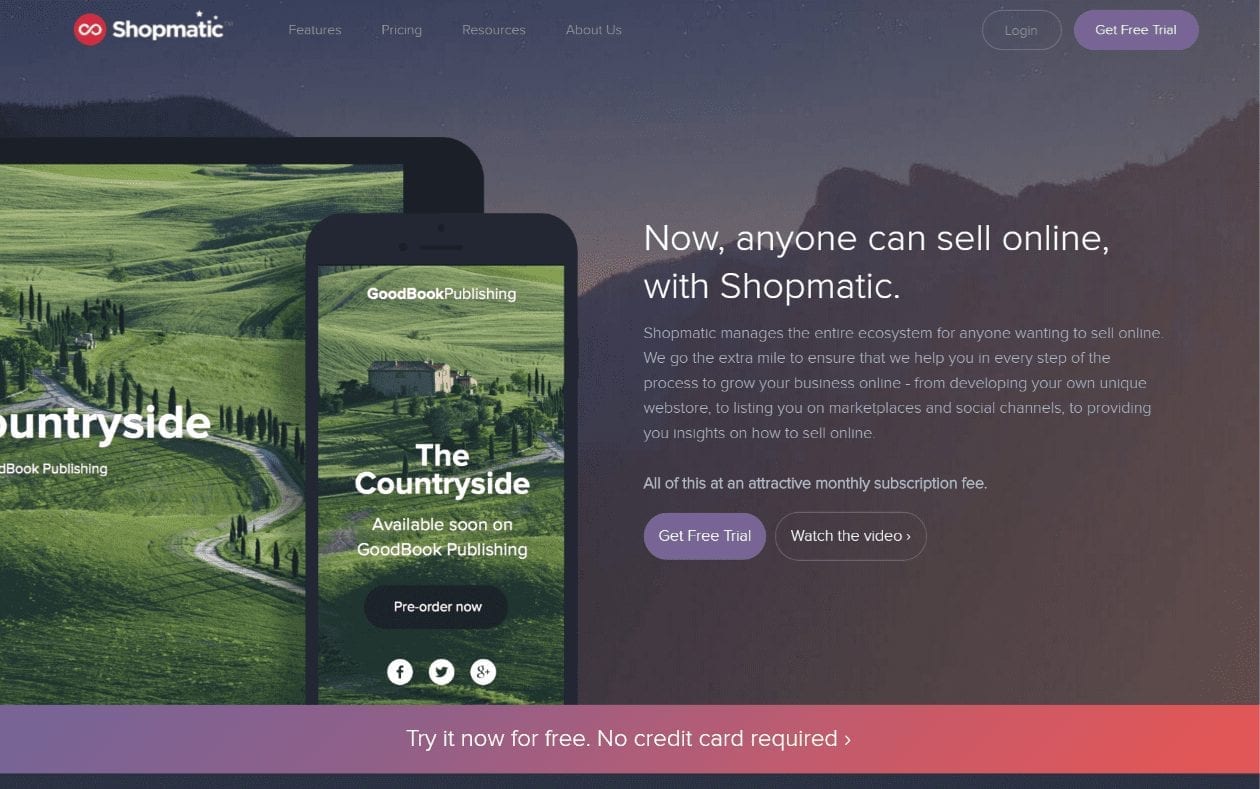
    Singaporean e-commerce platform Shopmatic has registered 200-per-cent growth in revenues, transactions, and GMV during the last financial quarter in spite of the global impact of the coronavirus pandemic.

    The firm works to bring various elements of the e-commerce landscape onto its standalone platform, allowing customers to create a customized online store and sell through social and chat commerce on multiple marketplaces.

    During the pandemic, Shopmatic launched tailored solutions for India’s kirana stores and Singapore’s grocery stores, providing options to use pre-developed catalogs, among other services.

    “Going digital is not an option anymore, but an imperative,” said Shopmatic CEO & co-founder Anurag Avula, “and we have been able to contribute to our merchants’ success by launching relevant solutions like the kirana/grocery store special. In the five years since we launched, we have been driven by our vision to enable online and offline success for our merchants by creating an omnichannel experience for our customers.

    “I am delighted that it has brought significant transaction growth to our customers. This inspires us to deliver even more innovative and compelling game-changing solutions for our merchants which we will be launching in the next few months.”

    Shopmatic currently reports more than 120,000 active merchants on its platform.

  • JD Worldwide to introduce more Korean brands in China

    JD Worldwide to introduce more Korean brands in China

    JD Worldwide has teamed with LG and Korea International Trade Association (KITA) to introduce more Korean brands to Chinese customers.

    “The epidemic has encouraged more Chinese consumers to shop online. With this trend, we will put more effort into helping South Korean brands export to China through e-commerce platforms,” said Park Min Young, chief KITA Beijing representative.

    Under the partnership, LG will be responsible for supply-chain management to provide South Korean products to JD while KITA will support SMEs entering Chinese market.

    “Since the epidemic, we have been working closely with organizations and enterprises from all over the world to introduce more international brands on JD,” said Frank Yu, head of marketing and operations at JD Worldwide

    “We believe this partnership will not only help brands find a new sales channel during this challenging time, but also bring more high-quality, authentic Korean products to over 380 million JD customers.”

    In May, more than 250 Korean brands joined a recruitment conference for the launch on JD Worldwide.

  • Amazon Prime Day delayed until October

    Amazon Prime Day delayed until October

    It was already understood that Amazon Prime Day will not take place in July as it usually does every year, with the most recent report hinting that it might get delayed until September. According to a new report, the annual sales event will be held in October.

    The company has supposedly given sellers a placeholder date of the week of October 5. A definitive date will likely be announced later.

    Those details were apparently shared by Amazon in an e-mail to third-party sellers. Officially, the e-tailer has not said anything about this year’s Prime Day. In recent weeks, the coronavirus has shown signs of resurgence, prompting many businesses that had reopened to close their doors again. Amazon is apparently postponing Prime Day again because it fears its supply chain could get negatively affected because of the spike.

    At the beginning of the pandemic, Amazon suspended shipments of nonessential items to its warehouses as it struggled to deal with increased demand following the outbreak. The e-commerce giant prioritized essentials such as medical supplies and household items during that time.

    Towards the end of April, the company said it would allow third-party sellers to resume shipments of nonessential products.

    Last month, the company organized a fashion-oriented sale to help sellers reeling from the effects of the pandemic and clear inventory in preparation for the Prime Day.

    Now as coronavirus cases are rising again, Amazon’s logistical challenges have resurfaced. Although the future is uncertain, a former Amazon executive does not think Prime Day will be delayed beyond October as the company wouldn’t want its biggest sale event to coincide with the holiday shopping season.

  • New Lazada CEO name surfaced

    New Lazada CEO name surfaced

    Southeast Asian e-commerce platform Lazada has appointed Chun Li as its new CEO.

    Li will succeed former CEO Pierre Poignant, who will head to Alibaba Group as a special assistant to its CEO Daniel Zhang.

    “Chun is an experienced business leader who can realize Lazada’s vision of unifying commerce with technology to advance Southeast Asia’s digital economy,” said Lucy Peng, chairwoman at Lazada Group.

    With technology-architecture and product-strategy backgrounds, Chun Li will ensure Lazada’s competitive advantage through data technology application and business localization across the region, according to the company.

    “Lazada’s priority is to create unique value for our consumers and merchants in Southeast Asia,” said Li. “There is incredible momentum for e-commerce across the region, and together with our strong local talents, we will step up Lazada’s digital innovation and commercial development to empower our customers to be successful and provide the best user experience for our consumers.”

    Li joined Alibaba Group as chief technology officer for the group’s B2B unit in 2014. He has served as both Lazada president and CEO of Lazada Indonesia since 2017.

  • Amazon pledges US$2 billion in Climate Pledge Fund

    Amazon pledges US$2 billion in Climate Pledge Fund

    Global retail giant Amazon has pledged US$2 billion for a new Climate Pledge Fund to foster sustainable technologies and services that will enable it to achieve net-zero carbon by 2040.

    The US-headquartered company says it will “back visionary companies whose products and services will facilitate the transition to a zero-carbon economy”.

    Founder and CEO Jeff Bezos says the fund will accept applications for grants from companies of any size worldwide, from pre-product startups to well-established enterprises. “Each prospective investment will be judged on its potential to accelerate the path to zero carbon and help protect the planet for future generations,” he said in a statement.

    Companies operating in industries including transportation and logistics, energy, manufacturing, the circular economy, and food will be eligible.

    The Climate Pledge was founded by Amazon in partnership with Global Optimism last year with a commitment to reach the goal of the Paris Agreement 10 years early – by 2040. Other companies have since signed on to the pledge, including consumer-goods company Reckitt Benckiser, tech giant Infosys and US telco Verizon.

    Bezos said the commitments by companies of that size send an important signal to the market that there will be rapid growth in demand for products and services that help reduce carbon emissions.

    Amazon has already invested in a company called Rivian, ordering 100,000 electric-powered delivery vans as a step towards reducing its carbon footprint.

    “Amazon has demonstrated its leadership in adopting low carbon technologies at scale,” said Rivian CEO RJ Scaringe. “We’re excited about a future of decarbonized delivery services.”

    The e-commerce company says it expects to run on 100-per-cent renewable energy by 2025, five years ahead of its original target date.

    It has also invested in nature-based solutions and reforestation projects around the world from its $100 million Right Now Climate Fund.

  • JD and Sony testing AR foot-measurement tool for online shoppers

    JD and Sony testing AR foot-measurement tool for online shoppers

    Chinese online e-commerce platform JD and Sony Semiconductor Solutions are working together to develop AR technology to measure foot size online.

    The JD and Sony solution requires customers to use their smartphone equipped with a distance-detecting camera and scan the front and sides of their feet in order to take an accurate measurement. The camera works by calculating the time it takes for a signal to bounce off the foot and return to the sensor.

    JD launched an AR feature on its app earlier this year for online customers to virtually try on shoes, a function is now available for more than 1000 sneaker SKUs on the platform and which is also available to external partners as a service, along with the firm’s other AR applications.

    “We hope to use innovations in technology to give all consumers equal access to efficient and convenient purchase and service,” said JD’s head of AR/VR Mingqiang Ye.

    “JD will continue to promote innovations in the area of AR and benefit both our customers and industry partners.”

    The firm is now planning to further develop its AR offerings in additional scenarios such as AR skin evaluation and AR live streaming.