Category: E-Tailing

Retail News Asia is committed to providing both local and global retailers with the latest E-Commerce & Etail news throughout the Asian market. This on a daily base.

  • What is Amazon’s Japan bestseller fashion?

    What is Amazon’s Japan bestseller fashion?

    Amazon Japan has revealed its most popular items sold on the online retailer’s platform in the last twelve months, with basics and sportswear taking the top spot in both fashion and accessories, and footwear categories. According to the ‘Amazon Ranking Grand Prize 2018’, the United Athle 5.6 Ounce High Quality T-shirt took first place in the clothing and accessories category. In a classic design, the affordable fashion item was followed in popularity by the brand’s crew neck t-shirt, which came in second place.

    Looking at the top 20 apparel brands, Champion gained five spots in the report, while in the womenswear section, casual tops by And It_ sat high in the rankings.

    Asics’ running shoes won both first and second place in footwear, while Anello’s poly-canvas mini bag proved popular in the bag category.

    In watches, Casio’s G-Shock shock-resistant smart-watch continued to gain popularity, with the Casio brand featuring 11 times in the Amazon Japan top 20. In the jewellery ranking, products by Tiffany & Co. gained in popularity too, said the report.

    The “Amazon Ranking Grand Prize 2018” ranked the U.S. e-commerce giant site’s most popular products by category for the period beginning in November 13, 2017, and ending on October 31, 2018.

    In the last twelve months, retail expenditure has continued to grow in Japan.

    In September, the archipelago nation recorded its 11th consecutive month of retail revenue growth, with sales up 2.1% on the same period last year, according to data by the Japanese trade ministry.

    Specifically, online shopping is at the forefront of this drive with the Japanese love for online shopping helped by the trend to online shop using mobile phones.

    In the latest Criteo survey, mobile devices accounted for 55% of all EC transactions in Japan, up 4 points on the year.

    Transactions through smartphones increased 9%, and tablets 3%, but purchases by PC were down 9%, said the report.


  • Millennials Dominate Indonesia’s Online Shopping Scene

    Millennials Dominate Indonesia’s Online Shopping Scene

    Millennials are driving growth in Indonesia’s e-commerce industry as they buy a wide range of items, from clothes and gadgets to phone credit and electricity tokens, from online outlets with increasing frequency, according to a recent report from market research and consulting firm Ipsos Indonesia. The E-Commerce Outlook 2018 report released on Monday looked at the profiles of 32 million online shoppers in the country.

    The study drew results from an online survey in August. Ipsos Indonesia said the study served as an exploratory stage to be followed up by a more extensive survey planned for next year.

    The study found that 64 percent of online shopping is dominated and driven by millennials, both in terms of product categories and revenue, Ipsos research director Andi Sukma said, referring to the 25-30 age group.

    “They are made up of young families that have a minimum income of Rp 4 million [$280] per month,” said Indah Tanip, an associate director at Ipsos Observer.

    Most millennials are drawn to e-commerce for its convenience and competitive prices, the rise of financial technology and online payment platforms, such as OVO and Go-Pay, which have also encouraged more millennials to purchase their phone credit and pay bills through e-commerce apps, the Ipsos report said.

    The report also identified the five most-visited e-commerce sites: Tokopedia, Shopee, Lazada, Bukalapak and Blibli.com.

    Citing data from the Indonesian Internet Service Providers Association (APJII), Ipsos said the wider availability of broadband internet in the country has helped fuel e-commerce growth. About 72 percent of Indonesians living in urban areas and nearly 50 percent in rural-urban areas have internet access.

    The E-Commerce Outlook 2018 report also looked at community habits, online service accessibility, popular e-commerce sites and consumers’ preferred payment methods.

  • Bukalapak Joins Hands With Tanamduit to Sell Mutual Funds Online

    Bukalapak Joins Hands With Tanamduit to Sell Mutual Funds Online

    E-commerce platform Bukalapak has partnered with online investment platform Tanamduit to introduce mutual fund products to first-time retail investors. The partnership will see local asset management firms Bahana TCW Investment Management, Batavia Prosperindo Asset Management and Sucorinvest Asset Management offer five new investment products, ranging from equity to fixed-income funds, on Bukalapak’s mutual funds platform BukaReksa.

    At its launch in January 2017, BukaReksa only featured money market fund products offered by CIMB Principal Asset Management and Mandiri Manajemen Investasi.

    But to capture a larger market, Bukalapak joined hands with finance marketplace Bareksa in December 2017, adding four more asset management firms, Kresna Asset Management, Syailendra Capital, Ciptadana Asset Management and BNP Paribas Investment Partners, to the platform

    BukaReksa now features nine asset management firms offering 21 investment products, compared with Bareksa, which has 31 asset management firms offering 160 investment products.

    “We hope our partnership with Tanamduit can boost financial literacy and investment in the country,” said Destya Danang Pradityo, head of payment and financial services at Bukalapak.

    Through the BukaReksa platform, customers can invest from as little as Rp 100,000 to Rp 1.5 million ($7-$104) in mutual funds.

    Destya said BukaReksa has at least 120,000 registered customers, with around half of them active investors from across the archipelago.

    “We believe online investment will become part of our lifestyles. Our collaboration with Bukalapak forms part of our mission to educate people on the benefits of investing,” said Muhammad Hanif, business development director at Tanamduit.

    With rapid technological development and the growth in online transactions, e-commerce players see opportunities to provide various services, including financial and investment products. This has seen the emergence of fintech startups offering mutual fund investment has been a trend over the past three years.

    Aside from Bukalapak, other online marketplaces also joined hands with Bareksa, such as Tokopedia, which in April this year launched Tokopedia Reksadana, offering mutual funds through local asset management firm Syailendra Capital.

    Another fintech startup, Invisee, has also been offering mutual fund products online in partnership with various asset management firms since last year.

    According to Halim Haryono, deputy director of investment supervision and development at the Financial Services Authority (OJK), the number of people investing in mutual funds increased 16.25 percent year-on-year to about 930,000 by October this year, due to the rise of online mutual fund marketplaces.

    Only about 400,000 people invested in mutual funds in 2016, Halim said.

  • Macy’s, Tmall contract completely over

    Macy’s, Tmall contract completely over

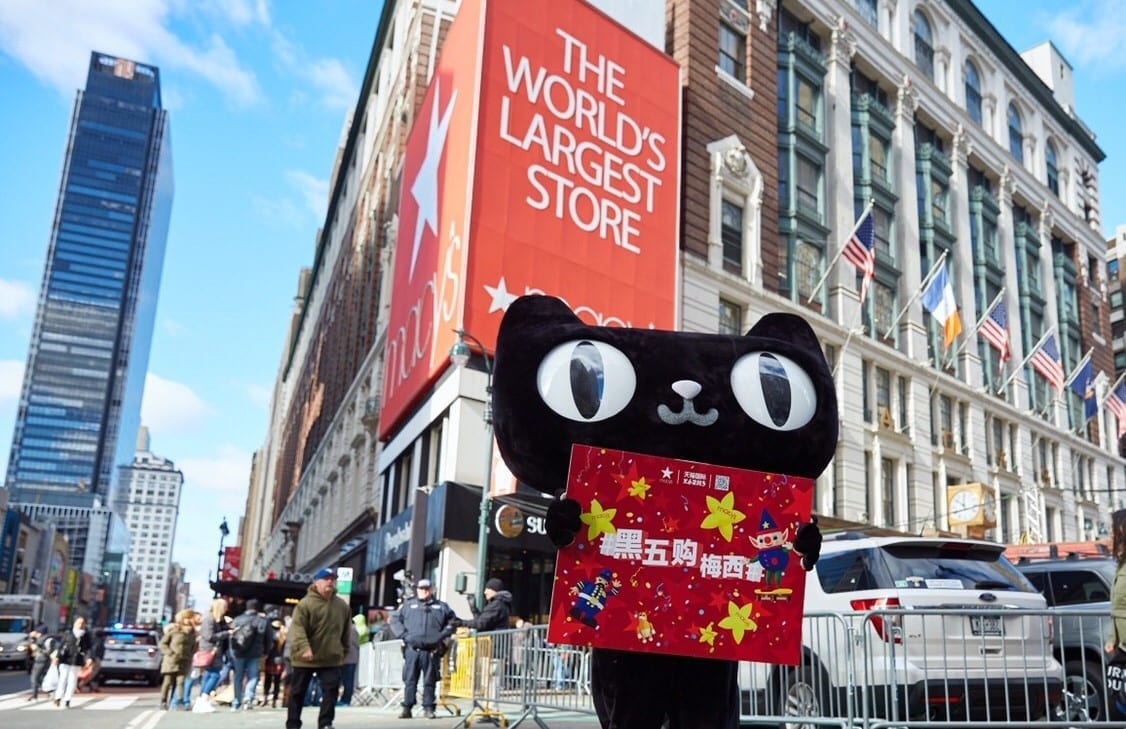
    Macy’s China stopped taking orders on Tmall this week and will close its operations by the end of the month. The US department store business said it chose not to renew the contract with Alibaba’s Tmall which ends on December 31. “We sincerely thank you for your support and love of Macy’s, and we will continue to provide services to you through the American website Macys.com,” the US retailer said in a statement.

    Just two years ago, in an interview, Macy’s China president Dustin Jones assured customers that the company would not leave China. “We will become [a] Chinese Macy’s,” he said.

    That comment followed the closure of the company’s brick-and-mortar stores in Mainland China. Macy’s subsequently closed its own China website last June.

    Since 2015, the Macy’s China business has been operated in partnership with Hong Kong-based Fung Retailing.

    Beijing-based retail analyst Liu Dingding said that Macy’s China failed because it could not keep up with the fast-changing and diversified demands of Chinese consumers.

    “The market in China is changing much faster than those in the US and Europe. These Western giants seem to react a bit slower than their Chinese counterparts,” said Liu.

    Securing a local partner was one way of ensuring success in the market – as WalMart and Carrefour’s partnerships with Tencent have shown, said Liu. That way they can localise their offer and learn from Chinese experience.

    “[Western retailers] have built up operating experience with years of success back home. But before applying this experience in their Chinese operations [they should] respect Chinese culture, hire more Chinese executives and try to adjust the way that they have operated for years back home.

    “That’s the first step to gaining a foothold in the Chinese market,” Liu said.

  • Order now, deliver later by GU fashion

    Order now, deliver later by GU fashion

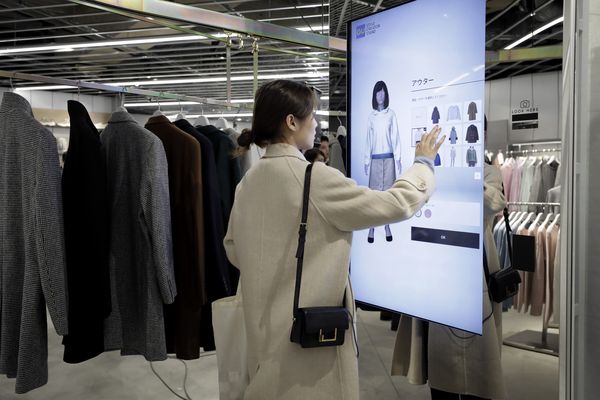
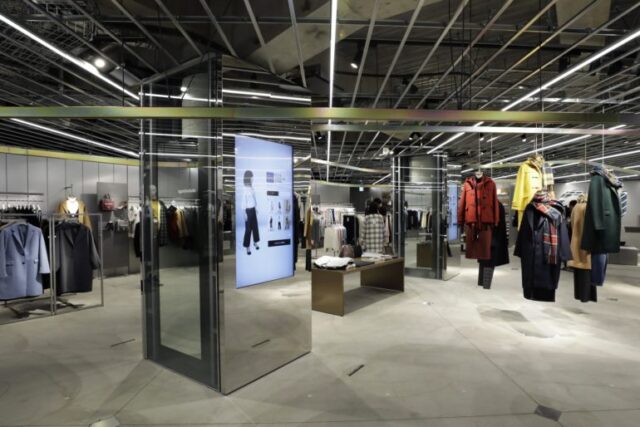
    A brand-new store opened last week in Tokyo’s Harajuku fashion district but it has a twist: shoppers are meant to walk away empty-handed. The GU Style Studio store, opened by Asia’s largest clothier and Uniqlo operator Fast Retailing Co., is for customers to try apparel and place orders online for later delivery.

    They can also try out extra services, such as playing with clothing combinations on a virtual mannequin and creating a digital avatar.

    Although the notion of showcase shopping has been around for a while, and remains somewhat popular in Europe, such stores have usually been reserved for electronics, household items and knick-knacks.

    Seldom has the idea been ported over to the clothing sector. But, as the rise of e-commercethreatens to upend the global retail industry, apparel makers are experimenting with new ways of selling clothes.

    “Among large specialty chain retailers, Fast Retailing has one of the most developed digital strategies,” said Dairo Murata, an analyst at JP Morgan Securities. “They are doing it all in-house, and it allows them to be more competitive.”

    The line separating online and offline storefronts is becoming blurrier as e-commerce moves into physical locations and brick-and-mortar retailers shift online.

    That’s resulted in new shopping experiences such as Amazon’s Prime Wardrobe, which sends boxes of clothing to customers to try on, letting them send back what they don’t like.

    GU isn’t the first to open a try-on store; Inditex SA’s Zara also temporarily opened a look-and-buy outlet in Tokyo’s Roppongi district this year.

    GU has steadily grown into a key pillar of Fast Retailing’s business, accounting for about 10 percent of revenue in the latest fiscal year. It has almost 400 stores across Asia, mainly in Japan, Taiwan and mainland China, and is known for being more affordable and more fashion forward than its bigger sibling, Uniqlo.

    The GU brand has also historically been more experimental with technology, being the first in Fast Retailing’s portfolio to introduce RFID tags and self-checkout.

    In 2017, a futuristic digital store popped up in the city of Yokohama with screens on shopping carts recommending various clothing combinations as people walked through the store.

    JP Morgan’s Murata said GU’s new Harajuku outlet could be a template for rolling out smaller shops in cities that don’t have space to store inventory. He said it could be applied to Uniqlo as well. But Osamu Yunoki, GU’s chief executive officer, said the company hasn’t decided whether to adopt the concept for Fast Retailing’s other brands, or other conventional GU stores carrying inventory.

    Shoppers at the new GU store can scan QR codes attached to clothes to bring up purchase links on their phones, and are also encouraged to test clothing combinations on a virtual mannequin on a separate app. Cameras placed in the store capture can also be used to create a virtual avatar of shoppers, although the resemblance was unconvincing.

    The store is able to collect and use data on how customers are shopping, such as what items customers are scanning into their phone, which clothing they try on and whether they purchase it or not. That could serve an important function for Fast Retailing’s efforts to automate its entire supply chain.

    “That kind of data from customers can be connected immediately to product development and manufacturing plans,” Yunoki said.

    At the same time, he said, the company is trying to offer something new for shoppers.

    “We’re fusing the in-store experience and e-commerce to offer a fun and convenient experience,” Yunoki said. “Harajuku isn’t just for shopping, it’s also a place where fashion is created. We’d like to use our customer’s creations as a stimulus for developing new types of fashion.”

  • ShopBack Partners Petron to Launch Petrol Redemption Programme

    ShopBack Partners Petron to Launch Petrol Redemption Programme

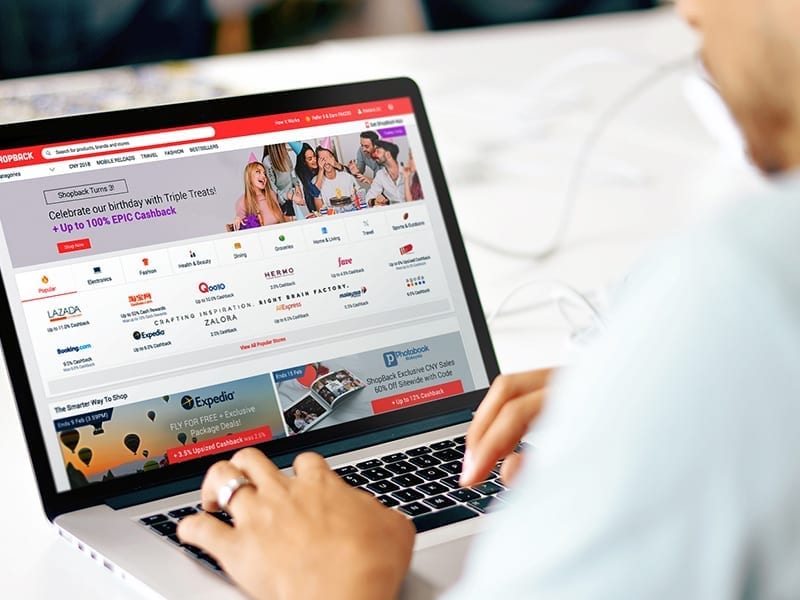
    Malaysians can now utilise cashback from ShopBack every time they refuel at petrol stations. The No.1 Cashback portal in the country recently inked a partnership with Petron Malaysia, becoming the first in the country to allow users to convert cashback to Petron Miles (PMiles) Points and vice versa.

    “Previously, after our users get cashback from their online purchases, they can choose to transfer the cash to their bank accounts or use it to offset Maxis phone bills. The collaboration with Petron is a first for both parties – the first long-term online to offline redemption for ShopBack, and the first offline to online redemption (PMiles Points to cashback) for Petron as well,” says Alvin Gill, Country General Manager of ShopBack Malaysia.

    He mentions that the number of users who accumulated five figures cashback savings through ShopBack is on the rise. Malaysians are getting more familiar with cashback benefits and the company has been exploring opportunities to continue shaping a smarter consumer spending habit offline, of which it feels the priority should be on ways that meet the practical needs of Malaysians’ daily life.

    “It is reported that about 23.9 per cent of Malaysians’ disposable income was spent on petrol, housing and utilities in 2016. Hence we decided to pursue petrol redemption as the second non-cash withdrawal option. ShopBack is excited to launch this with Petron and we definitely look forward to similar collaborations in the future.”

    The PMiles Points redemption option is now available on all ShopBack platforms (web, mobile web, and app).

    To convert cashback to PMiles points, users just need to log onto their accounts, select withdraw – points redemption and thereafter fill in the required information. For every RM10 cashback, users can convert it to 600 PMiles points.

    According to Choong Kum Choy, Head of Retail Business for Petron Malaysia, the collaboration with ShopBack underscores Petron’s commitment to provide the best customer experience for PMiles members. “We are committed to giving our customers the best products, the best service, and the best rewards. Our collaboration with ShopBack gives our PMiles holders more value with the cashback option, while significantly enhancing their shopping experience.”

    Currently, Petron Malaysia has more than 620 service stations in the country. PMiles members can also convert their points at Petron Service Stations Nationwide or download the form from PMiles Website. Every 1000 PMiles points can be converted to RM10 Cashback, which will be credited into the user’s ShopBack account.

  • Lazada to tackle counterfeit Korean products more seriously

    Lazada to tackle counterfeit Korean products more seriously

    Lazada has pledged to remove any counterfeit South Korean goods from its platform in a Memorandum of Understanding signed with the Korea Intellectual Property Protection Agency (KOIPA). It is reportedly the first time a Southeast Asian e-commerce company has reached an agreement with the Korean IP regulator and reflects the growing popularity of Korean beauty and fashion products online across Asia.

    Korean brands online and considered at risk from counterfeit products include Etude House, Innisfree, Laneige, Mamonde and 3CE.

    “The combined followers for [those brands’] Lazada flagship stores are more than 200,000,” Gladys Chun, general counsel and head of government affairs at Lazada Group said.

    “Laneige, Mamonde, Innisfree and 3CE were top search terms in Malaysia, Singapore, Thailand, and Vietnam during the recent Lazada 11.11 Shopping Festival.”

    Lazada has undertaken to remove any counterfeit goods from sale on its platform when alerted by brand owners, once it has confirmed authenticity. Sellers caught trying to sell copy goods on its site face blacklisting.

    “Such measures to curb illicit trading of goods on Lazada are aimed at boosting the confidence and preserving the trust of shoppers on our platform,” Chun said.

    “At Lazada, we respect and collaborate with rights holders in safeguarding their IP through a combination of proactive and reactive measures. It is incumbent on us to create that trusted space for shoppers and brands, giving them the peace-of-mind that we will always be acting in their best interests.”

  • India’s Shop101 in talks for funding boost

    India’s Shop101 in talks for funding boost

    Indian online marketplace Shop101 is seeking to raise $11-12 million in a Series B funding round. Talks concerning the investment are being led by Kalaari Capital and Unilever Ventures, with participation expected by current backer Stellaris Venture Partners, which invested $5 million several months ago. Investment capital is likely to assist the firm in technological development and expansion into new business categories.

    Shop101 uses Whatsapp, Facebook and Instagram functionality to support online entrepreneurs. WhatsApp and Facebook each have more than 200 million users in India. The Shop101 app has been downloaded about 1 million times and has experienced growth of 50 per cent month on month since its launch.

    A joint report by Google and KPMG last year indicated online SMEs could boost Indian economic growth by 10 per cent by 2020.

  • Malaysia’s e-commerce on growth estimation

    Malaysia’s e-commerce on growth estimation

    The government is targeting for e-commerce to achieve an annual growth rate of 20%, from a 14.3% growth posted in 2017, via its various initiatives. Deputy International Trade and Industry Minister Dr Ong Kian Ming said e-commerce registered a continuous increase for the period of seven years to RM85.8 billion in 2017.

    He said the government, through the National E-commerce Council, will continue to chart the growth and development of e-commerce in the country through the implementation of the National E-commerce Strategic Roadmap.

    Malaysia also signed the Asean Agreement on Electronic Commerce on Nov 12, 2018, a concerted effort between 10 countries to smoothen cross border e-commerce transactions by reducing barriers and lowering entry costs.

  • Lazada Malaysia to sell houses soon

    Lazada Malaysia to sell houses soon

    Southeast Asian e-commerce platform Lazada will begin selling houses in time for its planned 12.12 shopping festival. The move, in partnership with Malaysian property developer Mah Sing Group, constitutes part of Lazada’s plans to grow the variety of items on its platform.

    Lazada Malaysia CEO Christophe Lejeune said it plans to increase the number of Malaysian sellers from the platform’s current 50,000 to hundreds more, as well as provide support for 8 million Southeast Asian SMEs by 2030.

    Lazada operates in Thailand, Indonesia, Vietnam, Singapore and the Philippines, beyond the Malaysian market.

  • Blackpink is now Shopee brand ambassador

    Blackpink is now Shopee brand ambassador

    Popular all-girl K-pop group Blackpink has been appointed Shopee’s first regional brand ambassador. The appointment is timed to coincide with Shopee’s 12.12 birthday sale, which has embarked on a two week promotional campaign. The planned deals include discounts of up to 80 per cent for the one-day-only promotion.

    To draw attention to the sale day, Blackpink have released a dedicated shopee commercial currently available for viewing on YouTube.

    The promotion coincides with the launch of Korean entertainment firm YG Group’s official shop on the platform across five Shopee markets, including Singapore.

    K-pop group Blackpink was founded in 2016 and within just two years has built a strong reputation for its unique vocals and the group members’ personalities. Hailed by Billboard as the best-charting female Korean act in history, Blackpink has established prominence with record-breaking releases, including the single Ddu-Du Ddu-Du and albums Square One, Square Two and their most recent mini-album, Square Up.

  • Vietnam’s peer-to-peer shopping and delivery platform gets South Korea license

    Vietnam’s peer-to-peer shopping and delivery platform gets South Korea license

    Vietnamese peer-to-peer delivery service XTayPro has been licensed in South Korea and expects this to be a stepping stone into East Asia. The app is a platform connecting people travelling by air with those who wish to buy or send products overseas.

    It creates a community of travelers who can make a little extra cash by buying and carrying stuff for others.

    Less than four months ago XTayPro had participated in the K-Startup Grand Challenge, a start-up accelerator program supported by the South Korean government.

    It has since signed 10 memoranda of understanding and letters of intent with funds and technology investment companies in South Korea.

    The K-Startup Grand Challenge has been held annually since 2016 to help start-ups grow and expand into Asian markets. It has so far supported 40 startups and solicited $26 million for them.

    At this year’s event Vietnam had 8 representatives who overcame 1,700 other start-ups from 100 countries to join a group of 80 in the 4-month Acceleration Program.

  • Amazon in advance stage to buy stake in Future Retail

    Amazon in advance stage to buy stake in Future Retail

    Online retailer Amazon is in advanced stage of talks to buy around 9.5 percent stake in Kishore Biyani-led Future Retail, according to sources. According to a report: A final shape to an agreement between the two parties is expected to take place within the next 10 days, the sources said although in case of last minute hurdles the deal could be announced as late as January 2019.

    When contacted, Amazon declined to comment while messages sent to Future Group Founder and Group CEO Kishore Biyani remained unanswered by the time of filing story.

    According to a media report, the Amazon-Future Group deal is initially estimated to be around Rs 2,000 crore executed under foreign portfolio investor (FPI).

    The agreement could also include Amazon buying out Biyani and promoter group’s entire holding in future subject to applicable regulations in India.

    As of September 2018, promoter and promoter group had 46.51 percent share of Future Retail Ltd, which operates hypermarket and supermarket under brands which include- Big Bazaar, Easyday, Foodhall, HyperCity, FBB, Heritage fresh, ezone and WH Smith.

    It has presence in 250 cities across the country.

    Leading e-commerce major Amazon, which is looking to expand its presence in India, already has stake in Shoppers Stop and More.

    If the deal is through, this would be the third investment by the US-based company in the Indian brick-and-mortar retail ecosystem.

    Last year, retail major Shoppers Stop had announced raising Rs 179.26 crore from Amazon through an issue of equity shares on preferential basis. The deal with Amazon.com Investment Holdings LLC translated into just over 5 per cent shareholding for Amazon in Shoppers Stop.

    In September this year, Amazon said it has co-invested in Witzig Advisory Services, the entity that is acquiring Aditya Birla Retail’s ‘more’ chain of stores in India.

    According to market watchers, this deal is expected to help Amazon strengthen its play in the Indian retail market that is still dominated by offline retailers.

    The move would also intensify competition further between Amazon and Walmart-backed Flipkart that are locked in an intense battle for leadership in the Indian e-commerce market.

    The US’ largest retailer Walmart had picked up 77 percent stake in Flipkart for US$ 16 billion, the largest deal in the Indian e-commerce space so far.

    Both Amazon and Flipkart are pumping in millions of dollars towards building infrastructure, and expanding operations in the country.

  • Snapdeal unveils ‘Brand Shield’ to help firms fight counterfeits

    Snapdeal unveils ‘Brand Shield’ to help firms fight counterfeits

    India’s e-commerce major Snapdeal Monday said it has launched ‘Brand Shield’, an anti-counterfeiting programme to help brands report counterfeit products being sold on its platform. The programme has been designed based on the inputs received from various brand owners, Snapdeal said in a statement.

    The programme is aimed at enabling a structured interaction between the platform and brands with regard to any intellectual property (IP) issues flagged by the brand, it added.

    Under Brand Shield, there will be an online, triple-check point process for brands to report any violation of their IP rights in terms of trademark, copyright, patent or concerns related to design.

    Brands can also list specific issues relating to unlawful copying of logos, brand images, design features and packaging by sellers listed on Snapdeal’s platform. Brands will be required to establish their ownership of the IP, identify the listing of concern through proof and state their claim of infringement.

    The statement said designated teams at Snapdeal will review every report of IP infringement submitted through Brand Shield. Upon verification of the accuracy and adequacy of the information provided by the brand, Snapdeal will take down the listing within one business day, it added.

    In continuation of current practice, Snapdeal will also continue to de-list products/ listings in compliance with any directions or orders passed by the courts and other relevant authorities, the statement said.

    “The issue of unscrupulous sellers misusing online marketplaces to sell fake goods is a global problem. Brand Shield is part of our ongoing initiatives to collaborate with brands owners to combat counterfeits and infringement offences,” a Snapdeal spokesperson said.

    Snapdeal, an online marketplace, acts as an intermediary connecting buyers and independent third party sellers. It also prohibits the sale of counterfeit products on its marketplace and any sellers found in violation are penalised as per the terms of agreements with the sellers, the statement said.

  • Chinese e-commerce policy to benefit foreign sellers

    Chinese e-commerce policy to benefit foreign sellers

    The Chinese government last week announced that it will improve its e-commerce retail import policy to boost consumption. “We need to take a holistic approach, exercise prudent yet accommodating regulation to fully unleash the growth potential of cross-border e-commerce,” Li Keqiang, Premier of the State Council of the People’s Republic of China, said at a cabinet meeting on November 21, when the policy was laid out.

    The policy has been cheered by Australian exporters to the market, such as AuMake, the ASX-listed retail company that connects local suppliers with Chinese personal shoppers, daigous, who buy and ship products on behalf of friends, family and customers in China.

    The retailer released a statement on Friday saying the new policy is expected to stimulate daigou activity through 2019.

    The new policy ensures that China’s existing approach to cross-border e-commerce continues, and no new requirements around licensing, registration or record-filing for first-time imports will apply to sales through cross-border e-commerce platforms, as was expected to apply from January 1, 2019. Instead, these goods will continue to receive the more relaxed regulation for personal use imports.Adtech Ad

    The Chinese government is also expanding its preferential import duties to another 63 tax categories of high-demand goods and increasing the quota of goods eligible from 2000 yuan to 5000 yuan per transaction, and from 20,000 yuan to 26,000 yuan per head per year. This quota will be further adjusted in light of an individual’s personal income.

    “AuMake welcomes the latest development to further stimulate the CBEC [cross-border e-commerce] with the continuation of current licensing requirements, extension of tariff/VAT/consumer tax concessions and value per transaction/head limit also being increased,” the retailer said in a statement.

    “These measures are anticipated to increase the total size of the CBEC and it is anticipated that legitimate cross border e-commerce participants, including AuMake and professional daigou, will increase their market share as illegitimate operators are phased out with increased regulation.”