Category: E-Tailing

Retail News Asia is committed to providing both local and global retailers with the latest E-Commerce & Etail news throughout the Asian market. This on a daily base.

  • US Cyber Monday online sales to reach record US$7 billion

    US Cyber Monday online sales to reach record US$7 billion

    American consumers were on track to spend US$ 7.8 billion in online shopping on Cyber Monday, up 18.3 percent from last year, according to Adobe Analytics, which tracks 80 percent of online transactions at 100 of the largest retailers in the US. Cyber Monday, which falls on the first Monday after Thanksgiving Day and Black Friday, is considered the biggest online shopping day of the year.

    Last year, it hit a record US$ 6.6 billion in online sales.

    With growing online sales, Black Friday might be stealing Cyber Monday’s thunder. Online sales for Black Friday reached US$ 6.22 billion, up 23 percent compared with last year.

    Smartphone-enabled purchases amounted to US$ 2.1 billion, accounting for one third of the overall sales.

    Figures from Internet Retailer, a publisher of e-commerce news and analysis, predicted that the total amount to be spent over the period between Thanksgiving Day and Cyber Monday will reach US$ 21.6 billion.

    For the whole holiday season, which will last until end of December, online sales could hit a record US$ 124 billion, up by 15 percent from last year, Adobe Analytics said.

    Figures from market research firm eMarketer put overall US holiday online sales at around US$ 123 billion, which accounts for 12 percent of the estimated 1 trillion retail sales for this holiday shopping season.

    According to an annual survey, US consumers will spend an average of US$ 1,007 dollars during this holiday shopping season, up 4.1 percent from last year, the National Retail Federation said earlier.

  • Thai flagship store opened in Coupang

    Thai flagship store opened in Coupang

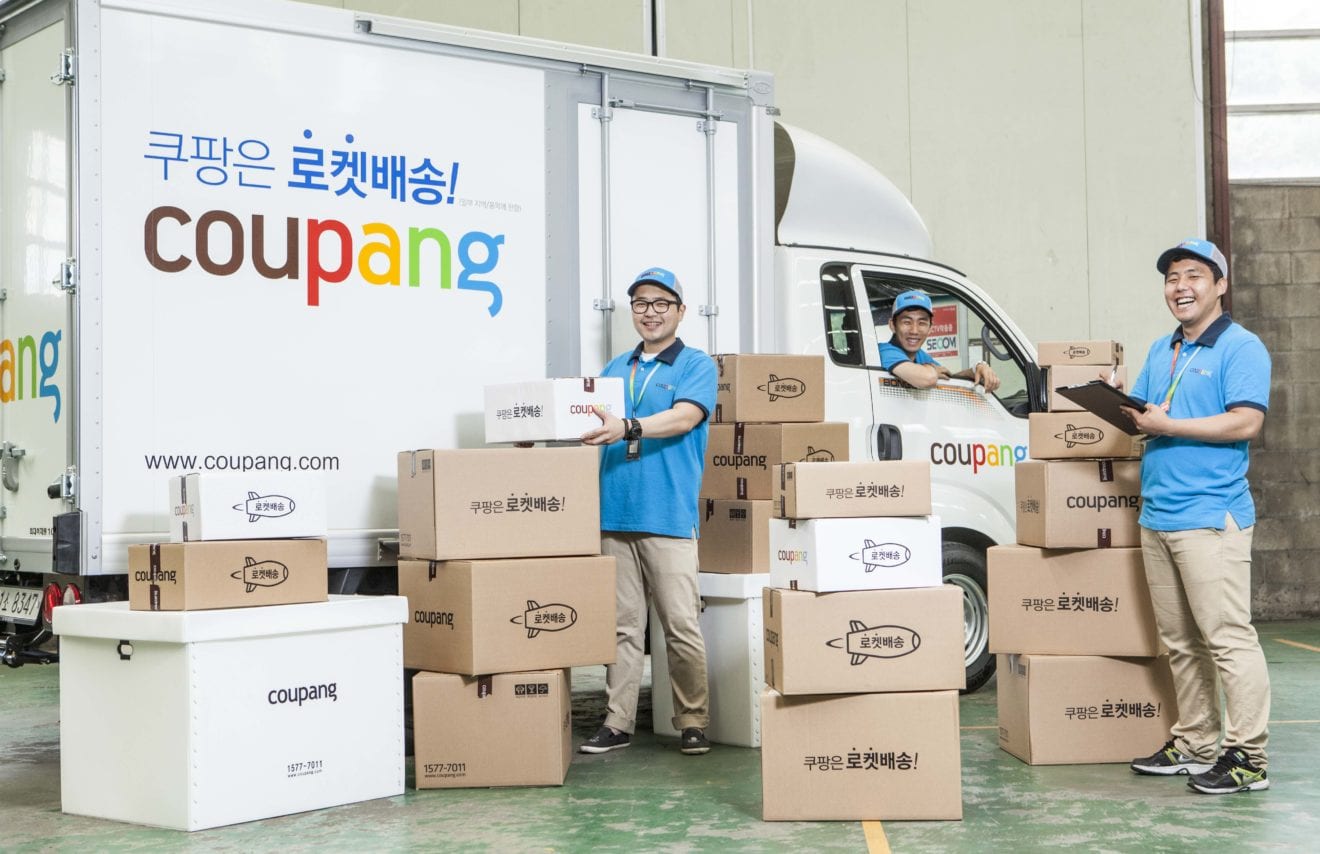
    South Korean e-commerce firm Coupang is planning to launch a flagship store in Thailand to boost the online sales of Thai-sourced products. Thailand’s Ministry of Commerce has been promoting Thai products on the platform since August, which has brought in more than THB118 million (US$3.57 million) for mostly food and beverage items. The ministry has just met with Coupang executives to seal an agreement to expand cooperation, resulting in the establishment of a Thai Mall on the platform.

    It is expected that the new partnership could result in an increase in sales to more than THB 200 million (US$6.06 million) over the coming year, a rise in export volumes to Korea by 7 per cent. Thailand’s total exports to South Korea were valued at $4.66 billion last year, an increase of 14.4 per cent from the year previous.

    Commerce Minister Sontirat Sontijirawong said “South Koreans know Thai brands from travelling here”, with 1.5 million of them visiting Thailand annually.

    Coupang is South Korea’s largest and fastest-growing e-commerce firm. It recently received an investment of US$2 billion from the SoftBank Vision Fund. It offers more than 120 million items for sale and 4 million available for guaranteed one-day delivery.

  • Uniqlo online Hong Kong launches soon

    Uniqlo online Hong Kong launches soon

    Uniqlo Hong Kong will launch its online store on December 4. A spokesperson for the company said the online platform for Hong Kong and Macau is a fitting solution considering rising rentals and limited space for retailers in Hong Kong, along with the strengthening popularity of e-commerce in the region.

    The brand has operated an online flagship on Alibaba’s Tmall for nine years and has had its own online shop since October.

    According to Uniqlo’s CEO for Greater China Ning Pan, the two existing e-commerce platforms take 15 per cent of sales in China, the majority of that figure from Tmall.

    He explained that while TMall remains an important strategic partner, the new platform will allow the firm to leverage analytics and AI to evaluate buyer preferences.

    The Hong Kong site is now under testing, and will be fully operational come launch day in December.

  • Malaysia is Airbnb’s fastest growing market in Southeast Asia

    Malaysia is Airbnb’s fastest growing market in Southeast Asia

    Malaysia, one market in the region which has not stifled the growth of short-term accommodation, is Airbnb’s fastest growing market in Southeast Asia, welcoming over two million guests in the past 12 months as of July 1, marking a 99% growth year on year. Airbnb head of public policy for Southeast Asia Mich Goh said that Airbnb, as a platform, is not illegal in Malaysia and there is no clear consensus on what the policy is for short-term rental here as it is a new phenomenon.

    There are now 44,000 listings in Malaysia on Airbnb, which is almost a 60% year-on-year increase.

    Goh said the Malaysian government has been consultative and open to dialogue with the home-sharing platform, where there has been willingness to listen to insights and to hear about how it could help Malaysia to evolve its tourism industry.

    “We treat every country differently. We’ve seen countries all around the world where they reach a moment when they decide whether or not they need to regulate short-term rental. Where we see these discussions go well is where governments are open to discussing this with multiple stakeholders, not just us but open to speaking with hosts, guests, hotel group, local communities and neighbourhoods.

    “Where these discussions have been holistic and involve multiple stakeholders, we’ve seen it reach a stage where smart and innovative policies are implemented that allow the short term rental activity to continue and to thrive to the benefit of the community while making sure any concerns that groups may have are addressed through the regulatory framework,” said Goh.

    Airbnb has signed a memorandum of collaboration (MoC) with the Malaysian Productivity Council (MPC) and a memorandum of understanding (MoU) with Malaysia Digital Economy Corp (MDEC) to drive inclusive, sustainable development of tourism in Malaysia.

    As part of the MoC with MPC, Airbnb will share relevant data and best practices to inform recommendations on short-term accommodation policy in Malaysia, and will assist MPC in shaping national policy plans related to the development of Malaysia’s tourism industry and infrastructure, as well as local communities.

    Airbnb’s MoU with MDEC is focused on promoting digital inclusion and empowering local hospitality entrepreneurs in Malaysia, while building capacity in both homes and experiences throughout the country.

    In Malaysia, Airbnb is having discussions with authorities including the Ministry of Finance, the Royal Malaysian Customs and the Ministry of Tourism and Culture to discuss the implementation of Voluntary Collection Agreements (VCAs) to collect and remit tourist tax.

    The VCA is a tool designed by Airbnb to collect taxes from its host and guest community and remit them on their behalf. This helps to facilitate a streamlined process and lighten the administrative burden for local and state governments, as well as Airbnb hosts.

    Asked on plans by the government to tax e-commerce, Goh said Airbnb will comply once it is implemented. “We’re waiting to see how it would apply in Malaysia and how we would comply when the time comes.”

    In 2017, the Airbnb community contributed RM200.4 million to the local economy. Its typical host earned US$1,200 (RM5,200) renting out their space 19 nights a year. The top five inbound markets for Airbnb in Malaysia are Singapore, China, the US, Indonesia and Australia. Seniors (aged 60 and above) make up Airbnb’s fastest growing age group of guests in Malaysia.

  • Korea’s FTC orders Booking.com, Agoda to change rules

    Korea’s FTC orders Booking.com, Agoda to change rules

    Hotel booking sites Agoda and Booking.com have been ordered to revise their no-refund policies or potentially face legal action. Korea’s Fair Trade Commission (FTC) announced on Wednesday that it has ordered the two global travel platforms to revise the terms and conditions which allow them to unfairly deny refunds for products and services.

    Customers are currently unable to get refunds on some hotel bookings or additional services, like hotel meals, reserved through Agoda and Booking.com even if reservations were made well in advance. Agoda and Booking.com have the same parent company, Booking Holdings, which also operates travel platforms Kayak and Priceline.

    “Though we recommended that Agoda and Booking.com revise their no-refund clauses last November, the companies failed to take heed without any particular reason,” read an FTC report. “We decided last month to issue an order forcing them to make the necessary revisions.”

    The FTC is not asking them to ban all no-refund products, but to at least accept refund requests made long before reservation dates.

    “The companies will still be able to deny refunds on highly discounted products or bookings made just before the reservation date,” said a spokesman. “But it is unreasonable for them to deny refunds for reservations made months ahead.”

    “The probability that a booking platform will be able to resell a product after a consumer cancels a reservation long before reservation date is very high,” he added. “The platform operators will face few losses if they resell the products.”

    The Act on the Regulation of Terms and Conditions gives the FTC the right to take “measures necessary to correct the terms and conditions” of a business that incurs losses to “several customers because the business person fails to comply with the recommendation” to revise “unfair terms and conditions.”

    According to the Act, the FTC also has the right to report the case to prosecutors if companies fail to respond accordingly within 60 days.

    The two companies have yet to give an official response. Agoda’s Peter Allen, who serves as the head of the company’s external relations department Agoda Outside, was in Seoul on Wednesday to give a talk at a leadership forum organized by the company.

    Agoda and Booking.com are not the only booking platforms that have been flagged for having policies that potentially harm customers.

    From 2016 through October 2017, the FTC reviewed the terms and conditions of major hotel booking sites operating in Korea and found that seven, including Agoda and Booking.com, had unfair refund policies.

    Unlike Agoda and Booking.com, Interpark, Hana Tour, HotelPass, Hotels.com and Expedia have since revised their terms and conditions.

    The number of consumer complaints against international travel platforms grew in Korea last year.

    According to the Korea Consumer Agency, consumers filed a total of 5,721 complaints in the first half of 2017 against international travel and accommodation platforms, or 46.4 percent more compared to the same period in the previous year.

  • From Cyber Monday to Cyber Week

    From Cyber Monday to Cyber Week

    Cyber Monday is expected to be the largest online shopping day in U.S. history, generating a whopping $7.8 billion in sales. That’s 17.6 percent higher than last year, according to the projection from Adobe Analytics. But the National Retail Federation projects that the number of shoppers taking advantage of online bargains on Cyber Monday – about 75 million – will be 3 million fewer than in 2017.

    Just as Black Friday has evolved into “Black November,” as retailers spread out their discounts, Cyber Monday has turned into “Cyber Week”, which is expected to alter some of its strength as a stand-alone day.

    It has been estimated that more than 164 million people planned to shop over the five-day Thanksgiving weekend. But experts said Black Friday remains the busiest shopping day, with NRF projecting 116 million would shop, both in-store and online, on that day alone.

    Based on Adobe Analytics data, a record $6.22 billion was spent online by the end of Black Friday, an increase of 23.6 percent over 2017’s $5.03 billion.

    Data suggests that consumers are getting more comfortable buying more and bigger ticket items online.

    The average order value of $146 set a new record for Black Friday, up 8.5 percent over last year.

    Many brick and mortar retailers are trying to capitalize on Cyber Monday by offering “buy online, pick-up in store” deals.

    A spokesperson from the NRF said that “Of those [shoppers] that choose to buy items online and pick them up at the store, nearly 70 percent will double their basket size by the time they walk out of the store. So, even on Cyber Monday, retailers will try to use this as an opportunity to bring consumers into their physical stores and cash in on impulse buys.”

  • Walmart China tests same-day delivery from Dada

    Walmart China tests same-day delivery from Dada

    Walmart China has begun testing same-day grocery delivery in its Xiangmihu store. The new Walmart To Go service is available within a WeChat mini-program, following Walmart’s partnership with online social networking provider Tencent earlier this year. It is currently undergoing trial with future rollout pending feedback from customers who opt in to the service.

    Those ordering from the nearly 8000 SKUs available on the app can receive delivery in as little as one hour via a service provided by Dada.

    Another of Walmart’s new mini-programs being tested at the branch displays a digital map that shows in-store shoppers inventory location and stock status.

  • Don’t Miss These 12.12 Online Sales Happening All Over Asia!

    Don’t Miss These 12.12 Online Sales Happening All Over Asia!

    During the year-end, it’s always the busy season for retailers and brands across the world and among them Southeast Asia is no Exception. The mega sale season typically experiences offline sales during Black Friday in December has moved online now because of the web stores opening up in the market including –  Lazada, Farfetch, SSENSE, Zalora, AliExpress, and Jumia.

    These campaigns now occur in a row on 9.9, 11.11, and 12.12 (September 9th, November 11th, and December 12th) and creating a big-time problem for all the new e-commerce brands.

    All the businesses and e-commerce stores must plan ahead in advance with multiple partners to strike their annual online revenue targets and increase the last month’s target.

    To help small as well as big brands, the shopping sale season is the best time to do shopping and enjoy making up strategies based on e-marketplace shopping trends. E-Commerce allows users to make some of the biggest brands popular all over Southeast Asia.

    This guide is here to bring to your notice about the most applicable and enhancing performance during the upcoming “mega online sales campaigns” held by top players like AliExpress, Lazada, Zalora, Farfetch, and Jumia in Southeast Asia. Further on the brands are participating in maximizing the increasing chances to maximize sales and reduce expensive mistakes with the findings.

    Let’s jump right in.

    Zalora is winning big with the 12.12 Sale

    Zalora is Asia’s one of the biggest online fashion store which is fully enjoyed by many regions across eight countries – Singapore, Malaysia, Indonesia, Philippines, Taiwan and Hong Kong .

    By initiating it with the 12.12 online fever, it aims to drive in more consumers and some best deals that encourage consumers to shop online. This has also led to an increase in the customer list by converting the traditional customers into e-consumers. This year too, it is expected to a growth of 32% of 12.12 Online Fever shoppers from last year.

    There are some great opportunities at Zalora for both male and female to find unique apparel, footwear and accessories. Also, you could find your favourite brand name among this list includes Rubi, Mango, Dorothy Perkins and Something Borrowed while Sperry, Herschel, Onitsuka Tiger and TOPMAN these are all popular among men.

    The 12.12 fever is definitely bringing down obstacles by making it more available for citizens in this region where they can enjoy some great option for shopping in the budget.

    Farfetch captivating deals on 12.12 Sale

    The online luxury brand name Farfetch has grossed merchandise up to value $310 million resulting in revenues for the British company to total $132.32 million. The London-based online store updated its approach for future where it expects higher merchandise sales than the previous estimates.

    Farfetch offers designer clothing and accessories are for men and women of all sizes and ages. During the 12.12 sale, all these items are available at best rates from the designer clothing and accessories to big brands name like Alexander McQueen, Dolce & Gabbana, Gucci, Prada, Thom Browne, and Versace among others.

    Farfetch has its presence in Indonesia, Malaysia, Philippines, Singapore, Thailand and Vietnam. Currently, it’s marketplace offers luxury products of more than 1,000 vendors across 48 different countries.

    Lazada 12.12 Online Revolution Sale shines out

    The Lazada Group’s Online Revolution is quite popular across many regions including in Indonesia, Malaysia, Philippines, Singapore, Thailand and Vietnam. The famous 12.12 Sale has made its presence yet again and proved to be the biggest online shopping event in Southeast Asia. It has yet again proven to be the biggest online shopping event in Southeast Asia, buzzing sales up from US$40.5 million.

    About 60 per cent of the gross merchandise came from December 12 event on mobile with the shoppers spending an average of 12 minutes on Lazada apps for browsing deals from international and local brands sellers.

    The Lazada store carries the slogan “Brands for All”, on 12.12 sale features more than 500,000 offers and flash deals on more than 1000 brands and 55,000 sellers.  The best-sellers are from shower gels and mascaras, tote bags and bracelets, virtual-reality headsets and speakers, and vacuum cleaners and tableware.

    The CEO Maximilian Bittner of Lazada says the sale has become highly anticipated among more consumers in Southeast Asia, both from small cities and rural areas.

    “This year too, the difference on everyday products will be on products like diapers and groceries, as well as advanced-value things from good brands.”

    AliExpress 12.12 Sale estimates to break last year’s record

    In China, December 12 is supposed to be a day when the country’s biggest e-retailer, The Alibaba Group, plans to throws a mega sale event on its flagship event – 12.12 shopping festival. This year, there will be great offers online more than 7 million vendors and around 800 million products.

    There are many brands participating in the event to celebrate the official launch of the festival featuring top categories including fashion, beauty, accessories, gadgets, home and living, electronics, sports and equipment, and much more.

    SSENSE big heavy deals on 12.12 Sale

    Ssense, an international shopping platform offers a wide selection of independent, luxury, and streetwear designers.  All the collection and apparels are its individual original produce.

    The 12.12 sale is happening in all Ssense stores, also the sale is expected to break all its previous record on revenue and will likely to benefit both retailers and customers.

    Ssense has its presence in countries like Singapore, HongKong, Thailand, Philippines, Indonesia, United Kingdom, Australia, United Aram Emirates, and few more.

    Jumia unbreakable discount and offers on 12.12 Sale

    Jumia is an online store in Africa that offers electronics, and fashion items. It has united with over 50,000 local African corporations and individuals and is a straight opponent to Kilimall in Kenya and Konga in Nigeria. It has started out in 2012 and now it has a presence across 14 African countries.

    12.12 Sale in Jumia is starting from 8 am at every hour with lots of juices and spices during the sale. Every hour for 12 hours here will be humongous of deals available featuring online stores.

    Watch out for your favourite fashion items now including mobile phones, laptops, home appliances, perfumes, game console and many more. It is going to be a great time when you can enjoy discount up to 99%.



  • Nykaa.com to bring Laneige to India

    Nykaa.com to bring Laneige to India

    Nykaa.com, India’s leading beauty retailer has launched Korean Beauty brand Laneige, exclusively in India. Laneige maximizes the potential of water to deliver the right solution to each skin concern with carefully selected, optimum natural ingredients. The brand has been showing great results with its simple yet innovative skincare and makeup solutions.

    With over 20 years of research, Laneige’s Water Science has developed optimum water to address skin concerns like hydration, pore refining, anti-aging, or complexion-correcting. Their signature Hydro Ionized Mineral Water offers quicker and deeper absorption for better overall moisturization while Mint Water reduces excessive sebum while offering greater pore care.

    “Observing the growing trend of Korean beauty brands across the world, Nykaa began introducing Korean brands to our portfolio last year. These brands have been a huge success with the Indian audience with their innovative ingredients and cutting-edge science. With Laneige’s signature water science based products we offer our customers a new facet in their beauty regime,” says Falguni Nayar, CEO Nykaa.

    Laneige’s best-selling products like Water Sleeping Mask, Lip and Eye Sleeping Mask, Water Bank Hydro Essence and White Dew Ampoule Essence are now available for women in India exclusively on nykaa.com and at select Nykaa Luxe stores in Delhi, Ahmedabad, Indore, Hyderabad, and Bangalore.

  • Coupang Korea to sack $2 billion funding

    Coupang Korea to sack $2 billion funding

    South Korea’s Coupan, the fast-growing e-commerce firm, will receive an investment of US$2 billion from the SoftBank Vision Fund. The funding follows SoftBank Group’s initial investment of $1 billion in June 2015. The new round of capital will enable Coupang to continue investing in consumer-first technologies.

    Lydia Jett, partner at SoftBank Investment Advisers and a Coupang board member, said the company Coupang wants to have “a revolutionary technology platform and uncompromising focus on customer delight”.

    “We believe the company is well-positioned to lead the Korean e-commerce market, with significant platform opportunities ahead given its data, payments and logistics advantage.”

    With revenue more than doubling in the last two years and approaching $5 billion this year, Coupang is Korea’s largest online retailer with more than 120 million items for sale and 4 million available for guaranteed one-day delivery.

    Millions of customers buy from Coupang more than 50 times per year, and one in every two Koreans has downloaded Coupang’s mobile application.

    Coupang CEO Bom Kim said: “At Coupang, we are obsessed with making customers’ lives easier.

    We’re excited to continue our partnership with SoftBank. We are confident this investment will allow us to leverage the platforms we have created in logistics, payments, and data to make e-commerce and other innovations even more indispensable to our customers.”

  • Farfetch poised to top $1 Billion in gross merchandise value

    Farfetch poised to top $1 Billion in gross merchandise value

    Online luxury group Farfetch said gross merchandise value through its site surged 53% in the third quarter to $310 million, resulting in revenues for the British company to total $132.32 million. The London-based marketplace upgraded its outlook for future growth saying it expects value merchandise revenues to be higher than the company’s previous estimates in the fourth quarter.

    For the three months to September 30, adjusted earnings before income, taxes, depreciation and amortisation registered a $32.3 million loss, meaning the company is yet to hit profitability.

    At the same time, the company reported 1.2 million active customers in the third quarter, up 42 percent.

    Average spending per order fell to $585, from $605 a year earlier, said the company, on the back of a stronger dollar and a free-shipping promotion.

    The results follow Farfetch’s IPO in September, which saw shares soar above $30 in the days after its debut, a more than 50% gain on the initial offer price.

    Farfetch has proven a popular choice for global luxury brands and retailers, as more and more houses continue to sign on to sell through the site.

    Most recently, new additions include Moschino, Victoria Beckham and Tory Burch, as well as streetwear offerings such as Stadium Goods, which sits inside the hub devoted to sneakers.

    Farfetch has also started selling jewellery and added its first department store to its portfolio, Harvey Nichols.

    Looking ahead, Farfetch raised its outlook for fourth-quarter sales on its marketplace, to be between $435 million and $445 million.

    Currently, Farfetch’s marketplace offers luxury products from over 1,000 vendors across 48 countries.

  • BigBasket India eyes 40 pc revenue from private labels next fiscal

    BigBasket India eyes 40 pc revenue from private labels next fiscal

    Chinese retail giant Alibaba-backed online grocery player BigBasket that aims to be a billion-dollar company by the next fiscal year, is expecting 40 percent of its projected revenue to come in from its private labels, a top company official has said.

    “Private labels are around 34 per cent of our business now and we plan to scale this to 40 per cent in about a year. The incremental 6 percentage points of revenue will come from non-fruits and vegetables and non-staples,” Hari Menon, Co-founder and Chief Executive, BigBasket said.

    According to a report: The company aims to clock Rs 3,500 crore in sales this fiscal year, up from Rs 2,000 crore last year.

    He added that the Bengaluru-based company will add a lot of categories to the private labels vertical.

    BigBasket that aims to raise up to US$ 200 million over the next few months, said, the FMCG sales overall (food and non-food) contributes over 50 percent of its business, 30 percent from staples (including 14.5 percent from private labels) and 18 percent from fruits and vegetables.

    It is going to launch beauty as a category in the next few days, with imported products as well, Menon said.

    The company has a presence in 25 cities and plans to launch its operations in Kochi soon.

    “Having gone deeper into the existing consumer base already, which has been our growth driver, we are now planning to get into the upper middle class and middle class segments,” he further said.

    BigBasket, founded in December 2011, claims 10 million subscribers and close to 1 lakh orders per day. The company expects to break even in the 10 large cities by next June.

    BigBasket last month acquired Pune-based RainCan and the Bengaluru-based Morning Cart to deliver milk to 20,000 customers. It has already launched this service in seven cities and expects to roll out to other three cities among the top 10 metros.

    Menon expects the milk delivery business to clock Rs 1,000-crore by next year and plans to grow this business as it will give access to many homes.

    He further said that the company will look at scaling up the fresh meat segment and increase its contribution to 5-6 percent from 1-1.5 percent at present.

    BigBasket has 30 warehouses now and will touch 45 by next year.

  • India’s Myntra launches Italian handbag brand Carpisa exclusively on its platform

    India’s Myntra launches Italian handbag brand Carpisa exclusively on its platform

    Myntra has announced the launch of Carpisa, the Italian brand known for its fine collection of handbags, suitcases, wallets and accessories, exclusively on its platform. The brand is being introduced to shoppers in India for the first time exclusively on Myntra, through a range of handbags, crafted for the modern and fashion-conscious women.

    Founded in 2001, Carpisa became one of the leading retailers in the bag, luggage and fashion accessory sector and holds celebrity actor Penelope Cruz as the brand ambassador. The brand is known for its designs, quality of products and above all, represents Italian culture and lifestyle.

    Catering to the affordable luxury segment, products from Carpisa are available at an average price of Rs 3,600, targeting women in the age group of 25-40 years from Sec A and Sec A+ categories in metros and Tier 1 cities.

    The handbags segment that Carpisa caters to in India is growing at a CAGR of over 15 percent, with an annual market potential of US$ 10 billion when combined with luggage and accessories.

    Speaking on the launch, Manohar Kamath, CXO and Head, Myntra Fashion Brands and Category Business, said, “We are delighted to announce the launch of Carpisa exclusively on Myntra. Shoppers in India are increasingly becoming brand and quality conscious and are exploring international brands and designs, clearly looking up to global styles and trends. As a leader in fashion ecommerce, we are focused on making the best of international brands accessible to our customers and Carpisa is the latest entrant, targeted at the fashion conscious women in India.”

    Francesco Pinto, Pianoforte Group International Expansion Director added, “We are extremely delighted to set foot in India in partnership with Myntra. India offers a huge growth opportunity for Carpisa, considering the size of the burgeoning fashion and lifestyle market. We are proud of this association with Myntra that builds a strong launchpad for Carpisa, while also giving the much needed initial thrust to take off.”

  • What is Black Friday like in the Philippines?

    What is Black Friday like in the Philippines?

    After Singles’ Day, the annual Black Friday shopping frenzy is back. A decades-old tradition celebrated every year the day after Thanksgiving, Black Friday marks the unofficial start of the Christmas shopping season in America.

    Together with its more recent online counterpart Cyber Monday, the sales have become a major global event over the past few years as online shopping has brought the bargains to the rest of the world.

    So what is exactly Black Friday like in emerging developing countries like the Philippines? What are Filipinos consumers’ expectations?

    Large discounts expected

    Customers will not waste the opportunity to save money on shopping.

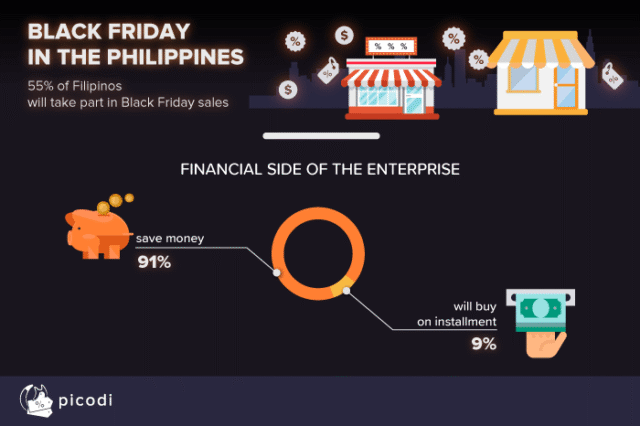
    55% of Filipinos admitted that they’re going to take part in the upcoming Black Friday sales and 91% of shoppers save money prior to Black Friday just to shop on this day.

    Let’s remember that Black Friday sales are usually associated with electronics and housewares which are the best-selling products.

    The remaining 9% declared that they are going to buy on installments.

    38% of consumers are planning to buy 2-3 products, and 36% are going to go on a shopping spree and buy more than 5 items.

    What’s more, 59% of buyers already have an idea what’s going to end up in their baskets. This can be due to the infinite number of guides to what is worth buying and how to find the biggest discounts.

    Black Friday symbolically opens the season of pre-Christmas sales. That is why it is a great opportunity for those who start searching for gifts in advance.

    38% of consumers will take advantage of Black Friday exactly for this purpose—to buy Christmas gifts.

    However, in the Philippines Black Friday is also an occasion to get a present for yourself as it is the intention of 67% of consumers.

    What does an average shopper looks like?

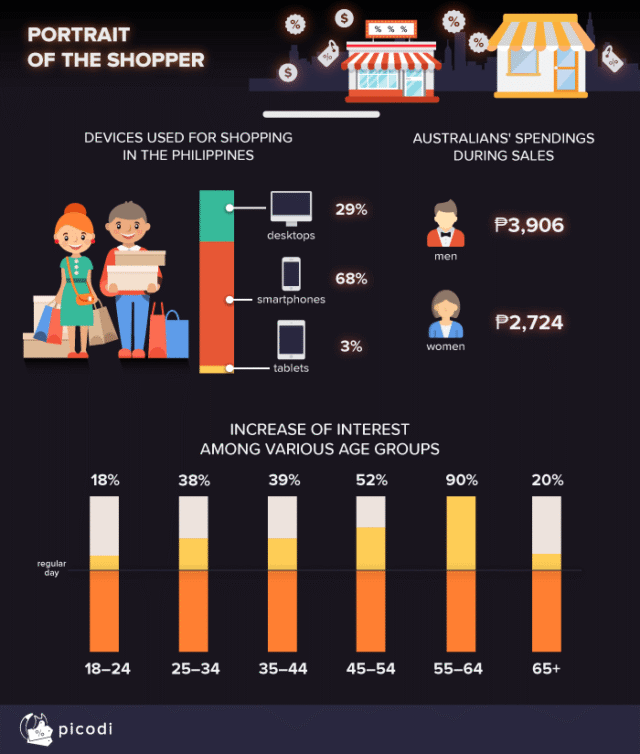
    Spending differences vary by sex. Indeed, an average man will spend more money on sales than an average woman: 3906 PHP and 2724 PHP respectively.

    When it comes to age the biggest interest for Black Friday discounts was among people aged 55-64 and 45-54.

    Statistics also say that mobile devices dominated desktops with 68% of consumers shopping on their mobile phones and 29% on desktops.

  • JD sales jumps as shoppers reached 300 million

    JD sales jumps as shoppers reached 300 million

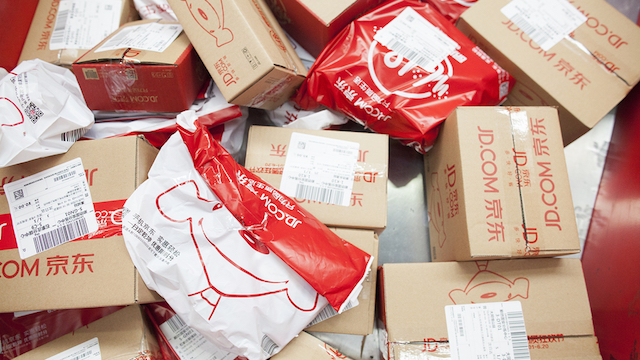
    JD sales lept 25.1 per cent in the third quarter, to RMB104.8 billion (US$215.3 billion). “We are pleased to report solid results for the third quarter, with our core JD Mall business driving consistent growth under its highly experienced management team,” said CEO and chairman Richard Liu.

    “JD’s commitment to convenient, reliable service and high-quality, authentic products continues to translate into an increasingly loyal user base. Our ‘Retail as a Service’ strategy is also gaining traction as we provide a wide range of partners with innovative retail infrastructure solutions,” he said.

    Annual active customer accounts increased to 305.2 million in the year to September 30, from 266.3 million at the same time a year earlier.

    Net income from continuing operations attributable to ordinary shareholders for the third quarter was RMB3.0 billion (US$400,000), three times more than for the same period last year.

    “JD’s strategic focus on improving customer experience helped drive strong performance across the business,” said Sidney Huang, JD’s CFO. “We will continue our disciplined strategy of investing in key technologies as we focus on optimising operations and driving economies of scale over the coming quarters.”

    Among highlights of the quarter was the signing of a raft of major international brands to the JD platforms, including L’Occitane de Provence, House 99, Hera, Salvatore Ferragamo,  Furla, Gieves & Hawkes, Kent & Curwen, Cerruti 1881 and D’Urban. JD’s dedicated luxury platform Toplife welcomed John Galliano, Buccellati and Shang Xia among others.

    As at September 30, JD had some 200,000 merchants on its online marketplace, and 175,366 full-time employees.