Category: Fashion

Retail News Asia is committed to providing both local and global retailers with the latest Fashion news throughout the Asian market. This on a daily base.

  • Find Out ‘It’  Winter item in Korea

    Find Out ‘It’ Winter item in Korea

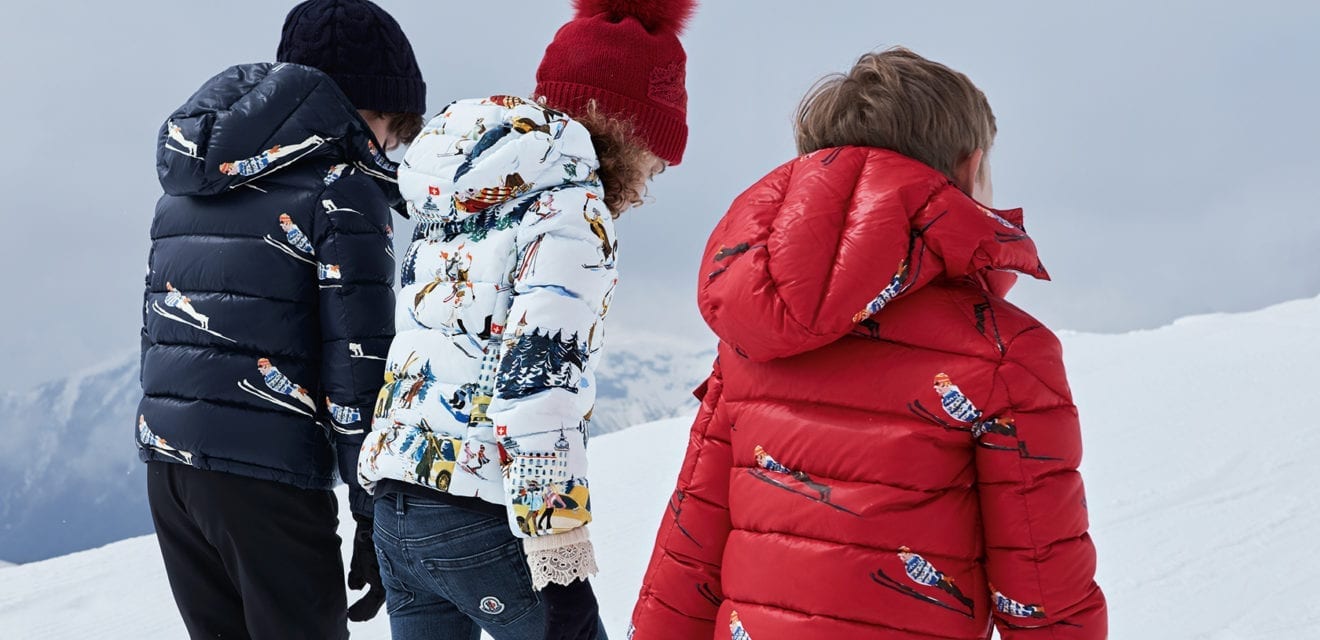
    Choosing the right padded jacket — this winter’s ‘it’ item — is a much more complicated task than one may think. It is not just design and color, but the type of insulation also has to be decided — goose, duck or synthetic materials, as well as their composition ratios, waterproof or not and even the overall weight.

    For many South Koreans, however, it all seems to come down to a choice between luxury and cost-effective alternatives.

    On the high-end side, with brands like Canada Goose, Nobis, Herno and Moncler, the jackets are priced at well over 1 million won (US$920).

    As for Moncler, the retail prices of long padded jackets for women hover around 2-3 million won. But some of the popular models have been sold out since summer and there’s a long waiting list still, an employee at a Moncler shop in Seoul said.

    The passion for the French fashion brand is high, as a growing number of people are purchasing online instead and have them delivered directly from Europe.

    “The price is 20-30 percent cheaper,” said Oh Su-hyun, who bought a Moncler coat this year via a Paris-based online shopping mall.

    “It cost me around $1,800, including tax. But I think it as an investment. Winter is long and you can wear it for many years because it’s Moncler.”

    More cost-conscious consumers have turned to more affordable options, chief among which is the PyeongChang Winter Olympic official down jacket, which was offered only in limited numbers.

    High-performance yet stylish and affordable, the PyeongChang coat has become an instant top seller.

    Since its launch on Oct. 26, people have been lining up for the coat which costs 149,000 won. But no more jackets are available now as the 300,000 pre-ordered items are completely sold out. The coats were manufactured by a local company in request by the nation’s retail giant Lotte, a licensed partner to the PyeongChang Olympics, to commemorate the global sports event.

    Some of the coats are being traded online, with a mark-up of 2-3 times the original price.

    The long padded coat craze seems to have led to an overall increase in winter coat purchases.

    According to Lotte Department Store, the sale of winter clothes surged 70 percent this month, while other retailers Hyundai and Shinsegae saw sales growing 12.7 percent and 13.4 percent, respectively.

  • Heineken Partners With A Bathing Ape For Its Capsule Collection

    Heineken Partners With A Bathing Ape For Its Capsule Collection

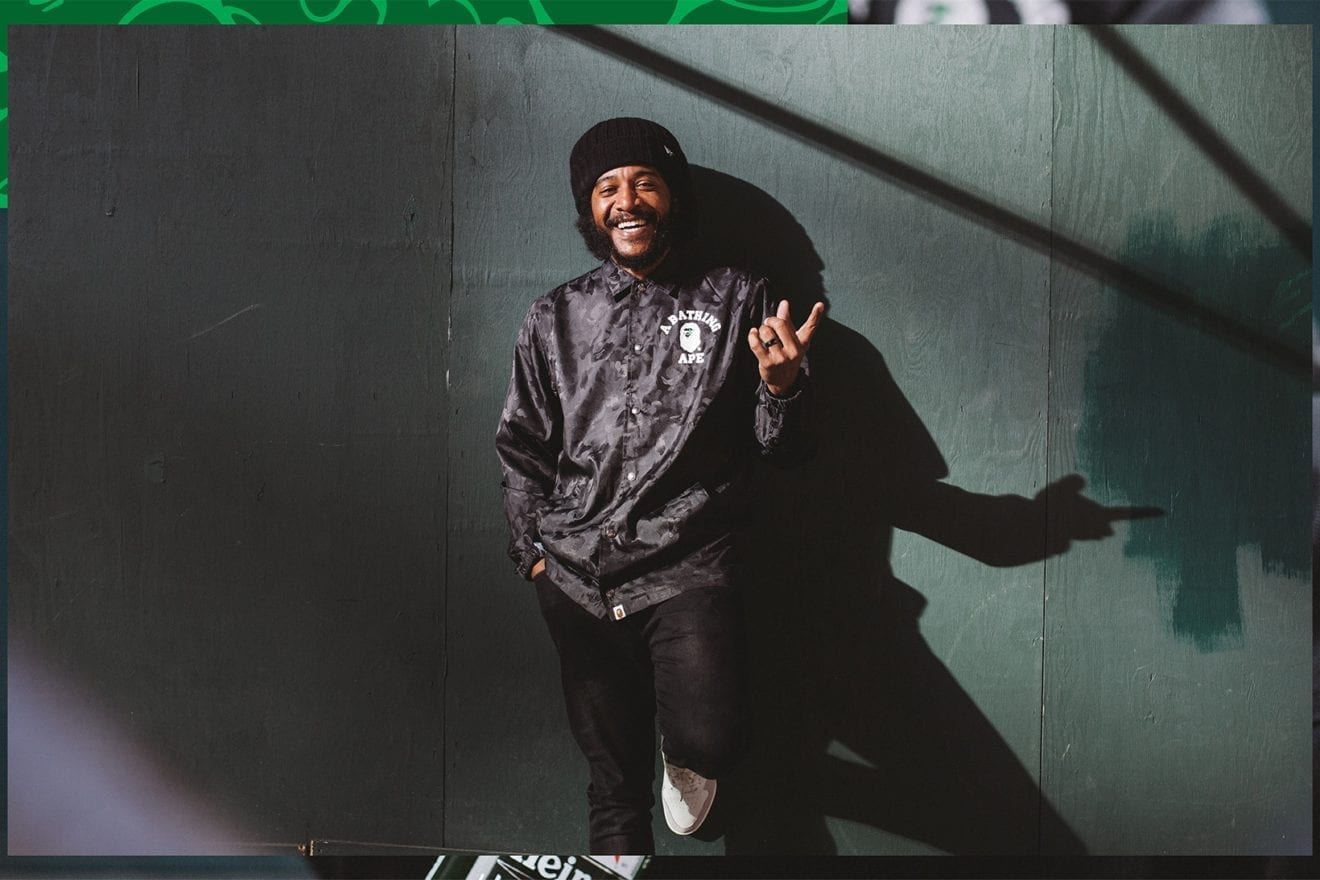
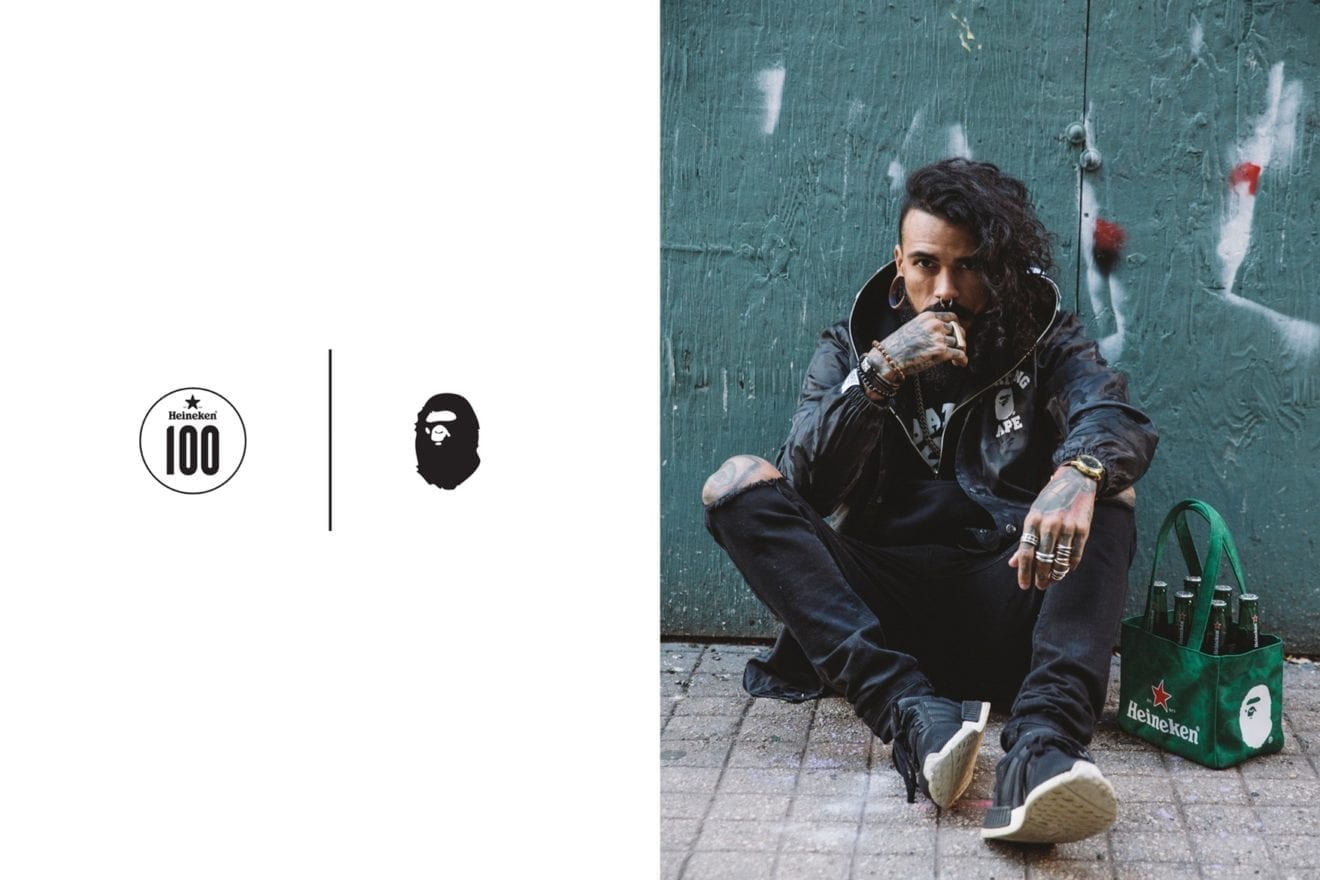
    Hong Kong-owned A Bathing Ape has been chosen by brewing giant Heineken as its partner for this year’s #Heineken100 program, its eighth collaboration with a retail fashion brand.

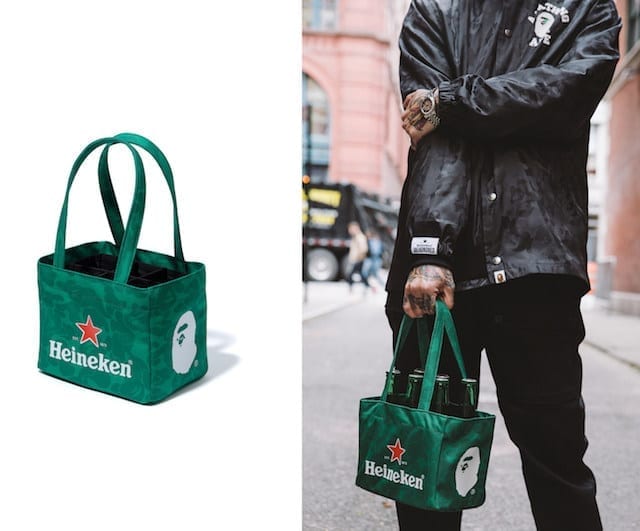
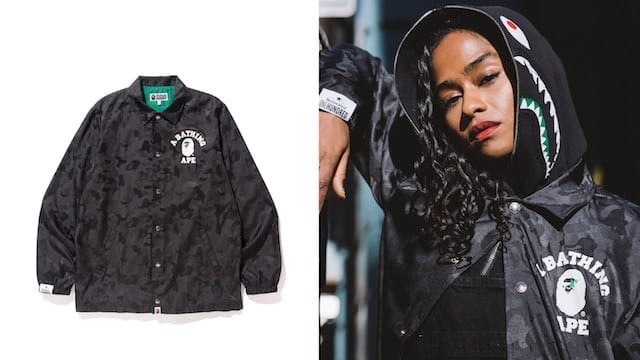
    The two companies have created a capsule collection of four co-branded fashion items: a hoodie, coach jacket, t-shirt and a six-pack bottle carrier.

    Unlike previous years – when the creations were gifted only to the 100 most influential beer drinks around the globe – this year consumers can buy the merchandise at a one-day only popup in New York. The store will be open in Japanese gastropub Izakaya in Manhattan’s East Village neighborhood in New York on Tuesday (December 12).

    Last year, Heineken collaborated with luggage brand Tumi to create a series of essential travel products. Other previous partners include Public School, Garrett Leight, Union Los Angeles, Parabellum, Mark McNairy, Kith and Neighborhood Japan.

    “The goal of the #Heineken100 program has always been to connect the brand with people who drive culture forward,” said Coltrane Curtis, founder and managing partner of Team Epiphany, the marketing agency behind the initiative. “This year, we listened to the fans. By opening up #Heineken100 to New Yorkers, we’re able to directly engage with consumers in one of the most influential cities in the world.”

    “This year’s #Heineken100 campaign brings together two brands with global ubiquity, whose consumers have a taste for luxury and innovation,” added Raul Esquer Lopez, Heineken USA brand manager. “We’re thrilled to partner with Bape, an iconic brand that shares a history of inventiveness through creating highly-aspirational imports for the man of the world.”

    The half-zip pullover hoodie will sell for US$399, the camo coach jacket for $413, the t-shirt for $112 and the cooler for $115. All feature dual branding.

    Bape is owned by Hong Kong’s I.T. Group.

  • Louis Vuitton launches its Facebook chatbot

    Louis Vuitton launches its Facebook chatbot

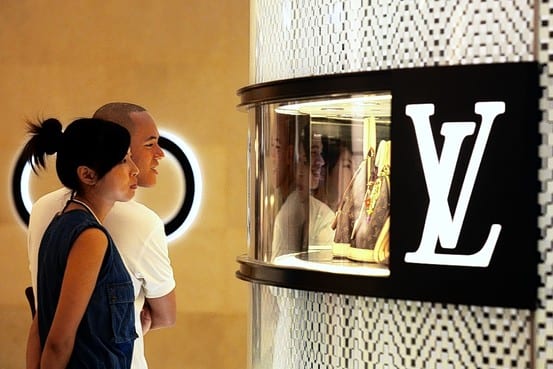
    In a bid to think “client first”, Louis Vuitton has launched a chatbot on Facebook Messenger that advises shoppers on products, aiming to provide meaningful feedback during the busy holiday period.

    The bot is powered by mode.AI, which has also previously partnered with the likes of Levi’s with its artificial intelligence, visual search and machine learning technology.

    It aims to give clients a more “sophisticated, personalized, visual and conversational online shopping experience” via Facebook, where Louis Vuitton currently has more than 20 million followers.

    The main focus is on search– users can converse with the bot to discover the brand’s full line of products, as well as use it to get suggestions on specific items. It uses natural language processing to facilitate a more advanced search experience.

    They can also share items with friends directly through it, and get votes in return on what to buy. Additional services include info on stores worldwide, access to product care instructions and a conversational view on the brand itself, from its fashion shows to its history and the craftsmanship behind its products.

    LV

    Louis Vuitton CEO, Michael Burke, said: “At Louis Vuitton, we always think client first. Today, our clients like to be connected to the Louis Vuitton universe wherever they are. They shop in our stores worldwide and are often in contact with their personal shoppers. They also follow us on Facebook, Twitter, Instagram, etc. and find our products on louisvuitton.com. It became evident that we should create the Louis Vuitton Virtual Advisor powered by mode.ai, a 24h/7 service to be able to fully meet their needs.”

    “We are still in the very early stage of AI technology adoption in the retail industry. The dominance of e-commerce isn’t just a trend, but an ever-growing arena, giving luxury brands like Louis Vuitton the opportunity to reach and sell to their customers in new and exciting ways. As shoppers continue to move online, the most forward-thinking companies will turn to AI chatbot technology to meet these shifting client demands,” said mode.ai CEO Eitan Sharon.

    Burke added: “The [bot] is designed to increase the quality of the relationship we have with our clients by enhancing and personalizing the shopping experience. We see messaging platforms as future key drivers of conversations with our clients, and potential for the integration of artificial intelligence and chatbot technologies to further enhance service to clients across these new channels.”

    The experience is currently only available on Facebook Messenger in the US, but there are plans to roll it out to Europe and Japan next, as well as across additional platforms including WeChat and Line.

  • The Shilla Duty Free unveils “seamless retail” in Changi T4 beauty outlet

    The Shilla Duty Free unveils “seamless retail” in Changi T4 beauty outlet

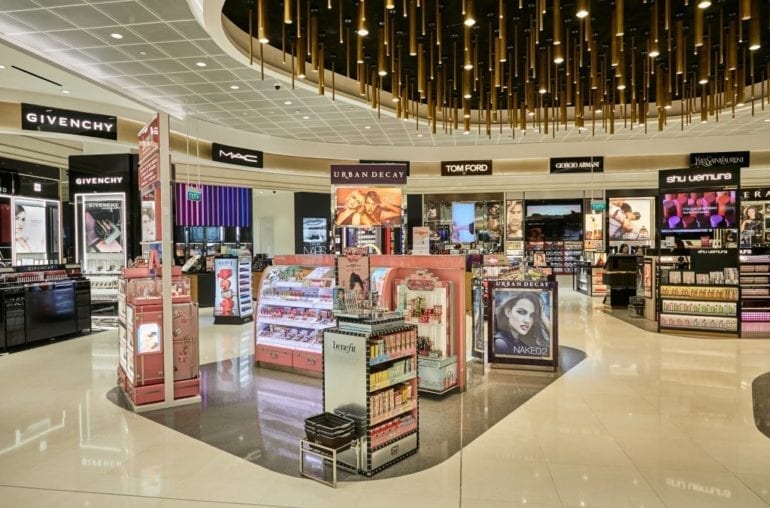
    The Shilla Duty Free has unveiled its 1,375 square meter beauty store in Singapore Changi Airport’s newly-opened Terminal 4.

    It is the biggest among all the Shilla Central stores at Changi and is part of the airport’s first integrated duty free zone, which travellers reach after passing through the centralised area for departure immigration.

    The zone also includes DFS Group’s liquor and tobacco outlet, and passengers can make purchases across the two stores in a single transaction.

    A number of beauty brands not currently offered at other terminals are available in The Shilla Duty Free’s new store, including Hera, diptyque, Alexander McQueen, Mercedes-Benz, Bentley and Bath & Body Works.

    The store features high ceilings and has been designed to be spacious to “allow for more creativity in the designs of the brand counters”, the retailer said. Large digital screens have been incorporated into the walls and pillars, and amplify the key branding messages and promotions.

    The layout encompasses four distinct zones, with the aim of making the shopping journey “seamless and uninterrupted”. A vibrant cosmetics zone features at the store’s main entrance, while internationally renowned brands are carried in the skincare zone, The Shilla Duty Free said.

    A zone dedicated to introducing travellers to brands known for their artisanal and organic approach to beauty features next. The last zone highlights fragrances, and is intended to “immerse travellers in the romance of perfumery”.

    The Shilla Duty Free Vice President of Global Merchandising Division Raelene Johnson commented: “We are thrilled to present Shilla’s new seamless retail format to travellers. The entire store has been tailored with our shoppers in mind, as we try to understand the consumer psyche and focus on building a great experience for each one of them.

    “Whether it is the joy of browsing through the different segmented zones that pique their interest, or discovery of their favourite brands that are not readily available downtown, or the exclusive promotions, we are confident that shoppers will always have a pleasant and enjoyable time at our store.”

  • South African conservationist-turned-artist Bruce Little entrusts his latest exhibition to Tigers

    South African conservationist-turned-artist Bruce Little entrusts his latest exhibition to Tigers

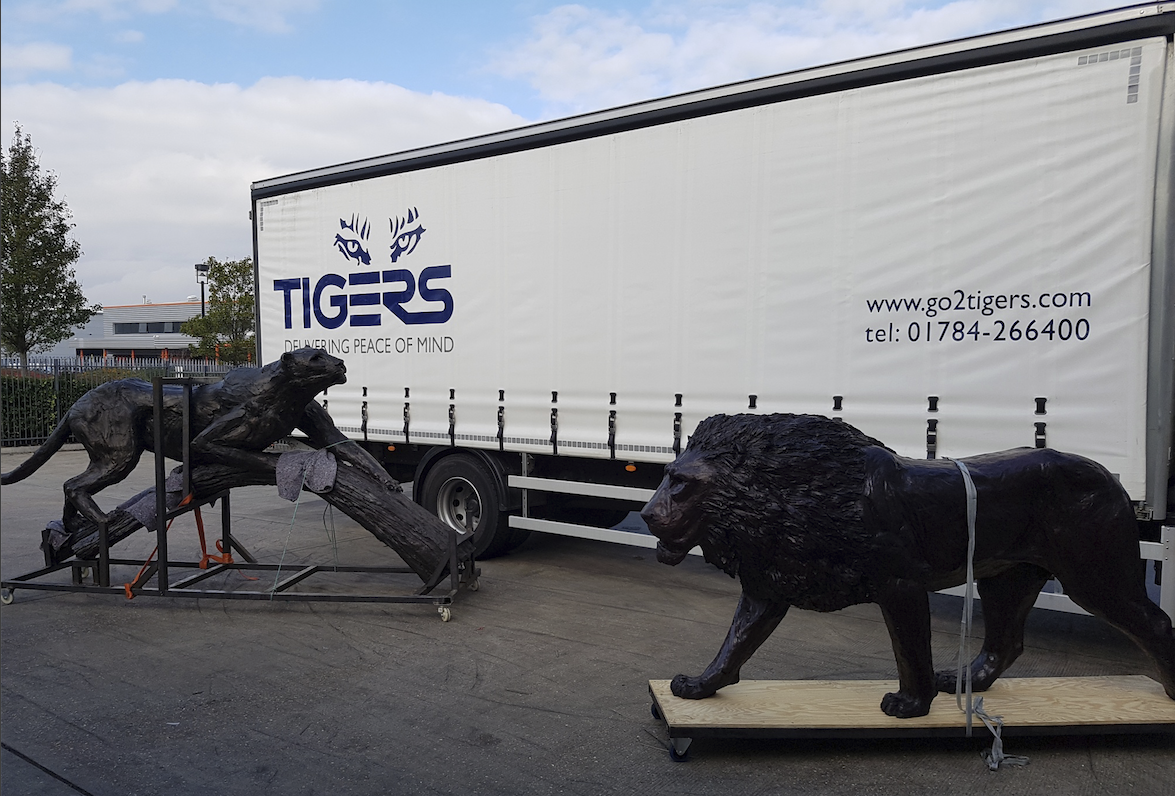
    Tigers has transported 29 large bronze wildlife sculptures from Cape Town, South Africa to London, United Kingdom for conservationist-turned-artist Bruce Little’s largest exhibition to date, held at the Mall Galleries. 

    The sculptures ranged from a tiny Harvester Mouse, measuring just 10cm long, 10cm wide, and 10cm high, and weighing three kilograms, to a Leopard, measuring 450cm long, 160cm wide, and 120cm high, and weighing 250 kilograms.

    “We loaded the sculptures under the watchful eye of the artist himself, Bruce Little, and re-palletised and delicately wrapped them to ensure a safe and secure movement to the gallery,” said Trevor Weeks, Branch Manager, London Heathrow Airport, Tigers. 

    “Twenty-nine large sculptures arrived in an ocean freight container at Tigers’ London Heathrow Airport facility, and were cleared as temporary import with a view to possible sale, providing the customer with the most cost-effective solution.

    “A further 31 smaller sculptures were moved from an address in the UK, and were delivered together at the Mall Galleries, using a vehicle mounted forklift truck to assist the gallery team with offloading.”

    Tigers collected the sculptures from the Mall Galleries after the exhibition had ended, and delivered them to another location in the UK for a private show.

    “Hosting an exhibition, the scale of which we have just had in London, is no easy feat particularly when the source of work has come from thousands of kilometres away,” said Bruce Little.

    “Fortunately, we have companies like Tigers at our disposal that have assisted seamlessly in delivering our bronzes where and when they are supposed to be. 

    “Last year they moved a monumental lion for me from Cape Town to Longleat, Wiltshire, UK, which weighed approximately five tonnes and this too went without a hitch.

    “I am most grateful for Tigers and their associates that have made it possible for me to exhibit around the world.” 

    Tigers operates seven offices in the United Kingdom, including London Heathrow Airport, Gatwick Airport, Felixstowe, Cardiff, Banbury, and Leeds.

  • SK-II to open pop-up store for Holiday limited edition

    SK-II to open pop-up store for Holiday limited edition

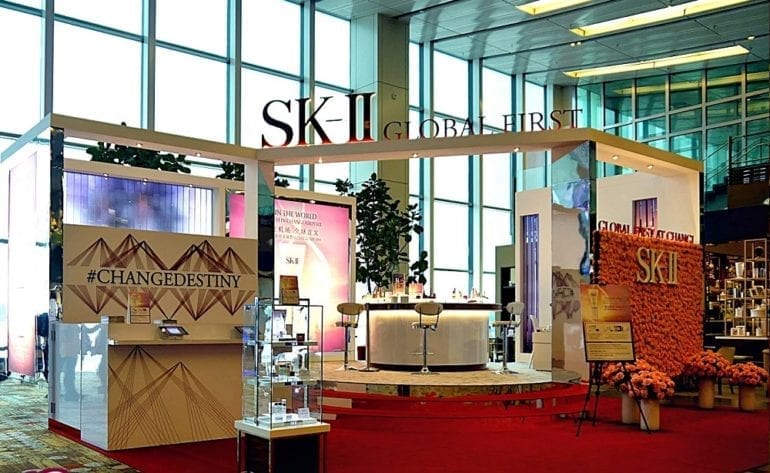
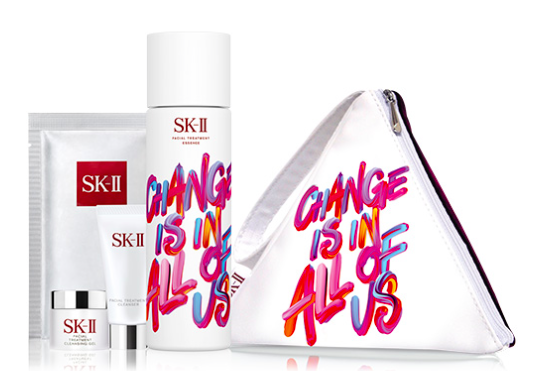
    SK-II opens a pop-up store of 2017 PITERA Essence Change Destiny Limited Edition at the Seocho-gu Central City Famille Station in Seoul for the holiday season.

    This pop-up store is designed with a variety of experience spaces and a wide range of enjoyment under the concept of a unique Pop Art design of the bottle of the PITERA Essence Limited Edition.

    A giant-sized bottle of PITERA Essence Limited Edition Bottle is displayed in the middle of the pop-up store that attracts attention and it allows anyone to experience a variety of ways to experience the PITERA Essence Limited Edition.

    Visitors take a picture  in the PhotoZone, which is surrounded by a variety of PITERA Essence Limited Editions.

    Limited Edition

    After taking a photo, they can select one of the three ‘#ChangeDestiny’ phrases on the bottle and the calligrapher will write the phrase on the a polaroid cover.

    In addition, SK-II’s beauty measuring system, Magic Ring, can be used to measure skin condition and offer beauty counseling.

    Visitors can participate in various activities at the PITERA station, including magic ring measurements, and present coins that are only available at the PITERA station.

    With the coin from the pop-up store, SK-II PITERA gift machine gives you the chance to get a variety of products from SK-II’s best products.

    The motif of this pop-up store, the PITERA Essence Change Destiny Limited Edition is the symbolic product of SK-II. It features a ‘#ChangeDestiny’ phrase inscribed on the bottle that inspires the subjective life.

    Three phrases with meaning of support for the attitude of life changing in a subjective way, “Be the Person You DECIDE To Be”, “CHANGE is in All of Us”, “DESTINY is a Matter of Choice” are designed in pop art form for each of the three products.

    Those products will be sold in limited edition at SK-II stores and major online malls in department stores nationwide.

    The same pop-up store concept has been mushrooming is the main Asia cities.

  • Be Inspired by Zalora to showcase trends

    Be Inspired by Zalora to showcase trends

    Online fashion destination Zalora has launched Be Inspired, a curated page that consolidates fashion trends across various themes.

    Shoppers can readily obtain items on Zalora to help them achieve specific looks.

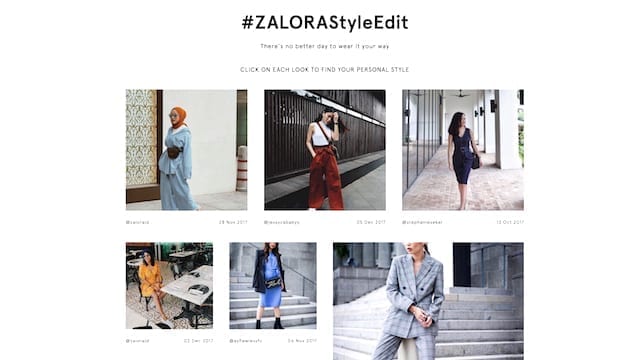
    Recognising the role of social media in influencing fashion choices, Zalora is also launching #ZaloraStyleEdit, a page for user-generated images from Instagram. By using the hashtag in their posts, shoppers can upload photos of their outfits.

    All the items featured can be bought on the spot as they are linked to either the exact Zalora product or a similar one sold on its site.

    The Be Inspired tab offers a curated experience with a navigation menu that highlights 16 evergreen and seasonal trends, as well as occasions and international fashion inspiration.

  • Health and beauty stores prove lucrative for retail conglomerates

    Health and beauty stores prove lucrative for retail conglomerates

    Health and beauty stores are rapidly expanding their footprint in Korea as the sector remains one of few lucrative realms in the local retail industry.

    CJ Olive Networks will soon open its 1,000th Olive Young store 18 years after starting the business. This year alone, it has added more than 200 locations. GS Retail in February took full ownership of Watsons Korea, the local operation of the Hong Kong franchise, and significantly expanded the chain. Lotte Shopping is also picking up the pace with LOHB’s, which had 30 stores in 2014 and now runs 89 locations across the country.

    Health and beauty stores, sometimes shortened to H&B, are similar to drugstores like CVS and Walgreens in the United States, but Korean law forbids them from selling pharmaceutical products, even off-the-counter medicine, so businesses naturally shifted to cosmetics and body care products, including dietary supplements.

    The H&B market has seen average annual growth of 22.5 percent in the last five years and is forecast to reach 2 trillion won (US$1.8 billion) this year. For retail conglomerates like CJ, GS and Lotte, the figures suggest the market is mature enough to ensure steady revenue as they look for the next big thing to make up for falling sales at discount chains and department stores.

    The companies are competing fiercely to expand their presence. Late entrants in particular are boosting efforts to catch up to the market leader Olive Young.

    Even smaller cosmetics brands that operate their own small shops and discount retail operators are eyeing a leap into the market.

    Olive Young’s parent company, CJ Olive Networks, is expected to pull in sales of 2 trillion won and operating profit of 111 billion won this year, according to industry estimates. The figures would represent an increase of 32 percent and 18 percent from last year.

    It is a remarkable turnaround from 2009, when CJ acquired a full stake in Olive Young from a Hong Kong retail group. For the next few years, the H&B chain remained profitless, with loss surpassing 10 billion won.

    But demographic changes – a rise in the number of single-person households and growth of a young population in their 20s and 30s – reversed the situation, and now, Olive Young is CJ Group’s fastest-growing subsidiary.

    About 80 percent of this year’s revenue at CJ Olive Networks, which also runs a home shopping channel, is expected to come from Olive Young. H&B stores also benefited from a new law in 2011 that allowed retailers other than pharmacies to sell sanitary pads and other women’s health care products. H&B stores began selling the products, and the market began growing at a remarkable speed, from 300 billion won in 2011 to 1.3 trillion won last year.

    Another attribute cited by analysts for H&B stores’ success is the carefree shopping atmosphere. Customers can freely try on products like lipstick and makeup without being followed by staff, a strategy that has worked well with younger consumers who value cost and saving money.

    With the market proving its worth, conglomerates are now making aggressive moves to include or expand H&B stores in their business portfolio. The market’s No. 2 player, Watsons, entered relatively early in 2005 but failed to make leaps due to a conservative business strategy.

    But after fully acquiring Watsons Korea, GS Retail has been signing off large investments to boost the sector despite going through some struggles with its convenience store chain GS25. The company said it is looking for ways to create synergy between GS25 and Watsons. Lotte Shopping is also looking for ways to expand LOHB’s, which started in 2013 with 10 stores.

    The first few years were slow, without impressive results, but last year, Lotte began investing heavily in the chain, setting up more than 30 new stores and doubling its sales. LOHB’s now has 89 locations, closely tailing Watsons’ 139.

    “Until now, LOHB’s didn’t receive much attention, squished between Lotte Department Store and Lotte Mart [both under Lotte Shopping], but we’re planning to develop it into one of our major businesses,” a source at Lotte Shopping said. The company plans to have more than 100 stores by the end of this year.

    Shinsegae last year won the right to operate the British drugstore chain Boots in Korea as part of its bid to enter the H&B market. The company opened four Boots stores this year, including one in the Starfield Hanam mall in Gyeonggi and a four-floor location in Myeong-dong, central Seoul, just steps away from Olive Young.

    The Myeong-dong store is the largest H&B in Korea, measuring 1,284 square meters (13,820 square feet). The company said its strategy is to customize each store and its product categories based on the commercial area in which it is located.

    Standalone cosmetics shops are also adding products to their offerings to turn themselves into H&B stores.

    Aritaum, which is owned by cosmetics maker AmorePacific and has 1,340 stores nationwide and 300 in Seoul alone, recently added skin care supplements to its product lineup.

    The company said the “rapid transition is hard because more than 80 percent of the branches are franchises,” but industry analysts believe this may be a sign that Aritaum is looking to profit from the H&B market.

    Convenience stores have also started signing partnerships with cosmetics and skin care product manufacturers to sell at their own operations.
  • New Eve Lom store in Harbour City, Hong Kong

    New Eve Lom store in Harbour City, Hong Kong

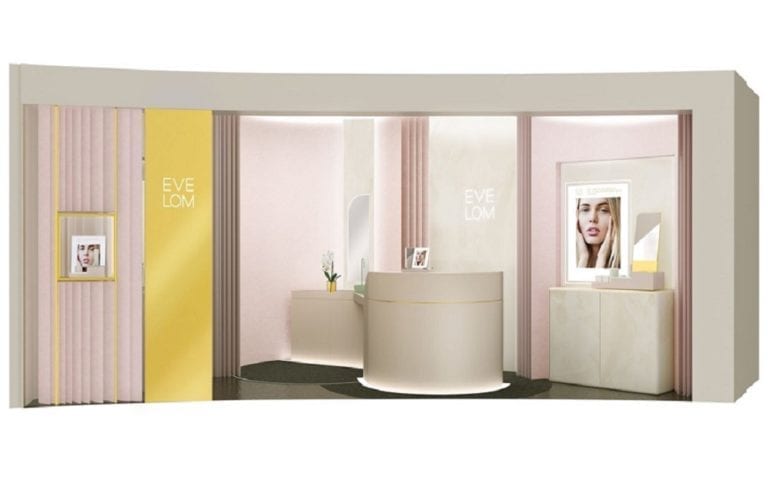
    The store opening is the culmination of a collaboration between Eve Lom and NY-based creative branding agency, School House, that first began with a refresh of the brand’s positioning.

    Eve Lom was one of the first founder brands in the luxury beauty space; since her entrance more than 30 years ago, the space, much like Hong Kong, has become crowded, causing a shift in the luxury paradigm.

    Inspired by the disciplined reductivity and subtlety of Eve Lom, the store concept offers guests a unique luxury beauty experience in the heart of the bustle of Hong Kong’s Harbour City.

    To complement its presence in one of the most densely populated and over-saturated cities in the world, the store actively refuses noise, in all senses of the word, with its overall atmosphere built from multiple curvaceous felt panels that seemingly envelope you upon entrance and absorb all chaos from the store’s surroundings.

    To bring the space to life, School House’s design team incorporated the new brand visualization using Eve Lom’s traditional color palette of white and gold while incorporating a new soft pink and green tones, inspired by the original balm cleanser coloration, along with the strategic use of a soft black.

    School House combined a mix of hard and soft materials such as slate, felt, porcelain and onyx to create an environment of simplicity and depth, to mirror the products being sold. The store is complete with an assisted consultation area, a full-line demo and testers display, and a retractable panel for privacy. The store signals a new era for the brand by making a powerful understatement, like only Eve Lom can.

    Consumers now seek authority, authenticity and simplicity from luxury beauty brands, tenets that Eve Lom has always represented. Noticing this change, School House saw an opportunity to reinvigorate the brand by strongly expressing its subtleties in order to take Eve Lom from the person to a persona through the execution of a strategy across a new brand visualization, including this new store concept.

  • Mulberry Group first store to launch in Hong Kong

    Mulberry Group first store to launch in Hong Kong

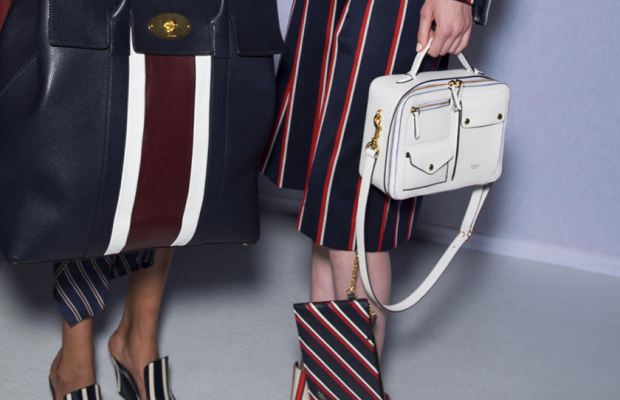
    UK-headquartered luxury fashion retailer Mulberry Group plans to launch in Hong Kong.

    Announcing its first half-year results, the brand revealed plans – but no details – to expand in both Hong Kong and Mainland China through an omnichannel strategy. Other, unidentified global markets are on its radar as well.

    The news follows the success of its recent expansion into Japan which helped strengthen the international performance in the six months to September 30.

    In Japan, Mulberry Group signed a 50-50 joint venture agreement in July with licensing partner Onward Global Fashion (OGF). An initial presence of four stores in key locations, including Ginza, has already been expanded with a fifth store opening.

    Total first-half revenue for the company was virtually flat at £74.6 million (US$99.8 million) compared to £74.5 million a year ago. Sales through its retail channel were up 2 per cent to £56.6 million, but comparable sales eased 1 per cent. Gross margin increased 248 points (up £1.9 million).

    While UK sales were flat, international sales grew 8 per cent to £11.3 million. Global digital sales rose 3 per cent to £10.7 million, accounting for 14 per cent of group revenue.

    “We are delivering on our strategy to grow Mulberry as a global luxury brand,” says CEO Thierry Andretta.

  • Lululemon sales skyrocket sales

    Lululemon sales skyrocket sales

    Canadian activewear retailer and manufacturer Lululemon has posted a 14 per cent uplift in total sales in the third quarter; same-store sales rose 8 per cent.

    Kevin Wathey, a consultant with GlobalData Retail, says that while other players in the sports and athleisure market struggle, Lululemon sales continue to go from strength to strength.

    While income dropped by 14 per cent, the increase in sales by either measure underlines that Lululemon is still attracting new customers – and getting existing shoppers to spend more both online and offline, he said. The drop in profit was the result of asset impairments and restructuring costs associated with the Ivivva closedown, rather than symptomatic of any fundamental issues with the business. Excluding the exceptional $21 million of fees, net income rose by a healthy 17 per cent year on year.

    “Exceptional items notwithstanding, the strength of Lululemon’s bottom line is mostly thanks to its ability to resist the temptation of excessive discounting – even in a market that has become steadily more promotional. In our view, this is made possible by the fact that Lululemon, unlike so many of its rivals, has a line-up of products that people want and for which they are prepared to pay full price. Constant innovation and a laser-like focus on functionality and quality are central to this,” said Wathey.

    International growth – including in Asia – and product innovation should continue to fuel sales.

    “The former is particularly helpful in driving revenue, and we remain excited about Lululemon’s prospects in both Asia and Europe. The latter gives the numbers a softer boost but also plays a critical role in keeping existing shoppers coming back for more. On the product side, we feel that Lululemon has some potentially significant wins ahead, especially in categories like footwear where it has just launched its first range of sneakers in collaboration with California-based Athletic Propulsion Labs.”

    Wathey said he remained optimistic about Lululemon.

    “It is true that the company has had a good run of growth and it is also the case that overall market conditions will continue to be challenging. However, Lululemon’s careful control of its brand, along with its efforts to position itself as a company that helps people achieve their lifestyle ambitions, will help it to speed through prevailing negative headwinds.”

  • First mobile tax refund system by Tourego

    First mobile tax refund system by Tourego

    Singapore has introduced the world’s first mobile tourist tax refund system, Tourego.

    Approved by the Inland Revenue Authority of Singapore (IRAS), Tourego migrates the paper-based tax refund process on to an app, allowing users to receive and store their refund tickets in an e-wallet.

    As well as that, Tourego provides shopping, food and travel tips about Singapore, plus users can compile a shopping list recommending retail partners. Already the network covers 100 businesses, with more expected to be announced soon.

    Tourego aims to solve the worldwide problem of tourists spending too much time at airports trying to obtain their tax refunds, says founder/CEO Tan Tie Wee.

    As well as enhancing the shopping experience for tourists, the app helps retail partners improve their efficiency as well as gain big-data insights into consumer behaviour,” he says.

    “We are grateful to the Singapore Tourism Board (STB), IMDA, Spring Singapore and IE Singapore for their support as Tourego contributes to Singapore’s vision to be a smart nation.”

    With Singapore as its first market, the Tourego app is free to download but is currently available only to non-Singaporeans to register for an account.

  • The Up and Down for American Eagle result

    The Up and Down for American Eagle result

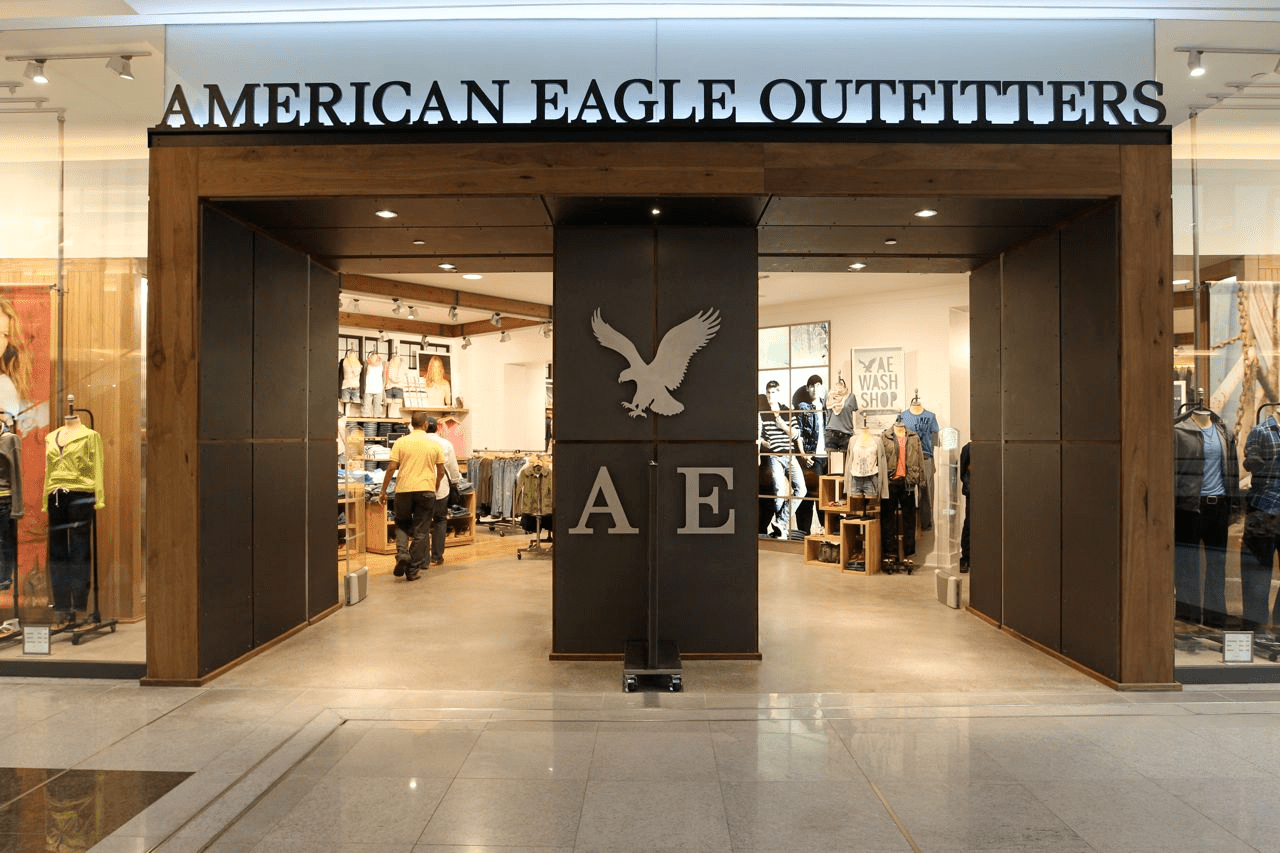
    Third quarter American Eagle results may be mixed, but they point to a company that is holding its own in a challenging market.

    There are, however, some negative numbers, such as the erosion on the bottom line, that signal the company has much more work to do before it can claim to be back to full health.

    American Eagle’s gross margin fell 1.2 percentage points to 39 per cent during the quarter, largely due to higher warehousing and shipping costs on online orders and increased promotional activity. Sales rose 2 per cent to US$960.4 million, but net income fell 16 percent to $63.7 million, partly due to a $14 million one-off charge.

    American Eagle stores posted a comparable sales increase of 1 percent, reversing the declines of the last two quarters which represents a step up on preceding periods when growth was present but anemic. As positive as this is, it is not a cause for unbridled celebration. The uplift was delivered against the backdrop of a stronger period for apparel overall. This raises a question as to how much is down to underlying natural demand, and how much is attributable to the improvements American Eagle has made over the past year.

    In fairness, a mix of both delivered the number. Categories like denim are performing well for American Eagle, with new washes and styles helping to drive sales. GlobalData Retail’s customer data suggests shoppers who visit to buy jeans are now buying more in other categories too – particularly in menswear.

    An increase in cross-category shopping is comforting and partly alleviates concerns that American Eagle was becoming overly reliant on denim. As much as this is currently helping results, it makes the company’s sales growth dependent upon denim remaining in fashion – something that it is unable to control or guarantee. By using denim as a springboard to promote other parts of its offer, American Eagle is on the right track.

    Along with a skew in category performance, American Eagle is also showing a disparity in channel results. The growth in stores is poor while growth online is much stronger. Given the interplay between shops and the website, it is arguably the overall numbers that matter. However, the higher costs associated with online fulfillment contributed to a margin decline this quarter. This was further exacerbated by heavy promotional activity, which was necessary to keep pace with the rest of the market.

    Aerie proves positive

    Away from American Eagle, Aerie continues to be a reliable source of growth. Its robust comparable sales uplift of 19 per cent this quarter was market-beating and underlines that it is still taking the share of other players. Usually, after such a long run of very high sales increases,one would be concerned about a softening as lapping comparatives become tougher. But that’s not the case with Aerie.

    The brand has excellent growth potential from two sources. First, the customer base continues to grow as more shoppers discover and migrate over to the brand. Aerie’s positioning and stance remain aligned with consumer attitudes, and this is helping to enlarge its share of shoppers.

    Second, the category extensions into products like soft knit tops and leggings are helping to increase average transaction values and are giving Aerie access to a more significant share of its shoppers’ overall spending.

    Overall, American Eagle is in a reasonable position and the performance over the holiday quarter should be solid, marking a good end to a respectable year.

  • New Concept for L’Occitane Flagship store

    New Concept for L’Occitane Flagship store

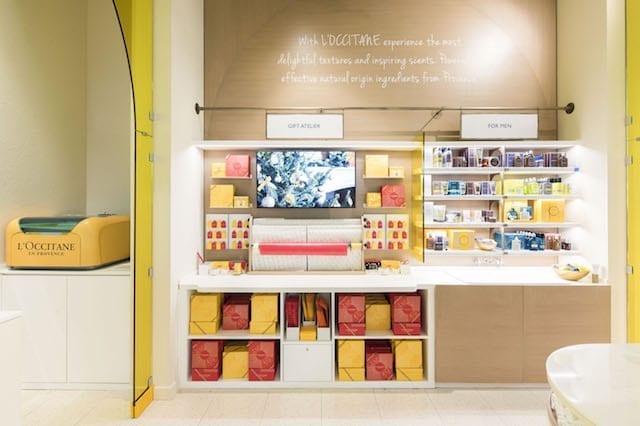
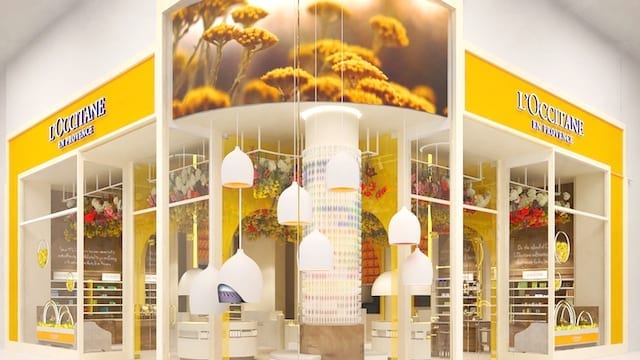
    French-headquartered, Hong Kong-listed L’Occitane en Provence, opens a world-first concept store in Canada  which it says offers an immersive digital experience and connected shopping model.

    Two new L’Occitane flagships based on the concept will open in London’s Regent Street and on the Champs Elysee in Paris later this month, with the format to be rolled out globally from next year.

    The skincare, body care and fragrance retailer has completely redesigned its 1600sqft (150sqm) Canadian store, located in the Yorkdale Shopping Centre in Toronto.

    Inspired by the land and culture of Provence, guests are invited to take a multi-sensory journey, setting what the company describes as “a new standard for the L’Occitane in-store customer experience”.

    “Visiting this store will be an experience like no other. Upon entering, guests will feel a sense of wonderment – they will be transported to the lavender fields of Provence, learn about L’Occitane’s expertise in the art of extraction, and visit the land of Corsica, home of the powerful Immortelle flower,” said Paul Blackburn, North American VP of concept design, construction & merchandising.

    “Behind the striking external glass facade, a curved video wall immediately attracts the attention of passersby. Below this eye-catching feature is an immersive digital experience inside a pair of suspended capsules. Within each capsule, a true story unfolds before your eyes combining imagery, scent, light and sound for a truly sensorial experience.”

    L’Occitane says the Toronto redesign is part of a larger expansion and refocus of store concept innovation from the brand. The company will pursue a ‘glocal’ retail strategy, in which it will tailor the customer experience with innovative and personalised services across the globe, while adapting the concepts according to local market specifications.

    The Regent Street store will be the largest L’Occitane store in the world, covering 6450sqft (600sqm), with specialised features to evoke all five human senses and a ‘test and play’ experience.

    “A visceral experience”

    L’Occitane commissioned brand creative and experience agency School House to create the new design.

    “Journeying through Provence is a visceral experience that changes something within you,” says Christopher Skinner, founder and principal of School House. “In 1976, Oliver Baussan experienced a connection to Provence’s land and culture, which he distilled from lavender and rosemary into essential oils. In the same way, we approached Yorkdale as an artistic expression of Provence, served through tactile and digital brand experiences that spark a sense of wonderment.”

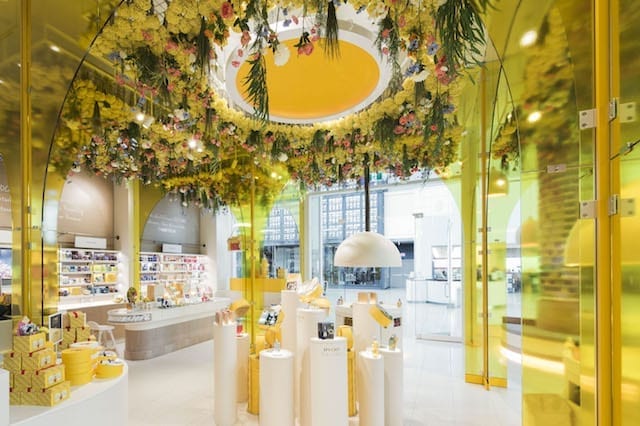
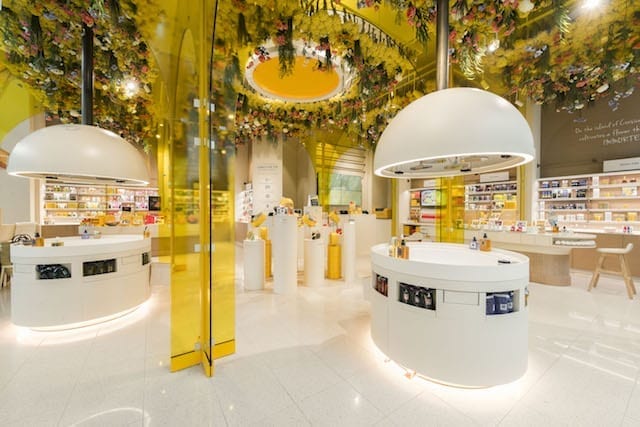
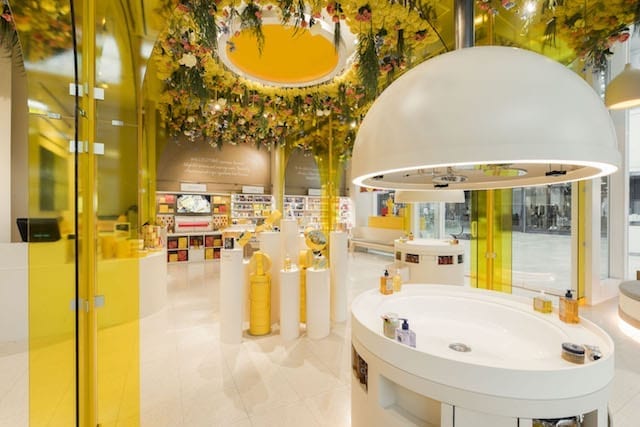
    Described as “a celebration of wonderment and discovery,” the Yorkdale boutique has multiple unique features for an immersive and connected shopping experience. An exterior facade stretching nearly seven metres hosts a curved video wall two metres high, drawing guests in-store. Upon entering, they are greeted by yellow glass archways, inspired by Provencal architecture. Key features include an interactive ‘skincare bistro’, and large hand-cream column wrapped in communal seating.

    “Provence is brought to life through an elevated shopping experience that channels the elements of earth, fire, air and water,” the company’s Canadian spokespeople say in a statement. “The elements are expressed through creative design features, heightening the senses and inviting exploration.

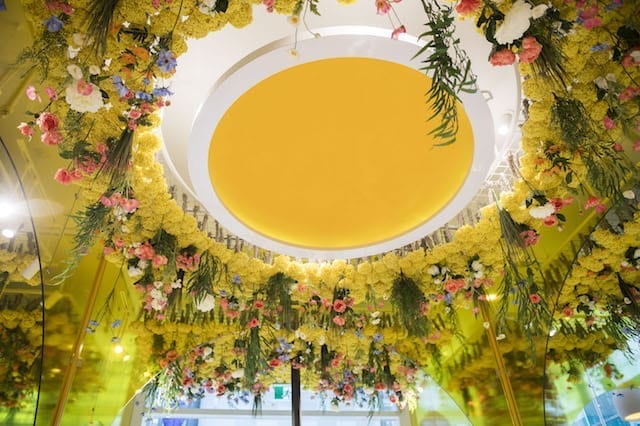
    “Earth is cultivated with a flooring of natural stone and a botanical ceiling installation of a ‘land reversed’. Water is cultivated with automated rain shower sinks, encouraging test-and-play with products beneath showers from hanging illuminated arched domes. Fire is channelled through a radiating sun installation set within the ceiling plane above. Lastly, air is cultivated into fragrance clouds, creating a unique testing experience for fragrances.”

    L’Occitane - new concept 10

    The L’Occitane team has also worked to ensure the store positively impacts the environment. All lighting will be 100 per cent LED, and, for the first time in North America, an in-store bottling recycling program in partnership with Terracycle will be offered. The stone flooring and countertops are made of recycled natural stone aggregates and contain pre-consumer recycled content. The yellow arches are made from co-polyester resin, incorporating 40 per cent pre-consumer recycled content, compatible with one of the largest post-consumer recycle streams.

    L’Occitane Yorkdale, opens on December 7, 2018.

  • Can Japan’s Uniqlo make it big in India?

    Can Japan’s Uniqlo make it big in India?

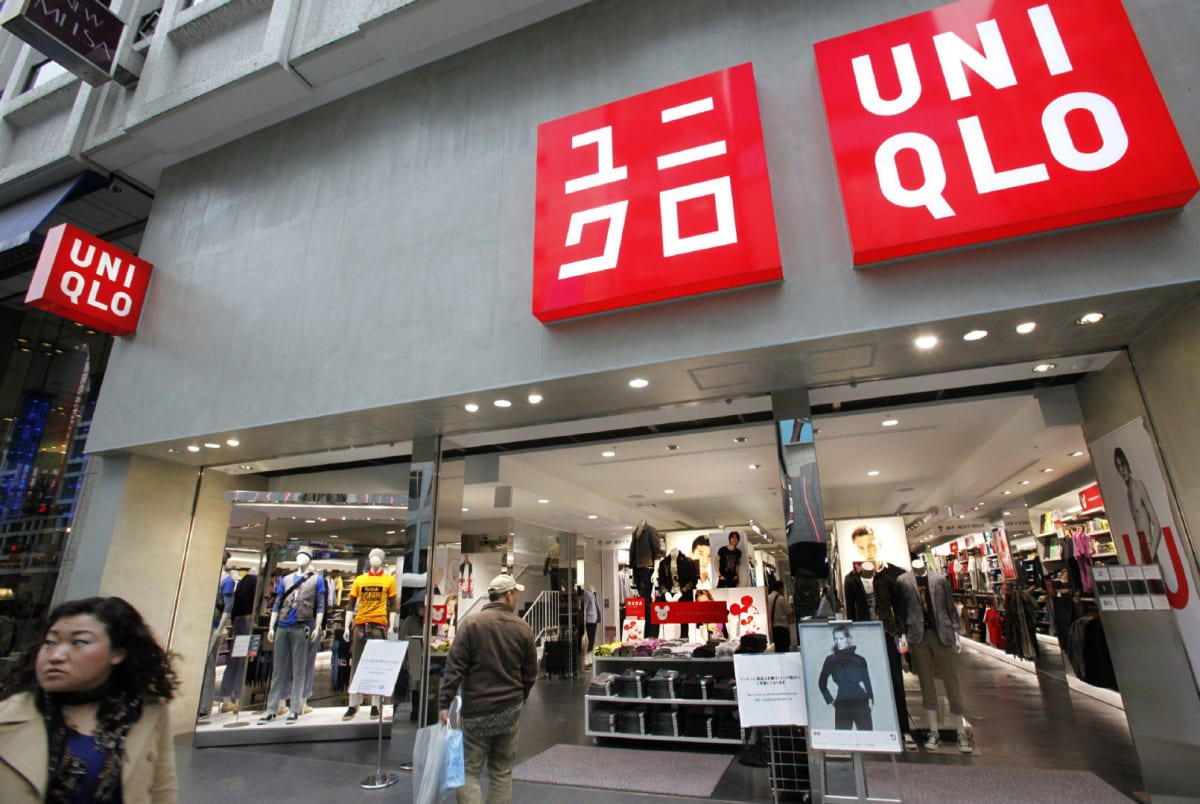
    Japanese brand Uniqlo, Asia’s largest apparel retailer, is all set to enter India. The Fast Retailing Co-owned brand, popular for its casual clothing in solid colours and iconic lightweight jackets, has sought the approval of India’s department of industrial policy and promotion (DIPP) to undertake single-brand retail trading in the country.

    If its proposal is cleared, Uniqlo will join the ranks of fast-fashion brands such as Zara, Forever 21, and H&M to open stores in Asia’s third-largest economy, where fashion retail is a $70 billion business. And here, its range of winter-wear, polos in solid colours, linen shirts, and other minimalistic offerings could well lure legions of young, aspiring shoppers hunting for branded clothing.

    While Uniqlo’s positioning and fashion are visibly different from that of Spanish retailer Zara and Swedish label H&M, with more focus on basic clothing and a strong line-up of winter wear, the brand will have to work on its pricing, communication, and styles to suit Indian shoppers, said retail experts.

    That’s because, unlike in other Asian markets, the brand is quite niche in India. “Not too many Indians know it as (well as) they know a Zara or H&M, so expansion is going to be a big challenge,” Pankaj Renjhen, managing director-retail at real estate consultancy JLL India, said. “Since Uniqlo is a basics brand…its positioning will have to be in line with that, which means the sizes and pricing will need to be tailored to India.”

    But what is likely to work for Uniqlo is its plain linen shirts and trousers that may find takers among India’s young office-goers seeking business casuals. Also, the Japanese firm offers a mix for both men and women, unlike Zara and H&M that mostly target the later. “While Zara and H&M are high on the fashion quotient, Uniqlo will have an appeal with the more young, office-going crowd as it offers casual wear at affordable prices,” said Ankur Bisen, vice-president of retail and consumer products at Technopak. “It also has a wide range for both men and women.”

    Uniqlo’s interest in India comes at a time when the retailer, which first opened a shop in Hiroshima in 1984, has been expanding its presence outside Japan where it holds a 6.5% share of the apparel market. In its most recent earnings report, the Fast Retailing Co posted a record operating profit of $1.57 billion for the year ended August 2017, bolstered by a jump in Uniqlo’s international business.

    For India, it has spent years evaluating the country’s policies. India allows foreign retail companies to invest directly in single-brand retail trading but has local sourcing requirements. Top Uniqlo officials have on several occasions met Indian government representatives to discuss its India debut. “India is a market with great potential,” a company spokesperson told Bloomberg, adding, “At the moment, we are awaiting word from the government, and we will be able to discuss potential future steps at a later date.”