Category: Fashion

Retail News Asia is committed to providing both local and global retailers with the latest Fashion news throughout the Asian market. This on a daily base.

  • Cristiano Ronaldo to launch CR7 Life flagship store in Hong Kong

    Cristiano Ronaldo to launch CR7 Life flagship store in Hong Kong

    Football icon Cristiano Ronaldo is expanding his lifestyle brand globally with the debut of the CR7 Life flagship in Hong Kong.

    Located on the seventh floor of Times Square Mall, the outlet will showcase a curated range of products, including apparel, accessories, shoes, eyewear, fragrances, and homeware. Many of the featured items have been handpicked and signed by Ronaldo.

    A dedicated CR7 Life Museum will also open alongside the store, celebrating the football star’s career, achievements, and influence on global sports culture.

    The flagship will also feature a Portuguese cafe serving traditional Portuguese delicacies such as Pasteis de Nata (custard tarts), premium coffee, and artisanal pastries.

    “This is more than just a shopping destination. It’s a full-sensory, cultural encounter that brings together sport, style, and travel – positioning Hong Kong as Asia’s new home of football lifestyle,” said the company.

  • J Lindeberg opens five-story flagship in Seoul’s Gangnam district

    J Lindeberg opens five-story flagship in Seoul’s Gangnam district

    In Seoul’s trendy Gangnam district, Swedish apparel label J Lindeberg has opened its largest store yet, a five-storey flagship.

    The concept store is inspired by the rhythm of golf and each floor showcases the company’s apparel as if navigating a golf course.

    The store was designed in collaboration with interior creatives, Showmakers, to celebrate movement, performance, and modern luxury through its furniture, themed zones and hangout spaces.

    The store offers different services on each floor,

  • Guess to transfer Chinese operations to local partner

    Guess to transfer Chinese operations to local partner

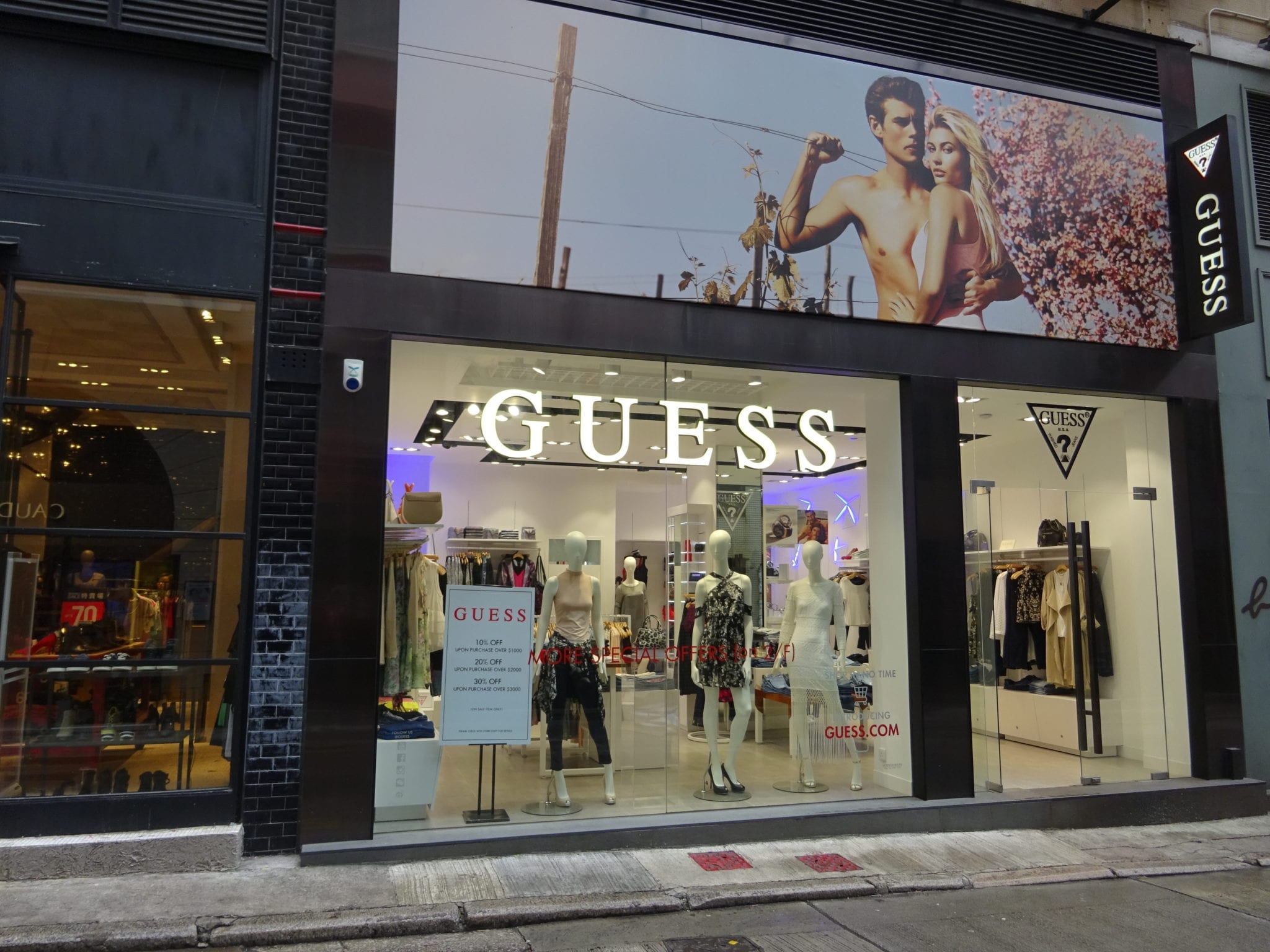
    Guess plans to transfer its operations in Greater China to a local partner this year as part of its restructuring strategy.

    “After many years of running our own direct operations in Greater China, we believe there is an opportunity for this market to be directly developed and managed by a local, highly experienced partner,” said CEO Carlos Alberini.

    “We have already met several potential candidates for consideration and we expect for this transition to be completed before the end of this fiscal year.”

    In addition, the retailer plans to streamline its Guess full-price store portfolio in North America by exiting non-strategic, unprofitable locations.

    Alberini explained that the company is focusing on increasing direct-to-consumer sales productivity globally and improving profitability through business and portfolio optimisation.

    For the fourth quarter ended February 1, Guess reported a 5 per cent increase in revenues to $932.3 million, driven by the Rag & Bone acquisition, positive momentum in the wholesale business, and increased licensing revenues.

    In the Americas, retail sales were up 4 per cent while wholesale revenues soared 63 per cent. Europe revenues increased 2 per cent and Asia revenues fell 15 per cent. Licensing revenues were up 18 per cent.

    GAAP net earnings for the period dropped 29 per cent to $81.4 million, including a net $18.9 million unrealised loss due to the change in fair value of the derivatives related to the company’s convertible senior notes due 2028.

    For the full year, sales grew 8 per cent to $3 billion and adjusted net earnings decreased 40 per cent to $104.5 million.

    “During the year, we delivered solid results with our licensing segment and our wholesale businesses in Europe and the Americas, but missed our plans for our direct-to-consumer business due to slower customer traffic in North America and Asia,” commented Alberini.

    For FY26, the retailer expects net revenues to increase 3.9-6.2 per cent. It forecast a loss of $30-35 million in the first quarter and earnings of $133-165 million for the full year.

    In a separate announcement, Guess said its board has established a special committee to review the non-binding takeover offer from WHP Global.

    “The special committee is carefully evaluating and considering WHP Global’s proposal with the assistance of its financial and legal advisors and has not yet determined whether it is appropriate to pursue the proposed transaction or any other transaction,” the company stated.

  • Underwear icon Hanes expands into the athleisure category

    Underwear icon Hanes expands into the athleisure category

    Hanes is expanding into athleisure with Hanes Moves, a new collection designed to bring the brand’s “signature comfort” into activewear.

    The range includes athletic-inspired innerwear and apparel for men, women and children.

    The collection features moisture-wicking fabrics, odour control, anti-chafing solutions and breathable stretch technology. Some styles also incorporate functional storage in leggings and shorts, while select women’s pieces include integrated leak protection.

    Jane Newman, chief design officer, global innerwear at HanesBrand, said launching the new collection was a “natural evolution” from the brand’s core basics.

    “We’ve progressed from classic essentials to fashion basics, then to loungewear,” she added. “Now, we’re entering athleisure with stylish, functional pieces designed to keep our customers comfortable throughout their day – no matter what they’re doing.”

    In June, HanesBrands sold the Champion business to Authentic Brands Group.

  • Zara to open first cafe in South Korea

    Zara to open first cafe in South Korea

    Zara, the Spanish fashion giant, is set to open its first Zacaffe location in South Korea this May, launching inside the brand’s newly renovated flagship store in Myeong-dong, Seoul.

    The move reflects a growing trend among global fashion brands incorporating cafes into their retail spaces, offering customers a more immersive brand experience.Zara introduced Zacaffe in Madrid in November 2024, integrating a cafe space within select stores to serve coffee, desserts, and branded merchandise, including tumblers, hats, eco-bags, and t-shirts. Following its China debut in Nanjing this month, the Seoul location will be its third global outpost, with an Osaka store also in the pipeline.

    “Myeong-dong is a prime shopping and fashion district, attracting both locals and tourists, making it the perfect location for a flagship Zara store and our cafe experience,” a Zara representative said.

    Zara also plans to introduce Korean-inspired desserts and a cafe design that reflects local aesthetics, aiming to attract both domestic customers and international visitors. The company is considering further expansion within South Korea.Zara is not alone in blending retail and café culture. Luxury fashion brands have increasingly adopted coffeehouse ventures to strengthen their brand presence and enhance customer engagement.

    Ralph Lauren introduced Ralph’s Coffee to South Korea in September 2024, opening a cafe in Seoul’s Garosu-gil district, a decade after launching the brand in New York in 2014. The cafe, featuring classic green-and-white interiors and American-style menu offerings, has drawn long queues, even on weekdays. Ralph’s Coffee also opened a popular pop-up store at The Hyundai Seoul last month.
    Maison Kitsune, the Parisian-Japanese brand under Samsung C&T fashion division, launched cafe Kitsune in Seoul’s Garosu-gil in 2018. The brand has since expanded to Hyundai Department Store’s Mokdong and Pangyo locations, as well as Shinsegae’s Centum City branch, where the cafe welcomes over 400 customer groups daily on weekends.

    Gelato Pique, a Japanese homewear brand, entered the cafe scene in September 2024 by opening Pique cafe in Hannam-dong, Seoul. The cafe offers specialty crepes and gelato, aligning with the brand’s “comfortable luxury” ethos and attracting foot traffic to the store.The trend underscores a strategic shift in the fashion industry. With the rise of e-commerce reducing in-store foot traffic, brands are reinventing retail spaces as lifestyle destinations.

    “Online shopping has made it harder for brands to showcase their identity in physical stores,” a fashion industry insider noted. “By launching cafés and selling branded merchandise, fashion labels create a more tangible, memorable experience for customers.”

    As more brands adopt cafe-driven retail strategies, the industry’s shift toward experiential shopping is expected to accelerate, blurring the lines between fashion, lifestyle, and hospitality.

  • Ugg launches footwear collection with NewJeans’ Hanni

    Ugg launches footwear collection with NewJeans’ Hanni

    California-based lifestyle brand Ugg has launched a sandal collection, GoldenRise, in partnership with K-pop girl group NewJeans’ member, Hanni.

    The GoldenRise has a customizable strap that can be worn three ways: as a slide, slingback, or wrap sandal. According to the brand, the collection has 100 per cent recycled polyester straps that adjust over the top of the foot, and the back strap may be wrapped around the ankle, switched for a shorter slingback, or removed completely to create a slide.

    “Rooted in joy, renewal, vibrancy, and warmth, Ugg and Hanni explore the magnetic, effortless feeling that is ‘Big Spring Energy,’” the brand said in a statement.

    The GoldenRise sandal, which Hanni wears in the global Spring/Summer 2025 campaign, is available on Ugg’s website, at Ugg stores, and at select wholesale retailers nationwide.

    Ugg employed leftover leathers and suedes in a new footwear line last year in reaction to the previous seasons’ overstock.

  • Hermes opens new Indonesia store

    Hermes opens new Indonesia store

    Hermes has opened a new store in Jakarta, Indonesia, located in Plaza Indonesia.

    Designed by Paris-based RDAI, the space showcases the French luxury house’s 16 metiers (artisinal expertise) in a setting that blends traditional craftsmanship with contemporary design.

    The store’s facade features teal-green ceramic tiles and semi-sheer rattan screens, offering glimpses into the interior. Inside, the layout is arranged by category, with fashion jewellery, silks, home collections, beauty, and fragrance near the entrance.

    Leather goods and equestrian collections are framed by fabric-covered panels, while dedicated areas present ready-to-wear and footwear. A jewellery and watch salon, adorned with hand-carved lacquered panels, adds a “refined touch”, while hand-tufted carpets introduce texture throughout the space.

    The store also incorporates locally sourced materials, including hand-woven wall fabrics and wooden furniture. Curated artworks from the Emile Hermes collection and contemporary photography further enhance the interior.

    In collaboration with Indonesian art collective Tromarama, the window displays merge the label’s equestrian heritage with Jakarta’s rail network, offering a unique artistic interpretation.

    “We invite visitors to explore our collections in a space that reflects Indonesia’s cultural and artistic heritage,” said Hermes.

  • Puma plans job cuts as US demand weakens, outlook dims

    Puma plans job cuts as US demand weakens, outlook dims

    Puma on Wednesday announced job cuts and warned of uncertain US consumer demand. The German sportswear group’s shares slumped 23 percent in the wake of disappointing quarterly and annual forecasts issued a day earlier.

    The grim outlook, which follows weak quarterly sales and annual profit announced in January, has raised concerns over Puma’s ability to compete with bigger rivals Adidas and Nike while fending off newer, fast-growing brands such as On Running and Hoka.

    Chief executive Arne Freundt said Puma’s target consumers in the United States were not spending due to economic uncertainty.

    “February was bad. March has started off a bit better,” he said at a press conference.

    Chief financial officer Markus Neubrand announced plans to cut 500 jobs worldwide and close some unprofitable stores as part of a cost-cutting plan.

    When asked about the potential impact of US import tariffs, Puma’s management confirmed that Chinese production made up about 10 percent of shoe imports into the United States, down from 30 percent in the past.

    The company was urging suppliers to diversify production away from China to countries including Indonesia, they said.

    Late on Tuesday, Puma forecast currency-adjusted sales for the current quarter to grow in a low single-digit percentage, below last year’s level, with “significantly” lower operating earnings for the same period.

    It said its annual currency-adjusted sales would grow in a low– to mid-single-digit percentage rate, compared with 4.4 per cent growth to 8.82 billion euros (US$9.62 billion) in 2024.

    It had previously expected 2025 growth to be stronger than in 2024.

    The group forecast adjusted earnings before interest and taxes (EBIT) of $566.5 million to $653.7 million euros for 2025, before a one-time charge of up to 75 million related to its cost-cutting programme.

    “While expectations have lowered recently, we still think this guidance is below the most conservative estimates and raises more questions,” Barclays analysts wrote in a note to investors.

    Puma shares slumped 23 percent to $23.86 at 1246 GMT, a level not seen since November 2016.

    Puma’s larger peer Adidas, meanwhile, recorded a solid performance in 2024 and adopted a cautious stance for 2025.

    “The stark contrast in regional performance and sell-through versus Adidas, in our view, underscores the importance of brand momentum in driving demand, but also orchestrating operational leverage amid a volatile retail environment,” said Felix Dennl, an analyst at Metzler in Frankfurt.

    Sales of popular retro shoe models helped boost sales of brands including Puma and Adidas last year.

    Puma said it still aims to sell 4 million to 6 million pairs of its relaunched motor racing-inspired “Speedcat” sneaker, though Freundt said an expected uptick in sales was taking longer than expected to materialise.

  • Hermes achieves double-digit sales growth in fourth quarter

    Hermes achieves double-digit sales growth in fourth quarter

    Hermes has posted double-digit sales growth for the fourth quarter and the full fiscal year, which management described as a solid performance in an “uncertain” environment.

    The company’s revenue surged 18 percent to €4 billion (US$4.2 billion), both on a reported and constant currency basis, during the quarter ended December 31. This extended the 11.4 percent uplift in the third quarter.

    Sales in Asia excluding Japan were up 10 per cent despite the downturn in traffic in Greater China. In Japan, sales jumped 20 per cent driven by the loyalty of local clients.

    The Americas rose 21.4 percent, while Europe increased 16.9 percent.

    For the full year, revenue rose 13 percent (15 percent in constant currency) to €15 billion, and consolidated net profit increased 7 percent to €4.6 billion.

    “In 2024, in a more uncertain economic and geopolitical context, the solid performance of the results attests to the strength of the Hermes model and the agility of the house’s teams,” said executive chairman Axel Dumas.

    “While preserving the group’s major balances and its responsibility as an employer, the house is staying the course, attached more than ever to its fundamental values of quality, creativity and savoir-faire,” he added.

    The company expects to record continued revenue growth in the medium-term despite the economic, geopolitical and monetary uncertainties.

  • Skechers opens world-first Performance Flagship

    Skechers opens world-first Performance Flagship

    Skechers has unveiled its first-ever Performance Flagship at West Edmonton Mall in Canada, offering an interactive retail experience space incorporating a half-court layout staging a range of performance products.

    Featuring half-size pickleball and basketball courts, the 700sqm store houses an extensive sales floor and the brand’s innovative athlete-worn technology performance products of footwear, apparel, and accessories.

    “Our new performance store offers competitors at every level the complete experience: from our largest-ever offering of performance footwear, apparel and accessories to Skechers specialists and educators for our diverse sports technologies, and courts where consumers can discover how our product performs without ever leaving the store,” said Michael Greenberg, president of Skechers.

    In addition, customers can explore the latest performance products for any level player, including golf, soccer, training, hiking, running and trail, supported by a roster of elite athletes. The Edmonton store also showcases signature technologies like Hyper Burst Pro, Performance Fitknit, Hands Free Slip-ins, Max Cushioning, and Arch Fit.

  • Adidas posts higher revenue, profit

    Adidas posts higher revenue, profit

    Adidas saw its revenue surge in the last fiscal year, according to the athleticwear company’s preliminary results.

    Revenue soared 24 percent to €23.68 billion (US$24.70 billion), while gross margin improved to 50.8 percent, with operating profit up 398.9 percent to €1.34 billion.

    “We clearly see that consumers’ and retailers’ interest in our products is growing across both lifestyle and performance,” said Bjorn Gulden, Adidas CEO.

    “Strong growth across all regions and divisions proves the good job our teams are doing across regions and functions.”

    Last October, the company said it expects full-year revenue to rise 10 percent and operating profit to reach around €1.2 billion.

    Adidas will publish the final results and 2025 financial guidance on March 5.

  • Guess Jeans to launch in India

    Guess Jeans to launch in India

    GUESS? Inc. is bringing its California-based denim lifestyle label, Guess Jeans, in India.

    The move comes as part of a long-term strategic franchise partnership with Tata Group’s multi-category e-commerce platform, Tata CLiQ, operated by Tata UniStore Limited.

    Under the partnership, Tata CLiQ will serve as the exclusive retailer for Guess Jeans in India, offering the brand’s products through both physical stores and online platforms. The collaboration is aimed at establishing an omnichannel presence, providing Indian customers with seamless access to the latest collections.

    The partnership is expected to drive significant growth for Guess Jeans by expanding its retail footprint across the country.

  • Guess Jeans to launch in India

    Guess Jeans to launch in India

    Guess sub-brand Guess Jeans will launch in India through a long-term franchise agreement with Tata Group’s multi-category e-commerce platform, Tata CLIQ.

    As part of this collaboration, Tata CLIQ will become Guess Jeans’ exclusive retailer in India, growing its retail footprint through brick-and-mortar stores and digital storefronts.

    According to the brand, the collaboration between Guess Jeans and Tata CLIQ will be critical in extending distribution channels and supporting Guess Jeans’ ambition to expand its store network nationwide.

    “As the next step in our global growth initiative for Guess Jeans, we expect a rapidly expanding and prosperous partnership with Tata CLIQ, which is part of the Tata Group in India,” said Nicolai Marciano, chief new business development officer, Guess Inc.

    “Our brand’s legacy, heritage, and innovative outlook on denim, paired with the local knowledge and expertise of Tata Group, ensure a strong and enduring partnership.”

    Guess Jeans is a West Coast lifestyle brand founded by Nicolai Marciano. The brand offers a full line of core basics, concentrating on denim, that captures Guess’s spirit.

    Last year, Tata announced it would postpone the plans to open m

  • Luk Fook’s retail revenue falls in third quarter

    Luk Fook’s retail revenue falls in third quarter

    Luk Fook posted lower retail revenue in the fiscal third quarter as high gold prices continued to weaken consumer sentiment.

    The group’s retail revenue fell 9 percent as Hong Kong and Macau plunged 20 percent and Mainland China soared 27 percent.

    Overall same-store sales plummeted 22 percent, with Hong Kong and Macau decreasing 24 percent and Mainland China falling 11 percent.

    In terms of products, same-store sales of gold fell 26 percent while fixed-price jewelry slid 7 percent.

    During the three months ended March 31, the group saw a net decrease of 65 shops.

    Moving forward, the company plans to actively promote non-diamond fixed price jewellery products as demand for diamond products remains weak.

    The company also anticipates sales of gold products to resume to normal levels after consumers adapt to high gold prices.

    Luk Fook targets to allocate more resources for expansion and add about 15 shops in the overseas markets in the current financial year.

    The company forecasts business performance to improve in the second half.

  • Shein scales up eco-friendly denim production

    Shein scales up eco-friendly denim production

    Shein is scaling its adoption of Cool Transfer Denim Printing technology by 90 per cent to boost sustainability in denim production.

    This method – implemented in 2021 in partnership with NTX – significantly reduces water and energy consumption while streamlining the manufacturing process.

    Last year, approximately 380,000 pieces of Shein denim apparel were made using Cool Transfer Denim Printing, saving more than 10,000 metric tonnes of water compared to traditional production methods.

    Traditional denim production is resource-intensive, requiring large amounts of water and energy for dyeing, bleaching, and washing.

    In contrast, Cool Transfer Denim Printing eliminates these high-consumption steps, using less water, dye, and energy. The method transfers designs from paper to fabric without heat, with a soft-hand feel.

    Aside from the method’s sustainability benefits, Shein said it also improves worker safety by reducing exposure to harmful chemicals like chlorine and caustic soda, commonly used in conventional processes.