Category: Fashion

Retail News Asia is committed to providing both local and global retailers with the latest Fashion news throughout the Asian market. This on a daily base.

  • Inditex books higher sales across all brands during first half

    Zara’s parent, Inditex, booked higher net income and sales across all of its brands during the fiscal first half year.

    The fashion group’s net income surged 10.1 percent to €5.0 billion (US$5.54 billion) as net sales rose 7.2 percent to €18.1 billion, thanks to the spring and summer collections being well received by customers.

    Zara’s net sales increased 5.4 percent to €13.0 billion, while Pull&Bear climbed 7.9 percent to €1.1 billion.

    Massimo Dutti jumped 7.4 percent to €904 million, while Bershka soared 16.7 percent to €1.4 billion.

    Stradivarius surged 16.7 percent to €1.3 billion, and Oysho stood at €368 million, up 6.4 percent.

    The company ended the first half with 5667 stores, with openings in 34 markets.

  • Uniqlo to open 20 flagship stores in Europe, North America and Asia

    Uniqlo to open 20 flagship stores in Europe, North America and Asia

    Uniqlo is aggressively expanding its reach by opening more than 20 flagship stores in Asia, Europe, and North America from this month, taking its worldwide store count to more than 2500.

    In Asia, the Fast Retailing-owned brand will open its largest store in South Korea at the Lotte World Mall and its first overseas roadside store featuring a new design concept in Bangkok, Thailand.

    The new roadside store is based on the brand’s Maebashi Minami Inter Store with the concept that customers can learn about the company from a corporate point of view, beyond being a store where people buy their clothes.

    Meanwhile, in North America, the brand will open its first store in Houston and Dallas, Texas, and six new stores on the West Coast in California.

    In Europe, Uniqlo will debut in Poland and Rotterdam with its first physical stores in the cities, and it will open a second store in Rome Termini Station, Italy. More new flagships are planned for Coal Drops Yard in London, at Scotland, at Copenhagen in Denmark, and at Amsterdam in the Netherlands.

    Moreover, the company will open stores in India, a regional flagship store in Wuhan, China, and five major stores in Japan.

    “In recent years, the concept of LifeWear as ‘the ultimate everyday wear that enriches the lives of everyone’ has resonated with people, and brand recognition and customer base have been expanding in Europe and North America,” said Uniqlo in a statement.

    “The company will accelerate store openings in these regions, driving further growth of its global business.”

  • Gentle Monster unveils its third Haus Nowhere flagship

    Gentle Monster unveils its third Haus Nowhere flagship

    South Korean fashion and lifestyle company Gentle Monster has opened its third Haus Nowhere store – in Shenzhen, China.

    The retail space spans 6914sqm across three floors and features kiosks from its eyewear brand Gentle Monster and perfume line Tamburins, along with other curated shops and brands.

    Inspired by the theme of “Insect Kingdom”, a fictional tale of the 10,000-year relationship between colossal humans, beasts, and insectoids, the store aims to evoke “unique emotions” as visitors are invited to step into the narrative and become part of the story.

    The Gentle Monster section is designed with an abstractly shaped concrete mantis head, with insect-inspired objects that give off an otherworldly atmosphere.

    Meanwhile, Tamburins’ section features silkworm installations and kinetic art pieces.

    “Haus Nowhere Shenzhen is more than just a shopping destination,” said the company. “It is a vast universe with its own narrative.”

    The Haus Nowhere Shenzhen marks the third chapter of the project, following the successful launches in Seoul and Shanghai.

  • Italian luxury brand N21 debuts in South Korea

    Italian luxury brand N21 debuts in South Korea

    Italian luxury fashion brand N21 (Numero Ventuno) has opened its first store in South Korea at the Hyundai Department Store Trade Center, marking its entry into the Korean market.

    Founded in 2010 by designer Alessandro Dell’Acqua, N21 is known for its modern yet feminine designs, offering a range of clothing, handbags, shoes, and accessories.

    The new store incorporates the brand’s signature design elements, featuring a nude colour palette with materials like lava stone and translucent surfaces, creating a “bold yet luxurious” ambience.

    It currently showcases the Fall/Winter 2024 collection, with key pieces such as the ‘Jewelry Sweater’ with signature jewellery buttons, oversized wool jackets, and long silk dresses.

    Kolon FnC – which secured exclusive distribution rights for N21 in South Korea  – said it plans to use the new store to strengthen N21’s presence and name awareness.

    With this addition, the company expands its portfolio of international brands, which includes Marc Jacobs, Neil Barrett, Valextra, and Khaite.

  • Uniqlo to open largest store in South Korea

    Uniqlo to open largest store in South Korea

    Japanese fashion label Uniqlo will launch its largest store in South Korea on September 13 after reporting strong sales at home and in some overseas markets.

    The 3504sqm store will be located in Jamsil Lotte World Mall.

    “As a local community member, Uniqlo has been striving to show our commitment,” said Kuwahara Takao, co-CEO of Uniqlo.

    “Our new store will provide products and services that enrich everyone’s daily lives and organise various local-friendly activities continuously to better the lives of people in Seoul.”

    Founded in 1949, Uniqlo is owned and operated by Fast Retailing Group and has more than 2000 stores worldwide.

    The brand entered South Korea in 2005 and now has 126 stores in strategic areas.

  • Victoria’s Secret swings to net income despite lower sales

    Victoria’s Secret swings to net income despite lower sales

    Victoria’s Secret swung to a net income despite lower sales in the fiscal second quarter, which an analyst attributes to better inventory management discipline and efficient cost control.

    The lingerie and perfume brand’s net income was US$32.1 million, while net sales fell 0.7 percent year over year to $1.42 billion.

    North America store sales decreased 2.1 percent to $800 million, and direct sales slid 0.9 percent to $430.2 million. International sales climbed 6.4 percent to $187 million.

    “Some better discipline around inventory management and strong cost control have both helped to boost the bottom line,” said Neil Saunders, GlobalData MD.

    “The better financial health of the business means that when Hillary Super takes the reins as CEO in early September she will, at least, inherit a company that has been stabilized.”

    The company forecasts net sales to increase low-single digits in the fiscal third quarter from the year-ago period.

    “We are encouraged our North America business trends have continued to improve as we’ve moved through August and the start of the third quarter,” said Timothy Johnson, Victoria’s Secret interim CEO, and chief finance and administrative officer.

    “While we are optimistic about the positive signs we’re seeing in our business, we recognize the consumer environment remains challenging and our customer is pressured economically.”

    For the full fiscal year, the company expects net sales to be down by about 1 per cent.

  • Uniqlo names Clare Waight Keller as creative director

    Uniqlo names Clare Waight Keller as creative director

    Uniqlo has appointed British designer Clare Waight Keller as its new creative director.

    On top of the new appointment, Keller will continue in her role as designer for the Uniqlo: C womenswear project.

    In her new role, Keller will also lead Uniqlo’s mainline collection, including menswear, beginning this year’s fall/winter.

    “Clare Waight Keller’s work with Uniqlo: C has convinced me that she is one of the few creators in the world able to achieve a high level of balance between creation and merchandising,” said Yukihiro Katsuta, Uniqlo Fast Retailing group senior executive officer and head of research and development.

    “I believe that with her, we will be able to evolve LifeWear, the ultimate everyday wear, into something even richer and create clothes that will make our customers even happier,” added Tadashi Yanai, Uniqlo fast retailing chairman, president and CEO.

  • Chinese tourists drive up Louis Vuitton

    Chinese tourists drive up Louis Vuitton

    Chinese tourists are fueling a surge in luxury goods sales in Japan, capitalizing on the weakened yen, which has plummeted to its lowest level in decades this year.

    Major luxury brands, including Yves Saint Laurent, Louis Vuitton, and Burberry, have reported significant sales growth in Japan during the first six months, despite experiencing weaker results in other markets.

    French fashion house Yves Saint Laurent’s sales jumped 42% in Japan “due to strong growth in the number of tourists visiting from China and Southeast Asia, who were attracted by the pricing differential arising from the favorable exchange rate,” its parent company Kering said recently.

    Another French brand, Louis Vuitton, operated by conglomerate LVMH, saw “exceptional growth in Japan arising in particular from purchases made by Chinese travelers.

    British brand Burberry has seen slower sales in China, its biggest market. But Japan posted a 6% growth, thanks to a surge in tourists’ spending, especially those from China, it said in a financial report last month.

    “Globally, the Chinese customer group also declined but held up better than mainland China as spend was diverted offshore,” it said.

    “Japan continued to grow, benefiting from strong tourism spend mainly from Chinese and near shore customers in Asia, whilst locals remained soft,” it added.

    The number of Chinese tourists in Japan quadrupled year-on-year in the first six months to 3.1 million, according to the Japan National Tourism Organization.

    The Japanese yen has been the one of the most depreciated currencies in the world this year and is hovering around the lowest in nearly four decades against the U.S. dollar.

    The Chinese yuan has risen 6.9% against the yen so far this year. Last month it reached a 24-year high against the Japanese currency.

    This currency disparity created opportunities for Chinese nationals like Snow and her boyfriend, who spent their first Japan visit indulging in luxury purchases.

    At a Gucci shop in Tokyo, the 30-year-old spent US$3,390 on a bag and two accessories.

    Another tourist who visited Japan in June said: “With the effect of the weak yen, shopping is quite affordable.”

    “You could buy a Bulgari necklace that costs 368,000 yen in mainland China for 300,000 yen in Japan.”

    Interest among affluent Chinese households in visiting Japan increased by 5 percentage points in May compared to a survey conducted last September, according to a study by consulting firm Oliver Wyman.

    Their travels are motivated by affordability. Prices for a range of luxury products in Japan were 10% to 30% lower than in mainland China, it added.

    Foreigners visiting Japan spent JPY2.14 trillion in the second quarter, a new quarterly record, according to the Japan Tourism Agency. Apart from mainland China, other major inbound tourism markets included South Korea, Taiwan and the U.S.

    Large department stores have also reaped the benefits of the luxury shopping boom. Isetan Mitsukoshi Holdings’ three flagship stores in Tokyo experienced a 20% year-over-year sales increase in the first half of July.

    Daimaru Matsuzakaya Department Stores’s tax-exempt sales jumped nearly 22% during the same period.

  • Uniqlo headhunts managers in Southeast Asia,

    Uniqlo headhunts managers in Southeast Asia,

    Japanese fashion retail chain Uniqlo is expanding its recruitment scheme to India and Southeast Asia where its number of stores have been growing fast.

    In the past two months, Uniqlo’s parent company Fast Retailing has been sending staff to Vietnam, Singapore and the Philippines to meet with students and university directors to discuss partnerships.

    The company has been accelerating recruitment in South and Southeast Asia because of a practical need for more human resources there, its chief adviser Noriaki Koyama said.

    “These regions have great potential for future development, and we will be able to find very talented people there,” said Koyama, who is in charge of human resource strategy.

    Fast Retailing has been setting up many new stores in South Asia, Southeast Asia and Oceania. As of February, it had 367 stores in those areas, up 14% from 2023. It now operates 13 stores in India and plans to have 28-30 outlets in next three years.

    To find potential managers, the company now partners with more than 40 universities in Asia and Oceania to organize internships at local offices and stores. In the fiscal 2023 (which ended in August), it hired 1,100 new graduates globally.

    It also seeks to be competitive in terms of compensation. “We are adjusting the pay scale for our store employees to be among the best in each country, not only in the local retail industry but also in other industries,” said Koyama.

    Around 56% of Fast Retailing management positions are given to non-Japanese staff. The company targets to bring the figure to 80% by 2030.

  • Ralph Lauren bucks subdued luxury market with higher sales

    Ralph Lauren bucks subdued luxury market with higher sales

    Ralph Lauren has posted a modest increase in sales and a surge in profit for the first quarter despite a challenging luxury market.

    The company’s revenue for the quarter ended June 29 was $1.5 billion, up 1 percent on a reported basis and 3 percent in constant currency.

    According to GlobalData MD Neil Saunders, the slight increase was delivered against a very difficult environment for luxury and consumer spending. This shows the company has “bucked the performance of many other high-end brands”, setting it apart as one of the few players still driving growth in a more subdued market.

    The sales growth was led by Europe with a 6 percent increase on a reported basis, followed by Asia with 4 percent improvement. Sales in North America, however, declined 4 percent as stronger direct-to-consumer performance was more than offset by planned declines in wholesale.

    While Ralph Lauren will need to wait for the NA market to bounce back, Saunders believes the Europe and Asia regions will continue to drive some good numbers. The company has more control over distribution and the brand is less mature in these markets, he added.

    Comparable store sales rose 5 percent, reflecting a strong performance in a muted market. The brand is benefitting from attracting more younger consumers, while its focus on classic, quiet luxury is favorable to current trends, according to the analyst.

    The results were even more robust on the bottom line, with net income jumping 27.6 percent to  $169 million. “Lower cotton costs, some better margins from a shift to retail, and general cost savings all helped to produce the outsized performance,” Saunders explained.

    For FY25, the company expects revenue to increase 2-3 percent given the current geopolitical and macroeconomic environment.

    “The powerful combination of our brand strength and diverse growth drivers — together with our culture of agility and operating discipline — gives us confidence that our long-term strategy will continue to deliver even through these dynamic times,” commented Patrice Louvet, president and CEO of Ralph Lauren.

  • Shiseido cites China slump for mid-year operating loss

    Shiseido cites China slump for mid-year operating loss

    Japanese cosmetics powerhouse Shiseido fell by its daily limit in Tokyo trading on Thursday following midyear earnings that were hit by restructuring costs and slumping demand in China.

    Shiseido becomes the latest casualty among luxury brands, including Cartier-owner Richemont and Gucci’s Kering, to be stung by slowing growth and consumer confidence in the world’s second-biggest economy.

    The company said on Wednesday it fell to an operating loss of US$18.44 million in the six months through June, from profit of 13.6 billion the previous year.

    The shares plunged by their daily limit of $4.77, down 15.5 per cent from the previous session close.

    In addition to a slump in sales to China due to changes in purchasing behaviour, the recording of $139.155 million in structural reform costs also affected results.

    Domestic sales were a bright spot, however, benefiting from a tourism boom in Japan fuelled by the weak yen. Some tourists, particularly Chinese, appear to be holding off on buying designer goods at home and splurging in Japan where they are cheaper.

  • Nike’s Olympics ad featuring athlete licking table tennis triggers controversy among Chinese netizens

    Nike’s Olympics ad featuring athlete licking table tennis triggers controversy among Chinese netizens

    Nike’s new ad for the 2024 Paris Olympics, featuring an Asian table tennis player licking her paddle, has sparked controversy among Chinese social media users.

    Though the nationality of the table tennis player has not been specified, many Chinese social media users have implied that the scene targeted China, as table tennis is the country’s national sport. They complained that the video, uploaded to Nike’s social media accounts on July 19 , was “smearing the image of the Chinese people.”

    “What’s the purpose of making this action? It’s disrespectful, incomprehensible and unacceptable,” one netizen wrote.

    The Global Times reported that by Tuesday, the hashtag “Nike promotional video licking table tennis paddle” had already garnered 81 million views on Weibo.

    Others suggest that the inclusion of the scene might have been a deliberate attempt to provoke and stir controversy, and comments expressing how they no longer buy Nike products racked up thousands of likes.

    One netizen commented: “Only people with dirty thoughts would think it’s a bad action. Licking the paddle obviously was to raise their fighting spirit and provoke the competitor.”

    The South China Morning Post reported that in response to the video, a Weibo user expressed confusion and criticism, asking: “What does licking a table tennis paddle even mean? What was the person who made this commercial even thinking, that the paddle is clean and sweet, like a lollipop?”

    It is reported that Nike’s customer service in China stated that it “will reflect the concerns to supervisors.”

    China will be represented by 405 athletes at the Paris Games starting on Friday.

  • Uniqlo elevates its T-shirt’s popularity as Singapore’s ‘national uniform’

    Uniqlo elevates its T-shirt’s popularity as Singapore’s ‘national uniform’

    Japanese fashion brand Uniqlo has launched new Singapore-exclusive colors for its AIRism oversized T-shirt, promoting it as the “SG uniform” and acknowledging its popularity as the go-to attire for Singaporean men.

    The new T-shirt colors, orange, red and dark green, were released last month at Uniqlo stores across the city-state, advertised as “The SG uniform”.

    This move indicated that the Japanese retailer is embracing the product’s ubiquity in the nation, especially among Singaporean men.

    The brand’s Singaporean website also listed the product as an “essential” fashion item, with one unit being sold almost every minute in the city-state from October 2022 to September 2023.

    Due to its prevalence, the “SG uniform” has often been a topic of discussion on social media, where Singaporean men’s basic outfit – the Uniqlo T-shirt, a pair of shorts and slippers – is often ridiculed.

    Notably, one viral video by TikTok user Sherrgoh, showing a man buying the same t-shirt in several different shades and captioned ‘SG boys shopping for their uniform in new colors,’ has gained over 1.6 million views.

    According to those who favor the oversized T-shirt, Uniqlo’s biggest appeal is its convenience.

    “I think that there are many other brands on the market that are of a similar price bracket and quality, like Muji, but Uniqlo makes it convenient to get the same piece of clothing that you know fits you well repeatedly or in different colors,” Raffli Noor, 39.

    Meanwhile, others have said that the item is both comfortable and low-key, not standing out and attracting unwanted attention.

    Singapore boasts 30 Uniqlo outlets and the highest density of Uniqlo stores outside of Japan, with approximately one store for every 189,000 people.

    The new colors for the AIRism T-shirt are not the brand’s first Singapore-exclusive release, as it had previously introduced several products inspired by Singaporean literature in collaboration with the city-state’s National Library Board in March.

  • Mattel to make most of its range colorblind accessible by year’s end

    Mattel to make most of its range colorblind accessible by year’s end

    Mattel says 80 per cent of its game portfolio will be colorblind accessible by the end of the year and 90 per cent by next year, as part of the brand’s commitment to creating more inclusive play experiences.

    To produce these new portfolio-wide changes, Mattel has collaborated with specialists in the field of color vision deficit and colorblind individuals. The debut follows the launch of Uno ColorADD in 2017, which was developed for colorblind people.

    “At Mattel, we are proud that our portfolio of games continues to bring people together – transcending languages and cultures – and this initiative to offer more colorblind accessible games is another proof point on our inclusivity journey,” said Ray Adler, VP and global head of games at Mattel.

    “We’re proud to help spread awareness for the colorblind community and make our products accessible for more people, so that all fans can come together and enjoy universal gameplay.”

    Mattel will donate colorblind-accessible games to local YMCA summer camps across the US. According to the brand, the donation will be a resource in celebrating this milestone and empowering children to attain their full potential via inclusive play.

    Mattel, founded in 1945, is a global toy retailer that owns brands including Barbie, Hot Wheels, Fisher-Price, and American Girl.

  • Sasa International’s annual profit surges 276 percent

    Sasa International’s annual profit surges 276 percent

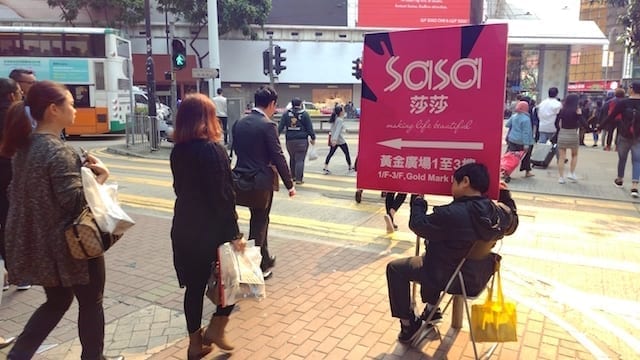
    Sasa International‘s annual attributable profit surged 275.8 percent to HK$218.9 million (US$28 million), as mainland Chinese tourists returned as the borders between Hong Kong, Macau, and Mainland China reopened.

    During the year, turnover rose 24.8 percent to HK$4.37 billion as sales in Hong Kong and Macau, its largest market, soared 31.4 percent to $3.41 billion.

    Mainland China sales grew 9.7 percent to $581.6 million, but Southeast Asia sales fell 1.7 percent to $365.8 million.

    Sales in other markets swelled 126.1 percent to $10.4 million.

    Moving forward, the beauty retailer is looking to introduce exclusive brands via livestream platforms in Mainland China to improve the company’s gross margin profile. It is also planning to expand in Hong Kong and is looking at high-traffic malls in Malaysia and Singapore.

    The company maintains a cautious outlook for China amid continued geopolitical tensions and said it has to consolidate its position in the region before making further moves.

    However, in the early weeks of the new financial year—from April 1 to June 16—the company’s turnover declined 9.5 percent year over year to $812.5 million.