Category: Fashion

Retail News Asia is committed to providing both local and global retailers with the latest Fashion news throughout the Asian market. This on a daily base.

  • Hermes beats rivals with record sales growth and net profit

    Hermes beats rivals with record sales growth and net profit

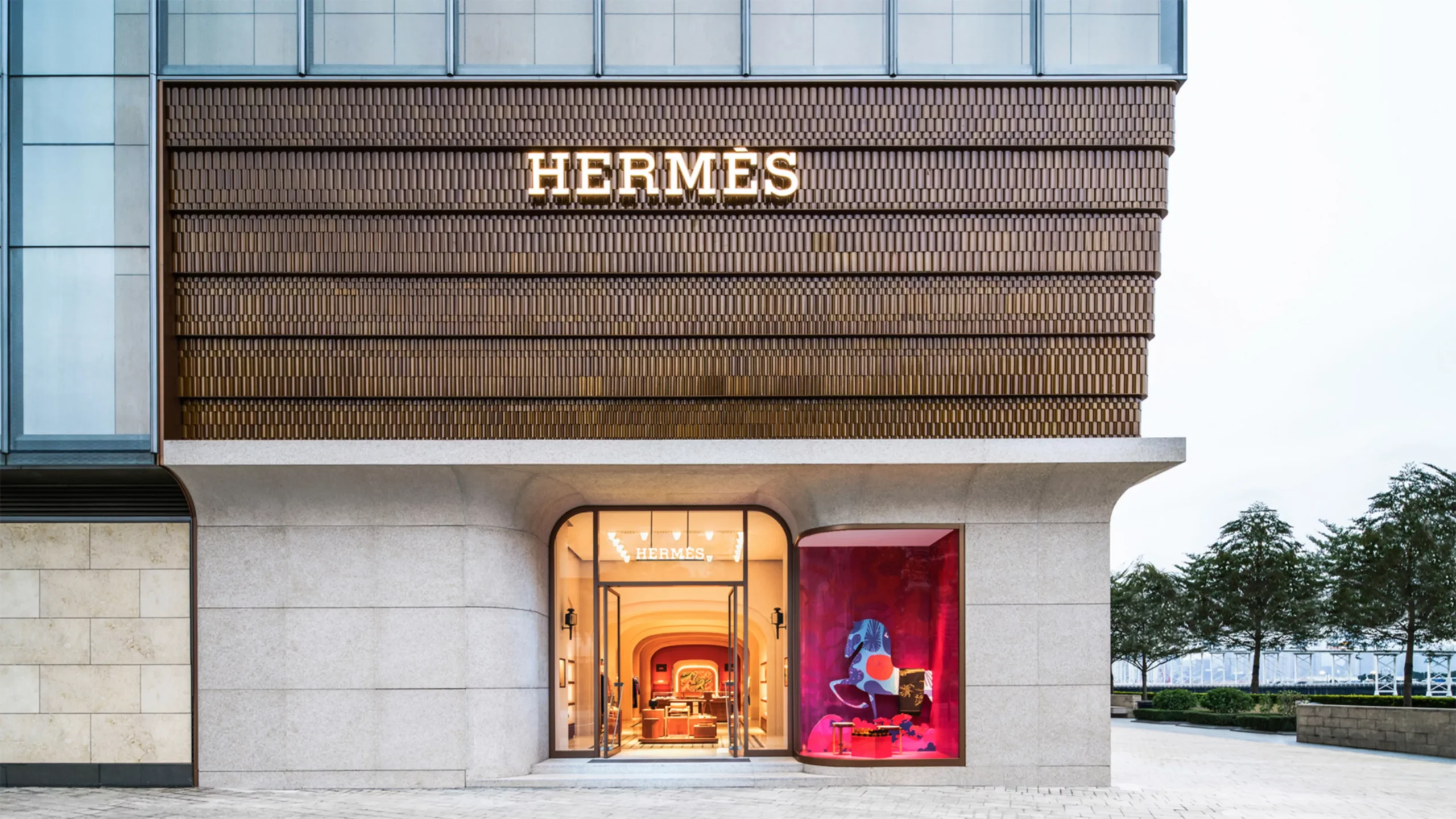
    French luxury house Hermes has reported a 16 percent growth in revenue to $14.46 billion for last year, with net profit surging 28 percent to $4.64 billion despite global demand for luxury goods slowing down.

    Sales in the fourth quarter ended December 30 reached $3.56 billion, up 13 percent.

    “These solid results reflect the strong desirability of our collections and the commitment and talent of the house’s women and men,” said Axel Dumas, executive chairman of Hermes.

    The group’s sales in America and Europe increased by 21 percent and 20 percent, respectively, and in Asia (excluding Japan), by 19 percent, with sales growth in all the region’s markets. Sales in Japan surged 26 percent.

    “In the medium-term, despite the economic, geopolitical, and monetary uncertainties around the world, the group confirms an ambitious goal for revenue growth at constant exchange rates,” the company said in a statement.

    Further reading, Gucci’s parent company, Kering Group, reported a revenue of $21 billion for last year, down 4 percent against 2022.

  • Pandora switches to 100 per cent recycled gold and silver

    Pandora switches to 100 per cent recycled gold and silver

    Pandora has shifted to using recycled silver and gold for all of its jewelry, a move it said will avoid significant greenhouse gas emissions.

    The new strategy aims to reduce 58,000 tons of carbon dioxide every year. According to the company, the carbon footprint of recycled silver is one-third compared to mined silver, while recycling gold emits less than 1 per cent of the carbon emissions from mining new gold.

    The target was previously set for 2025, but has been achieved early thanks to the strong commitment from the firm’s suppliers.

    Suppliers have had to switch their operations to only source materials that are certified recycled according to the Responsible Jewelry Council Chain of Custody.

    Pandora currently produces its jewelry with 97 per cent recycled silver and gold and is expected to increase to 100 per cent from this year’s second half.

    “Precious metals can be recycled forever without any loss of quality. Silver originally mined centuries ago is just as good as new, and improved recycling can significantly reduce the climate footprint of the jewelry industry,” said CEO Alexander Lacik.

    The Copenhagen-based company sells its products in more than 100 countries through more than 6500 points of sale, including some 2500 concept stores.

  • Uniqlo sues China rival Shein over viral bag copies

    Uniqlo sues China rival Shein over viral bag copies

    Japanese fashion giant Uniqlo said Tuesday that it is suing Chinese rival Shein over copycats of a massively popular crossbody pouch dubbed online the “Mary Poppins carryall.”

    Videos of fans praising its deceptively small size have gone viral on social media, with one clip on TikTok of a young woman unpacking numerous large items racking up more than a million views.

    The lawsuit filed in Japan against Shein Japan and two subsidiaries “demands the immediate cessation of sales of the imitation products, and compensation for damages incurred,” Uniqlo said in a statement.

    The nylon Round Mini Shoulder Bag, retailing for $19.90 in the United States, has reportedly become Uniqlo’s best-selling bag ever, repeatedly selling out.

    Shein, founded in 2008 in China and based in Singapore, has quickly conquered the global fast fashion market by catering to young customers through social media.

    Valued at $66 billion last year with revenues reportedly over $23 billion, the online retailer is eyeing a major initial public offering in New York potentially this year, the Wall Street Journal reported in November.

    The firm has been accused of exploiting unpaid labour, obscuring production processes and encouraging overconsumption as it faces the wrath of environmental and human rights activists.

    Last month, Chinese-owned online retailer Temu sued Shein in a US court, accusing it of “mafia-style” intimidation tactics to keep the upper hand in the local market.

    Shein Japan was not immediately available for comment on Tuesday.

  • Levi’s sets date for CEO transition

    Levi’s sets date for CEO transition

    Levi Strauss & Co has named Michelle Gass as president and CEO, effective January 29 next year, replacing Chip Bergh.

    Bergh is set to retire on April 26 next year. He has been elected to serve as executive vice chair of the board until his retirement date, after which he will transition to a senior advisor role until the end of fiscal FY24.

    “It has been an incredible privilege to lead this great company as CEO for the last 12 years. I want to especially thank my team, the board of directors and the family shareholders for all their support through the years,” said Bergh.

    “While I’ve known Michelle for more than a decade, my time working closely with her this past year has given me great confidence that her experience, track record of innovation and impact, and passion for the business will position the company for sustainable, profitable growth and significant shareholder and stakeholder value creation.”

    Gass has been the president of Levi Strauss & Co since January this year. Before that, she held senior positions at Kohl’s and Starbucks.

    “I am honored to be stepping in to lead this iconic brand and company, one that I have deeply admired and respected for many years. Levi’s is more than a denim icon; it’s part of our cultural fabric and an enduring symbol of quality, innovation and progress,” said Gass.

    “I am incredibly excited to lead our amazing team and to reali

  • Thai fashion brand Pomelo opens in Cambodia

    Thai fashion brand Pomelo opens in Cambodia

    Thai omnichannel fashion retailer Pomelo will launch in Cambodia in the first quarter of next year with physical stores and an e-commerce platform.

    The company has signed a partnership agreement with local distributor Zando Group to make its Cambodian debut and the launch is also part of a strategy to expand further within Southeast Asia.

    Pomelo, founded in 2013 by David Jou and Casey Liang, has developed from an internet-only fashion firm to a major Southeast Asian omnichannel retailer, with physical stores in Thailand, Singapore, Malaysia, and Indonesia, as well as online shipping to 50 countries.

    The brand opened its first store in Thailand in 2018 with the Tap, Try, Buy concept, which allows customers to order an infinite number of things online without paying anything upfront.

    Due to its growing economy, rising middle class, and increased demand for high-quality products, Cambodia’s retail sector has attracted major foreign labels in recent years.

    MLB, a South Korean streetwear brand, also opened its first physical store in Cambodia earlier this year, in collaboration with Vietnamese distributor Maison Retail Management International (MRMI).

  • Prada looks to double China business in the medium term

    Prada looks to double China business in the medium term

    Prada is looking to double its business in key luxury market China, Chief Executive Gianfranco D’Attis said on Wednesday, even as the country faces slowing growth in luxury demand and significant economic headwinds.

    “We have a lot of ambitions here in China, to double our business in the upcoming mid-term future. And with that comes also increasing our investments,” D’Attis told reporters in Shanghai.

    He did not give an exact timeframe for the ambition but said increased investments would not necessarily mean a major uptick in the number of stores opening across the country.

    “Not only the number of stores is important to us, but the quality of stores, bigger stores with more categories, with more localized products, with more experiences, with more hospitality, more events, more special capsules,” he said.

    D’Attis, a former Dior executive who took the helm at Prada in January, was speaking at a preview of the brand’s Pradasphere II exhibition in Shanghai. This is the second iteration of a concept that first showed in London.

    As well as a deep dive into the brand’s archive and identity, Pradasphere II, which is showing at a museum on Shanghai’s Huangpu River, also includes a Prada-themed cafe and a gift shop in a repurposed train parked alongside the museum.

    According to D’Attis, this likely won’t be the last time fans of the brand in China get to enjoy something like the Prada cafe, which boasts premium Italian coffee. Developing a hospitality concept is on the agenda for the brand worldwide, including in China, he said, possibly in 2024 or 2025.

    The Prada Group, whose brands also include classic English shoemaker Church’s, reported a 10% rise in third-quarter revenues in November, saying a strong performance in Asia and Europe helped to compensate for weakness in the Americas.

    According to consultants Bain, China is forecasted to account for almost 40 percent of global luxury sales by 2030.

    D’Attis is hopeful Chinese consumers will return to traveling and shopping in greater numbers in Europe, but said that wouldn’t necessarily impact sales at home.

    “Because we have such a different offer abroad than the local offer that we have, we believe that there is no cannibalization,” he said.

    “They will continue to spend locally, they will continue to be treated like kings and queens in China and when they travel, they get a different product… than they can find in China. So it’s very complementary.”

    Prada is not alone in remaining optimistic about China’s post-pandemic market. Even as luxury growth slows in the world’s second-largest economy, spooking investors, global brands from Louis Vuitton to Chanel have all recently staged events in cities such as Shanghai and Shenzhen.

  • Christian Louboutin forms joint venture with ABFRL

    Christian Louboutin forms joint venture with ABFRL

    Christian Louboutin has transferred its current Indian business into a joint venture with Indian fashion brand operator Aditya Birla Fashion and Retail Limited (ABFRL).

    Although the deal’s details have not yet been disclosed, ABFRL said the partners will hold an equal stake. Christian Louboutin’s Group CEO, Alexis Mourot, referred to India as an important market for the business.

    “This partnership reflects our commitment to offering our discerning customers the very best in elegance and style,” said Ashish Dikshit, MD at ABFRL. “It also exemplifies our ambition to develop and shape the future of the luxury market in India.”

    Founded in 2991 in Paris, the French label is known for its signature red-soled shoes. The brand, retailing footwear, leather goods & accessories, and beauty products, has a presence in more than 30 countries.

    Christian Louboutin will join ABFRL’s existing portfolio of international brands, including Ralph Lauren, Hackett London, Ted Baker, Fred Perry, Forever 21, American Eagle, Reebok and Galeries Lafayette.

    Earlier this year, the Indian fashion retail giant acquired a 51 percent stake in TCNS Clothing, which owns ethnic brands W, Aurelia, Wishful, Folksong, and Elleven.

    The country’s luxury market has received an influx of investment in the past few months. SMCP, which owns Sandro, Maje, Claudie Pierlot and Fursac, has recently expanded its reach to India in partnership with retail conglomerate Reliance Brands, betting on the country’s growing luxury market.

    Euromonitor International estimates India’s luxury market to generate US$8.5 billion this year, making it one of the fastest-growing markets in the world.

  • Birkenstock opens House of Birkenstock in Singapore

    Birkenstock opens House of Birkenstock in Singapore

    German shoe manufacturer Birkenstock has launched its House of Birkenstock in Singapore, marking the first of its kind in Asia.

    The store, located in one of the Duxton shophouses, combines the local design elements with its traditional German heritage. It is also Birkenstock’s seventh location in Singapore.

    The store’s entrance includes a traditional Chinese wooden signboard, handmade paper lanterns and the installation of vintage tiles. There is also a 6-meter-high Birkenstock feature wall and a contemporary Peranakan water feature.

    The space offers more than 200 models and is also the first store in Southeast Asia to offer the Birkenstock 1774 collection.

    In addition, Birkenstock plans to introduce different services in the future, including customization and repairs, strengthening its sustainable commitment.

    The brand said it is growing its presence in the APMA (Asia Pacific, Middle East and Africa) region with new store openings in selected locations.

    Birkenstock named Tiffany Wu as MD for Greater China last month to lead the footwear company’s expansion in the region.

  • Italian outerwear label Herno makes global duty-free debut in Korea

    Italian outerwear label Herno makes global duty-free debut in Korea

    Italian luxury brand Herno has made its first presence in South Korea, in partnership with Shinsegae International. The launch also marks Herno’s first presence in a duty-free shop.

    Located on the ninth floor of the Shinsegae Duty-Free Myeongdong branch, the store offers its latest winter collection in a variety of colors, with products made primarily of cashmere, silk, goose down, and nylon.

    “Even though outerwear is expensive, there is a perception that people buy high-quality products and wear them for a long time, so the demand for luxury padding is steadily increasing,” said a representative for Shinsegae International Herno.

    “As the number of travelers leaving overseas, including foreign tourists, is rapidly increasing ahead of the end of the year. We are expecting a good response from the Shinsegae Duty Free Myeongdong branch.”

    Herno, founded in 1948 by Giuseppe Marnezi, is notable for not showing its logos, in line with the quiet luxury trend. The decision to create a duty-free store was made in reaction to South Korea’s emergence as a centre of luxury fashion, the recent growth in international tourists visiting Korea, and the rapid increase in overseas travel by Koreans.

  • Puma says it has successfully converted sneakers into compost in pilot trial

    Puma says it has successfully converted sneakers into compost in pilot trial

    Sportswear company Puma has successfully produced compost from an experimental version of its classic suede sneaker, according to the results of its two-year-long Re:suede experiment.

    The experiment was the first program to launch as part of the company’s “Circular Lab”, an innovation hub led by innovation and design experts to create the future of the its circularity programs.

    The company created 500 pairs of experimental Re:suedes in 2021 using Zeology tanned suede, a TPE outsole, and hemp fibres during the experiment.

    Volunteers from Germany wore the shoes for six months to test their comfort and durability before being sent to a specially equipped industrial composting area operated by the Ortessa Group in the Netherlands.

    After being mixed with household waste and placed into a composting tunnel, the shoes were sprayed with leaching water from earlier composting that contained nutrients and naturally heated from the biological activity and controlled air circulation in the tunnel.

    The composting process took approximately 3.5 months, and the materials that were small enough (<10mm) to pass through a sieve were sold as Grade A compost for agricultural use in the Netherlands. The remaining materials were returned to the composting tunnel until they, too, had broken down to the desired level <10mm).

    “While the Re:suede could not be processed under the standard operating procedures for industrial composting, the shoes eventually turned into compost,” said Anne-Laure Descours, chief sourcing officer at Puma.

    “We will continue to innovate with our partners to determine the infrastructure and technologies needed to make the process viable for a commercial version of the Re: suede, including a takeback scheme, in 2024.”

    The company plans to share its insights in a detailed report so its peers and other interested stakeholders can learn from the experiment and apply the learnings to their initiatives.

    “We learned a lot during the Re:suede trial and how to streamline our industrial composting process to include items that need longer to turn into compost,” added Marthien van Eersel, manager of materials and innovations at Ortessa.

    As a result of feedback from volunteers who wore the Re:suedes for half a year, the company plans to enhance the overall fit of future versions of the shoes by using a new material pattern for the upper and the sock liner.

  • Chanel Korea fined for excessive collection of personal information

    Chanel Korea fined for excessive collection of personal information

    Chanel Korea has been fined for requesting names and contact numbers from waiting customers and their companions.

    The Personal Information Protection Commission announced on Thursday that it had decided to impose a fine of $2.761 on Chanel Korea for violating the Personal Information Protection Act during its 19th plenary meeting.

    Chanel Korea faced criticism for excessive collection of personal information when its boutique in a Seoul department store asked waiting customers and their companions for their names, contact numbers, birthdates, and addresses.

    Chanel Korea argued that it collected these details to prevent proxy purchasing since customers were only allowed to purchase a limited number of items. However, the company received widespread criticism, with people stating that it treated customers as potential criminals.

    The commission concluded that Chanel Korea’s actions violated the Personal Information Protection Act, and the measures taken went beyond the scope of their original purpose of managing waiting customers.

    Additionally, the commission noted that denying services to customers who refused to comply with personal information collection was also considered a violation of related laws.

    An official from the commission stated, “Businesses should collect the minimum personal information needed for their services. This case serves as a reminder that businesses must not refuse services to customers on the grounds that they refused to agree to the collection of personal information.”

  • Worst is over for garment, footwear exports

    Garment and footwear exports have slumped from the beginning of this year but the drops slowed in recent months, signaling a slight recovery in the industries, experts said.

    Statistics of the General Department of Customs showed that the export of garments fell by 12.9% to US$27.7 billion in the first ten months of this year, and that of footwear by 18.3% to $16.4 billion.

    The October figures improved from the previous month, with footwear increasing 30.3% to US$1.7 billion. The garment shipments dropped only 0.1% month-on-month to $2.57 billion.

    According to Duong Thuy Linh, Deputy General Secretary of the Vietnam Cotton and Spinning Association (VCOSA), the difficulty was not unique to the garment and textile industry of Vietnam.

    Global exports dropped due to a decrease in global demand driven by geopolitical tensions, rising inflation in major markets such as the US and the EU, and tightened monetary policy in a number of countries. These moves forced global consumers to trim spending.

    Meanwhile, market requirements for sustainability standards were becoming more stringent, along with fierce competition from other exporters such as Bangladesh and Myanmar, resulting in fewer and smaller orders.

    Linh said that many textile companies were forced to narrow the production scale to 50-80% from the end of last year to the second quarter of this year. However, a slight recovery started from July with most producers resuming full capacity.

    VCOSA forecasts that challenges will remain for the garment and textile industry of Vietnam as low consumption demand will persist in 2024.

    The association projected that the export value will be around $40 billion this year, a drop of 10% compared with the previous year.

    Linh emphasized that the worst is over, adding that with efforts of the government and businesses, as well as increased market demand during major year-end holidays, it is expected that the billion-dollar export industry will recover in the near future.

    According to VCOSA, the consumer price index (CPI) for 2023 estimated at 3.2-3.6% will help stabilize inflation, retain people’s income and avoid purse tightening. Lending rates have been reduced to support enterprises, it said, adding that GDP growth projected at 5% is also a great effort of the government to provide a stable environment for businesses so as to maintain production and overcome difficulties.

    Linh pointed out that Vietnam’s garment industry still had a competitive advantage in terms of labor cost. The industry also benefited from new-generation free trade agreements (FTAs) Vietnam signed with major markets.

    Although local producers face difficulties in meeting sustainability standards, there are good signals as several fiber producers meet international standards such as Global Recycle Standard, Oeko-Tex and BCI. They are switching to using organic cotton, natural fibers and renewable energy in production, she said.

    Economic expert Huynh Thanh Dien said that recent forecasts of big organizations like the International Monetary Fund and the World Bank were better for global economic growth, laying the foundation for optimism about the recovery of consumption demand in major markets.

    He went on to say that new trends are emerging in a new economic cycle, thus enterprises are urged to be proactive in grasping these opportunities.

    Major markets such as the EU are strengthening the application of high requirements and standards on green and sustainable development, Dien said, adding that these are challenges but also opportunities for enterprises to make breakthroughs.

  • Fila records a 35 per cent decrease in revenue

    Fila records a 35 per cent decrease in revenue

    Fila’s parent company Fila Holdings reported overall earnings of US$766.97 million for the third quarter, for which the company credits its global five-year “Winning Together” strategy established last year.

    The group said its operating profit was $71.6 million, boosted by strong sales at subsidiary Acushnet.

    Acushnet’s quarterly revenue increased by 3.3 percent year-on-year to $602.84 million due to strong demand for Titleist golf balls, as well as strong sales of its newly launched Titleist golf clubs and a higher average selling price (ASP).

    Meanwhile, Fila reported $163.44 million in quarterly revenue, a 35.1 percent reduction year-on-year.

    Fila Holdings is paying out a special dividend for the second year in a row, despite the Fila brand’s strategic transition obstacles. The company’s long-term commitment to increasing shareholder value is an important component of its Winning Together strategy.

    “In the face of a challenging business environment, we are striving to improve shareholder value alog with profitability in our main business,” said Fila Holdings CFO Ho Yeon (Aaron) Lee. n

    “We recorded solid consolidated quarterly earnings based on the growth of Acushnet, while we remain committed to our long-term goals with the Fila brand.”

    Fila is enhancing its position as a representative tennis brand, the company said, by participating as an official sponsor in UTS Seoul. This new concept tennis event will be staged in Asia for the first time at the end of this month.

  • Chloe opens new boutique at Changi Airport

    Chloe opens new boutique at Changi Airport

    Chloe has partnered with Heinemann Asia Pacific to launch a new boutique in Changi Airport’s Terminal 2 transit area.

    The launch, which marks Chloe’s first entry into Changi Airport and Heinemann’s return to Changi after an eight-year absence, includes a wide selection of products ranging from leather goods to shoes and accessories, as well as the Fall – Winter 23 collection.

    According to the brand, the space is devoted to both Maison’s founder, Gaby Aghion, whose home of Egypt is mirrored in the warm desert palette, and to former creative director Gabriela Hearst – through earthy textured tones that remember her early years in Uruguay, South America.

    “We are delighted to be back at Changi Airport, as the retail partner of a brand as desired and as committed to their values as Chloé,” said Heinemann Asia Pacific CEO Marvin von Plato.

    Chloe collaborated with pre-loved clothes marketplace Vestiaire Collective and digital ID provider EON earlier this year to develop the Chloe Vertical, an innovative circular economy project with sustainability at its core.

  • Gentle Monster opens its first Australian store

    Gentle Monster opens its first Australian store

    South Korean luxury eyewear brand Gentle Monster has entered the Australian domestic market with its first store opened inside David Jones’ Elizabeth Street, Sydney site.

    Gentle Monster David Jones features the brand’s signature kinetic art installation ‘Giant Head’, allowing visitors to “experience mysterious emotions through its indecipherable facial expressions which seem to penetrate the essence of the viewer”. Overseeing all Gentle Monster’s operations in Australia, Bluebell Group plans to open a flagship store next July.

    “This first opening in Sydney’s domestic market is a significant milestone for both the brand and Bluebell,” said Nelly Ngadiman, MD of Bluebell Southeast Asia & Australia. “It is a recognition of a close, successful partnership.

    “The brand’s uniqueness and disruptive nature in the fashion eyewear category enhances our teams’ commitment to retail excellence even further.”

    The launch is in partnership with retail brand operator Bluebell Group, following last year’s opening of Gentle Monster’s first travel retail airside space in the Southern Hemisphere at Sydney airport.

    Gentle Monster has recently expanded in Asia Pacific to further capitalize on the region’s growing luxury market. The eyewear brand opened its first store in the Philippines last month at Shangri-La The Fort in Bonifacio Global City, after entering Thailand with the first store opened in Bangkok’s EmQuartier earlier this year. The first Gentle Monster store in Malaysia is set to open at Kuala Lumpur’s luxury premise The Exchange TRX.