Category: Fashion

Retail News Asia is committed to providing both local and global retailers with the latest Fashion news throughout the Asian market. This on a daily base.

  • Esprit ‘on the right track’

    Esprit ‘on the right track’

    Hong Kong listed fashion group Esprit says its full year financial loss masked a positive phase of its turnaround program.

    Full year turnover fell 11.5 per cent (or 19.8 per cent in Hong Kong dollars) and the company posted a loss of HK$3.683 billion, largely due to impairments.

    In its profit announcement the company described the year as “exceptionally challenging” with trading affected by both internal and external factors.

    “Nevertheless, from a strategic perspective, it has been a year of significant achievement as the group completed the most vital and demanding phase of our turnaround plan. We have successfully installed the foundation enabling us to enhance our products and optimise sales performance across all channels (online, offline, retail and wholesale).

    “It is encouraging to see the first signs of a positive sales trend for our new Vertical Products’, which gives us confidence we are on the right track to restoring the competitiveness of Esprit.”

    The group blamed the sales decline on reduced store numbers (down 8.8 per cent), an unusually warm winter in Europe which impacted on Autumn/Winter sales volume and prices; declining apparel sales in Germany (the total market shrunk in nine of 12 months);  internal restructuring and unfavourable exchange rates.

    Group CFO Thomas Tang said that although the challenging market had considerable impact on Esprit’s turnover, its gross margin remained stable and savings were achieved in most cost lines of our regular operations.

    “With our priority on cash preservation over the past two years, the Group is on a sound financial footing, with a healthy balance sheet that we intend to leverage to decisively execute the strategies that shall drive top line growth in the near future.”

    Esprit is debt free.

    Tang said the last financial year was devoted to the implementation of the most demanding, yet vital, part of the group’s strategic plan: the ‘Transformation’ phase. During this phase, a vertically integrated business model (‘Vertical Model’) was introduced within Esprit to enhance the speed and efficiency of its product development and supply chain processes, and thereby significantly improving the design and value for money of its products.

    More specifically, the following have been implemented:

    • Lean supply chain management (from over 350 to below 230 suppliers).
    • Category management teams (all product divisions transformed).
    • New merchandising model (buying and merchandising fully centralised).
    • Reduction in product range (30 per cent to 40 per cent reduction of options).
    • Seasonal product calendar (from 12 monthly collections to four seasons).
    • Fast-to-market product development (two to three months lead time in the Trend Division and the fast-reaction capsules in all other divisions).
    • Stock management optimisation (pending additional stock replenishment capacity and capabilities in the central distribution center).

    “More importantly, the group has observed progressively positive developments in terms of product sales performance following the introduction in February 2015 of the Spring/Summer 2015 collections, the first ones developed under the Vertical Model: Retail turnover decline has narrowed consistently over each subsequent quarter during the year (Q1 -15.0%; Q2 -10.3%; Q3 -8.3%; Q4 -6.8%).

    Same store sales rose 4.1 per cent in the quarter to August and sales in Germany, its largest market, outperformed the market in each of the last three months.

    Retail sales of the Esprit Women divisions recorded 5.3 per cent year-on-year growth for the last three months and the Trend Division (representing 2.6 per cent of group turnover), reported full year turnover growth of 29.7 per cent.

    Esprit chairman Raymond Or said the group maintained a clear focus to execute the most complex and critical phase of its transformation in the year past, and made good progress despite a difficult operating environment.

    “The growth phase that we are now embarking upon is not without its challenges, but there is much hope and excitement across all levels of our organisation as we leverage the strong foundation that we have laid over the last two years. Every successful journey takes time, and we believe that we are nearing our final destination – which is to restore the long term competitiveness of our group.”

  • Lao Feng Xiang plans 20 Hong Kong stores

    Lao Feng Xiang plans 20 Hong Kong stores

    Lao Feng Xiang, the Chinese jewellery brand few in the west have ever heard of, is planning to open 20 stores in Hong Kong.

    Lured by the prospect of cheaper rents in high profile locations as Hong Kong’s luxury sector enters a decline, Lao Feng Xiang sees the foray as an opportunity to build its brand awareness outside the mainland.

    Lao Feng Xiang, controlled by the Shanghai Government, has a 167 year history in the mainland – and has a 3000 strong store network. It entered Hong Kong in May and now has two stores trading. Marketing manager Wang Ensheng told Bloomberg that as many as 20 will be trading within a few years.

    “The fact that Lao Feng Xiang opened stores in Hong Kong boosted our reputation,” Wang told Bloomberg in a telephone interview. “Mainland consumers know that we are now a player in this international jewelry hub.

    “This year is the best time to enter Hong Kong, an opportunity that we have waited for years.”

    The first Lao Feng Xiang store opened in Tsim Sha Tsui, an 80sqm boutique which sold more than HK$100 million of jewellery on its opening day.

    Shanghai flagship store in the year 1999

    “Hong Kong is a key market in our internationalisation strategy. We provide more diversified selections at the Tsim Sha Tsui store than any of our 2800 stores on the mainland,” said Wang at the time of the opening.

    “The logic is simple – we want to attract more young people to our fold,” he said.

  • Lacoste India targets flyers

    Lacoste India targets flyers

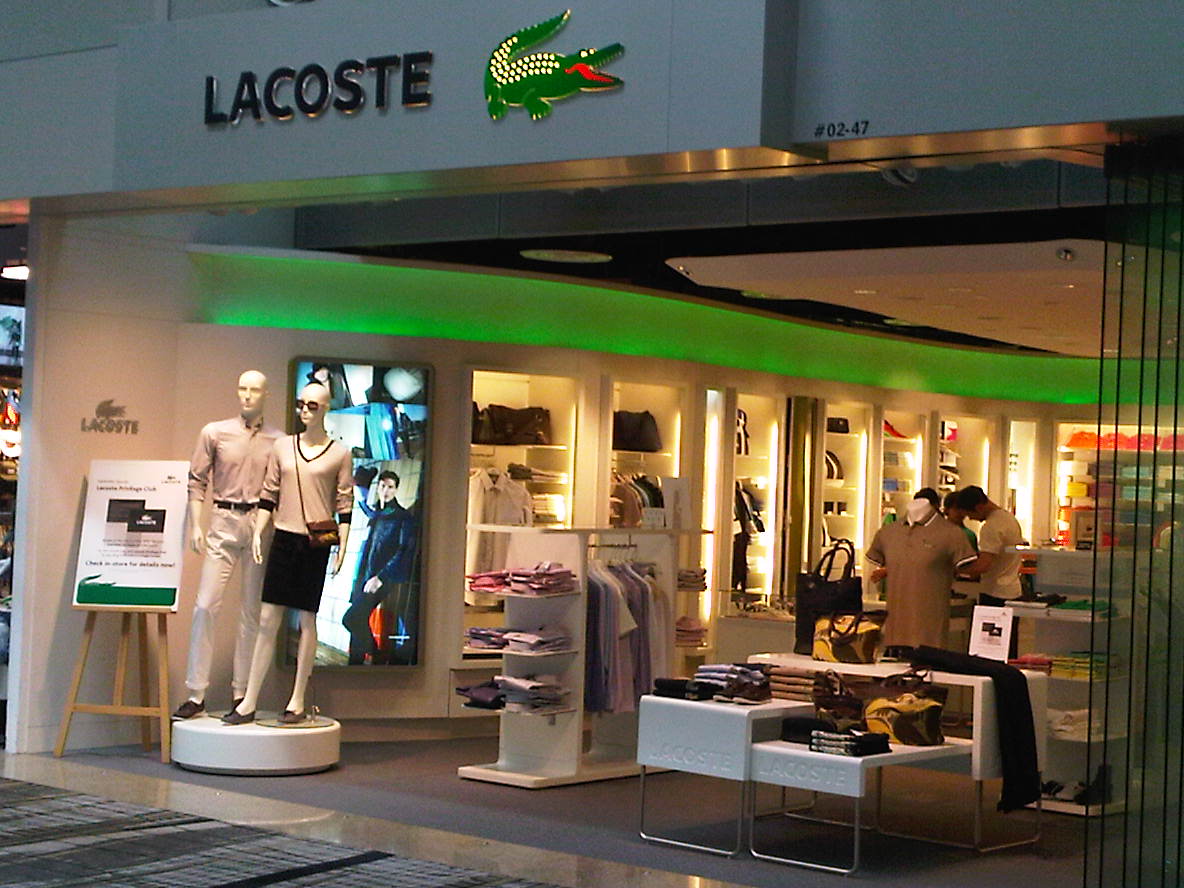
    French apparel brand Lacoste hopes to score more impulse sales by opening stores in Indian airport terminals.

    Lacoste India plans to open three new stores this year in Mumbai and Hyderabad airports and another five in shopping centres as it gradually builds its footprint in tier one cities.

    “We will be opening one outlet at the Hyderabad domestic terminal and at Mumbai airport,” Lacoste India director & CEO Rajesh Jain told PTI in an interview.

    “The new retail stores at airports would start contributing up to seven per cent of our total sales from next financial year.”

    Lacoste already operates a store inside Bangalore Airport. It is eyeing Kochi and Delhi as well.

    The company currently operates 46 stores in 18 Indian cities.

  • Denim brand joins Global Brands portfolio

    Denim brand joins Global Brands portfolio

    Hong Kong-based Global Brands Group has signed a 10 year licensing agreement covering two North American denim brands.

    In a joint venture between Iconix Brand Group and Buffalo International Global for the Buffalo David Bitton and i Jeans by Buffalo labels.

    Under the agreement, Buffalo David Bitton and i Jeans by Buffalo will join Global Brands’ portfolio of fashion and lifestyle brands, with Global Brands to design, produce and distribute products across both brands’ core categories.

    Global Brands CEO and vice chairman Bruce Rockowitz said with the addition of the Buffalo brands, “we have taken another significant step to establish Global Brands as a leader in the denim category”.

    “We are focused on categories where we want to be a key player and achieve scale.  Denim is one such category which we are excited about and where we see excellent potential for growth. We’re seeing a revival of denim as a fashion essential and believe that it will continue to trend strongly,” he said.

    Founded in Montreal, Canada and with a 30-year heritage, the Buffalo brands are known for a long-standing tradition of trend right, quality clothing and accessories. The brands are leaders in their respective channels of distribution, offering multiple denim styles and a full fashion collection that spans a range of men’s, women’s and children’s products, including denim jeans, pants, shirts, sweaters, jackets, dresses and other apparel, as well as accessories, suits, bags, sleepwear and small leather goods. The products are distributed through multiple channels, including better department stores, as well as fine specialty stores throughout North America.

    Gaby Bitton, chairman, Buffalo International, said: “This long term strategic partnership with Global Brands will strengthen the Buffalo David Bitton and i Jeans brands around the world. The JV will continue its extensive marketing support that have helped make the brands leaders in the category.”

    This is the second long-term licensing agreement signed by Global Brands in the denim space, following a similar agreement with the Joe’s brand this month.

  • Chinese shoppers still spending on luxury goods

    Chinese shoppers still spending on luxury goods

    China’s share market plunge and currency devaluation have not resulted in Chinese shoppers cutting back their spending on luxury goods as had been feared, a top-ranked HSBC analyst said this week.

    Mr Erwan Rambourg, HSBC Global’s co-head of consumer and retail, said the declines in stock prices and in the yuan need to be put in context.

    “The Shanghai composite index has been down roughly 40 per cent since its peak. On a 12-month view, if you had invested 12 months ago, you would still be up about 30 per cent,” he said.

    And while the yuan’s devaluation of about 2 per cent last month instantly made everything more expensive for travelling Chinese shoppers, the currency is still up in value relative to the euro compared with last year, he noted.

    “Purchasing power of the Chinese in Europe is still a lot stronger today than it was just 12 months ago,” said the Hong Kong-based Mr Rambourg, who has been covering the luxury and sporting goods sectors for 10 years.

    “The reason we look at euro-yuan and not (the US) dollar-yuan is because Chinese consumption abroad is mostly taking place in continental Europe, places like France and Italy. So obviously I don’t see that as a big negative.”

    It is the appreciation of the euro that could be a bigger issue than the decline in Chinese equity markets, Mr Rambourg said.

    He said the recent correction of the equity markets in Asia “has had a much bigger impact on Hong Kong than it has had on mainland China”.

    Reuters reported last month that Hong Kong retail turnover fell for the fifth straight month in July, as a slowdown in tourist arrivals further battered sales of big-ticket items such as jewellery and watches, while a plunge in the stock market hurt consumer sentiment.

    Mr Rambourg believes that luxury sales fell in Hong Kong because Chinese spenders have moved to more “fashionable” destinations such as Japan, South Korea and Taiwan.

    HSBC Global Research’s latest report estimated about 70 per cent of luxury revenue in Hong Kong comes from Chinese consumers.

    One of the issues in Hong Kong and Macau is the lack of diversity – Hong Kong is all about shopping, Macau is all about gaming, and there is not a lot that is offered beyond that, said Mr Rambourg.

    But when Chinese tourists go to Japan, they return home to tell people about the culture, creating a snowball effect which goes beyond just the price arbitrage, where some destinations become fashionable and other destinations become less fashionable.

    About 10 per cent of luxury revenue in Japan now comes from Chinese tourists and Mr Rambourg believes this figure will rise as it did in South Korea, which saw an increase from 10 per cent to 30 per cent.

    About 25 per cent of luxury revenue in Singapore comes from Chinese tourists.

    Mr Rambourg suggested that Singapore should look at providing more diversity in terms of the brands represented here in order to draw in more Chinese shoppers.

    While there will be ups and downs, he foresees Chinese consumers becoming dominant over the next decade.

    About 35 per cent of today’s luxury consumers come from China and the figure could double over the next 10 years, he said.

  • Siyaram announces joint venture with Italian lifestyle brand Cadini

    Siyaram announces joint venture with Italian lifestyle brand Cadini

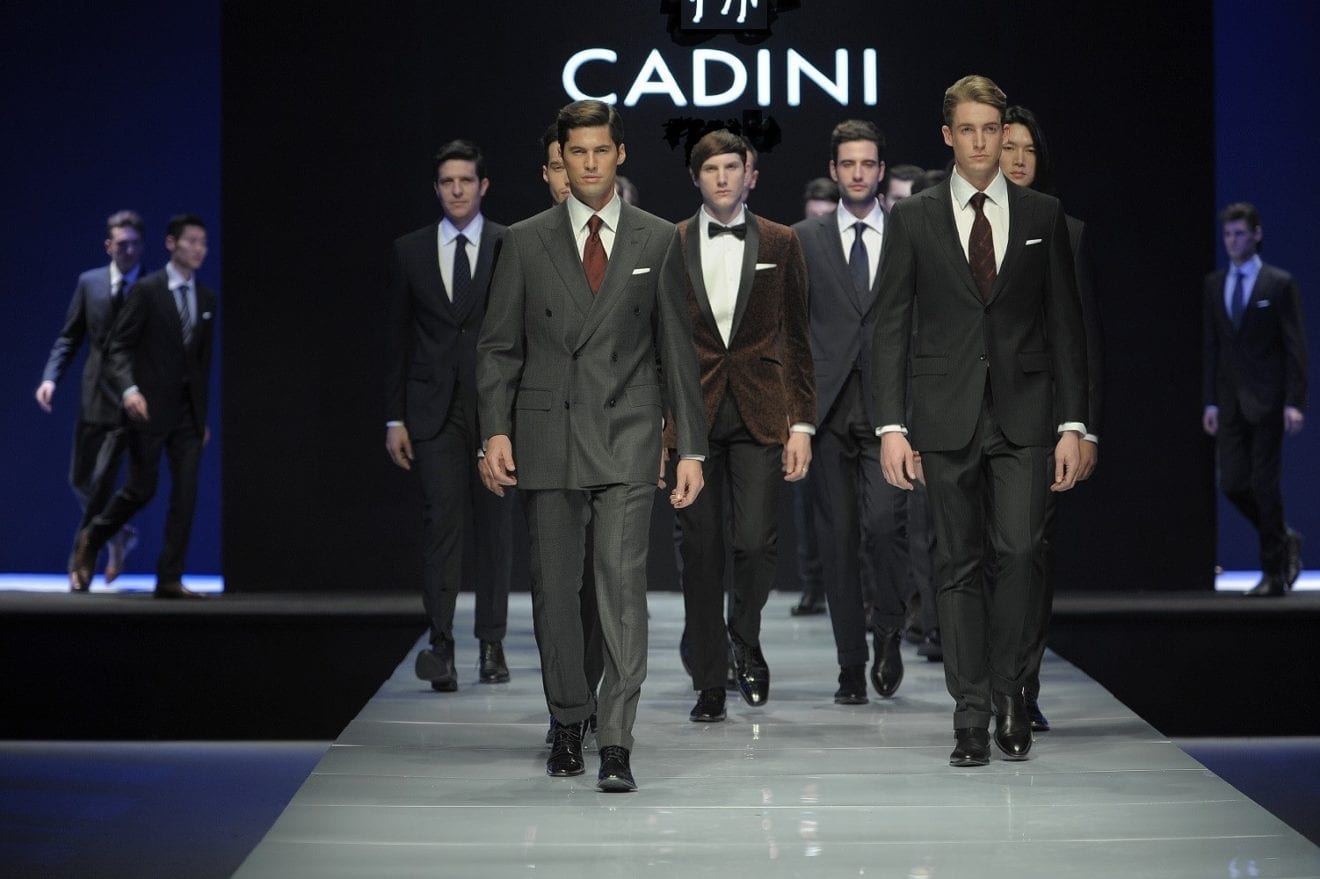
    Domestic textile player Siyaram Silk Mills today announced joint venture with leading Italian lifestyle brand Cadini.

    “We have entered into joint venture with leading Italian lifestyle brand Cadini. We have bought ownership rights to manufacture and market Cadini brand for its fabric segment in India, Sri Lanka and few other countries in Middle East,” Siyaram Silk Mills Chairman and MD Ramesh Poddar told PTI here.

    “We want to give Indian consumer the Italian feel at a reasonable price by customizing it to our market. Some products will be imported from Italy, but a major portion will be from India. We will bring the Italian innovation and manufacture it over here,” Poddar said at the launch of the brand in India without disclosing the consideration.

    He added, “Siyaram’s currently has annual revenue of around Rs 1,550 crore and expects to grow by 10-15 per cent annually this year. We expect Cadini to contribute around Rs 100 crore of our total revenues in the next financial year.”

    Cadini will also help Siyaram’s in sourcing and designing. The brand will be available in India in superior fabrics followed by garments and accessories, while the company also plans to open its Cadini exclusive outlets and shop-in shop in the near future.

    Expecting a great response from the humongous and fast growing Indian market Cadini Brand Director Daniella Nicolle said, “This venture has not only provided us a platform to showcase our collection to the Indian consumer but has also helped us to discover various avenues in terms of global marketing.”

    Cadini derives 95 per cent of its revenues from international market and only 5 per cent from Italian market, Faralli said.

    Siyaram’s has spent Rs 80 crore to modernize its manufacturing facility this year and will spend around Rs 70 crore next year funded through internal accruals as well as government incentive Textile Upgradation Fund Scheme (TUFS), Poddar said.

    He added, this will enable the company to add 10-15 per cent more to its monthly sales of 65 lakh metres of fabric per month.

  • Superdry to launch in China

    Superdry to launch in China

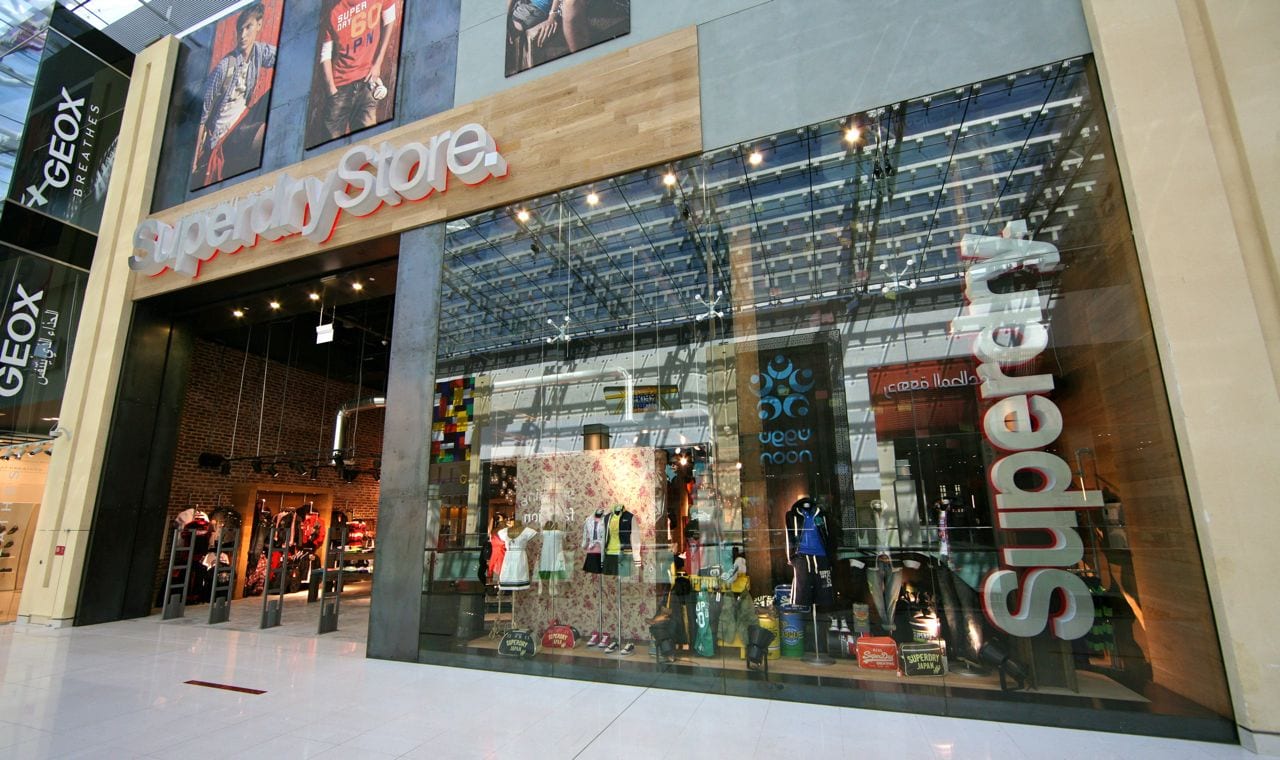
    Superdry was paraded down a catwalk in Beijing to officially launch the company in China.

    The launch event showcased some of the key product lines at the British Embassy Residence.

    The Rt Hon Sajid Javid MP, Secretary of State for Business, Innovation and Skills was at the event, as well as a strong representation of a number of current and former Chinese government officials.

    Mr Javid said: said: “We are delighted to see British brand Superdry join forces with Trendy International Group as they continue to further their international expansion in mainland China.

    “For decades, fashion has been at the core of British culture, something Superdry knows only too well. 2015 marks the UK-China Year of Cultural Exchange and both markets have a great deal they can share with each other.

    “Chinese consumers have a huge appetite for British brands so Superdry is well placed for success. Good luck to both SuperGroup and Trendy International as they embark on this auspicious partnership.”

    The agreed partnership to bring Superdry, the premium British lifestyle brand to China, will see an investment of up to £18 million (180 million RMB), on a 50:50 basis across a minimum period of 10 years. The joint venture was evolved from an initial introduction from the UKTI.

    The Chinese apparel market, with a current total retail value of $351 billion, presents an immense opportunity for the Superdry brand, particularly as it is forecast to become the largest apparel and footwear market in the world, overtaking the US this year.

    Euan Sutherland, CEO of SuperGroup, said: “Today marks a significant milestone in our joint venture with Trendy.

    “We are excited at the prospect of entering this market with such an established and experienced partner. We look forward to gaining a deep understanding of the Chinese market and customer, and this launch marks another significant step in Superdry becoming a global lifestyle brand.”

    The partnership with Trendy, a highly experienced retailer which already operates 3000 stores across China, will offer invaluable market insight and knowledge.

    Trendy will utilise their expertise and knowledge of the Chinese market and consumer to manage the joint venture, with a focus on operations and logistics in China, whilst SuperGroup will provide support from the UK, concentrating on brand guidance and merchandising.

    Both Trendy and SuperGroup believe Superdry has the potential to flourish in this market as it already has the appropriate product offering, pricing model and infrastructure for effective delivery in China.

    For Superdry customers it is about attitude, not age nor demographic. The Superdry product is contemporary and fuses vintage Americana and Japanese-inspired graphics with a British style. With an increasing demand for British brands abroad, Trendy sees Superdry as well-placed.

    Jacky Xu, founder and chief executive of Trendy International Group said: “We are delighted to be working with the SuperGroup team to launch Superdry in China.

    “Superdry is an innovative British brand, which we believe will sit well amongst our existing brands and have great appeal in the Chinese market.

    “Today, there is an increasing shift in consumer tastes in China, as individuals are moving away from the luxury brands to those more influenced by pop culture.

    “We believe Superdry is well placed to take advantage of this shift, presenting an excellent opportunity for our new partnership.”

  • UNIQLO Opens World’s First MAGIC FOR ALL Store in Shanghai

    UNIQLO Opens World’s First MAGIC FOR ALL Store in Shanghai

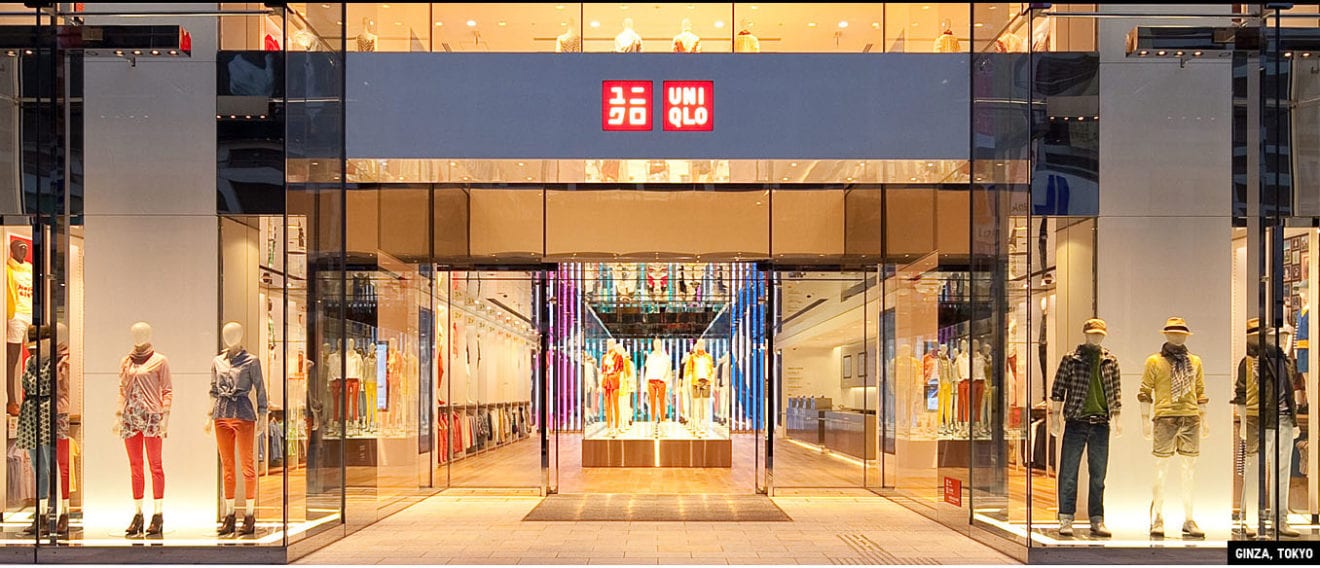
    UNIQLO is set to open its MAGIC FOR ALL store on the fifth floor of the UNIQLO Shanghai Global Flagship Store on Huai Hai Road, its largest UNIQLO store in the world, on September 27. The MAGIC FOR ALL line of LifeWear apparel is part of a global collaboration with Disney Consumer Products that aims to surprise and delight customers of all ages.

    Customers begin their MAGIC FOR ALL journey at the store’s main entrance, where a 180-centimeter-tall Mickey Mouse statue and 100 Mickey Mouse figurines await. Known as the Mickey 100 Series, the inspiration for these iconic figurines was taken from 100 exclusive new designs for Mickey Mouse, which will be on display for the first time in Shanghai. Fifteen of the designs were reproduced on colorful UTs (UNIQLO T-shirts), including five designs for children.

    Inside the MAGIC FOR ALL store, customers are treated to a series of unique and immersive experiences found only at UNIQLO in Shanghai. Tinker Bell can be seen flying across wall monitors accompanied by music, and in a world first, the store features Shout Mickey, a special area that captures joyful moments. When a customer shouts ‘Mickey’ toward the lens of a digital camera, the moment is captured and a digital image can be sent to the customer’s mobile device as a memento of the visit. The store also features a Future area, showcasing UNIQLO’s UT range of fashions, and the Colorful Fairy Tale realm for little princesses.

    Unique and innovative being central to the overall shopping experience, the store is the first in China to offer MAGIC FOR ALL options for UTme!, a custom T-shirt design service, and for MY UNIQLO, which enables customers to add special touches to items of clothing.

  • Spyder launches in Korea

    Spyder launches in Korea

    Ski and sportswear brand Spyder has launched in South Korea with an all-new product line available in freestanding stores and shop-in-shops.

    An accelerated retail rollout is planned with 25 stores opening across the country by the end of 2015.

    “We are excited to be working with Global Brands to bring Spyder to South Korea, one of the world’s most fashion-forward and trendsetting markets,” said Jamie Salter, chairman and CEO of Authentic Brands Group and owner of the brand.

    “Spyder is highly regarded and we are confident that the brand will flourish in the country.”

    Designed for the ‘style-seeking South Korean consumer’, both the men’s and women’s collections draw from the core DNA of the brand, fusing elements of performance and fashion.

    “We see tremendous equity in the Spyder brand and its ability to translate across key markets in Asia,” said Bruce Rockowitz, CEO and vice chairman, Global Brands Group.

    “We look forward to replicating the success we have achieved in other markets to South Korea, through the roll out of a number of exciting brand and category extensions.”

    Spyder is featured in shop-in-shops at fashion hot spots including Galleria Department Store, Hyundai Department Store, Lotte Department Store and AK Department Store. The brand also launches with freestanding stores in Seoul, Daegu, Gumi, Incheon and Sokcho. Spyder will be promoted in a 360 degree campaign that includes national Print, Out of Home, Digital, Social, and TV promotion beginning this month.

    Spyder is described as one of the world’s most recognisable and credible outdoor sportswear brands, focused on enhancing the ski experience both on and off the mountain. Originally founded by David Jacobs, coach of the Canadian Ski Team and Bob Beattie, coach of the United States Ski team, Spyder’s roots run deep in the ski community. The brand has been the official sponsor of the US Ski team since 1989. Spyder offers technical ski, fitness, and lifestyle apparel and accessories for men, women, and children. The highly sought after brand is available in department stores, sporting goods stores, and specialty retailers throughout North America, Europe, the Middle East and now South Korea.

  • Issey Miyake opens in Hong Kong

    Issey Miyake opens in Hong Kong

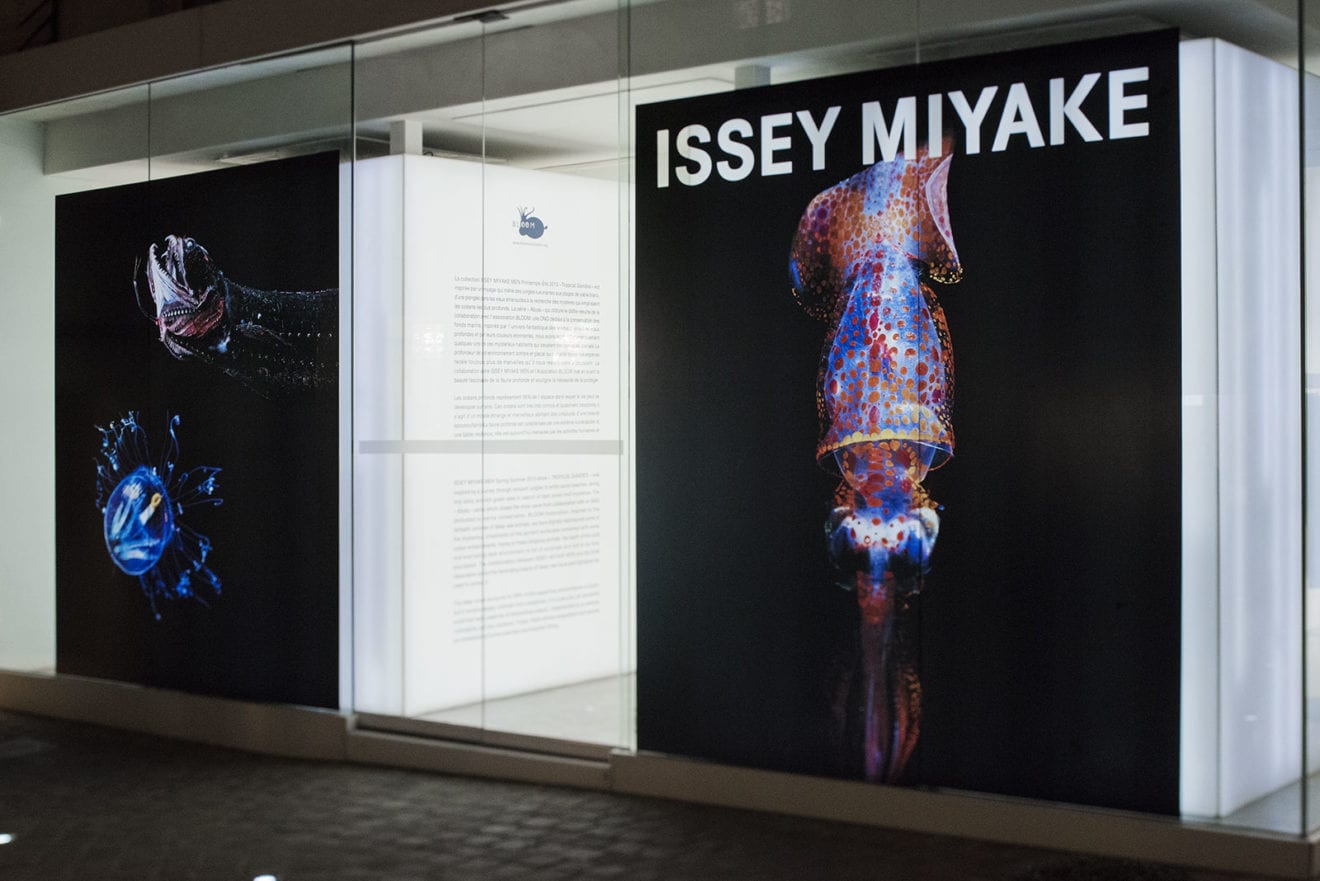
    Japanese luxury fashion designer Issey Miyake has opened its first store in Hong Kong.

    The Issey Miyake Hong Kong boutique is located on level 1 of the Ocean Centre at Harbour City on Canton Rd in Tsim Sha Tsui.

    Bao Bao Issey Miyake - Habour city 1

    Womenswear, menswear accessories, shoes – and, of course, the brand’s famous fragrances – are all on sale in the boutique which also offers shoppers a unique outlook across the harbour.

    The brand is known for it minimalist designs and the new Hong Kong boutique captures that philosophy in its design with merchandise displayed in a gallery like setting and simple black and white LED signage at the front.

    BaoBao Issey Miyake - Habour city


    Issey Miyake was born in Hiroshima and studied graphic design in Tokyo before working in Paris and New York. He returned to Tokyo in 1970 and founded the Miyake Design Studio to produce high-end women’s fashion.

    Over the years he has developed spin-off brands and expanded into fragrances in 1992.

    His flagship store is in Osaka.

  • Lama Hourani opens Shanghai boutique

    Lama Hourani opens Shanghai boutique

    Jordanian jeweller Lama Hourani has opened an exclusive boutique in Shanghai.

    But it’s been positioned as so exclusive, customers cannot enter without a prior appointment.

    Lama Hourani’s exquisite silver and gold jewellery creations are creating a stir in Asia, underpinning her rising fame as a celebrity designer in Asia. Her creations are worn by royalty, the glitterazzi and even the Pope.

    The new store is on the ground floor of a historic house in Shanghai’s French Concession. Its decor is like something from a book celebrating Arabian design: gold and marble plinths, deep blue carpet, black and white images on the walls depicting minorities, gold framed mirrors.

    “I opened [the boutique] because people in China were just so curious…The handmade aspect is special, and it’s a major plus for me to have a proper presence here.”

    Hourani these days lives in Shanghai so it is no surprise she chose the vibrant, modern city for her first retail presence. But she is also a regular visitor to Hong Kong, presenting exclusive curations of her designs to customers – again by appointment only.

    “My clients are from all over the world and are usually independent, self-established, culturally curious women… China has so much of that,” she said in a recent interview.

    “If you are talking about demographics, those who are well-travelled, the crème de la crème, they all want to wear a statement piece that says something, rather than something that makes them belong somewhere. A lot of customers in China are beyond that first stage.”

    In Hong Kong, Lama Hourani’s luxury jewellery is sold through Joyce and the website Plukka.com – as well as her own website.

    Having established a solid reputation in jewellery, Hourani says her next focus is to expand the brand into other categories: homewares is an obvious first extension.

  • Bossini strong in retail storm

    Bossini strong in retail storm

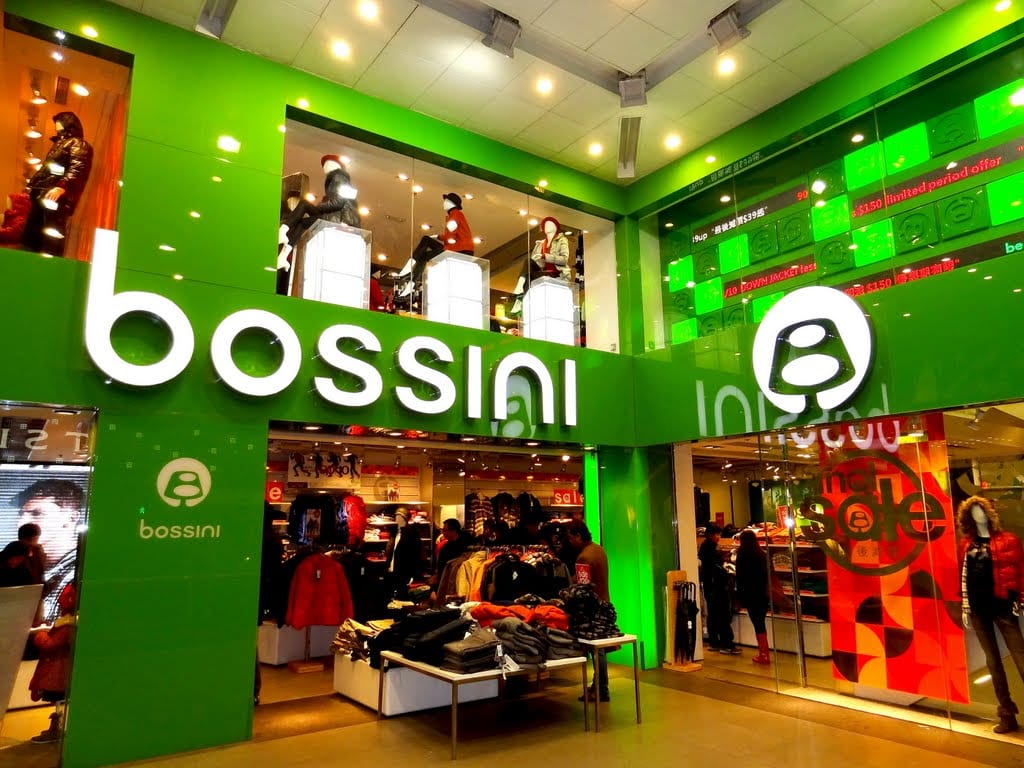
    Apparel retailer Bossini has weathered Hong Kong’s retail downturn by achieving strong growth offshore.

    The Hong Kong based company has revealed its annual results in the year to June 30, reporting a mere one per cent decline in sales to HK$2.523 billion, and a three per cent decline in gross profit to HK$1.264 billion with gross margin down one per cent to 50 per cent. profit attributable to shareholders fell nine per cent.

    “During the fiscal year 2014/15, despite facing challenging retail conditions in Hong Kong and Macau, its segmental business, which includes the export franchising operations, registered record-high sales with flat same-store sales growth for the directly managed stores,” the company said.

    “The operations in mainland China, Taiwan and Singapore all experienced improvements in segment results, resulting from the continuously improving shop productivity and stringent cost control measures. Mainland China segment achieved six per cent same-store sales growth and also recorded nine consecutive quarters of positive same-store gross profit growth. Taiwan segment saw a same-store sales growth of seven per cent, representing seven consecutive quarters of positive same-store sales growth.”

    Bossini ended the year with a presence in 35 countries and regions and a store count of 938 (down 24). Of those, 257 were directly managed stores and 681 were franchised.

    One factor in the group’s improved operational efficiency was a small reduction in inventory turnover timetable from 84 days to 83.

    Looking forward, CEO Edmund Mak said the group will benefit from lower production cost if US dollar remains strong versus Renminbi.

    “Besides, it is estimated that rents will fall in certain areas in Hong Kong as retailers are generally suffering from sales downturn, which could help partially offset the group’s ongoing difficulties. The group will be proactive in taking stringent measures to control costs, including rental costs, and continue to improve shop productivity. The group aims to remain flexible and responsive to changing market conditions.”

    Mak said Bossini sees grounds for “considerable optimism” in its overseas operations.

    “Therefore, we will focus more on expanding operations outside Hong Kong and Macau, in order to achieve a more balanced portfolio. Furthermore, we will continue to expand kids’ line, particularly in Mainland China, while launch co-branded and licensing programmes of clothing and accessories via partnerships that reinforce the core brand value ‘be happy’, striving to build “bossini”’s reputation as a vibrant, valued and competitive go-to brand.”

  • Boucheron Singapore store opens

    Boucheron Singapore store opens

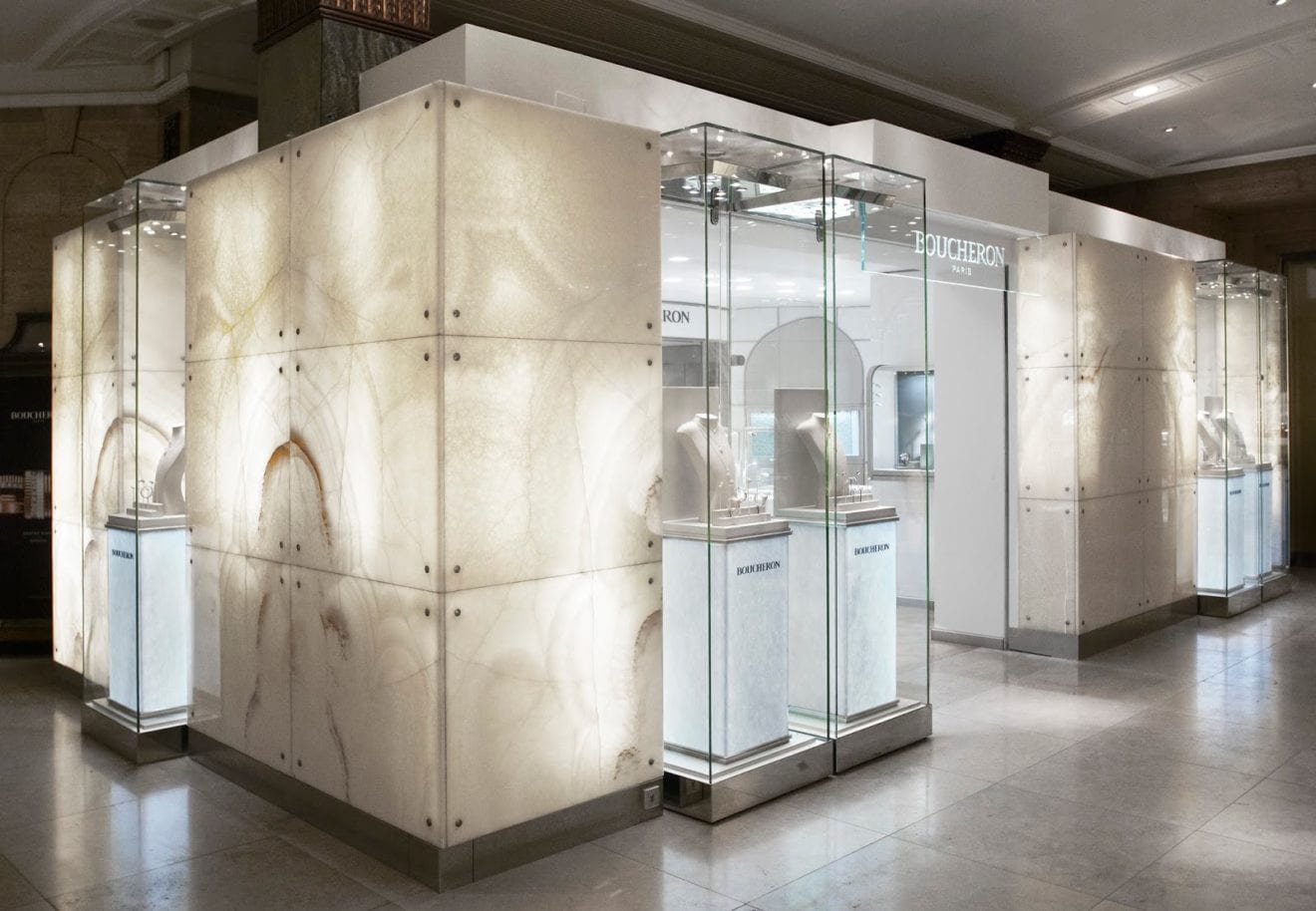
    Paris jeweller Boucheron has opened its first store in Singapore.

    Boucheron Singapore is among several new boutiques recently opened inside The Shoppes at Marina Bay Sands.

    Designed to reflect the famous jewellery brand’s Parisian flagship boutique at 26 Place Vendome, the Singapore store has a sumptuous, luxurious feel to highlight the timeless, elegant nature of its jewellery creations.

    The boutique was opened with a cocktail function early this month where more than 100 guests got the chance to view an exclusive Boucheron jewellery collection flown in from France.

  • Grana opens first permanent store

    Grana opens first permanent store

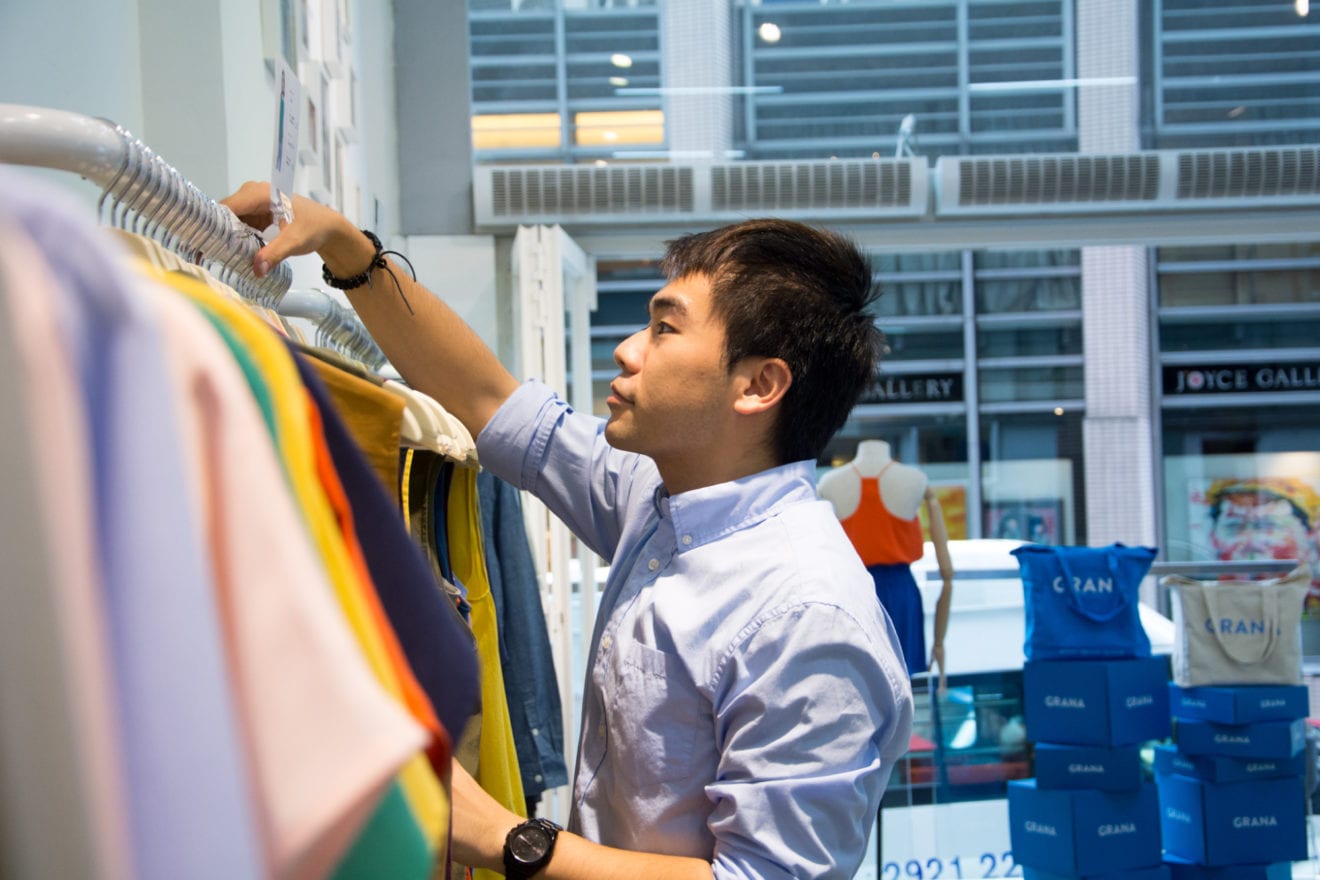
    Online fashion startup Grana has opened its first permanent physical store as it tries a new way of ensuring clothes fit the customers who order them.

    The new 1300 sqft store in Sheung Wan is branded The Fitting Room. It’s a unique hybrid retail concept, allowing customers to try a garment on, then buy clothes online instore for delivery to home or collection later in-store.

    While customers can try clothes on and see the styles first hand, they cannot purchase clothes from the store and take them home immediately.

    It aims to address the problem of online shoppers returning goods because they don’t fit, or because they don’t consider their purchase matches the colour or style of what they saw online.

    Grana is the creation of Australian Luke Grana, who was inspired by the high quality of t-shirts he came across during a trip to Peru. The site was developed with a unique business model in mind – in Grana’s own words “high-quality fashion at disruptive prices”.

    “Our business model is a little bit different; we deal directly with fabric mills instead of going through distributors or agents. Also, by operating online, we don’t have to pay rent. So when fashion retailers put in mark-ups along the way, our pricing is really simple: each of our shirts cost US$6, we retail that for US$12; jeans are US$20, we sell that for US$40. It’s a really honest and transparent pricing model and I think that’s what our, Generation Y customers prefer.”

    Of the new Sheung Wan store, Grana observes: “We bring together the best of two shopping worlds for a unique hybrid experience. Our customers can receive the tailored customer service and interaction that only a bricks-and-mortar location can provide, but with the ease of online purchasing.”

    Grana says similar hybrid stores are now being considered for Australia and the US.

    The new store is located at 108 Hollywood Rd, Sheung Wan, Hong Kong.

    Grana Hong Kong store inside

  • Luxury Brands Leave Hong Kong as Rental Prices Skyrocket

    Luxury Brands Leave Hong Kong as Rental Prices Skyrocket

    Following TAG Heuer’s exit, luxury fashion brand Coach pulled out its flagship store in the Central District of Hong Kong on Aug. 31, two years before its lease expires.

    Women’s shoe retailer Belle International in Tseung Kwan O also closed on the same day, while Hong Kong jeweler Emperor Watch & Jewellery Limited also announced plans to terminate its store’s lease early.

    The Guangzhou-based paper said that the exodus of luxury brands from Hong Kong has raised concerns about whether the trend may spread into mainland China.

    High rental fees were one of the reasons for the closures, the report said. Store rentals in Causeway Bay in the first quarter of 2014 stood at HK$43,310 ($5,580) per square meter, making it the most expensive in the world next to New York’s Fifth Avenue shopping district.

    With its store’s closure in Central, Coach will save HK$180 million ($23 million). It had been paying rental fees of $7.2 million ($930,000) per month.

    TAG Heuer ultimately decided to close shop after negotiations for a rent reduction with its landlord fell apart.

    Hong Kong is gradually losing its appeal to mainland Chinese shoppers, who are becoming more inclined to go to Europe, the U.S., Japan and South Korea to shop.

    Total retail sales in the city in 2014 have decreased 0.2 percent from the previous year to HK$493.3 billion ($63.65 billion), its first negative growth in the retail sector since the Hong Kong government launched the individual visa scheme for mainland visitors 11 years ago.

    Between March and July, the region’s retail sales fell even further, posting a 0.4-percent decline year-on-year in June and 2.8 percent in July.

    But despite increasingly poor sales of luxury goods such as jewelry and watches in Hong Kong, medium- and low-priced goods, including food stuffs, liquor, and tobacco, have been growing steadily. According to Southern Metropolis Daily, foodstuff sales rose 7 percent year-on-year in July, an indication that shoppers visiting Hong Kong are shifting from luxury items to daily necessities.