Retail News CRM

Category: Fashion

Retail News Asia is committed to providing both local and global retailers with the latest Fashion news throughout the Asian market. This on a daily base.

  • Gap’s key sales metric up 2pc in March

    Gap’s key sales metric up 2pc in March

    Gap Inc. reported a 2 percent increase in a key revenue metric for March as surging business at Old Navy offset sales declines at its namesake division and its Banana Republic stores.

    The results, which were released after the regular markets closed on Thursday, beat estimates for a 0.6 percent increase in sales in stores open at least a year, according to Thompson Reuters. But the figure was compared to a 6 percent drop in the same year-ago period. Shares fell in after-hours trading.

    Revenue from stores open at least a year is considered a key indicator of retail performance because it strips away the impact of recently opened or closed stores.

  • Maison Valentino Hong Kong

    Maison Valentino Hong Kong

    Subtle gray tones, ‘cracked’ floor effects and strong lighting ensure Valentino’s boldly coloured fashion take centrestage in the newly opened Maison Valentino Hong Kong flagship.

    Valentino Maison Hong Kong 315 9

    The new store, formally opened in February, was designed by the Italian brand’s creative directors Maria Grazia Chiuri and Pierpaolo Piccioli in partnership with architect David Chipperfield.

    Valentino Maison Hong Kong 315 1

    Located on Canton Rd, the 900sqm flagship store takes up two floors at the base of a modern office tower.

    Valentino Maison Hong Kong 315 7

    It’s ultra modern, stylish yet minimalist and the combination of strong architectural lines, discrete materials in contrasting greys and stylish visual merchandising make the store a standout amongst its many peers in the heart of Hong Kong’s luxury precinct.

    The store’s lower level features the Maison’s complete collections, including both womenswear and menswear ready-to-wear and accessories.

    Valentino Maison Hong Kong 315 3

    The stairwell is lined with mannequins striking different poses, each wearing contrasting, brightly-coloured Valentino creations.

    Valentino Maison Hong Kong 315 2

    Upstairs is a more ‘curated’ area, almost of gallery style.

    Valentino Maison Hong Kong 315 8

    The Hong Kong store is one of two opened by Valentino in February – the other in the Kingdom Tower in Riyadh, Saudi Arabia, further expanding the brand’s global footprint.

    Valentino Maison Hong Kong 315 4

  • Fast fashion future for Victoria’s Secret

    Fast fashion future for Victoria’s Secret

    The stunning global success of European fast fashion experts Zara and H&M is promoting a shift in strategy for what is possibly the world’s best known lingerie brand, Victoria’s Secret.

    According to a report by Business Insider, Victoria’s Secret is getting into fast fashion.

    The US-based brand revealed in a conference call with analysts the company plans to hasten its design and re-stocking process

    “Basically almost all of our panties today are on some kind of speed program,” CEO Sharen Turneysaid in the conference call.

    “And those speed programs allow us to read the business on a Monday and be back in stock in the stores within 15 to 25 days.”

    It also wants to shorten the timeline between design and shelf, the report said.

    “We’ve already taken probably four months out of our development time and believe there is probably another two months to continue to work in,” Turney said.

  • Sandro Paris embraces China

    Sandro Paris embraces China

    French designer Sandro Paris is planning to make greater China a key retail market.

    To date, the Paris-based company has store in France, the UK and the US. But it is attracted to China by the growing desire amongst Chinese consumers for foreign brands and products.

    Already it has opened 15 stores in China, including Hong Kong; two of them last month. A further 10 are planned during the remainder of the year.

    A flagship store is in planning for Hong Kong’s Causeway Bay precinct, one of the territory’s fashion hubs.

    Sandro Paris 415-1

    Sandro Paris was created by husband and wife team Evelyne and Didier Chetrite.

    Growing up in Morocco, Evelyne was drawn to fashion and when her family moved to Paris as a teenager, she was inspired by the window displays of department stores near her home.

    Later she met Didier, a young entrepreneur who had launched a ready-to-wear business

    Their first successful collaboration was “a series of dresses in patterned patchwork with bubble sleeves that were bohemian chic, loose but with a real style and presence”.

    After that, Didier expanded his office and hired a designer to work with Evelyne. The Sandro brand was born in 1984 and opened its first boutique on Rue Vieille du Temple in the heart of the Marais. It has grown to be a label known for feminine, versatile dressing. Today, Sandro has 202 boutiques worldwide.

    Sandro Men first launched in the Marais and Saint Germain des Pres areas, its shops likened to a jewel box combined with simple and trendy features. The stores have herringbone floors, painted mirrors and more than 190 styles, along with a selection of art books and music, “providing the comfort of a British club, while offering it pieces of the season”, according to the company’s website.

  • New Prada Bangkok store unveiled

    New Prada Bangkok store unveiled

    Prada has strengthened its Bangkok presence opening a new 440 sqm store in The Mall Group’s new EmQuartier shopping centre.

    The store, designed by architect Roberto Baciocchi, comprises a single level destination and houses the women’s and men’s ready-to-wear, leather goods, accessories and footwear collections.

    Prada Bangkok EmQuartier 415-4

    The external façade stretches some 40 metres and blends into the mall’s modern architectural composition: a white canvas curtain enclosed in a crystal box and flanked by large light boxes creates a sophisticated atmosphere. Slim strips of black granite with polished steel profiles frame the large entrances, windows and light boxes.

    The first entrance, defined by the signature black-and-white marble chequered flooring, opens on an area housing the women’s leather goods and accessories collections. The space is characterised by green fabric-clad walls with sleek polished steel and crystal display cases. Polished steel counters with drawers covered in coloured saffiano leather complete the furnishing.

    Prada Bangkok EmQuartier 415-3

    The next space is defined by an intimate atmosphere, with green fabric-clad walls and transparent perspex display units exalting the display of the women’s ready-to-wear collections. The footwear collections are nestled in elegant alcoves that recall Prada’s trademark display niches. Green velvet ‘Clover Leaf’ sofas, designed by Verner Panton and reproduced exclusively for Prada, crystal tables and display counters embellished with coloured saffiano leather elements enrich the space.

    Prada Bangkok EmQuartier 415-4

    The entrance to the area devoted to men leads to a space characterised by the distinctive black-and-white marble chequered flooring and ebony-clad walls with precious polished steel display cases, hosting the men’s leather goods and accessories collections. The area dedicated to the ready-to-wear and footwear collections is defined by ebony floorboards and walls, ‘pony skin carpeting’ and coloured ostrich leather sofas.

    Prada Bangkok EmQuartier 415-5

    Additional furnishings, such as polished steel display units and counters with drawers covered in coloured saffiano leather, complete the setting.

  • More men shop Korean department stores

    More men shop Korean department stores

    Department stores were once considered the ‘exclusive domain of women’ in many Asian countries.

    However, in Korea the ranks of men who enjoy shopping at luxurious stores are increasing.

    In addition, as more women are turning to overseas direct purchases or online shopping malls, Korea’s retail giants are attracting male shoppers by increasing hobby supplies and custom-made suits.

    According to Lotte Department Store, the proportion of male shoppers increased to 27 per cent this year, up four percentage points from 2010. Compared to the 26 per cent recorded at the end of last year, it rose by one percentage point in just three months. Sales of accessories for men more than doubled over the past five years.

    The Korean department store attributed the increase in male shoppers to a surge in male interest for cosmetics and clothes, as well as a renewed focus on enjoying hobbies and leisure activities.

    To cater to a growing number of male shoppers, the retailer has introduced stores that specialize in male apparel and accessories.

    Lotte opened “Curiosity of Renoma,” a hobby shop selling selected kidult products last December at its premium outlet in Gwangmyeong, and the shop is selling 150 million won worth of products monthly. At its Avenuel World Tower branch, it set up a camera shop named ‘el Camera’ selling cameras and related accessories to attract male shoppers interested in photography.

    Meanwhile, at its Jamsil branch, it opened a custom-made suit shop called “IFG”, which offers various suits priced from 300,000 won to 1,500,000, won and targets male shoppers aged 30 to 60.

    An official at Lotte said: “We plan to continue to expand stores specialising in products for men since we believe their potential buying power is huge.”


  • Muji confirms Sydney

    Muji confirms Sydney

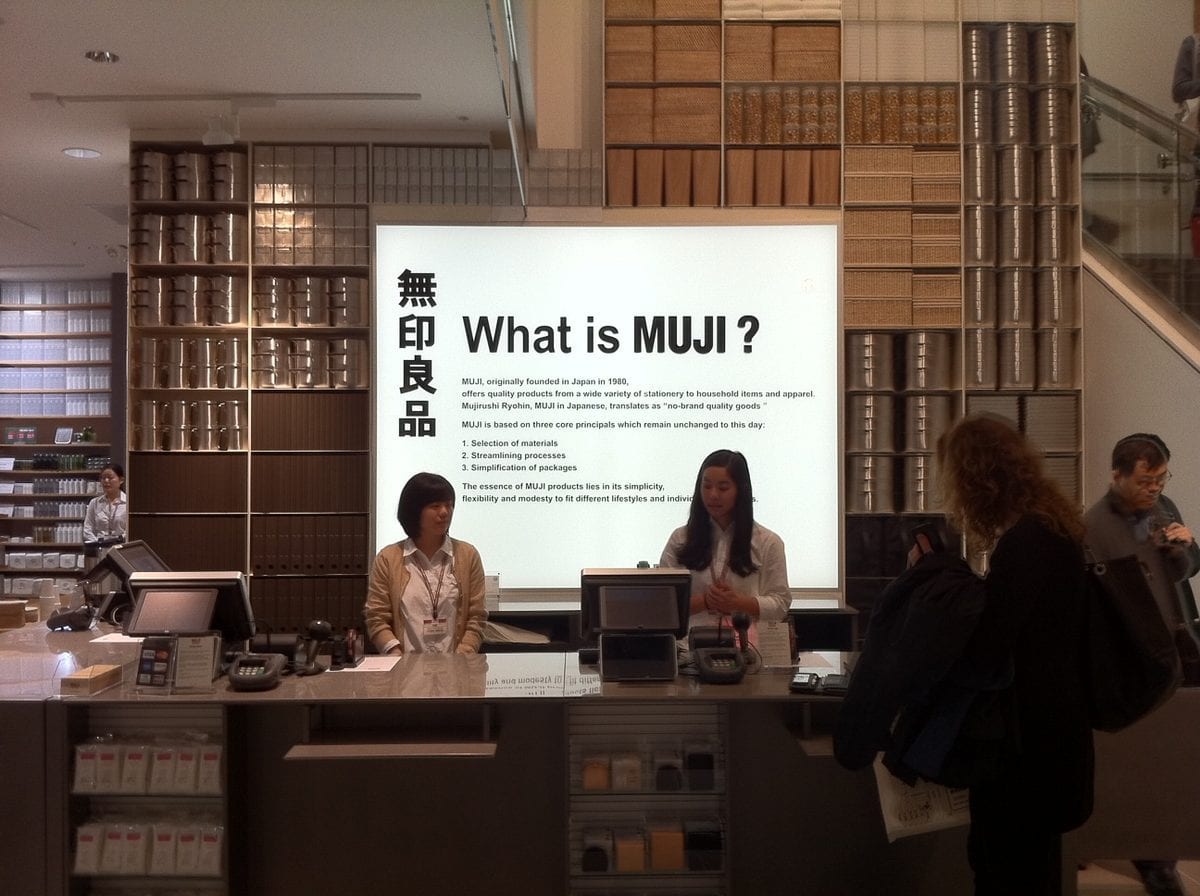
    Japanese retailer, Muji, has confirmed it will open its first Sydney store at The Galeries shopping centre, on May 14.

    The Galeries’ store will be Muji’s third store in Australia, with the first launching in November 2013 at Chadstone Shopping Centre, followed by Emporium Melbourne in April 2014.

    The new store covers a total space of 1344.62sqm with 1022.84sqm floor space, and will stock Muji’s range of men’s, women’s and children’s apparel, and accessories, furniture, homewares, skincare products, stationery, bedding, and travel goods.

    Victor Gaspar, GM of Ipoh Management Services, is thrilled to welcome Muji to The Galeries.

    “The much anticipated flagship Sydney store reinforces The Galeries’ ongoing pursuit of an unique, world class cultural offering. This is the first of a number of new openings planned at The Galeries this year, which promises to enhance the unique retail experience already offered to our customers.”

    Muji Australia’s MD, Takuo Nagahara, says he looks forward to the launch in Sydney and expanding Muji nationwide.

    “We look forward to further developing and sharing our brand concept and activities with people across Australia.” Nagahara says.

    The Galeries’ store will bring Muji to a total of 703 stores worldwide.

    The company is planning to open additional stores in Australia as well as an online store in the future.

    In 1980, Muji was established as a private brand of Seiyu, beginning with a limited range of 40 products.

    These products were the antithesis to the trend at that time, when Japanese consumers placed too much emphasis on brand name products, paying premium price for the brand name rather than the value of the product itself.

    Muji is derived from its Japanese name, ‘Mujirushi Ryohin’, which means ‘no brand quality goods,’ and the products are characterised by their simple aesthetic and eco friendly minimal packaging.

  • Superdry teams with Idris Elba

    Superdry teams with Idris Elba

    SuperGroup, UK-based parent of the faux Japanese Superdry brand, has signed up Idris Elba to help it re-launch in the US market.

    Elba is the star of the popular US crime show The Wire and the British BBC crime drama Luther, starred in the movies Mandela and Marvel’s Thor, and is repeatedly rumoured as a future James Bond.

    SuperGroup says it has signed Elba to create an exclusive new autumn winter collection for 2015.

    The company has revealed few other details but CEO Euan Sutherland said Elba’s high profile will help relaunch the Superdry brand in the all important North American market.

    Sutherland said Superdry’s prime target market remained aged 18 to 24, but many early converts to the brand have “grown up with” it. At 42, Elba will appeal to that older generation of shopper as well.

    “He epitomises what we are: British, grounded and cool,” said Sutherland.

    SuperGroup recently bought back the exclusive marketing rights to Superdry in the US, Canada and Mexico, paying £22.3 million to prematurely end the 30 year deal. With just 15 stores it sold £20 million worth of apparel in those markets last year, but lost £5 million doing so.

    “Idris Elba is a big man in the US and he will automatically reposition Superdry in people’s minds,” said Sutherland.

  • Miu Miu Japan opens new flagship

    Miu Miu Japan opens new flagship

    Prada brand Miu Miu has unveiled a new project with Swiss architects Herzog & de Meuron, the centrepiece of its Japanese operations.

    The 720 sqm building on Miyuki St in the Aoyama District of Tokyo will be the cornerstone of the brand’s Japanese activities. Based in Paris, Miu Miu was established by Miuccia Prada in 1993 as a platform for design explorations beyond her legendary Prada line. Since opening its first boutique in Aoyama in 1999, Miu Miu has maintained a significant presence in Japan and now has 23 boutiques across the country including nine in Tokyo.

    Miu Miu Aoyama Tokyo 415

    Prada says the new building continues the company’s tradition of collaboration with world-class architects and re-emphasises Miu Miu Japan’s dedication to the Japanese market.

    The project for Miu Miu is sited diagonally across the street from the Prada Tokyo Epicenter – also designed by Herzog & de Meuron – in an elegant neighborhood that has, over the past two decades, become a showplace of architectural invention. In contrast to the transparency of the all-glass Prada building, however, the understated metallic surface of the Miu Miu façade is opaque, which lends a more intimate feel.

    Miu Miu in Aoyama Tokyo 415

    The architects say: “Contrary to expectations for a site that is home to so many luxury brands, Miyuki St in Aoyama Tokyo is not particularly beautiful or elegant. The architecture is heterogeneous – a hodgepodge of freestanding buildings of different heights and shapes, with neither historical tradition nor common standards.

    “Never meant to be a space of its own, the street is a purely technical and functional link between Omotesando and the Aoyama Reien cemetery farther down the road. Despite single trees here and there, the atmosphere is not inviting, like a boulevard or a plaza. Tokyo is pure, quintessential city, its territory exploited to the full with absolutely no leeway for the individuality that we take for granted in European cities.

    Miu Miu in Aoyama Tokyo.415

    “We already noticed this over 10 years ago when we were planning the glass building for Prada Aoyama,” they continued.

    “At that time, we were interested in counteracting the situation – on one hand, by placing a small plaza to the side of the building, and on the other, by making the structure completely see-through so that one can see into the interior from all sides and can also look out from inside at specifically targeted views of the city.

    “Over the past decade, the distinctive building has become a much-frequented location and it was therefore important to Prada, our client Prada Japan and also to us as architects to take this into account in planning the Miu Miu store located in the immediate vicinity on the opposite side of the street. We started out by trying several different architectural typologies. Since zoning regulations called for less height, we explored the potential of a smaller, more intimate building. We used the following thoughts to channel our ideas: more like a home than a department store, more hidden than open, more understated than extravagant, more opaque than transparent.

    Miu Miu in Aoyama, Tokyo 415

    “The typological model that best suited these considerations and specifications was a box placed directly at the level of the street, its cover slightly open to mark the entrance and allow pedestrians to look inside. Only then do they realise that the building is a shop.

    “Here, under the oversized canopy, the two-storey interior is visible at a single glance, as if the volume had been sliced open with a big knife, turning the inside out. The rounded, soft edges of the copper surfaces inside meet with the razor-sharp steel corners on the outside of the metal box, while the cave-like niches clad in brocade face the central space of the shop like loges in a theatre.

    “The shop on two tall storeys not only presents enticing goods on tables and in display cases; it is also like a spacious and comfortable home with inviting sofas and armchairs.”

    The façade has neither logo nor pomp; it is a polished, mirror-smooth surface, as if one single giant brushstroke had swept smooth the ordinarily matte surface of the steel panelled façade. This surface attracts the gaze and curiosity of passing pedestrians. But instead of affording a view inside, as in a shop window, the gaze is inverted; instead of the anticipated see-through window, viewers encounter self-reflection.

    Miu Miu in Aoyama Tokyo 415.

  • Uniqlo founder tops Japan’s rich list

    Uniqlo founder tops Japan’s rich list

    Retail mogul Tadashi Yanai has topped Forbes magazine’s list of the richest people in Japan.

    The Uniqlo founder is reported to have a net worth of US$21.1 billion.

    Last year, Yanai, 66, whose company Fast Retailing also owns a raft of other apparel brands including GU, was ranked second. But Forbes says soaring sales of his clothing empire have added $3.3 billion to his net worth.

    Last year’s list topper, internet pioneer Masayoshi Son, who owns Softbank, was displaced into second, his net worth now estimated at $13.9 billion.

    The nation’s richest family is that of Nobutada Saji, of beverage giant Suntory, with Saji himself ranking third and worth $10.9 billion.

    Hiroshi Mikitani, the founder of online retail powerhouse Rakuten, is ranked fourth at $10.5 billion. His fortune soared 36 per cent in the last year alone, partly due to acquisitions of US website Ebates and investment in Uber rival Lyft.

    The other retailer to make the top 10 is Masatoshi Ito, founder of the Ito-Yokado Group, parent of 7-Eleven, the Ito-Yokado supermarket chain, department stores, restaurants and speciality shops. His estimated worth is $3.8 billion.

  • L’Oreal posts slower growth in China

    L’Oreal posts slower growth in China

    L’OREAL, the world’s largest cosmetics group, said growth in China slowed to 7.7 percent last year from that of 10.2 percent in 2013, as consumption growth slowed in China and globally.

    The French company’s total sales in China were 14.3 billion yuan (US$2.28 billion) last year, as the country remained its the third-largest market.

    Globally, like-for-like sales was up 3.7 percent under fixed exchange rate to 22.5 billion euros.

    “Moderate growth in the fast moving consumer goods sector is becoming a normal situation under China’s new economic scenario,” said Jason Yu, general manager of Kantar Worldpanel China.

    “Beauty market growth is boosted by trading up from a more sophisticated group of consumers, and we’ve seen high-end product lines growing at a much faster pace than mass market products,” he added.

    Alexis Perakis-Valat, L’Oreal Group Executive vice president for Asia Pacific and CEO of L’Oreal China, said future growth would come from more tailor-made products for local consumers and geographical expansion into lower tier cities, especially for luxury product division.

  • Prada 2014 profit falls for first time since listing as China, Europe weaken

    Prada 2014 profit falls for first time since listing as China, Europe weaken

    Italian luxury goods company Prada SpA reported its first drop in annual net profit since it listed in Hong Kong four years ago, as growing retail sales in the Americas and Japan failed to offset declines in Greater China and Europe.

    The company reported on Monday its 2014 net profit fell 28 percent to EUR450.7 million (USD489.8 million), slightly below forecasts, as overall annual sales dropped 1 percent. Asia-Pacific sales, which accounted for more than a third of the Milan-headquartered company’s business, also fell 3.1 percent.

    Like other luxury goods makers, Prada has seen weaker sales in China and Hong Kong amid a government crackdown on corruption, including bribery which often takes the form of lavish gifts to officials.

  • adidas to shift some production from Asia in robot revolution

    adidas to shift some production from Asia in robot revolution

    adidas announced plans to revolutionize the way it manufactures goods to speed up production and allow shoppers to customize more shoes and clothes, to help it accelerate sales and profit growth over the next five years.

    The German sportswear firm, which has been losing ground for years to fast-growing rival Nike, said it was testing automated production units that would allow it to shift manufacturing from Asia closer to consumers and even into stores, where shoppers will be able to personalize their goods.

    “We will bring production back to Europe. We will bring production back to where the main markets are,” said Chief Executive Herbert Hainer, adding the current six weeks it took to ship from Asia to Europe was too long.

  • Cotton On plans next stage of global growth

    Cotton On plans next stage of global growth

    Cotton On Group has revealed plans to add 227 jobs in Australia and overseas this year as the Geelong-based value fashion retailer embarks on another expansion phase aimed at maintaining its five-year record of 20 percent-plus sales growth.

    Cotton On Group’s sales are forecast to rise 22.5 percent in 2015 to AUD1.51 billion (USD1.17b) and the privately owned company is budgeting for 20 percent-plus growth in 2016 by opening more than 100 stores and expanding e-commerce with new online sites, improved digital content and click and collect options.

    Over the next three years, the group plans to open 570 stores around the globe, taking the total to almost 1900, while lifting online sales to AUD250 million.

  • Surfwear retailer Billabong rejects class action claim

    Surfwear retailer Billabong rejects class action claim

    Struggling surf-wear retailer Billabong said on Thursday it received notice of a shareholder class action lawsuit over market disclosures it made four years ago.

    The Federal Court of Australia online register said law firm Slater & Gordon filed a statement of claim a day earlier. A Slater & Gordon spokesperson was not immediately available for comment.

    The law firm said a year ago that it planned to seek compensation for shareholders, alleging the company gave earnings guidance for the 2012 financial year that lacked reasonable grounds.