Category: Fashion

Retail News Asia is committed to providing both local and global retailers with the latest Fashion news throughout the Asian market. This on a daily base.

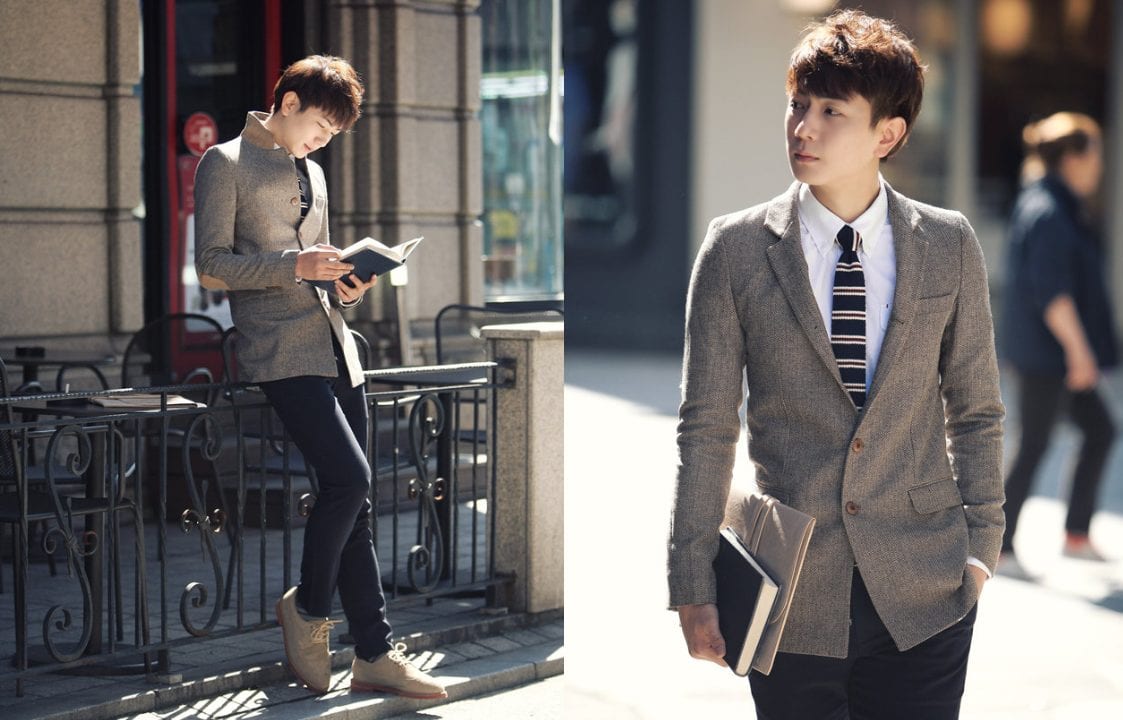
  • More men shop Korean department stores

    More men shop Korean department stores

    Department stores were once considered the ‘exclusive domain of women’ in many Asian countries.

    However, in Korea the ranks of men who enjoy shopping at luxurious stores are increasing.

    In addition, as more women are turning to overseas direct purchases or online shopping malls, Korea’s retail giants are attracting male shoppers by increasing hobby supplies and custom-made suits.

    According to Lotte Department Store, the proportion of male shoppers increased to 27 per cent this year, up four percentage points from 2010. Compared to the 26 per cent recorded at the end of last year, it rose by one percentage point in just three months. Sales of accessories for men more than doubled over the past five years.

    The Korean department store attributed the increase in male shoppers to a surge in male interest for cosmetics and clothes, as well as a renewed focus on enjoying hobbies and leisure activities.

    To cater to a growing number of male shoppers, the retailer has introduced stores that specialize in male apparel and accessories.

    Lotte opened “Curiosity of Renoma,” a hobby shop selling selected kidult products last December at its premium outlet in Gwangmyeong, and the shop is selling 150 million won worth of products monthly. At its Avenuel World Tower branch, it set up a camera shop named ‘el Camera’ selling cameras and related accessories to attract male shoppers interested in photography.

    Meanwhile, at its Jamsil branch, it opened a custom-made suit shop called “IFG”, which offers various suits priced from 300,000 won to 1,500,000, won and targets male shoppers aged 30 to 60.

    An official at Lotte said: “We plan to continue to expand stores specialising in products for men since we believe their potential buying power is huge.”


  • Muji confirms Sydney

    Muji confirms Sydney

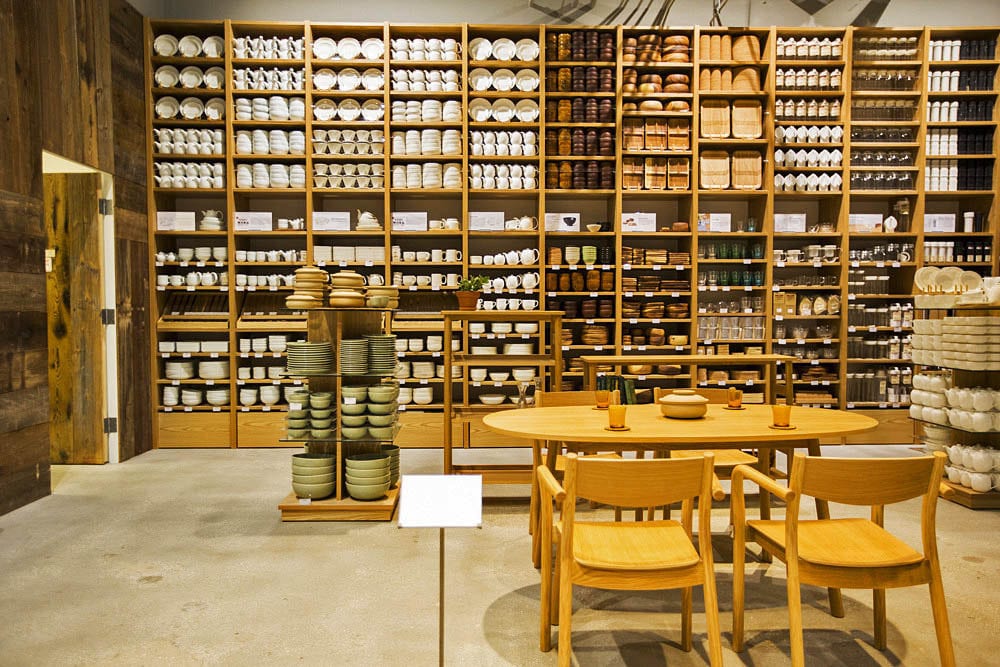
    Japanese retailer, Muji, has confirmed it will open its first Sydney store at The Galeries shopping centre, on May 14.

    The Galeries’ store will be Muji’s third store in Australia, with the first launching in November 2013 at Chadstone Shopping Centre, followed by Emporium Melbourne in April 2014.

    The new store covers a total space of 1344.62sqm with 1022.84sqm floor space, and will stock Muji’s range of men’s, women’s and children’s apparel, and accessories, furniture, homewares, skincare products, stationery, bedding, and travel goods.

    Victor Gaspar, GM of Ipoh Management Services, is thrilled to welcome Muji to The Galeries.

    “The much anticipated flagship Sydney store reinforces The Galeries’ ongoing pursuit of an unique, world class cultural offering. This is the first of a number of new openings planned at The Galeries this year, which promises to enhance the unique retail experience already offered to our customers.”

    Muji Australia’s MD, Takuo Nagahara, says he looks forward to the launch in Sydney and expanding Muji nationwide.

    “We look forward to further developing and sharing our brand concept and activities with people across Australia.” Nagahara says.

    The Galeries’ store will bring Muji to a total of 703 stores worldwide.

    The company is planning to open additional stores in Australia as well as an online store in the future.

    In 1980, Muji was established as a private brand of Seiyu, beginning with a limited range of 40 products.

    These products were the antithesis to the trend at that time, when Japanese consumers placed too much emphasis on brand name products, paying premium price for the brand name rather than the value of the product itself.

    Muji is derived from its Japanese name, ‘Mujirushi Ryohin’, which means ‘no brand quality goods,’ and the products are characterised by their simple aesthetic and eco friendly minimal packaging.

  • Superdry teams with Idris Elba

    Superdry teams with Idris Elba

    SuperGroup, UK-based parent of the faux Japanese Superdry brand, has signed up Idris Elba to help it re-launch in the US market.

    Elba is the star of the popular US crime show The Wire and the British BBC crime drama Luther, starred in the movies Mandela and Marvel’s Thor, and is repeatedly rumoured as a future James Bond.

    SuperGroup says it has signed Elba to create an exclusive new autumn winter collection for 2015.

    The company has revealed few other details but CEO Euan Sutherland said Elba’s high profile will help relaunch the Superdry brand in the all important North American market.

    Sutherland said Superdry’s prime target market remained aged 18 to 24, but many early converts to the brand have “grown up with” it. At 42, Elba will appeal to that older generation of shopper as well.

    “He epitomises what we are: British, grounded and cool,” said Sutherland.

    SuperGroup recently bought back the exclusive marketing rights to Superdry in the US, Canada and Mexico, paying £22.3 million to prematurely end the 30 year deal. With just 15 stores it sold £20 million worth of apparel in those markets last year, but lost £5 million doing so.

    “Idris Elba is a big man in the US and he will automatically reposition Superdry in people’s minds,” said Sutherland.

  • Miu Miu Japan opens new flagship

    Miu Miu Japan opens new flagship

    Prada brand Miu Miu has unveiled a new project with Swiss architects Herzog & de Meuron, the centrepiece of its Japanese operations.

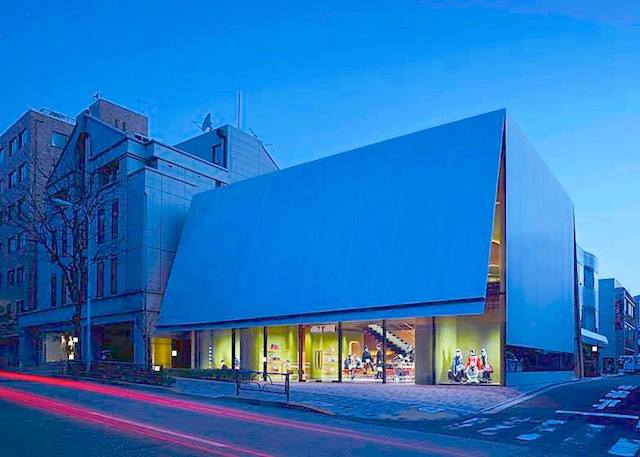
    The 720 sqm building on Miyuki St in the Aoyama District of Tokyo will be the cornerstone of the brand’s Japanese activities. Based in Paris, Miu Miu was established by Miuccia Prada in 1993 as a platform for design explorations beyond her legendary Prada line. Since opening its first boutique in Aoyama in 1999, Miu Miu has maintained a significant presence in Japan and now has 23 boutiques across the country including nine in Tokyo.

    Miu Miu Aoyama Tokyo 415

    Prada says the new building continues the company’s tradition of collaboration with world-class architects and re-emphasises Miu Miu Japan’s dedication to the Japanese market.

    The project for Miu Miu is sited diagonally across the street from the Prada Tokyo Epicenter – also designed by Herzog & de Meuron – in an elegant neighborhood that has, over the past two decades, become a showplace of architectural invention. In contrast to the transparency of the all-glass Prada building, however, the understated metallic surface of the Miu Miu façade is opaque, which lends a more intimate feel.

    Miu Miu in Aoyama Tokyo 415

    The architects say: “Contrary to expectations for a site that is home to so many luxury brands, Miyuki St in Aoyama Tokyo is not particularly beautiful or elegant. The architecture is heterogeneous – a hodgepodge of freestanding buildings of different heights and shapes, with neither historical tradition nor common standards.

    “Never meant to be a space of its own, the street is a purely technical and functional link between Omotesando and the Aoyama Reien cemetery farther down the road. Despite single trees here and there, the atmosphere is not inviting, like a boulevard or a plaza. Tokyo is pure, quintessential city, its territory exploited to the full with absolutely no leeway for the individuality that we take for granted in European cities.

    Miu Miu in Aoyama Tokyo.415

    “We already noticed this over 10 years ago when we were planning the glass building for Prada Aoyama,” they continued.

    “At that time, we were interested in counteracting the situation – on one hand, by placing a small plaza to the side of the building, and on the other, by making the structure completely see-through so that one can see into the interior from all sides and can also look out from inside at specifically targeted views of the city.

    “Over the past decade, the distinctive building has become a much-frequented location and it was therefore important to Prada, our client Prada Japan and also to us as architects to take this into account in planning the Miu Miu store located in the immediate vicinity on the opposite side of the street. We started out by trying several different architectural typologies. Since zoning regulations called for less height, we explored the potential of a smaller, more intimate building. We used the following thoughts to channel our ideas: more like a home than a department store, more hidden than open, more understated than extravagant, more opaque than transparent.

    Miu Miu in Aoyama, Tokyo 415

    “The typological model that best suited these considerations and specifications was a box placed directly at the level of the street, its cover slightly open to mark the entrance and allow pedestrians to look inside. Only then do they realise that the building is a shop.

    “Here, under the oversized canopy, the two-storey interior is visible at a single glance, as if the volume had been sliced open with a big knife, turning the inside out. The rounded, soft edges of the copper surfaces inside meet with the razor-sharp steel corners on the outside of the metal box, while the cave-like niches clad in brocade face the central space of the shop like loges in a theatre.

    “The shop on two tall storeys not only presents enticing goods on tables and in display cases; it is also like a spacious and comfortable home with inviting sofas and armchairs.”

    The façade has neither logo nor pomp; it is a polished, mirror-smooth surface, as if one single giant brushstroke had swept smooth the ordinarily matte surface of the steel panelled façade. This surface attracts the gaze and curiosity of passing pedestrians. But instead of affording a view inside, as in a shop window, the gaze is inverted; instead of the anticipated see-through window, viewers encounter self-reflection.

    Miu Miu in Aoyama Tokyo 415.

  • Uniqlo founder tops Japan’s rich list

    Uniqlo founder tops Japan’s rich list

    Retail mogul Tadashi Yanai has topped Forbes magazine’s list of the richest people in Japan.

    The Uniqlo founder is reported to have a net worth of US$21.1 billion.

    Last year, Yanai, 66, whose company Fast Retailing also owns a raft of other apparel brands including GU, was ranked second. But Forbes says soaring sales of his clothing empire have added $3.3 billion to his net worth.

    Last year’s list topper, internet pioneer Masayoshi Son, who owns Softbank, was displaced into second, his net worth now estimated at $13.9 billion.

    The nation’s richest family is that of Nobutada Saji, of beverage giant Suntory, with Saji himself ranking third and worth $10.9 billion.

    Hiroshi Mikitani, the founder of online retail powerhouse Rakuten, is ranked fourth at $10.5 billion. His fortune soared 36 per cent in the last year alone, partly due to acquisitions of US website Ebates and investment in Uber rival Lyft.

    The other retailer to make the top 10 is Masatoshi Ito, founder of the Ito-Yokado Group, parent of 7-Eleven, the Ito-Yokado supermarket chain, department stores, restaurants and speciality shops. His estimated worth is $3.8 billion.

  • L’Oreal posts slower growth in China

    L’Oreal posts slower growth in China

    L’OREAL, the world’s largest cosmetics group, said growth in China slowed to 7.7 percent last year from that of 10.2 percent in 2013, as consumption growth slowed in China and globally.

    The French company’s total sales in China were 14.3 billion yuan (US$2.28 billion) last year, as the country remained its the third-largest market.

    Globally, like-for-like sales was up 3.7 percent under fixed exchange rate to 22.5 billion euros.

    “Moderate growth in the fast moving consumer goods sector is becoming a normal situation under China’s new economic scenario,” said Jason Yu, general manager of Kantar Worldpanel China.

    “Beauty market growth is boosted by trading up from a more sophisticated group of consumers, and we’ve seen high-end product lines growing at a much faster pace than mass market products,” he added.

    Alexis Perakis-Valat, L’Oreal Group Executive vice president for Asia Pacific and CEO of L’Oreal China, said future growth would come from more tailor-made products for local consumers and geographical expansion into lower tier cities, especially for luxury product division.

  • Prada 2014 profit falls for first time since listing as China, Europe weaken

    Prada 2014 profit falls for first time since listing as China, Europe weaken

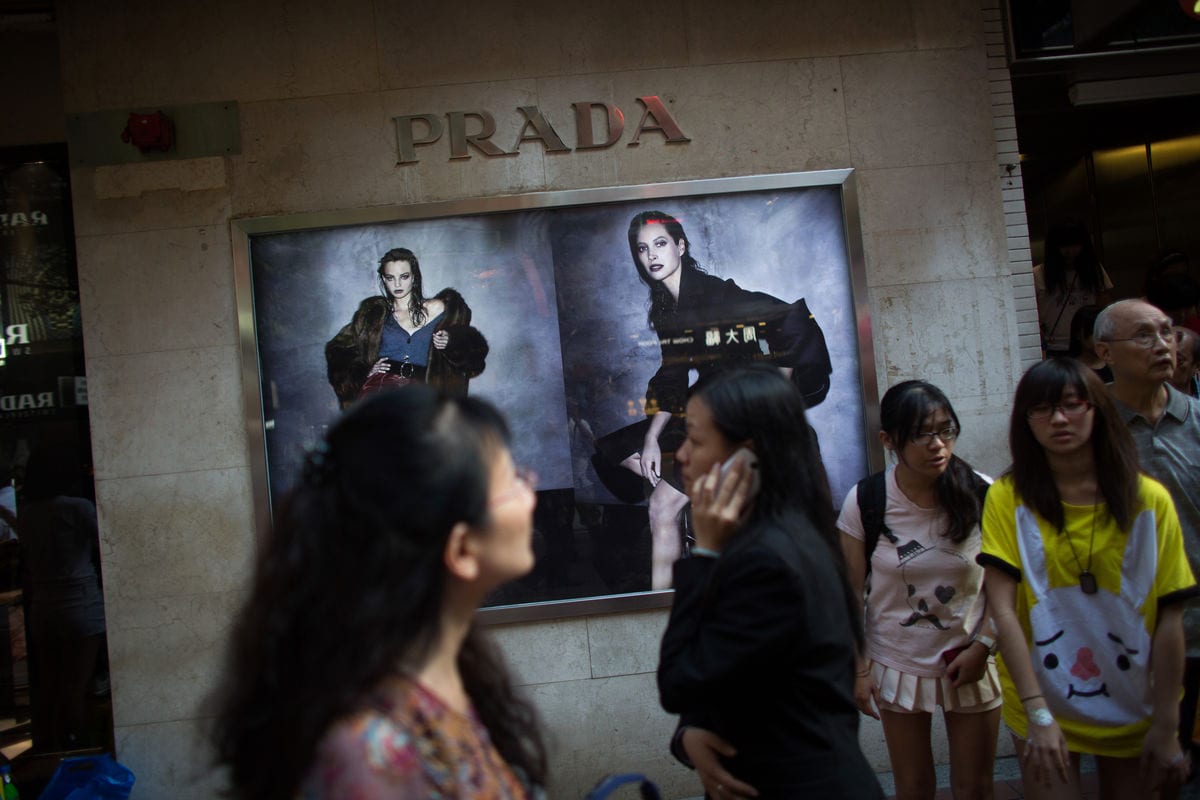
    Italian luxury goods company Prada SpA reported its first drop in annual net profit since it listed in Hong Kong four years ago, as growing retail sales in the Americas and Japan failed to offset declines in Greater China and Europe.

    The company reported on Monday its 2014 net profit fell 28 percent to EUR450.7 million (USD489.8 million), slightly below forecasts, as overall annual sales dropped 1 percent. Asia-Pacific sales, which accounted for more than a third of the Milan-headquartered company’s business, also fell 3.1 percent.

    Like other luxury goods makers, Prada has seen weaker sales in China and Hong Kong amid a government crackdown on corruption, including bribery which often takes the form of lavish gifts to officials.

  • adidas to shift some production from Asia in robot revolution

    adidas to shift some production from Asia in robot revolution

    adidas announced plans to revolutionize the way it manufactures goods to speed up production and allow shoppers to customize more shoes and clothes, to help it accelerate sales and profit growth over the next five years.

    The German sportswear firm, which has been losing ground for years to fast-growing rival Nike, said it was testing automated production units that would allow it to shift manufacturing from Asia closer to consumers and even into stores, where shoppers will be able to personalize their goods.

    “We will bring production back to Europe. We will bring production back to where the main markets are,” said Chief Executive Herbert Hainer, adding the current six weeks it took to ship from Asia to Europe was too long.

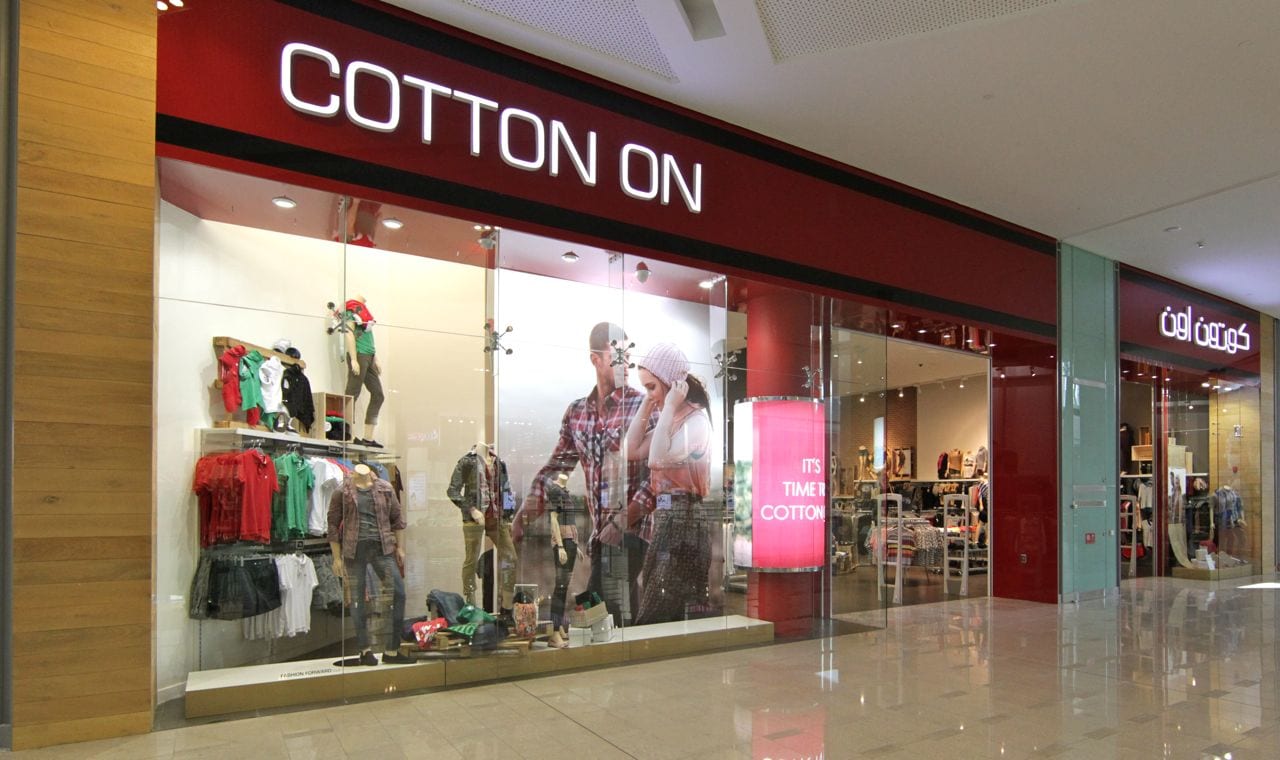
  • Cotton On plans next stage of global growth

    Cotton On plans next stage of global growth

    Cotton On Group has revealed plans to add 227 jobs in Australia and overseas this year as the Geelong-based value fashion retailer embarks on another expansion phase aimed at maintaining its five-year record of 20 percent-plus sales growth.

    Cotton On Group’s sales are forecast to rise 22.5 percent in 2015 to AUD1.51 billion (USD1.17b) and the privately owned company is budgeting for 20 percent-plus growth in 2016 by opening more than 100 stores and expanding e-commerce with new online sites, improved digital content and click and collect options.

    Over the next three years, the group plans to open 570 stores around the globe, taking the total to almost 1900, while lifting online sales to AUD250 million.

  • Surfwear retailer Billabong rejects class action claim

    Surfwear retailer Billabong rejects class action claim

    Struggling surf-wear retailer Billabong said on Thursday it received notice of a shareholder class action lawsuit over market disclosures it made four years ago.

    The Federal Court of Australia online register said law firm Slater & Gordon filed a statement of claim a day earlier. A Slater & Gordon spokesperson was not immediately available for comment.

    The law firm said a year ago that it planned to seek compensation for shareholders, alleging the company gave earnings guidance for the 2012 financial year that lacked reasonable grounds.

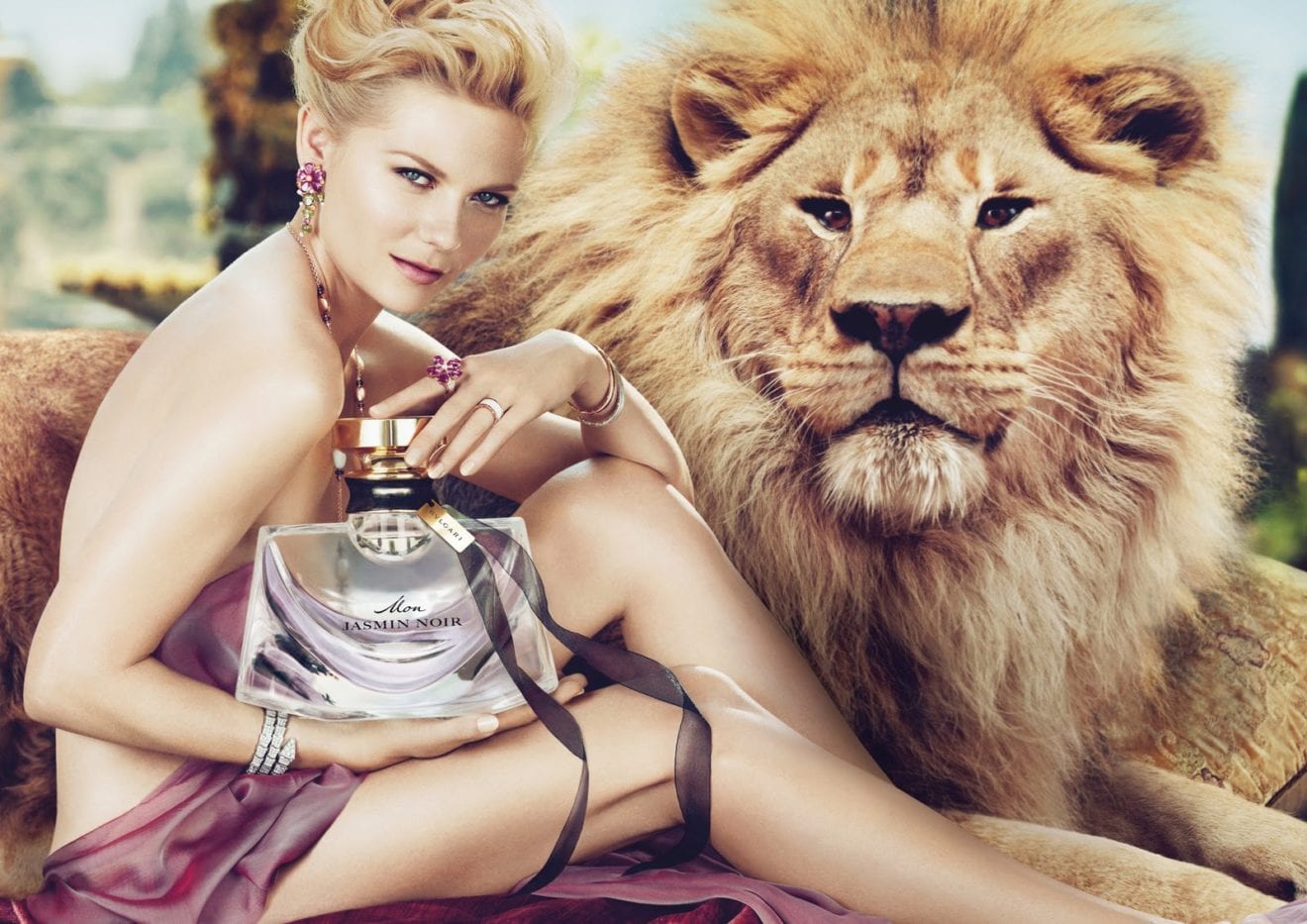
  • Bulgari to open 300th boutique this year

    Bulgari to open 300th boutique this year

    LVMH’s watch and jewellery flagship brand Bulgari is eyeing double digit growth in 2015, despite the lacklustre global luxury market.

    Bulgari expects to surpass 300 boutiques this year, part of a strategy by CEO Jean-Christophe Babin to maintain its position as one of the fastest growing brands in the Louis Vuitton group’s 60-strong stable.

    “We had a very good beginning of the year, so all else remaining equal, we think that we will do better this year than in 2014 with a double-digit growth rate,” said Babin in an interview with Reuters.

    Bulgari ended 2013 with 290 stores globally and expects to end 2015 with as many as 312.

    LVMH does not break down its trading figures by brand, but analysts estimate Bulgari achieves annual sales of between 1.5 billion and 2 billion euros.

    It is ranked third in size behind Cartier and Tiffany.

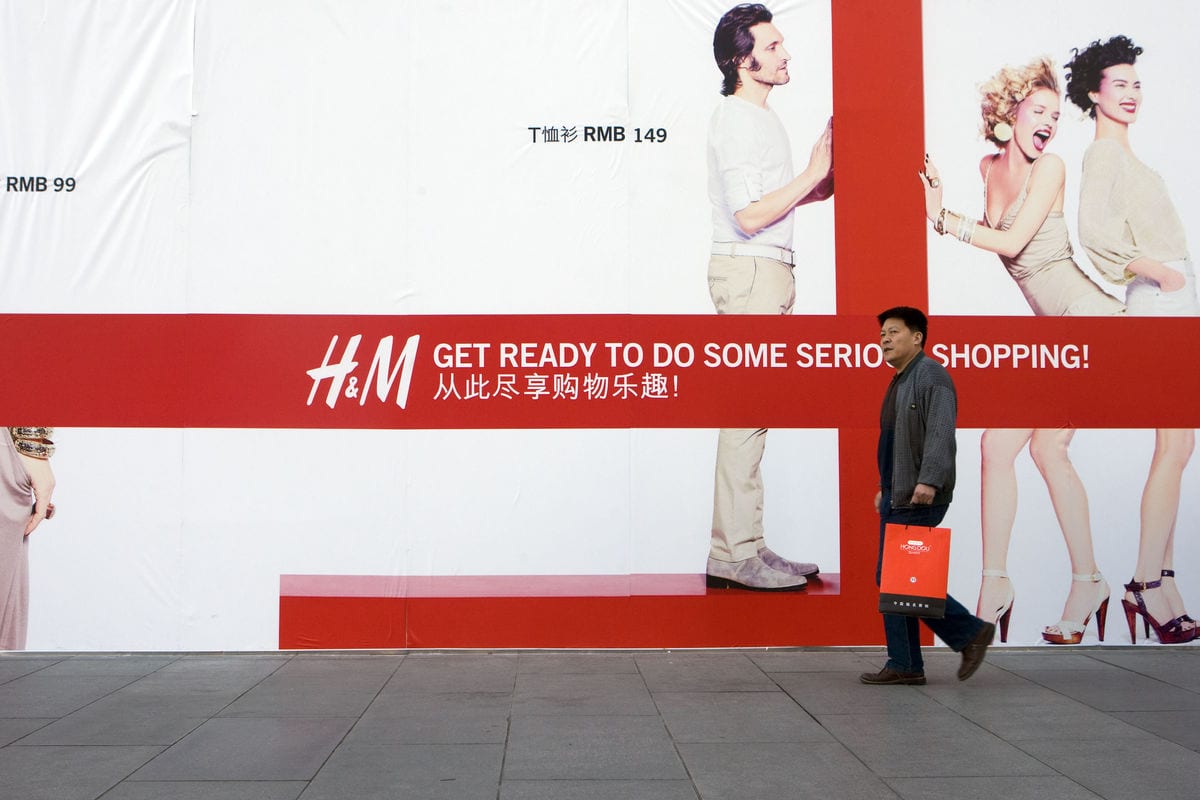
  • H&M soars in first quarter

    H&M soars in first quarter

    H&M says global sales in its first quarter – to February 28 – soared 15 per cent year-on-year on a local currency basis.

    CEO Karl-Johan Persson says the increase reflected well-received collections for all brands in the group, which boosted market share.

    Sales excluding VAT totalled US$4.73 billion.

    Gross profit increased by 26 per cent to $2.6 billion, which corresponds to a gross margin of 55.2 per cent, compared with 54.9 per cent the previous year.

    In the first quarter, H&M opened its first store in Taipei, Taiwan, and in the next three months will make its debut in Macau where it has two stores planned, along with entering Peru for the first time. In the second half of the year it will add Africa and India to its global footprint.

    The company said in a statement that sales in the first three weeks of the second quarter rose nine per cent in local currencies.

    “The year has got off to a very good start and we have great faith in our offering. Although the strong US dollar will affect our sourcing costs going forward, we will make sure that we always have the best customer offering in each individual market,” said Persson.

  • Hengdeli shifts focus to mid market

    Hengdeli shifts focus to mid market

    Chinese watch retailer and wholesaler Hengdeli Holdings is to expand into the mid market as it mainland China business grows.

    Hong Kong-listed Hengdeli specialises in high end watch retailing in mainland China, Hong Kong and Taiwan and has relationships with major global suppliers including Swatch, both LVMH and Richemont, Rolex and Kering.

    As at December 2014, the company represented more than 50 international brands, including Breguet, Bulgari, Cartier, Girard-Perregaux, IWC, Jaeger-LeCoultre, Longines, Mido, Omega, Rolex, Scatola del Tempo, TAG Heuer, Tissot, Vacheron-Constantin, Van Cleef & Arpels and Zenith.

    Last year Hengdeli added Manufacture Royale, MB&F and Vulcain to its portfolio as it stepped up its efforts to “bring in and align mid-end, mid-to-high end and high-end brands across both Mainland China and Hong Kong”. The company said it believes optimising the brand portfolio will pave the way for long-term business development and increased sales.

    According to recently filed 2014 financials, Hengdeli recorded turnover of RMB 14,764,370,000 (US$2.379 billion); an increase of 10.4 per cent year-on-year. Retail sales amounted to RMB 10,608,804,000 ($1.71 billion), an increase of 6.3 per cent year-on-year. Of this figure, retail sales in mainland China posted a year-on-year increase of 11.6 per cent to reach RMB 6,248,240,000 ($1.007 billion), while Elegant Hong Kong’s retail sales experienced a year-on-year decrease of 17.7 per cent to RMB 2,593,388,000 ($418 million). Excluding the impact of foreign exchange gains and losses, the decrease was 16.6 per cent.

    Group sales remained at the same level as in 2013, indicating a slowing of expansion. “Growth of our total retail sales was mainly generated by domestic retail outlets and mid-end brands. While continuing weak sales of high-end watches had some impact on the total retail sales, the new normality of China’s economy and our strategy of aligning operations with market dynamics has paid off. As a result, the decline in sales of high-end watches in Mainland China began to slowdown.”

    The company says sales of mid-end brands remained favourable, posting a year- on-year growth of 16.1 per cent. Same-store sales of mid-end brands also grew by 2.2 per cent, which was above the group’s average growth for the year.

    The group recorded net profit of RMB 583,427,000 ($94 million); an increase of 24.4 per cent year-on-year.

    As well as focussing expansion on less high end brands, Hengdeli actively expanded into mainland China’s second, third, and fourth-tier cities while building market shares in first-tier cities, and establishing a multi-level sales system across Mainland China and Hong Kong.

    At year end, the Group operated 513 retail outlets in mainland China, Hong Kong, Macau and Taiwan.

    The Group’s retail network covers the Greater China Region, where retail stores mainly includes Prime Time/Hengdeli, Elegant as well as certain other single-brand boutiques. Prime Time/Hengdeli mainly sells mid-end and mid-to-high-end international brands, while Elegant focuses on top-end internationally renowned brands.

    Prime Time is the major retail outlet arm of the Group in Mainland China and mainly sells internationally renowned mid-end and mid-to-high-end branded watches.

    Hengdeli says in 2015, China’s economy looks likely to continue to evolve despite ongoing global economic uncertainties.

    “We believe that the resultant new normality will continue to create exciting fresh opportunities for the group.”

  • Lululemon eyes Asia growth

    Lululemon eyes Asia growth

    Yogawear retailer Lululemon sees a positive future in Asia, despite bad experiences in Japan and Australia.

    Announcing a 13 per cent jump in global revenue in 2014 to US$1.6 billion, the Canadian company reiterated plans to open a new store in Hong Kong this year.

    The company plans 20 new stores in Europe and Asia this year with Hong Kong, Germany and the UK singled out as priorities.

    CEO Laurent Potdevin told analysts in a conference call he believed international revenues could eventually exceed those from North America.

    Lululemon currently has stores in Singapore, Hong Kong, China, Australia and New Zealand.

    It once had stores in Japan but withdrew from that market in 2009 after poor sales. It has also trimmed its network in Australia where sales failed to meet expectations.

    Besides Asia, the company is bullish about its prospects in the Middle East.

    It has a partnership with Dubai-based retail conglomerate Majid Al Futtaim to open stores in the UAE, Qatar, Bahrain, Oman and Kuwait. The first store is scheduled to open in Dubai late this year

    Potdevin described 2014 as “a critical year when we strengthened our leadership team and made important investments in our product pipeline, guest experience, brand, and community engagement”.

    “In 2015, we expect to substantially complete this foundational work and accelerate our investments in innovation to drive sustainable global growth as we continue to lead the market that we created,” he said in an earnings statement.

  • Global Brands revels in maiden result

    Global Brands revels in maiden result

    Global Brands, the listed Li & Fung spinoff, has reported its first trading result – reveling in a 37 per cent profit rise.

    The Hong Kong based company listed as an independent business on July 9, a move CEO and vice chairman Bruce Rockowitz says afforded it the freedom to fully build its brands business and pursue its own distinct and focused strategy. That strategy includes a direct-to-consumer business,, which would not have been possible under the Li & Fung business model. “At the same time, we continue to enjoy the benefit of being a member of the Fung Group.”

    Group sales in the second half totalled US$2.105 billion, up 7.5 per cent on the same period the previous year, while profit rose 36.6 per cent to $217 million.

    Merging the half years under the two ownerships into one set of figures, annual sales reached $3.454 billion and profit $154 million .

    Rockowitz says the business will continue to primarily concentrate on ‘American power brands’ through Licensed Brands and Controlled Brands divisions.

    “On the Licensed Brands side, we continue to sharpen the focus of our platform in terms of both the product categories that we offer and the brands that we work with, while expanding the platform globally.

    “One notable achievement of our efforts is that today we are among the largest licensed brand companies within the kids sector, a success that is based upon our leadership position in characters as well as in kids fashion. We have a truly global platform in the kids area, and we are working hard to further strengthen our prominent position in key categories and geographies worldwide.

    “In the US, notable achievements include the master licensing agreement that we signed with Disney in the sleepwear category in August. In Europe, our focus has been to integrate our businesses across major markets to strengthen our leadership across the region. In China, we have successfully established a strong platform for the kids fashion and character businesses.”

    Global Brands is also building its licensed brands portfolio , securing deals with major American brands in footwear and accessories: a new global accessory licensing relationship was signed with Cole Haan last year, and in January 2015, with Kate Spade.

    “In addition, we renewed our global footwear license agreement with Coach. These are all highly successful affordable luxury brands with strong growth momentum,” said Rockowitz.

    The company exited its private label jewellery business post listing and consolidated its home and women’s apparel offers to ensure each is run more efficiently.

    On the Controlled Brands side, the company made special mention of Frye, an American brand with a strong heritage.

    “Our Frye retail stores delivered strong results, while sales through our eCommerce portal Frye.com also recorded significant growth. Looking ahead, we see the further expansion of our retail footprint, growing online sales and extending our product offering as being the key drivers to building Frye into a global lifestyle brand. We have also made a number of key hires to accelerate growth.”

    Spyder has established itself as “a high end, high performance” skiwear brand in the US and Europe.

    “We are working to expand its presence in other geographies as well as in other product categories. In particular, we believe this is an opportune time to make a big push for Korea (the host country for the winter Olympics in 2018) and China. We believe the brand’s edgy aesthetics and high performance will resonate well in these key Asian markets.”

    Juicy Couture has started with very strong sales momentum and retail partners are actively working on a plan for new store openings globally.

    Aquatalia, though much smaller in scale than Frye, has proven its brand appeal, and expanded into menswear with a Fall 2015 collection.

    In December, Global Brands announced a joint venture with David Beckham and his business partner Simon Fuller. The joint venture, Seven Global, focuses on the continued development of the brand around David Beckham as well as on creating large scale brands in partnership with a select number of high‐profile sports and entertainment icons. The venture will cover all major consumer product categories.

    “We are extremely excited about the prospects that lie ahead for Seven Global,” said Rockowitz. “With our strong global platform of TLC, one of the world’s leading brand management companies that we acquired in January 2014, we are confident we can establish Seven Global as a trendsetting enterprise in the sports and entertainment space.”

    Rockowitz said although the macroeconomic environment remains complex, the company expect its margins will continue to trend upwards due to its growth in scale, improvement in gross margins and an improving business mix in favor of higher‐margin businesses, and an ongoing focus on integrating its businesses and rationalising the cost structure, while exiting unprofitable and non‐core businesses.

    “As we continue to grow and strengthen our business, one strategic priority is to extend our global reach. We have established a leading platform in our space in the US, which will remain our largest geography for the foreseeable future, and we believe we can successfully replicate this in Europe and Asia.”